I have switched the word ‘ordinary’ permanently to ‘ordered’ on the website, when referring to the green Sundays of this part of the year. That’s the real intimation of the word, as I see it: the Sundays counting down to the end of the year and the season of Advent.
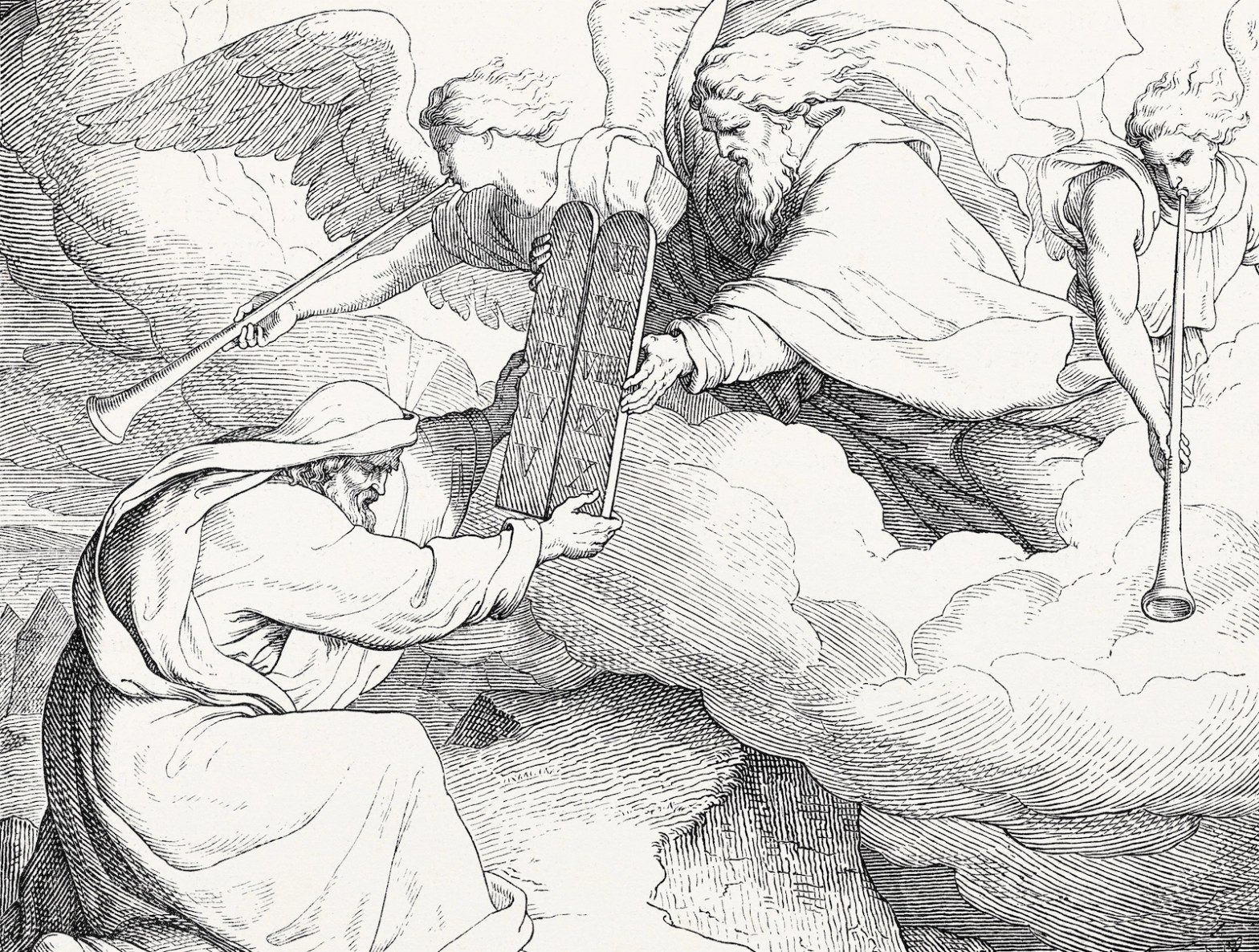
This weekend, we have very much about the nature of prophecy in the life of the sacred people. Prophecy is nothing but the communication of the mind of God to a people who cannot easily receive it; the prophet consequently becomes a mediator between the Holy One and the people He wishes to communicate with. Prophecy has very much to do with correcting the usual course of human life, by urging people to reconsecrate it repeatedly to the Holy One, by reorienting it towards Him. The essence of the perennial nature of the prophecy contained within Scripture and of its applicability to our lives is that human nature doesn’t change and human society as a whole (rather than progressing according to a common understanding) keeps oscillating between success and failure, and between good behaviour and bad behaviour. This cyclic nature in the life of human society is marvellously demonstrated in the life of the Hebrew nation in the Old Testament, and its extension in the life of the Christian Church in the last two millennia.
“And at His words, a divine force mastered me, raising me to my feet, so that I could listen to Him. ‘Son of man,’ He told me, ‘I am sending thee on an errand to the men of Israel, this heathen brood that has rebelled and forsaken Me; see how My covenant has been violated by the fathers yesterday, the children to-day! To brazen-faced folk and hard-hearted thy errand is, and still from the Lord God a message thou must deliver, hear they or deny thee hearing; rebels all, at least they shall know that they have had a prophet in their midst.”
Prophecy of Ezechiel, 2: 2-5 [link]
The prophet Ezechiel was a contemporary of the prophet Jeremiah, about 600 years before Christ, but while Jeremiah lived in Jerusalem, trying hard to convince the king of Juda and the authorities of the Temple to repent and return to the observance of the Law of God, and to trust in His providence, Ezechiel had been carried away with thousands of Hebrews to Mesopotamia and had to deal with the same obstinacy and intransigence there in the Exile. Prophets in both the Old Testament and in our own times have to raise their voice and call the people back to faith and trust in God, but the bottom line of our first reading this weekend remains: the majority of the people will not listen and will continue on down the path to utter destruction, but that will not be for the lack of prophets. They shall know that that man or that woman had stood among them and had been right all along, but had been ignored. Society’s downfall is wrought by its members, after they despised the correction sent them.
So, then, who is a prophet? In our own context, a prophet is not necessarily a cleric, a priest or a bishop. Nor is the role of a prophet a designated place of honour within the community. We are all prophetic souls – this gift was given to us at baptism – and we are meant to carry the mind of God from Scripture and Tradition and bring its to bear on whosoever may benefit from it, enshrining His law in the hearts of our family members, our friends, and in the wider society. This requires a particular nearness to God, which includes a life of intense and dedicated prayer and devotion. And it requires a very strong dose of humility, for the prophet works to glorify God and not himself or herself.
The most well-known prophets in the recent history of the Church have often been cloistered nuns like S. Margaret Marie Alocoque and S. Thérèse of Lisieux, or Religious Sisters like S. Maria Faustyna Kowalska – and their ministries, originating in the quiet of devout souls, have deeply changed and fuelled the general life of devotion of the Latin Church. Great bishops and priests like S. Alphonsus Liguori, Padre Pio and the media priest Monsignor Fulton Sheen have become household names among Catholics and impressed and encouraged us with their lives of holiness and words of wisdom. But during their own lifetimes, they were often ignored, and their message to some degree despised.
It’s even harder when the prophet tries to work among his or her own people and within the community he or she emerged from. It’s a little like the story in the gospel, where the Holy One couldn’t even work miracles in His own town, because nobody could trust their carpenter’s son to perform the works of God, or indeed to be a prophet from God.
“Then He left the place, and withdrew to His own country-side, His disciples following Him. Here, when the sabbath came, He began teaching in the synagogue, and many were astonished when they heard Him; ‘How did He come by all this?’ they asked. ‘What is the meaning of this wisdom that has been given Him, of all these wonderful works that are done by His hands? Is not this the carpenter, the son of Mary, the brother of James and Joseph and Judas and Simon? Do not His sisters live here near us?’ And they had no confidence in Him. Then Jesus said to them, ‘It is only in his own country, in his own home, and among his own kindred, that a prophet goes unhonoured.’ Nor could He do any wonderful works there, except that He laid His hands on a few who were sick, and cured them; He was astonished at their unbelief.”
Gospel of S. Mark, 6: 1-6 [link]
This may be the reason why bishops don’t always assign priests to the parishes they were born in, or grew up in, or both. It is easier for those who have known the prophet before the divine call was received to belittle him or her, and to discount the message – our Lord suffered this just as before him Jeremiah and Ezechiel did. But, although the people disregard the prophet, they will know that they didn’t lack that prophet, and the movement that follows the prophet will not let them forget.
But, from the perspective of the prophet, getting the message about is the priority, and not any glory the prophet may receive from the effort made. Pride is to be avoided entirely, and we see this theme in the second reading this weekend, where S. Paul says that he was tempted to pride because of the extraordinary generosity the Holy One had shown him, until he received the mysterious thorn in his flesh (a ‘sting’ in the translation below) to humiliate him. There is always great speculation about what this thorn was (some sort of physical deformity or disability, maybe), but it was certainly something that would have reduced Paul in the eyes of the superificial and of those who expect great Saints never to suffer. ‘Oh, he’s got that wretched deformity, God would never treat his prophets like that, he’s probably nothing.’
But we know that the greatest of the Saints suffered greatly, but that God was glorified in their suffering, and that when they struggled the most to bring His words to the Church they shone like little torches with the light that was His.
“I can only tell you that this man, with his spirit in his body, or with his spirit apart from his body, God knows which, not I, was carried up into Paradise, and heard mysteries which man is not allowed to utter. That is the man about whom I will boast; I will not boast about myself, except to tell you of my humiliations. It would not be vanity, if I had a mind to boast about such a man as that; I should only be telling the truth. But I will spare you the telling of it; I have no mind that anybody should think of me except as he sees me, as he hears me talking to him. And indeed, for fear that these surpassing revelations should make me proud, I was given a sting to distress my outward nature, an angel of Satan sent to rebuff me. Three times it made me entreat the Lord to rid me of it; but He told me, ‘My grace is enough for thee; My strength finds its full scope in thy weakness.’ More than ever, then, I delight to boast of the weaknesses that humiliate me, so that the strength of Christ may enshrine itself in me. I am well content with these humiliations of mine, with the insults, the hardships, the persecutions, the times of difficulty I undergo for Christ; when I am weakest, then I am strongest of all.“
Second letter of S. Paul to the Corinthians, 12: 3-10 [link]
 Catholic Louth and Mablethorpe