As soldiers of Christ (Sunday VI of Easter)

There are two sentiments I would like to forth this weekend. The first is a knowledge of God, and that includes a knowledge of the Catholic Faith in general (which speaks of Him), and the second is the power of our sacramental Confirmations as Catholics. The reason the Confirmation subject came into my mind is the story of the first reading, where we see the deacon S. Philip on the mission in the Samaritan territories to the north of Jerusalem.

“Philip, who had gone down to one of the cities of Samaria, preached Christ there. The multitude listened with general accord to what Philip said, as their own eyes and ears witnessed the miracles he did. There were many possessed by unclean spirits, and these came out, crying aloud; many, too, were healed of the palsy, and of lameness, and there was great rejoicing in that city. And there was a man called Simon, who had been in the city before Philip came there, misleading the people of Samaria with sorcery, and pretending to have great powers, so that high and low hung upon his words; This, they said, is an angel called the great angel of God. Long misled by his sorceries, they continued to pay attention to him, until Philip came and preached to them about God’s kingdom. Then they found faith and were baptised, men and women alike, in the Name of Jesus Christ; and Simon, who had found faith and been baptised with the rest, kept close to Philip’s side; he was astonished by the great miracles and signs he saw happening. And now the Apostles at Jerusalem, hearing that Samaria had received the word of God, sent Peter and John to visit them. So these two came down and prayed for them, that they might receive the Holy Spirit, Who had not, as yet, come down on any of them; they had received nothing so far except baptism in the Name of the Lord Jesus. Then the apostles began to lay their hands on them, so that the Holy Spirit was given them…”

Acts of the Apostles, 8: 5-17 [link]

Philip was a great and a charismatic man, and I believe it is S. Luke who tells us (also in his Acts of the Apostles) that three or four of Philip’s daughters were known to be prophetesses, such was the wind of grace that blew through that man’s household. But when the Apostles, who were the priests-bishops of the first generation of the Church heard of the success of the mission to the Samaritans, it says here that they went out in the persons of Peter and John to complete the initiation of that people with what we would call the Sacrament of Confirmation.

When we are confirmed, the Bishop gives us a good old slap across the face (or at least they used to, my mother used to tell me) and tells us to go out and work for the Kingdom, to bring the Gospel to the world, to fight as the soldiers of Christ. I think that although this martial attitude may appeal more to young gentlemen, it is not misplaced in the heart of the young ladies also, for Our Blessed Lady herself has a martial aspect in her battle with and conquest of the ancient serpent.

“If, after all, you should have to suffer in the cause of right, yours is a blessed lot. Do not be afraid or disturbed at their threats; enthrone Christ as Lord in your hearts. If anyone asks you to give an account of the hope which you cherish, be ready at all times to answer for it, but courteously and with due reverence. What matters is that you should have a clear conscience; so the defamers of your holy life in Christ will be disappointed in their calumny. It may be God’s will that we should suffer for doing right; better that, than for doing wrong. It was thus that Christ died as a ransom, paid once for all, on behalf of our sins, he the innocent for us the guilty, so as to present us in God’s sight. In his mortal nature he was done to death, but endowed with fresh life in his spirit,”

First letter of the Apostle S. Peter, 3: 14-18 [link]

How are we to fight, dear Friends? We turn to the Apostle S. Peter, who gives us this above as our second reading this weekend. Enthrone the Holy One in our hearts, respect for His sacraments which build us up, always have an answer ready for the anti-Christians and the anti-Catholics, who give constant challenge. Having an answer implies an intellectual part to the Christian struggle – we are to study the Scripture and the teachings of the Church. But! But not all of us are Scripture scholars or have the time in our busy lives to read the works of the Fathers of the Church or the numerous Saints and Scholars who have buttressed the walls of the Church for centuries. But we do have summaries of the Faith in our catechisms, most recently the catechism of the Holy Father John Paul II that was given us in the 1990s.

We must know what the Apostolic authority in Rome teaches, and especially about the most disputed moral questions of our times. For we are chiefly attacked on these. We live in a time of profound challenge to the Apostolic Faith, and we must be prepared to make return, but as S. Peters says above, with courtesy and respect/reverence, and with a clear conscience (not having committed these crimes ourselves). So let us tell them then what we think of their ideas of abortion and contraception that have decimated the population in the West, their ideas of eugenics, euthanasia and assisted suicide and population control.


But it’s not only on hot-button topics that we want to specialise as Catholics, is it? The basis of these evils that afflict our society is the opposition to any kind of moral authority. It all seems to have begun in Europe in the sixteenth century with an opposition to the moral authority of Rome, and it has progressed inevitably to the rejection of every kind of moral authority. The whisper of the serpent in the ear of mankind lingers: if you eat of the fruit of the tree, you can be your own moral authority, you too can be gods.

The response of the Holy One in the Bible to Abraham and to Moses and the prophets echoes again in His words to the Apostles in this gospel reading we have this weekend: if you love Me you will keep My commandments. Break your pride, submit your will, or you future prosperity will be threatened. Come back to Me with all your heart, and I will give you another Advocate, I will send you My own Spirit. And that promise of the Holy Spirit takes us back to S. Philip and his Samaritans (of the first reading), for with the Ascension of Christ He has departed from the sight of an unbelieving world, but to us His children – filled with the Holy Spirit as we are – He remains a bright light, and with His teachers and Saints God is the moral rule and standard.

“‘If you have any love for Me, you must keep the commandments which I give you; and then I will ask the Father, and He will give you Another to befriend you, One Who is to dwell continually with you for ever. It is the truth-giving Spirit, for Whom the world can find no room, because it cannot see Him, cannot recognise Him. But you are to recognize Him; He will be continually at your side, nay, He will be in you. I will not leave you friendless; I am coming to you. It is only a little while now, before the world is to see Me no more; but you can see Me, because I live on, and you too will have life. When that day comes, you will learn for yourselves that I am in My Father, and you are in Me, and I am in you. The man who loves Me is the man who keeps the commandments he has from Me; and he who loves Me will win My Father’s love, and I too will love him, and will reveal myself to him.”

Gospel of S. John, 14: 15-21 [link]

Picture post: the little shepherdesses of Fátima

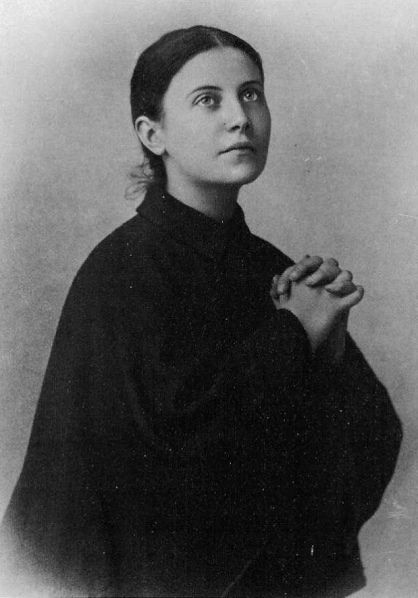
I’ve put a small synopsis of the Fátima event on the website, a few months ago. Here’s a memory of little Jacinta that her cousin Lúcia (both pictured) put into the popular book Fatima in Lúcia’s own words:

“Jacinta took this matter of making sacrifices for the conversion of sinners so much to heart, that she never let a single opportunity escape her. There were two families in Moita whose children used to go round begging from door to door. We met them one day, as we were going along with our sheep. As soon as she saw them, Jacinta said to us:
‘Let’s give our lunch to those poor children, for the conversion of sinners.’
And she ran to take it to them. That afternoon, she told me she was hungry. There were holm-oaks and oak trees nearby. The acorns were still quite green. However, I told her we could eat them. Francisco climbed up a holm-oak to fill his pockets, but Jacinta remembered that we could eat the ones on the oak trees instead, and thus make a sacrifice by eating the bitter kind. So it was there, that afternoon, that we enjoyed this delicious repast! Jacinta made this one of her usual sacrifices, and often picked the acorns off the oaks or the olives off the trees.

One day I said to her:
‘Jacinta, don’t eat that; it’s too bitter!’
‘But it’s because it’s bitter that I’m eating it, for the conversion
of sinners.'”

Fr. Louis Kondor SVD (ed.), Fátima in Lúcia’s own words, 16th edition, 2007.

The Way, the Truth and the Life (Sunday V of Easter)

When we say that God is Love, what do we Christians actually mean? We don’t mean some mushy sentiment of love that can last for a day, or a year, or a few years. We mean an intentional and self-giving love, such as the ones many of us hopefully have found in marriage. Such a sacrificial love changes the life of the lover, making that life into a life that is not lived for itself but is given for others. Parents know this well; they usually live for their children.

Such an unselfish love as this the people of this world do not generally appreciate, and as S. Peter says in our second reading today unselfish love becomes a living stone that is rejected by men… but chosen by God, and so a foundation that can be built on securely (‘Draw near to [Christ]; He is the living antitype of that stone which men rejected, which God has chosen and prized; you too must be built up on Him, stones that live and breathe, into a spiritual fabric; you must be a holy priesthood, to offer up that spiritual sacrifice which God accepts through Jesus Christ.’ – 1 Peter, 2: 4-5). This road of unselfish love is not an easy road to walk upon. We have to give up very much – even our own selves – for it.

Any community life involves some self-sacrifice for the sake of harmony. In the very building block of society – the family – this is crucial. And the very rulers of the family – the father and the mother – give up so very much, especially when the family is rather larger than we are used to these days. And science tells us that the very body of the mother changes as her family grows, in order that she may better care for her many children. True love changes us, it makes us better, it makes us more god-like. But, again, it’s not an easy road and, when struggled for, it makes men out of boys and women out of girls.

“‘Do not let your heart be distressed; as you have faith in God, have faith in Me. There are many dwelling-places in My Father’s house; otherwise, should I have said to you, I am going away to prepare a home for you? And though I do go away, to prepare you a home, I am coming back; and then I will take you to Myself, so that you too may be where I am. And now you know where it is I am going; and you know the way there.’ Thomas said to Him, ‘But, Lord, we do not know where Thou art going; how are we to know the way there?’ Jesus said to him, ‘I AM the way; I AM truth and life; nobody can come to the Father, except through Me. If you had learned to recognise Me, you would have learned to recognise My Father too. From now onwards you are to recognise Him; you have seen Him.’ At this, Philip said to Him, ‘Lord, let us see the Father; that is all we ask.’ ‘What, Philip,’ Jesus said to him, ‘here am I, Who have been all this while in your company; hast thou not learned to recognise Me yet? Whoever has seen Me, has seen the Father; what dost thou mean by saying, Let us see the Father?’ Do you not believe that I am in the Father, and the Father is in Me? The words I speak to you are not My own words; and the Father, Who dwells continually in Me, achieves in Me His own acts of power. If you cannot trust My word, when I tell you that I am in the Father, and the Father is in Me, let these powerful acts themselves be My warrant. Believe Me when I tell you this; the man who has learned to believe in Me will be able to do what I do; nay, he will be able to do greater things yet.”

Gospel of S. John, 14: 1-12 [link]

In this gospel reading, the Lord says that He is going to prepare a place for His many, many children. How is He going? On Good Friday, through the Cross. He says He will come back to fetch us, so we can be where He is. How will He draw us? Oh dear… for most of us, it will be through prolonged illness and death. We must unite our sufferings to His. He says that He is the Way, the Truth and the Life. If we are to follow this Way, we are to take up our daily crosses and follow patiently, faithfully, no matter how difficult it sometimes becomes. For as He goes on to say, Nobody can come to the Father except through Him. Nobody gets to heaven who cannot love as Christ loves, who cannot know and understand Christ. And if we succeed in this endeavour to know Christ, as did the greatest of the men and women of the Church (whom we call Saints), then as He says we shall perform the same works as He does, and even greater works.

This ideal of love and of lives lived for others begins with the family, which is why the diabolical attacks on Christians in our own times have all been primarily aimed at the family, the casualties being marriage and family life, with broken families, single-parent families, the inability to form life-long commitments, the moral miseducation and confusion of children and young people, etc. If we are to recover from all that as a society, we shall only do it by returning to Christ and His Gospel.


The first reading this weekend gives us the story of the foundation of the diaconate, and these days the first thing we think of when we hear of the diaconate or the deacons is the permanent diaconate that was established soon after the Council in the ‘60s. We are in our parishes indeed blessed with the ministry of Roger, our deacon in Mablethorpe.

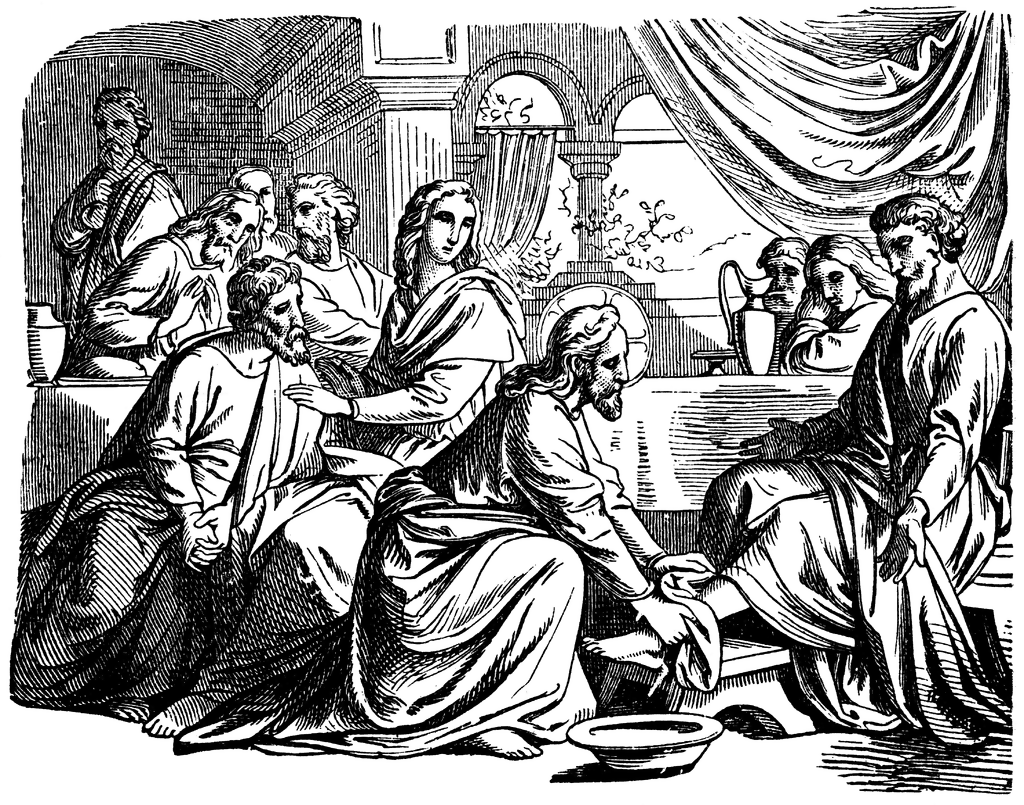
But we must not forget that every bishop and priest was first ordained a deacon, and that some bishops still wear the deacon’s dalmatic when they officiate at (pontifical) high Masses. The deacon in ancient days was a servant, and the appointment of the deacons in our reading today should remind us at once of the episode at the Last Supper, when Christ washed the feet of His Apostles, and mandated that His ministerial priesthood be a government of service to the Church.

In order that the priests of the early church could be free to preach, teach and proclaim the Gospel, they shared out their responsibility of care and service to these seven good men. They did not give up this responsibility, for they could not. It is tied up to their being, as it is to the being of the priests of the Church today, acting as fathers of the greater family of the Church, and ideally demonstrating a self-sacrificial love. A love akin to the Love that hung upon the Cross.

“At this time, as the number of the disciples increased, complaints were brought against those who spoke Hebrew by those who spoke Greek; their widows, they said, were neglected in the daily administration of relief. So the Twelve called together the general body of the disciples, and said, ‘It is too much that we should have to forgo preaching God’s word, and bestow our care upon tables. Come then, brethren, you must find among you seven men who are well spoken of, full of the Holy Spirit and of wisdom, for us to put in charge of this business, while we devote ourselves to prayer, and to the ministry of preaching.’ This advice found favour with all the assembly; and they chose Stephen, a man who was full of faith and of the Holy Spirit, Philip, Prochorus, Nicanor, Timon, Parmenas, and Nicolas, who was a proselyte from Antioch. These they presented to the Apostles, who laid their hands on them with prayer.”

Acts of the Apostles, 6: 1-6 [link]

Picture post: the Holy Father Pius XII (1939-1958)

This good and holy man guided the Church through the turmoil of the second World War. Much careful guidance he has left us, for example in his letter of the sacred liturgy, Mediator Dei. Some excerpts…

“It is unquestionably the fundamental duty of man to orientate his person and his life towards God. ‘For He it is to whom we must first be bound, as to an unfailing principle; to whom even our free choice must be directed as to an ultimate objective. It is He, too, whom we lose when carelessly we sin. It is He whom we must recover by our faith and trust.’ (S. Thomas Aquinas) But man turns properly to God when he acknowledges His Supreme majesty and supreme authority; when he accepts divinely revealed truths with a submissive mind; when he scrupulously obeys divine law, centering in God his every act and aspiration; when he accords, in short, due worship to the One True God by practicing the virtue of religion.

“This duty is incumbent, first of all, on men as individuals. But it also binds the whole community of human beings, grouped together by mutual social ties: mankind, too, depends on the sovereign authority of God.”

Pius XII, Mediator Dei, #13-14

The worship rendered by the Church to God must be, in its entirety, interior as well as exterior. It is exterior because the nature of man as a composite of body and soul requires it to be so. Likewise, because divine Providence has disposed that ‘while we recognize God visibly, we may be drawn by Him to love of things unseen.’ (Roman Missal) Every impulse of the human heart, besides, expresses itself naturally through the senses; and the worship of God, being the concern not merely of individuals but of the whole community of mankind, must therefore be social as well. This obviously it cannot be unless religious activity is also organized and manifested outwardly. Exterior worship, finally, reveals and emphasizes the unity of the mystical Body, feeds new fuel to its holy zeal, fortifies its energy, intensifies its action day by day: ‘for although the ceremonies themselves can claim no perfection or sanctity in their won right, they are, nevertheless, the outward acts of religion, designed to rouse the heart, like signals of a sort, to veneration of the sacred realities, and to raise the mind to meditation on the supernatural. They serve to foster piety, to kindle the flame of charity, to increase our faith and deepen our devotion. They provide instruction for simple folk, decoration for divine worship, continuity of religious practice. They make it possible to tell genuine Christians from their false or heretical counterparts.’ (Giovanni Cardinal Bona, De divina psalmodia)

But the chief element of divine worship must be interior. For we must always live in Christ and give ourselves to Him completely, so that in Him, with Him and through Him the heavenly Father may be duly glorified. The sacred liturgy requires, however, that both of these elements be intimately linked with each another. This recommendation the liturgy itself is careful to repeat, as often as it prescribes an exterior act of worship. Thus we are urged, when there is question of fasting, for example, ‘to give interior effect to our outward observance.’ (Roman Missal)”

Pius XII, Mediator Dei, #23-24

The august sacrifice of the altar, then, is no mere empty commemoration of the passion and death of Jesus Christ, but a true and proper act of sacrifice, whereby the High Priest by an unbloody immolation offers Himself a most acceptable victim to the Eternal Father, as He did upon the cross. ‘It is one and the same victim; the same person now offers it by the ministry of His priests, who then offered Himself on the cross, the manner of offering alone being different.’ (Council of Trent)

“The priest is the same, Jesus Christ, whose sacred Person His minister represents. Now the minister, by reason of the sacerdotal consecration which he has received, is made like to the High Priest and possesses the power of performing actions in virtue of Christ’s very person. (S. Thomas Aquinas) Wherefore in his priestly activity he in a certain manner ‘lends his tongue, and gives his hand’ to Christ. (S. John Chrysostom)

“Likewise the victim is the same, namely, our divine Redeemer in His human nature with His true body and blood. The manner, however, in which Christ is offered is different. On the cross He completely offered Himself and all His sufferings to God, and the immolation of the victim was brought about by the bloody death, which He underwent of His free will. But on the altar, by reason of the glorified state of His human nature, ‘death shall have no more dominion over Him,’ (Romans 6: 9) and so the shedding of His blood is impossible; still, according to the plan of divine wisdom, the sacrifice of our Redeemer is shown forth in an admirable manner by external signs which are the symbols of His death. For by the ‘transubstantiation’ of bread into the body of Christ and of wine into His blood, His body and blood are both really present: now the eucharistic species under which He is present symbolize the actual separation of His body and blood. Thus the commemorative representation of His death, which actually took place on Calvary, is repeated in every sacrifice of the altar, seeing that Jesus Christ is symbolically shown by separate symbols to be in a state of victimhood.”

Pius XII, Mediator Dei, #68-69

The august sacrifice of the altar is, as it were, the supreme instrument whereby the merits won by the divine Redeemer upon the cross are distributed to the faithful: “as often as this commemorative sacrifice is offered, there is wrought the work of our Redemption.” (Roman Missal) This, however, so far from lessening the dignity of the actual sacrifice on Calvary, rather proclaims and renders more manifest its greatness and its necessity, as the Council of Trent declares. Its daily immolation reminds us that there is no salvation except in the cross of our Lord Jesus Christ (Galatians 6: 14) and that God Himself wishes that there should be a continuation of this sacrifice ‘from the rising of the sun till the going down thereof,’ (Malachy 1: 11) so that there may be no cessation of the hymn of praise and thanksgiving which man owes to God, seeing that he required His help continually and has need of the blood of the Redeemer to remit sin which challenges God’s justice.”

Pius XII, Mediator Dei, #79

“Now it is clear that the faithful offer the sacrifice by the hands of the priest from the fact that the minister at the altar, in offering a sacrifice in the name of all His members, represents Christ, the Head of the Mystical Body. Hence the whole Church can rightly be said to offer up the victim through Christ. But the conclusion that the people offer the sacrifice with the priest himself is not based on the fact that, being members of the Church no less than the priest himself, they perform a visible liturgical rite; for this is the privilege only of the minister who has been divinely appointed to this office: rather it is based on the fact that the people unite their hearts in praise, impetration, expiation and thanksgiving with prayers or intention of the priest, even of the High Priest himself, so that in the one and same offering of the victim and according to a visible sacerdotal rite, they may be presented to God the Father. It is obviously necessary that the external sacrificial rite should, of its very nature, signify the internal worship of the heart. Now the sacrifice of the New Law signifies that supreme worship by which the principal Offerer himself, who is Christ, and, in union with Him and through Him, all the members of the Mystical Body pay God the honour and reverence that are due to Him.”

Pius XII, Mediator Dei, #93

“Therefore, let us all enter into closest union with Christ and strive to lose ourselves, as it were, in His most holy soul and so be united to Him that we may have a share in those acts with which He adores the Blessed Trinity with a homage that is most acceptable, and by which He offers to the eternal Father supreme praise and thanks which find an harmonious echo throughout the heavens and the earth, according to the words of the prophet, ‘All ye works of the Lord, bless the Lord.’ (Daniel 3: 57) Finally, in union with these sentiments of Christ, let us ask for heavenly aid at that moment in which it is supremely fitting to pray for and obtain help in His name. For it is especially in virtue of these sentiments that we offer and immolate ourselves as a victim, saying, ‘make of us thy eternal offering.’ (Roman Missal)

“The divine Redeemer is ever repeating His pressing invitation, ‘Abide in Me.’ (John 15: 4) Now by the sacrament of the Eucharist, Christ remains in us and we in Him, and just as Christ, remaining in us, lives and works, so should we remain in Christ and live and work through Him.”

Pius XII, Mediator Dei, #127-128

Brothers, what must we do? (Sunday IV of Easter)

“What must we do?!” This is cry of the repentant, the penitent; the cry of the men in our first reading today who were duped by the Temple priests into forming a mob and calling for the death of Christ. S. Peter, who is himself not shy of acknowledging that he had denied Christ (three times, as the Lord had predicted), wants to draw these men to the same tears that he had discovered as he fled from the hall of judgement, and towards the same love and forgiveness that he received from the risen Christ.

“[Peter concluded] ‘…God, then, has raised up this Man, Jesus, from the dead; we are all witnesses of it. And now, exalted at God’s right hand, He has claimed from His Father His promise to bestow the Holy Spirit; and He has poured out that Spirit, as you can see and hear for yourselves. David never went up to heaven, and yet David has told us, The Lord said to my Master, Sit on My right hand, while I make thy enemies a footstool under thy feet. Let it be known, then, beyond doubt, to all the house of Israel, that God has made Him Master and Christ, this Jesus Whom you crucified.‘ When they heard this, their consciences were stung; and they asked Peter and his fellow apostles, ‘Brethren, what must we do?’ ‘Repent,’ Peter said to them, ‘and be baptized, every one of you, in the Name of Jesus Christ, to have your sins forgiven; then you will receive the gift of the Holy Spirit. This promise is for you and for your children, and for all those, however far away, whom the Lord our God calls to Himself.’ And he used many more words besides, urgently appealing to them; ‘Save yourselves,’ he said, ‘from this false-minded generation.’ So all those who had taken his words to heart were baptized, and about three thousand souls were won for the Lord that day.”

Acts of the Apostles, 2: 32-41 [link]

In the long and sordid history of antisemitism, we can learn about the many Christians who throughout our history condemned the Jewish nation as a whole for the torture and execution of Christ, and used this as a reason to persecute that nation. Against this behaviour, the teaching authority (or Magisterium) of the Church has always declared that it was not a handful of Jews led by the Temple authorities who obtained the Passion of Christ, but all of sinful mankind. So, if S. Peter is addressing a crowd of people in Jerusalem after the Pentecost event (in our reading), a crowd which may have included some of the malefactors on Good Friday, the Church addresses all of sinful mankind – all of us – mired in sin and rejection of God. And the Church says to all of us, You have obtained the suffering of the Lord… and by it you are now saved!

Such is the wisdom and the generosity of God. Forgive them, He had whispered from the cross, Forgive them for they know not what they do. And they didn’t. And we still don’t, when we commit the sins we do. A little harmless sin there, we say to ourselves, we’re not hurting anyone, it’s not as if we’ve killed somebody, is it? A little venial sin here, a little uncharity there. Nobody need even know. But He felt it on that cross, two thousand years ago. Oh the guilt of it! The modern world doesn’t like this guilt. They make fun of the Catholics, and the great work of schooling that our religious Sisters and others have done for so long. Their religion, they say, is all about guilt and feeling bad, not being able to enjoy life. But there must come a time when every one of them – and every one of us – is convicted of sin. A churchman like S. Peter may do it with an inspired outburst, a bishop possibly could, a priest in the confessional perhaps, an irate parent or grandparent more likely.

And it drops upon us with a crash. That little harmless sin may have caused misery to somebody; well to Christ, yes, but perhaps also to somebody we know, perhaps to ourselves. What are we to do, Peter? Repent! says the man who had to repent himself, who must have fallen at the feet of the Blessed Virgin on Good Friday and wept and said, I have betrayed your Son (three times, dear Mother). So let us repent, for it’s never too late to repent and save yourselves from a perverse generation (as the Apostle says in the reading above), a generation that sins and refuses to acknowledge it, that destroys the lives of men and women and pretends that evils like abortion, euthanasia, etc. are good things.


This Sunday is customarily called Good Shepherd Sunday, and we see that in the readings. The Church is not as inclusive as many people want it to be, I suppose. We often hear from churchmen who say it is. Open to all, they say. There’s this modern song that is sung in some church with a refrain that says, All are welcome, all are welcome, all are welcome in this place. It is a rather hopeful idea, that all people are of good will, and want the best for everybody else. Nobody can accuse us Catholics of not being hopeful. But as we can see in this reading, the sheepfold of the Church is enclosed by a fence with a gate, for the protection of the sheep, and there is a gate-keeper, probably the Successor of S. Peter. And there are predators (thieves and robbers) seeking to climb the fence.

“‘Believe me when I tell you this; the man who climbs into the sheep-fold by some other way, instead of entering by the door, comes to steal and to plunder: it is the shepherd, who tends the sheep, that comes in by the door. At his coming the keeper of the door throws it open, and the sheep are attentive to his voice; and so he calls by name the sheep which belong to him, and leads them out with him. When he has brought out all the sheep which belong to him, he walks in front of them, and the sheep follow him, recognising his voice. If a stranger comes, they run away from him instead of following him; they cannot recognise the voice of a stranger.’ This was a parable which Jesus told them; and they could not understand what He meant to say to them. So Jesus spoke to them again; ‘Believe Me,’ he said, ‘it is I Who am the door of the sheep-fold. Those others who have found their way in are all thieves and robbers; to these, the sheep paid no attention. I am the door; a man will find salvation if he makes his way in through Me; he will come and go at will, and find pasture. The thief only comes to steal, to slaughter, to destroy; I have come so that they may have life, and have it more abundantly.”

Gospel of S. John, 10: 1-10 [link]

We do have to be realistic, and if past popes have spoken about ‘enemies of the Church,’ that did not cease to be a reality after the magical days of the 1960s. If S. Peter warned Jerusalem about a perverse generation of worldly men in our first reading, the theme is reiterated throughout the NT, and the Good Shepherd of the gospel reading tells us that there are spiritual thieves and brigands. We know from the history of the Church the heretics and schismatics (often ordained priests) who have torn the Church apart, particularly in these our own lands. We may fault particular monarchs for the damage, but if they could not have their way with the Roman authority they had to find conniving priests to help them. Thieves and robbers for hire.

We Catholics are to be wily as serpents but gentle as doves, as Christ has said elsewhere, and we should seek to discern the spirits, as S. Ignatius of Loyola used to say. We should then be able to recognise the voice of the Master and distinguish it from the whisper of the serpent, as Christ says in this reading. If there truly are predators even within the sheepfold, and we have heard extraordinary stories of wicked priests and bishops in the last half-century, we should be vigilant and pray hard.

And we are not to worry, for the Good Shepherd is still about and He will bring good out of every evil.

“As in honour pledged,
by sure paths He leads me;
dark be the valley about my path,
hurt I fear none while He is with me;
Thy rod, Thy crook are my comfort
.”

Psalm 22(23) [link]

Picture post: the Holy Father Paul VI

Read his ‘Credo of the People of God,’ in his famous apostolic letter Solemni hac liturgia, given motu proprio. He lamented (in the 1960s) the uncontained desire for novelties among several influential Catholics, which was causing great danger (‘disturbance and perplexity’) to the Faithful, even challenging the very basics of the Catholic Faith such as the Sacrament of the Eucharist.

So he sought to make an act of faith on our behalf. This is the part about the Blessed Sacrament. The full version of the letter is here.

Christ cannot be thus present in this sacrament except by the change into His body of the reality itself of the bread and the change into His blood of the reality itself of the wine, leaving unchanged only the properties of the bread and wine which our senses perceive. This mysterious change is very appropriately called by the Church transubstantiation. Every theological explanation which seeks some understanding of this mystery must, in order to be in accord with Catholic faith, maintain that in the reality itself, independently of our mind, the bread and wine have ceased to exist after the Consecration, so that it is the adorable body and blood of the Lord Jesus that from then on are really before us under the sacramental species of bread and wine, as the Lord willed it, in order to give Himself to us as food and to associate us with the unity of His Mystical Body. The unique and indivisible existence of the Lord glorious in heaven is not multiplied, but is rendered present by the sacrament in the many places on earth where Mass is celebrated. And this existence remains present, after the sacrifice, in the Blessed Sacrament which is, in the tabernacle, the living heart of each of our churches. And it is our very sweet duty to honor and adore in the blessed Host which our eyes see, the Incarnate Word Whom they cannot see, and Who, without leaving heaven, is made present before us.”

Apostolic letter Solemni hac liturgia of the Holy Father Paul VI, June the 30th, 1968 [link]

Picture post: SS. Leo XIV

SS is a shortened Sua Sanctitas, which is of course Latin for His Holiness. Here below is a recent quote from the Holy Father, who is currently in the midst of a pastoral tour of Africa. He was overjoyed to visit Algeria, a modern state that in more ancient times contained the diocese of Hippo, whose bishop was the great S. Augustine.

“As early as last May, I had said that on my first journey, I would like to visit Africa. Several people immediately suggested Algeria because of Saint Augustine, as you know. I am indeed very happy to visit once again the land of Saint Augustine. He represents a very important bridge in interreligious dialogue, and he is deeply loved in his homeland, as we will see. Having the opportunity to visit the places associated with the life of Saint Augustine, where he was bishop in the city of Hippo, now known as Annaba, is truly a blessing for me personally.”

Greeting to journalists on the flight to Algiers, the 13th of April, 2026 [link]

The road to Emmaus (Sunday III of Easter)

We are now well into the season of Easter, with the Resurrection appearances in the gospel readings and stories from the exploits of the Apostles after their marvellous Pentecost in the first readings. Today we find an early preaching of S. Peter from Acts, where he speaks of the eternal Second Person of the Blessed Trinity Who had appeared before the Jewish authorities and before the Roman governor as a man, and Peter is here talking about a pre-appearance of Christ in the book of psalms, and he quotes the psalm we also have today as our responsorial psalm (15).

“‘Men of Israel, listen to this. Jesus of Nazareth was a Man duly accredited to you from God; such were the miracles and wonders and signs which God did through Him in your midst, as you yourselves well know. This Man you have put to death; by God’s fixed design and foreknowledge, He was betrayed to you, and you, through the hands of sinful men, have cruelly murdered Him. But God raised Him up again, releasing Him from the pangs of death; it was impossible that death should have the mastery over Him. It is in His person that David says, Always I can keep the Lord within sight; always He is at my right hand, to make me stand firm. So there is gladness in my heart, and rejoicing on my lips; my body, too, shall rest in confidence that Thou wilt not leave my soul in the place of death, or allow Thy faithful servant to see corruption. Thou hast shewn me the way of life; Thou wilt make me full of gladness in thy presence. My brethren, I can say this to you about the patriarch David without fear of contradiction, that he did die, and was buried, and his tomb is among us to this day. But he was a prophet, and he knew God had promised him on oath that he would set the sons of his body upon his throne; it was of the Christ he said, foreseeing His Resurrection, that He was not left in the place of death, and that His body did not see corruption. God, then, has raised up this Man, Jesus, from the dead; we are all witnesses of it. And now, exalted at God’s right hand, He has claimed from His Father His promise to bestow the Holy Spirit; and He has poured out that Spirit, as you can see and hear for yourselves.”

Acts of the Apostles, 2: 22-33 [link]

Peter’s intent is to bring the men who as a mob had condemned Christ to the Romans, to repentance, but his point in this reading today is to demonstrate that death could have no hold upon Christ. That the sins of mankind had brought immense suffering to our Lord, which He had borne patiently and to its extreme. But that death could not conquer the Lord of Life Himself. We are witnesses, Peter says, we are witnesses that Christ was returned to life and now sits on the right hand of the great Power, and it is His spirit that is now powering the newly-born and extraordinary courage of the Apostles, who had a moment before been hiding away for fear of the Temple priests.

Once again, these stories are meant to teach and inspire the Church of every era. How bold should we be in our own time? We’re hearing all the time now about the Bishop’s mission plan, and I shall invite you to find a copy if you haven’t got one already. We too can forever be hiding away in fear of the present situation in our society, the present social system that despises more and more the Christian religion. Along with the fathers of our Christian nation, and particularly around this time of the feast day of S. George (Thursday coming), let us repeat in prayer the refrain of our psalm today: Show us, Lord, the path of life… and then help us to show it to our family members, our friends, those whom we love and whom we want to be removed from paths of destruction and brought to the same joy we share in the Way of the Lord Jesus.

Our long gospel reading is about the two disciples wandering away from Jerusalem, sorrowful but again not that sorrowful. Sorrowful because of the horror of Good Friday, not so sorrowful because S. Mary Magdalene and the other ladies have told them that the Body was not in the tomb and there were angels and things, and the Lord may not be as dead as they thought He was. That half sorrow, half joy is often ours as we see the state of the Church in our countries these days and perhaps remember what she once was.

But Christ is walking with us on the way, and He has good news for us. We shall try to retain His presence among us with the words of the two disciples (below): ‘Stay with us, it is towards evening, and it is far on in the day…’ He will teach us more about Himself, He will help us rebuild and restore.

“Then He said to them, ‘Too slow of wit, too dull of heart, to believe all those sayings of the prophets! Was it not to be expected that the Christ should undergo these sufferings, and enter so into His glory?’ Then, going back to Moses and the whole line of the prophets, He began to interpret the words used of Himself by all the scriptures. And now they were drawing near the village to which they were walking, and He made as if to go on further; but they pressed Him, ‘Stay with us,’ they said; ‘it is towards evening, and it is far on in the day.’ So He went in to stay with them. And then, when He sat down at table with them, He took bread, and blessed, and broke it, and offered it to them; whereupon their eyes were opened, and they recognised Him; and with that, He disappeared from their sight. And they said to one another, ‘Were not our hearts burning within us when He spoke to us on the road, and when He made the scriptures plain to us?'”

The Gospel of S. Luke, 24: 25-32 [link]

So… the two disciples at Emmaus found Christ in the Breaking of the Bread. And so shall we, if we take His word for it. He had said at the end of the gospel of S. Matthew that He would be with us always, yes, to the very end of the age. How would He manage that, for He was determined to ascend and return to His Father? There is a mystery there, and that mystery we Catholics call the Blessed Sacrament, the very presence of the Holy One in the heart of our churches, within us, around us.

Saint Luke left us two writings: his gospel, and his Acts of the Apostles. In both, he speaks of the ‘Breaking of the Bread,’ and it seems obvious to me that he means the Holy Eucharist. In our gospel story today, he tells us that Cleopas and his friend kept the mysterious Stranger over. Why did they? He had been preaching to them from the Hebrew Bible all the way from Jerusalem, opening to their intellects the oracles of the prophets. They were discovering Him anew, and they wanted to know more. But true religion is not about letters in a book – readings and homily only go so far. True religion is about communion with a Person.

After the Word comes the Eucharist. When we have found out about Christ from many sources – by study of Scripture and tradition – we search for the actual person of Christ, and in the Mass and at Holy Communion He comes to find us. 

Belief in God in the modern world

Following on from our readings this last Sunday, which were all about believing, and through belief in Christ acquiring eternal life. But of course we know that atheistic socialism has destroyed souls across multiple generations. So, what does the Church say about that? Here, from the documents of the Second Vatican Council…

Modern atheism often takes on a systematic expression which, in addition to other causes, stretches the desires for human independence to such a point that it poses difficulties against any kind of dependence on God. Those who profess atheism of this sort maintain that it gives man freedom to be an end unto himself, the sole artisan and creator of his own history. They claim that this freedom cannot be reconciled with the affirmation of a Lord Who is author and purpose of all things, or at least that this freedom makes such an affirmation altogether superfluous. Favouring this doctrine can be the sense of power which modern technical progress generates in man.

“Not to be overlooked among the forms of modern atheism is that which anticipates the liberation of man especially through his economic and social emancipation. This form argues that by its nature religion thwarts this liberation by arousing man’s hope for a deceptive future life, thereby diverting him from the constructing of the earthly city. Consequently when the proponents of this doctrine gain governmental power they vigourously fight against religion, and promote atheism by using, especially in the education of youth, those means of pressure which public power has at its disposal.

“In her loyal devotion to God and men, the Church has already repudiated and cannot cease repudiating, sorrowfully but as firmly as possible, those poisonous doctrines and actions which contradict reason and the common experience of humanity, and dethrone man from his native excellence.

“Still, she strives to detect in the atheistic mind the hidden causes for the denial of God; conscious of how weighty are the questions which atheism raises, and motivated by love for all men, she believes these questions ought to be examined seriously and more profoundly.

The Church holds that the recognition of God is in no way hostile to man’s dignity, since this dignity is rooted and perfected in God. For man was made an intelligent and free member of society by God Who created him, but even more important, he is called as a son to commune with God and share in His happiness. She further teaches that a hope related to the end of time does not diminish the importance of intervening duties but rather undergirds the acquittal of them with fresh incentives. By contrast, when a divine instruction and the hope of life eternal are wanting, man’s dignity is most grievously lacerated, as current events often attest; riddles of life and death, of guilt and of grief go unsolved with the frequent result that men succumb to despair.

“Meanwhile every man remains to himself an unsolved puzzle, however obscurely he may perceive it. For on certain occasions no one can entirely escape the kind of self-questioning mentioned earlier, especially when life’s major events take place. To this questioning only God fully and most certainly provides an answer as He summons man to higher knowledge and humbler probing.

“The remedy which must be applied to atheism, however, is to be sought in a proper presentation of the Church’s teaching as well as in the integral life of the Church and her members. For it is the function of the Church, led by the Holy Spirit Who renews and purifies her ceaselessly, to make God the Father and His Incarnate Son present and in a sense visible. This result is achieved chiefly by the witness of a living and mature faith, namely, one trained to see difficulties clearly and to master them. Many martyrs have given luminous witness to this faith and continue to do so. This faith needs to prove its fruitfulness by penetrating the believer’s entire life, including its worldly dimensions, and by activating him toward justice and love, especially regarding the needy. What does the most reveal God’s presence, however, is the brotherly charity of the faithful who are united in spirit as they work together for the faith of the Gospel and who prove themselves a sign of unity.

“While rejecting atheism, root and branch, the Church sincerely professes that all men, believers and unbelievers alike, ought to work for the rightful betterment of this world in which all alike live; such an ideal cannot be realized, however, apart from sincere and prudent dialogue. Hence the Church protests against the distinction which some state authorities make between believers and unbelievers, with prejudice to the fundamental rights of the human person. The Church calls for the active liberty of believers to build up in this world God’s temple too. She courteously invites atheists to examine the Gospel of Christ with an open mind.

“Above all the Church knows that her message is in harmony with the most secret desires of the human heart when she champions the dignity of the human vocation, restoring hope to those who have already despaired of anything higher than their present lot. Far from diminishing man, her message brings to his development light, life and freedom. Apart from this message nothing will avail to fill up the heart of man: ‘Thou hast made us for Thyself,’ O Lord, ‘and our hearts are restless till they rest in Thee.'”

Pastoral Constitution Gaudium et Spes, of the Second Vatican Council (1965), 20-21 [link]

Picture post: S. Maksymilian Kolbe (1894-1941)

The Polish Franciscan Father, who became famous for the substitutive sacrifice of his life, when he offered himself to the German death machine at Auschwitz in the stead of a family man.

But before that end to his life, he was a conventual Franciscan (1910), and founder of the Militia Immaculatae (1917) against the freemasonic forces than boldly challenged the popes around the time of the first World War. From that title we realise his great devotion to the Immaculate, who had only just appeared to the little shepherd-children of Fátima, in Portugal. He tried his best to spread this devotion.

In so doing, he became an early master of evangelisation using the media, establishing a religious press in the 1920s, and a daily newspaper in the 1930s, and even a radio station (1938).

The Germans did not like him, but respected his German ancestry, and he was allowed to run a diminished ministry from his friary at Niepokalanów. He and his collaborators managed to save many Jewish lives. However, he was arrested with other friars in 1941 and transported to Auschwitz, where he was badly beaten, but continued a religious ministry to his fellow-inmates. And then came the sacrifice that has defined him to millions of Catholics today.

Learn more about Father Kolbe.

S. Maksymilian Kolbe, pray for us, and draw us to the Immaculata.

The Christian priesthood (Sunday II of Easter)

Our readings this weekend give us the some of the origins of the apostolic ministry of the bishops and priests. Let’s begin with the Gospel reading, which is a resurrection appearance given by S. John in his gospel.

“And now it was evening on the same day, the first day of the week; for fear of the Jews, the disciples had locked the doors of the room in which they had assembled; and Jesus came, and stood there in their midst; ‘Peace be upon you,’ He said. And with that, He shewed them His hands and His side. Thus the disciples saw the Lord, and were glad. Once more Jesus said to them, ‘Peace be upon you; I came upon an errand from My Father, and now I am sending you out in My turn.‘ With that, He breathed on them, and said to them, ‘Receive the Holy Spirit; when you forgive men’s sins, they are forgiven, when you hold them bound, they are held bound.‘”

Gospel of S. John, 20: 19-25 [link]

Notice the setting: the Apostles know Christ is risen and they are still (as John says) in fear of the Jews. What a hold this miserable reign of the Sadducean priesthood had on hearts of the men and women of Jerusalem… Into the misery of this steps Christ, and He comes now to give the authority that once belonged to the Temple priests to His own Apostles.

Remember how once He had said in the gospels that the pharisees and the scribes were sitting in the chair of Moses; He had said (Matthew 23) that His disciples were to do as these teachers taught, but not follow their actions, for many of them were unable to practise what they preached. In another place (Matthew 21), He had condemned the Temple priesthood for their corruption and had said that the Kingdom of God would be taken from them and given to others who would bring better results. The teaching authority is now to be transferred, and in our Gospel story today. He first identifies Himself, by demonstrating the scars of the crucifixion, with the God-man Who had died on Good Friday. He then says that He had been sent with the teaching authority of God the Father, and that He now intends to send these eleven men with that same teaching authority.

But it’s not only about teaching, is it? It is about moral government also, for He goes on to say, Those whose sins you forgive are forgiven, those whose sins you retain are retained. Here we see the beginnings of the Sacrament of reconciliation, aka. penance or confession. What is this authority, that the Apostles handed on to bishops, and bishops hand on still to priests? Are we to believe in it? John, whose gospel this is, certainly thinks we should, for he gives us another resurrection appearance immediately, to shore the idea up. See, hear, touch, and receive the ability to teach, to bless, to forgive…

“There was one of the tTwelve, Thomas, who is also called Didymus, who was not with them when Jesus came. And when the other disciples told him, ‘We have seen the Lord,’ he said to them, ‘Until I have seen the mark of the nails on His hands, until I have put my finger into the mark of the nails, and put my hand into His side, you will never make me believe.’ So, eight days afterwards, once more the disciples were within, and Thomas was with them; and the doors were locked. Jesus came and stood there in their midst; ‘Peace be upon you,’ He said. Then He said to Thomas, ‘Let me have thy finger; see, here are My hands. Let me have thy hand; put it into My side. Cease thy doubting, and believe.’ Thomas answered, ‘Thou art my Lord and my God.’ And Jesus said to him, ‘Thou hast learned to believe, Thomas, because thou hast seen Me. Blessed are those who have not seen, and yet have learned to believe.'”

Gospel of S. John, 20: 24-29 [link]

The Apostle S. Thomas wasn’t there the first time, and Thomas is a bit of a scientist, as we all like to think we are these days. I won’t believe any of it, he says, until I’ve seen the Man myself felt those hole made by those abominable nails in His hands. And Christ comes around again to find Thomas. Thomas, Thomas, do you believe? You believe because you have seen, because you have touched. Blessed are those men and women living in 2026 who will not have seen, heard, touched, but somehow believe.

What is the effect of this new authority that the eleven Apostles have, that overcomes the authority the Temple priests used to have? We see a little of it in our first reading from Acts today, when we find that the order of nature submits to the Apostles now in the absence of the visible Christ, and miracles and signs abound and are noted.

“These [early Christians] occupied themselves continually with the Apostles’ teaching, their fellowship in the breaking of bread, and the fixed times of prayer, and every soul was struck with awe, so many were the wonders and signs performed by the Apostles in Jerusalem. All the faithful held together, and shared all they had, selling their possessions and their means of livelihood, so as to distribute to all, as each had need. They persevered with one accord, day by day, in the Temple worship, and, as they broke bread in this house or that, took their share of food with gladness and simplicity of heart, praising God, and winning favour with all the people. And each day the Lord added to their fellowship others that were to be saved.”

Acts of the Apostles, 2: 42-47 [link]

And we hear again in the second reading about a greater miracle than physical healings – and this echoes the exchange between Christ and S. Thomas – the attachment to Christ in the midst of great suffering (for the early Christian communities suffered greatly under numerous Roman governments) of souls who had never seen or heard Him.

“Blessed be that God, that Father of our Lord Jesus Christ, Who in His great mercy has begotten us anew, making hope live in us through the resurrection of Jesus Christ from the dead. We are to share an inheritance that is incorruptible, inviolable, unfading. It is stored up for you in heaven; and meanwhile, through your faith, the power of God affords you safe conduct till you reach it, this salvation which is waiting to be disclosed at the end of time. Then you will be triumphant. What if you have trials of many sorts to sadden your hearts in this brief interval? That must needs happen, so that you may give proof of your faith, a much more precious thing than the gold we test by fire; proof which will bring you praise, and glory, and honour when Jesus Christ is revealed. You never saw Him, but you learned to love Him; you may not see Him even now, but you believe in Him; and, if you continue to believe in Him, how you will triumph! How ineffable your joy will be, and how sublime, when you reap the fruit of that faith of yours, the salvation of your souls!”

First letter of the Apostle S. Peter, 1: 3-9 [link]

This second Sunday of Easter – Low Sunday, and these days Divine Mercy Sunday – is sometimes called Quasimodo Sunday, because the first words of the Mass (from the first letter of S. Peter) are ‘Like newborn infants, you must long…’ and in the Latin that is ‘Quasi modo geniti infantes concupiscite…’

“You must put aside, then, every trace of ill-will and deceitfulness, your affectations, the grudges you bore, and all the slanderous talk; you are children new-born, and all your craving must be for the soul’s pure milk, that will nurture you into salvation, once you have tasted, as you have surely tasted, the goodness of the Lord.”

First letter of the Apostle S. Peter, 2: 2 [link]

But let’s not look patronisingly at our new Catholics and neophytes and say to them, You newborn infants, etc., as far advanced in religion. I think there are many among us who will recognise that we are all of us like young infants before the Holy One, and that spiritual maturity though much desired is not easily had. We could say that the truly spiritually mature are the Saints of God, and perhaps the living saints who walk among us, but about whom we do not always know about.

We must seek maturity, but also remember to always be like little children before our Father God. So, back to the Quasimodo line of the Mass… S. Peter would have us yearn for the pure and spiritual feeding – milk, he says – from God, so that in the providence of the Holy One, we all of us – Catholics of seventy years, of fifty years, of ten years, or perhaps of a week… so that we may all of us may grow spiritually to salvation and embrace the eternal life promised to us.

The prayer of Nehemiah – seeking Divine Mercy

Nechemyahu son of Helchiyah was a Jewish governor, sent by the Persian emperor to help rebuild and secure Jerusalem, a little over seventy years after the neo-Babylonians had viciously flattened the Holy City and carried her strength away into exile. Nechemyah had heard of how badly the small community of Jews, who had been permitted by the Persians to return to Juda and rebuild, were faring. Let’s have a look at the first chapter of the book of Nechemyah (aka. II Esdras in old Catholic Bibles), which you will find in your Bibles. The book goes on to describe how the governor was successful and helped Jerusalem to arrive at a new prosperity in the following years. But in this post, I want to focus on his heartfelt prayer to the Holy One to restore His people after their sins had resulted in the calamity mentioned above.

“These are the memoirs of Nehemias, son of Helchias. One day in the month of Casleu, the year, the twentieth of Artaxerxes, in the royal city of Susa, I was visited by a kinsman of mine, Hanani, who brought with him certain travellers just come from Juda. So I asked them how it went with Jerusalem, and with the Jews still left there, survivors of the exiles who returned. ‘Survivors there are,’ said they, ‘in various parts of the province, left over from the days of the exile. But they are in great distress, and count for nothing; Jerusalem is but broken walls and charred gates.’ For a long time after hearing this news I kept my house, all tears and lament; I fasted, and sought audience with the God of heaven in prayer.”

The Church is not what she once was. We should be able to compare the situation of the forlorn Hebrews of Nechemyah’s time, and consider how they berated themselves for ignoring the warnings of their prophets. In our days, after decades of dissipation, the Latin Church in the West has succeeded in auto-demolishing her strength. We hear how a small fraction of the baptised can be bothered to attend Mass at all, let alone be part of the local community. The stories of the foolishness of the Hebrews in the last years of the monarchy of the House of David are often our own stories. Survivors there are, living in the ruins of the grand designs of Catholic men and women of the past, visible in the great churches that we gape at today, wondering at the ingenuity that built them. Can we build as they did? Can we rebuild? Ingenuity! Faith it was that built those walls! Let us pray in repentance as Nechemyah the governor prayed, for the foolishness of our forebears and for our own foolishness…

“‘Mercy,’ I cried, ‘Thou God of heaven, the strong, the great, the terrible! Thou Who ever keepest Thy gracious promises to the souls that love Thee, and are true to Thy commandments! Let Thy ears be attentive, Thy eyes watching still; listen to the prayer I offer Thee now, Thy servant, interceding day and night for my fellow-servants, the men of Israel. Listen to the confession I make of our sins; they, the men of Israel, have sinned, I and my father’s race have sinned; led away by false aims, we have neglected decree and observance and award of Thine, enjoined on Thy servant Moses. But do not forget that this servant of Thine, Moses, had a promise of Thee too. Far and wide though Thou shouldst scatter us among the nations, when we disobeyed Thee, yet if we came back to Thee, if we kept Thy bidding in mind and performed it, then wouldst Thou reunite us, though the furthest corner of earth were our place of banishment, and bring us home to that city which is the chosen shrine of Thy Name. Are they not Thy own servants, Thy own people, won for Thee by Thy great deeds, by Thy constraining power? Let not Thy ears be deaf, Lord, I beseech Thee, to Thy servant’s prayer, to the prayer of all these servants of Thine who love to hold Thy Name in reverence. Speed Thy servant well this day, and win for him the pity of a human heart.’

“It was of the king I spoke; I was the royal cup-bearer.”

We are still people who live in this world, even if we do not belong to this world (for our home is in heaven). As people in this world – as Nechemyah was the cup-bearer, and so had the ear of the Persian emperor and could intercede for his people – we are practical and we know or we must find ways to rebuild, to get earthly powers to assist us in our work.

We must establish a mission, we must work with the Bishops. We are not building heaven on earth. We are building lifts and escalators, to elevate people from the wickedness around them and onwards and upwards, towards the God Who loves them. Let us return to the Commandments, by keeping which we show our love for Christ. Teach the commandments to family and friends, and intercede as priests day and night for them. This is the New Evangelisation. It starts with us, and it goes out towards others. The God Who watches us destroy ourselves is ever ready to restore and rebuild us, if we are willing.

That’s what Divine Mercy Sunday is all about – restoration and renewal. For are we not servants of the Holy One, His own people, won for Him by the extraordinary sacrifice on the Cross?

So, storm heaven. The Church is not yet finished. Let us mend the walls.

Nehemiah is seen as a Saint by the Catholic Church (memorial day July the 13th, if I’m not mistaken). S. Nehemiah, pray for us!

And the King returns (Palm Sunday of the Passion of OLJC)

Most of us have had the Holy Week experience every year for all of our lives. Excepting our new Catholics, of course, and those of us coming back to the practice of the Faith after years. But all of us can gain something from the liturgy of these days, and that simply by entering into the drama of it, standing as spectators or indeed jumping headlong into the stories, while the familiar scenes play out around us.

What may impress itself upon us throughout is perhaps the grave demeanour of the God-man: the Ancient of Days walking in the fragility of our mortal existence, facing down the pompous and hypocritical religiosity of His time and solemnly submitting Himself to His fate. This is a fate that He has chosen for Himself however, for at no time does it seem as if He is taken by surprise or unprepared for the horrors of it.

As He begins His torment in the Garden of Gethsamene, He has you and me in mind; as He allows men to lay hands upon Him at last, He is determined for His sacrifice, again for our sakes – for He will redeem us from sin and death. As He hauls the cross upon His exhausted shoulders, His thoughts are for His Church, for His Christians. If any of us is married and is prepared to give everything for the sake of our beloved spouse, we understand at least in part the depth of this furnace of Love that is the Sacred Heart of the Lord. This intense, self-sacrificial love is attractive, and we want to be a part of it. We want to love like He loves.

But it hurts, and we know from experience how love can hurt – for love should hurt – but in the midst of the pain we find the heart of Christ. And if we persevere, in the words of S. Paul, we shall be like Him, for we shall see Him as He is.

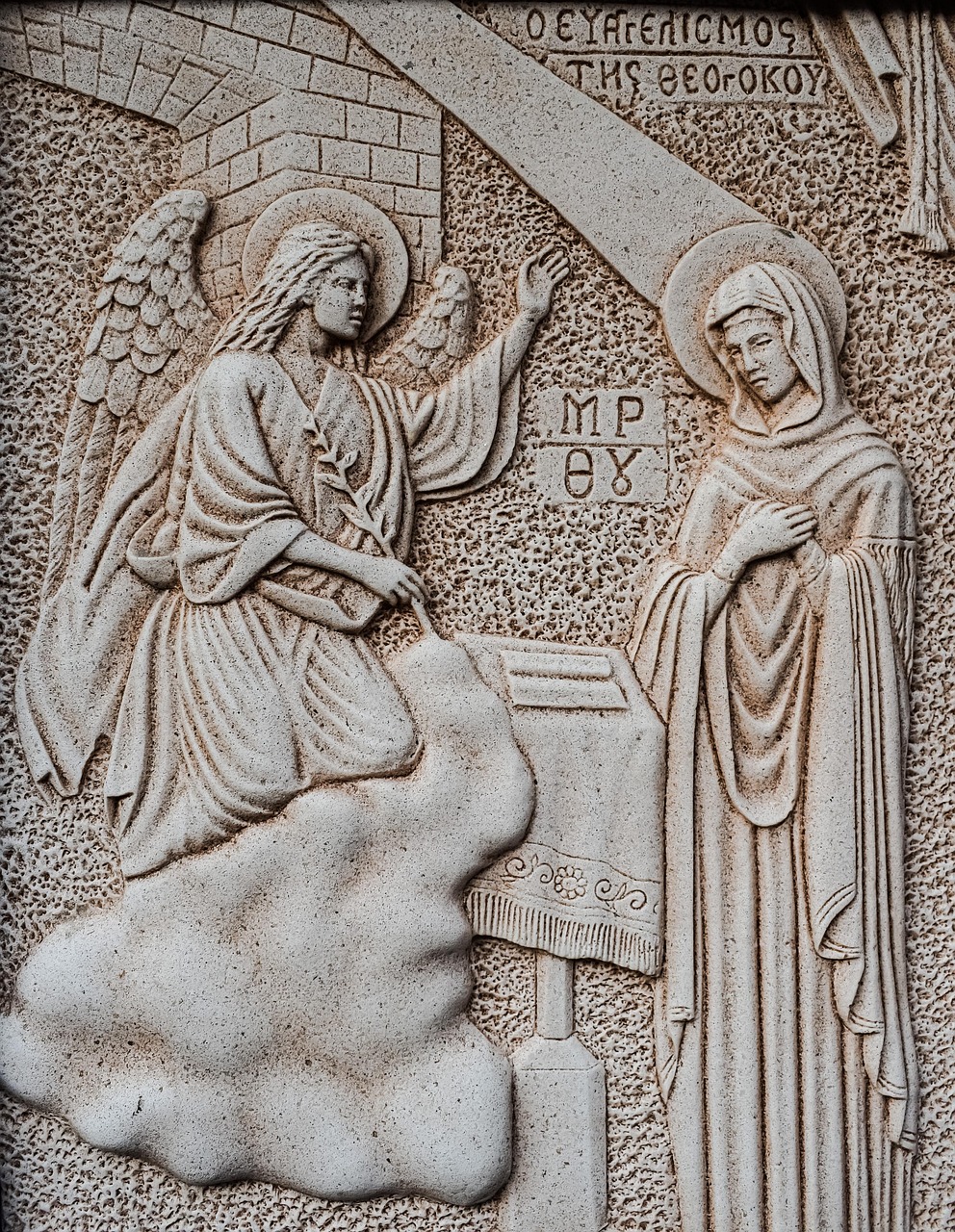
Hail, Full-of-Grace (Annunciation day)

Image by Dimitris Vetsikas from Pixabay

A very significant feast day today, now precisely nine months before Christmas Day. I thought I’d put out a few capsules of wisdom from the Saints of the Church, with the assistance of Biblia Clerus

“To the virgin Mary was sent, not any one of the angels, but the archangel Gabriel; for upon this service it was meet that the highest angel should come, as being the bearer of the highest of all tidings. He is therefore marked by a particular name, to signify what was his effectual part in the work. For Gabriel is interpreted ‘the strength of God.’ By the strength of God then was He to be announced Who was coming as the God of strength, and mighty in battle, to put down the powers of the air.”

Holy Father S. Gregory the Great

“Scripture has rightly mentioned that she was espoused, as well as a virgin, a virgin, that she might appear free from all connection with man; espoused, that she might not be branded with the disgrace of sullied virginity, whose swelling womb seemed to bear evident marks of her corruption. But the Lord had rather that men should cast a doubt upon His birth than upon His mother’s purity. He knew how tender is a virgin’s modesty, and how easily assailed the reputation of her chastity, nor did He think the credit of His birth was to be built up by His mother’s wrongs. It follows therefore, that the holy Mary’s virginity was of as untainted purity as it was also of unblemished reputation. Nor ought there, by an erroneous opinion, to be left the shadow of an excuse to living virgins, that the mother of our Lord even seemed to be evil spoken of. But what could be imputed to the Jews, or to Herod, if they should seen to have persecuted an adulterous offspring? And how could He Himself say, I came not to abolish the law, but to fulfill it, if He should seem to have had his beginning from a violation of the law, for the issue of an unmarried person is condemned by the law? Not to add that also greater credit is given to the words of Mary, and the cause of falsehood removed? For it might seem that unmarried becoming pregnant, she had wished to shade her guilt by a lie; but an espoused person has no reason for lying, since to women child-birth is the reward of wedlock, the grace of the marriage bed. Again, the virginity of Mary was meant to baffle the prince of the world, who, when he perceived her espoused to a man, could cast no suspicion on her offspring.”

The bishop S. Ambrose of Milan

“For God the almighty and merciful, Whose nature as goodness, Whose will is power, Whose work is mercy: as soon as the devil’s malignity killed us by the poison of his hatred, foretold at the very beginning of the world the remedy His piety had prepared for the restoration of us mortals: proclaiming to the serpent that the seed of the woman should come to crush the lifting of his baneful head by its power, signifying no doubt that Christ would come in the flesh, God and man, Who born of a Virgin should by His uncorrupt birth condemn the despoiler of the human stock. Thus in the whole and perfect nature of true man was true God born, complete in what was His own, complete in what was ours.”

Holy Father S. Leo the Great, sermon XXII on the Nativity

Hail, full of grace, the Lord is with thee; blessed art thou among women. (Lc 1,28)

Note that between the words ‘full of grace’ and ‘blessed art thou among women’ come the words ‘the Lord is with thee’; because the Lord Himself both keeps the fullness of grace inwardly, and works the blessing of fruitfulness (that is, holy operation) outwardly. Rightly, too, after the words ‘full of grace’ comes ‘the Lord is with thee’, because just as without God we can do and we have nothing, so also without him we can keep nothing we have. Therefore after grace it is necessary that the Lord be with us and keep what he alone has given. While he goes before us in giving grace, we are his co-workers in keeping it. He will not watch over us unless we ourselves watch with him. It is clear that our own diligence is needed, when he says to the Apostles:

How shall this be done, because I know not man. (Lc 1,34)

This means, ‘I am fully resolved not to know.’ She is called ‘of the desert’ because she was infertile, a virgin before, during and after giving birth. ‘Send forth,’ I repeat, ‘to the mountain’, to the excellence of the daughter of Sion, the Church which is the daughter of the heavenly Jerusalem.”

S. Anthony of Lisbon (aka. of Padua)

“Mary leaves everything to the Lord’s judgement. At Nazareth she gave over her will, immersing it in the will of God: “Here am I, the servant of the Lord; let it be with me according to your word” (Lc 1,38). And this continues to be her fundamental attitude. This is how she teaches us to pray: not by seeking to assert before God our own will and our own desires, however important they may be, however reasonable they might appear to us, but rather to bring them before Him and to let Him decide what He intends to do. From Mary we learn graciousness and readiness to help, but we also learn humility and generosity in accepting God’s will, in the confident conviction that, whatever it may be, it will be our, and my own, true good.”

Holy Father Benedict XVI, homily, 11-Sep-2006

Resurrection! (Sunday V of Lent)

We’re quite near now to Holy Week and Easter, and we can permit ourselves to look beyond the grimness of suffering and death to the glory of the resurrection beyond. There is always a light at the end of the tunnel with the Hebrew religion.

In the days of the prophet Ezekiel, all was darkness for the Israelite nation. Reduced from the heights of the united kingdom of Kings David and Solomon a few hundred years before to only the southern province of Judea now, and that only in a state of vassalage to the new power in Babylon, in Ezekiel’s own lifetime Judea was finally extinguished, Jerusalem reduced to ruins, and the people dispersed across the former Assyrian and the neo-Babylonian empire.

Is there any greater disaster, any deeper darkness possible for a people that proudly considered themselves the People of God, who remembered how their God had humiliated the power of Egypt in the days of Moses and given them possession of that beloved Land in the days of Joshua and the Judges? But Ezekiel with his prophetic vision can see the light at the end of the tunnel. In the prophecy of Ezekiel, the Holy One professes His continued love for His people, and in this reading we have today He declares His determination to restore that people.

“Then he told me, ‘Son of man, in these bones here thou seest the whole race of Israel. They are complaining that their very bones have withered away, that all hope is lost, they are dead men. It is for thee to prophesy, giving them this message from the Lord God: I mean to open your graves and revive you, my people; I mean to bring you home to the land of Israel. Will you doubt, then, the Lord’s power, when I open your graves and revive you? When I breathe my spirit into you, to give you life again, and bid you dwell at peace in your own land? What the Lord promises, the Lord performs; you will know that, he tells you, at last.'”

Prophecy of Ezekiel, 37, 11-14 [link]

And this becomes a magnificent bit of fuel for the messianic expectation that built up in the next six hundred or so years before the arrival of Christ. The restoration of the nation in the Jewish mind is always, always associated with the Land, hence the so-called ‘zionist’ movements of our own times. Ezekiel’s resurrection in this reading is accompanied by a restoration of the Land, and the messianic fulfilment of the Church equates this possession of the Land with the mystical union with God that is a foretaste in this life of the fuller union with Him that we call heaven. This possession of the human heart by God which Ezekiel mentions is also described in the second reading, where S. Paul associates it with a powerful belonging to God, whereby a sinful – and so a dead – body can be renewed and revivified by the inhabitation of that Holy Spirit of God.

“Those who live the life of nature cannot be acceptable to God; but you live the life of the spirit, not the life of nature; that is, if the Spirit of God dwells in you. A man cannot belong to Christ unless he has the Spirit of Christ. But if Christ lives in you, then although the body be a dead thing in virtue of our guilt, the spirit is a living thing, by virtue of our justification. And if the Spirit of Him Who raised up Jesus from the dead dwells in you, He Who raised up Jesus Christ from the dead will give life to your perishable bodies too, for the sake of His Spirit Who dwells in you.”

Letter of S. Paul to the Romans, 8: 8-11 [link]

Once more then, the theme of resurrection is had – the theme of a light burning in the darkness, and the darkness being unable to comprehend it – S. John’s synopsis of the life of Chris at the beginning of his gospel. The psalm that we have – one of the seven penitential psalms of Catholic tradition – is also a psalm of waiting for resurrection.

Out of the depths I cry to Thee, O Lord;
Master, listen to my voice;
let but Thy ears be attentive to the voice
that calls on Thee for pardon.
If Thou, Lord, wilt keep record of our iniquities,
Master, who has strength to bear it?
Ah, but with Thee there is forgiveness;
be Thy Name ever revered.
I wait for the Lord,
for His word of promise my soul waits;
patient my soul waits,
as ever watchman that looked for the day.
Patient as watchman at dawn,
for the Lord Israel waits,
the Lord with whom there is mercy,
with whom is abundant power to ransom.
He it is that will ransom Israel from all his iniquities.”

Psalm 129 (130) [link]

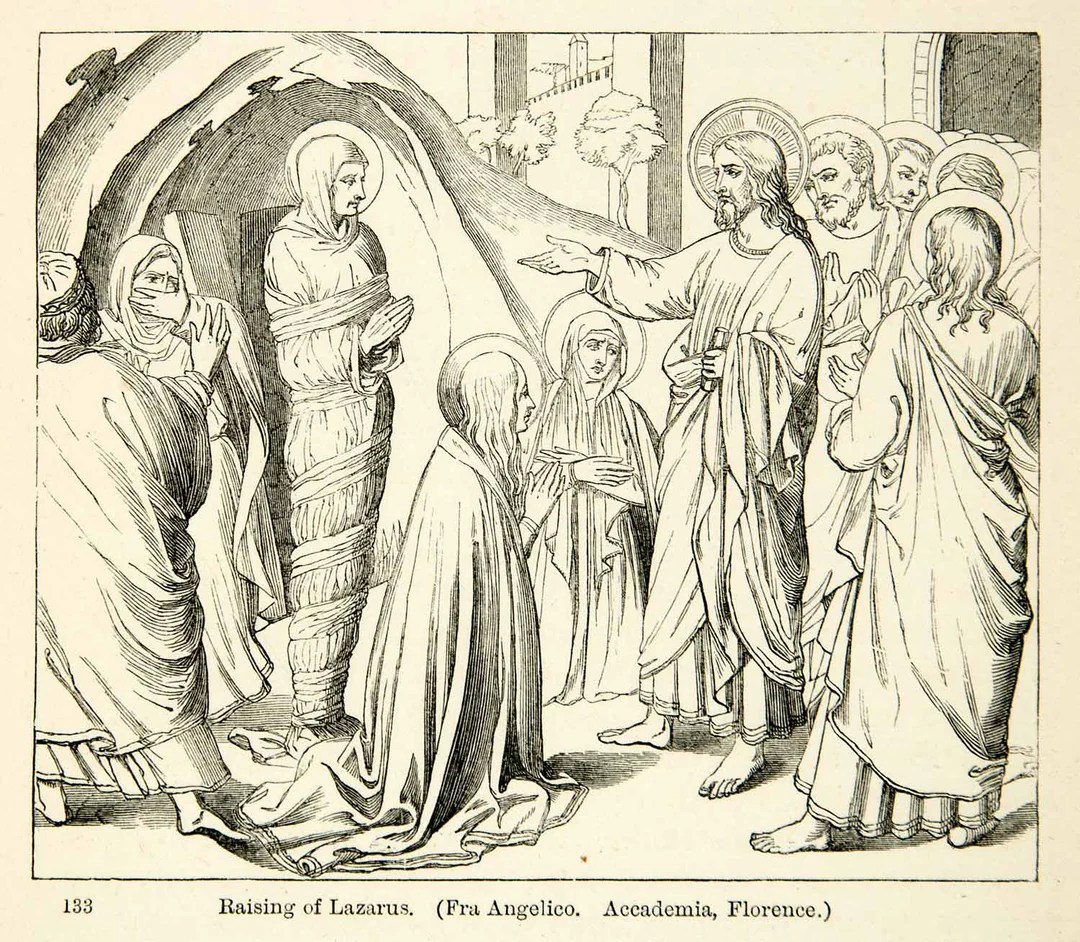
We could call it the psalm of Lazarus, for in our gospel story, this good friend of our Lord’s waits in the darkness of his tomb for life to return to him. As the psalm goes, he cries out to the Lord of Life out of the depths of the earth. We could call it our own psalm – the psalm of sinners – for many of us, trapped as we are in habits of sin, wait in the darkness and misery of slavery and cry out for a Saviour God, a Redeemer Who may bring light to the darkness, life to death. 


“…and so the Jews who were in the house with Mary, comforting her, when they saw how quickly she rose up and went out, followed her; ‘She has gone to the grave,’ they said, ‘to weep there.’ So Mary reached the place where Jesus was; and when she saw Him, she fell at His feet; ‘Lord,’ she said, ‘if Thou hadst been here, my brother would not have died.’ And Jesus, when He saw her in tears, and the tears of the Jews who accompanied her, sighed deeply, and distressed Himself over it; ‘Where have you buried him?’ He asked. ‘Lord,’ they said to Him, ‘come and see.’ Then Jesus wept. ‘See,’ said the Jews, ‘how He loved him;’ and some of them asked, ‘Could not He, Who opened the blind man’s eyes, have prevented this man’s death?’ So Jesus, once more sighing to Himself, came to the tomb; it was a cave, and a stone had been put over the mouth of it. ‘Take away the stone,’ Jesus told them. And Martha, the dead man’s sister, said to Him, ‘Lord, the air is foul by now; he has been four days dead.’ ‘Why,’ Jesus said to her, ‘have I not told thee that if thou hast faith, thou wilt see God glorified?’ So they took the stone away; and Jesus lifted His eyes to heaven, ‘Father,’ He said, ‘I thank thee for hearing My prayer. For myself, I know that Thou hearest me at all times, but I say this for the sake of the multitude which is standing round, that they may learn to believe it is Thou Who hast sent Me.’ And with that He cried in a loud voice, ‘Come out, Lazarus, to My side.’ Whereupon the dead man came out, his feet and hands tied with linen strips, and his face muffled in a veil. ‘Loose him,’ said Jesus, ‘and let him go free.'”

Gospel of S. John, 11: 31-44 [link]

I have heard many good priests speak about the purpose of our gospel stories as permitting us to enter into them and find as good friends the characters of these stories. We have three wonderful characters here: the dead man Lazarus, and his two sisters Martha and Mary. We know from other stories of the practicality of Martha and the mysticism of Mary, and even that comes across here, although both sisters say the same thing to Christ: if you had been here, our brother would not have died.

The long description of the death and resurrection of Lazarus and the sorrowful devotion of his sisters to their Friend, Whose presence they well knew could have prevented their brothers death – this story gives us much scope for our pursuit of Christ. Not only are many of us Lazaruses caught in the mire of our sins, still others of us are Marthas and Marys and have to endure watching family members and friends floundering in destructive lifestyles, when nothing that we can say or do seems to make any difference. If Christ would make His presence felt, our beloved would be saved from their afflictions.

But where is Christ in all of it? Is He four days away from bringing us relief, or four months, or four years? And is He keeping away a little longer for His own reasons, which we cannot see and so cannot understand. Or has He been here all along? In the story, He is certainly aware of His friends illness and death, and although a distance away is not quite absent. Our Lord in the end is not without feeling, His Sacred Heart is still very human indeed, He weeps for His friend and for the distress of his sisters and the others present.

He knows our misery and He will weep for it; and angels will say, See how much He loved them… and then He will move, and how He will move! And in the darkness of our hearts we shall hear Him say to us, Lazarus, here! Come on out! 

Faith and blindness (Sunday IV of Lent)

“…[the man born blind now seeing] answered [some of the Pharisees], ‘I have told you already, and you would not listen to me. Why must you hear it over again? Would you too become His disciples?’ Upon this, they covered him with abuse; ‘Keep His discipleship for thyself, we are disciples of Moses. We know for certain that God spoke to Moses; we know nothing of this Man, or whence He comes.’ ‘Why,’ the man answered, ‘here is matter for astonishment; here is a Man that comes you cannot tell whence, and He has opened my eyes. And yet we know for certain that God does not answer the prayers of sinners, it is only when a man is devout and does His will, that his prayer is answered. That a man should open the eyes of one born blind is something unheard of since the world began. No, if this man did not come from God, He would have no powers at all.’ ‘What,’ they answered, ‘are we to have lessons from thee, all steeped in sin from thy birth?’ And they cast him out from their presence. When Jesus heard that they had so cast him out, He went to find him, and asked him, ‘Dost thou believe in the Son of God?’ ‘Tell me Who He is, Lord,’ he answered, ‘so that I can believe in Him.’ ‘He is One Whom thou hast seen,’ Jesus told him. ‘It is He Who is speaking to thee.’ Then he said, ‘I do believe, Lord,’ and fell down to worship Him. Hereupon Jesus said, ‘I have come into this world so that a sentence may fall upon it, that those who are blind should see, and those who see should become blind.’ Some of the Pharisees heard this, such as were in His company, and they asked him, ‘Are we blind too?’ ‘If you were blind, Jesus told them, you would not be guilty. It is because you protest, We can see clearly, that you cannot be rid of your guilt.'”

Gospel of S. John, 9: 27-41 [link]

So… there are some who see who will lose sight with regard to Christ… With another one of S. John’s long readings from his gospel, this weekend we are given the story of the man who was blind from birth. In the gospels – and this is the key to that last speech of Christ above – blindness is usually associated with faith, and that is not a difficult connection to make. Until recently, we used to prayer for the Jewish community to come to faith in Christ, asking God to pull the veil of unbelief from over their eyes. Now that sentiment comes from that famous Jew, S. Paul, in one of his letters to the Corinthians.

In our more ecumenical times, when Catholic Missions are not what they were and we struggle to find politically correct ways to bring non-Christians to Christ, such a blindness is difficult to call out. But we must. And we must carefully work with the Bishop and his new Mission Plan and be bold, bolder than we have ever been for some time. For we live in a time of profound unbelief, when formerly Christians lands are not very Christian anymore, when un-Christian governments withdraw financial support from church properties, when people marvel when they are told that (say) twenty percent of a Catholic population goes to Mass regularly. And that would be in a modern Catholic country. Most people are happy to say that Christianity has had some good effect on Western culture – that is, a culture that makes no real sense without its vanishing Christian Church. And intelligent people will appear on television and say that they are culturally Christian, which I suppose means that they like the sound of church bells and would prefer to talk of ‘Christmas’ decorations rather than ‘winter holiday’ decorations. They want the tokens of a religious community their parents or grandparents belonged to, but will refuse to belong to that community themselves.

There is a very real blindness here, and thanks to the protracted secularisation of our countries (often from as far back as Victorian times, but with growing velocity since the 60s, and accelerated since the 90s), our young people may very well have been born blind with regard to this gospel story. And the Apostles ask our Lord, Who sinned, this man or his parents, that he be born blind? There is often this thought, even in the minds of honest Christians, that every sickness and affliction is some type of of divine punishment for sin, and perhaps that they may be responsible for the afflictions of their children and grandchildren, so we can understand this question. But as the books of Job and of Ecclesiastes in the Old Testament tell us, and as the story of our Lord Himself tells us, bad things can certainly happen to good people. Again children and grandchildren will go their way, despite the best efforts of their parents and grandparents. The answer to the question of the Apostles that we have here from Christ is then excellent: suffering will always come, and it is not why we suffer, but how we suffer that matters. If we learn well from the Man on the Cross, we shall suffer and die patiently and faithfully, and when we find deliverance from it (in the words of the gospel reading) the works of God will be displayed in us.


Consider the blindness of the man in terms of unbelief, and his receiving sight for the first time as a conversion to Christ. When he is healed the change in him is so magnificent that his physical aspect changes and the people who knew him before cannot recognise him. No, he only looks like him, they say. So also a new Christian, or perchance a new Catholic, whose own family may or may not like the change come over him.

Then there is the religious authority – the Pharisees – who are surprised and outraged because our Lord has broken the Sabbath rule to perform the healing. In our cultural status quo, the conversion to Christianity or even Catholicism if not already an offence is often seen as the result of imbecility. Society has progressed away from that medievalism, and this person is going back? Converts can become outcasts in their own families, strangers at family gatherings, and they can become social outcasts. How boldly the man protests for his Saviour, his Rescuer, and he suffers for it, being ostracised by the Pharisees (who run the synagogues) and probably by his parents (who don’t want to be expelled themselves from the synagogue).

But where he lost a home through conversion, as at the end of the story he finds a new one in Christ and His Church.

‘Thou hast no bucket’ (Sunday III of Lent)

We have readings about thirst this weekend, and when this occurs in Sacred Scripture, the real thirst of the Israelites in the desert can speak also of a spiritual thirst of that same people. And then there is the story of the Samaritan woman at the well.

“Then the whole people of Israel left the desert of Sin, moving on from stage to stage as the Lord directed them, and encamped at Raphidim. But here they had no water to drink, so they turned upon Moses crying out, ‘We have nothing to drink; find water for us.’ ‘Why do you turn upon me?’ asked Moses. ‘Will you challenge the Lord?’ But the people, thirsting for lack of water, grew loud in their complaints against Moses; ‘Didst thou bring us away from Egypt,’ they said, ‘only to let as die here, with our children and our cattle, of thirst?’ Moses had recourse to the Lord; ‘What can be done with them?’ he asked. ‘A little more of this, and they will begin stoning me.’ So the Lord bade Moses march out at the head of the people, taking some of the elders of Israel with him; and as he went, he was to carry in his hand the staff which he had used to smite the river. ‘I will meet thee,’ He said, ‘at the rock of Horeb; thou hast but to smite that rock, and water will flow out of it, to give the people drink.’ All this Moses did, with the elders of Israel to witness it; and the name he gave to that place was Challenge, because it was there the Israelites turned on him and challenged the Lord, by asking whether the Lord still went with them or not.”

Book of Exodus, 17: 1-7 [link]

This first reading this weekend tells of an episode in the story of the desert wandering of the children of Israel that was between their escape from Egypt and their arrival at the mountain of Sinai. So… no commandments yet, no special new covenant with God yet. Just a promise – a promise that on the other side of the desert was a land flowing with milk and honey. But getting across the desert is not easy, and the complaint in the story is repeated several times before the people arrive at the Jordan river and their entry point into the Land: we’re thirsty, there’s no water, there was lots of water in Egypt, God and Moses have deceived us, let’s go back to Egypt.

There is a lack of trust there, a lack of faith, both in God and in Moses. Let us not look down upon them. In the desert of this life, so many of us Christians and Catholics flounder in our faith, finding it hard to trust God and His promises. This spiritual thirst for a God which so many of us cannot satisfy, because we have not the faith that will allow us to give ourselves entirely to God, because we either cannot or will not accept the message of His Church – this spiritual thirst is quenched by Christ. Too many people are discouraged by the ministers of the Church or by other church-goers, and their unlikely behaviour, and they fall away. But priests are men and will fail, other churchgoers may be rude or cold and not what we expect them to be. But the great power in our churches is not they, but the Holy One Who dwells there hidden.

And that can take us to the story of the Samaritan woman. There are many features of interest here. First of all, she is not a Jew – as a Samaritan, she belonged to a separate religious community, which had defined itself in enmity and rivalry to the Jews. They claimed to be the children of Abraham and that their religion was older and purer than the religion of Jerusalem, the Jews denied these claims. As far as Jerusalem was concerned, the Samaritans were Gentiles, Jews wouldn’t associate with them, certainly not Jewish men with Samaritan women. It’s no wonder that the Apostles are surprised when they return at the end of the story and find their very orthodox Rabbi doing just that.

But Christ has a message for both Jew and Gentile, and that is that (as He says) Salvation comes from the Jews, from Jerusalem, from the Successor of David, but that that Salvation once arrived will allow all nations (and not only the Jewish) to worship the Creator God, not on Mount Sion in Jerusalem only (as Jews did), or on Mount Gerizim only (as Samaritans did), but everywhere. How is that possible? Well, the New Testament tells us that it is Christ Who is the Temple on the Mountain, the Shrine of true worship, from Whose side flows the tide of cleansing water that ends dryness, that brings life even to the dead. At another point in John’s Gospel, Christ calls out and says, Come to Me all ye who thirst, springs of water shall burst forth from within you. He says something similar in this reading also. That certainly indicates a spiritual thirst, and the water is the Holy Spirit of God.

“Thus He came to a Samaritan city called Sichar, close by the plot of ground which Jacob gave to his son Joseph; and there was a well there called Jacob’s well. There, then, Jesus sat down, tired after his journey, by the well; it was about noon. And when a Samaritan woman came to draw water, Jesus said to her, ‘Give me some to drink.’ (His disciples were away in the city at this time, buying food.) Whereupon the Samaritan woman said to Him, ‘How is it that Thou, Who art a Jew, dost ask me, a Samaritan, to give Thee drink? (The Jews, you must know, have no dealings with the Samaritans.) Jesus answered her, ‘If thou knewest what it is God gives, and Who this is that is saying to thee, Give me drink, it would have been for thee to ask Him instead, and He would have given thee living water.’ ‘Sir,’ the woman said to Him, ‘Thou hast no bucket, and the well is deep; how then canst Thou provide living water? Art Thou a greater man than our father Jacob? It was he who gave us this well; he himself and his sons and his cattle have drunk out of it.’ Jesus answered her, ‘Anyone who drinks such water as this will be thirsty again afterwards, the man who drinks the water I give him will not know thirst any more. The water I give him will be a spring of water within him, that flows continually to bring him everlasting life.’ ‘Then, Sir,’ said the woman, ‘give me water such as that, so that I may never be thirsty and have to come here for water again.’ At this, Jesus said to her, ‘Go home, fetch thy husband, and come back here. I have no husband, answered the woman;’ and Jesus told her, ‘True enough, thou hast no husband. Thou hast had five husbands, but the man who is with thee now is no husband of thine; thou hast told the truth over this.’ The woman said to him, ‘Sir, I perceive that Thou art a prophet. Well, it was our fathers’ way to worship on this mountain, although you tell us that the place where men ought to worship is in Jerusalem.’ ‘Believe me, woman,’ Jesus said to her, ‘the time is coming when you will not go to this mountain, nor yet to Jerusalem, to worship the Father. You worship you cannot tell what, we worship knowing what it is we worship; salvation, after all, is to come from the Jews; but the time is coming, nay, has already come, when true worshippers will worship the Father in spirit and in truth; such men as these the Father claims for His worshippers. God is a spirit, and those who worship Him must worship Him in spirit and in truth.’ ‘Yes,’ said the woman, ‘I know that Messias (that is, the Christ) is to come; and when He comes, He will tell us everything.’ Jesus said to her, ‘I, Who speak to thee, am the Christ.’ With that, His disciples came up, and were surprised to find Him talking to a woman; but none of them asked, What meanest thou? or Why art thou talking to her? And so the woman put down her water-pot, and went back to the city, to tell the folk there, ‘Come and have sight of a man who has told me all the story of my life; can this be the Christ?’ So they left the city, and came out to find Him.”

Gospel of S. John, 4: 5-31 [link]

Shall we play the Samaritan woman ourselves – this sinful, Gentile woman who admits adultery in this story? She and her people had not received the grace of God given the Jews in their Scripture, in their ritual worship, in the promises given them of Salvation through a successor of their King David. Our own fathers, before they were baptised, would have been as helpless as the Samaritans were, in their inability to slake a spiritual thirst that would have been far deeper than the thirst that the Jews had for union with God.

Christ, physically thirsty, can see the spiritual thirst of the Samaritan woman, and He can probably see ours. Anyone who drinks this water that I shall give will never be thirsty again. Standing in church this weekend, we are already being filled with these waters of life through the Sacraments we have received, through the Sacrament that we receive at every Mass. But we must remember those who are still wandering in the desert, freed from the Egypt of this world (per the first reading) and feeling their way towards Christ, discouraged often, tempted to return to the world, even our own fellow Christians and Catholics. Spare them a prayer this Lent, pray for their conversion, for their return to Christ, for their eternal life and inheritance. For them and for ourselves, we hope…

“Nor does this hope delude us; the love of God has been poured out in our hearts by the Holy Spirit, whom we have received. Were that hope vain, why did Christ, in His own appointed time, undergo death for us sinners, while we were still powerless to help ourselves? It is hard enough to find anyone who will die on behalf of a just man, although perhaps there may be those who will face death for one so deserving. But here, as if God meant to prove how well He loves us, it was while we were still sinners that Christ, in His own appointed time, died for us. All the more surely, then, now that we have found justification through His blood, shall we be saved, through Him, from God’s displeasure.”

Letter of S. Paul to the Romans, 5: 5-9 [link]

Scripture embodied (Sunday II of Lent)

One of the three great commands of Lent, besides fasting (voluntary self-deprivation) and alms-giving (material charity), is prayer. And we should not forget it. I don’t have to tell you how difficult prayer is, how futile it seems because of its apparent one-sidedness, how the enforced business of daily life makes it difficult to assign time for prayer.

And, more than everything else, once we have assigned time for prayer… what to do with that time? I tell people to set aside at least fifteen minutes daily, but even that can seem like a long, long time to modern minds accustomed to radio, television and (these days) endlessly-scrolling social media. Members of the teaching profession tell us how young people this day find it hard to hold a book, and that many infants swipe at the pages of books in distress. We could laugh at that, or shake our heads at the absurdity of our times, etc., but we adults are often not far different. We have made endless distraction a hobby.

So, Lent gives us a moment to set such things aside. That can be harder than giving up sweeties and drinks. We can find alternatives to sweeties and drinks. But how can we do at least fifteen minutes of nothing but sitting quietly with the Holy One? We are not supernatural beings – we are all too human, and we need to use our senses, we need to use our rational power and our ability to will and to love, and we need to use the resources that Holy Mother Church has placed in our laps. We shall always be as children before her, we should look for her instructions. Let’s begin with basics…

What’s that thing we do with our fingers at the start of the Gospel at Mass? We cross our foreheads, we cross our lips, we cross our hearts. What is the Gospel? The Word of God. The Church finds the Holy One both within the Scriptures and more substantially within the Blessed Sacrament. So, what can we learn from this old tradition for welcoming the Gospel at Mass? Let’s say that as we are doing this, we say inwardly, Christ be upon my mind, upon my lips, and within my heart as I listen to His holy Gospel. So, we are not to be standing aimlessly as the priest or deacon drones out a story we’ve heard hundreds of times during our lives. We are using a human power to love and lifting our hearts to Christ before we even begin to use our senses of sight and hearing to discover the Gospel story anew from the reader. We are promising to use our lips to repeat that story to ourselves or perhaps to others in a spirit of evangelisation, and by crossing our hearts we are (as we so often do) reconsecrating our whole selves to the Holy One Whose story the reading contains, Whose words it sometimes gives, Who looks upon us within our minds eye as we hear yet again of the love He bears to His Church and to the world.

Now, shall we use all those very human abilities again in our fifteen-minutes-or-more of prayer every day, together with Scripture, images, statues…?


“Meanwhile, the Lord said to Abram, ‘Leave thy country behind thee, thy kinsfolk, and thy father’s home, and come away into a land I will shew thee. Then I will make a great people of thee; I will bless thee, and make thy name renowned, a name of benediction; those who bless thee, I will bless, those who curse thee, I will curse, and in thee all the races of the world shall find a blessing.’ So Abram went out, as the Lord bade him, and with him went his nephew, Lot. Abram was seventy-five years old at the time when he left Haran, took his wife Sarai and his nephew Lot with him, all the possessions they had acquired in Haran, and all the retainers born in their service there, and set out for the land of Chanaan.”

Book of Genesis, 12: 1-5 [link]

We’re not supposed to be settled, are we? Spiritually, I mean. Here are a set of readings about being on the move and living in tents, but with the blessing of God. So Abram is asked to leave a life of comfort in the Mesopotamia and go off to the discomforts of Palestine. And that land, much quarreled-over that it is, is a constant labour. To live in Palestine, especially before the period of modern industry, has meant to keep your face turned to heaven, looking for blessing, depending upon divine Providence. S. Paul talks about hardships in the work of the Church in our second reading, but with the grace of God and with a hope for a joy to come. Listen to Him, God our Father says to us from the cloud, Listen to My Son. And does Christ bring us only good and comfortable things? A few thousand voices will call out to us from present-day Nigeria to tell us that He doesn’t.

“Do not blush, then, for the witness thou bearest to our Lord, or for me, who am his prisoner; share all the tribulations of the gospel message as God gives thee strength. Has He not saved us, and called us to a vocation of holiness? It was not because of anything we had done; we owe it to His own design, to the grace lavished on us, long ages ago, in Christ Jesus. Now it has come to light, since our Saviour Jesus Christ came to enlighten us; now He has annulled death, now He has shed abroad the rays of life and immortality, through that gospel which I have been appointed to herald, as an apostle and a teacher of the Gentiles.”

Second letter of S. Paul to S. Timothy, 1: 8-10 [link]

Now here’s a nice image to have in mind during our prayer, and its all about Scripture again, so let’s use it. It’s the story of the Transfiguration. Those of us who know our bibles know that the Bible has three big portions for the purposes of Christian theology: the Law (the first five books), the Prophets (Isaiah, Jeremiah, Ezekiel, Daniel, and the others), and the Gospel. If we set aside for a moment the historical books, the poetry and hymnody, and the letters of the Apostolic Fathers and bishops, we find these great portions of Scripture in the gospel story. Moses stands for the Law, Elijah stands for the Prophets, and Christ stands for the Gospel. The Gospel thus stands upon the foundation of the Law and the Prophets.

Now we can keep this image in our minds for our daily prayer, together with a copy of the Bible perhaps, and we can sign our foreheads, lips and hearts (as before) and say to the Holy One in the silence, May you be in our minds, upon our lips and within our hearts as we seek to find you in this time of prayer. We just may end up doing what S. Peter affects to do in the story: build a tabernacle for God to dwell in our hearts not only during this Lent, but for the rest of our lives…

“Six days afterwards Jesus took Peter and James and his brother John with Him, and led them up on to a high mountain where they were alone. And He was transfigured in their presence, His face shining like the sun, and His garments becoming white as snow; and all at once they had sight of Moses and Elias conversing with Him. Then Peter said aloud to Jesus, ‘Lord, it is well that we should be here; if it pleases thee, let us make three arbours in this place, one for thee, one for Moses and one for Elias.’ Even before he had finished speaking, a shining cloud overshadowed them. And now, there was a Voice which said to them out of the cloud, ‘This is My beloved Son, in Whom I am well pleased; to Him, then, listen.’ The disciples, when they heard it, fell on their faces, overcome with fear; but Jesus came near and roused them with His touch; ‘Arise,’ He said, ‘do not be afraid.’ And they lifted up their eyes, and saw no man there but Jesus only. And as they were coming down from the mountain, Jesus warned them, ‘Do not tell anybody of what you have seen, until the Son of Man has risen from the dead.'”

Gospel of S. Matthew, 17: 1-9 [link]

Materialism, prodigality and Lent (Sunday I of Lent)

Let’s begin the Lenten fast again with good grace, and not make it only about giving up one thing or another. Lent is not to be a season of privation only or a negative thing, but rather a positive thing. We remember when Christ said that we should make up our treasures not on earth, where material items are wont to decay and rust, but in heaven, where they will last forever. It makes complete sense then, as we look forward to the day of Resurrection – Easter Sunday – and as we consider our own resurrected lives beyond the grave (beyond which we shall not have carried anything but our hearts), that we attempt to minimise our use of material things (so susceptible to rust and decay) and build on the life of virtue (which will last eternally).

We can think about all this as an exercise for Lent, or if we continue with the sacrifice we have decided upon even beyond Lent, it becomes an exercise for the rest of our lives. It may do us much good.

“Of all the beasts which the Lord God had made, there was none that could match the serpent in cunning. It was he who said to the woman, ‘What is this command God has given you, not to eat the fruit of any tree in the garden?’ To which the woman answered, ‘We can eat the fruit of any tree in the garden except the tree in the middle of it; it is this God has forbidden us to eat or even to touch, on pain of death.’ And the serpent said to her, ‘What is this talk of death? God knows well that as soon as you eat this fruit your eyes will be opened, and you yourselves will be like gods, knowing good and evil.’ And with that the woman, who saw that the fruit was good to eat, saw, too, how it was pleasant to look at and charmed the eye, took some fruit from the tree and ate it; and she gave some to her husband, and he ate with her. Then the eyes of both were opened, and they became aware of their nakedness; so they sewed fig-leaves together, and made themselves girdles.”

Book of Genesis, 3: 1-7 [link]

This our first reading this weekend takes us back to the first boundary that the Holy One established for our first parents. All good parents set boundaries for their children, because they know from experience the things that can harm their children. Now we might say that the knowledge of good and evil is good and useful – because it helps us to live good lives – but at the moment that the serpent entered the Garden it became a temptation. And snatching for the fruit without the permission of God allows mankind to act as an opposing moral authority to God Himself. As the serpent says, You too will be gods.

It is a poison, this pride, and the injection of it into the minds of men has produced the extraordinary calamities that have plagued our race. Even in our countries, although for a time the rulers of men, be they secular or religious, were drawn to virtue by the principles of the Christian religion, they have progressively drawn away first from Church, then from Law, and now increasingly from God. They have declared themselves gods, and taken immense licence (many of them) with the lives of the men and women whom they were supposed to lead and serve, led those people astray too, and made the rule and order of God a thing of the past.

“And now Jesus was led by the Spirit away into the wilderness, to be tempted there by the devil. Forty days and forty nights he spent fasting, and at the end of them was hungry. Then the tempter approached, and said to Him, ‘If Thou art the Son of God, bid these stones turn into loaves of bread.’ He answered, ‘It is written, Man cannot live by bread only; there is life for him in all the words which proceed from the mouth of God.’ Next, the devil took Him into the holy city, and there set Him down on the pinnacle of the temple, saying to Him, ‘If Thou art the Son of God, cast Thyself down to earth; for it is written, He has given charge to His angels concerning thee, and they will hold thee up with their hands, lest thou shouldst chance to trip on a stone.’ Jesus said to him, ‘But it is further written, Thou shalt not put the Lord thy God to the proof.’ Once more, the devil took Him to the top of an exceedingly high mountain, from which he shewed Him all the kingdoms of the world and the glory of them, and said, ‘I will give Thee all these if Thou wilt fall down and worship me.’ Then Jesus said to him, ‘Away with thee, Satan; it is written, Thou shalt worship the Lord thy God, and serve none but Him.’ Then the devil left Him alone; and thereupon angels came and ministered to Him.”

Gospel of S. Matthew, 4: 1-11 [link]

The whisper of the serpent is everywhere now, and none of us can really escape it – even Christ heard it in the desert, according to our gospel reading above. But we can withstand it, with His grace. The Church is no longer what she was, but she has left us from the very heights of her achievement the tools that we need to stand firm and say in reply as our Lord did in the desert, There is only one God and Him alone shall we serve. When we were baptised, whether as infants or as adults, we were clothed with the Light of Christ; in our worse moments as adults, encircled by temptations and fallen into grave sin, we may – as Adam and Eve – feel naked and exposed, seeking to clothe ourselves with sophistries and excuses for our sadness.


It’s difficult to confess openly in a world where sin is not just justified and normalised, but often even celebrated, that sin has made us miserable, and that its consequences have sent us into despair. Naked and afraid the sinner often is, and he may think that the person who dislikes him the most is God Himself. Like the prodigal son of that wonderful parable, he may say to himself of God, My Father may not want to even look at me again for this mess I’ve made of my life. I shall be a slave in his household, so I can keep out of his sight.

Just as Adam and Eve sought to hide themselves from God after their sin, so we often hide also. From a place of vulnerability, we may fear even the priests of the Church in the confessional box, for shame of our sins. But as the priests will tell you, it is the journey back to the Father’s house and the confession of guilt with contrition of heart that changes everything. Oh, the boldness of it! Father, I have sinned against heaven and against you, I feel myself unworthy to be called your son, says the prodigal son. And the serpent flees in disappointment and the Holy One throws His own cloak upon our nakedness, places His own ring of sonship – or daughterhood – upon our fingers, and the angels rejoice that, where Death had reigned, Life has returned.

The Temptation of Christ (Luke 4, 1 – 13). Wood engraving, published in 1837.

Perseverance (Sunday VI of Ordered time)

“‘I have bestowed My love upon you, just as My Father has bestowed His love upon Me; live on, then, in My love. You will live on in My love, if you keep My commandments, just as it is by keeping My Father’s commandments that I live on in His love. All this I have told you, so that My joy may be yours, and the measure of your joy may be filled up.'”

Gospel of S. John, 15: 9-11 [link]

This weekend, after we have spent two Sundays talking about basic virtue – humility, integrity, honesty – this weekend, let us talk about perseverance. This is very, very important in our day, because we live in a moment in history when we know how difficult it is to make any type of commitment. It’s the reason why we have so few marriages now, and fewer still of them in churches. Why, in the Church of Christ, we have so few vocations to the monasteries and convents anymore, or even to the seminaries. When a couple comes up to me and says, Father, we are celebrating thirty years of marriage… Or forty, or – bless us all – fifty years… then, I want to throw a party to celebrate. Because these anniversaries demonstrate to us that such commitments are possible, when our present society and culture seems to tell us they are more idealistic.

Many years ago, I made a promise too, to be faithful, to serve in a particular way, and to do that until the end. None of the priests stand before a bishop for ordination expecting that one day they will leave, just as couples don’t stand up for marriage thinking that one day they may separate. We don’t really want to think about difficult times when our resolve is pushed to the breaking point. But these times do come, don’t they? Many of us know it, I know it. Perseverance. We must hold on to what is precious, even when we fear to lose it (perhaps). We must lock on to it, establish a covenant, sign documents in blood. Well, not blood really, but you know what I mean… we priests put our hands on a book of Gospels and say, So help me God and these Gospels which I touch with my hand.

Our readings at Mass this weekend are about keeping the law of God, certainly. But as that quote above from Christ’s Last Supper discourses in S. John’s gospel demonstrates, God connects observance of His commandments with love for Him, and this is true both of the Old Testament and the New Testament. And now the issue of fidelity and perseverance applies generally to all Christians. Whether we marry or not, whether we serve the Church in Holy Orders or not, God calls every one of us to return to a time when our race was in its beginning, when humanity was united to Him. Sin stabbed us in the side and dragged us from Him, bringing us death. God will not drag us back by force, He will not drag us kicking and screaming into heaven. He wishes rather that we establish that desire for Him ourselves, that we sign our lives over to Him therefore, and that we persevere in His love until the end.

That is the story of the Bible and the history of the Church. It is a love story, insofar as God as a lover makes a proposal to every human soul and invites her to make a response to Him. We shall find these themes throughout Holy Scripture and this weekend in our readings, such as with the words of Moses echoing through the book of Ecclesiasticus, which we now call Sirach: obey the commandments and choose life, disobey the commandments and choose death…

“When men first came to be, it was God made them, and, making them, left them to the arbitrament of their own wills; yet giving them commandments to be their rule. Those commandments if thou wilt observe, they in their turn shall preserve thee, and give thee warrant of His favour. It is as though He offered thee fire and water, bidding thee take which thou wouldst; life and death, blessing and curse, man finds set before him, and the gift given thee shall be the choice thou makest; so wise God is, so constraining His power, so incessant the watch He keeps over mankind. The Lord’s eye is watching over the men who fear Him, no act of ours passes unobserved; upon none does He enjoin disobedience, none has leave from Him to commit sin.”

Book of Ecclesiasticus (aka. Sirach), 15: 14-21 [link]

If you wish, says the sage, you can keep these many, difficult commandments of God and so have life. You choose to have life. God wants you to have it, but you must want it. There are elements in our society today who despise law of any sort, and rail against police forces, want to destroy order so that anarchy can be established. This is of course on a political level, but the tendency we can note on the spiritual level also. Men and women grimace at the Creator God, cursing His order within the Creation, telling him (if they talk to Him at all) that man is more important, that man’s desires must stand over God’s, that it is man who is to be the master over Creation. We see this attitude and its consequences on enormous scales these days, and all around us. This is what sin is – fighting against God’s order, pushing for disorder and anarchy.

And the prophet, be he Jewish or Christian, stands up and says (the response to our psalm this weekend), Blessed the person who follows the Law of God, the order established by the Holy One. The great English author C. S. Lewis called this order established by God the ‘deeper magic.’ Our Lord Jesus Christ called it love, charity – the desire for the good of others. Nor our own selfish good, but the good of the people whom we somehow have a care for.


What the Apostle S. Paul says to us in our second reading we could read out to the post-Christian society that we live in.

“There is, to be sure, a wisdom which we make known among those who are fully grounded; but it is not the wisdom of this world, or of this world’s rulers, whose power is to be abrogated. What we make known is the wisdom of God, His secret, kept hidden till now; so, before the ages, God had decreed, reserving glory for us. (None of the rulers of this world could read His secret, or they would not have crucified Him to Whom all glory belongs.) So we read of, Things no eye has seen, no ear has heard, no human heart conceived, the welcome God has prepared for those who love Him. To us, then, God has made a revelation of it through His Spirit; there is no depth in God’s nature so deep that the Spirit cannot find it out.”

First letter of S. Paul to the Corinthians, 2: 6-10 [link]

The Church has a wisdom to offer a world and it is a wisdom that is not of this world. It is a wisdom that the selfish or the worldly may not want to hear, because they may have to give up too much to follow it. They may have to give up their very lives for it.

We Christianss certainly have to live this wisdom, this charity, this love. We should live as if God were everything, and as if the people He loves mean the world to us also. As the Lord says in the Gospel reading, our virtue is fruitless if it goes no deeper than that of the scribes and pharisees, who (as we know) were too often obeying precepts of the law without love for the people they were supposed to serve. The famous ‘sermon on the mount’ of our Lord, between chapters five and seven of the gospel of S. Matthew, may be summarised like this: you have heard it said in the Law of Moses that you should not do such and such a thing and please don’t do it, but here I am, Holy God in your midst, and I say to you that if you do not avoid that sin for love of the person who may be hurt by it, out of love for that person, then you have not followed the Law at all. And so we can see why He sharpens the requirement. If we truly love somebody, we shall both not wish to kill them and not to insult them grievously. If we truly love our spouses, we shall never entertain divorce. If we truly respect the integrity of other people, we shall not only avoid the evil of adultery with them but also avoid lustful desires about them. If we truly honour God and the holy places, we shall never foolishly swear by Him or by them oaths that we are likely to break.

“‘Do not think that I have come to set aside the law and the prophets; I have not come to set them aside, but to bring them to perfection. Believe Me, heaven and earth must disappear sooner than one jot, one flourish should disappear from the law; it must all be accomplished. Whoever, then, sets aside one of these commandments, though it were the least, and teaches men to do the like, will be of least account in the kingdom of heaven; but the man who keeps them and teaches others to keep them will be accounted in the kingdom of heaven as the greatest. And I tell you that if your justice does not give fuller measure than the justice of the scribes and Pharisees, you shall not enter into the kingdom of heaven.

‘You have heard that it was said to the men of old, Thou shalt do no murder; if a man commits murder, he must answer for it before the court of justice. But I tell you that any man who is angry with his brother must answer for it before the court of justice, and any man who says Raca to his brother must answer for it before the Council; and any man who says to his brother, Thou fool, must answer for it in hell fire. If thou art bringing thy gift, then, before the altar, and rememberest there that thy brother has some ground of complaint against thee, leave thy gift lying there before the altar, and go home; be reconciled with thy brother first, and then come back to offer thy gift. If any man has a claim against thee, come to terms there and then, while thou art walking in the road with him; or else it may be that the claimant will hand thee over to the judge, and the judge to the officer, and so thou wilt be cast into prison. Believe Me, thou shalt not be set at liberty until thou hast paid the last farthing.

‘You have heard that it was said, Thou shalt not commit adultery. But I tell you that he who casts his eyes on a woman so as to lust after her has already committed adultery with her in his heart. If thy right eye is the occasion of thy falling into sin, pluck it out and cast it away from thee; better to lose one part of thy body than to have the whole cast into hell. And if thy right hand is an occasion of falling, cut it off and cast it away from thee; better to lose one of thy limbs than to have thy whole body cast into hell.

‘It was said, too, Whoever will put away his wife must first give her a writ of separation. But I tell you that the man who puts away his wife (setting aside the matter of unfaithfulness) makes an adulteress of her, and whoever marries her after she has been put away, commits adultery.

‘Again, you have heard that it was said to the men of old, Thou shalt not perjure thyself; thou shalt perform what thou hast sworn in the sight of the Lord. But I tell you that you should not bind yourselves by any oath at all: not by heaven, for heaven is God’s throne; nor by earth, for earth is the footstool under His feet; nor by Jerusalem, for it is the city of the great king. And thou shalt not swear by thy own head, for thou hast no power to turn a single hair of it white or black. Let your word be Yes for Yes, and No for No; whatever goes beyond this, comes of evil.'”

Gospel of S. Matthew, 5: 17-37 [link]

Practical charity (Sunday V of Ordered time)

Humility again. Integrity also. Last week from Zephanyah, this week from Isayah.

There are so many of us in this world who like to grandstand, to parade our poor little abilities – or perhaps our great talents – before the masses. It’s an easy thing to do in a world of mass media, with these little videos that everybody can create these days with their own telephones and so on. But we at least still live in a former-Christian society, and some important things linger for a while. The best of the magic-makers on television for example will showcase some extraordinary work and then be genuinely humble about it, explaining how they spent decades of dedication to some craft to build an absolute wonder.

We like genuineness, don’t we? Generally in society, I mean… the Bible calls that integrity. We find superficiality and double-facedness loathsome. In our first reading today, the prophet Isaiah talks about true and genuine charity, that comes from the heart. From the richest philanthropist, whose quiet work we may discover in a small obituary when he/she has gone, to the ordinary man/woman on the street who happily volunteers at a charity shop, or provides little treats to brighten faces on a cold day… the prophet declares that your light – and this is the reflected light of the Holy One – your light goes forth like the dawn in a world of darkness.

“Share thy bread with the hungry, give the poor and the vagrant a welcome to thy house; meet thou the naked, clothe him; from thy own flesh and blood turn not away. Then, sudden as the dawn, the welcome light shall break on thee, in a moment thy health shall find a new spring; divine favour shall lead thee on thy journey, brightness of the Lord’s presence close thy ranks behind. Then the Lord will listen to thee when thou callest on him; cry out, and He will answer, ‘I am here at thy side.’ Banish from thy midst oppression, and the finger pointed scornfully, and the plotting of harm, spend thyself giving food to the hungry, relieving the afflicted; then shall light spring up for thee in the darkness, and thy dusk shall be noonday…”

Prophecy of Isaias, 58: 7-10 [link]

Isn’t it nice to hear an ancient voice say this about our little efforts: your integrity will go before you, and the glory of the Lord behind you… It puts a smile on my face, at least.

I would happily exchange a street of hairdressers, cafés and manicurists for one with every type of charity shop with smiling faces in it. But the world is changing. We must treasure Christian charity and genuine kindness where it still exists, and try to teach it to our children and our grandchildren.

And then there is the reward for humility and integrity: cry and God will reply at once, I am here. He was already there, of course, for God is Charity. As we used to sing in the Latin, Ubi caritas et amor, Deus ibi est. Wherever there is charity and love, God is there…

But when I mentioned grandstanding and showboating earlier, I was thinking of our second reading as well, where the learned S. Paul – a great pharisee, who knew the Law of God perfectly… where this man says to his Corinthians that although he could have exhibited all this vastness of knowledge, eloquence and piety to the new Christians of Corinth, he chose instead to tell them simply about a God Who humbled Himself to the point of being crucified for the sins of the people He loved. Paul says that he was determined to not rely on his own human abilities, immense those these were, but to make Christ the focus more perfectly, and allow the power of God to speak instead.

“So it was, brethren, that when I came to you and preached Christ’s message to you, I did so without any high pretensions to eloquence, or to philosophy. I had no thought of bringing you any other knowledge than that of Jesus Christ, and of Him as crucified. It was with distrust of myself, full of anxious fear, that I approached you; my preaching, my message depended on no persuasive language, devised by human wisdom, but rather on the proof I gave you of spiritual power; God’s power, not man’s wisdom, was to be the foundation of your faith.”

First letter of S. Paul to the Corinthians, 2: 1-5 [link]

Let’s use the gospel story this weekend to bring together the other readings that we have. Christ says to us in His sermon on the mount, at the beginning of the gospel of S. Matthew, that we are to be the salt of the earth, but if that salt should lose its savour it should be tossed aside.

We know some salts that have no savour; they sit at the bottom of our kettles. And we know the salt which has preserved our food for centuries, that enhances its taste. Should not our lives of Christian virtue – cultivated with charity, humility, integrity, etc. – should these not be constantly charged, bringing joy to the world around us? We should serve up an excellent soup of Christian virtues to a bewildered world that is forgetting what Christians virtue is.

The Lord says that this light that burns within us should be on a hill-top, or (practically speaking) on the streets outside, not seeking its own glory, but the glory of the God Who is its source. We may know very much and have much ability, like S. Paul, but if we cannot bring it to use for the bettering somehow of the lives of the people around us, what good is it?

You are the salt of the earth; if salt loses its taste, what is there left to give taste to it? There is no more to be done with it, but throw it out of doors for men to tread it under foot. You are the light of the world; a city cannot be hidden if it is built on a mountain-top. A lamp is not lighted to be put away under a bushel measure; it is put on the lamp-stand, to give light to all the people of the house; and your light must shine so brightly before men that they can see your good works, and glorify your Father who is in heaven.”

Gospel of S. Matthew, 5: 13-16 [link]

\We could perhaps end with that psalm that is sandwiched so well between the readings. It is simply another version of the Isaiah reading. A light shines in the darkness for the upright. That light is undoubtedly Christ, but His light shines also from the hearts of His Christians. Be the light of in the darkness for men and women in your time. As the psalm went on to say, the righteous and honourable person fearlessly works for the poor, a light in the darkness, God his foundation.

“A blessed man is he, who fears the Lord,
bearing great love to His commandments.
Children of his shall win renown in their country;
do right, and thy sons shall find a blessing.
Ease shall dwell in his house, and great prosperity;
fame shall ever record his bounty.
Good men see a light dawn in darkness;
his light, who is merciful, kind and faithful.

It goes well with the man who lends in pity,
just and merciful in his dealings.
Length of days shall leave him still unshaken;
men will remember the just for ever.

No fear shall he have of evil tidings;
on the Lord his hope is fixed unchangeably.
Patient his heart remains and stedfast,
quietly he waits for the downfall of his enemies.
Rich are his alms to the needy;
still his bounty abides in memory. 
The Lord will lift up his head in triumph
;
ungodly men are ill content to see it.
Vainly they gnash their teeth in envy;
worldly hopes must fade and perish.”

Psalm 111 (112)

Integrity and humility (Sunday IV of Ordered time)

“Jesus, when He saw how great was their number, went up on to the mountain-side; there He sat down, and His disciples came about Him. And He began speaking to them; this was the teaching He gave.
‘Blessed are the poor in spirit; the kingdom of heaven is theirs.
Blessed are the patient; they shall inherit the land.
Blessed are those who mourn; they shall be comforted.
Blessed are those who hunger and thirst for holiness; they shall have their fill.
Blessed are the merciful; they shall obtain mercy.
Blessed are the clean of heart; they shall see God.
Blessed are the peace-makers; they shall be counted the children of God.
Blessed are those who suffer persecution in the cause of right; the kingdom of heaven is theirs.
Blessed are you, when men revile you, and persecute you, and speak all manner of evil against you falsely, because of me…'”

Gospel of S. Matthew, 5: 1-12 [link]

Let us summarise the so-called Beatitudes of the Gospel reading above, and then throw them back into the Old Testament reading, for the roots of these teachings of our Lord in the gospel can already be found in the Law that He had given to the people centuries ago, through the ministry of the prophet and law-giver Moses.

Consider that it is above all the virtue of humility that undoes the pride of our first parents in the earliest story of the Bible, in the book of Genesis. The serpent tells Adam and Eve, If you eat of that fruit, you human beings can become gods, and be independent of God. And then God becomes a human being and teaches us how to be dependent on Him once more, teaching us humility to the point of giving Himself up as a criminal to suffer and die for our crimes.

Humility is a wonderful turning of the tables on the ruinous serpent in the Garden. He teaches us to be proud, we refuse and do the opposite. And so, Christ says in the gospel, Blessed are the poor in spirit, the humble. Make yourself small and God will lift you higher, sit yourself at the end of the table and the master of the table will honour you by calling you to a higher place. That is another one of His parables, of course.

When we get humility down correctly, the other beatitudes fall into place, because humility before God leads to a submission to His Law – His desire and guidance for our lives. What is the summary of this Law? Christ says it is (a) the love of God for His sake, and (b) the love of neighbour for God’s sake also, but we would be more God-like if we loved our neighbours for who or what they are also – made in the image of the Holy One. The Law teaches us to love and so makes us gentle. Blessed the gentle!

We begin to look at the world around us with the eyes of God, and we are horrified by what sin has made of it, we are terrified by what the wickedness of the human heart has wrought upon the Creation. Our sins, and the sins of others. Blessed are they who mourn for the lack of justice! What shall we do about this? We shall pray, yes, but we shall work for the restoration of justice, in so far as we can, even if only in our homes and local communities. We shall attempt to restore justice and righteousness. Blessed are they who hunger and thirst for what is just, what is right! People may hurt us, or obstruct our efforts. Shall we retaliate? No, because there is another command… Blessed the merciful, blessed they who forgive… dear Father, forgive us our trespasses, as we forgive those who trespass against us. We are no Saints ourselves, you see, although we can become Saints by the grace of God, but in the meantime we must bring our own disordered lives before the Holy One, so that sin is destroyed within us, and the working of death ended within us. Blessed the pure, the purified, they who seek holiness and receive it from God. And having learned to forgive, we shall teach others to forgive also, for blessed are the peacemakers, who will be called sons and daughters of God.


“To honest doing and patient suffering betake you, men of humble heart wherever you be, men obedient to His will; it may be, when the hour of the Lord’s vengeance comes, you shall find refuge… No need, then, to blush for wayward thoughts that defied Me; gone from thy midst the high-sounding boast; no room, in that mountain sanctuary of Mine, for pride henceforward; a poor folk and a friendless I will leave in thy confines, but one that puts its trust in the Lord’s name. The remnant of Israel, strangers now to treachery and wrong, the true word ever on their lips! Yonder flock may graze and lie down to rest, none to dismay it.”

Prophecy of Sophonias (aka. Zephanyah), 2: 3, 3: 11-13 [link]

The prophet Zefanyah here takes us into the Old Testament, and lists the virtues he desires of his fellow countrymen: humility before God and before His Law, integrity, attachment to the Holy Name, honesty, peace. We see honesty, gentleness and peace mentioned in the beatitudes of the gospel reading, integrity and honesty are desired by Christ, who repeatedly condemns their opposite: hypocrisy. That we live these virtues out because of an attachment for God – for theological reasons – means that (in the words of the prophet) we seek refuge in the name of the Lord.

All of this implies that, in our spiritual lives, we become like little children, humble before our common Father, desirous to do His will, to become like Him. This is S. Paul’s theme in our second reading this weekend. It is rather interesting that the proud ones of this world often look down on faithful Christians and on the inheritance of the Church as something of the past, something ‘medieval,’ something to be progressed away from… and then S. Paul here says, those whom the world thinks common and contemptible are the ones God has chosen. It is not that we are necessarily common and contemptible, but that we are seen as such by the worldly (those ‘in the world’s fashion,’ as below) as we make ourselves servants to others in humility, in this way making our treasures in heaven rather than here below.

And God our Lord picks us up, glorifies us, becomes our everything.

“Consider, brethren, the circumstances of your own calling; not many of you are wise, in the world’s fashion, not many powerful, not many well born. No, God has chosen what the world holds foolish, so as to abash the wise, God has chosen what the world holds weak, so as to abash the strong. God has chosen what the world holds base and contemptible, nay, has chosen what is nothing, so as to bring to nothing what is now in being; no human creature was to have any ground for boasting, in the presence of God. It is from Him that you take your origin, through Christ Jesus, Whom God gave us to be all our wisdom, our justification, our sanctification, and our atonement; so that the scripture might be fulfilled: If anyone boasts, let him make his boast in the Lord.”

First letter of S. Paul to the Corinthians, 1: 26-31 [link]

The Bishop’s pastoral letter

Pastoral Letter on the Launch of the Diocesan Mission Plan, 2026-2030
appointed to be read at all Sunday Masses
celebrated in the Diocese of Nottingham
on the Third Sunday of the Year, Saturday 24th and Sunday 25th January 2026

“From early on in my time as your Bishop I have been asked for a plan, a roadmap, for the diocese; something to help us face the challenges that we, like most other dioceses, must find ways to respond to: a steady decline, numerically and financially, in many of our parishes, and fewer and older priests to provide pastoral care across our geographically large diocese. In my visits throughout the diocese, I have listened carefully to laity, clergy and religious. The fruit of that careful listening led to the clarity that our aim must never be just to manage decline, but rather to reshape our diocesan structures for renewal, growth and mission. Over the years I have encouraged a growing recognition that God is calling us to make the three spiritual themes that have characterised the Church throughout the ages the foundation for all we seek to do in our diocese: Encounter, Discipleship and Mission, inspired and enabled by the Holy Spirit and nourished by the Eucharist. But how were we to do this?

“In the 2022 and 2024 Lenten Roadshows across the diocese, which involved clergy and a small group of parishioners from each of the parishes, there was a growing recognition that we couldn’t continue as we were. Difficult decisions needed to be made to reorganise our parishes into larger amalgamated parishes, and to find ways to be more outward-looking, more engaged with the local wider community. This work has been steadily going on, and the aim is that by Pentecost 2026, or soon after, our total of 108 parishes will have gradually been reduced to the target of 54 parishes, which will include 11 non-amalgamated parishes often in the more rural areas. There was also a more hesitant recognition that a deeper crisis has been our failure as a Church community, over many generations, to respond to Our Lord’s commission to his apostles, “Go, make disciples”. We recognised a clear call, with the help of the Holy Spirit, to become more confident about our mission to share with others the wonderful difference that knowing Jesus as Our Lord and Saviour makes to our lives.

“What began to emerge was a vision of what our diocese might look like if we actively sought ways to respond to Christ’s commission, “Go, make disciples”, if we continually strove to become more prayerful, outward-looking and missionary. A sense of how to go about this also started to become clearer as I listened carefully to people’s accounts of good initiatives in our parishes, schools, Youth Service and Central Support Services (Curia) over the last few years and the different ways in which the Lord was already making these fruitful.

“I shared with people this emerging vision and framework in November 2024 in “The Story So Far” document. This was discussed with people across the diocese in the county Roadshows (February 2025). Together, as clergy and laity, we reflected honestly on where we were as a diocese and how best to respond. What emerged was not only a clearer picture of the challenges we face, but also a renewed sense of hope, purpose and shared responsibility. The feedback was rich, honest and constructive, and revealed a diocese that is already moving forward. This is very evident in the generous commitment of clergy and laity finding creative ways to work together, particularly when parishes are amalgamated, in the creativity of the Youth Service, the willingness of the Central Support Services (Curia) to adapt so as to be of yet greater service to parishes, and, above all, in the generosity of those who give of their time and giftedness in parishes everywhere to play their part in the mission entrusted to us all.

“The fruit of those reflections was a clear vision for where the Lord is calling us in the next 5 years, the priorities which will help us get there and some insights on how practically to approach this. Accompanying this was a profound clarity that renewal needs to be both spiritual and practical and have, at its heart, a deep fidelity to the Lord’s commission and a trust in his unfailing help.

“This is why I have chosen today, the ‘Sunday of the Word of God’ -a day instituted by the late Pope Francis and devoted especially to the celebration of Sacred Scripture – to share with you that we have a new Five Year Diocesan Mission Plan. It is entitled, “Go, make disciples” and it is both a spiritual and a practical mission plan to help us all to respond more and more to those challenging words of Christ Jesus to his disciples, and so to each of us: “Go, therefore, and make disciples of all nations, baptising them in the name of the Father and of the Son and of the Holy Spirit…and behold, I am with you always, to the end of the age.” (Matthew 28: 19-20). In it, I share the vision which has emerged from our work together over the previous years, as well as a practical framework for how we will do this shaped by the insights of how the Lord is already helping us bear fruit.

“The implementation of this plan, and the accompanying renewal of our diocese to make us more equipped for mission over the next five years, cannot be seen as just the responsibility of the parish clergy, a few committed parishioners, the Central Support Services (Curia) and the Bishop. It requires the active participation and spiritual commitment of each and every one of us, in our parishes, chaplaincies, schools and Church organisations, supported by the prayers of the housebound and those clergy and religious now retired. Equally, it will find its expression both in, and far beyond, the walls of our church. Everyone, without exception, is needed to play their part in this renewal. Saint John Henry Newman, recently declared a Doctor of the Church for the quality of his teaching, expressed well the very particular call we each have:

“God has created me to do Him some definite service; He has committed some work to me which He has not committed to another. I have my mission…Somehow I am necessary for His purposes…I am a link in a chain, a bond of connection between persons. He has not created me for naught. I shall do good, I shall do His work.”

John Henry Newman

“Each of us has a unique role to play in the plan that God has for our diocese. This five-year Mission Plan, “Go make disciples” is an invitation therefore to place our God-given gifts, talents and prayers, in the service of that commission which Christ has given to each of us. It’s an invitation to open ourselves to the power of the Holy Spirit, the one who makes mission possible; to seek His guidance so that we may grow in greater trust and confidence that when we humbly and hesitantly share with other people the positive difference that knowing and serving Christ makes to our lives, God will bless the little we feel we have to offer and will make it ever more fruitful in His service.

“The Diocesan Mission Plan is now available on the Diocesan website and, starting on Monday 26th January 2026, I will be presenting it in a series of area Roadshows. Parish copies of the full plan, and of a shorter version, will be made available at the end of each of the Roadshows.

“The encouraging reality is that some parishes, schools and other groups are already well underway. Others are keen to get going. Still others, particularly those currently involved in the process of amalgamation, may need to walk at a slower pace. Each parish is asked to share with me, by 15th June 2026, its first few steps for the first year (June 2026 – June 2027) and then to share an annual progress update on the gradual implementation of the Mission Plan. The Plan will be accompanied by a two-year programme of parish visitations beginning in late Eastertide this year.

“My invitation to each one of you would be to read the plan, pray for its implementation and actively look for an opportunity to contribute your gifts and talents to bringing it to life in your part of our diocese.

“As we all prepare to set out on this five-year journey to “Go, make disciples”, let us pray that the Lord will bless and make fruitful our efforts to respond. Let us make our own that humble and trusting prayer of Cardinal Prevost as he came to the realisation that he was about to be elected Pope:

“Here we go, Lord, you’re in charge, you lead the way.”

“With prayers and gratitude for all the good work going on in our diocese,

+ Patrick
Bishop of Nottingham.”

The devotion of S. Paul (Sunday III of Ordered time)

Today is the last day of the week of prayer for Christian Unity, and if it weren’t a Sunday we would be celebrating the feast day of the conversion of S. Paul, in that memorable encounter of his with Christ, on the road to Damascus, where Paul had planned to massacre the local Christians.

Christ had other plans.

Paul was being a good Jew; he had spotted what he saw as a community of heretical Jews, who had declared a certain Man to not only be the long-expected Messiah and Successor of David the king, but also to be God Himself in the flesh. Extraordinary blasphemy. What else should a good Jew, who had a licence to kill from Jerusalem, do? But God almighty had a different destiny for this level of zeal. He who loved holy religion and would kill for it would now love holy religion and die for it.

There is a reason we have had preserved for us so many of Paul’s letters in the New Testament. It is quite clear from the history and tradition of the Church that this indefatigable man did more to spread the Church throughout the Roman world than did any other of the Apostles in their own missions. And with his grounding in the philosophical tradition of the Greeks (he was a native of Greek Tarsus), and the legal tradition of the Romans (he was a citizen of that empire), Paul was both a pharisee – zealous for the Law of God – and a man of the world. It would be hard for any of us to to be what Paul was. He was in a class of his own. But we can be inspired by him.

We can be inspired by his attachment to his Jewish identity and his love for his fellow-Jews; he said in his letter to the Romans that he would give away his own eternal salvation if it would purchase that of his nation. We can be inspired by Paul’s great love of Scripture, which after his conversion spoke endlessly to him of Christ his love, of the order of salvation history, of the affection of God not only for His Chosen people but for all the rest of us as well. And in this time of ours, when every bishop seems to be talking about mission, and even about mission in these former Christian lands (now so badly fallen from Christ), we can be inspired by Paul’s desire to build the Church and win more souls for Christ.

We need never see the result of our work; we must only need do our little bit to further the work. As Paul said in his first letter to the Corinthians, he plants, Apollos his cooperator waters, but it is God who gives the growth. And that growth can then appear long after Paul and Apollos have gone to their rest. So we work hard, we build our foundation of prayer and devotion, standing firmly upon Scripture and tradition, both of which Paul insisted upon, alongside the Apostolic authority of the Church which Paul deferred to soon after Damascus-road conversion.


“Only I entreat you, brethren, as you love the name of our Lord Jesus Christ, use, all of you, the same language. There must be no divisions among you; you must be restored to unity of mind and purpose. The account I have of you, my brethren, from Chloe’s household, is that there are dissensions among you; each of you, I mean, has a cry of his own, I am for Paul, I am for Apollo, I am for Kephas, I am for Christ. What, has Christ been divided up? Was it Paul that was crucified for you? Was it in Paul’s name that you were baptized?Thank God I did not baptise any of you except Crispus and Gaius; so that no one can say it was in my name you were baptised. (Yes, and I did baptise the household of Stephanas; I do not know that I baptised anyone else.) Christ did not send me to baptise; He sent me to preach the gospel; not with an orator’s cleverness, for so the cross of Christ might be robbed of its force.”

First letter of S. Paul to the Corinthians, 1: 10-17 [link]

S. Paul’s emphasis in all that he endured for the sake of Christ and the Church was always on love, on charity. Our second reading this weekend (above) is from his letter to the Corinthians, and he urges reconciliation and forgiveness among the faction-ridden Corinthian Christians. The spirit of charity would unite them in a common belief and practice, and it would also give them a common purpose – even the mission work that the bishops are urging upon us in our own times. We too can often be discouraged by politics within the Church, and this has been rife for sixty years and more. But we cannot be for this priest or for that, for this bishop or for that, for this pope or for that. We are simply for Christ, Who should be our primary focus, our great Light.

As it says in our first reading this weekend and in our gospel reading, the great Light rises out of the darkness of pagan unbelief in the former Hebrew territories of Zebulun and Naftali, and He makes disciples and apostles, to bring His way of life to the ends of the earth. This land of Zebulun and Naftali had become known even in the time of Isaiah as ‘Galilee of the Gentiles,’ Galilee of the unbelievers. But the Nazareth and Capharnaum of the Gospels lie in the middle of Galilee. And, similarly, our churches and communities, our families and we ourselves – we temples of the Holy Ghost – we lie in the middle of a Galilee of our times – a land that has forgotten its origins in the covenant with Christ, but is yet waiting to discover them.

Let us then be a light in the darkness, to bring Christ anew to the people around us.

“After this, hearing of John’s imprisonment, He withdrew into Galilee. And now, forsaking the city of Nazareth, He came and settled down in Capharnaum, which is by the sea-shore, in the country of Zabulon and Nephthalim, in fulfilment of what was said by the prophet Isaias: The land of Zabulon and Nephthalim, on the sea road, beyond Jordan, the Galilee of the Gentiles! The people that abode in darkness has seen a great light; for men abiding in a land where death overshadowed them, light has dawned. From that time onwards, Jesus began to preach; ‘Repent,’ He said, ‘the kingdom of heaven is at hand.’ And as He walked by the sea of Galilee, Jesus saw two brethren, Simon, who is called Peter, and his brother Andrew, casting a net into the sea (for they were fishermen); and He said to them, ‘Come and follow Me; I will make you into fishers of men.'”

Gospel of S. Matthew, 4: 12-19 [link]

Two recent publications of the Holy Father Leo (December, 2025)

This is simply a button post. Click on the buttons below to download the documents…

Faithfulness (Sunday II of Ordered time)

What is it to be Christian? Most people these days seem to be repelled by the idea of religion, to begin with. But after centuries of anti-Catholicism, and in the last two centuries anti-Christian rhetoric, there is a gloom that arises in the typical Western mind about the Church. But the oldest sentiment of the Christian religion was similar to that of the Hebrew mindset of the old testament: Christianity was about belonging to God. And that Object of the Christian religion was the God of Israel, the God of the Hebrews and the Jews.

In the time of the Apostles in the first century, there were several non-Jews who attended Jewish Temple ritual and synagogue services – whom scholars sometimes call god-fearers. They were among the torrents who who flowed into the Church after that first Pentecost in Jerusalem. Being non-Jews like us, they delighted in being able to belong to the God of Israel in Jesus Christ, to belong in a way that they couldn’t when they were simply hangers-on, attending in the back row of the synagogues, and in the outer courtyard of the Gentiles in the Temple complex in Jerusalem.

When I think of these men and women – these early gentile Christians – I feel a rush of sympathy. And I hope that they pray for us gentile Christians in our own time, fighting against the tide of anti-Christian and anti-religious sentiment of today, even as they bore up with the anti-Jewish and anti-Christian sentiments of the Roman Empire, whose secular religion was anathema to both the Church and to the Jews. They were Romans and Greeks, and Armenians, and Copts, etc. and they were strongly bonded to the Hebrew God, Who had showed His face to men in Christ and had called them to belong to Him.

“Listen, remote islands; pay heed to me, nations from far away. Ere ever I was born, the Lord sent me His summons, kept me in mind already, when I lay in my mother’s womb. Word of mine is sword of His, ready sharpened, under cover of His hand; arrow He has chosen out carefully, hidden yet in His quiver. Thou art My servant,’ He whispers, ‘thou art the Israel I claim for My own.’ To me, all my labour seemed useless, my strength worn out in vain; His to judge me, He, my God, must reward my work as He would. But now a new message He sends me; I am His servant, appointed ever since I lay in the womb, to bring Jacob back to Him. What if Israel will not answer the summons? None the less, the Lord destines me to honour; nonetheless, He, my God, protects me. Use thee I will, He promises, nor with thy service be content, when the tribes of Jacob thou hast summoned, brought back the poor remnant of Israel; nay, I have appointed thee to be the light of the Gentiles, in thee I will send out My salvation to the furthest corners of the earth.”

Prophecy of Isaias, 49: 1-6 [link]

Centuries earlier, God had spoken through the prophet Isaiah (our first reading this weekend, above) to say, You are my servant, Israel, in whom I shall be glorified. This is a continuation of the Suffering Servant verses of Isaias that refer to Christ, and in so far as the Church continues the mission of Christ, it refers to her also. As Christ’s strength was worn out in service, in suffering, in sacrifice, so also the Church has worked in her time to return the tribes of Jacob to God, to bring back what remains of believing Israel, and moreover to be a light to the Gentiles – the non-Jewish tribes who today form the great majority of all Christians.

Today, Christ would say to the Successor of the Apostle S. Peter in Rome, You are Peter, and upon You have I built My Church. Just as the faithfulness of the patriarch Israel (aka. Jacob, the grandson of Abraham) had lent his name to the entire nation, the faithful humility of the Fisherman has anchored us to Christ, Who will be glorified in us. Faithfulness and commitment are greatly wanting in our time, and in so far as they are recovered or rediscovered, the hearts of men and women will be inspired once more by those who have gone before them, who have made extraordinary sacrifices in the past to belong to various concentric realities: family, community, nation, Church. For God will have nothing less than commitment, and that that commitment is made ever more perfect and permanent every day. The Church rejoices in that commitment, rejoice in belonging to Christ, as S. Paul obviously does in the beginning of his first letter to the Corinthians, which we are given as our second reading this weekend:

“Paul, whom the will of God has called to be an apostle of Jesus Christ, and Sosthenes, who is their brother, send greeting to the Church of God at Corinth, to those who have been sanctified in Christ Jesus, and called to be holy; with all those who invoke the name of our Lord Jesus Christ, in every dependency of theirs, and so of ours. Grace and peace be yours from God, who is our Father, and from the Lord Jesus Christ.”

First letter of S. Paul to the Corinthians, 1: 1-3 [link]

It is a great temptation for us, when things get difficult, to run away, to try and get away from the difficulties and challenges that life throws at us. To undo intimate relationships of belonging. Our greatest institutions of this type have seemingly impossible ideals these days. The best example is marriage. We all know the promises that are made there somehow, and many of us know how difficult they can be to be true to. Faithfulness for better or for worse, in sickness and in health. We smile when we attend the few marriages that are still conducted, we wish couples the best, we don’t want to think of the ‘for worse’ and the ‘in sickness,’ etc. We struggle when these eventually arrive, and we can often then feel the nails in the hands and feet of the Crucified, and the multiple thorns in His scalp. For we must suffer for the sake of the beloved, just as He suffered for the sake of His Church.

How many are abandoned by their spouses in grave need; how many are betrayed otherwise by carers, who may even be family members. We all want to be loved for better or for worse, not all of us are so blessed, but we are assured by Holy Church that there is One Who is always present, although veiled, Who views our suffering with compassion and bids us suffer with Him. He glorified His Father on that Cross, and in our sufferings He says to us (per Isaiah), You are My servant, in whom I shall be glorified; persevere now, be faithful until the end.

If John the Baptist saw a dove rest upon Christ at the Baptism, John being a prophet saw the great doom of the Cross (for he speaks of Christ as the Lamb of God, the sacrificial paschal Lamb of God), and he perhaps looked further and saw the Triumph the faithfulness brought afterwards.

“Next day, John saw Jesus coming towards him; and he said, ‘Look, this is the Lamb of God; look, this is He who takes away the sin of the world. It is of him that I said, One is coming after me who takes rank before me; he was when I was not. I myself did not know Who He was, although the very reason why I have come, with my baptism of water, is to make Him known to Israel.’ John also bore witness thus, ‘I saw the Spirit coming down from heaven like a dove, and resting upon Him. Till then, I did not know Him; but then I remembered what I had been told by the God Who sent me to baptise with water. He told me, The Man who will baptise with the Holy Spirit is the Man on Whom thou wilt see the Spirit come down and rest. Now I have seen Him, and have borne my witness that this is the Son of God.'”

Gospel of S. John, 1: 29-34 [link]

The Baptism of the Lord (Sunday I of Ordered time)

“Then Jesus came from Galilee and stood before John at the Jordan, to be baptized by him. John would have restrained Him; ‘It is I,’ he said, that ought to be baptized by Thee, and dost Thou come to me instead?’ But Jesus answered, ‘Let it be so for the present; it is well that we should thus fulfil all due observance.’ Then John gave way to Him. So Jesus was baptised, and as He came straight up out of the water, suddenly heaven was opened, and he saw the Spirit of God coming down like a dove and resting upon Him. And with that, a Voice came from heaven, which said, ‘This is My beloved Son, in Whom I am well pleased.’

Gospel of S. Matthew, 3: 13-17 [link]

Here is another epiphany or manifestation of the Lord. Remembering the story of the Nativity, and how the Messiah (chosen king) of the Jews appeared unknown in a stable-cave in Bethlehem, manifesting Himself through angels to some shepherds in the Judaean hill-country, and then through a star to the wise men of the East… we can discern a progressive unfolding and unveiling of the Holy One in the flesh.

So we speak of the epiphany to the shepherds, and the big-E Epiphany to the wise men. On this feast day, we discover a super epiphany to the holy man S. John the Baptist. This is a big, big one, because not only is John confirmed in his prophecies about the Messiah soon-to-come (the strap of Whose sandals he is not worthy to undo, etc.), but because all of a sudden he discovers the most blessed and Holy Trinity. For when the Lord emerges from the waters of repentance heaven is thrown open and John sees a physical manifestation of the Holy Ghost, in the form (Matthew tells us) of a dove. And the faceless Father of all things sounds forth to say, Behold, this is My beloved Son. If an epiphany is a discovery about the reality of the Godhead, then this is significant, comparable to a later epiphany to the three cardinal Apostles just before the Passion of the Christ, on the mountain of the Transfiguration.

And now, here is My servant, to whom I grant protection, the man of my choice, greatly beloved. My spirit rests upon him, and he will proclaim right order among the Gentiles. He will not be contentious or a lover of faction; none shall hear his voice in the streets. He will not snap the staff that is already crushed, or put out the wick that still smoulders; but at last he will establish right order unfailingly. Not with sternness, not with violence; to set up right order on earth, that is his mission. He has a law to give; in the far-off islands men wait for it eagerly. Thus says the Lord God, He Who created the heavens and spread them out, Craftsman of the world and all the world affords, He Who gives being and breath to all that lives and moves on it: True to My purpose, I, the Lord, have summoned thee, taking thee by the hand and protecting thee, to make, through thee, a covenant with My own people, to shed, through thee, light over the Gentiles: to give sight to blinded eyes, to set the prisoner free from his captivity, from the dungeon where he lies in darkness.

Prophecy of Isaias, 42: 1-7 [link]

Our reading from Isaiah this weekend is perhaps given to us because the voice of God here sounds very like the voice that John heard in the river Jordan. Isaiah presents to us in these later readings from his prophecy the figure of the so-called Suffering Servant of God, introduced in our reading today but in later chapters (such as chapter 53) presented very much as vicariously suffering for the nation.

Jewish sages of the past and Jews communities today think of these lines in the prophecy of Isaiah as representing the suffering nation of Israel, always so badly treated, mocked and persecuted by other tribes. But as we Christians read through these suffering-Servant passages, we find less of a corporate person – the Jewish nation – and more of a single magnified Person, a gentle Teacher (does not break a crushed reed) and a quiet witness to the Law of God (does not cry or make his voice heard).

With what a thrill must the Apostle S. Matthew have put in that last line in our gospel reading this weekend, about the Voice from heaven, Matthew’s own mind certainly on this reading from Isaiah’s prophecy, which first-century observant Jews would have known by heart. Faithfully he will bring justice, he will neither waver in his dedication nor be crushed by injustice, says Isaiah. Faithfully He has brought justice, He has not wavered in His mission, declares the evangelist S. Matthew in retrospect. The Light has shone in the darkness, says the evangelist S. John, and the darkness has not been able to extinguish it.

Faithfulness, constancy and perseverance until the end our Lord Himself has taught us.


The word messiah refers to anointing with oil, and so indicates kingship and priesthood. First century Jews (and wise men from the east) would have been looking in their Messiah for a successor of David certainly – a king – but this was to be a special type of king. A priest-king, said King David in the psalms, according to the order of Melchisedech. This would not necessarily be a political king, who would chase away Greek and Roman and reestablish the Jewish commonwealth. Rather, says Isaiah in our first reading, the priest-king’s primary responsibility would be establishing righteousness, that is, restoring the right relationship of mankind with God which had been lost in the sin of Adam and Eve.

Yes, He would be preaching and teaching by word and example, and so quietly opening the eyes of the blind and freeing captives, etc., but that would all serve the greater mission, which was to establish a new covenant community – which we call the Church – of those united in mind and heart to the Creator God. All of that is in the short reading from Isaiah we have this weekend, and the Apostle S. Peter narrates in summary to S. Cornelius in our second reading how Christ completed this mission, above all in curing spiritual and physical illness, but first by bringing purification and the ability to stand in confidence before the Fire of holiness that is God.

And that’s what baptism is all about. Purification. Reaching back in history behind sin and death to remove mankind from the tyranny of the devil, and put them back into the Garden of Eden from which they were once expelled.

“Thereupon Peter began speaking; ‘I see clearly enough,’ he said, ‘that God makes no distinction between man and man; He welcomes anybody, whatever his race, who fears Him and does what piety demands. God has sent His word to the sons of Israel, giving them news of peace through Jesus Christ, Who is Lord of all. You have heard the story, a story which ran through the whole of Judaea, though it began in Galilee, after the baptism which John proclaimed; about Jesus of Nazareth, how God anointed Him with the Holy Spirit and with power, so that He went about doing good, and curing all those who were under the devil’s tyranny, with God at His side.”

Acts of the Apostles, 10: 34-38 [link]

S. Anthony on virtue and vice

“Temperance, forbearance,
prudence, endurance, patience,
and similar great and virtuous powers
have been given to us by God
and are opposed to and help us
against their corresponding vices.
If we exercise these powers
and always have them at hand,
we will find nothing difficult,
sorrowful, or unbearable.
For we will think that all things are human
and are overcome by the virtues we possess…”

S. Anthony the Great, Advice on human morality and virtuous life

A Light shining in the darkness (Sunday II of Christmas)

I thought I’d say something today about the run-up to the Epiphany. There have been in the times of the Bible – and also throughout the history of the Christian church – manifestations of the divine, often to individuals, sometimes to groups of people. A manifestation of the divine is quite literally an epiphany. In our ordinary language, an epiphany is a moment of realisation of some significant truth, and when we Christians speak of an epiphany that realisation is connected with some great truth about God, His revelation to us, and what the import of that is for the Christian life.

We all wander through life as men and women, asking ourselves in particular what life is all about, and (if we happen to be somehow religious) what God has planned for us here below. Some of us may have an epiphany, such as when we meet our eventual spouse, or have our first child, or begin a work of some sort that just feels right. The rest of us will spend our lives discerning, wondering if we have ever gotten it right. We are in a way like those wise men of Persia, astronomers and probably astrologers, fumbling about for the legendary King of the Jews, Whom they knew about from the Hebrew Scriptures, and Whose star they were sure they were following, as it led them out of their homes and into the north of Syria, and then down into Palestine. Their expedition could not have been a small one, if indeed they were kings.

Like Abraham, the great patriarch of the Hebrew nation, who also had to make a similar trek from Babylon to Palestine, the wise men of the East had to make a leap of faith. They had to take a risk on an expensive and possibly hopeless adventure into the newly expanding Roman Empire, and into the territory of the wretched vassal king Herod. Let us ask ourselves – we who have the benefit of hindsight, and who know Whom it was they did eventually find in that manger in Bethlehem – let us ask ourselves what drove them… We do not know if they were Jews themselves, from a distant diaspora community in Persia. The Church has always seen this episode in the infancy stories of Christ as the beginnings of the entry of non-Jews into belief in the God of Israel – we can hear that in some of the Mass texts for the feast day.

We see the wise men as Gentiles – like ourselves – fixing our distant gaze upon the Jewish Messiah, directing our camel trains at this time of year to the little stable in Bethlehem. In our often bleak and seemingly hopeless secular lives – described so dramatically by the evangelists and priest-writers of the New Testament as darkness – we eagerly reach for flashes of light, streaks of colour, the smiling face of angels, and the loving embrace of the Creator God, Whom we know as our loving Father. These things are our own star, leading us over the desert sands to the Child in the manger.


“Hear now how wisdom speaks in her own regard, of the honour God has given her, of the boast she utters among the nation that is hers. In the court of the most High, in the presence of all his host, she makes her boast aloud, and here, amid the holy gathering of her own people, that high renown of hers is echoed; praise is hers from God’s chosen, blessing from blessed lips. ‘I am that word,’ she says, ‘that was uttered by the mouth of the most High, the primal birth before ever creation began. Through me light rose in the heavens, inexhaustible; it was I that covered, as with a mist, the earth. In high heaven was my dwelling-place, my throne a pillar of cloud; none but I might span the sky’s vault, pierce the depth of the abyss, walk on the sea’s waves; no part of earth but gave a resting-place to my feet. People was none, nor any race of men, but I had dominion there; high and low, my power ruled over men’s hearts. Yet with all these I sought rest in vain; it is among the Lord’s people that I mean to dwell. He who fashioned me, he, my own Creator, has found me a dwelling-place…'”

Book of Ecclesiasticus (aka. Sirach), 24: 1-12 [link]

This our first reading on this Sunday before Epiphany is a discourse from the book of Ecclesiasticus (aka. Sirach) about divine Wisdom, and we must note that this divine Wisdom is not simply a set of directions and guidance for moral life in this world, or the Ten Commandments of God, etc. The concept of Wisdom in the Hebrew understanding is linked closely to union with God. This is said time and again in the Gospels, and in the letter of the New Testament. We become truly wise not because we obey every commandment of God, but because we love Him so much as to live our lives according to His will for us – so that, as S. Paul would say, those commandments need not be sought out, because they are ‘written upon our hearts.’

So Wisdom in our reading is a person, whom we are to embrace. This person in the Christian reading would be Christ Himself, Who could rightly say that it is He Who is Wisdom incarnate – divine Wisdom in the flesh. So, Christianity is not a legalistic religion of letters and words in some book, but a religion of union with God through Christ. It’s nice to have a Bible, but if we were illiterate and unable to read, our priests and teachers could still lead us properly to God. As they certainly have our ancestors for generations! So Paul talks in the second reading about our faith in Christ – union with Him – as the very object of his (Paul’s) labours for the Church.

“Blessed be that God, that Father of our Lord Jesus Christ, Who has blessed us, in Christ, with every spiritual blessing, higher than heaven itself. He has chosen us out, in Christ, before the foundation of the world, to be saints, to be blameless in His sight, for love of Him; marking us out beforehand (so His will decreed) to be His adopted children through Jesus Christ. Thus He would manifest the splendour of that grace by which He has taken us into His favour in the person of His beloved Son. It is in Him and through His blood that we enjoy redemption, the forgiveness of our sins. So rich is God’s grace, that has overflowed upon us in a full stream of wisdom and discernment, to make known to us the hidden purpose of His will. It was His loving design, centred in Christ, to give history its fulfilment by resuming everything in Him, all that is in heaven, all that is on earth, summed up in Him. In Him it was our lot to be called, singled out beforehand to suit His purpose (for it is He Who is at work everywhere, carrying out the designs of His will); we were to manifest His glory, we who were the first to set our hope in Christ; in Him you too were called, when you listened to the preaching of the truth, that gospel which is your salvation. In Him you too learned to believe, and had the seal set on your faith by the promised gift of the Holy Spirit; a pledge of the inheritance which is ours, to redeem it for us and bring us into possession of it, and so manifest God’s glory. Well then, I too play my part; I have been told of your faith in the Lord Jesus, of the love you shew towards all the saints, and I never cease to offer thanks on your behalf, or to remember you in my prayers. So may He Who is the God of our Lord Jesus Christ, the Father to whom glory belongs, grant you a spirit of wisdom and insight, to give you fuller knowledge of Himself. May your inward eye be enlightened, so that you may understand to what hopes He has called you, how rich in glory is that inheritance of His found among the saints…”

Letter of S. Paul to the Ephesians, 1: 3-18 [link]

Well, Paul’s hearers probably had some limited access to the Greek translation of the Hebrew Scriptures that scholars call the Septuagint, but it is unlikely that many of them could read it, and yet they were able to take up their inheritance with the saints, their belonging to God their adopted Father in Christ, and they were thus able to manifest God’s glory in their everyday lives.

The Bible and the further history of the Church furnishes us with a love story between God and mankind, and as with every love story, the lovers must needs learn more and more about each other. The Apostle S. John at the beginning of his Gospel, which we have had at Mass this weekend, labours to teach us about this Object of our devotion, about the Light that shines in the darkness, a Light which the darkness will never conquer.

“At the beginning of time the Word already was; and God had the Word abiding with Him, and the Word was God. He abode, at the beginning of time, with God. It was through Him that all things came into being, and without Him came nothing that has come to be. In Him there was life, and that life was the Light of men. And the Light shines in darkness, a darkness which was not able to master it. A man appeared, sent from God, whose name was John. He came for a witness, to bear witness of the light, so that through him all men might learn to believe. He was not the Light; he was sent to bear witness to the Light. There is One Who enlightens every soul born into the world; He was the true Light. He, through Whom the world was made, was in the world, and the world treated Him as a stranger. He came to what was His own, and they who were His own gave Him no welcome. But all those who did welcome Him, He empowered to become the children of God, all those who believe in His Name; their birth came, not from human stock, not from nature’s will or man’s, but from God. And the Word was made flesh, and came to dwell among us; and we had sight of His glory, glory such as belongs to the Father’s only-begotten Son, full of grace and truth. We have John’s witness to Him; ‘I told you,’ cried John, ‘there was One coming after me Who takes rank before me; He was when I was not.’ We have all received something out of His abundance, grace answering to grace. Through Moses the law was given to us; through Jesus Christ grace came to us, and truth. No man has ever seen God; but now His only-begotten Son, Who abides in the bosom of the Father, has Himself become our interpreter…”

Gospel of S. John, 1: 1-18 [link]

Love and humility within the family (Holy Family Sunday)

As we meditate upon the Holy Family created at Bethlehem (where the Child was born) and Nazareth (where He grew up), we turn our minds to the very concept of family and family life as the Church looks at it. We look at the Holy Family as the ideal that we all reach for, while we are well aware of the messiness that can feature in our own experience. The Saints of the Church can advise charity, forbearance, etc. S. Paul in our second reading this weekend, for example, asks that we bear with each other, and forgive each other quickly when a quarrel has begun.

“You are God’s chosen people, holy and well beloved; the livery you wear must be tender compassion, kindness, humility, gentleness and patience; you must bear with one another’s faults, be generous to each other, where somebody has given grounds for complaint; the Lord’s generosity to you must be the model of yours. And, to crown all this, charity; that is the bond which makes us perfect. So may the peace of Christ, the very condition of your calling as members of a single body, reign in your hearts. Learn, too, to be grateful. May all the wealth of Christ’s inspiration have its shrine among you; now you will have instruction and advice for one another, full of wisdom, now there will be psalms, and hymns, and spiritual music, as you sing with gratitude in your hearts to God. Whatever you are about, in word and action alike, invoke always the Name of the Lord Jesus Christ, offering your thanks to God the Father through Him. Wives must be submissive to their husbands, as the service of the Lord demands; and you, husbands, treat your wives lovingly, do not grow harsh with them. Children must be obedient to their parents in every way; it is a gracious sign of serving the Lord; and you, parents, must not rouse your children to resentment, or you will break their spirits.”

Letter of S. Paul to the Colossians, 3: 12-21 [link]

Put on love, he says. Well, it’s easier said that done, isn’t it? When tempers flare, when we hold grudges, when daily irritations push us to say and do things we regret later… it’s hard to hang upon a cross in torment and not at least complain a little bit. But let us continue to reach for the ideal, to strive for perfection in Christian living, even in a world where that may now be abnormal.


Modern people don’t seem to like hierarchy and tradition. At least here in the West. We look at the societies and families of the East – which are increasingly appearing here among us – and we perhaps think, How quaint, that’s how we used to be… But we have progressed away from it, haven’t we? Our own societies rather have become anti-family, anti-hierarchy, and now eventually even anti-human. It’s all connected, and the result of a persistent rebellion against how things were. We have wonderful adjectives for the Victorians, and the Georgians, and so on. Their society was still very Christian, and ours is not so much.

It is therefore hard to preach and teach the Christian ideal of marriage and family life. We need more than ever to be inspired by the Holy Family, and by the family lives of Christians throughout history. The Catechism of the Catholic Church says that the family is the original cell of social life, and that the traditional family with father and mother ruling their children with authority is natural, and establishes stability and security for family members to flourish, and with fraternal links to the society around. That sounds about as quaint as the traditional family life of Eastern societies.

“Speak we now of a father’s rights; do you, sons, give good heed, and follow these counsels, if thrive you would. God will have children honour their fathers; a mother’s rights are His own strict ordinance. A lover of God will fall to prayer over his sins and sin no more; so, all his life long, his prayer shall find audience… riches he lays up for himself, that gives his mother her due. As thou wouldst have joy of thy own children, as thou wouldst be heard when thou fallest to praying, honour thy father still. A father honoured is long life won; a father well obeyed is a mother’s heart comforted. None that fears the Lord but honours the parents who gave him life, slave to master owes no greater service. Thy father honour, in deed and in word and in all manner of forbearance; so thou shalt have his blessing, a blessing that will endure to thy life’s end. What is the buttress of a man’s house? A father’s blessing. What tears up the foundations of it? A mother’s curse. Never make a boast of thy father’s ill name; what, should his discredit be thy renown? Nay, for a father’s good repute or ill, a son must go proudly, or hang his head. My son, when thy father grows old, take him to thyself; long as he lives, never be thou the cause of his repining.”

Book of Ecclesiasticus (aka. Sirach), 3: 2-14 [link]

We see the tradition of Christian family life in this our first reading this weekend as well, so it is a Jewish tradition in the end. The father and mother to be honoured and respected, the rights of both upheld. This extract is from the third chapter of the book of Ecclesiasticus (or Sirach, as we now call it) which provides an expansion of that well-known fourth commandment, to honour father and mother. In honouring our parents, we honour God; if we seek a heavenly reward for this we shall receive it, but if we simply do it simply for love we imitate God Himself. If we have to struggle against society and the civil authority to obey this commandment, there is a greater virtue still in the act, because the element of persecution is added. The Catechism also says that the political community has a duty to support families, defend family traditions, defend the marriage bond, establish freedoms, etc. – but does it really? The Church is rather optimistic, of course, but we must hope, and the Bishops do speak out publicly from time to time on the subject of marriage and family life.


Let’s look at the picture of the Holy Family in our gospel reading this weekend. The tiny Infant and His mother are extremely vulnerable, and heaven is not absent to them. Angels are everywhere. Beyond all else, the salvation of the human race hangs upon the survival of the Child, and heaven has appointed a protector in the quiet S. Joseph, a man whose tireless devotion to his wife and to the Child is evident in his efforts to protect them from Herod and then from Herod’s son Archelaus.

“As soon as they had gone, an angel of the Lord appeared to Joseph in a dream, and said, ‘Rise up, take with thee the child and his mother, and flee to Egypt; there remain, until I give thee word. For Herod will soon be making search for the Child, to destroy Him.’ He rose up, therefore, while it was still night, and took the Child and His Mother with him, and withdrew into Egypt, where he remained until the death of Herod, in fulfilment of the word which the Lord spoke by his prophet, I called my son out of Egypt. Meanwhile, when he found that the wise men had played him false, Herod was angry beyond measure; he sent and made away with all the male children in Bethlehem and in all its neighbourhood, of two years old and less, reckoning the time by the careful enquiry which he had made of the wise men. It was then that the word spoken by the prophet Jeremy was fulfilled: A voice was heard in Rama, lamentation and great mourning; it was Rachel weeping for her children, and she would not be comforted, because none is left. But as soon as Herod was dead, an angel of the Lord appeared to Joseph in Egypt in a dream, and said, ‘Rise up, take with thee the Child and His Mother, and return to the land of Israel; for those who sought the Child’s life are dead. So he arose, and took the child and his mother with him, and came into the land of Israel. But, when he heard that Archelaus was king in Judaea in the place of his father Herod, he was afraid to return there; and so, receiving a warning in a dream, he withdrew into the region of Galilee; where he came to live in a town called Nazareth, in fulfilment of what was said by the prophets, He shall be called a Nazarene.”

Gospel of S. Matthew, 2: 13-23 [link]
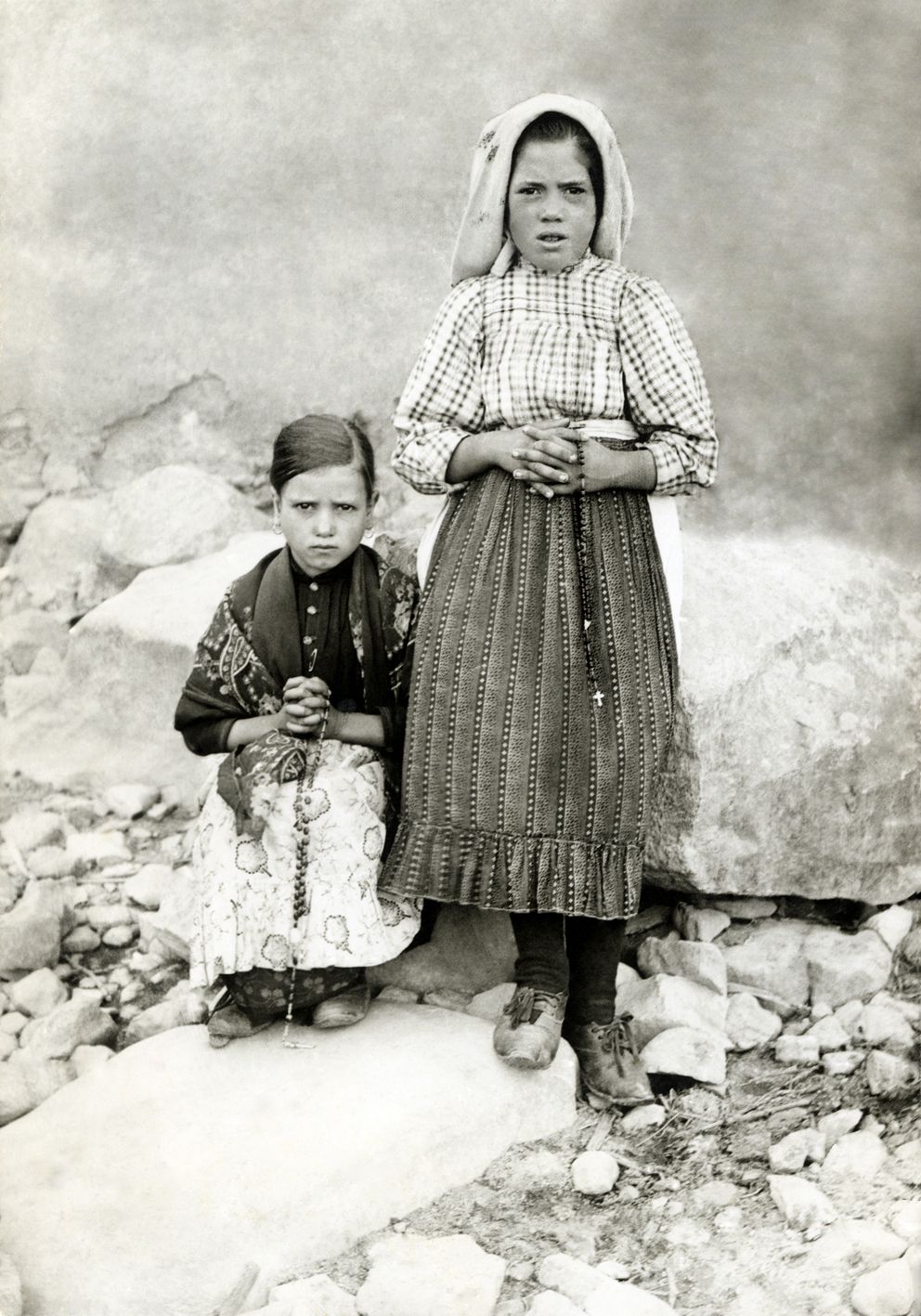
There is no doubt that this guardian figure is the head of the household, and takes up the role of father to the God-man Himself, Who we told later on submits in humility to the rule of His mother and of S. Joseph. Humility was the mark of Christ, from infancy and childhood, and until the torture of the Cross. Humility was the mark of His holy Mother, all of her life. Humility was the mark of S. Joseph, who served the Lady and her Child faithfully.

So, we shall learn from them faith in the Father God, persistent charity in our relationships, and the humility to submit to each other in charity. With Sirach in the first reading, we accept the hierarchical constitution of the family and patiently endure difficulties. With S. Paul in the second reading, we are thankful for this gift of the family, by which we entered this world, and by which (by Himself entering the world) God our Lord brought salvation to us all.

S. Anthony on human suffering

“…it is unreasonable to thank doctors
when they give us bitter and unpleasant medicines
for the sake of our body’s health,
but to be ungrateful to God
for what seems unpleasant to us,
not recognising that everything happens as it should
and for our benefit according to His providence.
For this recognition and faith in God
is the salvation and perfection of the soul.”

– S. Anthony the Great, Advice on human morality and virtuous life

Giving and receiving (Christmas Day)

We once more celebrate Christmas Day, with the popular and commercialised figures such as of ‘Santa Clause’ – or the Coca-Cola man, as I sometimes call him, after those television advertisements – and reindeer, and mistletoe and wine, and children singing Christian rhyme. I’m really glad, there are still children singing Christian rhyme, because as society seems to get less Christian every year, the marks of Christianity are being taken over for the mass markets for merchandising. It’s hard sometime to see the Christian heart of the holiday for the colourful decorations.

But we still enjoy a bit of caroling, I hope. The Child is a king, the carolers sing, etc. The words at least are still very Christian. The soul of Europe is still Christian, after all the revolutions and rebellions and things. All the horrors we continually hear about on the television or the radio – if we still listen to radio – wretched men doing wretched things to hurt other people, or exploit them. But, despite all the madness and the distress… the Child is a king, the carolers will sing.

The rulers and the leaders of this world don’t like the little Child in the manger, with His shining face. They may smile at us Christians, as one of several religions to which they want to tolerate, but refuse to give true respect. They don’t like the Christ Child because He can rule the hearts of men and women in a way that they can never do. Despots hate that – they want to have their own way, and to be loved for it. The despot of the Christmas story is of course Herod ‘the Great,’ the maniacal Idumaean usurper, who was determined that only he and his sons should be kings of the Jews, and resented the little Child with the claim of King David. We know the story of the ‘three wise men’ from the East, whom he wanted to show him the Child, so he could end Him. We know how he ended up murdering numerous infants to get at the Child.

The spirit of Herod is still around, it is a malevolent and anti-Christian spirit. The despots of today don’t like our Christmas festivals, and to survive in such a hostile environment we Christians must increasingly live lives of sacrifice. If we do not, then we eventually give up our Christian identity and disappear into a growing mass of unbelievers and no-religion ‘nones,’ using Christian symbols but with no understanding of Christianity. When we have determined who truly rules our hearts, we shall live accordingly. When we have chosen the Child in the manger to be the Lord of our hearts, we shall find that we have to give up very much for His sake.


Christmas is a time of giving, a time of sharing, is it not? We are taught this as children. We are to be Charity itself, particularly at this time. We give each other gifts, making little sacrifices to do so. Knowledgeable people tell us that the Romans were so impressed with our Christmas that they eventually created their own tradition to rival ours at this time of year. That’s nice. We like to inspire the pagans. But we can go overboard in giving, because we also like a bit of receiving. It’s nice to have gifts. And don’t we have a wonderful commercial system now to help that? Lots of shops, lots of sales, and certainly lots of boxing on the Boxing Day.

Let’s think about giving more than receiving, though, and perhaps the type of giving that improves lives, instead of producing disposable piles of coloured plastic. That would be better. According to S. Paul, Our Lord Jesus Christ said that it is better to give than to receive. The little Baby in the manger always gave more than He received, and so should we who are His friends, His children. He probably never had much material possession to give away, but He gave other things. Give, He said elsewhere in the Gospels, without hope of return, of getting back what you have given or its value. As I’m sure some of you have heard me say before, the Baby of the manger is also the Man on the Cross. Dying in His early thirties, He gave up His very life, His entire self, in order that we His friends, His children would be free, utterly free, the adopted children of God, as He is Son of God. 


Another thing (I think) I said on Sunday is that we are to remember the events of Christ’s life vividly, using imagery and music to do so. We should be able to enter into the stories, to take part in them, to find fellows among the characters there. Christmas is a spectacular example of that. With our carols and our Christmas cribs and decorations, we can be imaginative and walk into the little stable-cave of Bethlehem.

The first Christmas crib, I understand, was built by a famous Catholic deacon called S. Francis of Assisi, and it was life-size, with real animals, etc. I’m sure they still do something like that in places like Italy, perhaps even in Assisi where S. Francis lived. Picture S. Francis standing in the midst of his creation – his Christmas scene – and rejoicing in the poverty of God’s entry into the world of men. S. Francis, you see, was a man very much in love with simplicity and poverty.

So, tonight and tomorrow, we shall shred much wrapping paper and find new toys, both our young people and we older ones. It’s all great fun. But afterwards, I hope that we shall be able to stand before the crib and look upon the humble young Lady and her Child, with the guardian S. Joseph hovering nearby. And heaven cheering loudly overhead. For, shockingly even to the angels, God is suddenly a human being, Eternity binds Himself within time, He looks upon us with the eyes of a child and we know with a rush that He is not there for no reason at all, or for an adventure of some type.

He is there for you… and He is there for Me.

Let Him enter! (Sunday IV of Advent)

“The Lord owns earth, and all earth’s fulness,
the round world, and all its inhabitants.
Who else has built it out from the sea,
poised it on the hidden streams?
Who dares climb the mountain of the Lord,
and appear in His sanctuary?
The guiltless in act, the pure in heart;
one who never set his heart on lying tales,
or swore treacherously to his neighbour.

His to receive a blessing from the Lord,
mercy from God, his sure Defender;
his the true breed that still looks,
still longs for the presence of the God of Jacob.
Swing back, doors, higher yet;
reach higher, immemorial gates,
to let the King enter in triumph!
Who is this great King? Who but the Lord,
mighty and strong, the Lord mighty in battle?
Swing back, doors, higher yet;
reach higher, immemorial gates,
to let the King enter in triumph!
Who is this great King?
It is the Lord of Armies
that comes here on His way triumphant
.”

Psalm 23(24) [link]

Let the Lord enter! He is the King of glory…! This is our response to the psalm this weekend. Psalm 23(24) is a bit of a Christmas psalm, or perhaps an Annunciation psalm. For, roughly nine months ago, we celebrated that feast day. The ladies among us know best what nine months mean for a new life sparked into being… gradually clothing itself more and more in flesh, until she arrives (God willing) and opens her eyes to the light for the first time.

Let the Lord enter… into what? Let the Ancient of Days – the Eternal One – into His new reality, as not only God Most Holy, but as God Most Holy in human flesh. Who opens the door for Him to enter thus into our humanity? The beautiful young lady of Nazareth, when she says to the angel in March, May it be done as God has willed.

At the beginning of all things, the Holy One spoke a word and all things came into being in their turn. Then He said, Let us make mankind in Our own image. And so we became. With another word, God Himself in March took human form within the Virgin, and now in December we find Him all en-fleshed, appearing before His Mother and the holy guardian S. Joseph. The Lord, the King of glory, in conception, pregnancy and birth, thus enters as a man. And already Adam is reborn anew – the new Adam – and so the salvation of the human race is at hand.

What is the gift that Christ brings, what of humanity does He bring with Him that was lost? Remember Adam and Eve and how in pride they sought to be gods. Christ will teach us humility, He will teach us how to put our lives utterly at the service of God the Father. Whereas Adam failed to trust in God’s plan and decided to make his own plans, Christ now will fall in perfectly with His Father’s plan. Perfectly… even to the torture of the cross.

“Then it was that the Lord said to Isaias, ‘Take with thee thy son, Jashub the Survivor, and go out to the end of the aqueduct that feeds the upper pool in the Fuller’s Ground. There thou wilt meet Achaz, and this shall be thy message to him, Shew a calm front, do not be afraid. Must thy heart fail thee because Rasin king of Syria and the son of Romelia are thy sworn enemies? What is either of them but the smouldering stump of a fire-brand? What if Syria, what if Ephraim and the son of Romelia are plotting to do thee an injury? They think to invade Juda and strike terror into it, so that they can bring it into their power, and set up the son of Tabeel as its ruler; a vain errand, the Lord says; it shall not be. As surely as Damascus rules Syria, and Rasin rules Damascus, within sixty-five years Ephraim will be a people no longer. As surely as Samaria rules Ephraim, and the son of Romelia rules Samaria, if you lose courage, your cause is lost.‘ The Lord sent, besides, this message to Achaz, Ask the Lord thy God to give thee a sign, in the depths beneath thee, or in the height above thee. But Achaz said, ‘Nay, I will not ask for a sign; I will not put the Lord to the test.’ ‘Why then,’ said Isaias, ‘listen to me, you that are of David’s race. Cannot you be content with trying the patience of men? Must you try my God’s patience too? Sign you ask none, but sign the Lord will give you. Maid shall be with child, and shall bear a son, that shall be called Emmanuel.’

Prophecy of Isaias, 7: 3-14 [link]

In our first reading this weekend, we hear of this Jewish King Achaz. In the story that we have here, he is threatened from the north by the alliance between his rivals in the kings in Samaria and Damascus. He cannot trust God, and he wants to call for help from the Assyrians, or (failing that) the Egyptians. In another situation in the northern kingdom of Israel, the Israelite king Achab sought relief from a time of drought by making a syncretist bid to worship multiple gods, and the prophet Elijah had arrived to ask him whether or not there was a God in Israel. The prophet Isaiah now arrives before Achaz of Judah with a message from on High, and the king pretends piety. I will not test God, he says. But Isaiah knows his heart, and he replies with prophecy: the House of David did not then trust God, but in the distant future, the House of David would bring forth the greatest of all created beings – the Lady of Nazareth. She would trust as none of us shall ever trust, and through her the Promise would arrive. As the prophet says, the Virgin will give birth, and God will walk among men once more, as He did long ago in the garden with Adam and Eve, as He did when Israel left Egypt and marched towards the Holy Land.

Let us prepare ourselves to meet Him, as the psalm says, with clean hands and pure hearts, desiring not the worthless things of this world, but desiring only Him.


The Church has always asked us to remember. Memory in the Jewish/Hebrew sense is not about looking at photographs in old albums, but rather climbing right into those old photographs. That’s why we have sacred images, and at this time of year we have the numerous Christmas crib scenes. We should somehow become part of these, standing with the little figures of the angels and the shepherds and the kings, hovering over the little Baby with the shiny face.

The Hebrew festivals of old were designed for the people of every century and age to walk with Moses out of Egypt and into the desert, and to navigate that desert with God, and so take possession of the Land He had designed for them. Memory in the Christian sense is scarcely different, for it was a Jew Who gave us our festivals and rituals, and it was His Apostles and bishops who carried them to the ends of the earth. We are to remember Christ at every Mass, to remember His passion, death and resurrection. We can find all that expressed in our Eucharistic prayers.

The Mass draws us into the chamber of the Last Supper, when we may sit at the table with the Apostles, and it draws us to the foot of the Cross, where we may stand in horror with the Lady and the Apostle S. John, as they witness the reason why the Child was conceived and born, why the Holy One took flesh and walked as a Man among them. And so we celebrate Christmas as everything else at the foot of the Cross. Christmas had to be, so that Good Friday could be.

Emmanu-el. God-among-men. And this in order that, through His sacrifice, men could walk again in the company of God, in the shade of the trees in the Garden of Eden, at the Beginning.

“…an angel of the Lord appeared to him in a dream, and said, ‘Joseph, son of David, do not be afraid to take thy wife Mary to thyself, for it is by the power of the Holy Ghost that she has conceived this Child; and she will bear a Son, Whom thou shalt call Jesus, for He is to save His people from their sins. All this was so ordained to fulfil the word which the Lord spoke by His prophet: Behold, the virgin shall be with child, and shall bear a son, and they shall call him Emmanuel (which means, God with us). And Joseph awoke from sleep, and did as the angel of the Lord had bidden him, taking his wife to himself…”

Gospel of S. Matthew, 1: 20-24 [link]

Waiting patiently (Sunday III of Advent)

On this third Sunday of Advent, we water down the purple of the Advent vigil to a more joyous rose pink, as we rejoice in the Lord. Because of that first word of the Mass this weekend – rejoice – this liturgical Sunday is called Rejoice Sunday, or in the Latin Gaudete Sunday. So, as the Jews of the first century, feeling the electricity in the air of their time, rejoiced in the nearness of the first coming of Christ, so may we His Christians, treating every day as if it were immediately preceding the return of Christ, rejoice in the nearness of his second coming. As the prophet says in the first reading, the desert and the wastelands must rejoice and begin to bring forth produce, the desert being suddenly watered becomes as green as the mountains of Lebanon and the rises of Carmel and the fertile plains of Sharon, in the north of the Holy Land.

“Thrills the barren desert with rejoicing; the wilderness takes heart, and blossoms, fair as the lily. Blossom on blossom, it will rejoice and sing for joy; all the majesty of Lebanon is bestowed on it, all the grace of Carmel and of Saron. All alike shall see the glory of the Lord, the majesty of our God. Stiffen, then, the sinews of drooping hand and flagging knee; give word to the faint-hearted, Take courage, and have no fear; see where your Lord is bringing redress for your wrongs, God himself, coming to deliver you! Then the eyes of the blind shall be opened, and deaf ears unsealed; the lame man, then, shall leap as the deer leap, the speechless tongue cry aloud. Springs will gush out in the wilderness, streams flow through the desert; ground that was dried up will give place to pools, barren land to wells of clear water; where the serpent had its lair once, reed and bulrush will show their green. A high road will stretch across it, by divine proclamation kept holy; none that is defiled may travel on it; and there you shall find a straight path lying before you, wayfarer is none so foolish he can go astray. No lions shall molest it, no beasts of prey venture on it. Free men shall walk on it, coming home again to Sion, and praising the Lord for their ransoming. Eternal happiness crowns them, joy and happiness in their grasp now, sorrow and sighing fled far away.”

Prophecy of Isaias, 35: 1-10 [link]

These reference to dryness and aridity are all figures of the state of the souls of men and women, souls of dry soil, the good fruits of love being further choked by the briars of sin. Until…! Until this desert of our hearts is watered suddenly by the grace of God, coming to us through the God-man OLJC, Who once stood before the Temple in Jerusalem and cried out, Come to Me, all ye who are thirsty and drink, and from your hearts will pour forth living water! To the Samaritan woman at the well, He had said that if she had asked Him, He would have given her not the water of the well, but living water.

What does this living water do to us? The prophet carries on in our first reading, Strengthen weary hands, steady trembling knees, awaken to courage faint hearts. Old and tired was mankind when Christ arrived, two thousand years ago. Old and tired mankind often seems today, even in these former Christian heartlands in Europe, so distanced often now from their divine heritage. The mission of the Church, however diminished she has become in our time, is to strengthen weary hands again, steady trembling knees once more, help crumbling Christendom to her feet again. Christendom was strong once, she can be strong again. Because (in the words of the prophet) her God is returning, coming to rescue her. And her joy will return, even everlasting joy. The Apostle S. James gives us a little parable in our second reading, which is apt for Lincolnshire farmland: the farmer is patient as he watches his crop, nurses his crop.

“Wait, then, brethren, in patience for the Lord’s coming. See how the farmer looks forward to the coveted returns of his land, yet waits patiently for the early and the late rains to fall before they can be brought in. You too must wait patiently, and take courage; the Lord’s coming is close at hand. Brethren, do not bring complaints against one another; if you do, you will be judged, and the judge is already standing at your doors. If you would learn by example, brethren, how to work on and wait patiently in evil times, think of the prophets who spoke in the Lord’s name.”

Letter of S. James, 5: 7-10 [link]

He cannot be hasty, the farmer, and his produce is at the mercy of the elements. And we too must be patient with the Lord, not losing heart because He hasn’t returned yet. The Church has waited two thousand years, and perhaps we shall wait two thousand more. In the meantime, we shall maintain the spirit of Christian charity, and live well with each other and cultivate our practice of communal worship and personal devotion. And wait, wait, wait…


Poor, dear S. John. I mean the Baptist, of course. He had lived a difficult life. All this living in the desert in simple clothing, eating simple food, your only friend being the silence. The gospels tell us very little of John’s ministry, and the account seems rather short, compared to the ministry of Christ, which is the actual focus of the Gospels, of course. But we may consider that John’s ministry was possibly longer than Christ’s, and his desert existence (for however long that lasted) was a significant sacrifice and offering to God. Like so many other Jews, He would have perhaps been expecting the Christ He was preaching to appear as a conquering king, chasing away Roman and Greek, and reestablishing the Jewish commonwealth. And the patience of S. John has obviously been tested, when he sends his disciples to Christ to basically say, You are rather underwhelming, shall we wait a bit longer for our conquering Christ?

“Now John had heard in his prison of Christ’s doings, and he sent two of his disciples to Him; ‘Is it Thy coming that was foretold,’ he asked, ‘or are we yet waiting for some other?’ Jesus answered them, ‘Go and tell John what your own ears and eyes have witnessed; how the blind see, and the lame walk, how the lepers are made clean, and the deaf hear, how the dead are raised to life, and the poor have the gospel preached to them. Blessed is the man who does not lose confidence in Me.’ As they went out, Jesus took occasion to speak of John to the multitudes; ‘What was it,’ He asked, ‘that you expected to see when you went out into the wilderness? Was it a reed trembling in the wind? No, not that; what was it you went out to see? Was it a man clad in silk? You must look in kings’ palaces for men that go clad in silk. What was it, then, that you went out to see? A prophet? Yes, and something more, I tell you, than a prophet. This is the man of whom it was written, Behold, I am sending before thee that angel of Mine, who is to prepare the way for thy coming. Believe me, God has raised up no greater son of woman than John the Baptist; and yet to be least in the kingdom of heaven is to be greater than he.”

Gospel of S. Matthew, 11: 2-11 [link]

We can sympathise perhaps with John, because we also herald Christ the King in our own time and we look forward to a second coming and a full restoration of the human race and the Creation that hangs on to it. And we look about us, and the world is still quite slipping into hell – they are killing the babies by the thousands in abortions, and preparing to kill thousands more in assisted suicides – and we ask God, For how long more? Until when? When will You return to restore all things?

Christ clearly appreciates John’s long patience with his words at the end of this gospel message. John He calls the greatest of all the children of men… I hope he will appreciate our own long patience, although He may say to us as to John, Blessed are they who remain patient with Me…

Fear of the Lord (Sunday II of Advent)

How may we summarise the work of Christ our Lord? In one word, restoration. You’ve heard me begin very often with Adam and Eve, and how God Almighty placed them in the Garden of His love. When they rejected that love, they were ejected from the Garden.

There is a fault in man, and that is his (and her) desire to be independent of God. And experience tells us that that is quite impossible. We cannot be truly independent, we choose our own lords. If Christ is not lord, there will be somebody else, or something else. Just about anything can be turned into a cult/religion. So the shoot springs out of Jesse, as the prophet says in our first reading. Jesse, or Yishai, was the father of King David. What are the marks of this Son of David to come? Wisdom, power, knowledge and fear of the Lord.

“From the stock of Jesse a scion shall burgeon yet; out of his roots a flower shall spring. One shall be born, on whom the spirit of the Lord will rest; a spirit wise and discerning, a spirit prudent and strong, a spirit of knowledge and of piety, and ever fear of the Lord shall fill his heart. Not his to judge by appearances, listen to rumours when he makes award; here is judgement will give the poor redress, here is award will right the wrongs of the defenceless. Word of him shall smite the earth like a rod, breath of him destroy the ill-doer; love of right shall be the baldric he wears, faithfulness the strength that girds him. Wolf shall live at peace with lamb, leopard take its ease with kid; calf and lion and sheep in one dwelling-place, with a little child to herd them! Cattle and bears all at pasture, their young ones lying down together, lion eating straw like ox; child new-weaned, fresh from its mother’s arms, playing by asp’s hole, putting hand in viper’s den! All over this mountain, my sanctuary, no hurt shall be done, no life taken. Deep as the waters that hide the sea-floor, knowledge of the Lord overspreading the world! There he stands, fresh root from Jesse’s stem, signal beckoning to the peoples all around; the Gentiles will come to pay their homage, where he rests in glory.”

Prophecy of Isaias, 11: 1-10 [link]

This fear of the Lord is not necessarily a shake-in-my-boots fear, as when a beast of prey is stalking us. It is that ancient respect for the Holy One that our first parents set aside for the moment that it took for them to commit that first act of pride: We shall be like God, we shall rule our own lives. The shoot that springs out of the stock of Jesse, and so of Abraham, and so of Adam… this very human (and yet very divine) shoot will reform humanity, restore it, and return all men and women to the bosom of the Father God.

With the fear of the Lord comes the wisdom and integrity to govern His fellow men and to bring about this legendary peace, by which calf and lion cub feed together, on straw. God’s holy mountain here is the lost Garden of Eden, where there is no war and strife, injustice and inequity, no man preying upon his neighbour. We see something of this messianic peace in the idealism of S. Paul’s instructions to the Roman Church in our second reading this weekend, for he talks of tolerance in love among Christians, friendship in the midst of difference.

“See how all the words written long ago were written for our instruction; we were to derive hope from that message of endurance and courage which the scriptures bring us. May God, the author of all endurance and all encouragement, enable you to be all of one mind according to the mind of Christ Jesus, so that you may all have but one heart and one mouth, to glorify God, the Father of our Lord Jesus Christ. You must befriend one another, as Christ has befriended you, for God’s honour. I would remind those who are circumcised, that Christ came to relieve their needs; God’s fidelity demanded it; he must make good his promises to our fathers. And I would remind the Gentiles to praise God for his mercy. So we read in scripture, I will give thanks to thee for this, and sing of thy praise, in the midst of the Gentiles…”

Letter of S. Paul to the Romans 15: 4-9 [link]

Paul and the other Apostles were constantly dealing with the strife that had been created with the social and religious opposition between Jew and Gentile, Jew and non-Jew, often even within the Church. While the prophet Isaiah talks about all the tribes of mankind streaming towards Jerusalem at the beginning of the messianic age, there were still Jews sneering at Greeks and Romans, and everybody else. They were the chosen ones, the people of the Covenant. So Paul says at the end of this second reading that God made Himself subject to Jews in Christ for their own good, but also in order that non-Jews may eventually give glory to God for His mercy to them.

The gospel story brings to us S. John the Baptist, who is working to establish the beginnings of the Messianic age by drawing hearts back to God, to declare that the Church of Christ is at hand – a community of both Jews and Gentiles. John cut a fine figure indeed, dressed and acting in the exact manner as the prophet Elijah, a Jewish hero. And his hearers looked upon him and said, Is this the Christ? Or, is this the Elijah who is to precede the Christ? Let’s go and see…

“In those days John the Baptist appeared, preaching in the wilderness of Judaea; ‘Repent,’ he said, ‘the kingdom of heaven is at hand.’ It was of him that the prophet Isaias spoke, when he said, There is a voice of one crying in the wilderness, Prepare the way of the Lord, straighten out his paths. And he, John, wore a garment of camel’s hair, and a leather girdle about his loins, and locusts and wild honey were his food. Thereupon Jerusalem and all Judaea, and all those who dwelt round Jordan, went out to see him, and he baptised them in the Jordan, while they confessed their sins. Many of the Pharisees and of the Sadducees came to his baptizing; and when he saw these, he asked them, ‘Who was it that taught you, brood of vipers, to flee from the vengeance that draws near? Come, then, yield the acceptable fruit of repentance; do not presume to say in your hearts, We have Abraham for our father; I tell you, God has power to raise up children to Abraham out of these very stones. Already the axe has been put to the root of the trees, so that every tree which does not shew good fruit will be hewn down and cast into the fire. As for me, I am baptising you with water, for your repentance; but One is to come after me Who is mightier than I, so that I am not worthy even to carry His shoes for Him; He will baptise you with the Holy Ghost, and with fire. He holds His winnowing-fan ready, to sweep His threshing-floor clean; He will gather the wheat into His barn, but the chaff He will consume with fire that can never be quenched.”

Gospel of S. Matthew, 3: 1-11 [link]

The gospel story this weekend also demonstrates some of the pride of some of the Jewish authorities in their heritage: the Pharisees who gloried in observing every small injunction of the Law of Moses and called themselves good and righteous for that, and the Sadducees who rejoiced in the Temple cult and so in precision in ritual worship, and called themselves justified before God for that. Purity before God was as important for them as it is for us Catholics today, but they were so self-assured, as they approached the holy man in the desert to be baptised.

John is quite blunt with them, and seems to say something similar to what Paul says in his letters: we must work out our salvation with fear and trembling. With humility, that is to say. If God can raise children of Abraham – our father in the faith – out of the stones in the desert, it doesn’t matter at all that we may be Jews, or indeed that we are of any race, that our families have been Christian and Catholic for x number of centuries, or decades or years.

What matters is humility before God, the sincere seeking after Him, the cultivating of the good fruit of love in our hearts, even for the enemies we might have. It is that humility and fear of God that undoes the pride of Adam, and finally brings about peace.

Keeping vigil (Sunday I of Advent)

We could say to ourselves: last weekend was the last Sunday of the liturgical year, and so this Sunday must be the first Sunday of the new liturgical year. And we would be right. And we could suggest that, since the readings of the last two Sundays had apocalyptic, end-of-the-world-type themes, this Sunday should have more hopeful readings about the new heavens and the new earth.

But Advent continues the apocalypse-style readings, with many warnings about keeping vigil, about being spiritually vigilant, about avoiding evil and doing good. Watching and waiting. Waiting for… Christ to return. That’s what keeping vigil is all about – watching for the return of Christ. The distractions of this world place us in a type of stupor, and we lurch doggedly from one day to the next, our gaze fixed on the world around us. The Apostles and the Church of every age have asked us to awaken from that sleepy/drunken state, and to raise our gaze to Christ, and through Him to God our Father. Thus, S. Paul says to the Roman Christians in the second reading that it is high time that they awaken from slumber, for the day of salvation is nearer than ever. The night is over, the day will soon begin, he says, rather poetically. It is possible to be baptised and, the initial enthusiasm having faded, to sleep-walk back into a destructive lifestyle!

“Love of our neighbour refrains from doing harm of any kind; that is why it fulfils all the demands of the law. Meanwhile, make no mistake about the age we live in; already it is high time for us to awake out of our sleep; our salvation is closer to us now than when we first learned to believe. The night is far on its course; day draws near. Let us abandon the ways of darkness, and put on the armour of light. Let us pass our time honourably, as by the light of day, not in revelling and drunkenness, not in lust and wantonness, not in quarrels and rivalries. Rather, arm yourselves with the Lord Jesus Christ; spend no more thought on nature and nature’s appetites.”

Letter of S. Paul to the Romans, 13: 10-14 [link]

Remember those gospel parables of the bridegroom, the timing of whose coming is not announced precisely, so that his servants and his maid-servants are meant to keep their lamps lit, etc. and plan it down to the point of keeping spare oil at hand if He is more than a little late. Paul gives his Romans more practical detail: Christians are to give up their former, pre-baptismal, sinful lifestyles entirely. The light of baptism brought them out of the darkness of the unbelieving world and into the light of Christ. Returning to lives of sin would be like stepping back out of the light, with shameful acts such as the ones he lists: envies, sexual licence, and the rest. To those of us who have entrapped ourselves in habitual sin, good S. Paul would come up and say, Wake up, Wake up, it’s high time that you Wake up…

And that then is the spirit of Advent. Think of the good Jews of the time before Christ, even the familiar characters we love so much, S. Joseph, our Blessed Lady, S. Zachary the priest, his wife S. Elizabeth, their son S. John the Baptist, old S. Simeon in the Temple, and all the others. Good and holy Jews. The Light had not yet arrived for the first time, but the moment the prophet Daniel had predicted had arrived, and they waited in fasting and prayer. That was their Advent. The Light they welcomed with great joy promised that He would return, and return as the great Judge. And as His people waited His first Coming in fasting and prayer, He bids us now await His second Coming in like spirit. Keep the vigil, with the Latin Church’s tradition of purple veils, and multiple candles. This is our Advent.


Isaiah is the prophet of Advent. In our first reading this weekend, the prophet places the mountain of the Jewish Temple higher than every other mountain. Since the high places were where ancient peoples climbed to offer sacrifices, the various mountains represented other religions.

“This is a message which was revealed to Isaias, the son of Amos, about Juda and Jerusalem. In later days, the mountain where the Lord dwells will be lifted high above the mountain-tops, looking down over the hills, and all nations will flock there together. A multitude of peoples will make their way to it, crying, ‘Come, let us climb up to the Lord’s mountain-peak, to the house where the God of Jacob dwells; He shall teach us the right way, we will walk in the paths He has chosen. The Lord’s commands shall go out from Sion, His word from Jerusalem, and He will sit in judgement on the nations, giving His award to a multitude of peoples. They will melt down their swords into plough-shares, their spears into pruning-hooks, nation levying war against nation and training itself for battle no longer. Come you too (they will say), children of Jacob, let us walk together in the path where the Lord shews us light.'”

Prophecy of Isaias, 2: 1-5 [link]

The prophet is elevating the Jewish religion over every other, and Christ does the same when He says to a Samaritan woman that Salvation comes from the Jews. He is that Salvation, and His very name means God-saves. When does the Jewish religion tower over every other, lifted higher than every other? On a cross, outside the gates of Jerusalem. The prophet goes on… when this happens, when the cross is raised, all the tribes of mankind will stream to the foot of the cross, and the Holy One of Israel will rule their hearts… from a cross…

But that rule of His over our hearts depends always upon our cooperation. And that that brings us back to the theme of vigilance against sin, and Paul’s warning in the second reading that we do not return to lives of sin (as a dog returns to its own vomit, in the words of the Apostle S. Peter). For, if we leave the practice of religion to return to lives of vice, it will be as the gospel reading says, and we shall be badly surprised when Christ returns.

“‘When the Son of Man comes, all will be as it was in the days of Noe; in those days before the flood, they went on eating and drinking, marrying and giving in marriage, until the time when Noe entered the ark, and they were taken unawares, when the flood came and drowned them all; so it will be at the coming of the Son of Man. One man taken, one left, as they work together in the fields; one woman taken, one left, as they grind together at the mill. You must be on the watch, then, since you do not know the hour of your Lord’s coming. Be sure of this; if the master of the house had known at what time of night the thief was coming, he would have kept watch, and not allowed his house to be broken open. And you too must stand ready; the Son of Man will come at an hour when you are not expecting Him.

Gospel of S. Matthew, 24: 37-44 [link]

So, we stay awake, and we stay ready…

Who is the lord of my heart? (solemnity of OLJC sovereign king)

One of the lasting memories of my recent trip to Mexico City for a pilgrimage to Guadalupe is the story of the Mexican martyrs of the 1920s, who were fighting to protect their country from the ravages of the anti-Catholics and the anti-clericalists after the Mexican revolution. Many of these martyrs were priests, not all of them were. After the Holy Father Pius XI released his encyclical affirming the sovereign reign of Christ the King, and instituting the feast day that we have observed this Sunday, the Mexicans took up the rallying cry against the revolution: Viva Cristo Rey!, which is to say, Long live Christ the King! Pictured above is the Jesuit Father Miguel Pro, arrested for providing the Sacraments in defiance of the law, and executed by firing squad. His last words were… Viva Cristo Rey!

I shall once more give you my own particular understanding of the relationship of God to humanity, as a relationship not of domination but of mutual self-giving. A marital relationship, as you’ve heard me say so very often. This is why He gives us free will – the ability to choose Him. A tyrant or dictator attempts to remove free will, at first with legislation, then with force. Although we talk about the Law of God and the Law of Moses in the Old Testament, with all the penalties and rewards that are associated with law, there is behind all of it a question, based on free will: who is your Lord? Who rules your life, whom will you serve?

The Christian heart in a world of distraction wants to say, Christ! Christ rules my heart! But if He truly did, the gospel message would not sound to us as difficult as it often does, even to those of us who are devout in our practice of religion. In the beginning, God offered to rule our hearts, but our first parents Adam and Eve in their innocence were convinced by the serpent that they could rule their own hearts, that they could decide for themselves about the world and about their relationship with God. The darkness arrived, and God replied as always, I will show you light, and you must choose it for yourselves. We must choose Him for our Lord, our King.

In the course of time, Abraham the Syrian made a definite bid for God, and he is forever called by us Faithful, our father in faith. He and in various ways his son and grandson made the covenant with God: the Creator God would be their lord, it is He who would rule their lives. The Holy One does not forget covenants, and in due course He called to Himself the descendants of these men – the twelve tribes of Israel – who had fallen into idolatries during their exile in Egypt. He called them out of those idolatries to declare themselves once more for Him, as their ancestors had done. Under the guidance of Moses the lawgiver, they assured Him that He would be their lord. But time tests loyalty, and as we see in our first reading this weekend they yearned for a human lord – a human king – and were given this man David.

“After this, all the tribes of Israel rallied to David at Hebron; ‘We are kith and kin of thine,’ they said. ‘It is not so long since Israel marched under thy orders, when Saul was still reigning; and the Lord has promised thee that thou shouldst be its shepherd and its captain.’ And so the elders of Israel went to his court at Hebron; and there, at Hebron, in the Lord’s presence, David made a covenant with them, and they anointed him king of Israel.”

The second book of the Kings (aka. the second book of Samuel), 5: 1-3 [link]
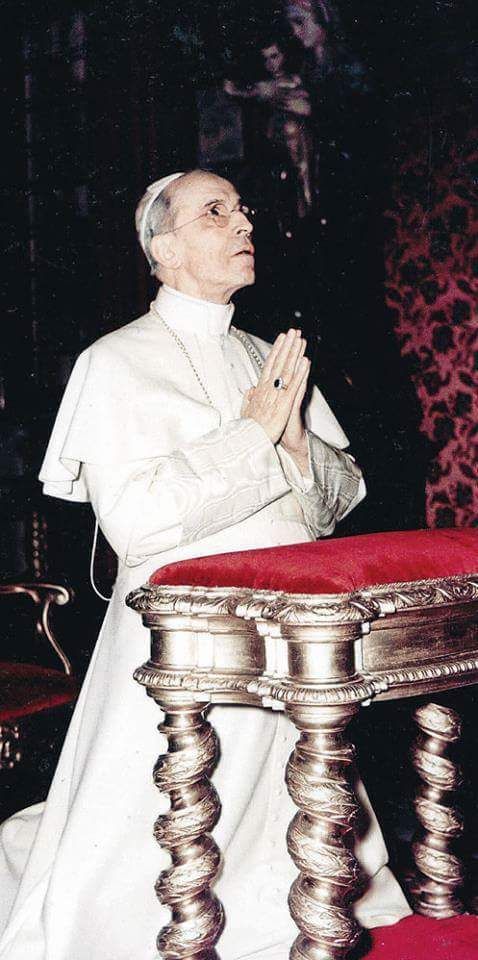
David was a flawed man, but a man nevertheless ‘after God’s own heart,’ as the Hebrew bible delights in telling us. But David must go to his grave, and the loyalties of his descendants will be tested and for the most part found wanting. The Hebrew heart nevertheless remembered the days in the desert, under the leadership of Moses, and in the midst of the secularism of later centuries continued to cry out to the Lord Whom the nation had claimed for her own Lord in that wilderness. And prophets told them that David would return, a son of David, another man ‘after God’s own heart,’ who would resolve the question not only for them but for every tribe of mankind: who is your Lord?


That question the Son of David from the Cross asks every age of man that has followed His life on earth. Here is not only the human form of David hanging in torment, but the ancient One Who called Adam and Eve to obedience, risking everything by giving them the ability to choose disobedience. But remedy for disobedience He would provide also, by crucifying disobedience to that cross.

“The people stood by, watching; and the rulers joined them in pouring scorn on Him; ‘He saved others,’ they said; ‘if He is the Christ, God’s chosen, let Him save Himself.’ The soldiers, too, mocked Him, when they came and offered Him vinegar, by saying, ‘If Thou art the King of the Jews, save Thyself. (A proclamation had been written up over Him in Greek, Latin and Hebrew, ‘This is the King of the Jews.’) And one of the two thieves who hung there fell to blaspheming against Him; ‘Save Thyself,’ he said, ‘and us too, if Thou art the Christ.’ But the other rebuked him; ‘What,’ he said, ‘hast thou no fear of God, when thou art undergoing the same sentence? And we justly enough; we receive no more than the due reward of our deeds; but this man has done nothing amiss.’ Then he said to Jesus, ‘Lord, remember me when Thou comest into Thy kingdom.’ And Jesus said to him, ‘I promise thee, this day thou shalt be with Me in Paradise.'”

Gospel of S. Luke, 23: 35-43 [link]
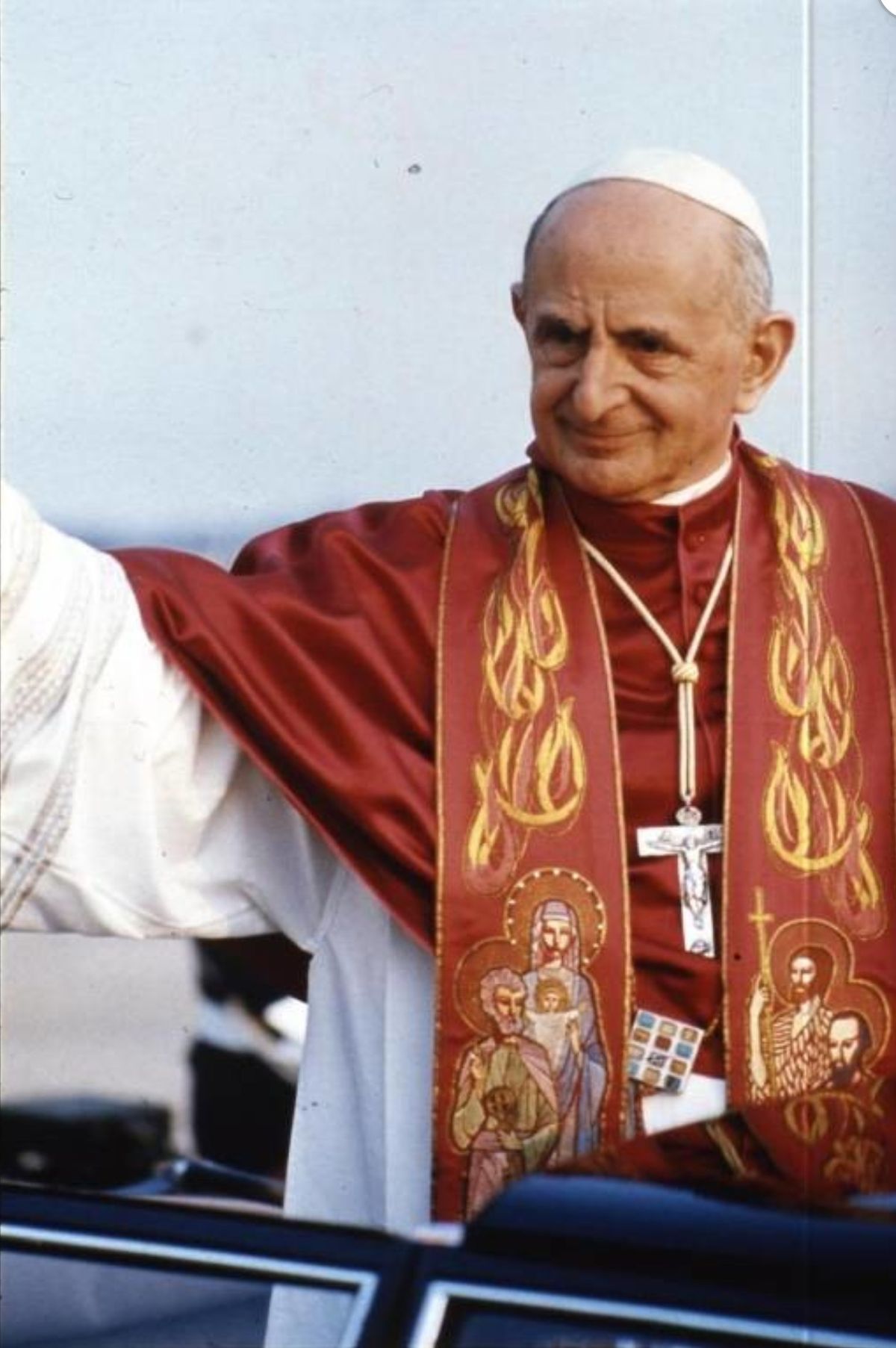
There were two men crucified with Him on that hill outside Jerusalem, which He had called the City of the Great King. His City, the City of His ancestor David. One of the thieves – the secularist – has chosen for this world, will have human rulers, spiritual ones in the high priests of Jerusalem (the rulers, above), secular ones in the Roman governors. Save yourself, and us as well, he says, so that we can continue to submit to men. The other man we call ‘the thief who stole heaven’ – he was a very good thief for that – for he has a foot in another world, a world where God is Lord, and not worldly men. He resolves the question for the Church by choosing God as Lord, Christ as King. Remember me, when You come into Your Kingdom.

Our feast day today is called Our Lord Jesus Christ King of the all things. Much of the universe will submit to its Creator without question, even rebellious angels will reluctantly bow; it is the human heart that wavers, that thinks too hard, that wants desperately to rule itself. But in its better moments it knows to confess that it is Christ Who is King.

Last things (Sunday XXXIII of Ordered time)

“Only, brethren, we charge you in the Name of our Lord Jesus Christ to have nothing to do with any brother who lives a vagabond life, contrary to the tradition which we handed on; you do not need to be reminded how, on our visit, we set you an example to be imitated; we were no vagabonds ourselves. We would not even be indebted to you for our daily bread, we earned it in weariness and toil, working with our hands, night and day, so as not to be a burden to any of you; not that we are obliged to do so, but as a model for your own behaviour; you were to follow our example. The charge we gave you on our visit was that the man who refuses to work must be left to starve. And now we are told that there are those among you who live in idleness, neglecting their own business to mind other people’s. We charge all such, we appeal to them in the Lord Jesus Christ, to earn their bread by going on calmly with their work.”

Second letter of S. Paul to the Thessalonians, 3: 6-12 [link]
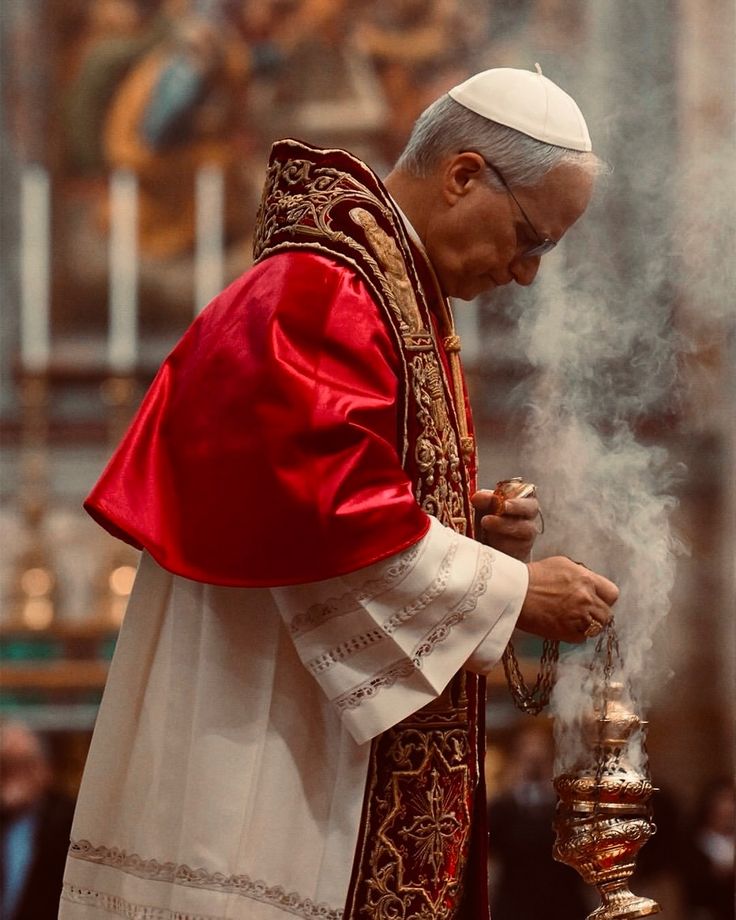
Oh dear, it’s the end of the liturgical year again, and the readings have gotten very extreme, as the Church begins to meditate on the Last Things. I shall remind you all in a few weeks time that the season of Advent marks not only the centuries of preparation among the Jews for the first coming of Christ, but also is to remind us to prepare likewise for His second coming.

How do we prepare? With prayer, certainly. With the Sacraments, of course. But just as important is to meditate on the commandments of God, the commentary on those commandments that Christ gives us in the Gospel, and the commentaries and catechisms that the bishops and priests since the time of the Apostles and S. Paul have provided us with. As Paul says to the Thessalonians in the second reading (above), they are to imitate a standard of living established by the Apostles and their cooperators, following a rule of life that they had established.

This is the origin of the teaching tradition of the Church, and her magisterium – her teaching authority. And all of these echo the first instructions given by God to the people through Moses: do good, avoid evil. You do good, you choose for yourself life. You do evil, you choose for yourself death. And this because the God of Justice cannot countenance evil and disorder. So, the prophet Malachi in the first reading gets lyrical when he tells us that the day of judgement is coming, which will bring evil to an end and will reward righteousness.

“Trust me, a day is coming that shall scorch like a furnace; stubble they shall be before it, says the Lord of hosts, all the proud, all the wrong-doers, caught and set alight, and neither root nor branch left them. But to you that honour My Name there shall be a sunrise of restoration, swift-winged, bearing redress; light-hearted as frisking calves at stall you shall go out to meet it, ay, and trample on your godless enemy, ashes, now, to be spurned under foot, on that day when the Lord of hosts declares Himself at last. Yours to keep the law ever in mind, statute and award I gave to assembled Israel through Moses, that was My servant.”

Prophecy of Malachias, 4: 1-4 [link]
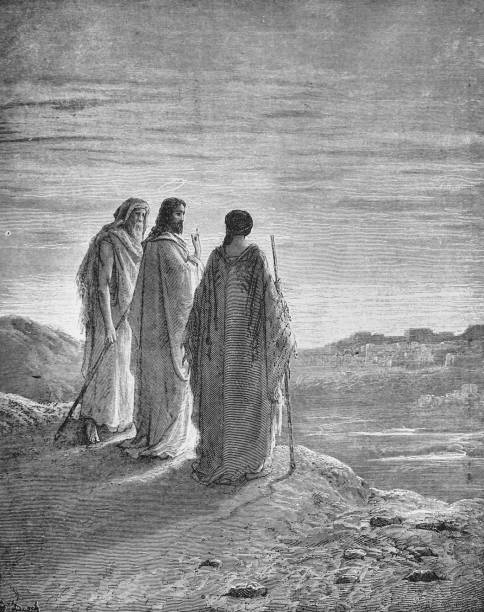
The righteousness that honours God’s Name, as in this reading, is simply the Jewish understanding of thinking with the mind of God and so finding His approval. So, what are those four Last Things the Church has placed before us? They are Death, Judgement, Heaven and Hell. Death will find us all, for we are mortal beings. Christ’s promise of Life lies beyond death, intended for the Righteous who have managed to embrace the Law of God, and so have lived His spirit of Justice. How is righteousness determined? Through Judgement, and Christ has declared in the Gospel that He Himself will come as the Judge, bringing the recompense for the souls of the just ones.

That recompense is Heaven, which the Just have chosen for themselves by their lives of dedication, by their love for God and for neighbour. We really do choose our end, for God has given us that dignity, that free will to choose; our eternal end is not necessarily given us as a reward or a punishment. The greatest of the men and women of the Church whom we call Saints have loved not for reward, but for Love’s own sake. May we be like they were. For the last and most terrible of the Last Things is eternal death – Hell – final separation from the source of Life, Who is God. We creatures of time understand eternal as forever and ever, but Hell is simply being in a godless and remorseful state with no further opportunity to change this destiny.


Christ often tell us in the course of the gospel stories that we are to choose what is good and what is beautiful, and what will last beyond this world. He never means material things, beautiful though these may be, because we all know that no matter how beautiful anything of this world is today, that beauty may be gone tomorrow, next year, or in a few years time. Change and decay in all around I see, as the famous hymn goes. So, when the good disciples of Christ say to Him, Look at this wonderful Temple the Herods have built for us, aren’t these buildings wonderful, they’ll last forever, won’t they?, the Holy One looks at them with pity, for He knows that within forty years, the Romans would level the entire complex to the ground to quell the Jewish rebellions.

“There were some who spoke to Him of the Temple, of the noble masonry and the offerings which adorned it; to these He said, ‘The days will come when, of all this fabric you contemplate, not one stone will be left on another; it will all be thrown down.’ And they asked Him, ‘Master, when will this be? What sign will be given, when it is soon to be accomplished?’ ‘Take care,’ He said, ‘that you do not allow anyone to deceive you. Many will come making use of My Name; they will say, Here I am, the time is close at hand; do not turn aside after them. And when you hear of wars and revolts, do not be alarmed by it; such things must happen first, but the end will not come all at once.’ Then He told them, ‘Nation will rise in arms against nation, and kingdom against kingdom; there will be great earthquakes in this region or that, and plagues and famines; and sights of terror and great portents from heaven. Before all this, men will be laying hands on you and persecuting you; they will give you up to the synagogues, and to prison, and drag you into the presence of kings and governors on My account; that will be your opportunity for making the truth known. Resolve, then, not to prepare your manner of answering beforehand; I will give you such eloquence and such wisdom as all your adversaries shall not be able to withstand, or to confute. You will be given up by parents and brethren and kinsmen and friends, and some of you will be put to death; all the world will be hating you because you bear My Name; and yet no hair of your head shall perish. It is by endurance that you will secure possession of your souls.

Gospel of S. Luke, 21: 5-19 [link]
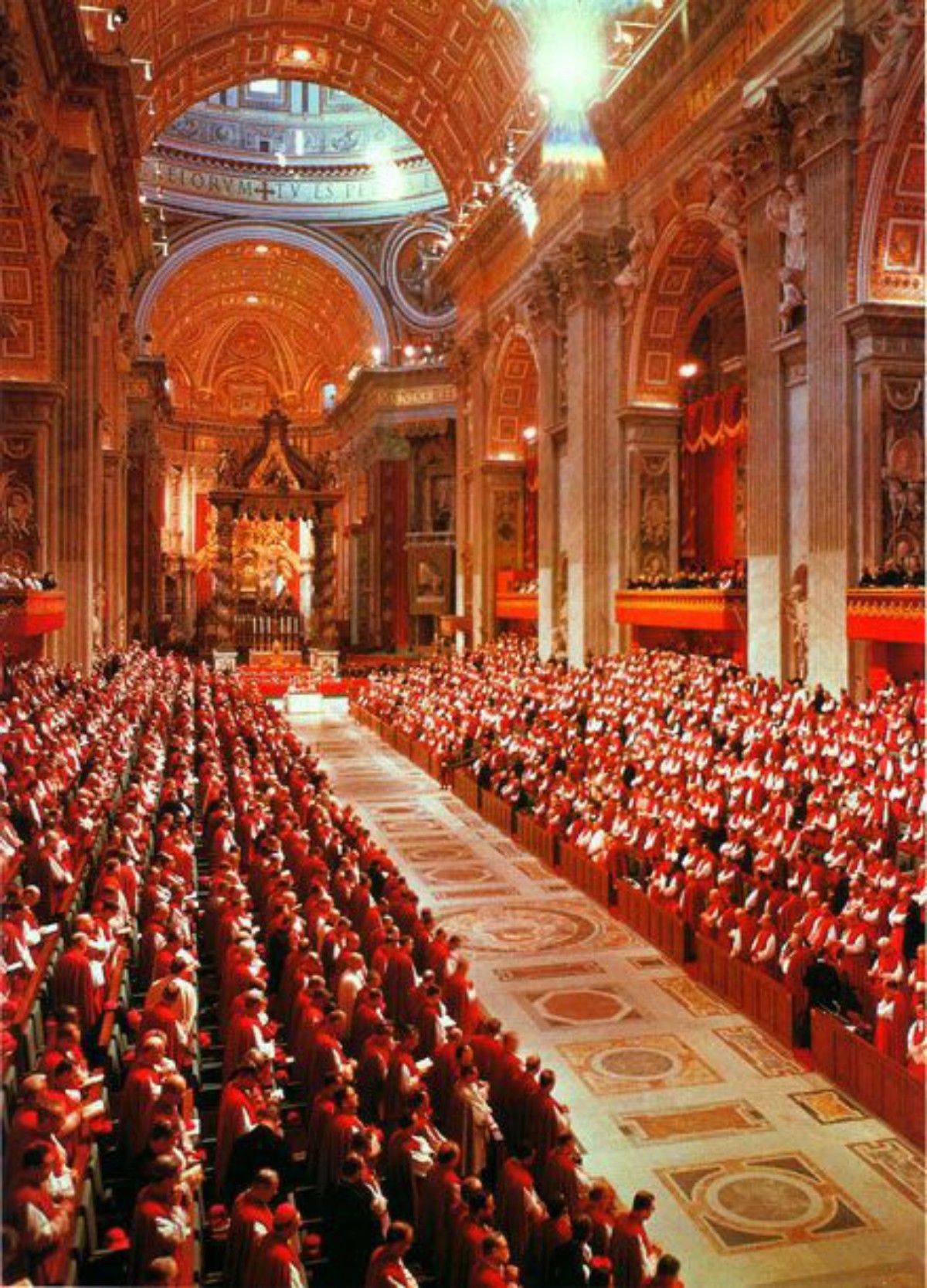
It will all go, He says, all of it, even the marvellous Temple. And in terror they ask, When!? But in reply He simply asks them to once more prioritise God, to prioritise Him. The things of this world can vanish in an instant, but God will remain. False teachers, false prophets, false christs will appear, but the Christians must fasten their hearts to Him. Secular governments will try to shake us away from Him with horrific persecution (and they are still about that today), but by the grace of God, hated though we are, we shall persevere, and Life, Heaven will be ours.

Remembrance Sunday

Image by annaklein from Pixabay

The thirty-second Sunday of Ordered (or Ordinary) time was suppressed again, as last weekend (with the Solemnity of All Saints), this time because of the feast day of the dedication of the Holy Father’s own cathedral in Rome, the arch-basilica of the Most Holy Saviour, called after its location in the far east of the Holy City – the Lateran basilica (the tympanum on its façade pictured above). So, our readings at Mass were all to do with temple and church buildings, and the theological meaning of these. But this is still England, and the nation has marked this Sunday as Remembrance Sunday, when she rallies around her Armed Forces community to remember the Fallen of the great Wars of the last century and their great Sacrifice.

So, let’s spend a little time talking about Remembrance Day. I don’t quite understand this grief I personally feel for these soldiers, for I am a foreigner and indeed several generations from them, I don’t share their belonging to this country, their desire to leave everything behind to fight to preserve what they loved. Looking back at the absolute butchery of the First War – which made our countries desire it to be the War to end all wars – and the greater savagery of the Second War, we can perhaps recognise a certain futility in the personal offering of the men who went to battle. Thanks to all the rather realistic films and documentaries that have been produced in the last few decades, I think of these brave men more often in their helplessness in the trenches and on the endless fields than in ‘victory’ at the end, and I remember the videos of traumatised soldiers trying to deal with ordinary life again after they survived the ordeal. So much wasted life…

Was their sacrifice worth it…? Well, of course it was. Because, for all the fear and uncertainty with which Christian men marched out to death, they acted in love. If not the greater love for their nation and people, and perhaps with the lofty ideals of freedom and opposition to tyranny, they went out of love for their families and their local communities. And love always has the last word. Love doesn’t remain buried under foreign soil, or behind plaques and inscriptions in churches and public memorials. Because Love Himself died upon a cross, and promised resurrection and eternal life to those who could empty themselves out like He did.

That may be why so many of us (and even of us well-meaning immigrants) still grieve for them all these years later, when our values have changed to the point where we debate constantly about what ‘British values’ actually are and to the point when old veterans appear on television and weep for what our countries have become, how different they are from what they had fought to preserve. We grieve for them because we know that they loved to the point of death, and (in the words of the famous poem), they gave their today so that we could have a tomorrow. That should touch the coldest of hearts. We might live in a post-Christian world here in the West, but we are still resting upon the strong foundations of a Christian past, and we know how to value sacrifice, and I hope we have not forgotten how to fight today for the things we love as men and women did in the past.

Thanks to the great hearts of the last century, we don’t have to look too far back in history to find witnesses, to find Christian men and women – military and civilian – willing to give everything up for the people they loved. The Wars were won – so we are told – tyranny has been delayed, millions died to achieve that, their love lives on, and we must treasure or learn to treasure the things they loved. Nation, town, village, family, friends, the way things were…


The readings we have for the dedication of the Lateran basilica speak of resurrection, and they may be apt for this time of Remembrance and prayer for the Fallen dead. The first reading from Ezechiel the prophet speaks in great detail of a new Temple in Jerusalem. Or so he thinks. Within Ezechiel’s lifetime, the Neo-Babylonian empire attacked Judea and Jerusalem, destroying the city and razing the Temple to the ground, in an effort to destroy the unity of the remainder of the Hebrew nation. They went on to scatter the rallying forces of the nation to the far corners of their empire, while refugees ran towards places like Egypt. Ezechiel, already in exile in Babylon, comforted the Jews there and told them that their fortunes would recover and the Temple would be rebuilt. This did happen – there was a second Temple – but not according to his detailed vision, some of which we have here…

“And last, he took me to the door of the temple itself, and shewed me where a stream of water flowed eastwards from beneath the threshold of it. Eastward the temple looked, and eastward these waters flowed, somewhat to the temple’s right, so as to pass by the southern side of the altar. Through the northern gate he led me, and round the walk that passed the outer gate, taking the eastern sun; and here, to the right of the gate, the water gushed out. Eastward then he faced, the man of the measuring-rod; measured a thousand cubits, and led me across a stream that reached my ankles. Another thousand, and when I crossed the stream it reached my knees; another thousand, and it was up to my waist, another thousand, and now it had become a torrent I might not cross any longer, so high the waters had swelled, out of my depth. Mark it well, son of man, said he; and with that he brought me out on to the bank again; when I reached it, I found that there were trees growing thick on either hand. This stream, he told me, must flow eastward to the sand-dunes, and so fall into the desert; pass into the Dead Sea and beyond it, cleansing those waters by its passage. Wherever it flows, there shall be teeming life once again; in the Dead Sea itself there will be shoals of fish, once this stream has reached it, this stream that heals all things and makes all things live. Fisher-folk will line the shores of it, and there will be drying of nets all the way from Engaddi to Engallim, and fish there will be in great shoals, varied in kind as the ocean fish are. Only the swamps and marshes about it there is no cleansing; these shall turn into salt-pits. And on either bank of the stream fruit-trees shall grow of every kind; never leaf lost, never fruit cast; month after month they shall yield a fresh crop, watered by that sanctuary stream; fruit for man’s eating, and medicinal leaves.

Prophecy of Ezechiel, 47: 1-12 [link]
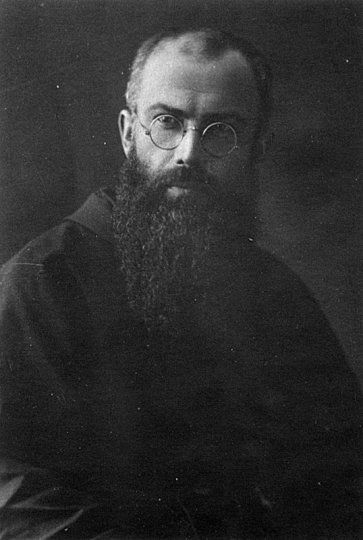
Or did Ezechiel’s vision actually come true in full, just not in a way that the nation expected it? Because the Apostle S. John uses these very images at the very end of the book of Apocalypse/Revelation. This is the same Apostle S. John who, in the extract we had from his Gospel this weekend, was anxious to tell us that the it is the Body of Christ that is the Temple, or Shrine. In the Book of Apocalypse, John shows the Church of Christ descending from on high, founded on Twelve Apostles, and with Twelve doors representing the Twelve Tribes of Israel. And, as with Ezechiel’s angel with a measuring rod, John too has an angel with a measuring rod. But here’s the last chapter of the Bible, when the John who saw a soldier open the side of the Body of Christ on the cross and blood and water flowing from the wound now tells of Ezechiel’s river gushing from the side of the Temple…

He shewed me, too, a river, whose waters give life; it flows, clear as crystal, from the throne of God, from the throne of the Lamb. On either side of the river, mid-way along the city street, grows the tree that gives life, bearing its fruit twelvefold, one yield for each month. And the leaves of this tree bring health to all the nations. No longer can there be any profanation in that city; God’s throne (which is the Lamb’s throne) will be there, with His servants to worship Him, and to see His face, His Name written on their foreheads. There will be no more night, no more need of light from lamp or sun; the Lord God will shed His light on them, and they will reign for ever and ever. Then the angel said to me, ‘These words are sure and true. The Lord God who inspires His prophets has sent His angel to tell His servants what must soon find its due accomplishment. Patience, I am coming soon.'”

Book of Apocalypse (aka. Revelation), 22: 1-7 [link]
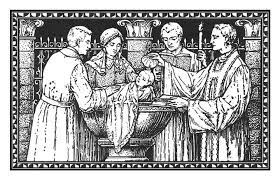
The basis of the readings for the dedication of churches is to remind us that the true Temple of God is to be the heart of man or woman who permits Him to live within. Christ once said that whoever is thirsty must needs come to Him, and from that person would gush forth living water. The living water of the Holy Ghost, of God’s presence within us. That eternal Life flowing through us will ensure that, though we shall all go into the grave, we shall not die forever. It is why the Church takes care to bury our bodies with great solemnity.

“You are a field of God’s tilling, a structure of God’s design; and we are only His assistants. With what grace God has bestowed on me, I have laid a foundation as a careful architect should; it is left for someone else to build upon it. Only, whoever builds on it must be careful how he builds. The foundation which has been laid is the only one which anybody can lay; I mean Jesus Christ. But on this foundation different men will build in gold, silver, precious stones, wood, grass, or straw, and each man’s workmanship will be plainly seen. It is the day of the Lord that will disclose it, since that day is to reveal itself in fire, and fire will test the quality of each man’s workmanship. He will receive a reward, if the building he has added on stands firm; if it is burnt up, he will be the loser; and yet he himself will be saved, though only as men are saved by passing through fire. Do you not understand that you are God’s Temple, and that God’s Spirit has His dwelling in you? If anybody desecrates the Temple of God, God will bring him to ruin. It is a holy thing, this Temple of God which is nothing other than yourselves.”

First letter of S. Paul to the Corinthians, 3: 9-17 [link]
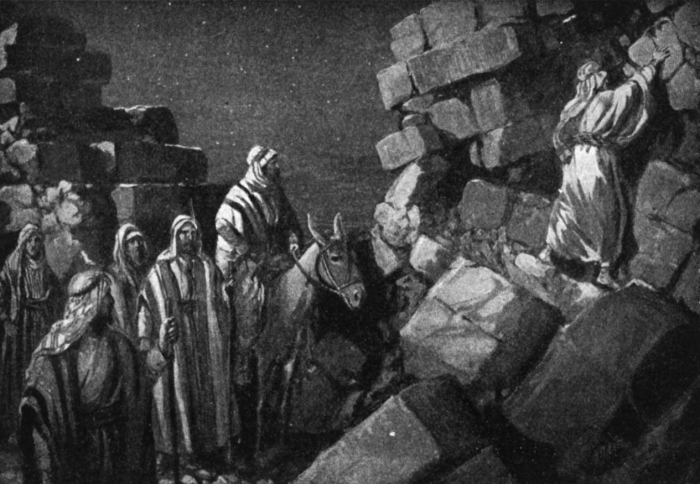
I thought I should add a quick summary of the readings for the 32nd Sunday of Ordered time (that we could have had this weekend). The first reading tells us about the Maccabean martyrs, faithful Jews who lived about one hundred and fifty years before Christ and under a severe persecution of the Greeks gave their lives for the love of God, nation and tradition. Perhaps that sounds familiar, on this Remembrance Sunday. These were not soldiers, but they died in turn in this story, seven brothers and their mother, each right before the others remaining. They resisted the Greek tyranny, because it threatened to extinguish Judaism once and for all. How did they answer the Greek tyrant?

‘God sees true,’ said they, ‘and will not allow us to go uncomforted. Did not Moses prophesy as much, even in his song of remonstrance, He will comfort His servants?’ So died the first, and now the second must make sport for them. When the hair was torn from his head and the skin with it, they asked, ‘Would he eat, or must his whole body pay for it, limb by limb?’ And he answered in good round Hebrew, eat he would not; whereupon he, in his turn, suffered like the first. ‘Ay, miscreant,’ he said with his last breath, ‘of this present life it lies in thy power to rob us; but He, Who is ruler of the whole world, He, for Whose laws we perish, will raise us up again, and to life everlasting.’ And now they had their will with the third, who was no sooner bidden than he put forth tongue and hands very courageously; ‘Heaven’s gift these be,’ he said, ‘and for God’s law I make light account of them, well assured He will give them back to me.’ Well might they marvel, king and courtiers both, at one so young that recked so little of his sufferings.”

Second book of the Maccabees, 7: 6-12 [link]

Not with us, they said, we shall die good Jews. Not too much later, Christian martyrs said similar things to the Romans, and the Persians, and the Arabs, and everybody else.

In the gospel story, Christ is approached by the Sadducees, who belonged to a school of theology that denied resurrection and eternal life. What Christ says to them in reply to their query about the life beyond this world should help us to understand not just Jewish martyrs and Christian martyrs, but indeed all those who suffer so that others might live. Christ often compares the children of this world (those who oppose Him) and the children of Light (the Christians). The children of this world attach themselves to the good things of this world, and the children of the Light are otherworldly. They give the good things of this world up for others, give them up for Love, and – in the words of the Maccabean – are raised us again, and to life everlasting.

“Then He was approached with a question by some of the Sadducees, men who deny the Resurrection; ‘Master,’ they said, ‘Moses prescribed for us, If a man has a married brother who dies without issue, the surviving brother must marry the widow, and beget children in the dead brother’s name. There were seven brethren, the first of whom married a wife, and died without issue. So the next took her, and also died without issue, then the third, and so with all the seven; they left no children when they died, and the woman herself died last of all. And now, when the dead rise again, which of these will be her husband, since she was wife to all seven?’ Jesus told them, ‘The children of this world marry and are given in marriage; but those who are found worthy to attain that other world, and resurrection from the dead, take neither wife nor husband; mortal no longer, they will be as the angels in heaven are, children of God, now that the Resurrection has given them birth. But as for the dead rising again, Moses himself has told you of it in the passage about the burning bush, where he calls the Lord the God of Abraham and the God of Isaac and the God of Jacob. It is of living men, not of dead men, that He is the God; for Him, all men are alive.”

Gospel of S. Luke, 20: 27-38 [link]

Blessed are they (Solemnity of All Saints)

“And I saw a second angel coming up from the east, with the seal of the living God. And he cried out with a loud voice to the four angels who were empowered to lay waste land and sea; ‘Do not lay waste land or sea or wood, until we have put a seal on the foreheads of those who serve our God.’ Then I heard the count of those who were sealed, a hundred and forty-four thousand of them, taken from every tribe of the sons of Israel. Twelve thousand were sealed from the tribe of Juda, twelve thousand from the tribe of Ruben, twelve thousand from the tribe of Gad; twelve thousand from the tribe of Nephthali, twelve thousand from the tribe of Aser, twelve thousand from the tribe of Manasses; twelve thousand from the tribe of Simeon, twelve thousand from the tribe of Levi, twelve thousand from the tribe of Issachar; twelve thousand from the tribe of Zabulon, twelve thousand from the tribe of Joseph, twelve thousand from the tribe of Benjamin. And then I saw a great multitude, past all counting, taken from all nations and tribes and peoples and languages. These stood before the throne in the Lamb’s presence, clothed in white robes, with palm-branches in their hands, and cried with a loud voice, ‘To our God, who sits on the throne, and to the Lamb, all saving power belongs.’ And all the angels that were standing round the throne, round the elders and the living figures, fell prostrate before the throne and paid God worship; ‘Amen,’ they cried, ‘blessing and glory and wisdom and thanksgiving and honour and power and strength belong to our God through endless ages, Amen.’ And now one of the elders turned to me, and asked, ‘Who are they, and whence do they come, these who are robed in white?’ ‘My Lord,’ said I, ‘thou canst tell me.’ ‘These,’ he said, ‘have come here out of the great affliction; they have washed their robes white in the blood of the Lamb.’

Book of Apocalypse (aka. Revelation), 7: 2-14 [link]

We honour this weekend the holy Saints of God, men and women like us who made their choice for Him and made great sacrifices to preserve their perfect communion with Him in this life. And their witness gives us great hope, for they are many, many in number. Some of seemingly inaccessible and angelic purity, great lights of the Church, whom we look upon with awe. Others who gave up lives of sin to live in the seclusion of the monasteries and conventual houses as penitents. And still others like ourselves, living in the world but not of the world, struggling daily with temptation and sin, endlessly penitent, but also continually sanctifying themselves and their lives with the daily practice of religion, pursuing lives of charity, their eyes fixed upon Christ, our refuge and our great hope.

In the course of the year, we remember several Saints on particular calendar days, the great names we are so attached to: Dominic, Teresa, Francis, Anthony, all the Elizabeths, all the Peters and Johns… But there is a multitude of Saints even greater than those that fit in the calendar year, many not known by name. And it is the great band of all of them that we honour today, looking upon them through the window that the book of Apocalypse gives us in our first reading, above. The word ‘apocalypse’ is simply Greek for ‘revelation,’ or ‘unveiling,’ and S. John (who wrote this book) pulls aside the veil so that we can look into the heavenly sanctuary to see a vast number of white-robed people of every nation and tribe, gathered before the throne of the Holy One. Is this all of mankind? By no means. We have to be realistic. What does S. John say to us again, but this time in our second reading?

“See how the Father has shewn His love towards us; that we should be counted as God’s sons, should be His sons. If the world does not recognise us, that is because it never recognised Him. Beloved, we are sons of God even now, and what we shall be hereafter, has not been made known as yet. But we know that when He comes we shall be like Him; we shall see Him, then, as He is. Now, a man who rests these hopes in Him lives a life of holiness; He, too, is holy. The man who commits sin, violates order; sin of its nature is disorder.”

First letter of S. John, 3: 1-3 [link]

It is the Christians who are God’s children, made so in baptism – a great gift and privilege. The Church gathered around the Lamb of God is by its nature exclusive. John says that we have to choose for Christ, and in so doing we separate ourselves from the world, which refuses to recognise Christ. We look about ourselves today in the ruin of what was Christian England and we see the truth of this. The first reading gives us a window, please God, into our own future, we who still choose for Christ. May we stand one day, beyond the travail of this life, within that merry crowd of white-robed Saints, delighting in their company, and they in ours.

But meanwhile, John says at the end of this second reading, Surely everyone who entertains such a hope must purify themselves and strive to be as pure as Christ, as pure as the angels. I mentioned at the beginning of this post the awe-inspiring men and women who were beacons of purity in their lives, many of them from infancy. We know that the New Testament addresses the general Catholic faithful as saints, ‘holy ones,’ chosen by God and Elect of His. We are all called to the highest levels of purity. Let us then imitate the Saints, as we imitate Christ, and be as perfect as they.


“Jesus, when He saw how great was their number, went up on to the mountain-side; there He sat down, and His disciples came about Him. And He began speaking to them; this was the teaching He gave. ‘Blessed are the poor in spirit; the kingdom of heaven is theirs. Blessed are the patient; they shall inherit the land. Blessed are those who mourn; they shall be comforted. Blessed are those who hunger and thirst for holiness; they shall have their fill. Blessed are the merciful; they shall obtain mercy. Blessed are the clean of heart; they shall see God. Blessed are the peace-makers; they shall be counted the children of God. Blessed are those who suffer persecution in the cause of right; the kingdom of heaven is theirs. Blessed are you, when men revile you, and persecute you, and speak all manner of evil against you falsely, because of Me. Be glad and light-hearted, for a rich reward awaits you in heaven; so it was they persecuted the prophets who went before you.”

Gospel of S. Matthew, 5: 1-12 [link]

We remember the Gospel lessons of the last several Sundays. They are all summarised for us in the blueprint for the Christian life that are the Beatitudes, the subject of our Gospel reading above. These Beatitudes are not bullet-points on a clipboard, that we can tick off, and say that we have done them. They are all inter-related, and their inner logic is humility before God and untiring charity. The poor in spirit know that they cannot rule their own lives, that it is only God Who can do this. This is humility – the maker of Saints.

Before humility falls pride and the desire to dominate others. The humble man or woman becomes gentle and values life, mourning its passing away and hoping in the restoration promised by the Holy One. In this hope, they are comforted and they will be comforted again in the renewal of all things at the end, in the apocalypse. In their love for the life they see about them, the humble children of God want justice and righteousness in this world, and they are merciful and forgiving of offence against themselves. In their great love for justice and righteousness before God, seeking Him before every worldly pleasure, they are clean of heart. And in their sorrow over the destruction and disorder brought about by sin and evil, they are peacemakers and bridge-builders.

And finally, their embrace of God will lead to them to give everything , even their own lives, for the sake of Him, and for the cause of Charity. For God is Charity. We shall strive to be like them. And we too shall be Saints!

Hypocrisy is easy (Sunday XXX of Ordered time)

The common theme in our readings this weekend seems to be the way God reads the hearts of men and women, how he identifies and values humility, justice and personal righteousness. Now, righteousness is innocence and purity before God, the absence of guilt – something those of us who live in constant temptation and cycles of sin and repentance cannot imagine. Perfection in righteousness is practically impossible without the grace of God, but it is our ideal. This is as important today for the Catholic as it was centuries ago for the Jewish sage who wrote these lines in the book of Ecclesiasticus/Sirach…

“In His own measure God’s gift repay; grudge thou must not what afford thou canst; the Lord is a good Master, and thou shalt have sevenfold in return. But think not to bribe His justice; He will have none of thy bribery. Never pin thy hopes on the power of wealth ill-gotten; the Lord is a true Judge, not swayed by partiality, and thou canst not win Him to take thy part against the friendless, turn Him deaf to the plea of the wronged. Prayer of the orphan, eloquent sigh of the widow, He will not disregard; see the tears on yonder widow’s cheeks, that accuse the author of her misery! From her cheeks they rise to heaven, where all prayers are heard, a grievous sight. None but His true worshippers He makes welcome; for their supplication the clouds give passage.”

Ecclesiasticus 35: 12-20 [link]

Purity before God is why the Church has preserved her ancient Sacrament of reconciliation, which replaces and renews the rites of reconciliation and atonement that Moses had established through the tabernacle/temple sacrificial system. In the Old Testament as in the New, purity and blamelessness before God results from the humble approach of the human soul to the Creator God, and it produces justice. In so far as the people draw near to God, they are able to show charity both to Him and to the people round about.

And that brings about justice and balance within society. In the best circumstances. Human society however, even in its simplest forms, becomes very stratified. There are classes within it, based on heredity, wealth, and in the past even perceived degrees of holiness. I say perceived because we can posture as much as we like, but only God can read our hearts and discern our true motives. As the first reading says, He is no respecter of personages, cares not for our ideas of social status, and will support the cause of the lowly man, the widow and the orphan, all of whom are the easy victims of injustices.

From these ancient wisdom texts of the Hebrews, such as Ecclesiasticus/Sirach, the Church has derived and traditionally set forth sins that ‘cry out to heaven for vengeance,’ which include murder and sexual violence, and also condemn the oppression of the poorest in society and the defrauding of labourers. The psalm we have this weekend [Psalm 33(34)] is even more outspoken about those who oppose the justice of God’s Law to cause distress to those who they see as beneath them, and how God upholds the victims. When we speak about the poor in these lines, we’re not only speaking of the poor in pocket, but all those who are bullied and victimised by the powerful. This poor man called, and the Lord heard him. And that brings us to the religious oppressor of the gospel story, and the apparent reason Christian society learned to condemn what we call ‘pharisaism.’

“There were some who had confidence in themselves, thinking they had won acceptance with God, and despised the rest of the world; to them He addressed this other parable: ‘Two men went up into the temple to pray; one was a Pharisee, the other a publican. The Pharisee stood upright, and made this prayer in his heart, I thank thee, God, that I am not like the rest of men, who steal and cheat and commit adultery, or like this publican here; for myself, I fast twice in the week, I give tithes of all that I possess. And the publican stood far off; he would not even lift up his eyes towards heaven; he only beat his breast, and said, God, be merciful to me; I am a sinner. I tell you, this man went back home higher in God’s favour than the other; everyone who exalts himself shall be humbled, and the man who humbles himself shall be exalted.”

Gospel of S. Luke, 18: 9-14 [link]

The pharisees were not all bad – they simply sought ritual purity, like the best of us – but also like some of us they were occasionally holier-than-thou, as in this parable, and condemned people who could not obey the precepts of the Law of Moses as well as they could. The tax-collector of the story is a public sinner, as the pharisee is a public holy-man, so this is also about superficiality, for the tax-collector here is (in his humility) actually the more honest man and the pharisee rather despicable – and Christ indicates that He could easily condemn the heart of the proud holy-man.


The only approach to God is then utter humility, and that includes a moderate (if not bad) appreciation of our own religious offering, even if it is given (in the words of Ecclesiasticus) with our whole heart, ungrudging. We bring what we can to the holy table at Mass, knowing that even that is insufficient, and that we honestly could have done better. That is not a hopeless attitude, because it has inspired centuries of saintly men and women to push forward even harder, to perfect their offering, their humble prayers (again in the words of Sirach) piercing the clouds of heaven.

We can never be religiously smug, like the bad pharisee of the gospel story, ticking away the sins we have not committed, in order to tell the Holy One that we are best of men and women, for we are in this way attempting to tell Him Who reads our hearts that we are good Jews, or good Christians, as the case may be. There is a similar gospel story to this in which a rich, young man tells our Lord that he has kept all the commandments of God (and so must be a good Jew), and Christ replies by calling him to greater perfection by giving away his vast wealth to the poor and joining the company of the disciples. And the rich young man walks away, sadly.

Let us not walk away, but ask the Holy Spirit of God to increase our generosity beyond a bare minimum, to give and to give without counting the cost, and giving God the glory for it. S. Paul tells us something in our second reading this weekend about fighting the good fight, keeping the faith until the end, pursuing righteousness, and finding our fulfilment not in ourselves but in God.

“As for me, my blood already flows in sacrifice; the time has nearly come when I can go free. I have fought the good fight; I have finished the race; I have redeemed my pledge; I look forward to the prize that is waiting for me, the prize I have earned. The Lord, the judge whose award never goes amiss, will grant it to me when that day comes; to me, yes, and all those who have learned to welcome His appearing…”

Second letter of S. Paul to S. Timothy, 4: 6-8 [link]

Dilexi te: the new exhortation from Rome

The Holy Father Leo XIV has published his first apostolic exhortation, entitled Dilexi te, on the virtue of charity and assistance of the poor. Download this latest offering by clicking the button below (PDF), and a quick summary of it in an infographic by clicking the button next to that (PDF)

The Rosary and persistence in prayer (Sunday XXIX of Ordered time)

October is the month of the Rosary, and I haven’t said anything about that yet, so I shall for a bit this weekend. And it helps that the readings this weekend concern persistence in prayer. What may our continual prayers for peace and for justice (in a world that seems to want anything but) be if not persistent and hopeful, like those of the widow of the gospel story…

“And He told them a parable, shewing them that they ought to pray continually, and never be discouraged. ‘There was a city once,’ He said, ‘in which lived a judge who had no fear of God, no regard for man; and there was a widow in this city who used to come before him and say, Give me redress against one who wrongs me. For a time he refused; but then he said to himself, Fear of God I have none, nor regard for man, but this widow wearies me; I will give her redress, or she will wear me down at last with her visits.’ ‘Listen,’ the Lord said, ‘to the words of the unjust judge, and tell me, will not God give redress to His elect, when they are crying out to Him, day and night? Will He not be impatient with their wrongs? I tell you, He will give them redress with all speed. But ah, when the Son of Man comes, will He find faith left on the earth?'”

Gospel of S. Luke, 18: 1-8 [link]

So, would Christ find faith left even in His Church today? I think He would. Would He find trust among His faithful people that justice will return. In every soul that still prays to Him, who looks aloft in hope… yes, He would.

The Rosary or coronet of our Lady is a string of 150 Aves or Hail Marys that historians suggest were meant to allow ordinary people in the medieval period to accompany the monks who recited the whole of the 150 psalms of the Book of Psalms regularly, either through a week or through a day. How do you keep track of 150 Aves, and how unwieldy do you suppose a string of 150 beads can get?

A fifteen-decade rosary

So, holy prudence reduced the strings most of our holy Religious – the monks and nuns – to 50 beads (which is what we are used to), which could be used three times. At some point also, the 150 Aves were divided into the fifteen mysteries in three batches – the Joyful, Sorrowful and Glorious Mysteries – of the Holy Rosary, that we know so well. After some clamour in the middle of the twentieth century for more rosary still (because we Catholics couldn’t get enough rosary), the Holy Father John Paul II – a great devotee of our Lady and her Rosary – suggested the five optional-extra mysteries that we call the Luminous Mysteries. So there you have it; a little potted history of the Rosary.

But what is the glory of the Rosary? Not that we necessarily get something material out of it, although our dear Lady may arrange that for us. After all, she helps us in our difficulties in this life, and she asked us to pray the Rosary for peace. But it’s not the important bit, it’s only a secondary, if welcome benefit. The glory of the Rosary is what is hidden within it: the mysteries of our Catholic Faith, in the life, death, resurrection and glory of Our Lord Jesus Christ, and also of His mother. For their fates are intertwined, and in saying the rosary and attempting to enter those mysteries, we hope to intertwine our own eternal fates with theirs. For we want heaven, we want Christ, and if saying a few hundred Aves a week can help that, we should do our best.

‘Blessed be that monotony of Aves,’ said S. Josemaria Escriva, ‘that purifies the monotony of your sins.’ So, the heart of the rosary – this great prayer of ours – is meditation on the life, death and resurrection of Christ, walking through these in the company of His mother. And who better can help us to understand Him, and to grow nearer to Him each day. If you say only 50 Aves a day, or if you go the full monty and say all 150, she will draw you inexorably along the narrow path and through the narrow gate, leaving behind the filth of this world and its rebellion against the Holy One and meeting at long last the Greatly Desired, the Lord of our Hearts.

But the Rosary recited regularly wants commitment, and that wants effort, and if you think about it it is the effort of it – of struggling with a good work  – that is crowned in the end with glory. And so let us do our best.


Speaking of effort… in our first reading today, we find that old man Moses, long past his eightieth year, has discovered that the success of the first battle the nation of Israel has with their long-term enemies the Amalekites depends on him holding his arms up in the air for hours.

“And while they were at Raphidim, the Amalecites came and offered the Israelites battle. So Moses said to Josue, ‘Muster me an army, and go out to fight against Amalec; I will take my stand to-morrow on the hill top, with the miraculous staff in my hand.’ And Josue did as Moses bade him, going out to do battle with Amalec, while Moses, Aaron and Hur went up to the hill top. Whenever Moses lifted up his hands, Israel had the better of it; only when he rested for a little did the victory go to Amalec. But now Moses’ arms grew weary; so they found him a stone to sit on and bade him be seated on it; then, one on each side, Aaron and Hur kept his hands lifted up. In this way, the strength of his arms held out until set of sun, while Josue routed Amalec, and all the forces Amalec could rally, at the sword’s point.”

Book of Exodus, 17: 8-13 [link]

There is a comic element to this, almost a slapstick with Moses raising and lowering his arms and Joshua struggling with this down on the plain. But think of Our Lady asking us at the tail end of the first World War to pray our Rosaries for peace. And then, a couple of decades, later the Germans are at it again. Shall we ever have peace? The Holy Father has just asked us this very month to pray the Rosary again for peace. And so… out with our beads, our arms are heavy… with laziness or reticence, or with the cares of life, which exhaust us and distract us, and there is no time for any prayer, certainly not the toil of the Rosary.

Moses had Aaron and Hur to hold his up, we should find our own assistance in these evil days. The Church has given us many weapons for spiritual warfare in our times. I’ve said something about the Rosary already. S. Paul gives us two more in our second reading: Scripture, our great inheritance from the Jewish nation, and the tradition Timothy has had from the Church, and from his mother and grandmother, both of whom Paul knew well.

“It is for thee to hold fast by the doctrine handed on to thee, the charge committed to thee; thou knowest well, from whom that tradition came; thou canst remember the holy learning thou hast been taught from childhood upwards. This will train thee up for salvation, through the faith which rests in Christ Jesus. Everything in the scripture has been divinely inspired, and has its uses; to instruct us, to expose our errors, to correct our faults, to educate us in holy living; so God’s servant will become a master of his craft, and each noble task that comes will find him ready for it. I adjure thee in the sight of God, and of Jesus Christ, Who is to be the judge of living and dead, in the name of His coming, and of His kingdom, preach the word, dwelling upon it continually, welcome or unwelcome; bring home wrong-doing, comfort the waverer, rebuke the sinner, with all the patience of a teacher.”

Second letter of S. Paul to S. Timothy, 3: 14 – 4: 2 [link]

With these weapons – Scripture, tradition, and the devotions that are ours – we shall snatch away our souls and those of the people we love from the enemy, the lord of this world, and entrust them to Our Lord Jesus Christ through His good Mother. And we shall not cease to pray, like the persistent widow of the gospel, for this world of men and women, made in the likeness of God, for their solace in this world, and for their eternal welfare.

For evil must inevitably rule this world, but evil will never have the last word, and Justice will come at last. 

Jews and Gentiles again (Sunday XXVIII of Ordered time)

“Then He came to Nazareth, where He had been brought up; and He went into the synagogue there, as His custom was, on the sabbath day, and stood up to read; the book given to Him was the book of the prophet Isaias; so He opened it, and found the place where the words ran, ‘The Spirit of the Lord is upon me; he has anointed me, and sent me out to preach the gospel to the poor, to restore the broken-hearted; to bid the prisoners go free, and the blind have sight; to set the oppressed at liberty, to proclaim a year when men may find acceptance with the Lord, a day of retribution.’ Then He shut the book, and gave it back to the attendant, and sat down. All those who were in the synagogue fixed their eyes on Him, and thus He began speaking to them, ‘This scripture which I have read in your hearing is today fulfilled.’ All bore testimony to Him, and were astonished at the gracious words which came from His mouth; ‘Why,’ they said, ‘is not this the son of Joseph?’ Then He said to them, ‘No doubt you will tell me, as the proverb says, Physician, heal thyself; do here in thy own country all that we have heard of thy doing at Capharnaum.’ And He said, ‘Believe me, no prophet finds acceptance in his own country. Why, you may be sure of this, there were many widows among the people of Israel in the days of Elias, when a great famine came over all the land, after the heavens had remained shut for three years and six months, but Elias was not sent to any of these. He was sent to a widow woman in Sarepta, which belongs to Sidon. And there were many lepers among the people of Israel in the days of the prophet Eliseus; but it was none of them, it was Naaman the Syrian, who was made clean.‘ All those who were in the synagogue were full of indignation at hearing this; they rose up and thrust Him out of the city, and took Him up to the brow of the hill on which their city was built, to throw Him over it. But He passed through the midst of them, and so went on His way.”

Gospel of S. Luke, 4: 16-30 [link]

It must not be forgotten how revolutionary Christ and His Apostles were being in advocating for the entry of non-Jews, of Gentiles, into the greatly-cherished promises that God had once made to Abraham and to his descendants. As above, in His very hometown, in Nazareth, the locals were surprised that the carpenter’s son had become a sage and a Torah-teacher, but they were outraged about His love of those foreigners, and tried to chuck Him over a cliff. And yet, as we said in refrain to our psalm this weekend, the Lord has shown His salvation to the Gentiles. The Nazareth story tells us that when the Jew refuses to believe, the Gentile often does. This was the experience of Christ, and also of His Apostles in the immediate history of the Church, after Pentecost, when for example the Samaritans were among the earliest to enter the Christian community.


We don’t hear enough about the prophet Elisha (aka. Eliseus), the disciple of the greater prophet Elijah, who is one of two Old Testament characters who never died. Elisha did die, but even that didn’t stop him working miracles. When his body brought somebody else back to life, we were given an odd window into the Hebrew use of the relics of Saints. So, Elisha, who had craved a greater share even than his master Elijah’s power over nature, unsurprisingly became an extraordinary miracle man. This weekend, in our first reading, we have one of the stories of his miracles, when he heals the illness of this Syrian soldier Naaman.

“Naaman came with his horses and his chariots, and stood at the door of Eliseus’ house; where Eliseus sent word out to him, ‘Go and bathe seven times in the Jordan, if thou wouldst have health restored to thy flesh, and be clean.’ At this, Naaman was for going back home; ‘Why,’ he said angrily, ‘I thought he would come out to meet me, and stand here invoking the name of his God; that he would touch the sore with his hand, and cure me. Has not Damascus its rivers, Abana and Pharphar, such water as is not to be found in Israel? Why may I not bathe and find healing there?’ But, as he turned indignantly to go away, his servants came and pleaded with him; ‘Good father,’ they said, ‘if the prophet had enjoined some great task on thee, thou wouldst surely have performed it; all the more readily thou shouldst obey him when he says, Wash and thou shalt be clean.’ So down he went, and washed in the Jordan seven times, as the servant of God had bidden him. And with that, his flesh healed up, and became like the flesh of a little child, and he was clean. So, coming back with all his retinue, he stood there in the presence of God’s servant; ‘I have learned,’ he said, ‘past doubt, that there is no God to be found in all the world, save here in Israel. And now,’ he said, ‘pray accept a gift from thy servant, to prove his gratitude!’ ‘As the Lord I serve is a living God,’ Eliseus answered, ‘I will accept nothing from thee;’ nor would any pleading bring him to consent. At last Naaman said, ‘Have thy way, then, lord prophet, but grant me a gift instead. Let me take away with me part of the soil of Israel, as much as two mules can carry; my burnt-sacrifice, my offerings henceforward are for the Lord only, and for no alien god.'”

The fourth book of the Kings (aka. the second book of the Kings), 5: 9-17 [link]

This story is even more significant because Christ Himself mentions it in the gospels (see above), when He seeks to remind His Jewish listeners that, in their opposition to the entry of non-Jewish people into the promises of Abraham, they were forgetting that God had in the past blessed several non-Jews. Naaman was one of those figures in the Hebrew Bible. That is the first point to be made about this story. The God Who had blessed the race of the Hebrews – the race of Abraham – was seen by ancient people as the God of Israel, in particular. Why would He assist non-Hebrews?

However, this is a common feature of the Old Testament, and in the book of Jonah, we hear of a Hebrew prophet who is sent on the mission to the Assyrian city of Nineveh – one of the largest cities of the time, and a Gentile city – the people of which repent of their sin and are forgiven by God – by the God of the Hebrews. These stories are used by Christ in the gospels to demonstrate that the time had arrived for Gentiles – non-Jewish people – to enter the Church.

And that is double good-news for us, who are not of the race of the Jews: first, God has become man and salvation has come to humanity, second, this salvation is not only for the chosen people of God, the Jews, but for everybody who approaches the Holy One in faith and humility. We can all be Naaman the Syrian.

So, then, God heals everybody who approaches Him in faith. Even in the Old Testament. The other point in this story is the illness, given here as leprosy. The isolation of sufferers of a variety of diseases called leprosy, to prevent contagion, is one of the oldest stipulations in the Old Testament. Get them out of the camp of Israel, keep them out of the camp, they are ostracised until the disease is confirmed by the priests to have been somehow healed (we see that in the gospel story this weekend, below). If you can imagine it, this created a second society of sick people who lived at a distance from the main community of Israel. And this would have persisted until very recently, when modern medicine began to treat such diseases adequately. There still are leper colonies in some places, and the Church has a significant outreach to these poor men and women, social outcasts today, as they would have been always. The great general Naaman is about to lose all his occupation and all his society, as well as his personal health.

And when we talk about disease in the Bible, we must talk also about the spiritual contagion of sin, which in our formerly-Christian countries historically created spiritual pariahs and necessitated important taboos, some of which persist in our more godless times. We may see that as a negative feature of the history of our countries, but the Church has in the past tried harder to preach an ethics based on virtue, and to create a truly Christian society. Shall we look down on our forebears for that?


“A time came when He was on His way to Jerusalem, and was passing between Samaria and Galilee; and as He was going into a village, ten men that were lepers came towards him; they stood far off, crying aloud, ‘Jesus, Master, have pity on us.’ He met them with the words, ‘Go and shew yourselves to the priests;’ and thereupon, as they went, they were made clean. One of them, finding that he was cured, came back, praising God aloud, and threw himself at Jesus’ feet with his face to the ground, to thank Him; and this was a Samaritan. Jesus answered, ‘Were not all ten made clean? And the other nine, where are they? Not one has come back to give God the praise, except this stranger.’ And He said to him, ‘Arise and go on thy way, thy faith has brought thee recovery.'”

Gospel of S. Luke, 17: 11-19 [link]

If we begin with the Jewish society of the first century, we know how some serious social sins, such as adultery and tax-collecting, created ostracisms as serious as that reserved for the lepers. Sin was quite a spiritual leprosy. When the ten lepers approach our Lord in this gospel story, let us then think of ourselves in their place. Every one of us who is locked into a cycle of addition or of habitual sin needs healing, and needs healing from Christ.

In these evil days the worst of the sins in the Bible have been normalised to the extent that any Christian mission work usually falls on deaf ears. Nothing we say today can convince many people that adultery/fornication, or dishonesty/theft, or even the murder of little babies in the womb and the enabling of suicide is wrong. We live in a society of spiritual lepers, most of it composed here of nominal Christians who can no longer countenance the teaching of either Moses in the Old Testament or of Christ in the New.

And that’s fair enough, perhaps. We have suffered very much in recent decades as a society in hearing the Gospel that our ancestors heard, we have suffered from a lack of adequate catechesis, we have had our moral senses dulled by an endless media narrative that seeks to minimise the Christian heritage of our countries and supplant it with a relativism that creates a market for multiple religions of equal value. That distances people from the Creator God, just as much as the ancient Syria of Naaman was, and the ancient Assyria of Jonah’s story.

But there is a glimmer of hope for a people distanced from Christ. The Church in this country is not what it was, but there is a light within her, and a great power. And a name – the name of the Ancient One, the Creator of all things. Naaman heard that there was possible healing in Israel, and came looking for Elisha. A Jewish leper of the first century knew to look for the miracle worker from Nazareth. And today quite every man and woman knows of His Church, and if they have not it is because we have failed to tell them about it. The one great job Christ gave His Church was evangelisation, and we are to inform this world we live in of the power of Christ, of where He is to be found, and how people who desire healing are to find Him.

And He will bless us all alike for our faith, Jew and non-Jew, Christians and non-Christian, and free us from our slavery to sin.

‘How long, o Lord?’ (Sunday XXVII of Ordered time)

“Lord, must I ever cry out to Thee, and gain hearing never? Plead against tyranny, and no deliverance be granted me? Must I nothing see but wrong and affliction; turn where I will, nothing but robbery and oppression; pleading at law everywhere, everywhere contention raising its head? What marvel if the old teachings are torn up, and redress is never to be found? Innocence by knavery circumvented still, and false award given…! What message, then, is entrusted to me? What answer shall I make when I am called to account? Here on the watch-tower my post shall be; stand I on the battlements, and await His signal. ‘Write down thy vision,’ the Lord said, ‘on a tablet, so plain that it may be read with a glance; a vision of things far distant, yet one day befall they must, no room for doubting it. Wait thou long, yet wait patiently; what must be must, and at the time appointed for it. Foul air the doubter breathes; by his faith he lives, who lives right…'”

Prophecy of Habacuc, 1: 2-4; 2: 1-4 [link]

This is a good set of readings we have at Mass this weekend, as the amount of violence around the world increases, in spite of an apparent international cooperation and the common experience of free travel and mutual understanding between peoples. I say ‘apparent’ because there are still hostile groups spreading ideologies of death and destruction, and seeking to terrorise entire communities. We look wistfully to a time when we thought there could be a war to end all wars; how hopeful we have been about humanity. And then there was another wretched war, and another and another.

It’s no longer only about nations raising armies against nations; a matter of these Germans here, or those Russians there. In a very multicultural environment, the whole world is on our doorstep, or down our streets, as much in the big cities as in our provincial towns. And that can be a beautiful thing, and it often is. But it also brings foreign wars and the accompanying violence within close proximity. Communal tensions that we used to hear about on the television as happening half a world away, we now hear happening in Leicester, or most recently Manchester. And we see the pictures of the recently dead in the media, and weeping family members online, and we may remember the beatitudes of Christ from the gospels of S. Matthew and S. Luke.

We may have deceived ourselves in the West into thinking that a more secular, atheist and humanist environment could lead to endless peace, although most of the world is still on fire with people killing other people, and that a soup of cultures stirred together may not of necessity bring only good things. In a time of relatively more strife, in the first century of this era, the Lord said, Blessed are the poor in spirit, the humble, those who strive for righteousness before God, who moan in the absence of justice, who are peace-makers in the midst of war, and finally who suffer and die for the cause of Christ, for the cause of love, for holding up the standard of the Cross in a world that despises the Cross. How long, o Lord! cries the prophet in our first reading today. Habakkuk is our prophet as we stare wistfully at news reports of seemingly endless destruction (because that’s what news reporters love to report about, but even so)… Why is man so anxious to hurt man, why can’t people just get along? The prophet didn’t have to look beyond the borders of the Israel he knew and loved, for as people fell away from the Law of God (‘old teachings torn up,’ in the reading above), communal strife was inevitable, envies and jealousies were everywhere, and every man sought selfishly for his own well-being. Contention and discord…


Habakkuk speaks for those of us who just want peace and an abundance of righteousness. I think most people in this world would say they want peace. Nobody really wants war. But why then, during peace-time, do people in the most prosperous cities of the world make war, commit crime? It’s not only the impoverished who enter systems of crime. When will justice come? God replies in the first reading to say, Wait and watch, be patient, justice will come… the situation of the world causes us distress when we are so surrounded by it, thanks to the news media. How does God permit these evils? we say, is there even a God? some of us find ourselves daring to ask. But, faith! Be patient, justice will come. The Jews in the first century received this same message. They were used to violence, the Romans being far worse than the governments we know, the family of Herod being no better. And the Jews come up to the Lord in our gospel story to say, Increase our faith.

“The apostles said to the Lord, ‘Give us more faith.’ And the Lord said, ‘If you had faith, though it were like a grain of mustard seed, you might say to this mulberry tree, Uproot thyself and plant thyself in the sea, and it would obey you. If any one of you had a servant following the plough, or herding the sheep, would he say to him, when he came back from the farm, Go and fall to at once? Would he not say to him, Prepare my supper, and then gird thyself and wait upon me while I eat and drink; thou shalt eat and drink thyself afterwards? Does he hold himself bound in gratitude to such a servant, for obeying his commands? I do not think it of him; and you, in the same way, when you have done all that was commanded you, are to say, We are servants, and worthless; it was our duty to do what we have done.'”

Gospel of S. Luke, 17: 5-10 [link]

His message to them is the same as His message to Habakkuk: do your duty, your work of charity, and do it well. The reference to commands here we may associate with the commandments of the Law of Moses, as made clearer by the Gospel of Christ. If we do all that was thus commanded, we are but doing our duty as good Jews and/or good Christians. And we must do it well, and with the right intentions. And having finished it, in humility we must then declare that we have only done as we should, and not seek any glory in it or any reward from it. The world is always falling to pieces around us, but we are the stewards of this world. Be good stewards, as Paul says in the second reading, inspired by the Spirit of action, love, self-control, proudly Christian with a vocation to holiness, waiting for the Lord.

“That is why I would remind thee to fan the flame of that special grace which God kindled in thee, when my hands were laid upon thee. The spirit He has bestowed on us is not one that shrinks from danger; it is a spirit of action, of love, and of discipline. Do not blush, then, for the witness thou bearest to our Lord, or for me, who am His prisoner; share all the tribulations of the gospel message as God gives thee strength. Has He not saved us, and called us to a vocation of holiness? It was not because of anything we had done; we owe it to His own design, to the grace lavished on us, long ages ago, in Christ Jesus. Now it has come to light, since our Saviour Jesus Christ came to enlighten us; now He has annulled death, now He has shed abroad the rays of life and immortality, through that gospel which I have been appointed to herald, as an apostle and a teacher of the Gentiles. This is what I have to suffer as the result; but I am not put to the blush. He, to whom I have given my confidence, is no stranger to me, and I am fully persuaded that he has the means to keep my pledge safe, until that day comes. With all the faith and love thou hast in Christ Jesus, keep to the pattern of sound doctrine thou hast learned from my lips. By the power of the Holy Spirit who dwells in us, be true to thy high trust.”

Second letter of S. Paul to S. Timothy, 1: 6-14 [link]

When we say, ‘I believe’, we also say ‘I belong’

Sharing the Good News 

“On Evangelii Gaudium Sunday the bishops of England and Wales ask parishes to pray for the work of evangelisation across our countries and to look for ways in which we can all do our part in sharing the beauty and joy of knowing Jesus Christ. This is very much our mission. 

“Reflecting the importance of sharing the good news is an essential part of our mission at home, and next year this annual Sunday will return to its former title of Home Mission Sunday. The joy of the gospel is where we should feel ‘at home’ but also challenges us to be missionary disciples in sharing the good news of Jesus Christ. 

I believe 

“This year, the Church has been celebrating a significant anniversary. It is 1,700 years since the Council of Nicaea. This great gathering of Bishops from around the Church began the work to formulate the creed we proclaim Sunday by Sunday. It is the content of this creed that is our mission, so that we may know and love God in this life, in order to be happy with him forever in the next. 

The creed begins with a profound proclamation, ‘I believe’

“In his book, Priests for the Third Millennium Cardinal Dolan tells the story of an American Bishop who faced a difficult problem with a college in his diocese where the staff and students were deeply divided. The Bishop tried bringing a sense of calm to the situation and everyone complained. Eventually former students started picketing outside the college. They had signs saying some pretty awful things about the Bishop. So, he went to the college to confront them. Of course, it was a nightmare. The poor Bishop was surrounded by angry comments and snarling faces. He was questioned by journalists about what he was going to do, what was his reason for being there, why did he bother etc. Confronted by so much anger and frustration, the Bishop simply replied, ‘I believe in God’ and continued with the Creed, the same creed we say every Sunday, which began to be formulated at the Council of Nicaea 1,700 years ago. 

“In the face of a world of anger, apathy, doubt, turmoil, the Bishop did the one thing he could and proclaimed, ‘I believe.’ They are the first words of the creed, but they sum up the heart of being part of the Church, because when we say, ‘I believe,’ we also say ‘I belong.’

“In what can sometimes be the chaos and messiness of our own lives, the answer God invariably gives us is to join with the whole family of God and say, ‘I believe.’

“At the heart of it all, the Christian must be a believer, to be able to say, “I believe,” someone who converses with God. If this is not the case, then all our activities are futile. The most important thing we can do for ourselves and for each other is, first of all, to be a believer. Through this we let God come into the world. And if God is not at work, our work will never be enough; when people sense that someone is there who believes, who lives with God and from God, hope becomes a reality in their lives. 

“Through the faith of the Christian, doors open up all around for people: it is really possible to believe, even today. All human believing is a believing-with, and for this reason the one who believes before us is so important. Where were we inspired to believe? Who handed on to us the gift of the faith? This year, we celebrate the faith and belief of the Bishops at Nicaea. They handed on to us a way in which we can proclaim the truth of who God is and who we are as the people of God. 

“As the gospel of St John reminds us, “Jesus answered them, ‘This is the work of God, that you believe in him whom he has sent.’ (John 6.29). To do the work of God is to believe. 

About the Mission Directorate 

“To help in this great commission, the Bishops’ Conference of England and Wales has a mission team which is based at their secretariat in Eccleston Square in London. This office supports the bishops in their work to promote the proclamation of the gospel across England and Wales. The Mission team does this in several diverse areas, but all of which help to serve the kingdom of God. Catechesis and evangelisation; helping to deepen knowledge of the beauty of Holy Scripture; marriage and family life; the National Office of Vocations; loving and protecting the great patrimony of our historic churches and cathedrals; serving the liturgy of the Church; promoting Christian Unity and Interreligious dialogue; supporting the work of chaplaincy in Higher Education and in Prisons; and in supporting the work of those who do much to share the gospel with young people today. 

“To aid the work of the directorate, there is an annual collection in every parish to help us in helping you. If you can, please be generous in supporting the work of the Mission team. We know there are many demands on your time and on your purse, but we remain truly grateful to you for any support you can give. 

“The greatest support remains your prayers and your own dedication to sharing the good news of salvation in Jesus Christ. 

“St. Augustine tells us that God made us to make the times, not the times to make us, and unless we make the times better with the light of Jesus Christ, then the times will make us worse with the darkness of despair. This is only possible when we say with honest and open hearts ‘I believe.’ Hope is despair overcome and the way we enkindle hope in the hearts of all is to believe. 

“As we rejoice in the gift of the creed, 1,700 years since the great Council of Nicaea, through all the ups and downs of life, may we be able to say with joyful hearts, ‘yes Lord, I believe.’ Amen.”

Abbot Hugh Allan O’Praem
Director of Mission

Blinded by comfort (Sunday XXVI of Ordered time)

“‘There was a rich man once, that was clothed in purple and lawn, and feasted sumptuously every day. And there was a beggar, called Lazarus, who lay at his gate, covered with sores, wishing that he could be fed with the crumbs which fell from the rich man’s table, but none was ready to give them to him; the very dogs came and licked his sores. Time went on; the beggar died, and was carried by the angels to Abraham’s bosom; the rich man died too, and found his grave in hell. And there, in his suffering, he lifted up his eyes, and saw Abraham far off, and Lazarus in his bosom. And there, in his suffering, he lifted up his eyes, and saw Abraham far off, and Lazarus in his bosom. And he said, with a loud cry, Father Abraham, take pity on me; send Lazarus to dip the tip of his finger in water, and cool my tongue; I am tormented in this flame. But Abraham said, My son, remember that thou didst receive thy good fortune in thy life-time, and Lazarus, no less, his ill fortune; now he is in comfort, thou in torment. And, besides all this, there is a great gulf fixed between us and you, so that there is no passing from our side of it to you, no crossing over to us from yours. Whereupon he said, Then, father, I pray thee send him to my own father’s house; for I have five brethren; let him give these a warning, so that they may not come, in their turn, into this place of suffering. Abraham said to him, They have Moses and the prophets; let them listen to these...'”

Gospel of S. Luke, 16: 19-31 [link]

And therefore the theme of the readings this weekend is the observance of the commandments of God, as signs of personal allegiance to God. The very first words of the Mass in the introit are words of confession of sin, sin which is the result of a negligence with respect to the Law of God. It is interesting, in reading history, to see how we suffer the same problems today as people in every age of men. That’s why I think that the conversations of men and women with God in Scripture (and in the Lives of the Saints, within the tradition of the Church) are sources of perennial wisdom. Look, for example at our first reading that we have from the prophecy of Amos.

“Poor fools, that in Sion or high Samaria take your ease, and fear nothing! That lord it over the Gentiles, and pass proudly through Israel’s domain, bidding us make our way to Chalane, and thence to noble Emath, or go down to Gath, where the Philistines are, and see if land of theirs be fairer, borders of theirs be wider, than these of ours. Poor fools, with the evil day ever at arm’s length, wrong enthroned ever close at hand! Sleep they on beds of ivory, sprawl they at table, eating the best lambs flock can provide, calves fattened at the stall; and ever must harp and voice nicely accord, ay, very Davids they think themselves for musical invention! All their drinking is from the bowl, all their ointment of the best, and what care they for Joseph’s ruin? Lead their folk they shall, but into exile; the revel must break up at last.”

Prophecy of Amos, 6: 1-7 [link]

We shall find here a wealthy elite, enjoying great wealth and the pleasures of life, unconcerned with the theological ruin of the nation. The kingdoms of Israel had been built on a theological vision, that had been given to the people by Moses. They were the people of God, the Chosen People, and their prosperity depended on their fidelity to a covenant with God, and that fidelity was measured by their observance of the commandments of God, and the heart of this observance was personal piety and social justice. Both these should have prevented them from lording over the Gentiles, and concerned them with the fate of their nation, just as it should have led the rich man of the Gospel to lift Lazarus out of the mud.

But we can already see signs of rebellion against this origin of the nation in the very stories of Moses and Aaron, and we can imagine (from our own experience) how the relative peace and the prosperity that the reigns of David and Solomon later ushered in would increase rebellion against God. When we aren’t struggling to get away from Egypt and fight starvation and thirst in the desert, when indeed we have the sufficiencies of life and the securities established by previous generations, we are easily tempted to think that we are sufficient unto ourselves, and that we do not need the Father God’s assistance, much less trouble ourselves with His commandments.

And human beings will be human beings, and inevitably a small number of men end up with most of the available wealth, through ability and through cunning. And, in lording over the Gentiles, they can no longer see very far into the future to see the ruin of their enterprise, and perhaps refuse to. So, God says through Amos the prophet: those in wealth and security in Jerusalem/Sion (and in the equivalent capital of the northern kingdom in Samaria) are enjoying a profligate wealth and are conquered by a short-term security, and cannot foresee the coming destruction of the nation, here represented by the name of the largest tribe, named after the patriarch Joseph of the Genesis stories.

For the prophet, the ruinous Assyrian army is already on the horizon and Samaria will be destroyed. And so, wealth and prosperity and even the absence of war are mere blinders, reducing our vision both in time (so we cannot see the future well) and in space (so we become more selfish, and unable to act in charity). And that takes us over to the gospel story, about the rich man and Lazarus. The rich man is ensconced snugly in his wealth and cannot imagine his dismal future – in Hades – nor can he notice the poor man on the doorstep of his home, and even in his misery in the underworld, he needs it pointed out.


Wealth is not necessarily an evil thing, and money we need for our lives in this world. The trouble arrives when money and wealth becomes ends in themselves, rather than as means to something greater. The rich people of the Amos’ prophecy did not suffer the destruction of their national security and the resulting exile because they were rich, nor even did the rich man of the gospel story merit eternal destruction because of his wealth. And it was not on account of their failures in ritual either that they ultimately suffered, for they likely performed all the was required of them in temple and sacrifice.

But they failed the duties of religion with regard to charity, for in their revelry Amos’ elites ignored the ordinary work of justice towards people in need, possibly even built their material fortunes on defrauding ordinary people. At the very least, as with the rich man of the gospel, they had learned to ignore the poor and distressed. These stories are given us as lessons, and charity is not only about throwing money  at various concerns in foreign countries. Charity wants time and personal attention given actively to those who need it, and these are often not much further than the next room in our homes, the next house in our streets, the next street in our villages and towns. For as we all know, charity always begins at home. 

Using money (Sunday XXV of Ordered time)

One of the messages we constantly receive throughout Holy Scriptures, as well as from multiple Saints in the history of the Church, is the importance of integrity: being on the outside as we are on the inside. God our Lord, Who condemns deceit, also through the prophets and Our Lord Jesus Christ condemns hypocrisy. And hypocrisy is quite simply saying something and doing something else, not practising what one preaches. So, the prophet Amos in our first reading today preaches against the merchant class, and the nobility that supports them of observing the superficials of religion while ignoring the justice and charity that religion requires.

“Here is word for you, oppressors of the poor, that bring ruin on your fellow-citizens in their need; you that long for New Moon and sabbath to be at an end, for trading to begin and granary to be opened, so you may be at your shifts again, the scant measure, the high price, the false weights! You that for a debt, though it were but the price of a pair of shoes, will make slaves of poor, honest folk; you that sell refuse for wheat! By Jacob’s ancient renown the Lord swears it, crimes of yours shall remain for ever unforgotten.”

Prophecy of Amos, 8: 4-7 [link]

The New Moon marks the beginning of a month in the Hebrew calendar that the Jews still use today, and the new-month (new-moonth) festivities are signals of religious observance, as are the sabbaths. So there were Hebrews in Amos’ time, hundreds of years before our Lord, who attended the Temple, and simultaneously trampled on the needy, swindling money from them with tampered scales. This reminds us of gospel stories and parables, where for example a levite and a priest can process up to Jerusalem for Temple duties while leaving a good Samaritan to observe charity to the dying man on the roadside, or good pharisees can squabble about the Sabbath observance while neglecting to help ordinary Jews in the practice of the Law of Moses, or indeed when the business of buying and selling – and inevitably its tampered scales – can be brought into the very courtyards and halls of the Temple.

“And He said to His disciples, ‘There was a rich man that had a steward, and a report came to him that this steward had wasted his goods. Whereupon he sent for him, and said to him, What is this that I hear of thee? Give an account of thy stewardship, for thou canst not be my steward any longer. At this, the steward said to himself, What am I to do, now that my master is taking my stewardship away from me? I have no strength to dig; I would be ashamed to beg for alms. I see what I must do, so as to be welcomed into men’s houses when I am dismissed from my stewardship. Then he summoned his master’s debtors one by one; and he said to the first, How much is it that thou owest my master? A hundred firkins of oil, he said; and he told him, Here is thy bill; quick, sit down and write it as fifty. Then he said to a second, And thou, how much dost thou owe? A hundred quarters of wheat, he said; and he told him, Here is thy bill, write it as eighty. And this knavish steward was commended by his master for his prudence in what he had done; for indeed, the children of this world are more prudent after their own fashion than the children of the light. And My counsel to you is, make use of your base wealth to win yourselves friends, who, when you leave it behind, will welcome you into eternal habitations.”

Gospel of S. Luke, 16: 1-13 [link]

The only reason I can think that we have the gospel story of the rich man and his dishonest steward this weekend is because it has to do with buying and selling, and the cleverness that that requires. Why does the rich man praise his steward for his perfidy, and should we praise him also? That question takes us towards the end of the gospel reading, where our Lord contrasts the children of this world with the Children of Light. And that presents all of us with a very real choice. We are to choose for Christ and His Kingdom, or to choose to remain in with this passing world of sin. The Children of Light is New Testament code for the Church, for the Christians who are baptised with lighted candles, who are clothed ritually in white, and in the first centuries wore that white for a week after their baptism, are asked even today to bring that white garment unstained one day before the Lord Who called them. Not for us the ways of this world, says the New Testament in multiple places, not for us the injustice, the cheating with tampered scales, the oneupmanship of the children of this world. Rather, we are to suffer these tactics of the materialists and the worldly, who use them to gain treasures in this world of gold, silver, etc. We are to keep our eyes fixed on Christ, and to gather for ourselves treasures in heaven, to where we cannot carry our money and our property and our stocks and our shares. While praying hard for those who are still fumbling with such things…

“This, first of all, I ask; that petition, prayer, entreaty and thanksgiving should be offered for all mankind, especially for kings and others in high station, so that we can live a calm and tranquil life, as dutifully and decently as we may. Such prayer is our duty, it is what God, our Saviour, expects of us, since it is His will that all men should be saved, and be led to recognize the truth; there is only one God, and only one mediator between God and men, Jesus Christ, Who is a man, like them, and gave Himself as a ransom for them all. At the appointed time, He bore His witness, and of that witness I am the chosen herald, sent as an Apostle (I make no false claims, I am only recalling the truth) to be a true and faithful teacher of the Gentiles. It is my wish that prayer should everywhere be offered by the men; they are to lift up hands that are sanctified, free from all anger and dispute.”

First letter of S. Paul to S. Timothy, 2: 1-8 [link]

O money, that tainted thing… What shall we get out of it? What is it to have a number in the bank with multiple zeroes on the right side of it, and to desire to add further zeroes to it? It may buy us a nice house, with more rooms than we need, a car or two, maybe a nice farm or a chateau in the country. But the Bible keeps reminding us that we cannot take these things with us when we go. And go we shall, eventually, as everything that decays and corrupts. Right, let’s pass it all on to those we love, but soon government will make that harder than ever. Christ tells us anyway that money and wealth cannot be an end in itself, that it must be a means to something greater. So, how shall we use our money? We need at least some of it to live, and that too is a gift from God.

But as for the rest… we shall have to use it to secure our treasure in the heavenly places. As the materialist steward uses his master’s wealth to secure future employment by forgiving the debts his master has acquired, so we shall use our Master’s many graces and gifts in acts of faith and charity to build favour with Him. And while the worldly steward is grudgingly honoured by his worldly master for getting the better of him (but doing it shrewdly), the children of light will be honoured for a different reason by the Lord of Light. For they have used the worthless things of this world to gain life itself.

Fiery serpents (Feast day of the Exaltation of the Holy Cross)

Those of you who have heard my repetitions know that I like to bring the experience of the early Israelites, following Moses out of Egypt and into the desert, closer to our own experience as Christians, following Christ out of the world and into the difficulties of our present lives. There is a real comparison here, and I want to describe our Christian lives in a treacherous and anti-Christian world as a cross. A real cross, a difficult cross. We who are old enough to remember it can tell of how being a Catholic in a protestant England was also a greater cross, perhaps greater than it is today, when Catholics and non-Catholics are more united in fighting a common enemy (or enemies).

“When they left mount Hor, they must needs march along the way that leads to the Red Sea, so as to fetch a compass round the territory of Edom. Before long, the people grew weary of this laborious march, assailing God and Moses with such complaints as these: ‘Why didst thou ever bring us away from Egypt, only to die in the desert? We have neither bread nor water here; we are sick at heart, sick of the unsatisfying food thou givest us.’ Upon this, the Lord sent serpents among them, with fire in their fangs, that struck at many and killed many of them, till they came to Moses and confessed, ‘We have sinned by making complaints against the Lord and against thee; entreat Him to rid us of the serpents.’ So Moses made intercession for the people; and the Lord bade him fashion a serpent of bronze, and set it up on a staff, bringing life to all who should look towards it as they lay wounded. And so it proved; when Moses made a brazen serpent and set it up on a staff, the wounded men had but to look towards it, and they were healed.”

Book of Numbers 21: 4-9 [link]

The first lines we have in this our first reading on this great feast day is typical of so many Christians and Catholics who have set aside the difficult cross, and have abandoned their practice of religion, and some of them their allegiance to Christ. Why did you bring us out of Egypt to die in this desert? they may say to their parents and their grandparents. Why did you baptise us as children? we wouldn’t have chosen that for ourselves, if we could have. People today are very utilitarian, and if they cannot get something material out of baptism and membership of the Church, they don’t want to even go through the motions in a superficial way. What is God’s reply to the challenges of the early Israelites to His way for them? Fiery serpents and death from venomous bites. In our time, abandoning the Church – the Way of Christ – has brought the fiery serpents of materialism, communism, exploitation by foreign ideologies and philosophies, new slaveries, fear and despair in the face of new diseases and natural calamities, and who know how much else. Fiery, fiery serpents. What was the remedy that God gave to the early Israelites, who were dying in consequence of their small acts of apostasy and rejection of Him? He asks Moses to mount a bronze serpent upon a mast and hold it aloft, and looking upon it brings healing. It becomes a visible sign of an invisible grace. In our Catholic language, Moses’ bronze serpent is a sacrament, or in some way sacramental.

“‘No man has ever gone up into heaven; but there is one who has come down from heaven, the Son of Man, Who dwells in heaven. And this Son of Man must be lifted up, as the serpent was lifted up by Moses in the wilderness; so that those who believe in Him may not perish, but have eternal life. God so loved the world, that He gave up His only-begotten Son, so that those who believe in Him may not perish, but have eternal life. When God sent His Son into the world, it was not to reject the world, but so that the world might find salvation through Him.”

Gospel of S. John, 3: 13-17 [link]

Our Lord, as we can see in our gospel reading this weekend, makes direct reference to Moses’ sacramental, raised serpent when He talks of His own being raised up as a sacrament. There was this marvellous film released some twenty-five years ago, that some of you know, called the Passion of the Christ. In that film, after the agonising and drawn-out, very realistic crucifixion of Christ while He is laid upon the cross on the ground, there is this following scene where the cross is raised up by the soldiers. The only Apostle present, S. John, is shown following the cross with his eyes, in horror and realisation. The Blessed Virgin also suddenly seems to see her Son becoming the sign of salvation…


In that moment, when S. John standing besides our Lady at the foot of the Cross saw Christ being raised up, he likely realised the theological import of it and its link with the story of the bronze serpent of Moses. Because it is he who gives us the same theology in our gospel reading this weekend. It is baptismal theology, which is why we find it in the dialogue that Our Lord has with the pharisee S. Nicodemus. To know why this extraordinary image of the crucified Christ – what we call the crucifix – has become the identification par excellence of the Christian religion, we must look for S. Paul’s wonderful hymn from the extract of his letter to the Philippians that we have for our second reading this weekend.

“His nature is, from the first, divine, and yet He did not see, in the rank of Godhead, a prize to be coveted; He dispossessed Himself, and took the nature of a slave, fashioned in the likeness of men, and presenting Himself to us in human form; and then He lowered His own dignity, accepted an obedience which brought Him to death, death on a cross. That is why God has raised Him to such a height, given Him that Name which is greater than any other name; so that everything in heaven and on earth and under the earth must bend the knee before the Name of Jesus, and every tongue must confess Jesus Christ as the Lord, dwelling in the glory of God the Father.”

Letter of S. Paul to the Philippians, 2: 6-11 [link]

We recall the pride of Adam and Eve that damned our race to sin and death – it was a desire to become gods that destroyed the original plan for humanity. A desire to stand on a level equal with God Himself and assert ourselves as having that same authority. Of being our own gods. We see that desire all around us today. The crucifix, as Paul describes here, is the termination of a long moment when God steps down – first in the Incarnation, and then further in the humiliation of the crucifixion – to give us a model of humility and service and to undo the pride that pushes against God.

To demonstrate how humiliating that torment was, quite aside from the immense physical pain and agonising death it involved, consider that it took centuries for the Church to use the crucifix in art, and when she finally did, it took even longer to show the torture of it in the detail we are now used to. The Church is the only religious community to proudly hold forth the image of a God Who suffers such a painful humiliation, and she is despised for it. S. Paul called the crucifix a scandal for the Jew – who cannot tolerate a defeated Messiah – and a foolishness to the non-Jew – who cannot tolerate a humiliated God. But, at a time when Christians around the world are tortured and killed in larger numbers than ever in the last two thousand years and more, the love and humility that they show in the extreme (so very like their Master) will always be held high by the Church, who holds higher still the Cross of her Lord, by which all things were made new.

“Here are the Jews asking for signs and wonders, here are the Greeks intent on their philosophy; but what we preach is Christ crucified; to the Jews, a discouragement, to the Gentiles, mere folly; but to us who have been called, Jew and Gentile alike, Christ the power of God, Christ the wisdom of God.”

First letter of S. Paul to the Corinthians, 1: 22-24 [link]