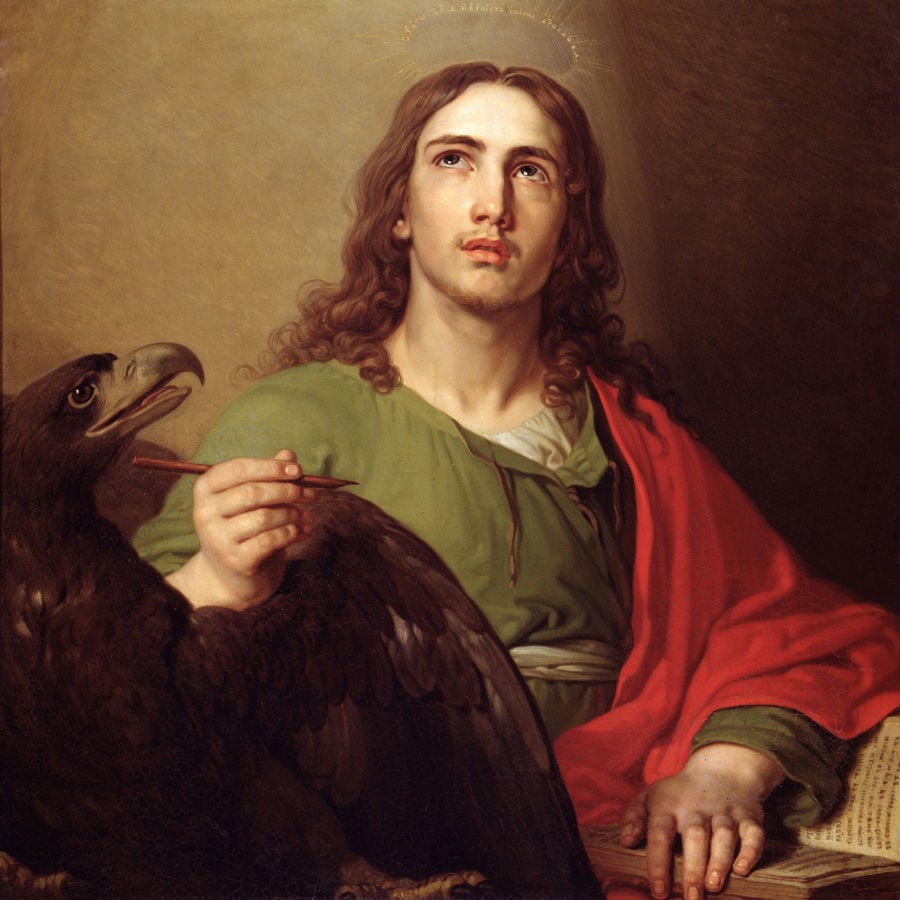
The first letter we have of S. John’s is not a very long letter at all, and has many features from the Gospel of Saint John, such as the theology of light and dark, good and evil and attachment to Christ. It is marvellously black and white, the constant theme being that if you love God, you keep His commandments (also a feature of his Gospel), and that if you don’t keep those commandments and still claim to love God, you’re a bit of a liar.
The whole letter is a warning against idolatry and apostasy, big problems at the time of its writing, because of the increasing vehemence of the persecuting Roman authorities as they attacked the early Christians in various places for ‘impiety’ – that is, the abandonment of the state religion and particularly the worship of Caesar. Simultaneously, the Apostles and early bishops already had to deal with heretics like Simon Magus and the ebionites, and continue the battle against the judaisers who wished all Christians to be circumcised Jews first. Appropriately, John ends his letter with the stern warning:
“Beware, little children, of false gods.”
I John 5: 7
The second preserved letter we have is a really short one. Really short. It has one message: cling to the true faith, there will be false prophets and you will know them when they deny that Christ came in human flesh, this is the spirit of anti-Christ, stay clear of it or lose your heavenly reward.
And there it is. Saint John identifies himself as an elder of a church that is not specified, and he is addressing another church, possibly as the last surviving Apostle. All the others had been by then martyred. He addresses this second church as a lady:
“I, the presbyter, send greeting to that sovereign lady whom God has chosen; and to those children of hers who are my friends in the truth, loved, not by me only, but by all those who have recognized the truth.”
II John 1
The warning about the anti-Christ is as simple as my summary above. Many Christians think that there is a single figure called anti-Christ who will arrive at a particular moment and cause significant damage to the Church. But it seems to me that John is speaking of a spirit of anti-Christ, a rival religious or political movement that specifically denies that the second person of the most blessed Trinity was made incarnate as a human being (as defined by the Creed), in order to bring about our salvation:
“Many false teachers have appeared in the world, who will not acknowledge that Jesus Christ has come in human flesh; here is the deceiver you were warned against, here is Antichrist. Be on your guard, or you will lose all you have earned, instead of receiving your wages in full. The man who goes back, who is not true to Christ’s teaching, loses hold of God; the man who is true to that teaching, keeps hold both of the Father and of the Son.
II John 7-9
Whereas John repeats the teaching that has made his Gospel famous – that we must love Christ by keeping His commandments – his last solemn warning is that we not even entertain the preachers and teachers who bring with them the above anti-Christian idea (that Our Lord has not come in human flesh). We know of historical persons who have presented this idea, and we may know people today who do so. John would call them anti-Christ, and that is terrible. We could compare his warning to those made by Saint Paul to his churches to remain in the traditions he had given them and not attempt to go beyond them, such as this one:
“Stand firm, then, brethren, and hold by the traditions you have learned, in word or in writing, from us.”
II Thessalonians 2: 14
The third preserved letter of S. John is another tiny one, this time from Saint John to a new Christian called Gaius, and it’s interesting to discover that, like Saint Paul, John calls his converts his children. It would seem to have been an early tradition for the Apostles and their successors, the bishops and the priests, to have a parent-children relationship with the young churches. This tradition has continued today, when we call our bishops and priests Father.
“I have no greater cause for thankfulness, than when I hear that my children are following the way of truth.”
III John 4
The first part of the letter is a eulogy to Gaius, who has been very charitable to the church he was at that time serving and other correspondents seem to have informed John about it. The rest of the letter seems to be parish politics: John is sending the letter privately to avoid an obnoxious member of the church called Diotrephes, who seems to have had the power to exclude both John himself and Gaius. I wonder who he was: bishop or priest?
Anyway, we get a flash of the Jewish distinction between good and evil from the first letter of Saint John before the end: choose good and God is with you, choose evil and you’re taking your character from the devil:
“Beloved, choose the right pattern, not the wrong, to imitate. He who does right is a child of God; the wrong-doer has caught no glimpse of him.”
III John 11
 Catholic Louth and Mablethorpe