As with last weekend, we meditate upon the suffering of our Lord in the course of His great Sacrifice, so let’s again try to unite all three of our Mass readings together to establish a common message. Remember that September is traditionally the month of our Lady of Sorrows, when we stand with our blessed Mother at the foot of the Cross and attempt to participate in her great distress as she watched her Son be humiliated and brutalised, and then die upon that cross. Whenever I say the sorrowful mysteries of the Rosary, it always strikes me that the most painful both for Him and for her was the third sorrowful mystery – the Crowning with thorns. Why that one? Because that is where the mocking was at its high point.
The Old Testament rings with the promise of the coming of the Messiah, the Son of David, the heir of that great King. This was central to the Jewish hopes of the first century. And our Lord took great pride in this human lineage, as we can perceive in His attention to detail, for example, with the arrangement of the entrance into Jerusalem on Palm Sunday. He knew, of course, that the humiliation was coming, but it would have been painful nonetheless to see and feel the people whom He had cared for for centuries and centuries reject Him, mock Him and hand Him over to non-Jews, who crowned Him with thorns in mockery.
And His poor mother, herself of the house and family of David… knowing better than anybody else that the tortured Body on the Cross belonged to both that much looked-for Messianic king and to God Himself. But, looking at it from the perspective of the corrupt priesthood of the Temple… weren’t they somehow justified (in their minds) in their hatred? We see their point of view in our first reading today, written in prophecy long before the Passion of our Lord.
“Where is he, the just man? We must plot to be rid of him; he will not lend himself to our purposes. Ever he must be thwarting our plans; transgress we the law, he is all reproof, depart we from the traditions of our race, he denounces us. What, would he claim knowledge of divine secrets, give himself out as the son of God? The touchstone, he, of our inmost thoughts; we cannot bear the very sight of him, his life so different from other men’s, the path he takes, so far removed from theirs! No better than false coin he counts us, holds aloof from our doings as though they would defile him; envies the just their future happiness, boasts of a divine parentage. Put we his claims, then, to the proof; let experience shew what his lot shall be, and what end awaits him. If to be just is to be God’s son indeed, then God will take up his cause, will save him from the power of his enemies. Outrage and torment, let these be the tests we use; let us see that gentleness of his in its true colours, find out what his patience is worth. Sentenced let him be to a shameful death; by his own way of it, he shall find deliverance.”
Book of the Wisdom of Solomon, 2: 12-20 [link]
The sage here calls the enemies of our Lord godless in their absolute lack of charity for the virtuous man, the Just Man who pricks their consciences simply by Himself being without sin. Without a word, the sinless Man condemns the lives of the wicked; without a word, He calls out their corruption. So, they reason, let us torture the Man and if God really loves Him, God will look after Him. Didn’t they actually say that at the foot of the cross, again in mockery? ‘If you are the Son of God, come down, come down and we shall believe in you…’ Mockery, mockery, all He receives is mockery. But, as we all replied to the psalm, God does uphold the life of the Just Man. And so, He says to us His Christians, acquire Righteousness before the throne of God through lives of virtue, and they will hate you and scorn you and mock you, as they did Me, but I will uphold your life.
“Then they left those parts, and passed straight through Galilee, and He would not let anyone know of His passage; He spent the time teaching His disciples. ‘The Son of Man,’ He said, ‘is to be given up into the hands of men. They will put Him to death, and He will rise again on the third day.’ But they could not understand His meaning, and were afraid to ask Him.
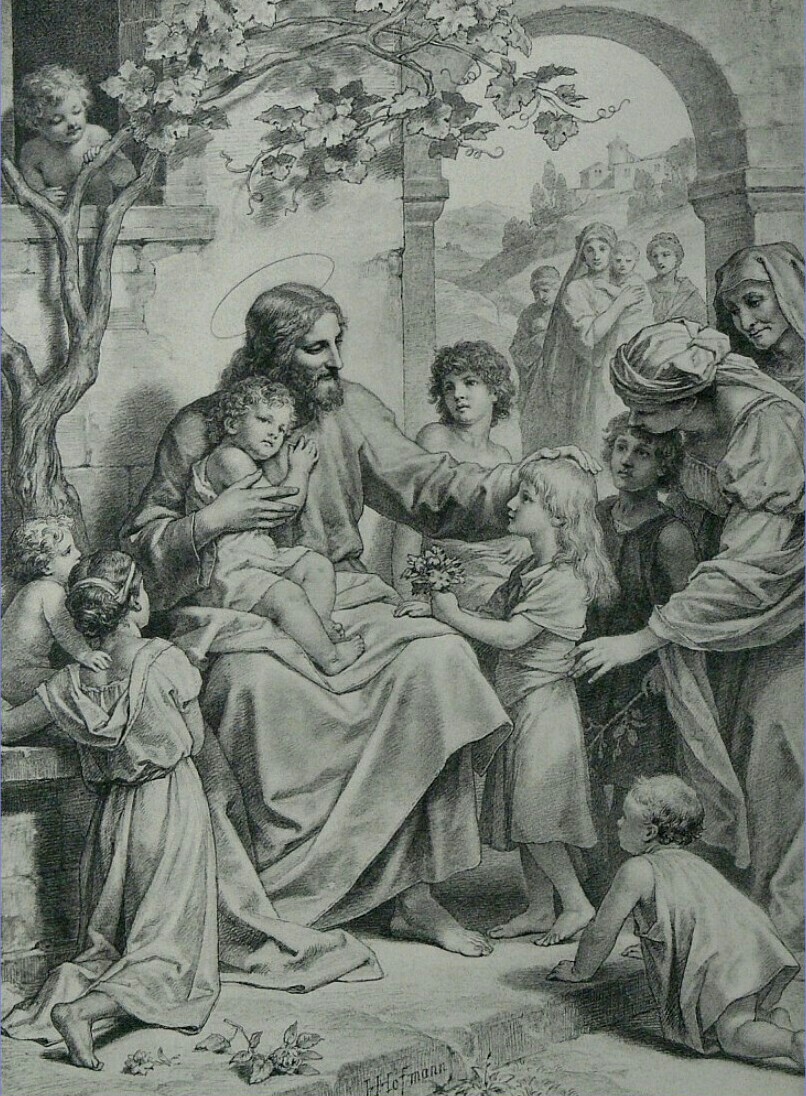
So they came to Capharnaum; and there, when they were in the house, He asked them, ‘What was the dispute you were holding on the way?’ They said nothing, for they had been disputing among themselves which should be the greatest of them. Then He sat down, and called the Twelve to Him, and said, ‘If anyone has a mind to be the greatest, he must be the last of all, and the servant of all.’ And He took a little child, and gave it a place in the midst of them; and He took it in His arms, and said to them: ‘Whoever welcomes such a child as this in My Name, welcomes Me; and whoever welcomes Me, welcomes, not Me, but Him that sent Me.'”
Gospel of S. Mark, 9: 29-36 [link]
As this Gospel story tells us, the Apostles did not understand and they were afraid to ask Him. How would they survive His torture and death? How would they survive their own persecution and martyrdoms? There are two points to be made in answer: the gospel tells us about true charity and Christian leadership, and the second reading tells us about compassion and peace-making. Christian leadership, particularly in the hierarchical governors – priests and bishops – but generally in all aspects of the Christian life, such as in the home and within social circles… Christian leadership is based on humility, and although it may involve a type of domination, it can never be domineering. This level of charity and humility is modelled for us by Christ Himself, Who was willing to suffer mockery and humiliation in order that charity and humility may prevail. Christian leadership suffers for the truth as its Lord did. And that carries us to the second reading.
“Where there is jealousy, where there is rivalry, there you will find disorder and every kind of defect. Whereas the wisdom which does come from above is marked chiefly indeed by its purity, but also by its peacefulness; it is courteous and ready to be convinced, always taking the better part; it carries mercy with it, and a harvest of all that is good; it is uncensorious, and without affectation. Peace is the seed-ground of holiness, and those who make peace will win its harvest. What leads to war, what leads to quarrelling among you? I will tell you what leads to them; the appetites which infest your mortal bodies. Your desires go unfulfilled, so you fall to murdering; you set your heart on something, and cannot have your will, so there is quarrelling and fighting. Why cannot you have your will? Because you do not pray for it, or you pray, and what you ask for is denied you, because you ask for it with ill intent; you would squander it on your appetites.”
Letter of S. James 3: 16 – 4: 3 [link]
Christian leadership must have nothing to do with jealousy or ambition/rivalry, which (S. James says) creates disharmony, disorder and wickedness, and breeds argument and infighting. We know this from experience, don’t we? We see it often, at home perhaps, but certainly at work, and in political and business governance. James is very down-to-earth here: if we don’t get what we selfishly want, we fight for it, and cause war and dissension. We may pray for peace, but if we don’t pray for it sincerely with a mind to leave off own desires and make self-sacrifices, we may not find peace.
If only we could learn to see the world and live in simplicity, as a child does, helping and being helped, we shall be able to make ourselves last, and servants of all.
 Catholic Louth and Mablethorpe