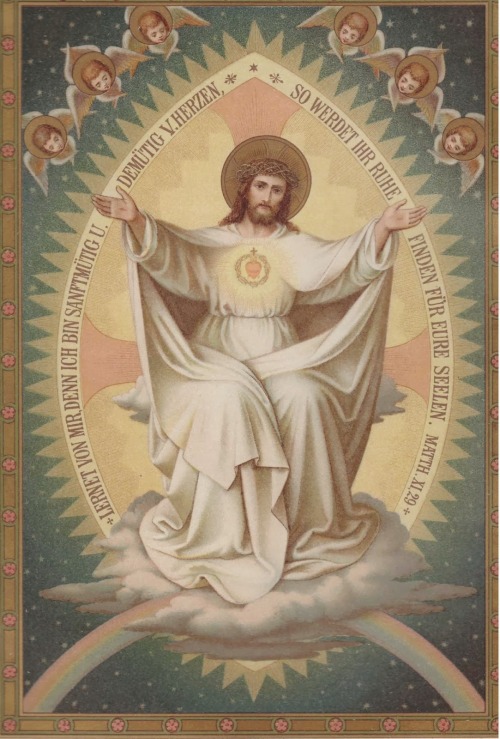
Having last Sunday celebrated the triumph of the Son of David, the Sovereign King of all things, we cycle around again this Sunday to the centuries of expectation of the Messiah. This is what Advent is – a means of stepping into the shoes of those Jewish men and women of the late Jewish period in the last few decades before Christ.
Following the destruction of the Jewish kingdom in the sixth century BC, and the several attempts of great kings and rulers to break the spirit of the Jewish nation, prophets predicted the restoration of the Davidic monarchy in the son of David, and the prophet Daniel, a Jewish captive of the Babylonian empire, predicted with some precision when this would happen. As that moment appeared, the people looked here and looked there for the promised King of the Jews. We know how anxiously they looked from the gospel account of the anxiety of the Idumaean king Herod when the magi from the east appeared and suggested that the child had already been born and Herod was afraid that the new Jewish king (however young) could supplant him, for he – Herod – was a foreigner.
But let’s come back to the heightened expectation as the prophet Daniel’s predicted moment approached. Our first reading gives us the prophet Jeremiah’s mention of the promise made to the nation of Israel concerning the house of Judah, and the prophet speaks of the Branch (here ‘scion’).
“‘Behold,’ [the Lord] says, ‘a time is coming when I will make good My promise to Israel and Juda; the day will dawn, the time be ripe at last for that faithful scion to bud from David’s stock; the land shall have a king to reign over it, giving just sentence and due award. When that time comes, Juda shall find deliverance, none shall disturb Jerusalem’s rest; and the name given to this king shall be, The Lord vindicates us.'”
Prophecy of Jeremias, 33: 14-16 [link]
Now, we might think that this is a branch of a great tree, perhaps the tree of Israel. But remember that Jeremiah was prophesying the destruction of the Jewish kingdom, and the destruction of Jerusalem, and that he lived through the same in the sixth century before Christ. He knew that the tree of David – the Davidic monarchy – was about to be felled or had been felled. Jeremiah was speaking of a branch sprouting from the stump of the felled dynasty of David. The Hebrew root for the word ‘branch’ is nzr, nazara. If that sounds familiar, it’s because it is the root of the name Nazareth.
It is a Christian tradition that both the families of the Blessed Virgin and of S. Joseph came from the area of Nazareth in the Galilee, at some distance from Jerusalem. In the first century, it would have been common knowledge that descendants of the House of Judah and the family of David were living in that place; it may be the reason it got its name – it was the place of the Branch. Those who studied their Scriptures in the first century, and knew of the promises, would have had their eyes on Nazareth.
How would they have prepared themselves for the imminent arrival of the Branch, of the Son of David, of the Messiah? In the Roman tradition of the Catholic Church, before a great festival, such as Christmas or Easter, there has always been a period of vigil, characterised by the colour purple. Those of us who remember the liturgical dispensation before the changes in the late 1960s will know that some lesser feast days also had a vigil day before, such as the feast of S. Lawrence in August. A vigil is a period of prayerful waiting. It is a time of penitence, which is indicated by the purple. It is a time of purification, and greater commitment to the setting aside of sin. Our gospel story is of Christ telling us that our whole lives should be a vigil in preparation for His return in glory.
“‘Only look well to yourselves; do not let your hearts grow dull with revelry and drunkenness and the affairs of this life, so that that day overtakes you unawares; it will come like the springing of a trap on all those who dwell upon the face of the earth. Keep watch, then, praying at all times, so that you may be found worthy to come safe through all that lies before you, and stand erect to meet the presence of the Son of Man.'”
Gospel of S. Luke, 21: 34-36 [link]
Let’s pick out some ideas for a vigil from His words, so that we can characterise our Advent vigil… we are to watch ourselves, take up self-control to avoid possible drunkenness and debauchery, we are to stay awake, praying for the strength to survive every threat to our perseverance and faithfulness to God, and to stand confidently in all purity before the Son of Man. And what can S. Paul say to help us in the second reading from Thessalonians this weekend?
“…may the Lord give you a rich and an ever richer love for one another and for all men, like ours for you. So, when our Lord Jesus Christ comes with all His Saints, may you stand boldly before the presence of God, our Father, in holiness unreproved. Amen. And now, brethren, this is what we ask, this is our appeal to you in the Name of the Lord Jesus. We gave you a pattern of how you ought to live so as to please God; live by that pattern, and make more of it than ever. You have not forgotten the warnings we have handed on to you by the command of the Lord Jesus.”
First letter of S. Paul to the Thessalonians, 3: 12 – 4: 2 [link]
So… our vigil this Advent should confirm us in love for each other and for the whole human race. Paul also talks about purity, and blamelessness before Christ and he ends with a call to make progress in the life of holiness, according to the traditions handed on by Apostles like himself. Here are our instructions for Advent; let us commit to them, and do well.
 Catholic Louth and Mablethorpe