On this third Sunday of Advent, we water down the purple of the Advent vigil to a more joyous rose pink, as we rejoice in the Lord. Because of that first word of the Mass this weekend – rejoice – this liturgical Sunday is called Rejoice Sunday, or in the Latin Gaudete Sunday. So, as the Jews of the first century, feeling the electricity in the air of their time, rejoiced in the nearness of the first coming of Christ, so may we His Christians, treating every day as if it were immediately preceding the return of Christ, rejoice in the nearness of his second coming. As the prophet says in the first reading, the desert and the wastelands must rejoice and begin to bring forth produce, the desert being suddenly watered becomes as green as the mountains of Lebanon and the rises of Carmel and the fertile plains of Sharon, in the north of the Holy Land.
“Thrills the barren desert with rejoicing; the wilderness takes heart, and blossoms, fair as the lily. Blossom on blossom, it will rejoice and sing for joy; all the majesty of Lebanon is bestowed on it, all the grace of Carmel and of Saron. All alike shall see the glory of the Lord, the majesty of our God. Stiffen, then, the sinews of drooping hand and flagging knee; give word to the faint-hearted, Take courage, and have no fear; see where your Lord is bringing redress for your wrongs, God himself, coming to deliver you! Then the eyes of the blind shall be opened, and deaf ears unsealed; the lame man, then, shall leap as the deer leap, the speechless tongue cry aloud. Springs will gush out in the wilderness, streams flow through the desert; ground that was dried up will give place to pools, barren land to wells of clear water; where the serpent had its lair once, reed and bulrush will show their green. A high road will stretch across it, by divine proclamation kept holy; none that is defiled may travel on it; and there you shall find a straight path lying before you, wayfarer is none so foolish he can go astray. No lions shall molest it, no beasts of prey venture on it. Free men shall walk on it, coming home again to Sion, and praising the Lord for their ransoming. Eternal happiness crowns them, joy and happiness in their grasp now, sorrow and sighing fled far away.”
Prophecy of Isaias, 35: 1-10 [link]
These reference to dryness and aridity are all figures of the state of the souls of men and women, souls of dry soil, the good fruits of love being further choked by the briars of sin. Until…! Until this desert of our hearts is watered suddenly by the grace of God, coming to us through the God-man OLJC, Who once stood before the Temple in Jerusalem and cried out, Come to Me, all ye who are thirsty and drink, and from your hearts will pour forth living water! To the Samaritan woman at the well, He had said that if she had asked Him, He would have given her not the water of the well, but living water.
What does this living water do to us? The prophet carries on in our first reading, Strengthen weary hands, steady trembling knees, awaken to courage faint hearts. Old and tired was mankind when Christ arrived, two thousand years ago. Old and tired mankind often seems today, even in these former Christian heartlands in Europe, so distanced often now from their divine heritage. The mission of the Church, however diminished she has become in our time, is to strengthen weary hands again, steady trembling knees once more, help crumbling Christendom to her feet again. Christendom was strong once, she can be strong again. Because (in the words of the prophet) her God is returning, coming to rescue her. And her joy will return, even everlasting joy. The Apostle S. James gives us a little parable in our second reading, which is apt for Lincolnshire farmland: the farmer is patient as he watches his crop, nurses his crop.
“Wait, then, brethren, in patience for the Lord’s coming. See how the farmer looks forward to the coveted returns of his land, yet waits patiently for the early and the late rains to fall before they can be brought in. You too must wait patiently, and take courage; the Lord’s coming is close at hand. Brethren, do not bring complaints against one another; if you do, you will be judged, and the judge is already standing at your doors. If you would learn by example, brethren, how to work on and wait patiently in evil times, think of the prophets who spoke in the Lord’s name.”
Letter of S. James, 5: 7-10 [link]
He cannot be hasty, the farmer, and his produce is at the mercy of the elements. And we too must be patient with the Lord, not losing heart because He hasn’t returned yet. The Church has waited two thousand years, and perhaps we shall wait two thousand more. In the meantime, we shall maintain the spirit of Christian charity, and live well with each other and cultivate our practice of communal worship and personal devotion. And wait, wait, wait…
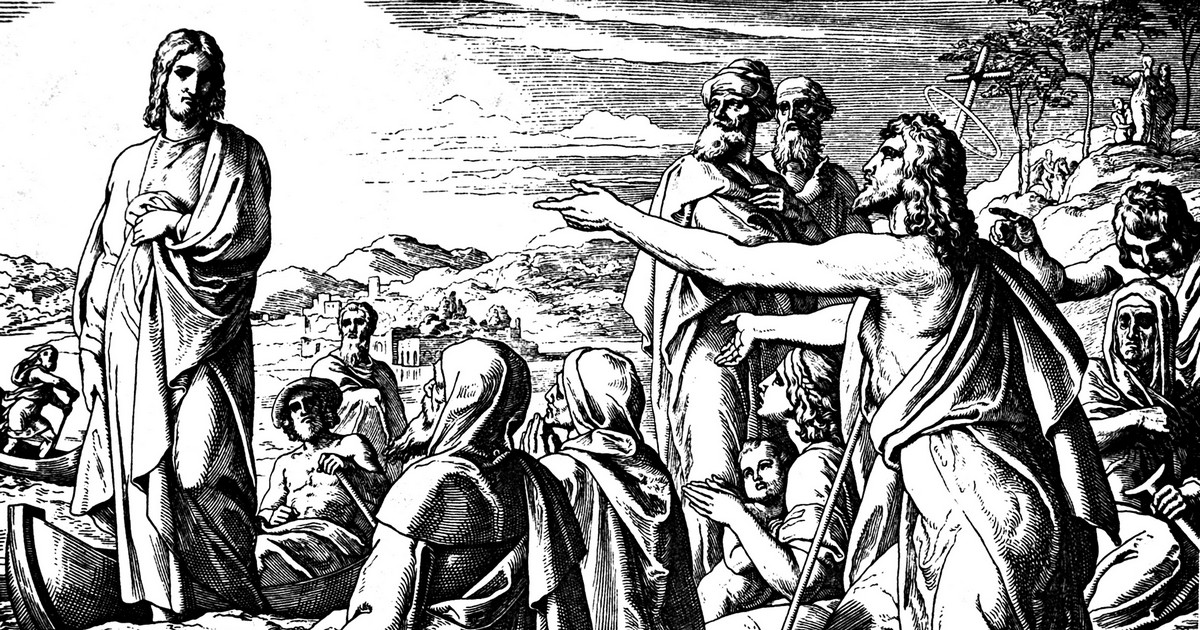
Poor, dear S. John. I mean the Baptist, of course. He had lived a difficult life. All this living in the desert in simple clothing, eating simple food, your only friend being the silence. The gospels tell us very little of John’s ministry, and the account seems rather short, compared to the ministry of Christ, which is the actual focus of the Gospels, of course. But we may consider that John’s ministry was possibly longer than Christ’s, and his desert existence (for however long that lasted) was a significant sacrifice and offering to God. Like so many other Jews, He would have perhaps been expecting the Christ He was preaching to appear as a conquering king, chasing away Roman and Greek, and reestablishing the Jewish commonwealth. And the patience of S. John has obviously been tested, when he sends his disciples to Christ to basically say, You are rather underwhelming, shall we wait a bit longer for our conquering Christ?
“Now John had heard in his prison of Christ’s doings, and he sent two of his disciples to Him; ‘Is it Thy coming that was foretold,’ he asked, ‘or are we yet waiting for some other?’ Jesus answered them, ‘Go and tell John what your own ears and eyes have witnessed; how the blind see, and the lame walk, how the lepers are made clean, and the deaf hear, how the dead are raised to life, and the poor have the gospel preached to them. Blessed is the man who does not lose confidence in Me.’ As they went out, Jesus took occasion to speak of John to the multitudes; ‘What was it,’ He asked, ‘that you expected to see when you went out into the wilderness? Was it a reed trembling in the wind? No, not that; what was it you went out to see? Was it a man clad in silk? You must look in kings’ palaces for men that go clad in silk. What was it, then, that you went out to see? A prophet? Yes, and something more, I tell you, than a prophet. This is the man of whom it was written, Behold, I am sending before thee that angel of Mine, who is to prepare the way for thy coming. Believe me, God has raised up no greater son of woman than John the Baptist; and yet to be least in the kingdom of heaven is to be greater than he.”
Gospel of S. Matthew, 11: 2-11 [link]
We can sympathise perhaps with John, because we also herald Christ the King in our own time and we look forward to a second coming and a full restoration of the human race and the Creation that hangs on to it. And we look about us, and the world is still quite slipping into hell – they are killing the babies by the thousands in abortions, and preparing to kill thousands more in assisted suicides – and we ask God, For how long more? Until when? When will You return to restore all things?
Christ clearly appreciates John’s long patience with his words at the end of this gospel message. John He calls the greatest of all the children of men… I hope he will appreciate our own long patience, although He may say to us as to John, Blessed are they who remain patient with Me…
 Catholic Louth and Mablethorpe