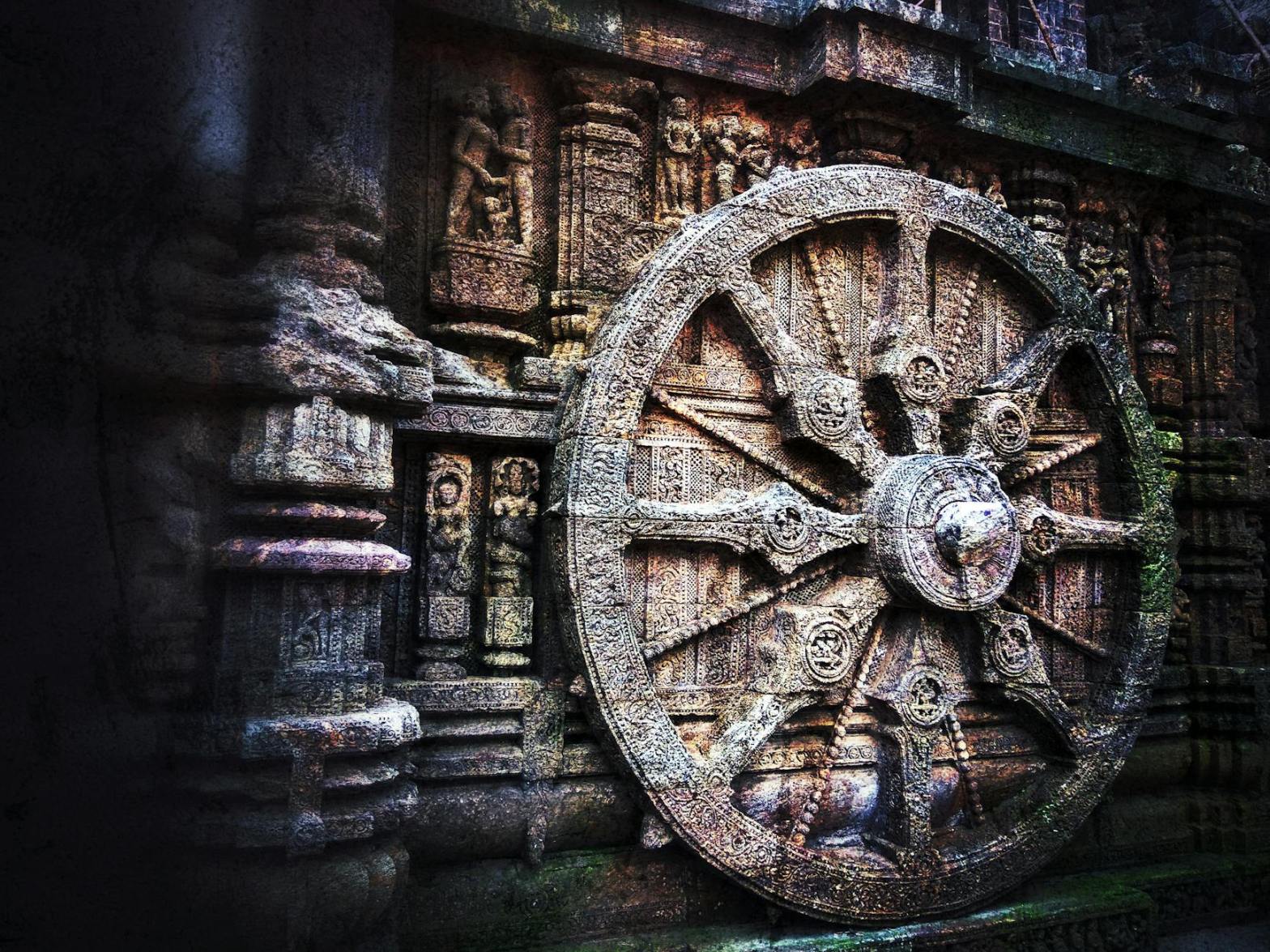
This is something of a personal project that I am building progressively, to establish a history of the Indian subcontinent alongside a parallel of history of the Malabar coast, and my own people – the Goan people – on that coast.
I. The time before Christ (the time BC)
| The general history of India | Notes on the Malabar coast | |
| 2000-500 BC | The decline of the most ancient civilisations born in the Indus Valley begins, as entire cities are abandoned and the populations apparently move southwards and eastwards; this suggests invasion from the north by the Indo-Aryan races of Central Europe; the period of Vedic composition begins, and the multiple religions of Hinduism are initiated under the nature gods of the Rig Veda (such as the thunder god Indra and the fire god Agni, the wind god Vayu, the moon god Soma, the cosmic guardian Varuna, etc.) and the later pantheon that surrounded the universal god Brahma and Vishnu and Shiva; simultaneously, the hierarchical caste system is instituted with the brahmins (priests) at the top, the kshatriyas (leaders and warriors) and vaishyas (merchants and farmers) in the middle and the shudras (labourers and servants) at the bottom; the epic narratives of the Ramayana and the Mahabharata come into being here | In this period of the creation of the Indian religions, a conception is formed that Goa was created by Parasurama, an incarnation of Vishnu, following his victory against the kshatriyas, as a haven for his brahmins, one of seven, ‘Govarashtra’; this is held to be a more ancient thought, even thousands of years older, although most of everything is conjecture, for Indian written sources begin much too late; the land would have been farmed by the tribes forced south by the Indo-Aryan invasions from the north; the consequent Mahabharata fables speak of Krishna’s being taken up with the female cowherds of Goparashtra, Gopakapuri and Gopakapattana: the cowherd country |
| 600 BC | The sixteen kingdoms (called mahajanapadas) are established as territories or provinces, both rajyas and sanghas under an overlordship; the great kingdoms in this age are Magadha (Patna/Pataliputra to Chota-Nagpur), Kosala, Vatsa and Avanti; the founder of Jainism, Mahavira, is born (599 BC), one of his disciples being Bimbisara of the Haryanka dynasty of the Maghada | |
| 563 BC | Birth of Siddhartha Gautama, called the Buddha, founder of the religion called after him; his movement and Mahavira Vardhaman‘s contemporary Jainism result from a popular discontent with the ritualism of the Brahmanas; both rejected the Vedic authority and theistic teaching, and established monastic disciplines | |
| 538 BC | The Achaemenid Koresh of Persia (aka. Cyrus the Great) reaches towards and conquers parts of the Indus Valley; he destroys the city of Kapisha and establishes a prosperous Persian imperial province/satrapia | |
| 544-413 BC | The Pradyota and Haryana dynasties rule the Magadha region, now south Bihar (Patna and Gaya) | |
| 500 BC | The end of the Vedic period and the birth of the classical Sanskrit language | |
| 333 BC | The Macedonian general Alexander (called the Great) establishes Hellenic rule beyond the Indus Valley after his victory over the Persian Darius III | |
| 326 BC | Battle of the Hydaspes river; Alexander defeats Ambhi of Taxila | |
| 324-187 BC | Chandragupta Maurya establishes the Mauryan empire after defeating the Nandas (321), and together with his son Bindusara (297-273) built it across most of the subcontinent | A historical record for Goa emerges which describes it as a south-west province of the Mauryan empire, which was based at Maghada and had been established in the subcontinent following the political vacuum created by the disintegration of Alexander’s empire |
| 300 BC | Megasthenes represents the Greek states before the Mauryan empire; Kalidasa composes poetry and drama | |
| 273-266 BC | Ashoka takes up the rule of the Mauryan empire; he extends his rule over the sub-continent, and through eastern Persia and Afghanistan; Ashoka adopts buddhism (265), builds thousands of stupas and viharas, and is well appreciated by the Buddhist tradition | Ashoka of the Mauryas renames the Konkan coast Aparanta Desh, that is, Beyond the End; he sends a buddhist missionary Dharmarakshita to the Konkan, to build that philosophy there; this buddhist mission is unsuccessful, undone by later hindu empires |
| 265 BC | The battle of Kalinga | |
| 232 BC | Death of Ashoka; Dasaratha succeeds him | The buddhist mission to the Konkan fails with the death of Ashoka, and Hindu brahmanism returns |
| 200 BC | The first of the stupas of Amaravati are built under the patronage of the Satavahanas of the Deccan; the Ajanta cakes are dug; Tamil literature appears | |
| 187-185 BC | Fall of the Mauryan empire following the assassination of the last king Brihadratha; the assassin Pushyamitra establishes the Shunga dynasty (185) but is unable to take up the empire, which fragments; Greek ambitions appear from the west, the Greeks called Yavana by the puranas | |
| 165-145 BC | The Indo-Greek Menander (aka. Milinda) rules | |
| 83-73 BC | Devabhuti of the Shungas reigns | |
| 80 BC | The Indo-Scythian kingdom is established | |
| 72-28 BC | The Kanva dynasty arrives as the Shungas are overthrown by Vasudeva Kanva; it ends with the ascendancy of the Satavahanas of the Deccan | |
| 100-60 BC | Satakarni I builds the Satavahana empire, begun by Simuka (100), a minor ruler under the Mauryans, and his brother Kanha; Satakarni defeated Sakas, Pahlavas and Yavanas | The Satavahanas expand over much of today’s Andhra Pradesh and Maharashtra; trade flourished under their rule, with new ports on the coastlines and market towns |
II. The pre-Islamic period
| The general history of India | Notes on the Malabar coast | |
| AD 68 | The Kushana empire is established by Kujula Kadphises in the north-west, its greatest king being Kanishka (127-147); he reigns over an empire that takes up parts of China, Parthia and as far south as today’s Maharashtra and Madhya Pradesh; Mahayana Buddhism deifies the Buddha | The Apostle S. Thomas, arriving on a trek through Babylonia, Persia and Parthia, brings the Christian religion to south India (52), passing through the the Tamil countries, and ending his life in martyrdom near Mylapore (72) |
| AD 78 | Gautamiputra Satakarni takes the Satavahana empire to its height | |
| AD 130-140 | Vashishthputra Pulumayi rules the Satavahana empire | |
| AD 165-194 | The rule of Yajna Sri Satakarni, a Satavahana | |
| AD 240 | The Gupta dynasty is made into a feudal power | |
| AD 300-500 | Writing of the fabulous Mahabharata and Ramayana epics, as well as of the famous Kama sutra of Vatsyayana; also many Puranas, the Bhagavad Gita and the Panchatantra (all under the Guptas); Sanskrit is thus revived as a written language | Thomas the Persian, called Kanayi Thoma by the Malabaris, brings his large and Christian family to the Malabar following persecutions in Persia (300s); not long after, the Thomaschristian church of south India begins to be supplied by bishops from Persia and Babylonia and the Malayalee church becomes a Syrian church, with Nestorian echoes |
| AD 319 | The Gupta empire is established by Chandragupta I (d.334), who assumes this name of the Mauryan king and called himself maharaja adhiraja (king of kings); his son Samudragupta (335-375) expanded from the plains of the Ganges to Rajasthan and south to Ceylon, and guaranteed trade with a navy; a hindu empire, it glorified Shiva, Vishnu and Brahma, and first built stone temples | |
| AD 375-414 | Reign of Chandragupta II | |
| AD 414-455 | Reign of Kumaragupta I, who took the Gupta empire to its height (called the classical age); the empire thereafter began to fragment as a result of attacks of the Huns; great Gupta-era mathematicians include Aryabhata (476-550) and Brahmagupta (598-668) | As the Bhojas, and the Silharas, and the Pallavas, and the Chalukyas, and the Rashtrakutas battle for supremacy in the Deccan, the Kadambas declare independence from the Pallavas (420) and establish a lasting empire and dynasty in Goa |
| AD 600-800 | The Tamil ‘saint poets’ | |
| AD 606 | Harshavardana of the Pushyabhutis comes to power in the vacuum created by the fall of the Gupta empire; his empire stretches from the Punjab to Bihar and Odisha, but not into the Deccan; his biography is written by Banabhatta (640); smaller kingdoms succeed him and fight for the control of his capital Kannauj – the Palas (from 760) of the East, the Gurjara-Pratiharas (from 783) of the West, and the Rashtrakutas in the north Deccan (from 753); the rivalry still permits development and prosperity – Dharampala of the Palas builds/restores ‘universities’ at Nalanda and Vikramshila | |
| AD 500-800 | Considerable kingdoms appear in south India: the rival Pallavas and Pandyas of the Tamil countries, the Cheras of today’s Kerala, the Chalukyas of Maharashtra and the Deccan; the Chalukyas of Badami, Vengi and Kalyani were related royal dynasties; Pulakeshin I, founder of the Chalukya family, had begun as a tributary of the Kadambas; his successor Pulakeshin II is powerful enough to establish diplomacy and trade with Persia; the Pallava king Mahendravarman I is also a great king of the Tamil lands | |
| AD 850 | Thanjavur of the Pandyas is captured by Vijayala Chola; the Chola kingdom arrives as a tributary in the midst of the rivalry between Chalukya, Pallava and Pandya; they become the great power in the south under Rajaraja and his son Rajendra | Two Persian bishops appear in the Malabar, called Mar Sabor and Mar Proth, to further stablise the Syrian church in the Quilon area, with much cooperation from the Kulasekhara raja; as the Christians in Persia fall into persecution especially after the later Mongol raids, the supply of bishops and priests to the Malabar falters |
| AD 973 | The western Chalukyan empire is founded, as the Chalukyas destroy the power of their rivals the Rashtrakutas | The Kadamba kings remove the Rashtrakutas from Chandrapura and move their capital to the island of Govapuri, on the banks of the Zuari river, whose natural harbour makes them wealthy from maritime trade in spices and horses with the Arabs and Hindus in foreign lands |
| AD 985-1014 | Reign of Rajaraja of the Cholas; together with his son Rajendra I (1014-1044), the power of the Cholas extends to Sumatra and the Malay peninsula, with the assistance of a strong navy; Hinduism is translated into the dravidian languages of the south – Tamil, Kannada and Telugu |
III. Islamic overlordship
| The general history of India | Notes on the Malabar coast | |
| AD 1000-1025 | Turkic invasions from Central Asia take place in the north, the first under Mahmud of Ghazni and then Mohd Ghuri (1175); Islamic rule thus arrives in India in the Delhi sultanate, which takes over much of the subcontinent by the 14th century | Ghazni begins the first Mohammedan attacks on the Konkan coast, aiming at the wealthy Kadamba temples; over the next three to four centuries the raids continue until the later iconoclasm of Ala’uddin Khilji and Mohammend Tughluq; as Govapuri is ruined and rebuilt, the Kadambas find Chandrapura to be a refuge from the invaders |
| AD 1014-1044 | Reign of Rajendra Chola; the Cholas conquer the Ganges valley and defeat the Palas | |
| AD 1054 | The Kadambas abandon their capital of Chandrapur (later Chandor) for the town of Govapur (later Goa Velha) on the Zuari river (1054) | |
| AD 1076 | The eastern Ganga dynasty takes power at Odisha | |
| AD 1106 | Vishnuvardhana takes over the Hoysala dynasty; the crumbling of the Chola empire has produced smaller kingdoms under the Hoysala, Kakatiya and Yadava dynasties, alongside the surviving Pandyas | The Kadamba Jayakeshi I (1104-1148) rules a territory that stretched from Bombay to Belgaum in the north-east, and his armorial lion is used today to denote the Kadamba dynasty; the Kadambas had encouraged Mohammedan traders and merchants to settle, and this period also includes raids and piracy by Mohammedan bands from the north as the Chalukya dynasty came to an end (1198) and defences fell |
| AD 1189 | The Yadavas of Devagiri appear; at the first battle of Tarain, the victory of Prithviraj Changan over Mohammed Ghuri (1191), followed by Ghuri’s victory (1192) and his conquest of Delhi (1193); the prestige of Delhi begins here | |
| AD 1202 | Bihar and the Bengal taken by Bakhtiyar Khilji, general of the armies of Ghuri | |
| AD 1206 | Death of Mohammed Ghuri; his general Qutbuddin Aibak, who had been regent of the Mohdan enterprise in India, establishes the Mamluk dynasty, ruling the new Delhi sultanate | |
| AD 1211 | Iltutmish, son-in-law of Akbar, rules the Mamluks and expands the sultanate territory | |
| AD 1216 | Pandyas of Madurai appear in the south | |
| AD 1221 | The Mongols invade from the north under Ghengis Khan | |
| AD 1266 | Reign of Giyasuddin Balban (once Ghazi Malik), the second sultan, who lends greater stability to Delhi, quelling rebellions and building forts |
IV. Discovered by the Europeans
| The general history of India | Notes on the Malabar coast | |
| AD 1288 | Marco Polo of Venetia arrives in India | |
| AD 1290 | The Khilji dynasty is established under Jalauddin Khilji; his nephew Alauddin Khilji reigns (1296), and explorations of the south begin with Malik Kafur (1309) | |
| AD 1312 | The mohammedan invasions force the Kadambas back from Govapur to their old capital at Chandrapur (later Chandor, 1312) | |
| AD 1320 | The Tughlaq dynasty of Ghiyasuddin Tughlaq (once Ghazi Malik) appears; he and Mohd bin Tughlaq establish an empire over almost the entire subcontinent; the most popular was the beneficent Feroz Shah Tughlaq, the third sultan; the sultanate establishes trade with the Persian gulf and the spice islands, cottage industries are encouraged and Persian mixed with Hindi and Urdu | The Zamorins of Calicut ally themselves to Arab traders, and even invite these to settle in the Quilon and Calicut area; these begin to challenge the prosperity of the Malabar Christians and bring them to ruin |
| AD 1327 | The imperial capital moves from Delhi to Daulatabad | |
| AD 1334 | Ibn Battuta arrives at the courts of the Delhi sultanate | |
| AD 1336 | The Vijayanagara empire of the Deccan is established following a rebellion against Delhi by Harihara and Bukka, who were ministers of the kingdom of Kampala in today’s Karnataka; they became agents of Mohd Tughlaq and governors in the south; as the Hoysalas of Mysore and Warangal agitated to acquire independence from Delhi, Harihara and Bukka abandoned the Tughlaqs; their opponents were in the main Mysore and Madurai in the south and the Bahmanis in the north; greatest of the Vijayanagaras was Krishnadevaraya (about 1510) | The Latin bishops Iordanus Catalani and John Marignoli arrive at Quilon, and begin to document the Syro-Malayalee church of south India; finding the Malabar church in disarray because of the absence of a local clergy, the Europeans baptise thousands of people, beginning a new Latin attachment of these Syrian Christians, even if Latin diocesan structures did not arrive until the Portuguese did |
| AD 1345 | The Bahmani sultanate of the Deccan is established by Alauddin Hasan Bahman Shah, following a rebellion against Delhi | The Bahmanis arrive in Goa (1350) to establish Mohammedanism with a new fanaticism, oppressing the Hindus, destroying their temples and killing their priests; all vestiges of the Kadamba civilisation are destroyed, the only temple that survives being the rather-inaccessible Tambdi Surla |
| AD 1378 | The Vijayanagaras arrive from their capital of Hampi in the Deccan to wreak vengeance upon the Bahmanis for the destruction of the Kadambas, killing the Mohammedans in Goa | |
| AD 1390s | The sultanate crumbles under attacks by Timur of the Uzbek, which included a great sack of Delhi, and the emergence of a weak Sayyid dynasty and a Lodhi dynasty, the last of whom founded the city of Agra | |
| AD 1470 | The Bahmanis return in force to Goa with a massive eastern army and a navy of 120 warships; finding the Zuari silted up, they had to shift port to the Mandovi river to the north, establishing the new capital of Ela, soon to become among the most prosperous in the south | |
| AD 1489 | The Bahmani sultanate breaks up into five sultanates in the Deccan: the Nizam-Shahis of Ahmadnagar, the Adil Shahis of Bijapur, the Imad Shahis of Berar, the Qutb Shahis of Golconda, and the Barid Shahis of Bidar; these rivals united against the Vijayanagara empire | |
| AD 1498 | The Portuguese explorer Vasco da Gama arrives at Calicut (aka. Kozhikode, 1598) to oppose the Arab spice trade monopoly and reroute traffic around Africa and through Portugal; the Malabar Christians of Kodungallur (Cranganore) make submission to the Portuguese king, trusting in the military and financial assistance of the European arrivals, their co-religionists | |
| AD 1504-1526 | Zahiruddin Babur, a descendant of Genghis Khan, who has inherited Fergana in 1494 and looking for his own kingdom, rules from Kabul; losing Fergana, he invades from the north; after many attacks on Delhi, he wins the battle of Panipat and the Delhi sultanate is replaced with the Mughal empire (1526); Humayun’s first reign ends in exile in Persia (1539-1540) as he seeks to establish a stability Babur never had; Sikhism arrives with the teaching of Guru Nanak in the Punjab, and the ten gurus after him | The recent arrival of the Portuguese naval power is resisted by the Zamorin of Calicut, most powerful of the local kings, who sends battle craft to join up with Ottoman warships from the Red Sea and meet the small Portuguese fleet at Chaul (1508), the vice-rei of Portuguese India, Dom Francisco d’Almeida, engaged the Ottoman fleet at Diu and destroyed it (1509), ensuring a Portuguese trade monopoly in South Asia; the smaller kingdom of Cochin allies with the Portuguese |
| AD 1510 | The Portuguese take the island of Goa from Bijapur, under the Portuguese king Manuel I, and establish their own Padroado government there; Afonso d’Albuquerque, a type of religious crusader as well as a soldier zealous for his king and country, having taken Muscat (1507) and Hormuz (1508), is assigned by Lisbon to acquire Goa, while Fernando Coutinho is assigned to take Calicut; he takes the fortress at Panjim without difficulty but is forced to fortify the island against a significant counter-offensive mounted by the sultanate of Bijapur; the 25th of November, the date of the Portuguese establishing a strong foothold in Goa and the conquest of the city of Ela, becomes as S. Catherine’s day foundational for Portuguese Goa; the Mohammedan residents of the city were executed for their attempt to aid the attempts of Bijapur | |
| AD 1514 | The Holy Father Leo X gives the Portuguese crown spiritual authority in their foreign domains; the Padroado system is established in Goa and the Malabar | |
| AD 1532 | The first vicar general arrives in Goa to bolster the growing local Catholic Church | |
| AD 1540-1545 | The Afghan Sher Shah Suri rules briefly in the north, but his Suri empire begins to collapse with his death (1545); Humayun returns to establish his second reign (1555-1556) after the removal of Sikandar Shah | |
| AD 1541 | The vicar general orders the closure of all Hindu temples in the Portuguese territories; this is soon followed by the destruction of idol-worship, the razing of temples, and the exile of brahmin priests | |
| AD 1542 | Francisco Xavier arrives from Lisbon as a missionary strength, sent by the king João III to remedy the moral debauchery in the city of Goa; he notes the Hindu conversos, who in a manner similar to the Spanish conversos were practising Hindu religions in secret, and he recommends a Goa Inqusition; the sultanate cedes large territories in the Goa area to the Portuguese (1543) | |
| AD 1556-1605 | The reign of Akbar begins in his teenage years following his father Humayun’s sudden death, Bairam Khan acting as regent; the attack on Agra and Delhi by the Suri general Hemu leads to the second battle of Panipat (1556), establishing a long and stable rule for Akbar; he receives general religious authority (1579) through a generous and benevolent toleration of religions; his vizier Birbal is about as famous, and Tansen his bard and Abel Fazl his historian | In the midst of the sessions of the Council of Trent, (1545-1563), the Goa Inquisition is approved by Rome (1561), and reputed imprisonment, torture and execution is handed down with little historical record; the diocese of Cochin is erected (1557) as a suffragan to the archdiocese of Goa, while Persian priests continue in the eparchy of Angamaly, associated with the local archdeacon |
| AD 1559 | The Padroado government in Goa ends idolatrous shrines in private homes, just as the Inquisition arrives to police new converts who retained sympathies for their former religions | |
| AD 1565 | Fall of the Vijayanagara empire, under the attacks of the sultanates united; after the battle of Talikota, the city of Vijayanagar was devastated, with its many temples; it is replaced by smaller kingdoms ruled by the Nayaka dynasty | The ruins of Vijayanagara furnish new majesty at Bijapur; the sultanates prepare to assault the Portuguese posts along the Konkani coast |
| AD 1566 | The new land revenue system is established | |
| AD 1571-1585 | The capital is moved to Fatehpur Sikri; the jagirdar-mansabdar system is adopted | The attack by the sultanates of the Deccan on Goa (1570) is brought to failure by the silted up Mandovi river and the poisonous life in the swampland; provincial synods of the archdiocese of Goa (1575, 1585) decide to subordinate the Malabar Syrian church to the Latin church |
| AD 1595 | Alexis Menezes is appointed archbishop of Goa and will soon be embroiled in the degradation of the Malabar church; following the death of the last Syrian bishop of the Malabar (Mar Abraham, d.1597, who had submitted to Rome and wore the pallium of the Holy Father), Dom Menezes appoints a Jesuit to administer the diocese of Angamaly, which thus becomes a suffragan of Goa; the Malabar church is divided between the diocese of Cochin (party of the archbishop) and the diocese of Angamaly (the party of the archdeacon) | |
| AD 1600 | A group of English merchants and traders establish the English East India Company, under a royal charter of HM Elizabeth I of England, which established an English monopoly on trade with Asia | The high-handed Latin hierarchy in Goa asserts its authority over the Malabar church at the synod of Diamper, which was organised by the archbishop of Goa to cure the Malabaris of Nestorianism, and to command social and ecclesiastical reform; the archbishop obtains the acclaim of the laity, but creates an insurmountable problem for the Syrian-rite clergy that have been erected by the Persian and Babylonian bishops in the last century; the new Jesuit archbishop in Angamaly becomes gradually more distant from the Malayalee archdeacon, and moves his seat across to the Padroado Latin base of Cranganore |
| AD 1605-1627 | Reign of Jahangir son of Akbar (1607), dominated by his favourite wife Nur Jahan (1611), which caused the later wars of succession that led to the accession of Shah Jahan (1628); the British East India Company establishes itself in London (1600); the Dutch factories appear at Masulipatnam and Petapalli in the Andhara; The British company builds a factory at Masulipatnam and a trading post at Surat; the Dutch East India Company sets up bases in the Tamil country, in the Bengal and in Gujarat | The archdiocese of Cranganore in the Malabar becomes a suffragan of Goa (1609), losing a measure of autonomy; his work done, the archbishop of Goa returns to Portugal (1611) to take up the See of Braga; Dom Alexis Menezes (d.1617) goes down in history as possibly the second apostle to the Malabar, after the Apostle S. Thomas; meanwhile, the English appear off the coast of Calicut (1615) |
| AD 1628-1658 | Reign of the emperor Shah Jahan, fifth of the Mughal emperors, who added the Deccan to the empire, creating the sultanate of Ahmadnagar; Golconda and Bijapur submit by treaty (1636); the emperor builds the famous mausoleum called the Taj Mahal (1638) to honour his wife Mumtaz Mahal, and establishes his capital at Shahjahanabad (1639) with its ‘red fort’ and Jama Masjid, now called ‘old Delhi’; the East India Company builds Fort S. George at Madras (1644) | Following an unsuccessful attempt by the Malayalee archdeacon to acquire a Persian/Babylonian bishop (Mar Ahatalla) and thus oppose the Latin archbishops of Cranganore, he organises the so-called Coonen-Cross rebellion (1653) and soon afterwards is consecrated (illicitly) as Patriarch; he is supported by his own local party, but also by the Dominican and Franciscans at Cochin, and perhaps even in Rome; meanwhile, the Portuguese naval power is challenged by the Dutch and British and is in terminal decline |
| AD 1658-1666 | Shah Jahan is succeeded by his third Alamgir Aurangzeb, following a difficult succession and the battle of Samugarh, which resulted in the imprisonment in Agra of his sick father, who favoured his first son Dara Shikoh; Aurangzeb took the Mughal empire to its heights, when it stretched from Kashmir to Jinji, from the Hindukush to Chittagong; he replaced Akbar’s benevolence with a sharia state | Propaganda Fide arrives in the Malabar to return spiritual control of the Syrian church to Rome from the Padroado system of Portuguese India; just before the arrival of the Dutch Calvinists, these Rome-deputed Carmelites are able to establish a Vicariate of Malabar (1659), the bishop Joseph Sebastiani appointing a local man Parambil Chandy Kathanar (aka. Alexander de Campo) as bishop for this vicariate, the exception in a mostly Carmelite leadership; this first indigenous bishop belongs to the family of the Malabar archdeacons, and is able to reverse to an extent the schism of the Coonen Cross; Ernakulam and Verapoly become important names from this period; all this leaves three Catholic bodies in the Malabar: the Latin-rite Padroado Cochin, the Latin-rite Padroado (Jesuit) Cranganore, and the Syrian-rite Propaganda Fide Vicariate; practically, Dutch opposition to Rome and the Portuguese diminishes Cochin and Cranganore, and favours Verapoly |
| AD 1662-1682 | Conflict between the Mughals and the Ahoms, who attempt to prevent the eastern expansion of the empire; the Ahoms try to keep them out of Guwahati (1667) | The Portuguese are forced out of the Malabar by the Dutch (1663) |
| AD 1664, 1670 | The Maharathas, emerging from the northwestern Ghats, capture the Mughal fort at Surat under the bandit-king Shiva (d. 1680), soon called Maharaja Chhatrapati, forming a lasting opposition to the mohammedan territories of the Mughal empire, especially Bijapur; the French establish factories in Gujarat (1667) | Rajaram son of Shiva dies (1699), his queen Tarabai claims rule in the name of her infant ‘Shivaji II’ and is chased from fort to fort by the Mughal power of Aurangzeb; with little administrative and military organisation, the Maratha power could never compete with the Mughals; Portuguese Goa becomes entangled in the Maratha-Mughal dispute, punished for not having a significant military presence herself |
| AD 1667 | The French arrive late in the subcontinent to establish a factory in Gujarat, and later in Pondicherry; the English East India Company was already enabled by now by HM Charles II to raise an army of its own and rule territory in India, minting its own coinage | |
| AD 1699 | Guru Gobind Singh, tenth guru of the Sikhs founds Khalsa and militarises the Sikhs | The foreign vicars apostolic return to the Malabar with the Carmelite Angelo Francesco (1700), the only Catholic authority the Dutch will permit; the Jesuit bishop of Cranganore remains in exile at Ambhazakkad until the destruction of the Order; the nephew of Parambil Chandy, called Parambil Matthew has been installed as archdeacon, this office dying shortly with him |
| AD 1707-1712 | Death of Aurangzeb, whose empire begins to crumble under hostility from Marathas, Rajputs, Hats and Sikhs; reign of Bahadur Shah; as the Mughal empire continues to crumble, states like Bengal, Hyderabad and Awadh begin to reach for independence | The vice-rei at Goa, the Conde de Alvor, proposes a move of the capital from the disease-ridden Ela to Mormugão, but this motion ends with his relocation to Lisbon |
| AD 1713 | Reign of Jahandar Shah; Farrukh Siyar of the Mughals reigns; Hussain Ali is viceroy of the Deccan | |
| AD 1716 | Execution of the Sikh Banda Singh Bahadur and several of his followers in Delhi, for aggression against the Mughal empire; the Sikhs continue to defend the Punjab, against Mughal and Afghan; Farrukh Siyar allows the British East India Company to trade in the Bengal, where Murshid Quli Khan becomes governor (1717) and then nawab | |
| AD 1719 | Farrukh Siyar is defeated and killed by the Sayyids; reign of Rafi-ud-Darjat of the Mughals and then Shah Jahan II, under direction of the Sayyids; Mohammad Shah (1719-1748) takes up the Mughal rule, and the Sayyid brothers are defeated (1720) | |
| AD 1721 | The Afghan kingdom of Rohilkhand is established by Ali Mohammed Khan in the north; Saadat Ali Khan I becomes governor of Awadh (Oudh, 1722), setting up his son-in-law Safdar Jung as deputy; the state of Hyderabad built by the Nizams (1724), first Chin Qulich Khan, first entitled Nizam-ul-Mulk (administrator) and Asaf Jah I | The English make an agreement with the kings of Travancore, in the person of Marthanda Varma (1723) |
| AD 1739 | Nadir Shah invades the Mughal empire at Delhi, sacking the city and other important Mughal cities; the Afghan Ahmad Shah Abdali also begins the first of several invasions (1747-1769), further weakening the empire; the European trading powers also begin to eat away at the empire; death of Shuja-ud-Din, nawab of the Bengal, to be succeeded by Sarfaraz Khan and then Alivardi Khan; the Marathas invade the Bengal (1742) | The Maharatha Shapu, son of Sambha, son of Shiva, attacks Bassein, a Portuguese post north of Bombay, simultaneously attacking Goa and Rachol, occupying Margão; this aggression ends in the Treaty of May, by which the Northern territories of Bassein are given to the Marathas, in exchange for their withdrawal from Goa, and a large monetary compensation from the Portuguese; Goa is now ruined, as the Marathas and the growing British power keep the Portuguese hemmed in |
| AD 1742 | General Joseph Dupleix becomes governor of the French protectorate of Pondicherry; the Dutch naval power begins to weaken and Marthanda Varma, the king of Travancore manages to defeat them at the battle of Colachel (1741) | |
| AD 1744-1748 | First Carnatic war between Mughals, British and French; Madras (aka. Chennai) is captured by the French (1746) | |
| AD 1747 | The Afghan Ahmad Shah Abdali invades from the north, his reign (1748-1754); the death of the nizam of Hyderabad, Chin Qulich Khan (1748) and of the Mughal emperor Muhammad Shah (1748); Madras passes over to the British (1749); the second Carnatic war (1749-1754) | |
| AD 1751 | Peace treaty between the nawab of Bengal and the Marathas; Robert Clive captures Arcot and the British now fight for control of south India | |
| AD 1754-1759 | Reign of Alamgir II of the Mughals; the nawab of Bengal Siraj-ud-Daula fights the British for control over Calcutta (1756-1757); Ahmad Shah Abdali attacks and raids Delhi and Mathura (1757); the battle of Plassey is fought between the British and the nawab of Bengal, who was assisted by the French (1757) – the British victory makes them rulers of the Bengal (with early echoes of the Raj to come), and a doctrine of lapse allows them to take up the territory of failed dynasties (thus fall in due course the Rajputs, the Punjab, Satara, Jhansi, Nagpur, Sambalpur, Jaipur, Udaipur, Surat, Awadh, and even the Mughals); the third Carnatic war (1758-1763); the Marathas fight the Sikhs for the Punjab (1758) | |
| AD 1759-1806 | Reign of Alam II; Alamgir II defeated by the soldier Ghazi-ud-Din (1759); the British begin a serious investment into their Indian possessions, establishing a code of law and justice, a road and soon a rail system, a postal system and then the telegraph; the Industrial Revolution arrives gradually and India becomes a supplier to British industry, while alienating the people of the subcontinent; rebellions begin from 1763 | The Jesuit Order is brutally suppressed (1759-1773) by the weak Holy Father Clement XIV, through the machinations of masonic groups in Europe; the Order continues to subsist in isolated kingdoms, but ceases operations in the subcontinent |
| AD 1760 | Battle of Panipat; Haider Ali becomes king of Mysore (1761) and he and his son Tipu Sultan build this state to be a scourge to Travancore in the west and the Mughals and Marathas in the north; the Afghan Ahmad Shah Abdali fails to conquer the Punjab and his governors are deposed (1761) | |
| AD 1764 | The battle of Buxar between the Mughal-supported Bengal together with the Awadh kingdom, and the British; the British company begins to collect revenue in the Bengal; the first war between the British and Mysore (1767) | |
| AD 1772 | Following famines in the Bengal and in Bihar, Warren Hastings is appointed governor of Bengal (1772) and the East India Company gets the opium monopoly in Bengal (1773); Calcutta becomes the capital of British India (1772-1911) | |
| AD 1775-1782 | The Marathas fight the British for the first time; Tipu Sultan, the ‘Tiger of Mysore,’ succeeds as king of Mysore (1782); he is killed by the British at the siege of Seringapatam (1799) | The Portuguese enlarge the territory of Goa with Bicholim and Satari (1780-1781), then Pernem, then Ponda, Sanguem, Quepem and Canacona (1791), these forming the novas conquistas, added to the velhas conquistas of Bardez and Salçete; Mar José Cariattil, first Malayalee archbishop of the archdiocese of Cranganore, is consecrated in Lisbon (1783) but fails to arrive in the Malabar, dying in transit; he is replaced as administrator by the volatile Paramekkal Thoma Kathanar, who begins to oppose the Carmelite vicars apostolic, reviving the old animosity of the Malayalee archdeacons; the mohammedan Tipu Sultan becomes a persecutor of the Malabar Christians after his victory over the English (1784), drawing thousands into slavery and forced conversion; escapees flee to Travancore, where Paramekkal Thoma governs Cranganore in exile from the village Vadayar now; Cochin becomes a vassal kingdom of the English under its king Saktan Thampuran (1791); inspired by republican ideas, three Pinto priests plot to overthrow the Portuguese government at Goa (1787) |
| AD 1799 | After repelling invasions by the Afghan Zaman Shah, the Sikhs find a new ruler in Ranjit Singh, who takes Lahore from the Mughals with European military aid; he eventually established a ‘Sikh empire’ | The British naval power decides to ‘protect’ Goa from attack by the French and Tipu Sultan of Mysore during the Napoleonic wars and sends a small fleet (1798); when asked to withdraw, the British occupy the forts at Aguada and Cabo Raj Bhavan for a decade; with the death of Tipu Sultan, South India practically falls into the hands of the British, who begin to establish new educational institutions, and Anglicanism begins to be established; the vicars apostolic at Verapoly forbid the laity from attending protestant and progressivist schools |
| AD 1803 | The second war between the British and the Marathas, and the British take Delhi and establish a political power | |
| AD 1806-1837 | Reign of Akbar II; a sepoy mutiny taks place at Vellore in the Tamil area (1806); meanwhile the East India Company has its charter renewed but its trade monopoly rescinded (1813); the English language becomes the official language of trade (1835) | Travancore becomes a vassal kingdom of the English (1805) |
| AD 1809 | The treaty of Amritsar call Maharaja Ranjit Singh the sole sovereign of the Punjab | |
| AD 1827-1835 | Raja Ram Mohan Roy forms the Brahma Samaj (1828) to establish a ‘Hindu identity’ aligned to Western ideals, including modifications of Vedic items such as yoga, which appears here in its modern and popular form | Rule of the vice-rei Dom Manuel de Portugal e Castro, who was able to prepare Panjim and then establish her as the capital of Portuguese India; a most enlightened vicar general in the Malabar, Mgr. Aurelius Stabilini attempts unsuccessfully to stamp out social problems like casteism, but enables the ministry of such men as Father Chavara Kuriakose Elias, who establish the Carmelites of Mary Immaculate (CMI), the first indigenous religious Order of the Malabar Christians. |
| AD 1837-1857 | Reign of Bahadur Shah II of the Mughals, whose empire ends with the sepoy rebellion; their attempt to stand him up as their leader is suppressed by the British military and he and his family are stripped of the title of ’emperor’ and he is exiled to Burma | Political dissent in Goa leads to a compromise with the government of Queen Maria II of Portugal (1834), which results in greater autonomy and the first local governor Bernardo Peres da Silva; this move fails and he is replaced by the former vice-rei Dom Manuel de Portugal e Castro; new mutinies result in the massacre of Gaspar Dias (1835), when the fort of that name and its regiment guard were destroyed; the archdiocese of Cranganore (established after the synod of Diamper) is finally suppressed and joined to the Vicariate of Malabar, now renamed the Vicariate of Verapoly; the sickly city of Old Goa is finally abandoned and the administration moves to ‘new Goa,’ that is, Pangim (1843) |
| AD 1848 | Lord Dalhousie becomes the governor-general of India; the first railway line appears, linking Thane and Bombay (1853); the Lee-Enfield rifle is introduced (1856) | |
| AD 1853 | The British introduce the first railway line in India, to further the ends of trade and government and, soon enough, the movement of troops; the rail network that will soon result is a permanent subject of grudging respect and (perhaps even) gratitude from even the greatest anti-colonialist Indian | The vicar apostolic Mgr. Bernardine Baccinelli (1860s and on) begins to undo the prohibition on education in English-syllabus schools in the Malabar; he and his successor Mgr. Mellano establish primary schools everywhere and a secondary school (1880) |
V. Self-consciousness and the rise of nationalism
| The general history of India | Notes on the Malabar coast | |
| AD 1857 | The mutiny of the sepoys begins in the Bengal and demonstrates a strong resistance to foreign rule; the sepoy rebels, looking for leaders, fix upon Naha Saheb Peshwa of Kanpur, the Rani Lakshmibai of Jhansi, and seizing Delhi declare the Shah to be their leader; the British, taken by surprise and finding the administration of the East India Company crumbling, took to violence – martial law is declared and any sign of rebellion brutally suppressed; they retake Delhi, and Bahadur Shah II Zafar, last of the Mughal emperors, is exiled to Rangoon, where he dies (1862); the Mughal empire has by now mostly shrunk to the walls of Delhi | |
| AD 1858 | The proclamation of Queen Victoria of the English is issued and the English East India Company comes to an end in nationalisation, to be replaced by the British Raj; the exploitation of the Indians continues under a new government; the spirit of nationalism among the Indians newly unleashed continues to grow, as demands continue for a representative government and the admission of locals to government and military authority | Father Chavara becomes one of the last of the vicars apostolic of Verapoly and Cranganore |
| AD 1885 | The Indian National Congress (INC) is formed to form a moderate inclusion of locals into the civil service, yet under the British oversight – a limited self-governance; however, radicalism begins to appear in the INC, inspired by the US War of Independence, the Irish struggle for freedom and the unification of Italy, and the opposition to the Russian Tsars | The Syrian-rite Catholics of the Malabar acquire their independence from the Carmelite vicars apostolic with a new hierarchy of bishops (1887) |
| AD 1905 | The partition of Bengal into east and west is designed by the governor general Lord Curzon to suppress political opposition; the swadeshi movement begins (1905-1911), and Congress calls for self-rule while Mohandas Gandhi coins the famous word satyagraha for non-violent resistance (1906); revolution is led in the west by Bal Gangadhar Tilak and Veer Savarkar in Maharashtra, and Bankim Chandra, Aurobindo Ghosh and Swami Vivekananda in the Bengal; meanwhile the All-India Muslim league (AIML) appears in 1906 | |
| AD 1907 | Congress splits into moderates and extremists at the Surat session; Lala Lajpat Rai is exiled to Mandalay after riots in the Punjab (1907) and Bal Gangadhar Tilak is imprisoned for sedition (1908); the Morley-Minto reforms (aka. the Indian Councils Act) are announced (1909) as a compromise following the swadeshi activism, providing a limited self-government which was ultimately insufficient | |
| AD 1909 | Mohandas Karamchand Gandhi publishes his tract Hind Swaraj (Indian home rule), during his stay in South Africa; the All-India Muslim League (AIML) is also established | |
| AD 1911 | The capital of India is finally moved from Calcutta to Delhi by HM George V; attempted assassination of Lord Harding at Chandini Chowk by Rashbehari Bose and Sachindra Nath Sanyal (1912); the Ghadar party is formed at San Francisco of the United States to aid the overthrow of the Raj (1913) | The Portuguese king is assassinated with his older son, and Portugal descends into banana republican chaos, which affects its foreign territories, including the tiny ones on the Malabar coast |
| AD 1914 | The First World War begins and Indian soldiers are recruited to fight for the Empire | |
| AD 1916 | Mohandas Gandhi returns to India (1915) and establishes the Sabarmati ashram at Ahmedabad, while mass mobilisations against the British Raj begin; farmers from Champaran in Bihar join his protest (1917) | |
| AD 1919 | The horrific Jallianwala Bagh massacre forever destroys the moral repute of the British in the eyes of the Indians; the non-cooperation movement begins (1920), ending in violence at the Chauri Chaura police station (1922) |
VI. Independence and ‘self-determination’
| The general history of India | Notes on the Malabar coast | |
| AD 1926 | Gandhi, having withdrawn from political action, focuses on social reform, such as the campaign against untouchability and the promotion of self-employment, symbolised by his charkha spinning wheel; he launches the civil disobedience movement (1929) with a march from his Sabramati ashram to Dandi – the so-called salt march (1930); this ends in the Gandhi-Irwin pact in March, which removed the salt tax | After declaring a new republic, Portugal falls under the sway of the dictator António de Oliveira Salazar, who frustrates the desires for independence and autonomy of Goa from Lisbon; his economic policies further destroy the prosperity of the foreign territories, and hundreds of thousands of Goans become economic migrants in British India and elsewhere; the fishing communities were depleted as fishermen fled to the merchant navies and other shipping concerns |
| AD 1935 | The Government of India act of the British parliament gives India political rights of governance at the provincial level, giving separate electorates to the Mohammedans, and creating reserved seating for the scheduled castes (the most oppressed of social classes) in both provincial and central governments | |
| AD 1940 | The Lahore session of the Muslim League passes its Pakistan resolution | |
| AD 1942 | The Quit-India movement for complete freedom from the British is begun; Subhash Chandra Bose takes charge of the Azad Hind Fauj (1943) | |
| AD 1947 | The calamitous partition and establishment of the independent state of Pakistan, with Mohammed Ali Jinnah as first governor general; the Indian Independence act of the British parliament finally ends the Raj, as Jawaharlal Nehru declares the new secular, socialist republic to begin at the stroke of midnight on the 15th of August; 565 princely states persist, such as Mysore, Indore and Kapurthala | Calls for the end of Portuguese India intensify, and followers of Mohandas Gandhi begin new agitations, though uncoordinated and ultimately failures, while the agitators in the 1950s were imprisoned, executed or exiled by the Portuguese government |
| AD 1948 | Mohandas Gandhi is assassinated | |
| AD 1950 | India becomes a democratic republic as its constitution comes into effect | |
| AD 1961 | Following the failure of rebels in Goa to remove the Portuguese government, and the news received by Delhi of the repressive measures against them, the Indian prime minister Jawaharlal Nehru launches new measures to support the rebels; when this fails, and contrary to the judgement and resolution of the United Nations, he orders a massive military operation, nicknamed Vijaya, with an overwhelming force of 30,000 men to oppose the 1800 of so Portuguese men in Goa; India hails this as a heroic ‘liberation’ and labels Goa a ‘union territory,’ beginning at once to destroy Goa’s Portuguese heritage; threats arrive to join Goa to the Indian state of Maharashtra (1963) and remove the status of her language concanim | |
| AD 1963 | The wealthy mining giant D. B. Bandodkar becomes the first chief minister of Indian Goa | |
| AD 1973 | With the death of Bandodkar, his daughter Shashikala Kakodkar is the second chief minister | |
| AD 1986 | Following much political action and even riots in Panjim, the Official Language bill is received from Delhi, declaring concanim an official language of Goa and effectively making the ‘union territory’ into a proper state of the Indian Union; this transfer of titles was finally solemnised (May, 1987) | |
| AD 2022 | The new airport is established at Mopa (2022), following a new optimism about prospects for tourism |
Sources used:
* David Abram, the Rough guide to Goa, the sixth edition, 2005.
* K. X. M. John, the Triumph and tragedy of the Synod of Diamper: the story of Christianity in the Malabar, Notion Press, Madras, 2019.
* Nayan Keshan, Devika Awasthi, Priyal Mote (eds.), Treasures of India: from antiquity to modernity, Dorling Kindersley Ltd. (a Penguin Random House Company), London, 2023.
 Catholic Louth and Mablethorpe