
This page is an entry-by-entry for the Introduction to Catholicism series of meetings at the parish. It should contain a summary of everything said, with images, useful external links, and any answers to questions unanswered at each meeting. Posts are entered one after the other from the top, so the most recent meetings will be top-most.
Sessions XVI through XIX
In the last several weeks, at the Sunday Masses, I have been talking about the Mass and what our part in it is. I thought that would dovetail nicely with a run through the Catechism on the same subject in these Monday meetings. Our journey through Scripture so far is this:
* In the story of Adam and Eve, we discover how Union with God was lost by our race, when we decided we could be independent of God, and make the rules ourselves. The result has been sin, selfishness and death. Almost at once one of their sons kills the other. God told Adam and Eve that He would remedy their situation – that one of their children would restore all things. Thus begins the hope of restitution.
* In the story of Noah, we find how far humanity had descended from God, for God was prepared to end it all. But there was a light in Noah – he had remained faithful. And in him humanity survived. Let’s call his part devotion, which adds on to hope (for already when Noah was born, his father Lamech had said that ‘he [Noah] will console us, that have toiled and laboured with our hands so long on ground which the Lord has cursed’). Noah is open to God’s will in his life, even to the point of engineering a gigantic wooden ship, and establishing a sanctuary for Creation.
* In the story of Abraham, that light burned brighter, and this travelling herdsman was prepared to give everything up for the sake of God, even his beloved son Isaac, and with Isaac the posterity that God had promised him. To hope and devotion and faithfulness, Abraham added an active life of contemplative prayer. In such prayer, God is present to us in the silence and a conversation begins.
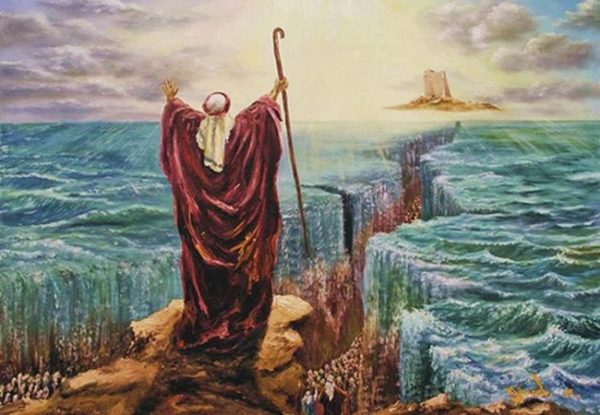
* We are presently with Moses, who led the children of Abraham out of Egypt against all odds. Moses is also a model of contemplative prayer, for his conversation with God is endless, to the point that people called him God’s friend. To the list of virtues we have above, however, we may now add divine worship, for through Moses, God established the religious system of the Hebrew nation. Through the rites of worship, the grace of God enables us to restore the Union with Him that was lost by our first parents.
And as we survey the Catholic religion, we look at several aspects of it. The primary aspect is Holy Mass, which we know from Sunday worship, although some of us attend during the week as well. At Mass, as I have been saying for some time now, we remake our commitment to God, which was made first on Good Friday, at the foot of the cross. There are also the several Sacraments of the Church, which we can list as:
* Baptism, Holy Communion and Confirmation, the Sacraements of Initiation, by which we enter and actively maintain the covenant with God, both as a community and personally.
* Confession (Reconciliation) and Anointing of the Sick, by which we are healed physically and spiritually at difficult times in our lives and drawn back into the loving embrace of God if we have fallen from it.
* Matrimony and Orders, by which we take up lives of service for the building up of the Church, either by beginning families or by providing the Sacraments to the people.
The word ‘liturgy’ itself means a ‘holy work,’ and it is something the entire community of Believers engages in, and not only the ministerial priesthood. The work of offering ourselves to God in a personal work for each one of us, and the ministerial priest offers together with it the great offering of Christ Himself. This is the preliminary to Union with God, and this makes liturgy primary to the Christian experience. Through the sacred humanity of Christ, the Sacraments draw us into union with the Blessed Trinity. The sacraments are so essential to accomplishing this Union with God that we can say that without the priesthood there can be no Church, for without the priests we would be bereft of the sacramental economy.
The Sacraments are designed to engage the senses, for human beings depend upon their physical senses. Not only do Sacraments use physical material (water for Baptism, oil for anointing, bread and water for the Mass) but we use items called sacramentals, such as blessed water and salt, holy icons and images, and medals. And we use art and music in praise and worship. And, in so far as we live in time, we sanctify time itself and we have a church calendar. And last week we spoke of the Liturgy of the Hours, by which we sanctify time during the day.
The 6th of January, 2025 (XV)
I have overlooked updating this page since early December. We had continued to look at the story of Moses during December, and to examine his guidance of the people from the idolatry of Egypt and through the waters of the Red Sea and into the desert, where they had to face the hardship of hunger and thirst, for they had been fed as Egyptian slaves and had become used to this. They challenged God and his priest Moses, but their arrival at the holy mountain at Horeb was to be expedited, and God began the miraculous provision of food and drink in the wilderness of Seen.
It is necessary to inspect the procession out of Egypt and through water, because of its analogy to the life of Christian processing from the world through the waters of baptism. The Christian life then becomes a pilgrimage through the desert of this life and towards the Promised Land of happiness with God in heaven. And in this procession, alongside trustful prayer, Moses is asked to give the people first the Commandments of God (the guidance for right living), and then the elements of divine worship. Moses life thus provides us the theme of both trustful prayer and right living, and faithfulness to an elaborate system of worship.
This system is given to him on the sacred ground of the holy mountain, while the people wait in their masses at the foot of the mountain, not daring to even set foot on it. This separation of holy ground from the profaneness of the world becomes diagrammatic in the new system of worship, for the mountain represents the lost Garden of Eden, which can now be attained again by divine permission. As Moses ascends into the smoke-wreathed summit of the mountain, the priests and elders of the people are permitted to climb to a certain height, while everybody else waits at the bottom.
Once the tabernacle arrangement is built at the end of Genesis, the courtyard of the tabernacle represents the world, the tabernacle-tent itself the mountain, and the inner room (holy of holies, the holiest place) of the tent the summit of the mountain. The new arrangement mimics the procedure at the mountain. The high-priest (as Moses) alone may enter the holy of holies, the Aaronite priests (as elders of the people) may enter the tabernacle-tent to offer incense and renew the perishables, and everybody else remains without. The later Temples in Jerusalem are built on precisely the same framework. The significance for Christians is given in the New Testament, by the Letter to the Hebrews, where it is clear that the holy of holies represents Heaven (where Christ as High-priest has gone). The drama of the tabernacle-tent system is demonstrated by its careful demarcations and boundaries. In Christ, as the gospel tells us, the veil of the Temple is torn in two, and the tabernacle once accessible to only a single tribe of Hebrew men is now accessible by all.
In the next few weeks, we move from the Bible to the Church’s own teaching on the Commandments of God (by which we learn the principles of right living), and on the Divine Liturgy in church (by which we give due worship to the Creator).
The 2nd of December, 2024 (XI)
The subject of prayer comes up again as we consider the calling of Moses, the lawgiver of the Hebrew nation. It is a good idea to use stories to demonstrate the Catholic faith, rather than simply reading through paragraphs of the Catechism of the Catholic Church. In the figure of Abraham, the first patriarch of the Hebrew nation, we discovered a purity of faith in the one God that sought to remove entirely the worship of other gods and minor deities, and the willingness to give everything to God when asked, even Abraham’s beloved son Isaac. Abraham establishes for us today the attitude of prayer, the faithful humility and the God-centredness of his life. Although we are not called to sacrifice our family members on a mountain, we are called to prioritise God above everything else. We are able to do this in degrees as we approach perfection in our personal faith. Abraham thus is our father in the faith. Just as the Jews today call Abraham avi-nu, our father by blood, so we Catholics call Abraham in the Mass Abraham avi-nu, our father in the faith.
Once we’ve established the locus of prayer in the soul, the attitude of humble devotion of children to their Father, we find also in Abraham the words of prayer, by which we speak in dialogue with the God Who loves us and make intercession for ourselves and for others around us, and for the entire human race. Already we are sacrificing our time in doing these things, and making an offering of love to God; there are among monks and nuns those who sacrifice their whole lives to make a more complete offering of prayer to God. As the Church teaches us, our prayer is efficacious above all in establishing this union of our faith with the prayer of Christ Himself.
We made a beginning with the story of Moses, and discovered that this man with whom God spoke ‘as a man speaks with his friend,’ had acquired the humble attitude of prayer (probably being trained by his Jewish mother) but spoke with God for the first time on the holy mountain, before the burning bush.
What I made note of in this episode was the trust that God placed in Moses, not because of Moses’ own self-confidence but because God knew what Moses was made of. He knew that this stuttering man, afraid of being a leader of his people and afraid of encountering the Egyptian king as such, would take up the authority given him by heaven and lead his people out of slavery in Egypt and through great suffering in the desert. We too are often asked to do things in our lives – to begin a family, to alter our circumstances and to assist people we’d rather not – and we asked to do these things while sacrificing our comfort zones and stepping out to where we’d rather not go. God never asks for the impossible, but He promises us that He will accompany us in the doing. All this involves prayer, but the very act of prayer and spending any amount of time in prayer is already a commitment we are called to make, sacrificing ourselves and the time we would normally spend doing something else.
We shall soon discover how God calls the Hebrew people to worship under Moses’ rule, and how their religion and ritual was established, by which they would be chosen out of the world as a race and a people, practically married to God, and given a mission to bring themselves and all people of the world back into the embrace of God, which is both Heaven, and the Garden of Eden.
The 25th of November, 2024 (X)
We have continued this hour to talk about prayer as a natural outcome of the intense relationship of love which we are attempting to establish or continue with God. Prayer could be simply glances exchanged with God, just as experienced in human relationships of love. For example, although we may say, ‘I love you,’ to our beloved family and friends, and we really should, often enough we can be in their presence and not say a word. So indeed, we may pray with or without words to God, and make sensible contact with his (using our vision) through icons and holy images, and (using our hearing) through Scripture and tradition. We looked once more through the book of psalms; last week we had looked at Psalm 22(23), the Lord is my Shepherd, which is the prayer to the Shepherd-king, and at Psalm 50(51), Have mercy, which is a long act of contrition. Today, we looked at Psalm 90(91), He who dwells, a long psalm of protection, which is a good night prayer.
We continued to look through the Compendium of the Catechism 534-547 about prayer. In summary, all people are called to dialogue with their Maker, and great prophets in the Bible (such as Abraham and Moses) excelled at it, and were able to bring messages from on high to the people in their care. Much later on, Christ and His Mother were great examples of prayer in the gospel stories. We find that Christ was deep in prayer, even while hanging in agony upon the cross, when He seems to have recited Psalm 21(22): My Lord, My Lord, why have you forsaken me. Q.545 in the Compendium addresses something related to our former discussion about the Scandal of evil, for should we not always get what we ask in prayer from a loving father? The Catechism states that efficacious prayer is not prayer that is answered as made, but prayer that effects a union in faith with the prayer of Christ.
If we were all to get what we wanted all the time, there would likely be mayhem. It occurred to me to mention the film Bruce Almighty, whose protagonist receives the power of God and decides to answer everyone’s prayer with a Yes. The inevitable results…
To end this summary, I should add some links to the two prayer-books I mentioned, the simple prayer book, and the other Catholic prayer book, both provided by the Catholic Truth Society. Also mentioned was the Pieta prayer book, that I thought was no longer printed; but it is!
The 18th of November, 2024 (IX)
I had indicated in the last hour that we would remain with Abraham, whom we see as the father of all believers, Jewish or Christian. In this hour, I wanted to begin to talk about prayer, which is so very crucial to the Christian life, and I wanted to say at once that prayer is not merely a set of formulae, something composed that is read by some churchman at a microphone during a ceremony, or indeed something we read out of a book. It’s nice to read prayers out of books, because most of us are tongue tied when it comes to prayer and our minds can go blank when we set our minds to it. That is, I suppose, when we look at prayer like that. But the Church teaches us that prayer is actually a natural outcome of that relationship with God which we have considered for some weeks now.
“Prayer is the raising of one’s mind and heart to God, or the petition of good things from Him in accord with His will. It is always the gift of God Who comes to encounter man. Christian prayer is the personal and living relationship of the children of God with their Father Who is infinitely good, with His Son Jesus Christ, and with the Holy Spirit Who dwells in their hearts.”
Compendium of the Catechism, §534
With this in mind, we took up the story of Abraham preparing to sacrifice his son Isaac, the son of the promise, who was to bring Abraham and his family the blessings of God for generations. With so much set upon this boy, and despite Abraham’s great love for his son, he was prepared to give him up to the God Whom he trusted, and Who he knew could even bring life to the dead. The choice is inexplicable to so many of us who life in the comfort of years of relative social peace, both locally and internationally. But certainly within living memory, men and women of this country gave their sons away in war for what they recognised as a great cause. And throughout the centuries, and even today, Christian men and women have made great sacrifices and even given their lives for their faith – which means that they have given and are giving their lives for God and His Church. This we recognise of the martyrs. But in the holy men and women of the centuries of Christendom who have given themselves up to lives of obedience, poverty and chastity in the Religious Orders, we may also see the shadow of Abraham being prepared to give away his own family and posterity because he recognised a divine call or ‘vocation.’
We looked briefly at the Book of Psalms in the Bible, the prayerbook of both the Jewish people and the Christian Church. We shall continue to talk about prayer in the next hour, as we work our way towards the figure of Moses, whose story introduces us to religion and ritual, and the establishment of a ritual priesthood for the forgiveness of sin and atonement with God.
The 11th of November, 2024 (VIII)
The story of the patriarch Abraham was selected to move from the subject of faith to that of prayer, which is crucial for the religious life, so the next hour or two will be about prayer, before we go on to the story of Moses and introduce the subject of ritual and liturgy. The story of Abraham in the Bible is extremely simplified, for it comes from a traditional narrative that was written down only much later. It speaks in turn of
* Abraham’s utter dedication to the God Who revealed Himself to Him. We do not know the precise circumstances of this, for at one moment Abraham’s family is moving from Ur in Babylonia to Haran in the north of Syria, and the next moment Abraham is travelling with his wife south through the Levant and towards Hebron and Be’er-sheba. Meanwhile, however the relationship between God and him was built, Abraham is slowly revealed as a priest (he offers sacrifice on stone altars), a prophet (he speaks directly to God), and eventually a tribal ruler (he seems to have a significant household and is capable of raising a fighting force to defend his family).
* His utter ordinariness. Although described in the Bible as favoured by God, he is a tribal herdsman, at the mercy of both nature and the authority of human societies. It is clear that he dwells apart from towns and villages in the manner of a nomad and owns no land of his own; he later has to purchase land to bury his wife. Also, when famine clutches at the Land, as it has so often done in the history of the Levant, he is forced like many others to flee for the relative prosperity of Egypt.
* He will give everything he owns and even his future for the sake of God. We shall see this spectacularly in the story of the near-sacrifice of his legal heir, Isaac, whom he loved dearly. There is a spirit of abandonment in this attitude of his, a spirit that is recommended by the gospels and by the Church. And we shall speak about this detachment from the world in our discussion about prayer.
The 4th of November, 2024 (VII)
The hour began as usual with a summary of previous meetings, for a reiteration of the point of the Christian identity and the direction that we are intended to go in. I wanted in this hour to quickly describe ‘faith’ and ‘faithfulness’ as intrinsic to the Catholic psyche. ‘Faith’ has become rather weakened as a word, for it is used to described multiple religious professions which respect a variety of deities or divinities, but ‘faithfulness’ introduces the element of perseverance in our attachment to the one God of the Hebrews, the God of Abraham, Isaac and Jacob. This faithfulness is to be preserved in the face of every other religion we meet in our rather multicultural society, and moreover in the face of grievous suffering and near death.
So, what is faithfulness, and how are we to preserve it and grow it in our hearts? We turned to the Catechism of the Catholic Church (1814-1816) to find that faith and trust are almost interchangeable, and then we can ask ourselves whom we trust in matters of divine revelation and to whom we give authority over us in matters of faith and morals. In the words of the Catechism, we seek to know and do God’s will, according to what Holy Church has revealed to us of Him. Note, then, that we must believe and trust in the Catholic Church, before we can receive what she teaches us about God. The Church established by Christ is both the theological extension of His body on earth, and the guarantor of traditional items like Holy Scripture, that is, the Bible. The authority of Scripture stands or falls with the authority of the Apostolic Church which has guaranteed it from the beginning.
Naturally, faithfulness to God cannot begin and end in words and professions – it must find fruit in a love not only of God but of the people around us, and the world around us. This love (or in Latin, charity, caritas) ensures that the faith we have is a living faith, which is witnessed both in active charity and a bold proclamation of and witness to the Christian religion within our families, among our friends, and in the public square. All this is required for salvation:
“The disciple of Christ must not only keep the faith and live on it, but also profess it, confidently bear witness to it, and spread it: ‘All however must be prepared to confess Christ before men and to follow Him along the way of the Cross, amidst the persecutions which the Church never lacks.’ (Lumen Gentium, §42) Service of and witness to the faith are necessary for salvation: ‘So every one who acknowledges Me before men, I also will acknowledge before My Father Who is in heaven; but whoever denies Me before men, I also will deny before My Father Who is in heaven. (Gospel of S. Matthew, 10: 32-33)”
Catechism of the Catholic Church, §1816
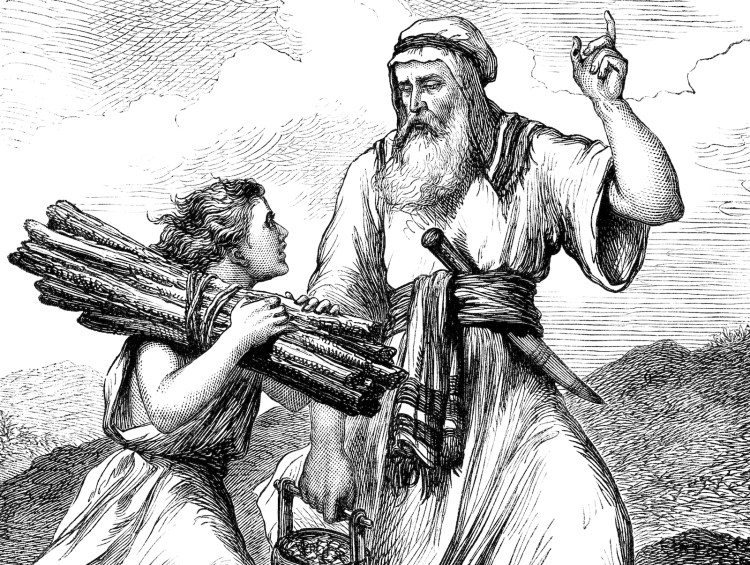
That ended, we began to look at Abraham in the remaining time, Abraham who in his great love for God obeyed without question when asked to leave family and security to start on a journey to he-knew-not-where. That is only the beginning of his story, which we shall look at in greater detail in the next hour. Always keep in mind that this faith of Abraham, though a child-like faith in a parent, is not a blind faith or an unreasonable faith, but a considered faith. For example, when God promises him progeny in both his old age and the old age of his wife Sarah, he laughs at the thought before throwing himself at the mercy of God. As we shall see.
The 28th of October, 2024 (VI)
Very quickly, in the last meeting we looked in summary at the previous meetings, before taking up the subject of the new lectionaries that the Church in England and Wales are taking up in unison from the 1st day of December, but which our parishes have already taken up in anticipation. The publisher has placed some frequently-asked questions on their website, but the gist of them is that the reading remain the same as ever, but the translation from the original Hebrew-Greek-Aramaic of the Bible has been altered from the Jersusalem Bible to the English Standard Version (in its Catholic edition). The Bishops have been eager to improve the quality of our translations, to make Holy Scripture better available to the Church. The Missal (the red book on the altar, with its Mass texts) was updated in 2011, and the lectionaries have now been updated also. Other books, such as the ritual books of blessings and services for sick visits, etc. will in due course be updated also. The usual peoples’ missal contains both the Scripture readings of the lectionaries and the Mass texts from the altar Missal, either for the Sundays alone, or for all the days of the year (the daily Missal). Those are the books that are being offered for sale at the back of the church.
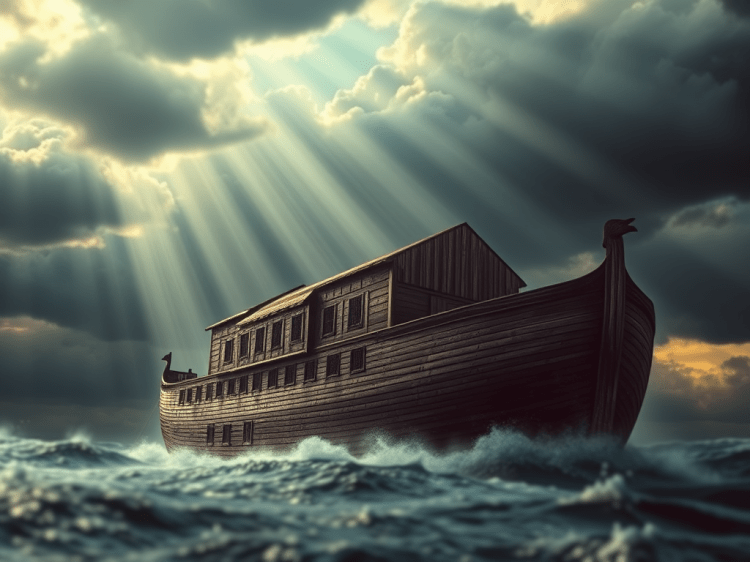
I wanted to quickly take note of the faithfulness of the patriarch Noah, as part of our drift through Scripture to learn from ancient figures of Judaism and Christianity who have demonstrated a life of devotion to God and (covenantal) relationship with Him. The story of Noah is summary is that:
* humanity had drifted further and further away from God, in its pride and desire for domination, and had even created anomalies and perhaps even abominations within Creation, contrary to the wishes of the Creator. So, He determined to end life altogether, and established the conditions for a devastating flood.
* however, along comes one faithful man. Faithfulness is what God requires of all people, Jewish, Christian or anybody else. Faithfulness again refers to covenantal relationship or attachment to Him, to the exclusion of everything and everyone else. Quests for power and wealth and domination are contrary to this requirement of faithfulness. Noah was able to supply what was wanting everywhere else.
* the flood comes and goes, humanity is devastated along with the rest of creation, with the exception of Noah and his family, and the several animals he carried with them on the ark. If we consider that humanity was created a priest on the behalf of all Creation, so that through the voices of men and women all Creation would be able to glorify the Creator and offer Him due worship…
* if we consider that, then we realise that of all fallen humanity, God established this priesthood of humanity anew in Noah, and this chosen man duly offers sacrifice when his family has made land again after the flood subsided. Soon, from Noah’s family, would come the patriarch Abraham, and as several of Noah’s descendants fell away from God into idolatries and worldliness, the theme of priesthood would be continued as the race of the Hebrews (children of Abraham) were established as a priestly nation under the lawgiver Moses. In the next hour, we should look at the faith of Abraham.
Some requests for future meetings that we can discuss are the following, and we shall certainly take them up in the weeks to come (feel free if you will to add to the list):
* religious experiences, and why they happen
* does God exist inside or outside of time
* the differences between Protestantism and Catholicism
* the States of heaven and hell
* the importance of the Eucharist
* the importance of baptism for acquiring the blessing of heaven
The 21st of October, 2024 (V)
This hour was mostly about the problem of evil, or the scandal of evil, which (in summary) asks how a good and benevolent God could permit the existence of pain and suffering, or evil in general. I shall begin with this link to a video made by the popular American priest, Father Schmitz. He says the essential things: that God is provident, but that although He has willed perfection for His creation and first invited mankind to assist Him in the perfecting of the world (hence Adam as the Gardener in Eden), that process of perfection is ongoing and that implies a measure of imperfection that will be in due course remedied. Scripture and tradition therefore ask us to be patient in suffering.
The relevant sections of the Catechism begin with §302, which addresses the subject of divine providence, and begins by describing Creation as having both a primary Cause – God – and secondary causes that are perpetually put in action by the primary Cause, Who exercises a sovereignty over the works of His hands, permitting both good and evil, but proposing to bring good from out of evil.
“The witness of Scripture is unanimous that the solicitude of divine providence is concrete and immediate; God cares for all, from the least things to the great events of the world and its history. The sacred books powerfully affirm God’s absolute sovereignty over the course of events: ‘Our God is in the heavens; He does whatever He pleases…’ and so it is with Christ, ‘Who opens and no one shall shut, Who shuts and no one opens.’ As the book of Proverbs states: ‘Many are the plans in the mind of a man, but it is the purpose of the LORD that will be established.'”
Catechism of the Catholic Church, §303
It goes on to recommend to us a docility and ‘childlike abandonment’ in the face of grievous suffering and distress. Which, we may ask ourselves, is all very well… but why even permit suffering and distress? Shouldn’t we be happy all of us, all of the time? Somebody suggested during our meeting that we can learn from suffering and build our characters through prolonged distress. As the Catechism states, there is no quick answer to the scandal of evil, and Christians can only point to the Man on the Cross to say that the God Who permitted both good and evil to coexist was Himself happy to share for an eternal moment in time that experience of human suffering and despair.
“If God the Father almighty, the Creator of the ordered and good world, cares for all His creatures, why does evil exist? To this question, as pressing as it is unavoidable and as painful as it is mysterious, no quick answer will suffice. Only Christian faith as a whole constitutes the answer to this question: the goodness of creation, the drama of sin and the patient love of God Who comes to meet man by His covenants, the redemptive Incarnation of His Son, His gift of the Spirit, His gathering of the Church, the power of the sacraments and His call to a blessed life to which free creatures are invited to consent in advance, but from which, by a terrible mystery, they can also turn away in advance. There is not a single aspect of the Christian message that is not in part an answer to the question of evil.”
Catechism of the Catholic Church, §309
The Church is focused more upon the ‘blessed life’ of the perfected Creation in the future than this life of good mixed with evil. Somebody asked at the last meeting about the image of God which every human being is created with and enjoys, and how such an image of God can permit human beings to commit evil acts and bring suffering upon their fellows and upon Creation. I had replied that it is precisely the image of God which permits us to will good and love as God does and that also permits us to will evil and choose not to love. Because it gives us a freedom of will and action that allows sin, which brings death. As it says in that last quote, we can turn away by a terrible mystery from the divine plan of God.
The commandments of God in the Bible and the counsels of the Church have for their aim the guidance of our lives, in order that we may always choose good and avoid evil, and so live our human freedom responsibly. But, why wouldn’t the good and infinitely powerful God prevent evil people from corrupting further Creation and the situation of their fellows? And setting aside moral evils, why are natural evils (such as the destruction caused by natural disasters) permitted to wreak havoc? Again, these events – like volcanoes and earthquakes – are properties of the world we live in and are to be endured, in the hope that the Creator and master of this world and its history will draw good from the suffering that results. We shall only wait in silence and in patience. Let’s allow the some Saints of the Church to conclude for us the position of the Church:
“S. Catherine of Siena said to ‘those who are scandalized and rebel against what happens to them’: ‘Everything (even evil things) comes from love, all is ordained for the salvation of man, God does nothing without this goal in mind.’
Catechism of the Catholic Church, §313
S. Thomas More, shortly before his martyrdom, consoled his daughter: ‘Nothing can come but that that God wills, and I make me very sure that whatsoever that be, seem it never so bad in sight, it shall indeed be the best.’
Dame Julian of Norwich: ‘Here I was taught by the grace of God that I should steadfastly keep me in the faith… and that at the same time I should take my stand on and earnestly believe in what our Lord shewed in this time – that ‘all manner (of) thing shall be well.”“
The 14th of October, 2024 (IV)
We began this hour with a session on Adam and Eve, and I thought we would go in turn over men and women in the Bible who exemplified the type of relationship of prayer and devotion to God that we would all like to have. We saw Adam and Eve in possession of that relationship in the beginning and until they fell from grace with their sin of pride and disobedience. But their remorse and repentance was immediate, although the guilt of that sin would never altogether depart. We noted that God made consequent plans to restore humanity from within, when He said to the serpent that a child of woman would crush its head, that is, would end its reign over the hearts of men and women.
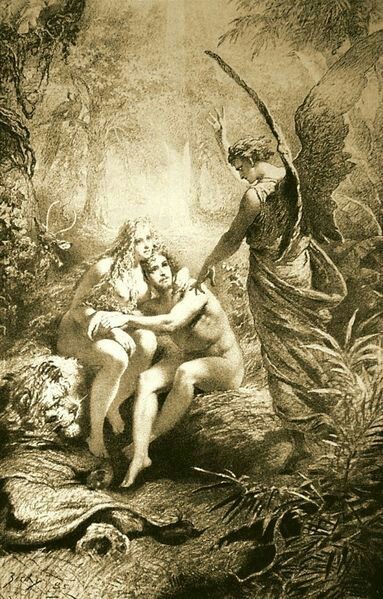
Nevertheless, the freedom from God that Eve desired came at a price. Now man would no longer be served by Creation as he had been before – he would have to harvest his food at great toil. Woman would suffer, too, becoming dependent on her husband and suffering pain in childbirth. But every curse brought by the first sin of our race would be brought to an eventual end by the Son of Man, a human child, who would be stung by the serpent’s spirit of rebellion but conquer it through His own patience and love. The Son of Man takes humanity back to the garden from which humanity was exiled.
But in the meantime, the children of Adam are still living walking through a ‘vale of tears.’ Life remains full of suffering and disadvantage, a result of the curse brought by sin. Somebody last week enquired about what we call the ‘problem of evil.’ Basically put, that is the question of why a good God Who so loves His creation would allow evil to persist. We can see Scripture’s answer on the origin of evil. But the question of evil has led many to disbelieve in a good and gracious God, or a God Who cares for the world He has made, and especially the people in it. In our next session, we shall have a quick look at what the Church says about this subject, how we are to suffer evil and push through towards the light at the end of the tunnel. If there is any time for it, we shall move towards the story of Noah and the flood.
The 7th of October, 2024 (III)
As these meetings are still a very beginning, it may be the best idea to build gradually, and to spend a longer time on the very basics of the Catholic religion. That means presenting religion as received. Most of us who grow up with religion are taught about God, and don’t spend much time trying to prove His existence. I am assuming that everybody approaching this or any other introduction to Christianity already has an appreciation of the divine, and is open to learning about God. So, I have begun with His relationship with humanity, destroyed by the sin of our first parents Adam and Eve, and the restoration of that relationship in Christ. Therefore, there is all this repetition of the promises of God to His people which we call covenantal. As part of this covenant, He has sworn Himself to being a guide for us, directing our lives if we choose to let Him, to being a Good Shepherd.

We spent much of today’s hour on a recap of the last two hours, but adding more of the theology of marriage, because marriage illuminates the type of commitment God makes to His Church, and so the type of commitment He invites every member of His Church to – a commitment of total, mutual self-giving. We see aspects of this invitation in the Gospel, when Christ says that we should be prepared to give everything up for His sake. Everything? Yes, everything. It sometimes sounds like hyperbole; shall we give up our families, our children, our friends for His sake? Yes, and no. Some of us do make great sacrifices, such as the monks and nuns who live apart from society. But for the rest of us, He is asking us to prioritise Him over everything else. The divine Spouse of the Church is also the divine Spouse of every individual Christian soul.

We shall in forthcoming weeks measure out the life of devotion and commitment to God, as demonstrated by great figures in the Bible. I mentioned several of those, such as Abraham the Father of all Believers, Moses the Lawgiver, Samuel the priest-prophet, King David, the great prophets Isaiah and Jeremiah, the restorers of the Nation Ezra and Nehemiah, and the Holy Apostles and bishops of the early Church. Above all, the demonstration of love God has asked of us since the days of Moses is the observance of His commandments and guidance for our lives.
“‘Believe Me when I tell you this; the man who has learned to believe in Me will be able to do what I do; nay, he will be able to do greater things yet. It is to My Father I am going: and whatever request you make of the Father in My Name, I will grant, so that through the Son the Father may be glorified; every request you make of Me in My own Name, I Myself will grant it to you. If you have any love for Me, you must keep the commandments which I give you; and then I will ask the Father, and He will give you Another to befriend you, One Who is to dwell continually with you for ever. It is the truth-giving Spirit, for Whom the world can find no room, because it cannot see Him, cannot recognise Him. But you are to recognise Him; He will be continually at your side, nay, He will be in you. I will not leave you friendless; I am coming to you. It is only a little while now, before the world is to see Me no more; but you can see Me, because I live on, and you too will have life. When that day comes, you will learn for yourselves that I am in My Father, and you are in Me, and I am in you. The man who loves Me is the man who keeps the commandments he has from Me; and he who loves Me will win My Father’s love, and I too will love him, and will reveal Myself to him.'”
Gospel of S. John, 14: 12-21 [link]
The 30th of September, 2024 (II)
At this second meeting, in the absence of a few people, we looked once more at baptism, both in its essentials (belonging, membership of a community) and some externals (some of the symbolism used). In particular, the whole marital theology of the Hebrews of the Old Testament, by which the relationship that God has with the people is characterised by or actually itself characterises the covenant of human marriage. The Church has a long history of encouraging absolute fidelity in human marriage, to the exclusion of any measures for divorce, for this is what Christ mandated. Christ and his Apostles had carried over the Hebrew understanding of the relationship of God to the people into the Church, so that like the Hebrews of the Jewish church of the Old Testaments, Christians may say to God, You are our God, and we Your people. And the heart of God is the heart of a husband Which gives itself unceasingly for His spouse – the Church.
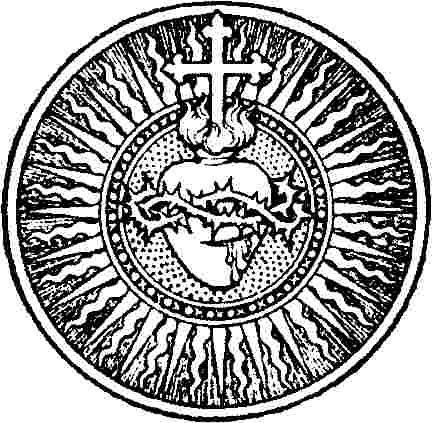
It follows then that to be Christian is to treasure that relationship with God and to return the love of the Sacred Heart in so far as possible with a strong devotion of prayer and worship, and in the practical demonstration of that love in charity towards the people around us. To be Catholic is to do all of this with the full ritual that was established by Christ and mandated by the teaching authority of the Apostolic Church. This includes, following the initial purification of Baptism, participation of the Christian in the full Sacramental life of the Church.
And in this context of returning the love of God, we had mentioned the duties of the Christian life. As with any human relationship or society – and especially marriage – all parties in the relationship expect to receive something from the relationship and intend to give something. God holds our very existence in being and, aside from being the spousal Figure of Holy Scripture, has identified Himself to us in Christ as a loving Father, doting upon His little children. The Church makes her response in love with her life of worship and prayer, with the consequent outpouring of the life of charity.
We ended with a brief introduction to the Bible, which provides us mostly in the form of a collection of short stories, but also as a set of proverbs and poetic works a demonstration of divine Wisdom and the love of God working in the world. The major divisions of Holy Scripture are as follows:
* the Torah (translated as ‘guidance’) consists of the first five books of the Bible, containing the Creation narratives, the election of Abraham as patriarch of the Hebrew nation, the enslavement of that nation in Egypt and their redemption from slavery and translation to the limits of the Holy Land
* the several history books, from Joshua and Judges through Ruth and the several book of the Kings (1 and 2 Samuel, 1 and 2 Kings) tell of the subsequent history of the settlement of the Holy Land, and the fortunes and decline of the Hebrew kingdoms from roughly 1000 BC to the time of their final destruction and the Exile of the nation in 587 BC, a collection supplemented by two books of the Chronicles of the kings
* the two supplementary histories of Ezra and Nehemiah, which tell of the return from the Exile of a small group of Judeans (aka. Jews, natives of the territory of Judea in the Holy Land), and their restoration of a Jewish nation in a Jewish homeland, with Jerusalem and the Temple; and the two books of the Maccabees, which tell of the resistance of this renewed Jewish community to its attempted destruction by Hellenistic (Greek) forces
* a host of poetry and storytelling in the books of the Psalms and the Proverbs, but also in the Wisdom of Solomon, the Song of Songs, and the tales of Job, Tobit, Judith and Esther
* the full complement of prophecy, including the great names of Isaiah, Jeremiah, Ezechiel and Daniel, and the lesser known names of such as Hosea, Micah and Malachi
* the four Gospels given us by Matthew, Mark, Luke and John
* the latter history of the Acts of the Apostles, given us by Luke
* the several letters written by Paul to various churches and various individual persons
* the several letters written without precise dedication by the Apostles Peter, John, James and Jude
* the apocalyptic description in Revelation in figure and symbol of the rule of Christ and the establishment of His spouse the Church
The 23rd of September, 2024 (I)
To summarise this evening, we struggled a little to come online with Zoom and shared a few links, to resources we shall use regularly over the next several weeks and months, and established some basics of the Christian religion through a quick description of baptism.
The three links are to :
(a) Holy Scripture (or the Bible) here in the RSV-CE version, which simply means Revised Standard Version – Catholic edition; the RSV was a protestant revision of the famous King James Version (KJV), and the Catholic edition makes the necessary restoration to establish a Catholic bible;
(b) the Catechism of the Catholic Church, which was promulgated by the Holy Father John Paul II in the AD 1992, as a common statement of faith after the long years of confusion in 1970s and ’80s; and
(c) the Compendium, or summary, of the same Catechism, which is arranged in a question-and-anwer format, with numbered references to the full Catechism.

The summary of the delivery on Baptism is this:
* the sin of Adam and Eve in the primordial Garden – a sin of pride and disobedience, and the associated rebellion against the Creator God – has produced a hereditary guilt that requires the baptism even of infants, who have not committed any personal sin
* the whole mission of Christ, and so of His Church, is the drawing of human beings away from this rebellion against God and back into Communion with Him; this was achieved by the utter filial obedience of Christ until the point of death, and is applied to humankind through the medium of grace, via principally the Sacraments of the Church
* grace builds upon nature, and human beings must cooperate with God to acquire their freedom from the chains of sin and death, repenting and making a firm renunciation of evil and an act of faith
* Baptism then washes away both the original guilt of the sin of Adam and Eve, and all personal sin, providing the subject with a blank slate to start again on the road of purity and union with God
* Baptism is prefigured in the early stories of the Bible by moments when humanity is delivered from chaos and death through the instrumentality of wood (viz. the ark of Noah, the staff of Moses, the ark of the Covenant); the wood points forward to the wood of the Cross
* Baptism is ultimately the means of entry into a covenant people of God, an elect community which God in Christ marries, remains faithful to and invites to be faithful to Him
To end, then, why are we Catholics? Why would we wish to be Catholic? In brief, because we recognise that our ultimate end is eternal happiness with God in heaven, and not any passing happiness here on earth. To that end, we strive to know Him, to love Him and to serve Him, our Creator and our final Good. He has shown us His face in Christ, and calls us into communion with Him – the Holy Communion of the universal Church, structured around her bishops, and around the Successor of the Apostle S. Peter.

 Catholic Louth and Mablethorpe