
The significance to our local church
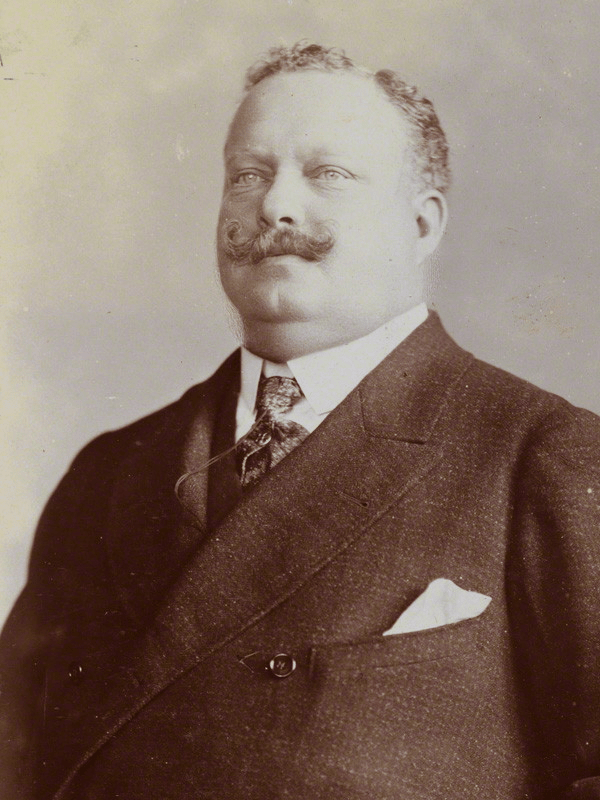
Our church at Mablethorpe S. Joseph is said to have erected the first shrine dedicated to Our Lady of Fátima in all of England, dating to 1937. This was the work of Father Louis Drury, who studied at the English College in Lisbon at the time of the apparitions in 1917, and later became parish priest at Louth S. Mary in the 1930s. Father Drury was involved in the building of S. Joseph’s, and acquired our statue of OL of Fátima, which was made near the shrine in Portugal, and is a replica of the original statue produced by the sculptor José Ferreira Thedin in 1920 for the shrine at Fátima. This became the first statue of OL of Fátima in England.
With this page, we shall summarise the apparitions, with excerpts from Sister Lúcia’s own memories of the events that changed her life and the lives of her family, her nation and the entire Latin Church.
A history of the Immaculata in Portugal
- The first king of Portugal, Afonso Henriques, was legendarily born a cripple and miraculously cured by the intercession of OL, and went on to later lead the Portuguese reconquista – the return of the Iberian peninsula into Christian hands, centuries after the Islamic invasions. He took Lisboa and Santarém in AD 1147, and built the great Cistercian monastery of Alcobaça, which like all such monasteries was dedicated to the Blessed Virgin.
- In the fourteenth century, Dom João of Aviz led Portuguese armies towards an extraordinary victory over Castilian forces at Aljubarrota, with the assistance of the Holy Constable (o Santo Condestável), S. Nuno Alvarez Pereira. Nuno prayed for victory near Ourém, and Dom João vowed to build a church to honour the Blessed Virgin after the battle, as OL of the Battle (in Portuguese, o Batalha). The great church that still stands at Batalha was given to the Dominicans and so became connected with the holy Rosary. The king had an English queen, Philippa of Lancaster, daughter of John of Gaunt, and it is said that she influenced the building at Batalha. Nuno eventually retired to the Carmel in Lisboa, and has become one of the most recently canonised Saints of the Portuguese nation.
- At the instigation of the above-mentioned Dom João I of Portugal, the Holy Father Boniface IX declared that every cathedral in Portugal should be dedicated to the Blessed Virgin, and this declaration was (astonishingly) made on a thirteenth day of May.
- The royal house of Portugal, the House of Bragança, had from the beginning a strong dedication to the Blessed Virgin as the Immaculate, patroness and defender of the realm. The barons (cortes) were required to submit to her, and the university at Coimbra was required to defend her Immaculate Conception.

The political situation
The immediate situation in Portugal was the political fallout from the regicide in 1910, when the king Carlos I and the crown prince Luís Filipe were assassinated by republican enthusiasts and the country became something of a banana republic, with more than forty-five governments over the next fifteen years. This new heir of the French Republic was naturally anti-Catholic and anti-clerical, and the Orders were suppressed and exiled, and with the new separation of church and state, the common life of the people was aggressively secularised. As usual, this intruded into family life, where marriage became a contract and divorce was introduced; the schools were taken over and Church institutions were ruined, their properties being used as barracks, government buildings and stables. When the First World War broke out in 1914, Portugal fell into financial ruin. The local republican administrator in Ourém was the masonic Artur Santos, and he played a prominent part in the Fátima story.
The children
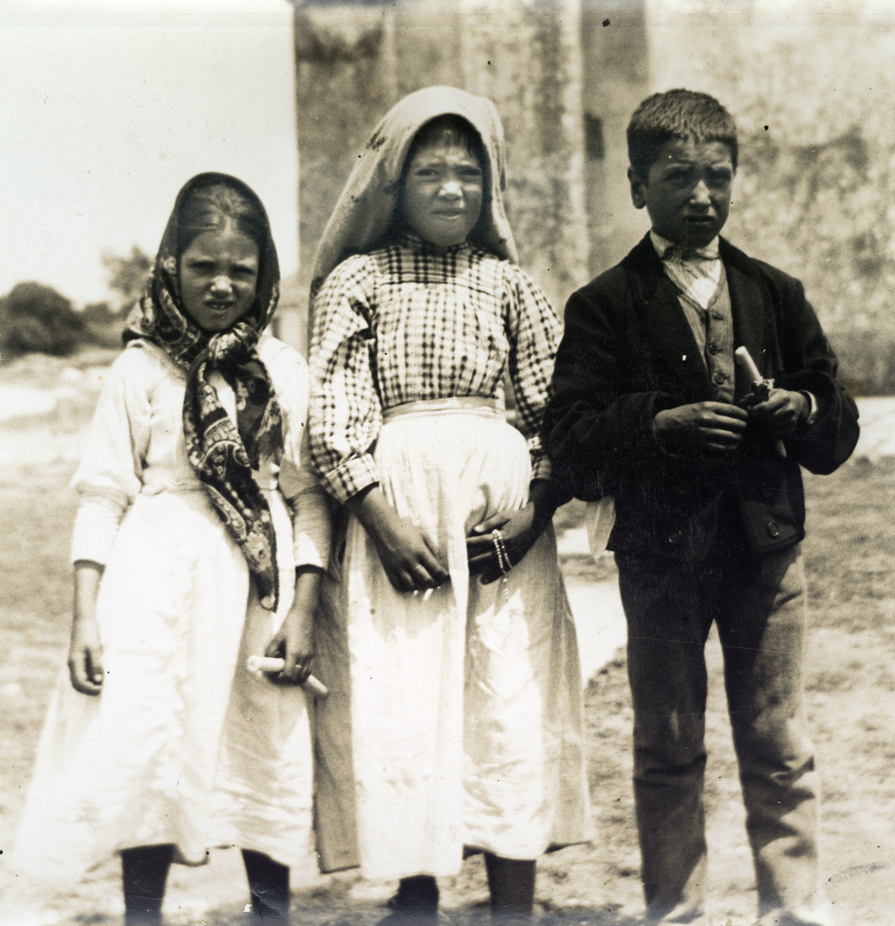
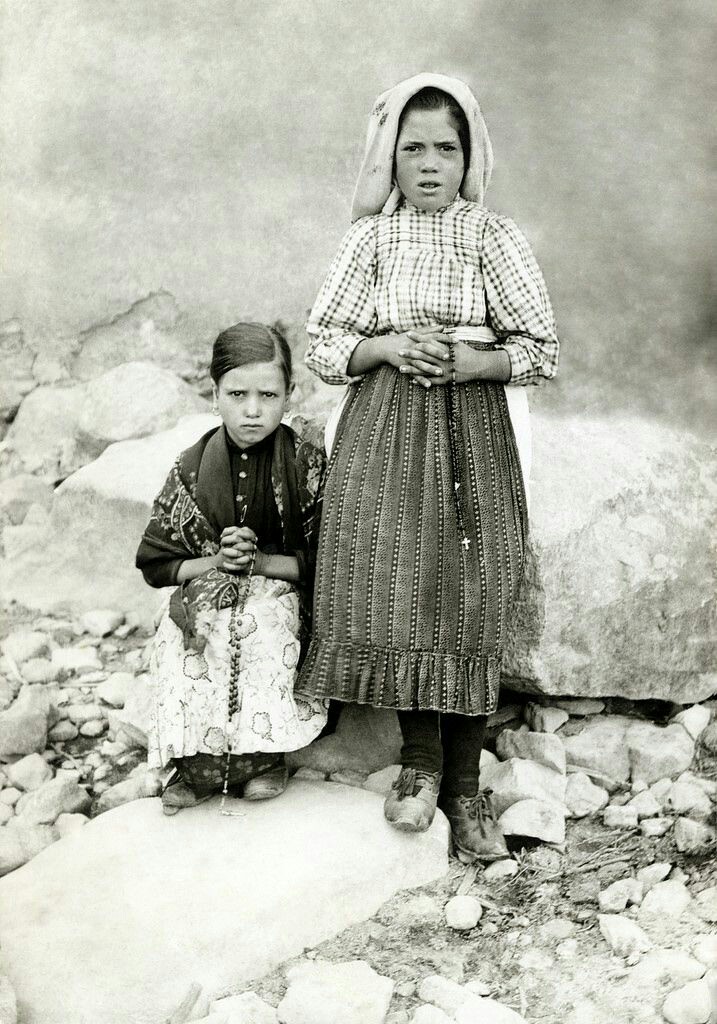
- The children were all of them born at Aljustrel, the oldest of the three to Senhor Antonio dos Santos (d. 1919) and Senhora Maria Rosa (d. 1942). Maria Rosa, who had taught all her children to be honest, for very long was convinced that her daughter was lying about the apparitions and continued to punish her for dishonesty. Lúcia was born on the 22nd of March, 1907, an affectionate child with a great love of younger children, a bit of a chatterbox, who loved to play games and dance, and to dress up for the festas (feast days). She was strictly educated by her mother in the Faith, as were her brother and sisters, and received First Holy Communion at the extraordinarily young age of six. She became the primary recipient of the substance of the revelations at Fátima.
- The two others children, brother and sister, were born to Senhor Emanuelo Marto and his wife Senhora Olimpia. Of all the adults, Emanuelo was the most placid in the wake of the apparitions, and became the most supportive. Francisco (or Francis) was born on the 11th of June, 1908, and Jacinta on the 11th of March, 1910. Francisco apparently like to hunt small animals like snakes and lizards; he was not always well-behaved, but easily corrected, and with a don’t-carish attitude towards playing games. He was patient with his sister and cousins, quick to give up the most precious of his belongings, and patient in suffering for the truth.
- Little Jacinta (or Hyacinth) was a lively girl, who was very attached to her cousin Lúcia and accompanied her wherever she went. She and her brother had a strong devotion to the hidden Jesus in the Blessed Sacrament. She was affectionate to the lambs in the small flock she cared for, carefully naming them and carrying them about in her arms. She was also one for games and dancing, and quick to give these up in penance during the visions of 1917.
The Angel of Portugal
Long before the Lady arrived at Fátima, from the spring of 1916, as Lúcia much later revealed, the three children were visited by heavenly figure that identified itself as the Angel of Peace, and then the Angel of Portugal. The first meeting was at Chousa Velha, where they were once more herding sheep. The angel taught them to make personal sacrifices and to pray, himself prostrating himself upon the ground with the words, ‘My God, I believe, I adore, I hope and I love Thee. I ask forgiveness for those who do not believe nor adore nor hope nor love Thee.‘ At a second visit, later in the summer, the angel brought the message of urgency of prayer; in addition to the reparation urged by the first prayer he had taught them, he now spoke of suffering and personal sacrifices – expiatory sacrifices made by the children which could purchase peace for Portugal. By thus bringing forth the cross and the demand of Christ for sacrificial reparation, the angel prepared them for the virtues of humility and personal sanctity, and the responsibility of carrying the message of heaven to a world that didn’t and doesn’t want to hear it.
On a later visit, the angel brought a host and a chalice and after teaching them the famous Most Holy Trinity prayer, gave the host to Lúcia to eat and the chalice to Francisco and Jacinta to drink from. This has the appearance of Holy Communion, although the smaller children had not yet made their First Holy Communions. It is clear from the first two apparitions that this was also a chalice of suffering (for the two little children would soon die of painful illnesses), not unlike the chalice brought to Christ at the garden of Gethsemane. The angel now prostrated himself upon the ground and said this prayer several times…
“Most Holy Trinity, Father, Son and Holy Ghost, I adore You profoundly and I offer You the most precious Body, Blood, Soul and Divinity of Jesus Christ, present in all the tabernacles of the world, in reparation for the outrages, sacrileges and indifference by which He is offended. And by the infinite merits of His most Sacred Heart and of the Immaculate Heart of Mary I beg You for the conversion of poor sinners.”
Prayer of the Angel of Portugal
A first two apparitions
On the 13th day of May in 1917, Lúcia, Jacinta and Francisco Marto were herding sheep at the Cova da Iria, at Fátima. Lúcia described seeing a very young woman arrived in a flash of what seemed to be lightning upon an azinheira (holm oak) tree, a young woman ‘brighter than the sun, shedding rays of light clearer and stronger than a crystal ball filled with the most sparkling water and pierced by the burning rays of the sun,’ a woman who said she was from heaven. She was apparently fifteen years old, and was dressed all in white, in a long dress and with a white veil that reached also to the ground; her apparel was worked with fine gold thread, as is portrayed in most contemporary icons and images. She came to receive an initial commitment from the children, and ten-year-old Lúcia was very prompt to accept the invitation. Jacinta could not hear the Lady very well, and Francisco not at all.
“Will you offer yourselves to God to submit to all the sufferings that He will send you in reparation for sins by which He is offended and in supplication for the conversion of sinners?”
Our Lady to Lúcia on May the 13th, 1917
The experience had immediate effects upon the children. Little Jacinta did not wish to play anymore, because the Lady had asked them to pray, do penances and make sacrifices for sinners and other acts of reparation. And they gave up their simple lunches, to the sheep and later to poorer children, choosing instead to eat bitter acorns, roots, berries, etc. The greater mortification arrived from Lúcia’s family, who couldn’t believe the story; following the disbelief of the local priest in Aljustrel, her mother Maria Rosa was convinced that the apparition was of the devil. At the apparition on the 13th of June, people present noticed what seemed to be a cloud hovering over the tree the Lady stood upon and that the conversation sounded like the buzzing of an insect. The children now saw in vision the Immaculate Heart, encircled by thorns that seemed to pierce it, and Lúcia perceived this as being the result of the sins of humanity. They also received the famous ‘Fátima prayer.’
“O my Jesus, forgive us; deliver us from the fire of hell; take all souls to heaven especially those in most need.” [O meu Jesus, perdoai nos, livrai nos do fogo do inferno; levai as almas todos para o ceu, e socorrei principalmente as que mais precisarem]
The Lady instructed Lúcia to learn to read, and said that she would soon take Francisco and Jacinta away into heaven. Because of her treatment at home, Lúcia was determined to not attend the apparition on the 13th of July, but she changed her mind. The Lady asked for the daily rosary, and promised to reveal her identity at the October meeting, and to work an extraordinary miracle to demonstrate the reality of the apparitions to the general public. The Lady also on this occasion showed the children a horrific vision of hell – the first part of the Secret – which they never forgot, and which inflamed their desire to live their lives in expiation for the sins of the ‘poor souls’ who were falling in such numbers into eternal torment. A second secret was revealed to the children on this occasion: devotion to the Immaculate Heart (including the first-Saturdays devotion) and the requirement of the consecration of Russia to the Immaculate Heart by the Holy Father. Meanwhile, curiosity took over the growing number of visitors to Fátima and Aljustrel. These visitors also ruined the field of the Cova da Iria, losing Lúcia’s family their food self-sufficiency and causing them to sell the grazing sheep, and they interrupted the sewing/weaving work of her sisters. Accusations of deception and fraud arrived to further torment the children.
“I want you to come here again on the 13th of next month. Continue to say the rosary every day in honour of Our Lady of the Rosary to obtain the peace of the world and the end of the war, because only she can obtain it.”
Our Lady to Lúcia on July the 13th, 1917
The drama of August
Strangely (from our perspective), the local republican administrator, the villainous Artur Santos, saw the apparitions as a threat to the new republic – the beginning of a clerical plot. The word about secrets being kept by the three children annoyed and concerned him, and after attempting to bribe the children into divulging those secrets, he decided to impede them from attending the Lady on the 13th of August. He orchestrated their kidnap and imprisonment in his own home and then in the provincial jail from the 13th to the 15th of August. People at the Cova noted that the usual transparent ‘cloud’ approached from the east and descended upon the azinheira tree, then returned. They also noticed new changes in the environment: coolness in the air, a yellowish sunlight (and sometimes blood red, and pink), with pale colours in the sky and reflected upon the faces and clothing of people on the ground. Meanwhile, the numbers attending at the Cova had increased significantly, and a large sum of money began to be collected at the tree; one of the frequent visitors, Maria Carreira, took custody of the money until instruction was received for its use, for neither the children nor their families wanted anything to do with it.
Extraordinarily, the Lady made her appearance later in August, when Lúcia was shepherding with Francisco and his brother João, at Valinhos on the 19th. When Lúcia recognised the usual change in the environment, with the sunlight dimming suddenly, and the flash of lightning, she sent in haste to Aljustrel for Jacinta. Simultaneously at Fátima the environmental changes also took place: coolness in the air, colours in the sky and on the ground… As soon as Jacinta arrived, the Lady stood once more upon a tree. Lúcia was told once more to pray the daily rosary for peace, and make sacrifices for sinners, many of whom went to hell because nobody sacrificed for them. She was also told to use the money collected at the Cova to build a type of processional stands or litters (andores), to supply a cult of Our Lady of the Rosary. And when Lúcia asked for a miracl, in order to convince the general public of the apparitions…
“I will grant one in October, but not so grand a one as if they had not taken you to the Town. S. Joseph too will come with the holy Child to bring peace to the world. Our Lord will also come to bless the people. Our Lady of the Rosary and Our Lady of Sorrows will come too.”
Our Lady to to Lúcia on August the 19th, 1917
In September, priests and seminary students arrived for the first time to attend the visit to the Cova, curious in spite of warnings that the apparitions might be diabolical in origin. On the 13th of September, they were able to witness with everybody else not only the environmental changes (freshness in the air, dimming of the sun to the point of the appearance of the stars, and a sort of rain of apparent flower petals which never reached the earth) that accompanied the apparitions but the movement from the east to the azinheira tree of a luminous globe, seen by many but not by all. As the October visit approached, all Portugal was in expectation, especially of the promised miracle; and the families of the children were also in a panic, fearing that the worst would happen on the day. Maria Rosa had determined that if her Lúcia was to die there, then she would die with her.
The 13th of October
The day dawned as extremely rainy, and the large crowds of over 70,000 were soaked through at once. Soon after midday, the rain came to an astonishingly abrupt stop, and the usual flash of light heralded the final appearance of the Lady at Fátima, while a type of mist seemed to surround the children and the tree. The Lady identified herself to Lúcia as the Lady of the Rosary and asked her to continue to say the daily rosary. She said that the war would end soon, and the soldiers would return. She also commanded the building of a chapel onsite in her honour – in honour of the Lady of the Rosary. Meanwhile, numerous witnesses in the large crowd experienced what became known as the miracle of the sun. The sun had dimmed considerably and seemed to many to be a silver disc and the atmospheric colouring of August and September was repeated. But when the Lady had vanished, the crowd beheld the sun as first rotating vigorously as a wheel and shooting out rays of coloured light (blue, yellow, etc.), and then as apparently detaching itself from its anchoring and approaching the earth very quickly, with a reddish glow and great heat, so that clothing soaked with rainwater seemed to dry quickly. That last movement caused much panic among the observers. The show ended with a shower of white objects from the direction of the sun, objects that resembled snowflakes or rose-petals, which fell towards the earth but vanished before they could be touched.

Strikingly, some fervent Catholics saw nothing, while among the shocked observers were plenty of sceptics, and many who had arrived simply to pour scorn upon the credulous when nothing happened and no miracle took place. Such were men like Senhor Avelino de Almeida of the newspaper O Seculo, who ended up reporting an extraordinary happening.
“Before the astonished eyes of the crowd, whose aspect was biblical as they stood bare-headed, eagerly searching the sky, the sun trembled, made sudden incredible movements outside all cosmic laws – the sun ‘danced’ according to the typical expression of the people.”
Avelino de Almeida in the anti-clericalist paper O Século,
“…the silver sun, enveloped in the same gauzy purple light was seen to whirl and turn in the circle of broken clouds…
The light turned a beautiful blue, as if it had come through the stained-glass windows of a cathedral, and spread itself over the people who knelt with outstretched hands…people wept and prayed with uncovered heads, in the presence of a miracle they had awaited. The seconds seemed like hours, so vivid were they.”
The Lisbon daily O Dia, on October the 17th
The phenomena were also visible to some at a great distance from the Cova. A later missionary to India, Father I. L. Pereira saw the sun as a ‘rotating snowball’ while ten kilometres away from Fátima. The poet Afonso Lopes Vieira did from his verandah forty kilometres away. Schoolteacher Delfina Lopes and her students and other witnesses at Alberta, forty kilometres away, also saw disturbances in the sun. Most extraordinarily, the Holy Father saw the miracle, hundreds of miles away at Rome. But while the crowd was staring at the sun itself, Lúcia was seeing images of the Holy Family, first the Lady of the Rosary as before, then S. Joseph and the Child Jesus blessing the people, then Christ Himself in blessing, then Our Lady of Sorrows, and then Our Lady of Mount Carmel holding the brown scapular; all in the vicinity of the sun. Jacinta and Francisco also saw S. Joseph and the Child, and Jacinta heard the message about the daily rosary and the chapel to be built at Fátima.
“I have come here to tell you that people must not offend our Lord any more because He is very much offended, and that if people amend their lives the war will end, and if they do not the world will end.”
Our Lady to Lúcia on October the 13th, as overheard by Jacinta
It would seem finally that there is no scientifically verifiable cause for the miracle of the sun, and although there have been various proposed explanations, it remains that people had very individual and subjective experiences of the same phenomenon, and even the three children differed in what they could see and hear and what they couldn’t. Some people only saw the radiant colours and others (including some believers) saw nothing at all. The leading conjecture of a mass hallucination of a crowd expecting a miracle must be discarded for a crowd not knowing what to expect, and yet seeing the same extraordinary solar disturbance in a large variety of ways. Another conjecture, such as presented by Professor Auguste Meessen of the Institute of Physics (Leuven), about phosphene visual artifacts and temporary partial blindness caused by staring directly at the sun, must surely be discarded because of the absence of permanent optical damage in the crowd of thousands. Meessen’s observation that seeing colour changes could be caused by the bleaching of photosensitive retinal cells, caused by staring into the sun, may also be ignored for the attention of the crowds was on the tree and the children, rather than the sun, until the phenomena of the colours was long established (in August and September) and the sun had already began its spinning and other motions.
In addition to the miracle of the sun, the three children indicated that the lady prophesied a great sign in the night sky which would precede a second great war. On the 25th of January, 1938, bright lights and an aurora borealis appeared all over the northern hemisphere, and even in places as far south as North Africa, Bermuda and California in the widest occurrence of such a show since 1709. Lúcia, as the only surviving of the three children at the time, indicated that it was the sign foretold in letters to the superior of the community she lived in and to the bishop the following day. Just over a month later, Germany seized Austria and the Second World War dropped upon Europe.
The immediate aftermath
- First the political situation: the anti-clericalists began immediate agitation, to discredit the visions and to fault the priests, who themselves had however mostly avoided Fátima and many of whom had almost violently attempted to dissuade the children. The secularist newspapers and masonic pamphleteers called on the ‘liberal-minded’ to avoid another plunge into the darkness of ‘medieval’ religion, to uphold the new republic and its ‘civilisation and progress,’ and use truth, reason and science to oppose the miracles of Fátima and the foolishness of Catholic belief.
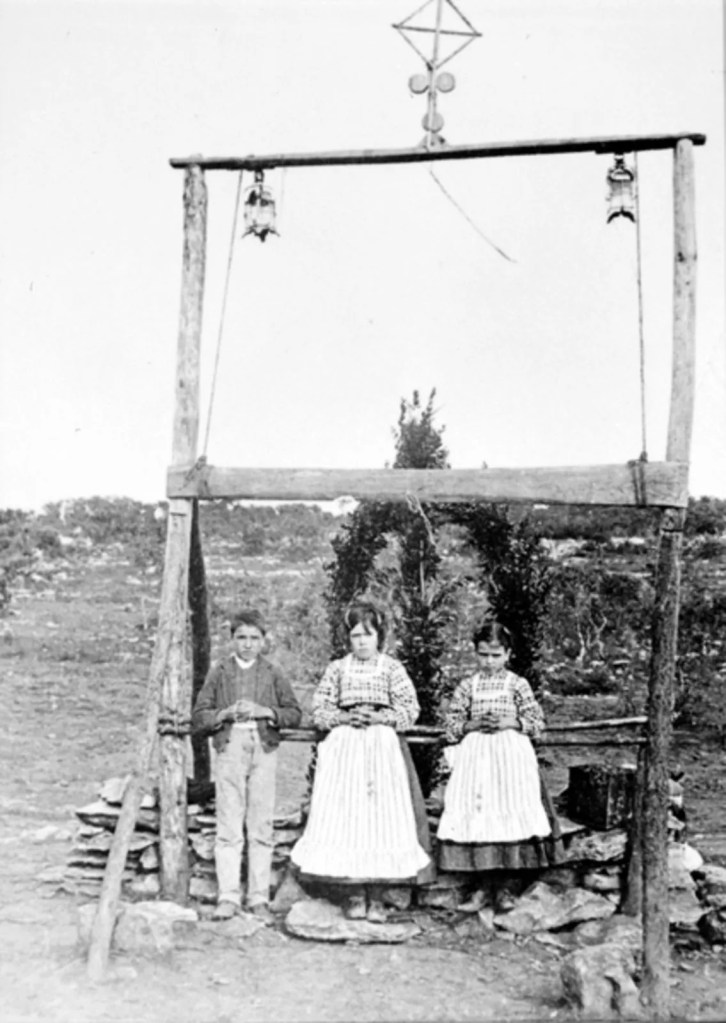
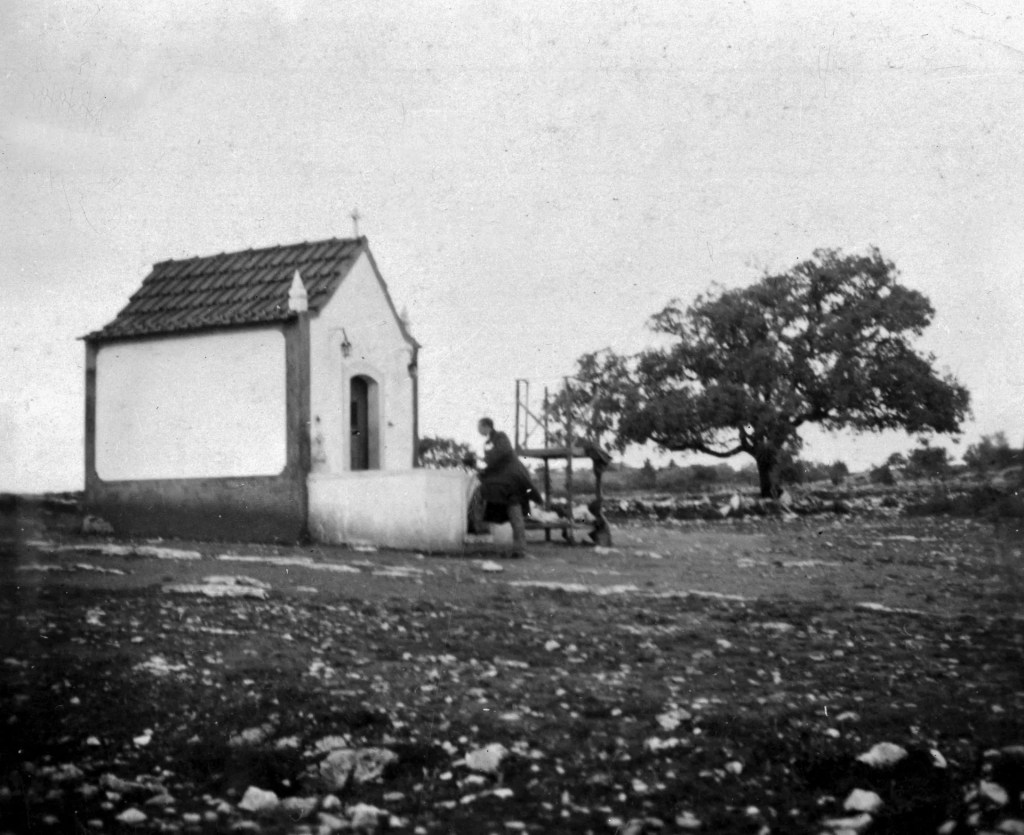
- The trees at the Cova da Iría were quite denuded by pilgrims cutting twigs and entire branches off; and a simple chapel was built upon the site, although without a statue within. The original wooden frame with the lanterns and cross, visible in one of the pictures above, was dismantled by the same freemasons of Santarém who chopped down the azinheira that the Lady had stood upon and carried all away. A statue had been provided for, designed with some assistance from Lúcia and Jacinta, and was meant to be installed in the chapel in 1920, but anti-clerical attacks continued and this was delayed. The administrator Artur Santos was still on the warpath, and other agents attempted to destroy the chapel in 1922 with bombs, taking the roof off. The bishop forbade the rebuilding of the chapel, but began the canonical enquiry into the visions that same year, visiting the site himself for the first time in 1926.
- The children finally discovered a friendly and sympathetic priest, Padre Faustino Ferreira d’Olival, who was able to set their hearts at peace about the Secret, and instruct them about corporal and spiritual sacrifices. Jacinta was visited by the Lady of the Rosary several more times in the next few months, and became (according to Lúcia) serious and prepared for and made her first Holy Communion. Francisco began to became certain that his only vocation in life was to die, and in heaven console the Sacred Heart for the offences it had suffered.
“I loved seeing the angel and I loved seeing our Lady even more, but what I liked best of all was seeing our Lord in that light which God put into our hearts. I love God so much, but He is so sad because of all the sins. We mustn’t commit even the tiniest sin.”
Francisco Marto, after October the 13th
- Francisco fell ill towards the end of 1918, his whole family but for his father catching the Spanish ‘flu. His parents noted his docility in enduring the illness and the attempted remedies. As he worsened in the early months of 1919, he asked Lúcia and Jacinta to help him to make a confession of his few faults and received Holy Communion for the first and last time on April the 3rd. He died at 10.00 the next day. Lúcia accompanied his funeral procession, but Jacinta being too ill herself could not.
- Jacinta’s illness was to last for much longer, but she continued to see the Lady of Fátima frequently throughout it. It was because of these visits from heaven that the little girl committed the rest of her short life to expiatory sacrifice: she agreed to suffer greatly for sinners, in order that as many souls as possible could be saved. She soon developed pneumonia and a horribly painful abscess in her side, and was carried over to the small hospital at Vila Nova d’Ourém. Her condition did not improve when she returned after two months, and had been worsened by tuberculosis, which had increased her frailty. But she was delighted to resume her conversations with her cousin Lúcia at Aljustrel. Her parents recognised that she was prepared to join her brother in death, but were convinced of a possibility of healing at a bigger hospital in Lisbon, and her mother Olimpia and brother Antonio accompanied her to Lisboa at the end of 1919. She ended up spending weeks at a small orphanage near the Estrela basilica, managed by a Mother Godinho. She was admitted to the Estephania hospital on February the 2nd for an operation to manage the abscess, but to no avail. However she was near death, and the Lady arrived to remove her pain entirely for her last few days. On the 20th, she called for viaticum but was told to wait until the next morning; she died at 20.00, alone except for an attending nurse. Her body was borne to Vila Nova d’Ourém, to be placed in the vault of the Baron Alvaiazere
- In 1918, the ancient See of Leiría was restored after the destruction of the republican revolution, and Mgr. José Alves Correia da Silva was consecrated bishop in 1920. He eventually decided that Lúcia was to leave Aljustrel, to escape the curiosity of people, and to permit for the eventual canonical enquiry into the Fátima events. She was moved to the school of the Dorothean Sisters at Vilar, near Porto. She later entered the community of the Dorothean Sisters as a postulant, at Tuy in 1925, making first profession in 1928, and final profession in 1934. She was sent to their Fátima house in 1946, but soon decided to enter the Carmel at Coimbra instead, which had been her earlier desire.
- In 1926, the Apostolic nuncio visited the Cova and made report to Rome, and in 1927 a votive Mass was granted to Fátima, and the bishops presided for the first time in July of that year at an official ceremony at the Cova. A cultus was finally permitted to the site, and in 1937 the nuncio presided at a national pilgrimage to Fátima in the presence of half a million people. In 1939, the cardinal patriarch of Lisboa presided at another pilgrimage to implore peace for Portugal, and further pilgrimages took place. The Holy Father Pius XII, a devotee, sent his legate to crown the statue, in the presence of growing crowds.
- In 1931, following a determination that the apparitions at the Cova were worthy of credence, the bishops of Portugal together had consecrated the country to the Immaculate Heart, which it is believed protected Portugal from the ravages of the Second World War. In 1935, on September the 12th, the bishop of Leiría decided to translate the bodies of the two small children to the specially built tomb at Fátima. When Jacinta’s coffin was unsealed, her body was found to be perfectly incorrupt, and a picture of it was sent to Lúcia, who promptly began writing her memoirs of her cousin. The relics were carried first to the Cova da Iría, where the bishop of Evora offered Mass, and then placed in the arranged tomb.
- In 1946, on the 13th of May, the statue at the shrine was crowned by the pontifical envoy Cardinal Masella with a crown of solid gold given by the women of Portugal, and the Holy Father Pius XII declared Our Lady to be Queen of the World. In this golden crown, since the attempted assassination of the Holy Father John Paul II (May the 13th, 1981), is embedded the bullet that almost killed the pope, who credited his near escape to her.
Sister Lúcia the Dorothean
It wasn’t only Jacinta who continued to see the Lady of Fátima after 1917. Lúcia saw her several times over the years. In 1925, she appeared to her at her convent, showing her a heart ringed with thorns, and commanded the five first Saturdays devotion, as a means of consoling the Immaculate Heart for the blasphemies and ingratitude of the ungrateful. The devotion consisted of confession and Holy Communion, and five decades of the rosary, together with a fifteen-minute meditation on the mysteries of the holy Rosary, with the general intention of making reparation to the Immaculate Heart. Reparation and consolation were at the heart of the Fátima apparitions also.
As Lúcia began to further disclose what was yet unknown about Fátima, under religious obedience, she still reserved the Secret that had been revealed to all three children. She began to make requests by letter to the Holy Father for the consecration of the whole world (and especially Russia) to the Immaculate Heart. A letter she sent to the bishop of Leiría in 1939 announced the coming of the Second World War, which would be declared later that year, and a letter to Rome in 1940 made the exact request of the Lady of the Rosary again, but the response was delayed for political reasons. This request was finally honoured by the Holy Father Pius XII in 1942.
A bibliography of useful books
* C. C. Martindale, SJ, the Message of Fátima, Burns Oates and Washbourne Ltd. (London, 1950)
* Plinio Corrêa de Oliveira, Commented Fátima, Tradition, family and property (London 2008)
 Catholic Louth and Mablethorpe