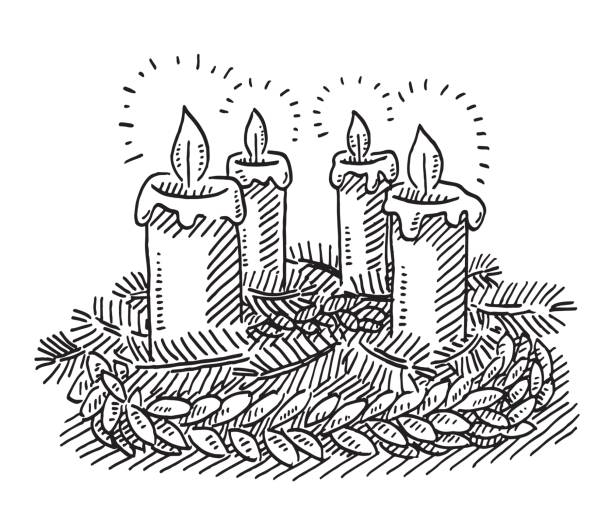
“Heaven and earth shall pass away, but My word shall not pass away. But of that day or hour no man knoweth, neither the angels in heaven, nor the Son, but the Father. Take ye heed, watch and pray. For ye know not when the time is. Even as a man who going into a far country, left his house; and gave authority to his servants over every work, and commanded the porter to watch. Watch ye therefore, (for you know not when the Lord of the house cometh; at even, or at midnight, or at the cock-crowing, or in the morning,) lest coming on a sudden, He find you sleeping. And what I say to you, I say to all: Watch.”
Gospel of S. Mark, 13: 31-37 [link]
Stay awake! Watch! Spiritual vigilance, of course. Acquiring and maintaining purity from sin, in so far as we are able.
It’s Advent again, and Advent is the season of the prophet Isaiah, who so often sings of the Messiah-to-come and sometimes gives us more information than the gospel-writers do. If we simplify the message of the Bible, we could say that human nature is fallen singularly from its original purpose of honouring and glorifying God the Creator and is separated from Him, and when men and women acknowledge this situation and look to reestablish communion with God they find in Him not a belligerent Master but a kindly Father, and so are helped by Him, drawn by Him and finally given a great stepladder into His holy mountain. This great stepladder is the sacred humanity of Christ our Lord, especially as it hands in perfect obedience off the cross…
So, we can acknowledge a great abyss between us and God, but we cannot bridge it on our own. We cannot steal heaven for ourselves. We have to receive heaven as a gift. And it is a gift that is generously given, for we are so very loved by Him Who created us. So, with the prophet Isaiah in our first reading, we could ask plaintively why God allows us to fall into error, and tumble away from Him. We could ask Him to return to us and be our strong Defender.
“Thou art our Father, and Abraham hath not known us, and Israel hath been ignorant of us: Thou, O Lord, art our Father, our Redeemer, from everlasting is Thy Name. Why hast Thou made us to err, O Lord, from Thy ways: why hast Thou hardened our heart, that we should not fear Thee? Return for the sake of Thy servants, the tribes of Thy inheritance. They have possessed Thy holy people as nothing; our enemies have trodden down Thy sanctuary. We are become as in the beginning, when Thou didst not rule over us, and when we were not called by Thy Name. That Thou wouldst rend the heavens, and wouldst come down; the mountains would melt away at Thy presence. They would melt as at the burning of fire, the waters would burn with fire, that Thy Name might be made known to Thy enemies – that the nations might tremble at Thy presence. When Thou shalt do wonderful things, we shall not bear them, Thou didst come down, and at Thy presence the mountains melted away. From the beginning of the world they have not heard, nor perceived with the ears; the eye hath not seen, O God, besides Thee, what things Thou hast prepared for them that wait for Thee.”
Prophecy of Isaias, 63, 64 [link]
Two thousand years after He first rent the heavens asunder and came down to show us His face in Christ, we want Him to do it again. We want Christ back in our company. Advent is a season of remembering how the Children of Abraham of the Old Testament waited for Christ to arrive, and it is also a season of praying as they did – but for His second coming. We mark the holy expectation of the Jews, and we join our own holy expectation of the present moment. And so, dear Father in Heaven, oh, that You would rend the heavens and come down, that the mountains would quake at Your presence, when you would make Your Name known to a world that requires it.
But awaiting the coming of the Great King also implies vigil and watchfulness. It has probably not escaped anybody’s notice that the liturgical colour switches from green/white to violet/purple in Advent. In the Latin church, violet is the colour of vigil and (as we know from the Lenten observance) of penitence. We inherit this understanding of vigil and penitence from our Jewish antecedents in the Faith. Early on in the Bible, in the stories of Moses, we find that the great Hebrew festivals were often preceded by moments of self-affliction or self-sacrifice.
We hear how Moses himself ascended Mount Horeb to receive the Ten Commandments and the liturgical usages of the Hebrews and remained there for forty days and nights. When he came down and discovered to his distress that the people had decided to give God a face by sculpting a golden calf, he flung down and broke to pieces the stone tablets the Commandments had been inscribed upon. Back up the mountain he then went for another vigil of forty days and nights. And then, our Lord Himself before His rather short ministry ran out into the desert of Judea for forty days and nights. And towards the end of His period of sacrifice, along comes the devil to try and break His resolve. Vigils and fasts are a wonderful foil we can brandish at the tempter.
We don’t quite have forty days and nights from today until Christmas, but I think we can use these days and weeks in prayer and at least a moderate penance, to prepare ourselves for the great festival of Christmas. We really should get into the habit as Christians of making small personal sacrifices (or large ones), not only reserving the giving-things-up to the time of Lent.
The word ‘vigil’ in our liturgical practice comes from the common appeals from Christ that we keep alert and maintain our spirit of prayer and purity (keeping lamps lit in waiting for the Bridegroom, keeping military watch on the walls of a city under threat), because we do not know the day or the hour when He will return. The theme is strong in our gospel reading today (above). We traditionally keep vigil for important feasts, we even have a bit of a vigil for the reception of Holy Communion; this once included a fast from midnight, reduced later to three hours before Holy Communion, and most recently reduced to one hour before Holy Communion. ‘Vigil’ and ‘alert’ are the watchwords of the season of Advent.
We who are family men and family women – who have children we love and grandchildren (great-grandchildren, even) – we shall not only keep watch for our own souls only, but also for those beautiful souls whom we love. With our constant duty of care, our deeds of kindness and mercy, our little works of instruction and warning, we shall do well, and when the Great King shall arrive, He will not find us asleep.
And we shall be pleased anyhow, our souls well prepared, to celebrate in a few weeks the festival of His birth.

