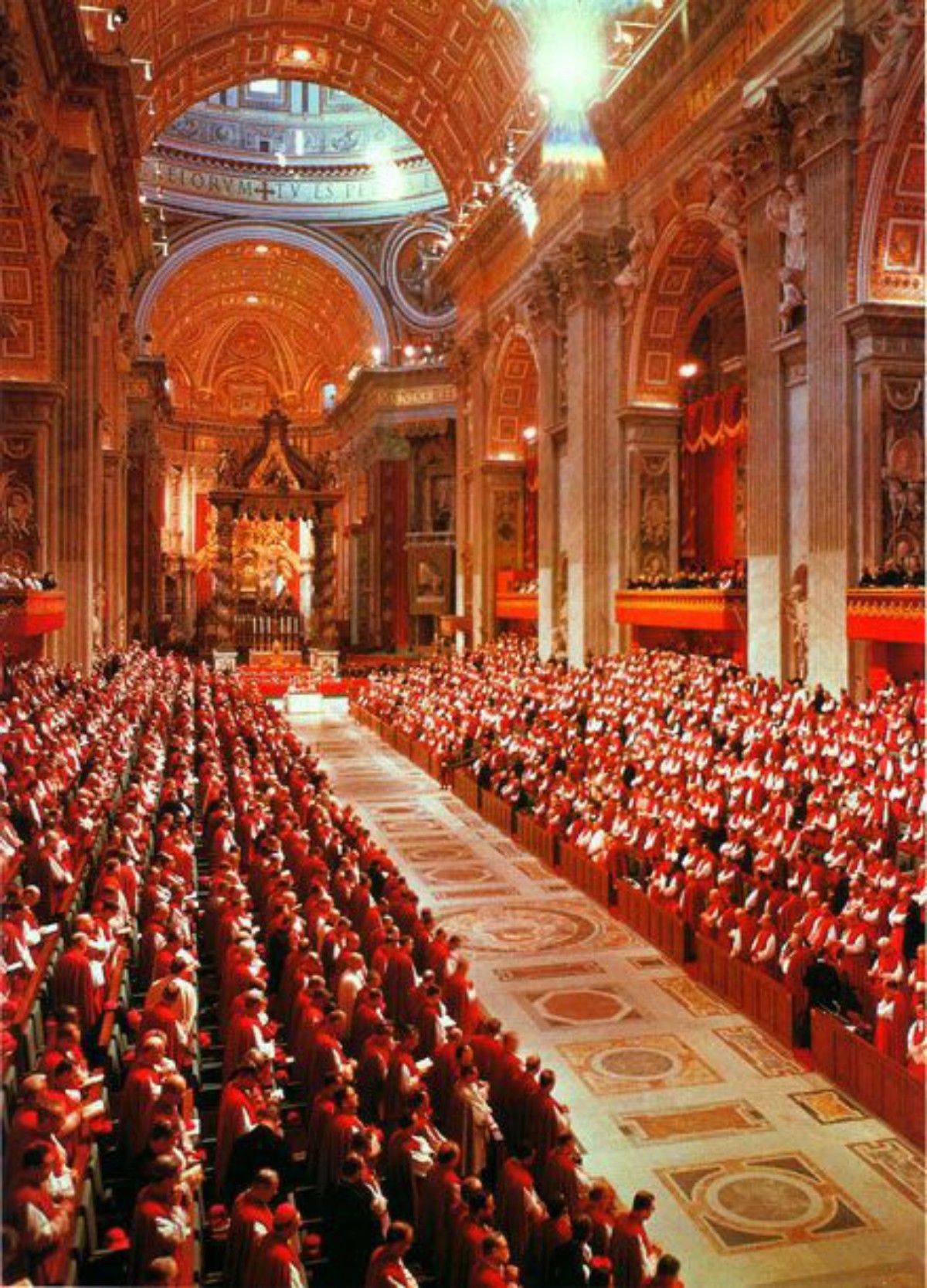
Following on from our readings this last Sunday, which were all about believing, and through belief in Christ acquiring eternal life. But of course we know that atheistic socialism has destroyed souls across multiple generations. So, what does the Church say about that? Here, from the documents of the Second Vatican Council…
“Modern atheism often takes on a systematic expression which, in addition to other causes, stretches the desires for human independence to such a point that it poses difficulties against any kind of dependence on God. Those who profess atheism of this sort maintain that it gives man freedom to be an end unto himself, the sole artisan and creator of his own history. They claim that this freedom cannot be reconciled with the affirmation of a Lord Who is author and purpose of all things, or at least that this freedom makes such an affirmation altogether superfluous. Favouring this doctrine can be the sense of power which modern technical progress generates in man.
“Not to be overlooked among the forms of modern atheism is that which anticipates the liberation of man especially through his economic and social emancipation. This form argues that by its nature religion thwarts this liberation by arousing man’s hope for a deceptive future life, thereby diverting him from the constructing of the earthly city. Consequently when the proponents of this doctrine gain governmental power they vigourously fight against religion, and promote atheism by using, especially in the education of youth, those means of pressure which public power has at its disposal.
“In her loyal devotion to God and men, the Church has already repudiated and cannot cease repudiating, sorrowfully but as firmly as possible, those poisonous doctrines and actions which contradict reason and the common experience of humanity, and dethrone man from his native excellence.
“Still, she strives to detect in the atheistic mind the hidden causes for the denial of God; conscious of how weighty are the questions which atheism raises, and motivated by love for all men, she believes these questions ought to be examined seriously and more profoundly.
“The Church holds that the recognition of God is in no way hostile to man’s dignity, since this dignity is rooted and perfected in God. For man was made an intelligent and free member of society by God Who created him, but even more important, he is called as a son to commune with God and share in His happiness. She further teaches that a hope related to the end of time does not diminish the importance of intervening duties but rather undergirds the acquittal of them with fresh incentives. By contrast, when a divine instruction and the hope of life eternal are wanting, man’s dignity is most grievously lacerated, as current events often attest; riddles of life and death, of guilt and of grief go unsolved with the frequent result that men succumb to despair.
“Meanwhile every man remains to himself an unsolved puzzle, however obscurely he may perceive it. For on certain occasions no one can entirely escape the kind of self-questioning mentioned earlier, especially when life’s major events take place. To this questioning only God fully and most certainly provides an answer as He summons man to higher knowledge and humbler probing.
“The remedy which must be applied to atheism, however, is to be sought in a proper presentation of the Church’s teaching as well as in the integral life of the Church and her members. For it is the function of the Church, led by the Holy Spirit Who renews and purifies her ceaselessly, to make God the Father and His Incarnate Son present and in a sense visible. This result is achieved chiefly by the witness of a living and mature faith, namely, one trained to see difficulties clearly and to master them. Many martyrs have given luminous witness to this faith and continue to do so. This faith needs to prove its fruitfulness by penetrating the believer’s entire life, including its worldly dimensions, and by activating him toward justice and love, especially regarding the needy. What does the most reveal God’s presence, however, is the brotherly charity of the faithful who are united in spirit as they work together for the faith of the Gospel and who prove themselves a sign of unity.
“While rejecting atheism, root and branch, the Church sincerely professes that all men, believers and unbelievers alike, ought to work for the rightful betterment of this world in which all alike live; such an ideal cannot be realized, however, apart from sincere and prudent dialogue. Hence the Church protests against the distinction which some state authorities make between believers and unbelievers, with prejudice to the fundamental rights of the human person. The Church calls for the active liberty of believers to build up in this world God’s temple too. She courteously invites atheists to examine the Gospel of Christ with an open mind.
“Above all the Church knows that her message is in harmony with the most secret desires of the human heart when she champions the dignity of the human vocation, restoring hope to those who have already despaired of anything higher than their present lot. Far from diminishing man, her message brings to his development light, life and freedom. Apart from this message nothing will avail to fill up the heart of man: ‘Thou hast made us for Thyself,’ O Lord, ‘and our hearts are restless till they rest in Thee.'”
Pastoral Constitution Gaudium et Spes, of the Second Vatican Council (1965), 20-21 [link]

