We are now well into the season of Easter, with the Resurrection appearances in the gospel readings and stories from the exploits of the Apostles after their marvellous Pentecost in the first readings. Today we find an early preaching of S. Peter from Acts, where he speaks of the eternal Second Person of the Blessed Trinity Who had appeared before the Jewish authorities and before the Roman governor as a man, and Peter is here talking about a pre-appearance of Christ in the book of psalms, and he quotes the psalm we also have today as our responsorial psalm (15).
“‘Men of Israel, listen to this. Jesus of Nazareth was a Man duly accredited to you from God; such were the miracles and wonders and signs which God did through Him in your midst, as you yourselves well know. This Man you have put to death; by God’s fixed design and foreknowledge, He was betrayed to you, and you, through the hands of sinful men, have cruelly murdered Him. But God raised Him up again, releasing Him from the pangs of death; it was impossible that death should have the mastery over Him. It is in His person that David says, Always I can keep the Lord within sight; always He is at my right hand, to make me stand firm. So there is gladness in my heart, and rejoicing on my lips; my body, too, shall rest in confidence that Thou wilt not leave my soul in the place of death, or allow Thy faithful servant to see corruption. Thou hast shewn me the way of life; Thou wilt make me full of gladness in thy presence. My brethren, I can say this to you about the patriarch David without fear of contradiction, that he did die, and was buried, and his tomb is among us to this day. But he was a prophet, and he knew God had promised him on oath that he would set the sons of his body upon his throne; it was of the Christ he said, foreseeing His Resurrection, that He was not left in the place of death, and that His body did not see corruption. God, then, has raised up this Man, Jesus, from the dead; we are all witnesses of it. And now, exalted at God’s right hand, He has claimed from His Father His promise to bestow the Holy Spirit; and He has poured out that Spirit, as you can see and hear for yourselves.”
Acts of the Apostles, 2: 22-33 [link]
Peter’s intent is to bring the men who as a mob had condemned Christ to the Romans, to repentance, but his point in this reading today is to demonstrate that death could have no hold upon Christ. That the sins of mankind had brought immense suffering to our Lord, which He had borne patiently and to its extreme. But that death could not conquer the Lord of Life Himself. We are witnesses, Peter says, we are witnesses that Christ was returned to life and now sits on the right hand of the great Power, and it is His spirit that is now powering the newly-born and extraordinary courage of the Apostles, who had a moment before been hiding away for fear of the Temple priests.
Once again, these stories are meant to teach and inspire the Church of every era. How bold should we be in our own time? We’re hearing all the time now about the Bishop’s mission plan, and I shall invite you to find a copy if you haven’t got one already. We too can forever be hiding away in fear of the present situation in our society, the present social system that despises more and more the Christian religion. Along with the fathers of our Christian nation, and particularly around this time of the feast day of S. George (Thursday coming), let us repeat in prayer the refrain of our psalm today: Show us, Lord, the path of life… and then help us to show it to our family members, our friends, those whom we love and whom we want to be removed from paths of destruction and brought to the same joy we share in the Way of the Lord Jesus.
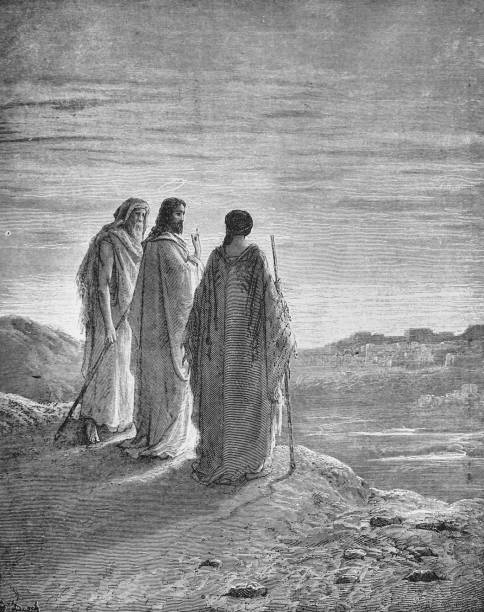
Our long gospel reading is about the two disciples wandering away from Jerusalem, sorrowful but again not that sorrowful. Sorrowful because of the horror of Good Friday, not so sorrowful because S. Mary Magdalene and the other ladies have told them that the Body was not in the tomb and there were angels and things, and the Lord may not be as dead as they thought He was. That half sorrow, half joy is often ours as we see the state of the Church in our countries these days and perhaps remember what she once was.
But Christ is walking with us on the way, and He has good news for us. We shall try to retain His presence among us with the words of the two disciples (below): ‘Stay with us, it is towards evening, and it is far on in the day…’ He will teach us more about Himself, He will help us rebuild and restore.
“Then He said to them, ‘Too slow of wit, too dull of heart, to believe all those sayings of the prophets! Was it not to be expected that the Christ should undergo these sufferings, and enter so into His glory?’ Then, going back to Moses and the whole line of the prophets, He began to interpret the words used of Himself by all the scriptures. And now they were drawing near the village to which they were walking, and He made as if to go on further; but they pressed Him, ‘Stay with us,’ they said; ‘it is towards evening, and it is far on in the day.’ So He went in to stay with them. And then, when He sat down at table with them, He took bread, and blessed, and broke it, and offered it to them; whereupon their eyes were opened, and they recognised Him; and with that, He disappeared from their sight. And they said to one another, ‘Were not our hearts burning within us when He spoke to us on the road, and when He made the scriptures plain to us?'”
The Gospel of S. Luke, 24: 25-32 [link]
So… the two disciples at Emmaus found Christ in the Breaking of the Bread. And so shall we, if we take His word for it. He had said at the end of the gospel of S. Matthew that He would be with us always, yes, to the very end of the age. How would He manage that, for He was determined to ascend and return to His Father? There is a mystery there, and that mystery we Catholics call the Blessed Sacrament, the very presence of the Holy One in the heart of our churches, within us, around us.
Saint Luke left us two writings: his gospel, and his Acts of the Apostles. In both, he speaks of the ‘Breaking of the Bread,’ and it seems obvious to me that he means the Holy Eucharist. In our gospel story today, he tells us that Cleopas and his friend kept the mysterious Stranger over. Why did they? He had been preaching to them from the Hebrew Bible all the way from Jerusalem, opening to their intellects the oracles of the prophets. They were discovering Him anew, and they wanted to know more. But true religion is not about letters in a book – readings and homily only go so far. True religion is about communion with a Person.
After the Word comes the Eucharist. When we have found out about Christ from many sources – by study of Scripture and tradition – we search for the actual person of Christ, and in the Mass and at Holy Communion He comes to find us.

