Jews and Gentiles again (Sunday XXVIII of Ordered time)

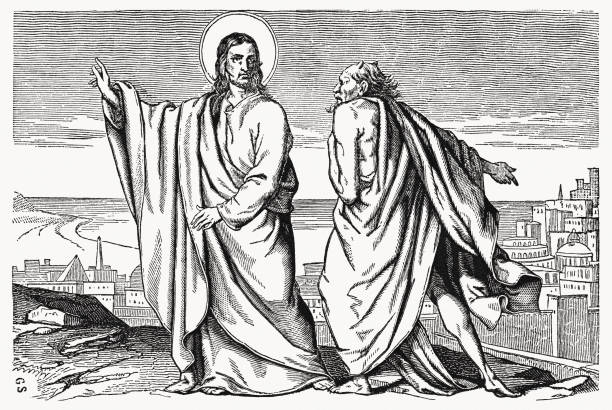
“Then He came to Nazareth, where He had been brought up; and He went into the synagogue there, as His custom was, on the sabbath day, and stood up to read; the book given to Him was the book of the prophet Isaias; so He opened it, and found the place where the words ran, ‘The Spirit of the Lord is upon me; he has anointed me, and sent me out to preach the gospel to the poor, to restore the broken-hearted; to bid the prisoners go free, and the blind have sight; to set the oppressed at liberty, to proclaim a year when men may find acceptance with the Lord, a day of retribution.’ Then He shut the book, and gave it back to the attendant, and sat down. All those who were in the synagogue fixed their eyes on Him, and thus He began speaking to them, ‘This scripture which I have read in your hearing is today fulfilled.’ All bore testimony to Him, and were astonished at the gracious words which came from His mouth; ‘Why,’ they said, ‘is not this the son of Joseph?’ Then He said to them, ‘No doubt you will tell me, as the proverb says, Physician, heal thyself; do here in thy own country all that we have heard of thy doing at Capharnaum.’ And He said, ‘Believe me, no prophet finds acceptance in his own country. Why, you may be sure of this, there were many widows among the people of Israel in the days of Elias, when a great famine came over all the land, after the heavens had remained shut for three years and six months, but Elias was not sent to any of these. He was sent to a widow woman in Sarepta, which belongs to Sidon. And there were many lepers among the people of Israel in the days of the prophet Eliseus; but it was none of them, it was Naaman the Syrian, who was made clean.‘ All those who were in the synagogue were full of indignation at hearing this; they rose up and thrust Him out of the city, and took Him up to the brow of the hill on which their city was built, to throw Him over it. But He passed through the midst of them, and so went on His way.”

Gospel of S. Luke, 4: 16-30 [link]

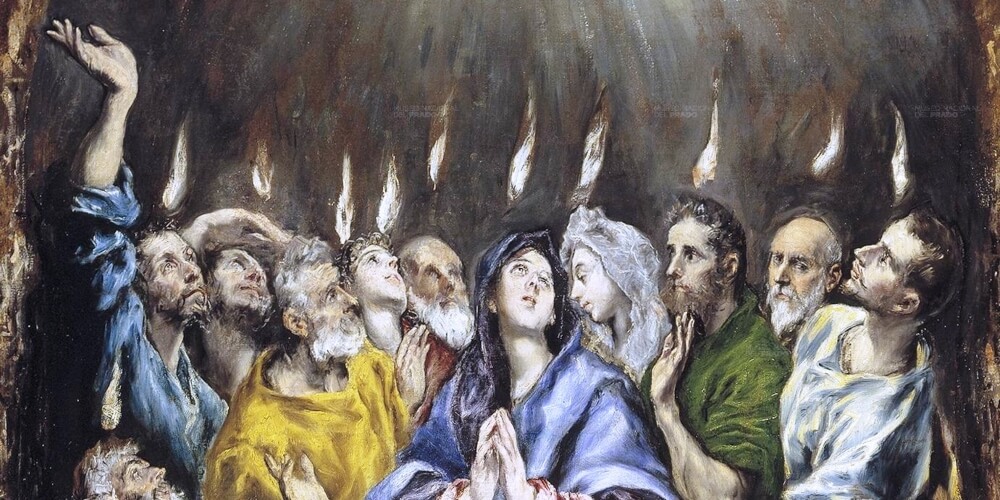
It must not be forgotten how revolutionary Christ and His Apostles were being in advocating for the entry of non-Jews, of Gentiles, into the greatly-cherished promises that God had once made to Abraham and to his descendants. As above, in His very hometown, in Nazareth, the locals were surprised that the carpenter’s son had become a sage and a Torah-teacher, but they were outraged about His love of those foreigners, and tried to chuck Him over a cliff. And yet, as we said in refrain to our psalm this weekend, the Lord has shown His salvation to the Gentiles. The Nazareth story tells us that when the Jew refuses to believe, the Gentile often does. This was the experience of Christ, and also of His Apostles in the immediate history of the Church, after Pentecost, when for example the Samaritans were among the earliest to enter the Christian community.


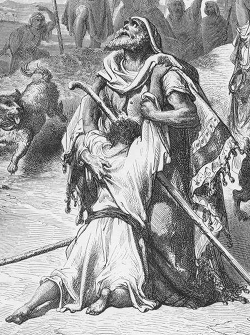
We don’t hear enough about the prophet Elisha (aka. Eliseus), the disciple of the greater prophet Elijah, who is one of two Old Testament characters who never died. Elisha did die, but even that didn’t stop him working miracles. When his body brought somebody else back to life, we were given an odd window into the Hebrew use of the relics of Saints. So, Elisha, who had craved a greater share even than his master Elijah’s power over nature, unsurprisingly became an extraordinary miracle man. This weekend, in our first reading, we have one of the stories of his miracles, when he heals the illness of this Syrian soldier Naaman.

“Naaman came with his horses and his chariots, and stood at the door of Eliseus’ house; where Eliseus sent word out to him, ‘Go and bathe seven times in the Jordan, if thou wouldst have health restored to thy flesh, and be clean.’ At this, Naaman was for going back home; ‘Why,’ he said angrily, ‘I thought he would come out to meet me, and stand here invoking the name of his God; that he would touch the sore with his hand, and cure me. Has not Damascus its rivers, Abana and Pharphar, such water as is not to be found in Israel? Why may I not bathe and find healing there?’ But, as he turned indignantly to go away, his servants came and pleaded with him; ‘Good father,’ they said, ‘if the prophet had enjoined some great task on thee, thou wouldst surely have performed it; all the more readily thou shouldst obey him when he says, Wash and thou shalt be clean.’ So down he went, and washed in the Jordan seven times, as the servant of God had bidden him. And with that, his flesh healed up, and became like the flesh of a little child, and he was clean. So, coming back with all his retinue, he stood there in the presence of God’s servant; ‘I have learned,’ he said, ‘past doubt, that there is no God to be found in all the world, save here in Israel. And now,’ he said, ‘pray accept a gift from thy servant, to prove his gratitude!’ ‘As the Lord I serve is a living God,’ Eliseus answered, ‘I will accept nothing from thee;’ nor would any pleading bring him to consent. At last Naaman said, ‘Have thy way, then, lord prophet, but grant me a gift instead. Let me take away with me part of the soil of Israel, as much as two mules can carry; my burnt-sacrifice, my offerings henceforward are for the Lord only, and for no alien god.'”

The fourth book of the Kings (aka. the second book of the Kings), 5: 9-17 [link]

This story is even more significant because Christ Himself mentions it in the gospels (see above), when He seeks to remind His Jewish listeners that, in their opposition to the entry of non-Jewish people into the promises of Abraham, they were forgetting that God had in the past blessed several non-Jews. Naaman was one of those figures in the Hebrew Bible. That is the first point to be made about this story. The God Who had blessed the race of the Hebrews – the race of Abraham – was seen by ancient people as the God of Israel, in particular. Why would He assist non-Hebrews?

However, this is a common feature of the Old Testament, and in the book of Jonah, we hear of a Hebrew prophet who is sent on the mission to the Assyrian city of Nineveh – one of the largest cities of the time, and a Gentile city – the people of which repent of their sin and are forgiven by God – by the God of the Hebrews. These stories are used by Christ in the gospels to demonstrate that the time had arrived for Gentiles – non-Jewish people – to enter the Church.

And that is double good-news for us, who are not of the race of the Jews: first, God has become man and salvation has come to humanity, second, this salvation is not only for the chosen people of God, the Jews, but for everybody who approaches the Holy One in faith and humility. We can all be Naaman the Syrian.

So, then, God heals everybody who approaches Him in faith. Even in the Old Testament. The other point in this story is the illness, given here as leprosy. The isolation of sufferers of a variety of diseases called leprosy, to prevent contagion, is one of the oldest stipulations in the Old Testament. Get them out of the camp of Israel, keep them out of the camp, they are ostracised until the disease is confirmed by the priests to have been somehow healed (we see that in the gospel story this weekend, below). If you can imagine it, this created a second society of sick people who lived at a distance from the main community of Israel. And this would have persisted until very recently, when modern medicine began to treat such diseases adequately. There still are leper colonies in some places, and the Church has a significant outreach to these poor men and women, social outcasts today, as they would have been always. The great general Naaman is about to lose all his occupation and all his society, as well as his personal health.

And when we talk about disease in the Bible, we must talk also about the spiritual contagion of sin, which in our formerly-Christian countries historically created spiritual pariahs and necessitated important taboos, some of which persist in our more godless times. We may see that as a negative feature of the history of our countries, but the Church has in the past tried harder to preach an ethics based on virtue, and to create a truly Christian society. Shall we look down on our forebears for that?


“A time came when He was on His way to Jerusalem, and was passing between Samaria and Galilee; and as He was going into a village, ten men that were lepers came towards him; they stood far off, crying aloud, ‘Jesus, Master, have pity on us.’ He met them with the words, ‘Go and shew yourselves to the priests;’ and thereupon, as they went, they were made clean. One of them, finding that he was cured, came back, praising God aloud, and threw himself at Jesus’ feet with his face to the ground, to thank Him; and this was a Samaritan. Jesus answered, ‘Were not all ten made clean? And the other nine, where are they? Not one has come back to give God the praise, except this stranger.’ And He said to him, ‘Arise and go on thy way, thy faith has brought thee recovery.'”

Gospel of S. Luke, 17: 11-19 [link]

If we begin with the Jewish society of the first century, we know how some serious social sins, such as adultery and tax-collecting, created ostracisms as serious as that reserved for the lepers. Sin was quite a spiritual leprosy. When the ten lepers approach our Lord in this gospel story, let us then think of ourselves in their place. Every one of us who is locked into a cycle of addition or of habitual sin needs healing, and needs healing from Christ.

In these evil days the worst of the sins in the Bible have been normalised to the extent that any Christian mission work usually falls on deaf ears. Nothing we say today can convince many people that adultery/fornication, or dishonesty/theft, or even the murder of little babies in the womb and the enabling of suicide is wrong. We live in a society of spiritual lepers, most of it composed here of nominal Christians who can no longer countenance the teaching of either Moses in the Old Testament or of Christ in the New.

And that’s fair enough, perhaps. We have suffered very much in recent decades as a society in hearing the Gospel that our ancestors heard, we have suffered from a lack of adequate catechesis, we have had our moral senses dulled by an endless media narrative that seeks to minimise the Christian heritage of our countries and supplant it with a relativism that creates a market for multiple religions of equal value. That distances people from the Creator God, just as much as the ancient Syria of Naaman was, and the ancient Assyria of Jonah’s story.

But there is a glimmer of hope for a people distanced from Christ. The Church in this country is not what it was, but there is a light within her, and a great power. And a name – the name of the Ancient One, the Creator of all things. Naaman heard that there was possible healing in Israel, and came looking for Elisha. A Jewish leper of the first century knew to look for the miracle worker from Nazareth. And today quite every man and woman knows of His Church, and if they have not it is because we have failed to tell them about it. The one great job Christ gave His Church was evangelisation, and we are to inform this world we live in of the power of Christ, of where He is to be found, and how people who desire healing are to find Him.

And He will bless us all alike for our faith, Jew and non-Jew, Christians and non-Christian, and free us from our slavery to sin.

‘How long, o Lord?’ (Sunday XXVII of Ordered time)

“Lord, must I ever cry out to Thee, and gain hearing never? Plead against tyranny, and no deliverance be granted me? Must I nothing see but wrong and affliction; turn where I will, nothing but robbery and oppression; pleading at law everywhere, everywhere contention raising its head? What marvel if the old teachings are torn up, and redress is never to be found? Innocence by knavery circumvented still, and false award given…! What message, then, is entrusted to me? What answer shall I make when I am called to account? Here on the watch-tower my post shall be; stand I on the battlements, and await His signal. ‘Write down thy vision,’ the Lord said, ‘on a tablet, so plain that it may be read with a glance; a vision of things far distant, yet one day befall they must, no room for doubting it. Wait thou long, yet wait patiently; what must be must, and at the time appointed for it. Foul air the doubter breathes; by his faith he lives, who lives right…'”

Prophecy of Habacuc, 1: 2-4; 2: 1-4 [link]

This is a good set of readings we have at Mass this weekend, as the amount of violence around the world increases, in spite of an apparent international cooperation and the common experience of free travel and mutual understanding between peoples. I say ‘apparent’ because there are still hostile groups spreading ideologies of death and destruction, and seeking to terrorise entire communities. We look wistfully to a time when we thought there could be a war to end all wars; how hopeful we have been about humanity. And then there was another wretched war, and another and another.

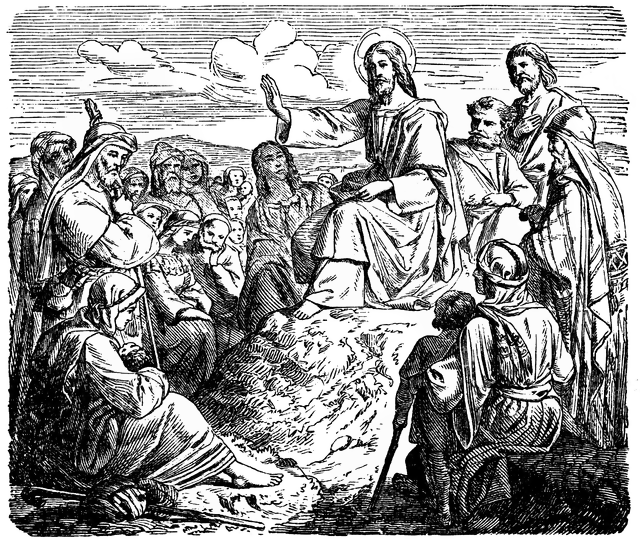
It’s no longer only about nations raising armies against nations; a matter of these Germans here, or those Russians there. In a very multicultural environment, the whole world is on our doorstep, or down our streets, as much in the big cities as in our provincial towns. And that can be a beautiful thing, and it often is. But it also brings foreign wars and the accompanying violence within close proximity. Communal tensions that we used to hear about on the television as happening half a world away, we now hear happening in Leicester, or most recently Manchester. And we see the pictures of the recently dead in the media, and weeping family members online, and we may remember the beatitudes of Christ from the gospels of S. Matthew and S. Luke.

We may have deceived ourselves in the West into thinking that a more secular, atheist and humanist environment could lead to endless peace, although most of the world is still on fire with people killing other people, and that a soup of cultures stirred together may not of necessity bring only good things. In a time of relatively more strife, in the first century of this era, the Lord said, Blessed are the poor in spirit, the humble, those who strive for righteousness before God, who moan in the absence of justice, who are peace-makers in the midst of war, and finally who suffer and die for the cause of Christ, for the cause of love, for holding up the standard of the Cross in a world that despises the Cross. How long, o Lord! cries the prophet in our first reading today. Habakkuk is our prophet as we stare wistfully at news reports of seemingly endless destruction (because that’s what news reporters love to report about, but even so)… Why is man so anxious to hurt man, why can’t people just get along? The prophet didn’t have to look beyond the borders of the Israel he knew and loved, for as people fell away from the Law of God (‘old teachings torn up,’ in the reading above), communal strife was inevitable, envies and jealousies were everywhere, and every man sought selfishly for his own well-being. Contention and discord…


Habakkuk speaks for those of us who just want peace and an abundance of righteousness. I think most people in this world would say they want peace. Nobody really wants war. But why then, during peace-time, do people in the most prosperous cities of the world make war, commit crime? It’s not only the impoverished who enter systems of crime. When will justice come? God replies in the first reading to say, Wait and watch, be patient, justice will come… the situation of the world causes us distress when we are so surrounded by it, thanks to the news media. How does God permit these evils? we say, is there even a God? some of us find ourselves daring to ask. But, faith! Be patient, justice will come. The Jews in the first century received this same message. They were used to violence, the Romans being far worse than the governments we know, the family of Herod being no better. And the Jews come up to the Lord in our gospel story to say, Increase our faith.

“The apostles said to the Lord, ‘Give us more faith.’ And the Lord said, ‘If you had faith, though it were like a grain of mustard seed, you might say to this mulberry tree, Uproot thyself and plant thyself in the sea, and it would obey you. If any one of you had a servant following the plough, or herding the sheep, would he say to him, when he came back from the farm, Go and fall to at once? Would he not say to him, Prepare my supper, and then gird thyself and wait upon me while I eat and drink; thou shalt eat and drink thyself afterwards? Does he hold himself bound in gratitude to such a servant, for obeying his commands? I do not think it of him; and you, in the same way, when you have done all that was commanded you, are to say, We are servants, and worthless; it was our duty to do what we have done.'”

Gospel of S. Luke, 17: 5-10 [link]

His message to them is the same as His message to Habakkuk: do your duty, your work of charity, and do it well. The reference to commands here we may associate with the commandments of the Law of Moses, as made clearer by the Gospel of Christ. If we do all that was thus commanded, we are but doing our duty as good Jews and/or good Christians. And we must do it well, and with the right intentions. And having finished it, in humility we must then declare that we have only done as we should, and not seek any glory in it or any reward from it. The world is always falling to pieces around us, but we are the stewards of this world. Be good stewards, as Paul says in the second reading, inspired by the Spirit of action, love, self-control, proudly Christian with a vocation to holiness, waiting for the Lord.

“That is why I would remind thee to fan the flame of that special grace which God kindled in thee, when my hands were laid upon thee. The spirit He has bestowed on us is not one that shrinks from danger; it is a spirit of action, of love, and of discipline. Do not blush, then, for the witness thou bearest to our Lord, or for me, who am His prisoner; share all the tribulations of the gospel message as God gives thee strength. Has He not saved us, and called us to a vocation of holiness? It was not because of anything we had done; we owe it to His own design, to the grace lavished on us, long ages ago, in Christ Jesus. Now it has come to light, since our Saviour Jesus Christ came to enlighten us; now He has annulled death, now He has shed abroad the rays of life and immortality, through that gospel which I have been appointed to herald, as an apostle and a teacher of the Gentiles. This is what I have to suffer as the result; but I am not put to the blush. He, to whom I have given my confidence, is no stranger to me, and I am fully persuaded that he has the means to keep my pledge safe, until that day comes. With all the faith and love thou hast in Christ Jesus, keep to the pattern of sound doctrine thou hast learned from my lips. By the power of the Holy Spirit who dwells in us, be true to thy high trust.”

Second letter of S. Paul to S. Timothy, 1: 6-14 [link]

When we say, ‘I believe’, we also say ‘I belong’

Sharing the Good News 

“On Evangelii Gaudium Sunday the bishops of England and Wales ask parishes to pray for the work of evangelisation across our countries and to look for ways in which we can all do our part in sharing the beauty and joy of knowing Jesus Christ. This is very much our mission. 

“Reflecting the importance of sharing the good news is an essential part of our mission at home, and next year this annual Sunday will return to its former title of Home Mission Sunday. The joy of the gospel is where we should feel ‘at home’ but also challenges us to be missionary disciples in sharing the good news of Jesus Christ. 

I believe 

“This year, the Church has been celebrating a significant anniversary. It is 1,700 years since the Council of Nicaea. This great gathering of Bishops from around the Church began the work to formulate the creed we proclaim Sunday by Sunday. It is the content of this creed that is our mission, so that we may know and love God in this life, in order to be happy with him forever in the next. 

The creed begins with a profound proclamation, ‘I believe’

“In his book, Priests for the Third Millennium Cardinal Dolan tells the story of an American Bishop who faced a difficult problem with a college in his diocese where the staff and students were deeply divided. The Bishop tried bringing a sense of calm to the situation and everyone complained. Eventually former students started picketing outside the college. They had signs saying some pretty awful things about the Bishop. So, he went to the college to confront them. Of course, it was a nightmare. The poor Bishop was surrounded by angry comments and snarling faces. He was questioned by journalists about what he was going to do, what was his reason for being there, why did he bother etc. Confronted by so much anger and frustration, the Bishop simply replied, ‘I believe in God’ and continued with the Creed, the same creed we say every Sunday, which began to be formulated at the Council of Nicaea 1,700 years ago. 

“In the face of a world of anger, apathy, doubt, turmoil, the Bishop did the one thing he could and proclaimed, ‘I believe.’ They are the first words of the creed, but they sum up the heart of being part of the Church, because when we say, ‘I believe,’ we also say ‘I belong.’

“In what can sometimes be the chaos and messiness of our own lives, the answer God invariably gives us is to join with the whole family of God and say, ‘I believe.’

“At the heart of it all, the Christian must be a believer, to be able to say, “I believe,” someone who converses with God. If this is not the case, then all our activities are futile. The most important thing we can do for ourselves and for each other is, first of all, to be a believer. Through this we let God come into the world. And if God is not at work, our work will never be enough; when people sense that someone is there who believes, who lives with God and from God, hope becomes a reality in their lives. 

“Through the faith of the Christian, doors open up all around for people: it is really possible to believe, even today. All human believing is a believing-with, and for this reason the one who believes before us is so important. Where were we inspired to believe? Who handed on to us the gift of the faith? This year, we celebrate the faith and belief of the Bishops at Nicaea. They handed on to us a way in which we can proclaim the truth of who God is and who we are as the people of God. 

“As the gospel of St John reminds us, “Jesus answered them, ‘This is the work of God, that you believe in him whom he has sent.’ (John 6.29). To do the work of God is to believe. 

About the Mission Directorate 

“To help in this great commission, the Bishops’ Conference of England and Wales has a mission team which is based at their secretariat in Eccleston Square in London. This office supports the bishops in their work to promote the proclamation of the gospel across England and Wales. The Mission team does this in several diverse areas, but all of which help to serve the kingdom of God. Catechesis and evangelisation; helping to deepen knowledge of the beauty of Holy Scripture; marriage and family life; the National Office of Vocations; loving and protecting the great patrimony of our historic churches and cathedrals; serving the liturgy of the Church; promoting Christian Unity and Interreligious dialogue; supporting the work of chaplaincy in Higher Education and in Prisons; and in supporting the work of those who do much to share the gospel with young people today. 

“To aid the work of the directorate, there is an annual collection in every parish to help us in helping you. If you can, please be generous in supporting the work of the Mission team. We know there are many demands on your time and on your purse, but we remain truly grateful to you for any support you can give. 

“The greatest support remains your prayers and your own dedication to sharing the good news of salvation in Jesus Christ. 

“St. Augustine tells us that God made us to make the times, not the times to make us, and unless we make the times better with the light of Jesus Christ, then the times will make us worse with the darkness of despair. This is only possible when we say with honest and open hearts ‘I believe.’ Hope is despair overcome and the way we enkindle hope in the hearts of all is to believe. 

“As we rejoice in the gift of the creed, 1,700 years since the great Council of Nicaea, through all the ups and downs of life, may we be able to say with joyful hearts, ‘yes Lord, I believe.’ Amen.”

Abbot Hugh Allan O’Praem
Director of Mission

Blinded by comfort (Sunday XXVI of Ordered time)

“‘There was a rich man once, that was clothed in purple and lawn, and feasted sumptuously every day. And there was a beggar, called Lazarus, who lay at his gate, covered with sores, wishing that he could be fed with the crumbs which fell from the rich man’s table, but none was ready to give them to him; the very dogs came and licked his sores. Time went on; the beggar died, and was carried by the angels to Abraham’s bosom; the rich man died too, and found his grave in hell. And there, in his suffering, he lifted up his eyes, and saw Abraham far off, and Lazarus in his bosom. And there, in his suffering, he lifted up his eyes, and saw Abraham far off, and Lazarus in his bosom. And he said, with a loud cry, Father Abraham, take pity on me; send Lazarus to dip the tip of his finger in water, and cool my tongue; I am tormented in this flame. But Abraham said, My son, remember that thou didst receive thy good fortune in thy life-time, and Lazarus, no less, his ill fortune; now he is in comfort, thou in torment. And, besides all this, there is a great gulf fixed between us and you, so that there is no passing from our side of it to you, no crossing over to us from yours. Whereupon he said, Then, father, I pray thee send him to my own father’s house; for I have five brethren; let him give these a warning, so that they may not come, in their turn, into this place of suffering. Abraham said to him, They have Moses and the prophets; let them listen to these...'”

Gospel of S. Luke, 16: 19-31 [link]

And therefore the theme of the readings this weekend is the observance of the commandments of God, as signs of personal allegiance to God. The very first words of the Mass in the introit are words of confession of sin, sin which is the result of a negligence with respect to the Law of God. It is interesting, in reading history, to see how we suffer the same problems today as people in every age of men. That’s why I think that the conversations of men and women with God in Scripture (and in the Lives of the Saints, within the tradition of the Church) are sources of perennial wisdom. Look, for example at our first reading that we have from the prophecy of Amos.

“Poor fools, that in Sion or high Samaria take your ease, and fear nothing! That lord it over the Gentiles, and pass proudly through Israel’s domain, bidding us make our way to Chalane, and thence to noble Emath, or go down to Gath, where the Philistines are, and see if land of theirs be fairer, borders of theirs be wider, than these of ours. Poor fools, with the evil day ever at arm’s length, wrong enthroned ever close at hand! Sleep they on beds of ivory, sprawl they at table, eating the best lambs flock can provide, calves fattened at the stall; and ever must harp and voice nicely accord, ay, very Davids they think themselves for musical invention! All their drinking is from the bowl, all their ointment of the best, and what care they for Joseph’s ruin? Lead their folk they shall, but into exile; the revel must break up at last.”

Prophecy of Amos, 6: 1-7 [link]

We shall find here a wealthy elite, enjoying great wealth and the pleasures of life, unconcerned with the theological ruin of the nation. The kingdoms of Israel had been built on a theological vision, that had been given to the people by Moses. They were the people of God, the Chosen People, and their prosperity depended on their fidelity to a covenant with God, and that fidelity was measured by their observance of the commandments of God, and the heart of this observance was personal piety and social justice. Both these should have prevented them from lording over the Gentiles, and concerned them with the fate of their nation, just as it should have led the rich man of the Gospel to lift Lazarus out of the mud.

But we can already see signs of rebellion against this origin of the nation in the very stories of Moses and Aaron, and we can imagine (from our own experience) how the relative peace and the prosperity that the reigns of David and Solomon later ushered in would increase rebellion against God. When we aren’t struggling to get away from Egypt and fight starvation and thirst in the desert, when indeed we have the sufficiencies of life and the securities established by previous generations, we are easily tempted to think that we are sufficient unto ourselves, and that we do not need the Father God’s assistance, much less trouble ourselves with His commandments.

And human beings will be human beings, and inevitably a small number of men end up with most of the available wealth, through ability and through cunning. And, in lording over the Gentiles, they can no longer see very far into the future to see the ruin of their enterprise, and perhaps refuse to. So, God says through Amos the prophet: those in wealth and security in Jerusalem/Sion (and in the equivalent capital of the northern kingdom in Samaria) are enjoying a profligate wealth and are conquered by a short-term security, and cannot foresee the coming destruction of the nation, here represented by the name of the largest tribe, named after the patriarch Joseph of the Genesis stories.

For the prophet, the ruinous Assyrian army is already on the horizon and Samaria will be destroyed. And so, wealth and prosperity and even the absence of war are mere blinders, reducing our vision both in time (so we cannot see the future well) and in space (so we become more selfish, and unable to act in charity). And that takes us over to the gospel story, about the rich man and Lazarus. The rich man is ensconced snugly in his wealth and cannot imagine his dismal future – in Hades – nor can he notice the poor man on the doorstep of his home, and even in his misery in the underworld, he needs it pointed out.


Wealth is not necessarily an evil thing, and money we need for our lives in this world. The trouble arrives when money and wealth becomes ends in themselves, rather than as means to something greater. The rich people of the Amos’ prophecy did not suffer the destruction of their national security and the resulting exile because they were rich, nor even did the rich man of the gospel story merit eternal destruction because of his wealth. And it was not on account of their failures in ritual either that they ultimately suffered, for they likely performed all the was required of them in temple and sacrifice.

But they failed the duties of religion with regard to charity, for in their revelry Amos’ elites ignored the ordinary work of justice towards people in need, possibly even built their material fortunes on defrauding ordinary people. At the very least, as with the rich man of the gospel, they had learned to ignore the poor and distressed. These stories are given us as lessons, and charity is not only about throwing money  at various concerns in foreign countries. Charity wants time and personal attention given actively to those who need it, and these are often not much further than the next room in our homes, the next house in our streets, the next street in our villages and towns. For as we all know, charity always begins at home. 

Using money (Sunday XXV of Ordered time)

One of the messages we constantly receive throughout Holy Scriptures, as well as from multiple Saints in the history of the Church, is the importance of integrity: being on the outside as we are on the inside. God our Lord, Who condemns deceit, also through the prophets and Our Lord Jesus Christ condemns hypocrisy. And hypocrisy is quite simply saying something and doing something else, not practising what one preaches. So, the prophet Amos in our first reading today preaches against the merchant class, and the nobility that supports them of observing the superficials of religion while ignoring the justice and charity that religion requires.

“Here is word for you, oppressors of the poor, that bring ruin on your fellow-citizens in their need; you that long for New Moon and sabbath to be at an end, for trading to begin and granary to be opened, so you may be at your shifts again, the scant measure, the high price, the false weights! You that for a debt, though it were but the price of a pair of shoes, will make slaves of poor, honest folk; you that sell refuse for wheat! By Jacob’s ancient renown the Lord swears it, crimes of yours shall remain for ever unforgotten.”

Prophecy of Amos, 8: 4-7 [link]

The New Moon marks the beginning of a month in the Hebrew calendar that the Jews still use today, and the new-month (new-moonth) festivities are signals of religious observance, as are the sabbaths. So there were Hebrews in Amos’ time, hundreds of years before our Lord, who attended the Temple, and simultaneously trampled on the needy, swindling money from them with tampered scales. This reminds us of gospel stories and parables, where for example a levite and a priest can process up to Jerusalem for Temple duties while leaving a good Samaritan to observe charity to the dying man on the roadside, or good pharisees can squabble about the Sabbath observance while neglecting to help ordinary Jews in the practice of the Law of Moses, or indeed when the business of buying and selling – and inevitably its tampered scales – can be brought into the very courtyards and halls of the Temple.

“And He said to His disciples, ‘There was a rich man that had a steward, and a report came to him that this steward had wasted his goods. Whereupon he sent for him, and said to him, What is this that I hear of thee? Give an account of thy stewardship, for thou canst not be my steward any longer. At this, the steward said to himself, What am I to do, now that my master is taking my stewardship away from me? I have no strength to dig; I would be ashamed to beg for alms. I see what I must do, so as to be welcomed into men’s houses when I am dismissed from my stewardship. Then he summoned his master’s debtors one by one; and he said to the first, How much is it that thou owest my master? A hundred firkins of oil, he said; and he told him, Here is thy bill; quick, sit down and write it as fifty. Then he said to a second, And thou, how much dost thou owe? A hundred quarters of wheat, he said; and he told him, Here is thy bill, write it as eighty. And this knavish steward was commended by his master for his prudence in what he had done; for indeed, the children of this world are more prudent after their own fashion than the children of the light. And My counsel to you is, make use of your base wealth to win yourselves friends, who, when you leave it behind, will welcome you into eternal habitations.”

Gospel of S. Luke, 16: 1-13 [link]

The only reason I can think that we have the gospel story of the rich man and his dishonest steward this weekend is because it has to do with buying and selling, and the cleverness that that requires. Why does the rich man praise his steward for his perfidy, and should we praise him also? That question takes us towards the end of the gospel reading, where our Lord contrasts the children of this world with the Children of Light. And that presents all of us with a very real choice. We are to choose for Christ and His Kingdom, or to choose to remain in with this passing world of sin. The Children of Light is New Testament code for the Church, for the Christians who are baptised with lighted candles, who are clothed ritually in white, and in the first centuries wore that white for a week after their baptism, are asked even today to bring that white garment unstained one day before the Lord Who called them. Not for us the ways of this world, says the New Testament in multiple places, not for us the injustice, the cheating with tampered scales, the oneupmanship of the children of this world. Rather, we are to suffer these tactics of the materialists and the worldly, who use them to gain treasures in this world of gold, silver, etc. We are to keep our eyes fixed on Christ, and to gather for ourselves treasures in heaven, to where we cannot carry our money and our property and our stocks and our shares. While praying hard for those who are still fumbling with such things…

“This, first of all, I ask; that petition, prayer, entreaty and thanksgiving should be offered for all mankind, especially for kings and others in high station, so that we can live a calm and tranquil life, as dutifully and decently as we may. Such prayer is our duty, it is what God, our Saviour, expects of us, since it is His will that all men should be saved, and be led to recognize the truth; there is only one God, and only one mediator between God and men, Jesus Christ, Who is a man, like them, and gave Himself as a ransom for them all. At the appointed time, He bore His witness, and of that witness I am the chosen herald, sent as an Apostle (I make no false claims, I am only recalling the truth) to be a true and faithful teacher of the Gentiles. It is my wish that prayer should everywhere be offered by the men; they are to lift up hands that are sanctified, free from all anger and dispute.”

First letter of S. Paul to S. Timothy, 2: 1-8 [link]

O money, that tainted thing… What shall we get out of it? What is it to have a number in the bank with multiple zeroes on the right side of it, and to desire to add further zeroes to it? It may buy us a nice house, with more rooms than we need, a car or two, maybe a nice farm or a chateau in the country. But the Bible keeps reminding us that we cannot take these things with us when we go. And go we shall, eventually, as everything that decays and corrupts. Right, let’s pass it all on to those we love, but soon government will make that harder than ever. Christ tells us anyway that money and wealth cannot be an end in itself, that it must be a means to something greater. So, how shall we use our money? We need at least some of it to live, and that too is a gift from God.

But as for the rest… we shall have to use it to secure our treasure in the heavenly places. As the materialist steward uses his master’s wealth to secure future employment by forgiving the debts his master has acquired, so we shall use our Master’s many graces and gifts in acts of faith and charity to build favour with Him. And while the worldly steward is grudgingly honoured by his worldly master for getting the better of him (but doing it shrewdly), the children of light will be honoured for a different reason by the Lord of Light. For they have used the worthless things of this world to gain life itself.

Fiery serpents (Feast day of the Exaltation of the Holy Cross)

Those of you who have heard my repetitions know that I like to bring the experience of the early Israelites, following Moses out of Egypt and into the desert, closer to our own experience as Christians, following Christ out of the world and into the difficulties of our present lives. There is a real comparison here, and I want to describe our Christian lives in a treacherous and anti-Christian world as a cross. A real cross, a difficult cross. We who are old enough to remember it can tell of how being a Catholic in a protestant England was also a greater cross, perhaps greater than it is today, when Catholics and non-Catholics are more united in fighting a common enemy (or enemies).

“When they left mount Hor, they must needs march along the way that leads to the Red Sea, so as to fetch a compass round the territory of Edom. Before long, the people grew weary of this laborious march, assailing God and Moses with such complaints as these: ‘Why didst thou ever bring us away from Egypt, only to die in the desert? We have neither bread nor water here; we are sick at heart, sick of the unsatisfying food thou givest us.’ Upon this, the Lord sent serpents among them, with fire in their fangs, that struck at many and killed many of them, till they came to Moses and confessed, ‘We have sinned by making complaints against the Lord and against thee; entreat Him to rid us of the serpents.’ So Moses made intercession for the people; and the Lord bade him fashion a serpent of bronze, and set it up on a staff, bringing life to all who should look towards it as they lay wounded. And so it proved; when Moses made a brazen serpent and set it up on a staff, the wounded men had but to look towards it, and they were healed.”

Book of Numbers 21: 4-9 [link]

The first lines we have in this our first reading on this great feast day is typical of so many Christians and Catholics who have set aside the difficult cross, and have abandoned their practice of religion, and some of them their allegiance to Christ. Why did you bring us out of Egypt to die in this desert? they may say to their parents and their grandparents. Why did you baptise us as children? we wouldn’t have chosen that for ourselves, if we could have. People today are very utilitarian, and if they cannot get something material out of baptism and membership of the Church, they don’t want to even go through the motions in a superficial way. What is God’s reply to the challenges of the early Israelites to His way for them? Fiery serpents and death from venomous bites. In our time, abandoning the Church – the Way of Christ – has brought the fiery serpents of materialism, communism, exploitation by foreign ideologies and philosophies, new slaveries, fear and despair in the face of new diseases and natural calamities, and who know how much else. Fiery, fiery serpents. What was the remedy that God gave to the early Israelites, who were dying in consequence of their small acts of apostasy and rejection of Him? He asks Moses to mount a bronze serpent upon a mast and hold it aloft, and looking upon it brings healing. It becomes a visible sign of an invisible grace. In our Catholic language, Moses’ bronze serpent is a sacrament, or in some way sacramental.

“‘No man has ever gone up into heaven; but there is one who has come down from heaven, the Son of Man, Who dwells in heaven. And this Son of Man must be lifted up, as the serpent was lifted up by Moses in the wilderness; so that those who believe in Him may not perish, but have eternal life. God so loved the world, that He gave up His only-begotten Son, so that those who believe in Him may not perish, but have eternal life. When God sent His Son into the world, it was not to reject the world, but so that the world might find salvation through Him.”

Gospel of S. John, 3: 13-17 [link]

Our Lord, as we can see in our gospel reading this weekend, makes direct reference to Moses’ sacramental, raised serpent when He talks of His own being raised up as a sacrament. There was this marvellous film released some twenty-five years ago, that some of you know, called the Passion of the Christ. In that film, after the agonising and drawn-out, very realistic crucifixion of Christ while He is laid upon the cross on the ground, there is this following scene where the cross is raised up by the soldiers. The only Apostle present, S. John, is shown following the cross with his eyes, in horror and realisation. The Blessed Virgin also suddenly seems to see her Son becoming the sign of salvation…


In that moment, when S. John standing besides our Lady at the foot of the Cross saw Christ being raised up, he likely realised the theological import of it and its link with the story of the bronze serpent of Moses. Because it is he who gives us the same theology in our gospel reading this weekend. It is baptismal theology, which is why we find it in the dialogue that Our Lord has with the pharisee S. Nicodemus. To know why this extraordinary image of the crucified Christ – what we call the crucifix – has become the identification par excellence of the Christian religion, we must look for S. Paul’s wonderful hymn from the extract of his letter to the Philippians that we have for our second reading this weekend.

“His nature is, from the first, divine, and yet He did not see, in the rank of Godhead, a prize to be coveted; He dispossessed Himself, and took the nature of a slave, fashioned in the likeness of men, and presenting Himself to us in human form; and then He lowered His own dignity, accepted an obedience which brought Him to death, death on a cross. That is why God has raised Him to such a height, given Him that Name which is greater than any other name; so that everything in heaven and on earth and under the earth must bend the knee before the Name of Jesus, and every tongue must confess Jesus Christ as the Lord, dwelling in the glory of God the Father.”

Letter of S. Paul to the Philippians, 2: 6-11 [link]

We recall the pride of Adam and Eve that damned our race to sin and death – it was a desire to become gods that destroyed the original plan for humanity. A desire to stand on a level equal with God Himself and assert ourselves as having that same authority. Of being our own gods. We see that desire all around us today. The crucifix, as Paul describes here, is the termination of a long moment when God steps down – first in the Incarnation, and then further in the humiliation of the crucifixion – to give us a model of humility and service and to undo the pride that pushes against God.

To demonstrate how humiliating that torment was, quite aside from the immense physical pain and agonising death it involved, consider that it took centuries for the Church to use the crucifix in art, and when she finally did, it took even longer to show the torture of it in the detail we are now used to. The Church is the only religious community to proudly hold forth the image of a God Who suffers such a painful humiliation, and she is despised for it. S. Paul called the crucifix a scandal for the Jew – who cannot tolerate a defeated Messiah – and a foolishness to the non-Jew – who cannot tolerate a humiliated God. But, at a time when Christians around the world are tortured and killed in larger numbers than ever in the last two thousand years and more, the love and humility that they show in the extreme (so very like their Master) will always be held high by the Church, who holds higher still the Cross of her Lord, by which all things were made new.

“Here are the Jews asking for signs and wonders, here are the Greeks intent on their philosophy; but what we preach is Christ crucified; to the Jews, a discouragement, to the Gentiles, mere folly; but to us who have been called, Jew and Gentile alike, Christ the power of God, Christ the wisdom of God.”

First letter of S. Paul to the Corinthians, 1: 22-24 [link]

Martyrdom! (Sunday XXIII of Ordered time)

We had readings about humility last weekend, and we spoke about how we are to take the lowest seats and allow the King of all things to lift us up higher, to greater things. All things considered, as human beings, despite our pride in being the pinnacle of life on this planet (and perhaps in this universe), we are still created beings, lesser than a host of immortal spiritual beings and far below the Lord and Creator of all things. And we are different from these spirits, for we are beings of flesh and blood as well. We shall never become angels, and they can never become human beings

This material part of our existence attaches us to the things of this world. We cannot fathom a life and existence without the food and clothing that sustain us, or indeed the means of acquiring it: money, trade and commerce. And so, as the first reading says, these tents of clay – our animal bodies – weigh down our spiritual being, preventing us from soaring heavenward.

“What God’s purpose is, how should man discover, how should his mind master the secret of the divine will? So hesitating our human thoughts, so hazardous our conjectures! Ever the soul is weighed down by a mortal body, earth-bound cell that clogs the manifold activity of its thought. Hard enough to read the riddle of our life here, with laborious search ascertaining what lies so close to hand; and would we trace out heaven’s mysteries too? Thy purposes none may know, unless Thou dost grant Thy gift of wisdom, sending out from high heaven Thy own Holy Spirit. Thus ever were men guided by the right way, here on earth, and learned to know Thy will…”

Book of the Wisdom of Solomon, 9: 13-18 [link]

The reading seems to recognise that, although with our vast imagination we reach for the stars, we are yet earth-bound. We can look at that in an astronomical or even science-fiction space travel manner, or we could consider the human heart reaching out to its Creator but unable to comprehend Him based only on His effects around us, that is, in the Creation that lies about us in every direction. He – the Creator – has to condescend to reveal Himself to us. This is the difference we find in our Catholic text-books between the knowledge we can have of God from nature and the knowledge we can have of Him from Scripture and Tradition, by which we can know of His conversations with men and women in history.

So, the reading talks about Holy Wisdom being granted from above, being gifted by the Holy Spirit. Nature can tell us that there is a God, but it is the Revelation of Himself that comes through Scripture and Tradition that tells us Who He is and what He expects of us, as the reading says. He guides us through these, and as a guide and rector, sets us a path upon which we must walk to please Him, even the narrow path Our Lord Jesus Christ so often spoke about. Humility is again key here, because we can only accept the guiding hand of the Creator by thus recognising the ultimate poverty of the human heart.

Swiftly Thou bearest our lives away,
as a waking dream,
or the green grass that blooms fresh with the morning;
night finds it faded and dead.

Still Thy anger takes toll of us, Thy displeasure denies us rest,
so jealous Thy scrutiny of our wrong-doing,
so clear our hidden sins shew in the light of Thy presence.
Day after day vanishes, and still Thy anger lasts;
swift as a breath our lives pass away.

What is our span of days?
Seventy years it lasts, eighty years, if lusty folk we be;
for the more part, toil and frustration;
years that vanish in a moment, and we are gone.
Alas, that so few heed Thy vengeance,
measure Thy anger by the reverence we owe Thee!
Teach us to count every passing day, till our hearts find wisdom.
Relent, Lord; must it be for ever?
Be gracious to Thy servants.
For us Thy timely mercies,
for us abiding happiness and content
;
happiness that shall atone for the time when Thou didst afflict us,
for the long years of ill fortune.
Let these eyes see Thy purpose accomplished,
to our own sons reveal Thy glory;
the favour of the Lord our God smile on us!
Prosper our doings, Lord, prosper our doings yet.

Psalm 89(90): 5-16 [link]

As the psalm this weekend says, we are like the grass that springs up in the morning and withers and fades in the evening. But a psalm that speaks so dismally about this mortality of ours ends with the theme of joy that we are – and we rejoice and exult in this our fragility. And there is a glory to this fragility of ours, if we are pleased to discover it. For if there weren’t, the Eternal One, God our Lord, would not have elected to share it with us; and that is what He has done in the Incarnation of Our Lord Jesus Christ. If then He speaks to us in our gospel story today about hating our family and our very lives if we are to belong to Him, do you suppose He is being so very extreme. After all, He chose to have these, too.


If God has properly become a Man (and we’ve grown so used to the idea, that we forget how mad this would have sounded to a Roman, a Greek or even a Jew in the first century), then He has near family, a mother, cousins, friends, he had a job, leisure activities, hobbies, material fascinations. He learned to love these, just as we do. What our gospel story is treating this weekend is our attachment to the passing things of this world.

“Great multitudes bore Him company on His way; to these He turned, and said, ‘If any man comes to Me, without hating his father and mother and wife and children and brethren and sisters, yes, and his own life too, he can be no disciple of Mine. A man cannot be My disciple unless he takes up his own cross, and follows after Me. Consider, if one of you has a mind to build a tower, does he not first sit down and count the cost that must be paid, if he is to have enough to finish it? Is he to lay the foundation, and then find himself unable to complete the work, so that all who see it will fall to mocking him and saying, Here is a man who began to build, and could not finish his building? Or if a king is setting out to join battle with another king, does he not first sit down and deliberate, whether with his army of ten thousand he can meet the onset of one who has twenty thousand? If he cannot, then, while the other is still at a distance, he despatches envoys to ask for conditions of peace. And so it is with you; none of you can be My disciple if he does not take leave of all that he possesses.'”

Gospel of S. Luke, 14: 25-33 [link]

Following after Christ then obviously involves a mortification that results in our denying not only sinfulness, but other human goods that people take for granted, even family. And this is what Christ calls a cross. The degree to which we love someone or something is measured by how willing we are to give them or it up. And if we are to treasure God over every other person and thing, then we should be able to set them all aside at the drop of a hat.

Would that it were so easy! And that we could except the people we love as well from this test. This is more understandable by those of us who are converts, and have had to give up very much to be Christian and Catholic. There are religions that are intrinsically inimical to Christianity, and there are Christian communities who loathe the Catholic Church. Crossing over the bridge to Rome and the Catholic Church brings unbearable heartache to many, and the act of conversion can in a very real way involve hating parents, brothers and sisters, cousins, a whole network of friends and acquaintances, and much, much more. In some cases, the life of the convert is at risk. And Christ mentions that too, in this reading.

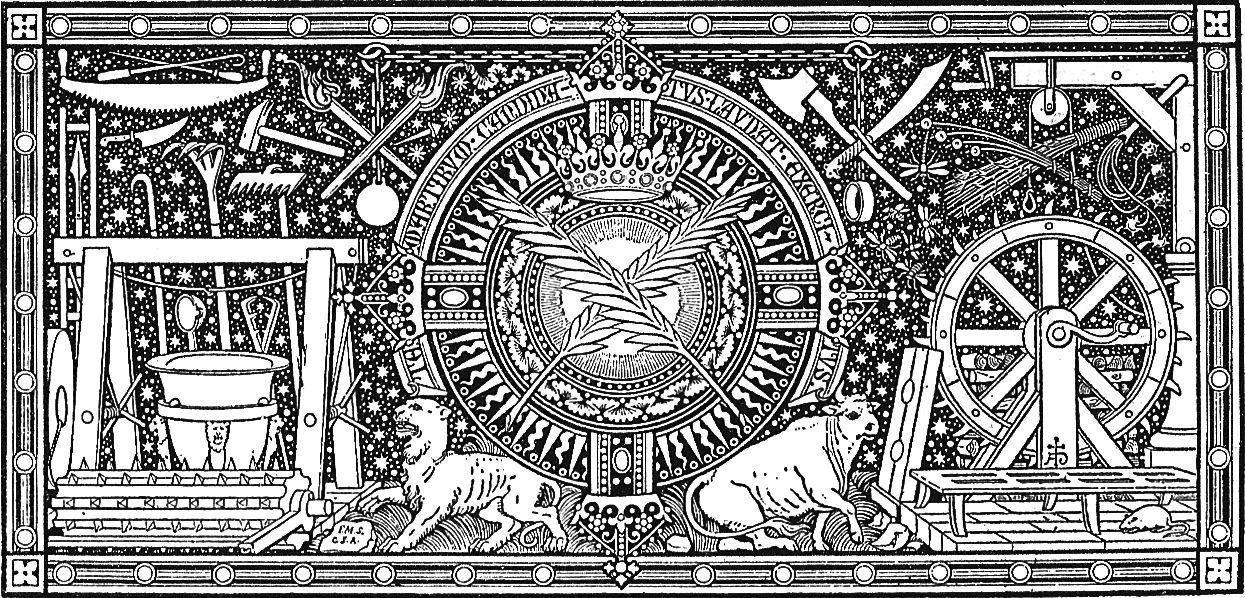
But surviving all this is more than possible. So, when we are converts, we are asked to measure out our commitment over months or years before baptism. Our readings this weekend are then ultimately about martyrdom, which is why I’ve included an image with this post of the instruments of martyrdom, and the victory palm-branches of the martyrs, crowned. The greatest of the Saints of the Church are the martyrs, men and women who have and continue to pay even the ultimate price for love of Christ and the Church. And we love them; we love them and we honour them for something they have been for choices that they have made, which we may admire but think impossible for ourselves.

Until the question is put to us as it was to them, and then perhaps we too shall be martyrs.

He has raised up the lowly (Sunday XXII of Ordered time)

“He also had a parable for the guests who were invited, as He observed how they chose the chief places for themselves; He said to them, ‘When any man invites thee to a wedding, do not sit down in the chief place; he may have invited some guest whose rank is greater than thine. If so, his host and thine will come and say to thee, Make room for this man; and so thou wilt find thyself taking, with a blush, the lowest place of all. Rather, when thou art summoned, go straight to the lowest place and sit down there; so, when he who invited thee comes in, he will say, My friend, go higher than this; and then honour shall be thine before all that sit down in thy company. Everyone who exalts himself shall be humbled, and he that humbles himself shall be exalted.’ He said, moreover, to His host, ‘When thou givest a dinner or a supper, do not ask thy neighbours to come, or thy brethren, or thy kindred, or thy friends who are rich; it may be they will send thee invitations in return, and so thou wilt be recompensed for thy pains. Rather, when thou givest hospitality, invite poor men to come, the cripples, the lame, the blind: so thou shalt win a blessing, for these cannot make thee any return; thy reward will come when the just rise again.”

Gospel of S. Luke, 14: 7-14 [link]

Let’s talk a little about the poor in spirit – the humble – those who are frequently outcasts in their societies, even if they are not necessarily penniless. It is quite clear that our readings at Mass this weekend are all about humility. I shall begin with a quote from S. Basil the Great, the bishop of Caesarea, who treats the gospel story above as referring to social order, but we can address also the particular order within the community of the Church, and we may as well look at that.

“To take then the lowest place at a feast, according to our Lord’s command, is becoming to every man, but again to rush contentiously after this is to be condemned as a breach of order and cause of tumult; and a strife raised about it, will place you on a level with those who dispute concerning the highest place. Wherefore, as our Lord here says, it becomes him who makes the feast to arrange the order of sitting down. Thus in patience and love should we mutually bear ourselves, following all things decently according to order, not for external appearance or public display; nor should we seem to study or affect humility by violent contradiction, but rather gain it by condescension or by patience. For resistance or opposition is a far stronger token of pride than taking the first seat at meat, when we obtain it by authority.”

S. Basil of Caesarea

Basil’s reference to the host at the wedding feast who arranges the seating at table seems to indicate Christ, Who established the seating with the hierarchical constitution of the Church, that is, the grades of clergy and laity, including non-clerical rulers and governors. He says that, in love and patience, we are to mutually live within this structure that is not created by ourselves but established by Christ and received by us. And he says that we should do so integrally, and not only by outward appearances, for any resistance or opposition to the order set before us by the Lord, is a sign of pride.

Therefore, any serious attempt at ‘reform,’ which ends up being a rebellion against the order established by Christ, and every attempt to remake the Church with novelties is an act of pride. All the disturbances and divisions that have afflicted the Church over the centuries and torn her apart have something to do with this type of pride, which seeks to destroy the apostolic structure of the Church, and to somehow seize the authority that was established by Christ. However well-meaning social and religious reformers have been in the last few centuries, the men who have wrenched away from legitimate authority structures have ultimately broken away and led large communities of people into increasing isolation and fragmentation. And so, the root of disunity is usually pride. Pride leads men to take what is not theirs to have, from the moment that our first parents Adam and Eve took of the tree in the Garden, and even until modern governments have tended towards autocracy and dictatorship.

We have numerous stories in the Gospels of how Christ declared that every type of leadership in the Church is given and not taken, that the leaders of the Church are to serve and not be served, that such a gift is not to be sought after for glory and gain. And then, our minds may go over the many instances we may have experienced or heard about of clerics – bishops and priests – who have abused the trust of their Master, who have chased after glory and gain, and even worse have chased after power over other people, either spiritual or physical. And so, we take up the lesson on humility, the original lesson from Lady Wisdom in the book of Ecclesiasticus/Sirach.

“Faithfully it shall be made good to thee, nor shalt thou be forgotten when the time of affliction comes; like ice in summer the record of thy sins shall melt away. Tarnished his name, that leaves his father forsaken; God’s curse rest on him, that earns a mother’s ill-will. My son, do all thou dost in lowly fashion; love thou shalt win, that is worth more than men’s praise. The greater thou art, the more in all things abase thyself; so thou shalt win favour with God … Sovereignty belongs to God and no other; they honour Him most that most keep humility.”

Book of Ecclesiasticus (aka. Sirach), 3: 17-21 [link]

The first reading extols humility – lowliness of heart – even in the great, and there is a line that exalts the willingness to learn. For the humble person is prepared to learn from the wisdom of the past, both family and community tradition, or as the reading says to listen to parables and the dreams of the wise. We live in a time where social pride and the theory of progressivism has all but dismissed the traditions of the past, and we find ourselves constantly remaking and redefining ourselves, while looking down on the ancients, the medievals, and even the early modern philosophers. Universities seek to close philosophy and theology departments, because a modern and progressive society has no use for anything that doesn’t directly benefit the economies of nations, or doesn’t help very much with acquiring power and influence. There is less space these days for humility and benevolence, which are the marks of a Christian past.  


But there’s nothing terribly new about any of that, because the human heart is always the same in every era. And whether we look at the modern world or the ancient world or anything in between, pride and the desire for power over other people is commonly found. If our Lord chided the Pharisees and the Temple scribes for their superficiality and their seeking after glory in the way they comported themselves in public, He in our gospel story above addresses their attempt to seize honour for themselves. To take for themselves a religious authority over ordinary Jews that was illegitimate and exacting. As per the parable, in trying to take up seats nearer the host of the wedding feast, they were over-reaching. For glory is not taken for oneself; it is given from above.

This doesn’t only concern the priests and teachers in the Church, of course, but every one of us. Some of us are authority figures in our families and local communities. And it doesn’t only concern honour, which is given from above, but it concerns also power, which is also ultimately God’s. He sets those who rule over us in this world in their place, and asks us to suffer them, if it comes to that. But as in the story we have above, he expects us to take the lowest place, and He will lift us up out of this. When He says that whoever exalts himself will be humbled and whoever humbles himself will be exalted, He is practically reading the Law of Moses out and admonishing the proud Pharisees for failing yet again in their observance of that Law.

I shall end by naming the most humble of the children of men, our blessed Lady, who in her great song the Magnificat says, He Who is mighty has done great things for me, He has put down the mighty and exalted the humble

“Mary said, ‘My soul magnifies the Lord; my spirit has found joy in God, Who is my Saviour, because He has looked graciously upon the lowliness of His handmaid. Behold, from this day forward all generations will count me blessed; because He Who is mighty, He whose name is holy, has wrought for me His wonders. He has mercy upon those who fear Him, from generation to generation; He has done valiantly with the strength of His arm, driving the proud astray in the conceit of their hearts; He has put down the mighty from their seat, and exalted the lowly…”

Gospel of S. Luke, 1: 46-52 [link]

The narrow gate (Sunday XXI of Ordered time)

“There was a man that said to Him, ‘Lord, is it only a few that are to be saved?’ Whereupon He said to them, ‘Fight your way in at the narrow door; I tell you, there are many who will try and will not be able to enter. When the master of the house has gone in and has shut the door, you will fall to beating on the door as you stand without, and saying, Lord, open to us. But this will be his answer, I know nothing of you, nor whence you come. Thereupon you will fall to protesting, We have eaten and drunk in thy presence; thou hast taught in our streets. But he will say, I tell you, I know nothing of you, nor whence you come; depart from me, you that traffic in iniquity. Weeping shall be there, and gnashing of teeth, when you see Abraham and Isaac and Jacob and all the prophets within God’s kingdom, while you yourselves are cast out. Others will come from the east and the west, the north and the south, to take their ease in the kingdom of God. And indeed, there are some who are last, and shall then be first, some who are first, and shall then be last.”

Gospel of S. Luke, 13: 23-30 [link]

Our readings this Sunday are about the evangelising mission of the Church, and the work of bringing all the races of mankind into communion with God. The above lines are quite obviously a warning to the Jewish audience, for it mentions their patriarchs, Abraham, Isaac and Jacob, and their prophets, implying that they were first on account of these men, and if they were not careful they would be last, for the first seats in the Messianic kingdom would fall to others. Others who are not Jews.

If you hear me say ‘Jews and Gentiles’ or ‘Jews and non-Jews’ a lot, it’s because that is one of the great themes in the Bible, both in the Old Testament and in the New. It depends upon the marital theology, that I’m always talking about as well. For God created our human race in love, and created us with the capacity to know and love Him, with the intimacy of a woman’s love for her husband. But He doesn’t command that love; He invites it of our free wills. He asks for it, He pursues us for it.

After the initial rejection of that love by Adam and Eve, He made the proposal again to a single race through their patriarch Abraham. The Old Testament (aka. the Hebrew Bible) is built upon the yes of Abraham. God responds to Abraham’s faith by promising communion to him and to his descendants, giving them properity in the Holy Land. But the Hebrews were meant to be only a seed community, and God in Christ makes the invitation to all the races of mankind. This last chapter of the prophecy of Isaiah is a prophecy of the Church of Christ, and you can see it clearly in our first reading this weekend.

“Trust me, I will hold assize upon all such deeds and devices of theirs; ay, upon all nations and races. All must come and see My glory revealed, and I will set a mark upon each of them. What of those that find deliverance? I have an errand for them, to be My messengers across the sea; to Africa, and to Lydia where men draw the bow, to Italy, and to Greece, and to the Islands far away. They shall go out where men never heard of My Name, never saw My glory yet, to reveal that glory among the nations. And out of all nations they shall bring your brethren back, an offering to the Lord, with horse and chariot, with litter and mule and waggon, to Jerusalem, the Lord says, to this mountain, My sanctuary. A bloodless offering this, for the sons of Israel to bring, in its sanctified vessel, to the Lord’s house! And some among these newcomers, the Lord says, I will choose out to be priests and Levites.”

Prophecy of Isaias, 66: 18-21 [link]

The rallying point in this reading is the holy mountain in Jerusalem, what was called Moriah in the time of Abraham, where David planned and Solomon built the first Temple, very near where Our Lord Jesus Christ was crucified, died and was buried. Traditionally, there was one tribe of the twelve tribes of Israel – the tribe of the Levites – that was permitted to conduct and support sacred ritual for the Hebrew nation, and one clan within that tribe – the clan of the Aaronites – who could offer ritual sacrifice as priests. Now, the prophet declares that of all the tribes of mankind  circling towards Mount Moriah God will make priests and Levites/deacons.

So, let us take a moment on this Sunday to consider the universal Church, and the many men and women who have been and today are her missioners, the messengers of the Holy One to the lands beyond the seas, as in the reading above. It is so very easy for us to be insular in our parishes, and it has been easier in the past, when our local churches here in England have been predominantly English, or because of the accidents of history (especially, sadly, the English reformation) predominantly Irish in some parts. But, as we all have experienced and experience today, that is changing rapidly.

Thanks to the media also, and more especially the new media (online media, social media), it is possible to have an easy window on the Catholic world in other countries, further and further away than we have ever managed to reach with travel. The new media is marvellous indeed, for now there are in countries where it is very difficult to be a Catholic, or even a Christian, hidden souls who have discovered the ancient promise of Isaiah and are quietly (and often, without baptism for the impossibility of it) joining the procession of the nations to Mount Moriah, and the foot of the Cross. Our dioceses and Rome are all now spending more time and money on the new media and we must make our own efforts wherever possible if we use these things, finding new ways to live out our faith publicly and to invite others to share it. As the great pope Benedict XVI use to say, ‘A great joy cannot be kept to oneself. It has to be passed on.’

If we think our ancient Catholic faith is a good thing, we can’t but pass it on.


But making an offer to somebody is always a risk. Offers can be accepted, but more often rejected. God took a great risk with Adam and Eve and their descendants, allowing us wills free to accept Him or reject Him. That He feels every rejection is obvious when He often expresses Himself in Scripture as a jilted lover in the Old Testament, or as a heartbroken Father in the New. The second reading speaks of receiving instruction and discipline from God our Father, sometimes with great suffering and pain. Not everybody wants that sort of instruction or the great responsibility that results from living the Christian life. Most of us want to receive only good things from God our Lord, and certainly not challenges, either physical or mental. More recently, in the Sacred Heart apparition, Christ has presented Himself as a rejected Messiah, rejected even by His Christians. The substance of that apparition was that the Sacred Heart has for all its efforts for mankind received much mockery and blasphemy, even from Christians, and that He desires that those who love Him make efforts in love to comfort Him for it. So, then, He is injured by the rejection He suffers from His own Christians.

All our own attempts to draw souls to Christ are similarly subject to either acceptance or rejection. As the gospel story this weekend asks, ‘Will there be only a few saved?’ Christ is clear if bleak in His answer: not everybody will be able to enter through the narrow door, even if they get safely up the narrow pathway to that narrow door. Christian hope is a virtue, and we dare hope that all will be saved. But we have a realism about us, and we know that not everybody will choose for Christ, and that they who have hated Christ and His Church in this world might not easily change their minds for the next.

But this is the evangelical enterprise: in spite of everything, and even if we face more rejection than acceptance, we must bring the infectious love of God to a world that needs it, and so to conquer hearts. We may do more through acts of charity, generosity and good cheer than with many words or the handing out of pocket bibles. Christianity, contrary to what we may sometimes be told, is not a religion ‘of the book,’ but rather a religion of the heart. Its object is not the legalistic following of a moral code, written in some book. Its object is a person, Jesus Christ.

Christianity and Catholicism will always be a love story.

“…you have lost sight, already, of those words of comfort in which God addresses you as His sons; My son, do not undervalue the correction which the Lord sends thee, do not be unmanned when He reproves thy faults. It is where He loves that He bestows correction; there is no recognition for any child of His, without chastisement. Be patient, then, while correction lasts; God is treating you as His children. Was there ever a son whom his father did not correct? No, correction is the common lot of all; you must be bastards, not true sons, if you are left without it. We have known what it was to accept correction from earthly fathers, and with reverence; shall we not submit, far more willingly, to the Father of a world of spirits, and draw life from Him? They, after all, only corrected us for a short while, at their own caprice; He does it for our good, to give us a share in that holiness which is His. For the time being, all correction is painful rather than pleasant; but afterwards, when it has done its work of discipline, it yields a harvest of good dispositions, to our great peace. Come then, stiffen the sinews of drooping hand, and flagging knee, and plant your footprints in a straight track, so that the man who goes lame may not stumble out of the path, but regain strength instead.”

Letter of S. Paul to the Hebrews, 12: 5-13 [link]

The heart of the prophet (Sunday XX of Ordered time)

“And they urged the king, these notables, to make an end of [Jeremias]; ‘He goes about,’ said they, ‘to weaken the resolve of the garrison, and of the people at large, by talking in this fashion; there is malice here, not good will.’ ‘He is at your disposal,’ king Sedecias answered; ‘not for a king to withstand you!’ So they had their way with Jeremias; he should be left helpless in the cistern of Melchias the son of Amelech, there in the court where the prisoners were kept. Into the cistern they lowered him with ropes; there was no water in it now, only mire, and into the mire he sank.”

Prophecy of Jeremias, 38: 4-6 [link]

Our readings this weekend have been about martyrdom, for we are able to see the price that was paid by people of God in these readings, the price they paid for allegiance to God. And allegiance to God and communion with Him are still very much what we Catholics are all about. I often say that we who are a remnant of what was once a larger and more bustling Catholic community in this country must bear the responsibility for holding out the gospel message to a society that is increasingly hostile and anti-Christian. It’s a difficult job, and there’s no mistake. When the Bishop tells us that we have to work towards being ‘missionary disciples’ in this respect, he probably knows how hard it is to be a missioner even within our immediate family and circle of friends. For several decades at least and a few centuries at most, religion has been something of a social faux pas, and has been seen as creating more problems than we need. In more ways than one, we who attempt to be faithful are lowered (as Jeremias) into the cistern, and find ourselves sinking into a mire.

But, religion deals with the very foundations of our individual beings and of our human communities; ignoring it and setting aside other basic divisions within our increasingly multicultural society – simply to avoid debate and confrontation – creates what politicians like to call broken societies, and (most recently) an island of strangers. The modern prophet will then have to address his message to a much broader audience than the Hebrew prophets could have dreamt of, although some of them were sent beyond the borders of Israel to other nations. A prophet like Jeremiah, a priest like S. Paul (in the second reading) and our Lord Himself were working determinedly within a common culture, a common philosophy a monolithic society. As England used to be, perhaps.

But an England united in faith and creed lies behind the mists of history. The present situation can more easily mirror the divisions that King Henry brought in five hundred years ago. Following his separation from Rome, when the new religion of the English church was established, the old Catholic religion had to be suppressed. Now, in the new arrangement of multiple cultures, a new politically-correct state ‘religion’ is being established, and the old Christian religion has to be suppressed to an extent. Or deliberately secularised by political pressure.

It sounds horrible when this is happening to us now, but if we peer into the Old Testament, we find that the reason why the prophets kept getting sent to the people – to draw them out of idolatry and reinstall the ancient religion of the Hebrews – was that Jerusalem and her kings and nobles were constantly being drawn by international fashions into worldly ways. They were forgetting who they were (the people of God, unshackled from the world) and what they were about (expanding the reign of God, with no king/ruler over their hearts but God Himself). By the influence of Egypt, the great power to the south-west, golden calves kept appearing in the Holy Land. By the military threat of Assyria and Babylon, and on a smaller scale Syria, there was likely a policy of appeasement with these Eastern powers, with the corresponding effect on the culture and society of the Hebrews. If this situation sounds familiar, it is not unlike what the Church has struggled with for two thousand years. And in the midst of it all stood the prophets, preaching about Moses and the Tabernacle and the Temple, of trust in the Holy One, in Whom alone could salvation be found – not in worldly economies, and military might, and diplomatic agreements. Simply turn back to God, yelled the prophet, God Who wants not sacrifices of animals as such, but humble, contrite hearts, broken hearts. Hearts of children looking for their Father God to redeem them from the burdens of the world.


And when the prophet stands up to protest about the corruptions of the religious traditions of the people, in the pursuit of worldly interests and material wealth, the people do not want to hear it. Their hearts are far from God and religion, as much in the days of Jeremiah as in our own. Look at the first reading today and consider if it doesn’t say something about society’s desire to belittle Christianity, to bring Christ down from His being the divine Son of God and sacrificial Redeemer of the human race to plain old wandering rabbi, to ridicule pope, bishop and priest whenever possible, to water down and trivialise the gospel message. The Church is just one more religious community, they will tell us, another merchant selling a dismal and disheartening message of sin and death. Let us instead enjoy this world to the full, for there is nothing beyond this life. Let’s try and confiscate her immense wealth (King Henry actually did this, he thought he and his friends were more entitled to it) and toss her into a well, where she can die. The story of Jeremiah in the first reading also includes a cowardly king – Sedecias, or Zedekiah – who instead of defending the prophet hands him over to a mob.

“Why then, since we are watched from above by such a cloud of witnesses, let us rid ourselves of all that weighs us down, of the sinful habit that clings so closely, and run, with all endurance, the race for which we are entered. Let us fix our eyes on Jesus, the origin and the crown of all faith, who, to win His prize of blessedness, endured the cross and made light of its shame, Jesus, Who now sits on the right of God’s throne.”

Letter of S. Paul to the Hebrews, 12: 1-2 [link]

S. Paul’s great cloud of witnesses in the second reading were martyrs in the first century, who paid the ultimate price for maintaining a Christian message in the ruthless world of the Roman Empire. As Paul says, these martyrs of the early Church – prophets all – kept their eyes fixed on Christ, as they endured similar tortures to His own, making light of the shame of it. And so they share His reward.

Again, when our Lord says in the gospel story that He brings fire, so that allegiance to Him will divide families, we see the immense price that is paid by those who attach themselves to Him, for they very often lose family and friends in so doing. Those of us who are converts to Christianity understand this all too well, and those who study the history of religion in this great country as well.

“‘It is fire that I have come to spread over the earth, and what better wish can I have than that it should be kindled? There is a baptism I must needs be baptised with, and how impatient am I for its accomplishment! Do you think that I have come to bring peace on the earth? No, believe Me, I have come to bring dissension.'”

Gospel of S. Luke, 12: 49-51 [link]

So then… great are the sacrifices that we make (i) in relationships, (ii) in popularity, (iii) in possessions, to be prophets of God, to bear witness to Him, to stand firm when the whole world laughs at us, pushes us into the mud and the mire and calls blasphemies after Him Whom we love. It tears at our hearts. The psalm we have this weekend at Mass demonstrates the prayer of the prophet, who sings praises of God from the deep pit he was forced into. In this psalm, we hear the voice of Christ Himself.

Patiently I waited for the Lord’s help,
and at last He turned His look towards me;
He listened to my plea, drew me up out of a deadly pit,
where the mire had settled deep,
and gave me a foothold on the rock,
with firm ground to tread.
He has framed a new music on my lips,
a song of praise to our God
,
to fill all that stand by with reverence,
and with trust in the Lord.
Happy is the man whose trust is there bestowed,
who shuns the rites of strange gods, the lure of lies.
O Lord my God,
how long is the story of Thy marvellous deeds!
Was ever care like Thine?
How should I tell the tale of those mercies, past all numbering?
No sacrifice, no offering was thy demand;
enough that thou hast given me an ear ready to listen.
Thou hast not found any pleasure in burnt-sacrifices,
in sacrifices for sin.
See then, I said, I am coming to fulfil what is written of me,
where the book lies unrolled;
to do Thy will, O my God, is all my desire,
to carry out that law of Thine which is written in my heart.

And I told the story of Thy just dealings before a great throng;
be witness, Lord, that I do not seal my lips.”

Psalm 39 (40) [link]

Wait for the Lord (Sunday XIX of Ordered time)

“Of what should befall that night, our fathers had good warning; confidence in Thy sworn protection should keep them unafraid. A welcome gift it was to Thy people, rescue for the just, and doom for their persecutors; at one stroke Thou didst punish our enemies, and make us proud men by singling us out for Thyself. In secret they offered their sacrifice, children of a nobler race, all set apart; with one accord they ratified the divine covenant, which bound them to share the same blessings and the same perils; singing for prelude their ancestral hymns of praise.”

Book of the Wisdom of Solomon, 18: 6-9 [link]

“See then, brethren, how carefully you have to tread, not as fools, but as wise men do, hoarding the opportunity that is given you, in evil times like these. No, you cannot afford to be reckless; you must grasp what the Lord’s will is for you. Do not besot yourselves with wine; that leads to ruin. Let your contentment be in the Holy Spirit; your tongues unloosed in psalms and hymns and spiritual music, as you sing and give praise to the Lord in your hearts.

Letter of S. Paul to the Ephesians, 5: 15-19 [link]

That’s more or less the first reading this weekend, at the top. And below it a word from S. Paul about singing hymns of praise and thanksgiving (liturgically, as at Mass) in the midst of suffering and torment from enemies of Christ.

But let’s do something unusual and focus upon the second reading this reading, for this time it is actually far longer. Many years ago, when the Holy Father Paul VI gave us the new Mass, he ordered the novelty of the second reading because he thought that we need to hear more during the Mass from the letters of S. Paul and the other Apostles and bishops who gave the New Testament. The letter to the Hebrews is a crucial remainder of the theology of the second Temple, which was so very important to the religious awareness of both Jews and Jewish Christians in the first century, and here it demonstrates an essential element of the relationship of the human soul to God: the union with Him, and the faithful trust in Him that gives us the certainty, no matter how difficult life may become, that God has the bigger picture and will bring all things ultimately to a good end. So, we wait patiently for God and sing psalms and hymns of praise.

So then, the second reading talks of the faith of Abraham when he was asked by God to give up all his securities in life to take the long road towards an unknown future in the land of Canaan. So also, the second reading speaks of the faith of Sarah his wife, who was called to give her husband an heir in her nineties, an idea she laughed at at first but nevertheless trusted that God would carry out. These great patriarchs (and matriarchs) of the Hebrew nation died looking forward to a hope that they would never see themselves, but that would come to their descendants centuries later.

“Here is one man, a man for whom life is already over; and from him springs a race whose numbers rival the stars of heaven, or the uncounted grains of sand on the sea-shore. It was faith they lived by, all of them, and in faith they died; for them, the promises were not fulfilled, but they looked forward to them and welcomed them at a distance, owning themselves no better than strangers and exiles on earth.”

Letter of S. Paul to the Hebrews, 11: 12-13 [link]

As our Lord once said to His disciples, ‘…blessed are your eyes, for they have sight; blessed are your ears, for they have hearing; and, believe me, there have been many prophets and just men who have longed to see what you see, and never saw it, to hear what you hear, and never heard it…,’ [Gospel of S. Matthew, 13: 16-17, link] for generations of faithful Hebrews and Jews had pushed in faith towards what they themselves would never witness. So we today will not see the second coming of Christ with the eyes of our flesh, but we push forward towards it and towards the greater glory of the Church when that moment arrives and the divine Bridegroom claims Her as His spotless Bride. In the words of the first reading (above) about the Hebrew nation, God made them glorious by calling them to Himself. So also, as S. John says in the book of Revelation, Christ made the Church glorious by calling her to Himself.

Again, in words prophetic about the Christian Church that would be born centuries later, the book of Wisdom here speaks of the devout offering up their lives in this world in secret, sharing blessing and dangers at the same time while singing the hymns and songs of their ancestors. It is with this faithfulness in the midst of evil and moral dissolution of the world all around us that we sing together the psalm that we have at Mass this weekend, for like the Hebrews of old waiting for their Messiah to come the first time, we yet as we wait for His second coming rejoice in our union with Him, saying Blessed the people the Lord has chosen as His inheritance, whom He has chosen for His own.


When we think of our relationship with Christ, either as individuals or as a Catholic community, we are asked to keep our lamps of vigil lit, as we wait patiently for the return of Christ, when our relationship with Him will be finally consummated, or completed. From the gospel reading this weekend, it is obvious that this vigil is a command to the entire Church and not only the priests/bishops, although the question posed by the Apostle S. Peter demonstrates that Christ did have different sets of instructions for and different expectations of the Apostles/priests and for everybody else. It is an interesting exercise to discover the designated audience in the dialogues presented in the four Gospels that we have. When Peter asks the question, the second half of the gospel is aimed at the leaders and governors of the church, that is, the bishops and the priests, those who have been entrusted with the care of the Household of the Church.

“Peter said to Him, ‘Lord, dost Thou address this parable to us, or to all men?’ And the Lord answered, ‘Who, then, is a faithful and wise steward, one whom his master will entrust with the care of the household, to give them their allowance of food at the appointed time? Blessed is that servant who is found doing this when his lord comes; I promise you, he will give him charge of all his goods. But if that servant says in his heart, My lord is long in coming, and falls to beating the men and the maids, eating and drinking himself drunk; then on some day when he expects nothing, at an hour when he is all unaware, his lord will come, and will cut him off…'”

Gospel of S. Luke, 12: 41-46 [link]

Therefore, woe betide the priest or bishop who causes injury and scandal within the Church, for Christ will find him and, then, there is further talk about beatings. And more beatings for those who betray the law of love and justice, irresponsibly, for they know what Christ requires and ignored it. We might as well talk of degrees of responsibility. The governors of the Church have more responsibility because of their sacred Orders than other Christians and a greater obligation to observe the Law of Christ, but Christians in general have more responsibility than non-Christians in the same regard because of their consecration to God in baptism and confirmation. The punishment for sin corresponds to the level of responsibility to Christ.

“‘Yet it is the servant who knew his Lord’s will, and did not make ready for him, or do his will, that will have many strokes of the lash; he who did not know of it, yet earned a beating, will have only a few. Much will be asked of the man to whom much has been given; more will be expected of him, because he was entrusted with more.'”

Gospel of S. Luke, 12: 47-48 [link]

But coming back to the point of these long readings we have had this weekend: the very Jewish idea of faith and trust in God, even (or especially when) we do not understand why life is so difficult and suffering and pain is all around and everywhere we look. When distractions are everywhere, and there are a hundred other things we should do instead of attending Mass on Sundays and attending to our daily prayers and devotions. Because this religious observance helps us keep our lamps lit (as the wise virgins in the picture at the top of this post) and ready for the day Christ returns. The Church has waited for that day for two thousand years, and we are asked by our Lord to live as if that day is tomorrow, as if every day is our last. Live in the present, He says to us, and do not look too far into the future.

“‘Do not fret, then, asking, What are we to eat? or What are we to drink? or How shall we find clothing? It is for the heathen to busy themselves over such things; you have a Father in heaven Who knows that you need them all. Make it your first care to find the kingdom of God, and His approval, and all these things shall be yours without the asking. Do not fret, then, over tomorrow; leave tomorrow to fret over its own needs; for today, today’s troubles are enough.”

Gospel of S. Matthew, 6: 31-34 [link]

The Second Spring – a sermon of Cardinal Newman

It was with great joy that English Catholics have heard this last week that the Holy Father is to name our Cardinal S. John Henry Newman (whose last home some of us from our parishes visited recently) as a Doctor of the Universal Church, an unusual honour that has been given to only a handful of Saints, who through their words have drawn and continue to draw souls to Christ.

While reading a short history of Mount S. Bernard abbey in Leicestershire, I was surprised by the optimism and the enthusiasm of its nineteenth-century founder, Mr. Ambrose de Lisle, for the growing strength of the Catholic Church in England, and the possible union of the Anglican Church with Rome. From the distance of almost two centuries, and after the many disappointments of recent decades, it is difficult to understand the excitement of the Victorian Catholics.

A very good example of this enthusiasm is Cardinal Newman’s famous sermon, delivered on the 13th day of July, 1852, not long after the establishment on the 29th day of September, 1850, of the new Catholic hierarchy of bishops. The occasion was the first synod of the new metropolitan province of Westminster, the venue of the sermon was the splendid chapel of the seminary at Oscott S. Mary, it was entitled ‘the Second Spring,’ and it was and remains unforgettable.

Here is the text of the sermon. All the emphases (bold text) are my own.


Surge, propera, amica mea, columba mea, formosa mea, et
veni. Iam enim hiems transiit, imber abiit et recessit. Flores
apparuerunt in terra nostra.

‘Arise, make haste, my love, my dove, my beautiful one, and
come. For the winter is now past, the rain is over and gone.
The flowers have appeared in our land.’

Song of Songs, 2: 10-12 [link]

“We have familiar experience of the order, the constancy, the perpetual renovation of the material world which surrounds us. Frail and transitory as is every part of it, restless and migratory as are its elements, never-ceasing as are its changes, still it abides. It is bound together by a law of permanence, it is set up in unity; and, though it is ever dying, it is ever coming to life again. Dissolution does but give birth to fresh modes of organization, and one death is the parent of a thousand lives. Each hour, as it comes, is but a testimony, how fleeting, yet how secure, how certain, is the great whole. It is like an image on the waters, which is ever the same, though the waters ever flow. Change upon change, — yet one change cries out to another, like the alternate Seraphim, in praise and in glory of their Maker. The sun sinks to rise again; the day is swallowed up in the gloom of the night, to be born out of it, as fresh as if it had never been quenched. Spring passes into summer, and through summer and autumn into winter, only the more surely, by its own ultimate return, to triumph over that grave, towards which it resolutely hastened from its first hour. We mourn over the blossoms of May, because they are to wither; but we know, withal, that May is one day to have its revenge upon November, by the revolution of that solemn circle which never stops, — which teaches us in our height of hope, ever to be sober, and in our depth of desolation, never to despair.

“And forcibly as this comes home to every one of us, not less forcible is the contrast which exists between this material world, so vigorous, so reproductive, amid all its changes, and the moral world, so feeble, so downward, so resourceless, amid all its aspirations. That which ought to come to nought, endures; that which promises a future, disappoints and is no more. The same sun shines in heaven from first to last, and the blue firmament, the everlasting mountains, reflect his rays; but where is there upon earth the champion, the hero, the lawgiver, the body politic, the sovereign race, which was great three hundred years ago, and is great now? Moralists and poets, often do they descant upon this innate vitality of matter, this innate perishableness of mind. Man rises to fall: he tends to dissolution from the moment he begins to be; he lives on, indeed, in his children, he lives on in his name, he lives not on in his own person. He is, as regards the manifestations of his nature here below, as a bubble that breaks, and as water poured out upon the earth. He was young, he is old, he is never young again. This is the lament over him, poured forth in verse and in prose, by Christians and by heathen. The greatest work of God’s hands under the sun, he, in all the manifestations of his complex being, is born only to die.

“His bodily frame first begins to feel the power of this constraining law, though it is the last to succumb to it. We look at the bloom of youth with interest, yet with pity; and the more graceful and sweet it is, with pity so much the more; for, whatever be its excellence and its glory, soon it begins to be deformed and dishonoured by the very force of its living on. It grows into exhaustion and collapse, till at length it crumbles into that dust out of which it was originally taken.

“So is it, too, with our moral being, a far higher and diviner portion of our natural constitution; it begins with life, it ends with what is worse than the mere loss of life, with a living death. How beautiful is the human heart, when it puts forth its first leaves, and opens and rejoices in its spring-tide. Fair as may be the bodily form, fairer far, in its green foliage and bright blossoms, its natural virtue. It blooms in the young, like some rich flower, so delicate, so fragrant, and so dazzling. Generosity and lightness of heart and amiableness, the confiding spirit, the gentle temper, the elastic cheerfulness, the open hand, the pure affection, the noble aspiration, the heroic resolve, the romantic pursuit, the love in which self has no part, — are not these beautiful? and are they not dressed up and set forth for admiration in their best shapes, in tales and in poems? and ah! what a prospect of good is there! who could believe that it is to fade! and yet, as night follows upon day, as decrepitude follows upon health, so surely are failure, and overthrow, and annihilation, the issue of this natural virtue, if time only be allowed to it to run its course. There are those who are cut off in the first opening of this excellence, and then, if we may trust their epitaphs, they have lived like angels; but wait a while, let them live on, let the course of life proceed, let the bright soul go through the fire and water of the world’s temptations and seductions and corruptions and transformations; and alas for the insufficiency of nature! alas for its powerlessness to persevere, its waywardness in disappointing its own promise! Wait till youth has become age; and not more different is the miniature which we have of him when a boy, when every feature spoke of hope, put side by side of the large portrait painted to his honour, when he is old, when his limbs are shrunk, his eye dim, his brow furrowed, and his hair grey, than differs the moral grace of that boyhood from the forbidding and repulsive aspect of his soul now that he has lived to the age of man. For moroseness, and misanthropy, and selfishness, is the ordinary winter of that spring.

“Such is man in his own nature, and such, too, is he in his works. The noblest efforts of his genius, the conquests he has made, the doctrines he has originated, the nations he has civilized, the states he has created, they outlive himself, they outlive him by many centuries, but they tend to an end, and that end is dissolution. Powers of the world, sovereignties, dynasties, sooner or later come to nought; they have their fatal hour. The Roman conqueror shed tears over Carthage, for in the destruction of the rival city he discerned too truly an augury of the fall of Rome; and at length, with the weight and the responsibilities, the crimes, and the glories, of centuries upon centuries, the Imperial City fell.

“Thus man and all his works are mortal; they die, and they have no power of renovation.

“But what is it, my Fathers, my Brothers, what is it that has happened in England just at this time? Something strange is passing over this land, by the very surprise, by the very commotion, which it excites. Were we not near enough the scene of action to be able to say what is going on, — were we the inhabitants of some sister planet possessed of a more perfect mechanism than this earth has discovered for surveying the transactions of another globe, — and did we turn our eyes thence towards England just at this season, we should be arrested by a political phenomenon as wonderful as any which the astronomer notes down from his physical field of view. It would be the occurrence of a national commotion, almost without parallel, more violent than has happened here for centuries, — at least in the judgments and intentions of men, if not in act and deed. We should note it down, that soon after S. Michael’s day, 1850, a storm arose in the moral world, so furious as to demand some great explanation, and to rouse in us an intense desire to gain it. We should observe it increasing from day to day, and spreading from place to place, without remission, almost without lull, up to this very hour, when perhaps it threatens worse still, or at least gives no sure prospect of alleviation. Every party in the body politic undergoes its influence, — from the Queen upon her throne, down to the little ones in the infant or day school. The ten thousands of the constituency, the sum-total of Protestant sects, the aggregate of religious societies and associations, the great body of established clergy in town and country, the bar, even the medical profession, nay, even literary and scientific circles, every class, every interest, every fireside, gives tokens of this ubiquitous storm. This would be our report of it, seeing it from the distance, and we should speculate on the cause. What is it all about? against what is it directed? what wonder has happened upon earth? what prodigious, what preternatural event is adequate to the burden of so vast an effect?

“We should judge rightly in our curiosity about a phenomenon like this; it must be a portentous event, and it is. It is an innovation, a miracle, I may say, in the course of human events. The physical world revolves year by year, and begins again; but the political order of things does not renew itself, does not return; it continues, but it proceeds; there is no retrogression. This is so well understood by men of the day, that with them progress is idolised as another name for good. The past never returns— it is never good; — if we are to escape existing ills, it must be by going forward. The past is out of date; the past is dead. As well may the dead live to us, as well may the dead profit us, as the past return. This, then, is the cause of this national transport, this national cry, which encompasses us. The past has returned, the dead lives. Thrones are overturned, and are never restored; States live and die, and then are matter only for history. Babylon was great, and Tyre, and Egypt, and Nineve, and shall never be great again. The English Church, was, and the English Church was not, and the English Church is once again. This is the portent, worthy of a cry. It is the coming in of a Second Spring ; it is a restoration in the moral world, such as that which yearly takes place in the physical.

“Three centuries ago, and the Catholic Church, that great creation of God’s power, stood in this land in pride of place. It had the honours of near a thousand years upon it; it was enthroned in some twenty sees up and down the broad country; it was based in the will of a faithful people; it energized through ten thousand instruments of power and influence; and it was ennobled by a host of Saints and Martyrs. The churches, one by one, recounted and rejoiced in the line of glorified intercessors, who were the respective objects of their grateful homage. Canterbury alone numbered perhaps some sixteen, from S. Augustine to S. Dunstan and S. Elphege, from S. Anselm and S. Thomas down to S. Edmund. York had its S. Paulinus, S. John, S. Wilfrid, and S. William; London, its S. Erconwald; Durham, its S. Cuthbert; Winton, its S. Swithun. Then there were S. Aidan of Lindisfarne, and S. Hugh of Lincoln, and S. Chad of Lichfield, and S. Thomas of Hereford, and S. Oswald and S. Wulstan of Worcester, and S. Osmund of Salisbury, and S. Birinus of Dorchester, and S. Richard of Chichester. And then, too, its religious orders, its monastic establishments, its universities, its wide relations all over Europe, its high prerogatives in the temporal state, its wealth, its dependencies, its popular honours, — where was there in the whole of Christendom a more glorious hierarchy? Mixed up with the civil institutions, with king and nobles, with the people, found in every village and in every town, — it seemed destined to stand, so long as England stood, and to outlast, it might be, England’s greatness.

“But it was the high decree of heaven, that the majesty of that presence should be blotted out. It is a long story, my Fathers and Brothers — you know it well. I need not go through it. The vivifying principle of truth, the shadow of S. Peter, the grace of the Redeemer, left it. That old Church in its day became a corpse (a marvellous, an awful change!); and then it did but corrupt the air which once it refreshed, and cumber the ground which once it beautified. So all seemed to be lost; and there was a struggle for a time, and then its priests were cast out or martyred. There were sacrileges innumerable. Its temples were profaned or destroyed ; its revenues seized by covetous nobles, or squandered upon the ministers of a new faith. The presence of Catholicism was at length simply removed,— its grace disowned,— its power despised,— its name, except as a matter of history, at length almost unknown. It took a long time to do this thoroughly; much time, much thought, much labor, much expense; but at last it was done. Oh, that miserable day, centuries before we were born !

“What a martyrdom to live in it and see the fair form of Truth, moral and material, hacked piecemeal, and every limb and organ carried off, and burned in the fire, or cast into the deep ! But at last the work was done. Truth was disposed of, and shovelled away, and there was a calm, a silence, a sort of peace; — and such was about the state of things when we were born into this weary world.

“My Fathers and Brothers, you have seen it on one side, and some of us on another; but one and all of us can bear witness to the fact of the utter contempt into which Catholicism had fallen by the time that we were born. You, alas, know it far better than I can know it; but it may not be out of place, if by one or two tokens, as by the strokes of a pencil, I bear witness to you from without, of what you can witness so much more truly from within. No longer, the Catholic Church in the country; nay, no longer I may say, a Catholic community; — but a few adherents of the Old Religion, moving silently and sorrowfully about, as memorials of what had been. ‘The Roman Catholics’ — not a sect, not even an interest, as men conceived of it, — not a body, however small, representative of the Great Communion abroad, — but a mere handful of individuals, who might be counted like the pebbles and detritus of the great deluge, and who, forsooth, merely happened to retain a creed which, in its day indeed, was the profession of a Church. Here a set of poor Irishmen, coming and going at harvest time, or a colony of them lodged in a miserable quarter of the vast metropolis. There, perhaps, an elderly person, seen walking in the streets, grave and solitary, and strange, though noble in bearing, and said to be of good family, and a ‘Roman Catholic.’ An old-fashioned house of gloomy appearance, closed in with high walls, with an iron gate, and yews, and the report attaching to it that ‘Roman Catholics’ lived there; but who they were or what they did, or what was meant by calling them Roman Catholics, no one could tell; — though it had an unpleasant sound, and told of form and superstition. And then, perhaps, as we went to and fro,, looking with a boy’s curious eyes through the great city, we might come today upon some Moravian chapel, or Quakers’ meeting-house, and tomorrow on a chapel of the ‘Roman Catholics;’ but nothing was to be gathered from it, except that there were lights burning there, and some boys in white, swinging censers; and what it all meant could only be learned from books, from Protestant Histories and Sermons; and they did not report well of ‘the Roman Catholics’ but, on the contrary, deposed that they had once had power and had abused it. And then, again, we might, on one occasion, hear it pointedly put out by some literary man, as the result of his careful investigation, and as a recondite point of information, which few knew, that there was this difference between the Roman Catholics of England and the Roman Catholics of Ireland, that the latter had bishops, and the former were governed by four officials, called Vicars-Apostolic.

“Such was about the sort of knowledge possessed of Christianity by the heathen of old time, who persecuted its adherents from the face of the earth, and then called them a gens lucifuga, a people who shunned the light of day. Such were Catholics in England, found in corners, and alleys, and cellars, and the housetops, or in the recesses of the country; cut off from the populous world around them, and dimly seen, as if through a mist or in twilight, as ghosts flitting to and fro, by the high Protestants, the lords of the earth. At length so feeble did they become, so utterly contemptible, that contempt gave birth to pity; and the more generous of their tyrants actually began to wish to bestow on them some favour, under the notion that their opinions were simply too absurd ever to spread again, and that they themselves, were they but raised in civil importance, would soon unlearn and be ashamed of them. And thus, out of mere kindness to us, they began to vilify our doctrines to the Protestant world, that so our very idiocy or our secret unbelief might be our plea for mercy.

“A great change, an awful contrast, between the time-honoured church of S. Augustine and S. Thomas, and the poor remnant of their children in the beginning of the nineteenth century! It was a miracle, I might say, to have pulled down that lordly power; but there was a greater and a truer one in store. No one could have prophesied its fall, but still less would any one have ventured to prophesy its rise again. The fall was wonderful; still after all it was in the order of nature; — all things come to nought: its rise again would be a different sort of wonder, for it is in the order of grace, — and who can hope for miracles, and such a miracle as this! Has the whole course of history a like to show? I must speak cautiously and according to my knowledge, but I recollect no parallel to it. Augustine, indeed, came to the same island to which the early missionaries had come already; but they came to Britons, and he to Saxons. The Arian Goths and Lombards, too, cast off their heresy in S. Augustine’s age, and joined the Church; but they had never fallen away from her. The inspired word seems to imply the almost impossibility of such a grace as the renovation of those who have crucified to themselves again, and trodden underfoot, the Son of God. Who then could have dared to hope that, out of so sacrilegious a nation as this is, a people would have been formed again unto their Saviour? What signs did it show that it was to be singled out from among the nations? Had it been prophesied some fifty years ago, would not the very notion have seemed preposterous and wild?

“My Fathers, there was one of your own order, then in the maturity of his powers and his reputation. His name is the property of this diocese; yet is too great, too venerable, too dear to all Catholics, to be confined to any part of England, when it is rather a household word in the mouths of all of us. What would have been the feelings of that venerable man, the champion of God’s ark in an evil time, could he have lived to see this day? It is almost presumptuous for one who knew him not, to draw pictures about him, and his thoughts, and his friends, some of whom are even here present; yet am I wrong in fancying that a day such as this, in which we stand, would have seemed to him a dream, or, if he prophesied of it, to his hearers nothing but a mockery? Say that one time, rapt in spirit, he had reached forward to the future, and that his mortal eye had wandered from that lowly chapel in the valley which had been for centuries in the possession of Catholics, to the neighbouring height, then waste and solitary. And let him say to those about him: ‘I see a bleak mount, looking upon an open country, over against that huge town, to whose inhabitants Catholicism is of so little account. I see the ground marked out, and an ample enclosure made; and plantations are rising there, clothing and circling in the space.

“And there on that high spot, far from the haunts of men, yet in the very centre of the island, a large edifice, or rather pile of edifices, appears, with many fronts and courts, and long cloisters and corridors, and story upon story. And there it rises, under the invocation of the same sweet and powerful name which has been our strength and consolation in the Valley. I look more attentively at that building, and I see it is fashioned upon that ancient style of art which brings back the past, which had seemed to be perishing from off the face of the earth, or to be preserved only as a curiosity, or to be imitated only as a fancy. I listen, and I hear the sound of voices, grave and musical, renewing the old chant, with which Augustine greeted Ethelbert in the free air upon the Kentish strand. It comes from a long procession, and it winds along the cloisters. Priests and Religious, theologians from the schools, and canons from the Cathedral, walk in due precedence. And then there comes a vision of well nigh twelve mitred heads; and last I see a Prince of the Church, in the royal dye of empire and of martyrdom, a pledge to us from Rome of Rome’s unwearied love, a token that that goodly company is firm in Apostolic faith and hope. And the shadow of the saints is there; — S. Benedict is there, speaking to us by the voice of bishop and of priest, and counting over the long ages through which he has prayed, and studied, and labored; there, too, is S. Dominic’s white wool, which no blemish can impair, no stain can dim: — and if S. Bernard be not there, it is only that his absence may make him be remembered more. And the princely patriarch, S. Ignatius, too, the S. George of the modern wrorld, with his chivalrous lance run through his writhing foe, he, too, sheds his blessing upon that train. And others, also, his equals or his juniors in history, whose pictures are above our altars, or soon shall be, the surest proof that the Lord’s arm has not waxen short, nor His mercy failed, — they, too, are looking down from their thrones on high upon the throng. And so that high company moves on into the holy place; and there, with august rite and awful sacrifice, inaugurates the great act which brings it thither.’ What is that act? it is the first synod of a new Hierarchy; it is the resurrection of the Church.

“O my Fathers, my Brothers, had that revered Bishop spoken then, who that had heard him but would have said that he spoke what could not be? What! those few scattered worshippers, the Roman Catholics, to form a Church! Shall the past be rolled back? Shall the grave open? Shall the Saxons live again to God? Shall the shepherds, watching their poor flocks by night, be visited by a multitude of the heavenly army, and hear how their Lord has been new-born in their own city? Yes; for grace can, where nature cannot. The world grows old, but the Church is ever young. She can, in any time, at her Lord’s will, ‘inherit the Gentiles, and inhabit the desolate cities.’ ‘Arise, Jerusalem, for thy light is come, and the glory of the Lord is risen upon thee. Behold, darkness shall cover the earth and a mist the people; but the Lord shall rise upon thee, and His glory shall be seen upon thee. Lift up thine eyes round about, and see; all these are gathered together, they come to thee ; thy sons shall come from afar, and thy daughters shall rise up at thy side.’ ‘Arise, make haste, my love, my dove, my beautiful one, and come. For the winter is now past and the rain is over and gone. The flowers have appeared in our land. . . . the fig-tree hath put forth her green figs; the vines in flower yield their sweet smell. Arise, my love, my beautiful one, and come.’ It is the time for thy Visitation. Arise, Mary, and go forth in thy strength into that north country, which once was thine own, and take possession of a land which knows thee not. Arise, Mother of God, and with thy thrilling voice, speak to those who labor with child, and are in pain, till the babe of grace leaps within them? Shine on us, dear Lady, with thy bright countenance, like the sun in his strength, O Stella matutina, O harbinger of peace, till our year is one perpetual May. From thy sweet eyes, from thy pure smile, from thy majestic brow, let ten thousand influences rain down, not to confound or overwhelm, but to persuade, to win over thine enemies. O Mary, my hope, O Mother undefiled, fulfil to us the promise of this Spring. A second temple rises on the ruins of the old. Canterbury has gone its way, and York is gone, and Durham is gone, and Winchester is gone. It was sore to part with them. We clung to the vision of past greatness, and would not believe it could come to nought; but the Church in England has died, and the Church lives again. Westminster and Nottingham, Beverley and Hexham, Northampton and Shrewsbury, if the world lasts, shall be names as musical to the ear, as stirring to the heart, as the glories we have lost; and Saints shall rise out of them, if God so will, and Doctors once again shall give the law to Israel, and Preachers call to penance and to justice, as at the beginning.

“Yes, my Fathers and Brothers, and if it be God’s blessed will, not Saints alone, not Doctors only, not Preachers only, shall be ours — but Martyrs, too, shall re-consecrate the soil to God. We know not what is before us, ere we win our own; we are engaged in a great, a joyful work, but in proportion to God’s grace is the fury of His enemies. They have welcomed us as the lion greets his prey. Perhaps they may be familiarized in time with our appearance, but perhaps they may be irritated the more. To set up the Church again in England is too great an act to be done in a corner. We have had reason to expect that such & boon would not be given to us without a cross. It is not God’s way that great blessings should descend without the sacrifice first of great sufferings. If the truth is to be spread to any wide extent among this people, how can we dream, how can we hope, that trial and trouble shall not accompany its going forth? And we have already, if it may be said without presumption, to commence our work withal, a large store of merits. We have no slight outfit for our opening warfare. Can we religiously suppose that the blood of our martyrs, three centuries ago and since, shall never receive its recompense? Those priests, secular and regular, did they suffer for no end? or rather, for an end which is not yet accomplished? The long imprisonment, the fetid dungeon, the weary suspense, the tyrannous trial, the barbarous sentence, the savage execution, the rack, the gibbet, the knife, the cauldron, the numberless tortures of those holy victims, O my God, are they to have no reward? Are Thy martyrs to cry from under Thine altar for their loving vengeance on this guilty people, and to cry in vain? Shall they lose life, and not gain a better life for the children of those who persecuted them? Is this Thy way, O my God, righteous and true? Is it according to thy promise, O King of saints, if I may dare talk to Thee of justice? Didst not Thou Thyself pray for Thine enemies upon the cross, and convert them? Did not Thy first Martyr win Thy great Apostle, then a persecutor, by his loving prayer? And in that day of trial and desolation for England, when hearts were pierced through and through with Mary’s woe, at the crucifixion of Thy body mystical, was not every tear that flowed, and every drop of blood that was shed, the seeds of a future harvest, when they who sowed in sorrow were to reap in joy?

“And as that suffering of the Martyrs is not yet recompensed, so, perchance, it is not yet exhausted. Something, for what we know, remains to be undergone, to complete the necessary sacrifice. May God forbid it, for this poor nation’s sake! But still could we be surprised, my Fathers and my Brothers, if the winter even now should not yet be quite over? Have we any right to take it strange, if, in this English land, the springtime of the Church should turn out to be an English spring, an uncertain, anxious time of hope and fear, of joy and suffering — of bright promise and budding hopes, yet withal, of keen blasts, and cold showers, and sudden storms?

“One thing alone I know — that according to our need, so will be our strength. One thing I am sure of, that the more the enemy rages against us, so much the more will the Saints in Heaven plead for us; the more fearful are our trials from the world, the more present to us will be our Mother Mary, and our good Patrons, and Angel Guardians; the more malicious are the devices of men against us, the louder cry of supplication will ascend from the bosom of the whole Church to God for us. We shall not be left orphans; we shall have within us the strength of the Paraclete, promised to the Church and to every member of it. My Fathers, my Brothers in the priesthood, I speak from my heart when I declare my conviction, that there is no one among you here present but, if God so willed, would readily become a martyr for His sake. I do not say you would wish it; I do not say that the natural will would not pray that that chalice might pass away; I do not speak of what you can do by any strength of yours;— but in the strength of God, in the grace of the Spirit, in the armor of justice, by the consolations and peace of the Church, by the blessing of the Apostles Peter and Paul, and in the name of Christ, you would do what nature cannot do. By the intercession of the Saints on high, by the penances and good works and the prayers of the people of God on earth, you would be forcibly borne up as upon the waves of the mighty deep, and carried on out of yourselves by the fulness of grace, whether nature wished it or no. I do not mean violently, or with unseemly struggle, but calmly, gracefully, sweetly, joyously, you would mount up and ride forth to battle, as on the rush of Angel’s wings, as your fathers did before you, and gained the prize. You, who day by day offer up the Immaculate Lamb of God, you who hold in your hands the Incarnate Word under the visible tokens which He has ordained, you who again and again drain the chalice of the Great Victim; who is to make you fear? what is to startle you? what to seduce you? who is to stop you, whether you are to suffer or to do, whether to lay the foundations of the Church in tears, or to put the crown upon the work in jubilation?

“My Fathers, my Brothers, one word more. It may seem as if I were going out of my way in thus addressing you; but I have some sort of plea to urge in extenuation. When the English College at Rome was set up by the solicitude of a great Pontiff in the beginning of England’s sorrows, and missionaries were trained there for confessorship and martyrdom here, who was it that saluted the fair Saxon youths as they passed by him in the streets of the great City, with the salutation, ‘Salvete flores martyrum‘? And when the time came for each in turn to leave that peaceful home, and to go forth to the conflict, to whom did they betake themselves before leaving home, to receive a blessing which might nerve them for their work? They went for a Saint’s blessing; they went to a calm old man, who had never seen blood, except in penance; who had longed indeed to die for Christ, what time the great S. Francis opened the way to the far East, but who had been fixed as if a sentinel in the holy city, and walked up and down for fifty years on one beat, while his brethren were in the battle. Oh! the fire of that heart, too great for its frail tenement, which tormented him to be kept at home when the whole Church was at war! and therefore came those bright-haired strangers to him, ere they set out for the scene of their passion, that the full zeal and love pent up in that burning breast might find a vent, and flow over, from him who was kept at home, upon those who were to face the foe. Therefore one by one, each in his turn, those youthful soldiers came to the old man; and one by one they persevered and gained the crown and the palm, — all but one, who had not gone, and would not go, for the salutary blessing.

“My Fathers, my Brothers, that old man was my own S. Philip. Bear with me for his sake. If I have spoken too seriously, his sweet smile shall temper it. As he was with you three centuries ago in Rome, when our Temple fell, so now surely when it is rising, it is a pleasant token that he should have even set out on his travels to you; and that, as if remembering how he interceded for you at home, and recognising the relations he then formed with you, he should now be wishing to have a name among you, and to be loved by you, and perchance to do you a service, here in your own land.”


Text source: Francis P. Donnelly SJ (ed.), The Second Spring: a sermon by John Henry Newman DD, Longmans, Green and Co., New York, 1911.

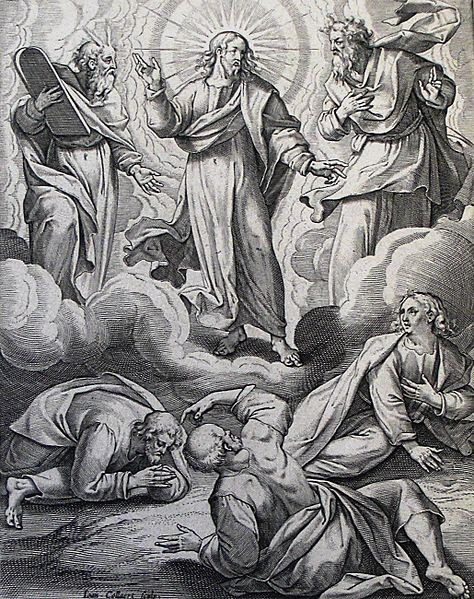
Vanity of vanities (Sunday XVIII of Ordered time)

“What, should one man go on toiling, his the craft, his the skill, his the anxious care, leaving all to another, and an idler? That were frustration surely, and great mischief done. Tell me, how is a man the richer for all that toil of his, all that lost labour of his, here under the sun? His days all painfulness and care, his very nights restless; what is here but frustration? Were it not better to eat and drink, and toil only at his own pleasures? These, too, come from God’s hand; and who has better right to food tasted and pleasure enjoyed than I? Who wins God’s favour, has wisdom and skill for his reward, and pleasure too; it is the sinner that is doomed to hardship and to thankless care, hoarding and scraping, and all to enrich some heir God loves better! For him frustration, for him the labour lost.”

Book of Ecclesiastes, 2: 21-26 [link]

I remember when at seminary in Rome attending an entire lecture series on the book of Ecclesiastes, which Scripture scholars seem to think was a secular book that was later given religious significance by the Hebrew priests, who attributed it finally to the wise king Solomon. The reason given for this supposition is that very little reference is made to the God of the Hebrews and to the Temple-centred Hebrew religion. Ecclesiastes does seem (when taken on its own) then to be a personal philosophy, and can have the effect of hopelessness: the gist of it seems to be that no matter what you do, whether you are good or bad, virtuous or not, life with its ups and downs still happens. This seems to be dislocated then from the rest of the Bible, which often suggests that God gives good things to those who are religiously observant, and punishes the evil.

But, there is a tension between both these ideas in the Bible. And, of course, none of us who have experienced this world really believes that the good are always rewarded and the evil always suffer. There is a profound realism in Ecclesiastes, which is echoed in the book of psalms, which asks in many places why God allows the wicked to thrive and the innocent to be humbled into the ground. The Hebrew priests, the rabbis and the bishops of the Church have successively entered these observations of life in this world of the book of Ecclesiastes into Holy Scripture, setting them against the background of religious observance, and encouraging faith and perseverance, even when virtue seemingly bears no fruit, and prayer seemingly receives no answer. Here’s a psalm with the theme of this Sunday…

“What need have I to be afraid in troubled times,
when malice dogs my heels and overtakes me,
malice of foes who trust in their own strength,
and boast of their great possessions
?
No man can deliver himself from his human lot,
paying a ransom-price to God;
too great is the cost of a man’s soul;
never will the means be his
to prolong his days eternally
and escape death.
True it is, wise men die;
but reckless fools perish no less;
their riches will go to others,
and the grave will be their everlasting home.
Age after age, they will live on there,
under the fields they once called their own
.
Short is man’s enjoyment of earthly goods;
match him with the brute beasts,
and he is no better than they.
Fatal path, that ensnares the reckless!
Pitiful end of the men that love life!
There they lie in the world beneath,
huddled like sheep, with death for their shepherd,
the just for their masters;
soon, soon their image fades, the grave for its tenement.
But my life God will rescue
from the power of that lower darkness,
a life that finds acceptance with him.

Do not be disturbed, then, when a man grows rich,
and there is no end to his household’s magnificence;
he cannot take all that with him when he dies,
magnificence will not follow him to the grave.”

Psalm 48 (49): 6-18 [link]

All of this also provides the substance of the so-called problem of evil which is still put forth today. People will ask us who are religious and devoted to the Almighty God, and say to us, If your God is so powerful and loves so much, why does He permit evil things? Why are there babies dying in the Palestine wars, and church-going Christians being massacred in Nigeria, and so on…? We’ve been hearing about human dignity in the last few weeks. Why do we have to fight so hard for human rights and human dignity, when the powerful God Who gave these to men and women should be able to exert his power and come to their defence? Aren’t all our efforts hopeless, isn’t all we do just vanity?

But these questions and this commentary are merely another statement of the human condition. The Church, with her long history and her long memory, more than any other community today speaks to this human condition, calling her sons and daughters out of the misery of this world and towards hope in a glorious future. We are born into and live within a world of sin, where people use the freedoms given them by the Holy One both well (with charity and altruism) and badly (oppression, totalitarianism, exploitation). God permits this situation for a time, because He wants us to demonstrate virtue, He wants us to embrace Charity ourselves and become like Him. This union with Him He will effect only with our participation and cooperation – His gift of communion with Himself crowns our own desire for it.

How shall we demonstrate our desire? We are to learn to use our freedoms well, with guidance from Him – this guidance comes both from Scripture and from the tradition of the Church and from her active teaching authority. We are to discover that a life of Love, lived for Love’s sake, has its own value, whether or not it receives material reward. As the pre-Christian Greek sages would say, Virtue is its own reward. We may then answer the sage of the first reading (or Psalm 48 above) by saying that, Yes, the life of virtue may seem futile because the concrete, material result of a life well-lived may fall to a successor who is profligate or a villain, or because there have been no results at all. But the heart of the virtuous person if forgotten by this world yet lives in eternity. As the psalm this weekend says, our life in this world is a short night -a dream- but there will be a dawn, a morning beyond it.

“Teach us to count every passing day,
till our hearts find wisdom.
Relent, Lord; must it be for ever?
Be gracious to Thy servants.
For us Thy timely mercies,
for us abiding happiness and content;
happiness that shall atone
for the time when Thou didst afflict us,
for the long years of ill fortune.

Let these eyes see Thy purpose accomplished,
to our own sons reveal Thy glory;
the favour of the Lord our God smile on us!
Prosper our doings, Lord,
prosper our doings yet.”

Psalm 89 (90): 12-16 [link]

The Christian therefore approaches these questions of evil in this world and the seeming futility of human effort by pointing beyond death to a world beyond. We Christians live in a world of ruin, we live as a light in the darkness, preserving a vision of life and eternity in the midst of change and decay. S. Paul says in our second reading that we are to look for eternal things, heavenly things, and not to treasure the material things of this world.

“Risen, then, with Christ, you must lift your thoughts above, where Christ now sits at the right hand of God. You must be heavenly-minded, not earthly-minded; you have undergone death, and your life is hidden away now with Christ in God. Christ is your life, and when He is made manifest, you too will be made manifest in glory with Him. You must deaden, then, those passions in you which belong to earth, fornication and impurity, lust and evil desire, and that love of money which is an idolatry. These are what bring down God’s vengeance on the unbelievers, and such was your own behaviour, too, while you lived among them. Now it is your turn to have done with it all, resentment, anger, spite, insults, foul-mouthed utterance; and do not tell lies at one another’s expense. You must be quit of the old self, and the habits that went with it; you must be clothed in the new self, that is being refitted all the time for closer knowledge, so that the image of the God who created it is its pattern. Here is no more Gentile and Jew, no more circumcised and uncircumcised; no one is barbarian, or Scythian, no one is slave or free man; there is nothing but Christ in any of us.”

Letter of S. Paul to the Colossians, 3: 1-11 [link]

This doesn’t mean that material possessions are essentially bad or evil – rather, we are to treat them not as ends in themselves, but as a means to arrive at eternal things. We must chase after Charity and generosity, benevolence and integrity – and fill our barns and our greater barns with these, not with reward and possession. We see this theme once more in our gospel story today. Two brothers are quarrelling about an inheritance, and the one approaches Christ to ask for some magisterial help with his own case. The Holy One is very clear in His response – He has come to teach the abandonment of such things as material possession, so they who seek earthly things for the sake of these things cannot expect His assistance. The parable He then tells also speaks of the futility of material possession, and he echoes the psalms and the book of Ecclesiastes when He says, You cannot take any of it beyond this life. He has said the same thing in others ways, such as when He recommended that we store up treasures for ourselves in heaven, beyond the reach of the rust and corruption of this world. Or when He recommended that we seek first the Kingdom of God and its righteousness.

So, we may the enjoy the good things of this world, yes, but while keeping our eyes fixed on the destiny with God at the end of all things. In effect, we shall have chosen only God after all.

“Then He said to them, ‘Look well and keep yourselves clear of all covetousness. A man’s life does not consist in having more possessions than he needs.’ And He told them a parable, ‘There was a rich man whose lands yielded a heavy crop: and he debated in his mind, What am I to do, with no room to store my crops in? Then he said, This is what I will do; I will pull down my barns, and build greater ones, and there I shall be able to store all my harvest and all the goods that are mine; and then I will say to my soul, Come, soul, thou hast goods in plenty laid up for many years to come; take thy rest now, eat, drink, and make merry. And God said, Thou fool, this night thou must render up thy soul; and who will be master now of all thou hast laid by?‘”

Gospel of S. Luke, 12: 15-20 [link]

Intercessory prayer (Sunday XVII of Ordered time)

I have been talking for some Sundays now about human dignity, which comes from human beings being made in the image and likeness of God. This image is not a physical image, obviously, because God is spirit, and has no form. In Christ, God takes to Himself a human form and becomes visible, but man was created in God’s image in his ability to reason, to will what is good and to love what is good. The moral good we are called to espouse as custodians and guards of this beautiful world we live in is an objective good – it cannot be various, so that one person’s vision of good can be opposed to another person’s.

We all seek happiness as human beings, but in the measure that the routes we choose are aligned with God’s plan for us, our desires can be either ordered (according to God’s plan) or disordered. And so He provides us guidance for our lives, that we may arrive surely (if eventually) at our destination in Him. For, as the Catechism says, it is only God Who satisfies, who can be our true happiness.

The Beatitudes respond to the natural desire for happiness. This desire is of divine origin: God has placed it in the human heart in order to draw man to the One who alone can fulfill it: ‘We all want to live happily; in the whole human race there is no one who does not assent to this proposition, even before it is fully articulated. How is it, then, that I seek you, Lord? Since in seeking you, my God, I seek a happy life, let me seek you so that my soul may live, for my body draws life from my soul and my soul draws life from you. God alone satisfies.'”

Catechism of the Catholic Church, §1718 [link]

So, when the Gospel tells us that we are blessed if we are poor in spirit, if we thirst after justice and personal righteousness before God, when we suffer humiliation and suffering for the sake of justice and for the sake of God and Christ, the Gospel is helping us to find our home in God, to treat the things of this world not as ends in themselves but as means of getting to God. Those of us who are parents and grandparents, or those who in another way have a care of souls, have a duty to secure not only our own pathway to God, but in so far as we can those of the persons who are given to our care.

It hardly needs saying that in giving us the measure of intellectual and moral freedom that He has given us, God has taken the great risk that we may turn against Him, deny His Wisdom and His Commandments and choose to destroy our eternal happiness instead. In our so doing, by committing sin and especially grievous sin, we denigrate and reduce the human dignity that is a gift to us from God. We abuse the freedom He has given us by refusing the command to charity and unselfishness.

The Catechism has a little section on freedom and responsibility, and states that, paradoxically, the more we follow the Commandments of Christ and do voluntarily what is morally good, the more free we actually become. As Catholics, we exercise our freedom in this way, striving to always honour the Law of Charity – Love of God and love of neighbour – persevering in prayer and seeking to unite our own wills to to divine Will, in order that the choices we make are ordered towards our eternal destiny in heaven, taking personal responsibility for the things we say and the things we do. For our freedom to act, without fear and coercion (which is itself essential to our human dignity), must always (like the Man on the cross) be coloured by love.

“Freedom is the power, rooted in reason and will, to act or not to act, to do this or that, and so to perform deliberate actions on one’s own responsibility. By free will one shapes one’s own life. Human freedom is a force for growth and maturity in truth and goodness; it attains its perfection when directed toward God, our beatitude. As long as freedom has not bound itself definitively to its ultimate good which is God, there is the possibility of choosing between good and evil, and thus of growing in perfection or of failing and sinning. This freedom characterizes properly human acts. It is the basis of praise or blame, merit or reproach. The more one does what is good, the freer one becomes. There is no true freedom except in the service of what is good and just. the choice to disobey and do evil is an abuse of freedom and leads to ‘the slavery of sin.'”

Catechism of the Catholic Church, §1731-1733 [link]

I have said often enough that the Church is a kingdom of priests, a holy nation, that all of us have a priesthood. The most obvious role of a priest is in sacrifice, in making offering to God. We all have something to offer, for what we are is entirely a gift of God, and the Christian’s first offering to God is always of himself or herself. This gift of self is free and comprehensive, for it includes all the good things in our lives and all the bad things too. All that we are.

But then, as priests, we are called to pray for ourselves and for others, in particular for others – this is what we call intercessory prayer and it is the basis of such items of the Mass as the prayers of the faithful or bidding prayers, part of our more general ministry of prayer as Christian. Father Abraham demonstrates this in our first reading today.

“So the Lord told [Abraham], ‘The ill repute of Sodom and Gomorrha goes from bad to worse, their sin is grievous out of all measure; I must needs go down to see for Myself whether they have deserved the ill report that has reached Me or not; I must know for certain.’ And Abraham stood there in the Lord’s presence, as the men turned and went on towards Sodom. Abraham drew close to Him, and asked, ‘Wilt Thou, then, sweep away the innocent with the guilty? Suppose there are fifty innocent men in the city, must they too perish? Wilt Thou not spare the place to save fifty such innocent men that dwell there? Never that, Thou wilt not destroy the innocent with the guilty, as if innocence and guilt were all one; that is not Thy way, that is not how the Judge of the whole earth executes justice!’ And the Lord told him, ‘If I find fifty innocent citizens in Sodom, I will spare the whole place to save them.’ And Abraham answered, ‘Dust and ashes though I be, I have taken it upon me to speak to my Lord, and speak I will. What if there should be five wanting to make up the tale of fifty innocent men? Wilt Thou bring the whole city to ruin because there are five less than fifty?’ ‘No,’ He said, ‘if I meet with forty-five such, I will not bring it to ruin.’ But he plied Him once more, ‘What wilt Thou do, then, if forty are found there?’ ‘I will hold My hand,’ said He, ‘to save forty.’ Then he said, ‘Lord, do not be angry with me for pleading thus; what if thirty are found there?’ ‘If I find thirty,’ He said, ‘I will not do it.’ ‘I have taken it upon me,’ said he, ‘to speak to my Lord, and speak I will; what if twenty are found there?’ ‘I will grant it life,’ he said, ‘to save twenty.’ And he said, ‘Do not be angry with me, Lord, I entreat thee, for making one more plea still; what if ten are found there?’ ‘I will spare it from destruction,’ He said, ‘to save ten.'”

Book of Genesis, 18: 20-32 [link]

Abraham has just received the promise from God, an answer to his prayers, that he will have a son Isaac, he being a hundred years old and his wife ninety. When Sarah his wife heard this promise, she laughed. But Abraham was certain: if they can have a child in old age, then all things are then possible. So, when God declares that He is about to destroy these cities in the plain near the Salt Sea, the priest Abraham prays for those people.

And so should we, when we look at the mass of people in our society drifting further and further away from the Christian England of the past. Pray, pray, pray for England, and pray for the world. Christ gives us a nice prayer in our gospel reading – the Our Father – for what we can hope for from God. We must say this prayer for ourselves, and for our families, our society, our country.

“Once, when He had found a place to pray in, one of His disciples said to Him, after His prayer was over, ‘Lord, teach us how to pray, as John did for his disciples.’ And He told them, ‘When you pray, you are to say, Father, hallowed be Thy Name; Thy kingdom come; give us this day our daily bread; and forgive us our sins; we too forgive all those who trespass against us; and lead us not into temptation. Let us suppose that one of you has a friend, to whom he goes at dead of night, and asks him, Lend me three loaves of bread, neighbour; a friend of mine has turned in to me after a journey, and I have nothing to offer him. And suppose the other answers, from within doors, Do not put me to such trouble; the door is locked, my children and I are in bed; I cannot bestir myself to grant thy request. I tell you, even if he will not bestir himself to grant it out of friendship, shameless asking will make him rise and give his friend all that he needs. And I say the same to you; ask, and the gift will come, seek, and you shall find; knock, and the door shall be opened to you. Everyone that asks, will receive, that seeks, will find, that knocks, will have the door opened to him. Among yourselves, if a father is asked by his son for bread, will he give him a stone? Or for a fish, will he give him a snake instead of a fish? Or if he is asked for an egg, will he give him a scorpion? Why then, if you, evil as you are, know well enough how to give your children what is good for them, is not your Father much more ready to give, from heaven, His gracious Spirit to those who ask Him?'”

Gospel of S. Luke, 11:1-13 [link]

The theme of this gospel reading is the same as of the first reading. As Abraham prays repeatedly for the citizens of the two cities mentioned, so Christ asks us to persist/persevere in prayer for the intentions we have, either for ourselves and our families, or for our society and country. He asks us to pester him, to badger him, to be impudent in prayer (‘shameless asking,’ above). And so let us have at it, praying constantly for the good of all, and in our great love we shall mirror the One Who laid out His arms upon that awful cross and gave His life for mankind.

Choosing the better part (Sunday XVI of Ordered time)

I shall continue what I have been saying now for the last two Sundays, treating human dignity. Last week, I spoke of the image of God in man, and that man is the only creature willed by God for his own sake, with an eternal destiny to beatitude with God. Mankind is made to create in a way similar to God, to make and remake, to seek what is true and beautiful, and to work to establish it with freedom. I did say also that man’s freedom is bound by charity, by love, so that we cannot do absolutely anything with ourselves or to each other, but should seek both our good and the good of others also.

This is where we begin to talk about good and evil. Evil is not anything really, but the absence of good – it is the disorder that enters into the divine plan, challenges the Will of God. If God Himself has endowed human beings with their native dignity, and His law of charity obliges us to honour that dignity, then living a truly moral life involves making choices that prioritises not our own desires, but the well-being of others. If this goodwill – this truly human charity – is drawn to its very extreme, we end up upon a cross alongside Christ, giving ourselves up as He did for love. As the Catechism states, living a moral life bears witness to the dignity of the person. And it must always do.

“By his reason, man recognizes the voice of God, Which urges him ‘to do what is good and avoid what is evil.’ Everyone is obliged to follow this law, which makes itself heard in conscience and is fulfilled in the love of God and of neighbour. Living a moral life bears witness to the dignity of the person.

Catechism of the Catholic Church, §1706 [link]

But as I mentioned last week, there is a destructive inclination within us, which causes us fight each other, to destroy each other, and to seek justifications for such behaviour. There is a more frightening side of this, because the ancient Hebrew/Jewish tradition and the Catholic tradition tell us that there are spiritual forces bent upon our destruction, spiritual forces who envy our ability to relate to the Holy One, God our Lord, in a way that is forbidden them. These enemies of our souls would attempt to cause us to pervert our freedoms, to deny what charity demands and to choose selfishness instead. When our first parents (Adam and Eve) listened to the voice of the serpent in the Garden, they made us susceptible to the same whispered voice. The Catechism states that we are now inclined to evil and subject to error, divided within ourselves.

“‘Man, enticed by the Evil One, abused his freedom at the very beginning of history.’ He succumbed to temptation and did what was evil. He still desires the good, but his nature bears the wound of original sin. He is now inclined to evil and subject to error: Man is divided in himself. As a result, the whole life of men, both individual and social, shows itself to be a struggle, and a dramatic one, between good and evil, between light and darkness.”

Catechism of the Catholic Church, §1707 [link]

S. Paul said this well when he declared in one of his letters that there seemed to be another law within him that drew him from the good he desired to do and towards the evil that he actually did. I think we can all identify that contradiction within ourselves. But let’s not be altogether negative about human nature. There is more good in us than evil, and the Holy One will draw that good out of us, and bring good even out of the evil that we human beings cause. For the Man on the Cross is our Salvation, and in Him humanity is altered forever: He shows us the extreme of charity, He shows us how to die with dignity, and He beckons away away from selfishness and individualism, and towards love and communion. We have a name for this perfection in charity – sanctity, or holiness – a gift conferred upon us by God our Lord, a gift that makes us Christ-like.

“He who believes in Christ becomes a son of God. This filial adoption transforms him by giving him the ability to follow the example of Christ. It makes him capable of acting rightly and doing good. In union with his Savior, the disciple attains the perfection of charity which is holiness. Having matured in grace, the moral life blossoms into eternal life in the glory of heaven.”

Catechism of the Catholic Church, §1709 [link]

In all of this though, we are centred as Christians and Catholics upon God and not upon humanity. It is God Who gives us our dignity and makes us holy. If we ignore God or set His Law aside and claim to have a morality that is determinedly atheistic and non-Christian (even anti-Christian), as we have often done in the West, we lose the traditional understanding of human dignity and atrocities arrive, the scale of which can be unbelievable, until we read of the catastrophes of the last century and the ongoing tragedy of the millions of aborted babies, among other moral evils of our times.

And so, we must return to God, both individually and as a society, allowing Him once more to make His home among us, to walk with us. Father Abraham in our first reading shows hospitality to God – he obviously recognises the divine figures standing before him – and his generosity is reciprocated, for his wife will now give birth to his true heir at the age of ninety.

“Abraham hastened into the tent to find Sara. ‘Quick,’ he said, ‘knead three measures of flour, and make girdle-cakes.’ Meanwhile, he ran to the byre, and brought in a calf, tender and well-fed, and gave it to a servant, who made haste to cook it. Then he brought out butter and milk with the calf he had cooked for them, and laid their meal ready, and stood there beside them in the shade of the trees. When they finished eating, they asked, ‘Where is thy wife Sara?’ ‘She is here,’ he answered, ‘in the tent.’ ‘I will come back,’ said he who was speaking to him, ‘next year without fail; and, live she till then, thy wife Sara shall have a son.’ Sara, behind the tent door, overheard it and laughed…”

Book of Genesis, 18: 6-10 [link]

In the gospel story, we are again faced with hospitality shown to God by men, and this time it is God in the flesh, being served with His Apostles by the sisters of Lazarus. Here, S. Mary makes the choice of the contemplation of the face of God in Christ, while her sister busies herself with the housekeeping and is annoyed that she has no helper. S. Martha is indignant, but our Lord says, Mary has chosen the better way.

“In one of the villages He entered during his journey, a woman called Martha entertained Him in her house. She had a sister called Mary; and Mary took her place at the Lord’s feet, and listened to His words. Martha was distracted by waiting on many needs; so she came to His side, and asked, ‘Lord, art Thou content that my sister should leave me to do the serving alone? Come, bid her help me.’ Jesus answered her, ‘Martha, Martha, how many cares and troubles thou hast! But only one thing is necessary; and Mary has chosen for herself the best part of all, that which shall never be taken away from her.'”

Gospel of S. Luke, 10: 38-42 [link]

I have a great deal of sympathy for Martha, because I often find myself in her position, and don’t give myself enough time to take up her sister Mary’s attitude. We do tend to busy ourselves with many things, and give very little time to prayer and the study of Scripture and Tradition – of studying the face of God. There is a little bit of Mary and a little bit of Martha in all of us, but we must find our priorities and choose the better part for ourselves. For while we focus on charity to our family, friends and others (as Martha), let us not forget prayer and devotion (as Mary).

Who was Edmund Bonner, the forgotten bishop of London?

I’ve been curious about the English bishops of the sixteenth century who went through the car-crash of the English reformation. We sometimes hear of the great bishop of Rochester, S. John Fisher, the only one of the English bishops to stand up to King Henry VIII, and who paid for this with his life. S. John was appointed cardinal while in his prison cell not long before his martyrdom but was unable to accept the appointment. However, he is often pictured in his cardinatial red. But what of the others?

Let’s learn about Edmund Bonner (1500-1569), the bishop of London, who’s rises and falls were typical of the English nation of his time, which had learnt to honour the king, as he were set over her by God Himself. Which is all right and proper, in good times. But the integrity of S. John Fisher and the former chancellor S. Thomas More was rare, and the other bishops preferred to compromise with the schismatic rule of the king, and the later heretical rule of his son. Bonner was one such. He compromised at first (although remaining very conservative when faced with the protestantisation of the English Church), returned to Catholicism under the reign of Queen Mary Tudor, and afterwards remained firm, dying in prison under the protestant Queen Elizabeth.

Edmund Bonner was chaplain to Cardinal Wolsey, King Henry’s chancellor. When Wolsey failed to obtain for the king the annulment of his marriage to Queen Katherine of Aragon, he was abused and died soon afterwards, and despite Bonner’s loyalty to the archbishop, he became a diplomatic envoy of the king. When the king broke communion with Rome and drew the English Church with him into schism, Bonner signed the Act of Supremacy (1534) and accepted a schismatic but still valid episcopal consecration to the See of London. He was fiercely Catholic in his doctrine, but loyal to the King in his ‘reformation’ of the English Church, trying offences against the king’s Act of Six Articles (1539), which aimed to end disunity and religious debate with a decidedly tradionalist stand against the protestant novelties being broadcast from the Continent. When the king died and his son, the child-king Edward VI (1547-1553), was enthroned, protestantism was increasingly forced upon the English Church, and when Bonner resisted he found himself in the Marshalsea prison for refusing to recognise the king’s supremacy.

Bonner was restored when Queen Mary was enthroned (1553) and returned to popular acclaim to the cathedral of London. After his ill-treatment at the hands of the protestants during the reign of King Edward, Bonner now presided over the trials of belligerent protestants, and earned the hatred of the protestant hagiographer John Foxe, who later in his famous Book of Martyrs called the old bishop ‘Bloody Bonner.’ Quite like the protestants began to call Queen Mary ‘Bloody Mary.’ Despite this later protestant campaign against Bonner, he is known to have conducted the heresy trials patiently and to have tried hard to convince the protestants to renounce their errors, desperate to save these his opponents, in both body and soul. When this failed, he was forced by custom to hand them over to the secular authority for due punishment. At a time when politics and religion were intertwined, such dissenters were seen as a national security risk. The glorious Queen Elizabeth later treated Catholics similarly, and on a much larger scale. But Bonner was known to be persuasive, and protestant leaders feared his ability to diminish their numbers with his words; he was hated more for this ability to return people to union with Rome than for his part in the executions.

When Queen Mary died (1558), and Queen Elizabeth was crowned and began to destroy the work of the reconciliation of England to Rome and the Holy Father, Bonner was deprived of his See of London for refusing to end the offering of the Holy Mass and the chanting of the Hours in the Cathedral of S. Paul, and for refusing to sign the new Act of Supremacy (1558). The Mass had been banned again in 1559. Back went Bonner to the Marshalsea, this time for good. He died there in 1569, and if he has not been acknowledged as a martyr for the Old Religion of England this would likely be because of his connection with the executions under Queen Mary.

Source: M. Davies, Cranmer’s Godly Order, Angelus Press, 2014.

A useful book

‘Who is my neighbour?’ (Sunday XV of Ordered time)

I had said last week that I would speak for a few weeks about the teaching of the Church on human dignity. We know from Sacred Scripture that the Holy One, God our Lord, prizes human life above every other type of life in this world. Even that is an idea that has numerous opponents in our present age, when school children even are taught in many ways how human life is a type of cancer on this planet and is bringing the delicate ecosystem we are a part of to ruin.

Then there are population-control advocates bent upon the reduction of the human population, and we are well familiar with their techniques in recent decades. Think of anything that falls under the banner of ‘family planning,’ which is supposed to be a benefit to hard-working parents, who cannot afford large families because of the ridiculously low wages they earn. But who then controls the economy and sets those wages?

So, then… we are a cancer upon this world, are we? And yet, the Catechism tells us that we are the pinnacle of God’s creation, created in His very own likeness? How so? In so far that we can know and will as no other species of being can, and in so far as we can love and sacrifice who we are for the people and things that we love. For the Catechism says that this image of God shines forth in the communion of persons. The image of God in man is manifested in community life. And the first building block of our communities is the family. Our Lady said to Sister Lúcia, one of the visionaries of Fátima, that the final battleground between heaven and hell over the souls of men and women will be over marriage and family life.

“‘Christ… in the very revelation of the mystery of the Father and of His love, makes man fully manifest to himself and brings to light his exalted vocation.’ It is in Christ, ‘the image of the invisible God,’ that man has been created ‘in the image and likeness’ of the Creator. It is in Christ, Redeemer and Saviour, that the divine image, disfigured in man by the first sin, has been restored to its original beauty and ennobled by the grace of God. The divine image is present in every man. It shines forth in the communion of persons, in the likeness of the union of the divine Persons among themselves… Endowed with ‘a spiritual and immortal’ soul, the human person is ‘the only creature on earth that God has willed for its own sake.’ From his conception, he is destined for eternal beatitude.”

Catechism of the Catholic Church, §1701-1703 [link]

And so, it is not surprising that the Church finds herself fairly alone as a community in standing up for marriage and family life, and therefore in defending the image of God in man – that is, in defending human dignity. Another aspect of the Catholic doctrine of human dignity is the destiny of human beings (mentioned above), an idea also greatly attacked by modern thought. We may have heard people say over and over for decades that human life is meaningless, we may have seen the devastation caused by atheistic communism and other recent ideologies that (especially in the twentieth century) have used new technologies to destroy millions of lives. The modern world often looks at men and women like cattle, to be used and then thrown away. Children can now be used as fashion accessories and technology like IVF and the associated surrogate pregnancies may be used to customise babies for political points and popularity.

And Holy Church stands up in the midst of all this and tells us that human life has a meaning, that men and women were created by God for God, that we are to return to Him in eternal beatitude, that we are able to seek the Truth – and direct ourselves towards it, and find our perfection in that Truth, that Love – in God. True, unselfish human freedom then is not about being able to do absolutely anything that takes our fancy to ourselves and to other people; rather, true freedom is bound by charity and a consideration of others and their native dignity, but also keeping in mind always that desired end God has for every one of us: eternal happiness with Him.


“…but only if thou wilt obey Him, and hold fast to the commandments and observances this Law contains, returning heart and soul to Him, thy Lord and thy God. It is not above thy reach, it is not beyond thy compass, this duty which I am now enjoining upon thee. It is not a secret laid up in heaven, that thou must needs find someone to scale heaven and bring it down to thee before thou canst hear what it is, and obey it. It is not an art, practised far overseas, that thou must wait for some one to go voyaging and bring it back to thee before thou canst learn to live by it. No, this message of mine is close to thy side; it rises to thy lips, it is printed on thy memory; thou hast only to fulfil it.”

Book of Deuteronomy, 30: 10-14 [link]

It is human dignity and the respect for other people that underlies the law of charity that is presented to us by Moses, and which he talks about in our first reading today (above). Charity is not only about throwing money at charitable organisations in foreign countries, for charity begins at home. It is not easy, but as Moses says it is not beyond our strength, not beyond our reach, for we need not exert ourselves very much to acquire the divine Wisdom, Who dwells within us.

Moses was speaking some 1,400 years before Christ, long before the first Christian Pentecost and the Sacraments of the Church, and now we have the Holy Spirit living within us. Are we not better off than the crowds that heard Moses? Do we not have the Holy One born in the flesh, the Son of God and of Mary, Whom we receive in Holy Communion, to whom (as S. Paul says in the second reading) all things are subject, even the spiritual enemies of our souls?

“He is the true likeness of the God we cannot see; His is that first birth which precedes every act of creation. Yes, in Him all created things took their being, heavenly and earthly, visible and invisible; what are thrones and dominions, what are princedoms and powers? They were all created through Him and in Him; He takes precedency of all, and in Him all subsist. He too is that head Whose body is the Church; it begins with Him, since His was the first birth out of death; thus in every way the primacy was to become His. It was God’s good pleasure to let all completeness dwell in Him, and through Him to win back all things, whether on earth or in heaven, into union with Himself, making peace with them through His blood, shed on the cross.”

Letter of S. Paul to the Colossians, 1: 15-20 [link]

We cannot be afraid, and we shall fight for human dignity, for the men and women whom Christ loves and for whom He gave His life. And so when we are minded to help those who need it and ask ourselves, Who is my neighbour?, the answer is probably not found only in foreign countries and faraway lands, but rather just down the road, with the old and the vulnerable in their homes, the mothers coerced by a corrupted society into choosing abortion when they would rather not, the despairing family man who just lost his job and doesn’t know how to support his family. We shouldn’t have to look too far to find our neighbour.

“It happened once that a lawyer rose up, trying to put Him to the test; ‘Master,’ he said, ‘what must I do to inherit eternal life?’ Jesus asked him, ‘What is it that is written in the law? What is thy reading of it?’ And he answered, ‘Thou shalt love the Lord thy God with the love of thy whole heart, and thy whole soul, and thy whole strength, and thy whole mind; and thy neighbour as thyself.’ ‘Thou hast answered right,’ He told him; ‘do this, and thou shalt find life.’ But he, to prove himself blameless, asked, ‘And who is my neighbour?’ Jesus gave him his answer; ‘A man who was on his way down from Jerusalem to Jericho fell in with robbers, who stripped him and beat him, and went off leaving him half dead. And a priest, who chanced to be going down by the same road, saw him there and passed by on the other side. And a Levite who came there saw him, and passed by on the other side. But a certain Samaritan, who was on his travels, saw him and took pity at the sight; he went up to him and bound up his wounds, pouring oil and wine into them, and so mounted him upon his own beast and brought him to an inn, where he took care of him. And next day he took out two silver pieces, which he gave to the inn-keeper, and said, Take care of him, and on my way home I will give thee whatever else is owing to thee for thy pains. Which of these, thinkest thou, proved himself a neighbour to the man who had fallen in with robbers?’ And he said, ‘He that shewed mercy on him.’ Then Jesus said, ‘Go thy way, and do thou likewise.'”

Gospel of S. Luke, 10: 25-37 [link]

Cardinal William Allen (1532-1594)

I first developed an appreciation for Cardinal Allen when I first heard about his work at our seminary in London (the seminary of the archbishop of Westminster), which was named after him. At Allen Hall, we were told about the sacrifice of the English seminary priests during the reign of HM Elizabeth I in the second half of the sixteenth-century. Many of those devoted young men passed through the seminaries of the English colleges on the Continent, notably Douai and Rome. Our saintly luminaries at the seminary were students mostly of Douai, although several had passed through Rome, and the seminary at Allen Hall is the sole heir now of the venerable English College of Douai. We take seminaries for granted today, but they were a new idea at the time, and one of the pioneers of these houses of formation was the man behind the organisation of much of what we know as the English Mission: the movement to restore England to communion with the Successor of Peter, after the mutilations of the protestant revolution. That man was Cardinal William Allen, who lived much of his life in exile, but always with his face turned towards his beloved England.

William Allen was born at Rossall Grange, in the parish of Poulton-le-Fylde, in Lancashire, in 1532. The family home belonged to the nearby Cistercian abbey of Dieulacres, where a family member, Thomas Allen, was abbot, but the family owned property in the region and were well-known in the county. When HM Henry VIII (1509-1547) began his attempts to annul his marriage to Queen Katherine of Aragon, who had failed to give him the male heir he desired, and when the king began the schism with Rome and the progressive ruination of the English Church, Allen was a child. Soon, the bishop of Rochester, S. John Fisher, and the former chancellor of the realm, S. Thomas More, met their end in the tower (1535) for their refusal to accept the royal supremacy over the English Church, and the popular Pilgrimage of Grace failed (1536) after its leaders foolishly trusted the government and disbanded their numbers. Many Lancashire families like the Allens remained in their loyalty to Rome.

Oxford and Louvain

The successor to King Henry was his ailing young son Edward VI (1547-1553), whose regent, his uncle Edward Seymour, duke of Somerset, was an ardent protestant, who (together with the protestant archbishop of Canterbury Cranmer) desired to force the English Church down the way of Continental protestantism. In these difficult years, as the churches were ruined and the Catholic rites progressively replaced, Allen arrived at Oxford, where he was admitted to Oriel College, taking his BA three years later, and then a fellowship at his college. When Queen Mary Tudor (1553-1558) was crowned and began the reconciliation of the English Church and the English nation with Rome, her archbishop of Canterbury Reginald Pole marked Allen for higher things. He had now taken his MA (1554) and was principal of S. Mary’s Hall, a residence near Oriel College. Sadly, the queen died shortly and all her good work was undone by her protestant half-sister Elisabeth Tudor (1558-1603), who as queen restored the fortunes of the English protestants. When the supremacy of the kings of England over the English Church was returned with new Acts of Uniformity and Supremacy, churchmen were required to conform. The scholar Allen remained at Oxford until 1561 and then joined a large number of English Catholics going into exile in the Spanish Netherlands, at Louvain. Having joined the university there (1563), Allen began to tutor for a living. When he returned to visit family in Lancashire in 1563, he took note of the underground Catholic Church and the work of the recusant families, and encouraged them to stand fast and not attend the new protestant church services. He also joined the controversy with the protestant divines with his first tract, Certain brief reasons concerning the Catholic faith (1564).

Being known to the authorities, he had to keep moving to avoid arrest, but he was eventually forced into exile once more (1565) and returned to Louvain, taking Orders as a priest at Malines. The politics of the region were worsening as Calvinism spread in Holland and the protestant party of the Huguenots pushed against the Catholic powers of Spain and the French House of Guise. In the Spanish Netherlands, opposition to the occupation by Spain was increasing. Meanwhile, nearer home, the Catholic Mary Queen of Scots posed a threat to Queen Elisabeth as a more legitimate successor to the throne of England. As the threat of a Spanish invasion of England grew, and with the presence of Mary Queen of Scots in England from 1568, the government became increasingly anti-Catholic, in its law and policy.

Douai and Rheims

Philip II of Spain had founded the University of Douai in the Spanish Netherlands (1559) in order to promote the Catholic reformation of the Council of Trent (1545-1563) in the area. On the 29th of September, 1568, Allen inaugurated the English College at Douai, to duplicate the Oxford system for Catholic scholars in exile, preparing these for a time when England would return to the Catholic faith. As this became increasingly unlikely in the near future, Douai became a training college for Catholic clergy who would work on mission in England – a seminary. Allen thought his students should be well-grounded in the classics, and in philosophy and theology, but also in their knowledge of Scripture, well-prepared not only to provide the sacraments to the underground English Catholics but also for controversy with the Anglican divines. Under its prefect of studies, Dr. Richard Bristow, Douai became known for its excellence in scholarship and practical training. In 1573, the first seminary priests were ordained for this English Mission and began the dangerous return home. The first Douai priest to suffer torture and death was S. Cuthbert Mayne (1577).

In the turmoil of the sectarian politics of the time, Allen and his cooperators worked constantly with the singular aim of restoring England to communion with the Holy See of Rome. The removal of Queen Elisabeth was seen as crucial by many of them, especially after the Holy Father S. Pius V in his bull Regnans in Excelsis (1570) declared the queen excommunicate and her subjects released from their duty of allegiance to her. Whatever the intentions of the pope, the practical result was a chokehold on English Catholics, as the government declared all motions against the queen as treasonous and the very name of William Allen was itself associated with treason. Allen was summoned to Rome as a leader of the Catholics in exile, to advise about a Spanish invasion from the Netherlands (1575). Soon after his return to Flanders, the Dutch revolt against the Spanish occupiers and the relationship between the English College at Douai with Spain put the English community at Douai at risk. The English College moved from Douai to Rheims (1578), while the rector Dr. Bristow remained behind with the younger students. The English College at Rheims became the new centre of the English Catholics in exile, a new target for spies of the English government and its spymaster Sir Francis Walsingham. One of his spies almost succeeded in assassinating Allen and the other students in 1582. The English College was able to return to Douai in 1593, but not before Allen’s Bible-translation project, begun in 1578 at Douai, produced an English New Testament suitable for the use of Catholics (1582). The Old Testament was delayed by circumstances and only appeared in the time of King James (1609). The Douai-Rheims version of Holy Scripture was extremely successful, and has served English-speaking Catholics well into the twentieth and the twenty-first century.

Rome

The difficulties that the English College had faced at Douai led Allen to consider a new establishment in the Holy City, and on a visit to Rome in 1576 he set his sights upon the English hospice on the Via de Monserrato. Under the rectorship of the Welsh priest Dr. Morys Clynnog, English students began arriving there (1576) and evetually the Holy Father Gregory XIII solemnly founded the seminary of the Venerable English College there (1579). The bull was received at the College by the new rector, the Italian Jesuit Father Alfonso Agazzari, a friend of Allen’s. Allen arrived to assist in 1579, and to secure support from the young Society of Jesus (founded 1540) for the English Mission. His hope was shared by the English Jesuit Robert Persons, an Oxford man from Somerset, who himself shortly arrived on the shores at Dover, in the guise of a soldier. Not long afterwards, S. Edmund Campion arrived there and moved on to London. The reputation of the Jesuit Order as the army of the pope in Rome placed Walsingham’s spies on high alert, and Father Campion was quickly arrested and executed (1581), charged under the Treasons act (1382) with plotting to kill the queen. Allen and Persons were simultaneously charged with the same.

Allen had published an account of the foundation of the English Colleges at Douai, Rheims and Rome in 1581, and shortly afterwards a Brief history of the glorious martyrdom of twelve reverend priests, which included an account of the martyrdom of Father Campion and other seminary priests. As the government continued to associate Catholicism itself with treason, and so poison the popular mind against the work of Allen and his cooperators, a propaganda war began. The former priest-hunter William Cecil Lord Burghley published his Execution of justice in England (1583), and Allen replied with a True sincere and modest defence of the English Catholics (1584). Allen was eager to dissociate the English Catholics from accusations of treason, and to demonstrate that the executed priests and their lay associates were victims of a religious persecution, rather than traitors against the Crown, guilty of sedition. In 1585, the queen ordered the banishment of Catholic priests from the kingdom, and every priest ordained abroad since 1559 would be arrested for treason and if convicted (and if he refuse the Oath of Supremacy and to leave within a prescribed period) be subjected to execution by hanging, drawing and quartering. All cooperators with these priests would also suffer grievously.

Allen’s health began to deteriorate from 1585, but he persisted in his work for the English Mission. That same year, he was in Rome, asking the Holy Father Sixtus V for financial support for the English College in Rheims. Tensions between England and Spain increased as the threat of a Spanish invasion grew. The Babington plot to free Mary Queen of Scots (1586), who had been imprisoned by the queen, and place her as legitimate queen upon the English throne had led to Mary being executed (1587) and the measures against the English Catholics tightened. Allen and the Jesuit Persons advised the Spanish Philip II that the queen had to be removed and the famous armada was assembled. If the invasion were successful, the English Church would need to be adequately governed, and the Holy Father Sixtus V appointed Allen a cardinal, possibly a future archbishop of Canterbury and chancellor to a Catholic king of England. Instead, the Spanish armada was destroyed (1588) by a combination of unplanned weather and the skill of the English navy. Allen had planned a deposition of the queen, and his plans were used by the government as ammunition against English Catholics, leading to a new wave of executions in the years that followed. Nevertheless, the majority of English Catholics were loyal to the queen, and were prepared to take arms in the defence of the realm.

Cardinal Allen remained dedicated to the English Mission, but thereafter mostly withdrew from politics, focusing instead on scholarship and hospitality to English visitors to Rome. In 1589, he was appointed archbishop of Malines by the Spanish king, but he was not confirmed by the pope and never took up that ministry. He died at Rome on the 16th of October, 1594, and was buried in the chapel of the Venerable English College, where his tomb was honoured until that chapel was destroyed by Napoleonic troops in 1798. This then is the legacy of the great Cardinal: his scholarship, his work for the education of English Catholics in exile and the formation of the seminary priests he sent to the English mission, his making of Martyrs, his determination to return the English Church to communion with Rome, his love for the old Religion of England, his great love for England.

Source: Cardinal William Allen (1532-1594), Stewart Foster OSM, CTS Publications, London 1993.

Christus imperat, Christ commands (Sunday XIV of Ordered time)

Just over two weeks now, our government passed two very significant bills through the Commons [link 1, link 2], with horrendous probable consequences. If we look at the apparently compassionate reasons provided for pardoning women who aborted their children within weeks or even days of birth for murder (for whatever reason), and then for allowing people who are very near death and in grave pain to end their own lives with the assistance of physicians… if we look at this compassion, we may also look all the way down the slippery slopes that have been manifested to us by countries like the Netherlands, Belgium and Canada that began such evils as assisted suicide with compassion and then went further and further and further; yet those responsible for that assisted-dying bill were careful to restrict debate and to eliminate as many safeguards as possible.

And when it comes to the abortion of little unborn children very near birth – that is practically infanticide. We have all seen or held newborn babies, and we may have seen ultrasound or other images of children in the womb in the last weeks/months before birth. Many centuries ago, the Church beat barbarism out of this land, and over a long period of time, with great difficulty, established respect for human life and human dignity. We may conclude from the recent motions in Parliament that barbarism is back, even if it is now dressed in a nice suit and a tie and speaking platitudes.

In view of this great evil growing all about us, I thought I would make a quick statement of the Church teaching on human dignity, and follow it up further in the next few weeks; I’m sorry I did not do it sooner, but the last two Sundays were significant feast days, one of Corpus Christi, the other of the Apostles S. Peter and Paul. In a single line, the Church defends the sanctity of human life from the moment of conception in the womb of the mother, and until the moment of natural death. The Catechism begins by mentioning the original sin of Adam and Eve that made mankind enemies with itself, with man fighting man, as given first by the fratricide of Cain, who killed his brother Abel. We have become so adept now at hurting each other, and destroying each other’s lives, that our leaders may try to justify it morally.

From the very time of Noah, God has declared the value of human life, and sworn by covenant that the blood of man/woman spilt by his/her brother will be avenged. This was solemnised further in the Law of Moses, and drawn to the extreme by Our Lord Jesus Christ in the Gospel, when He declared that not only murder but anger, hatred and the desire for vengeance will meet justice before Him. I shall not say too much more today, but let us note that among the natural sciences that Western society has claimed to revere, biology declares clearly that human life begins at conception in the womb of the mother, and let us note further that even non-Catholics and non-Christians who are not taken over by modern ideologies recognise the value of human life and can see the horror of any type of suicide (with due recognition of the despair that leads to it, and of the distress of family and friends and everybody else affected), and especially suicide procured with a physician’s support.


The Church authority often speaks not only to us Catholics but to people of good will. The Second Vatican Council was a good example, and its various documents are invariably addressed that way. You can see a distant echo of that in the first reading this weekend, from the depths of history.

Lovers of Jerusalem, rejoice with her, be glad for her sake; make holiday with her, you that mourned for her till now. So shall you be her foster-children, suckled plentifully with her consolations, drinking in, to your hearts’ content, the abundant glory that is hers. Thus says the Lord, Peace shall flow through her like a river, the wealth of the nations shall pour into her like a torrent in flood; this shall be the milk you drain, like children carried at the breast, fondled on a mother’s lap.”

Prophecy of Isaias, 66: 10-14 [link]

Rejoice, declares the prophet, o Jerusalem and all you who love her. That means all Jews (Jerusalem) and well-wishing Gentiles (all those who love her). The version above even speaks of adoption, just as in the Church non-Jewish tribes are adopted into a Jewish Church. In our time, that could read all Christians and non-Christians of good will, whom the Church optimistically calls to work together with her. It is our hope that one day all the tribes of mankind will be joined to the Church. This last chapter of the prophecy of Isaiah (and we would do well to read the whole thing perhaps) speaks of the Church in prophecy. Let us raise the Cross once more, then, so that all the tribes and nations of the world will be drawn to Our Lord Jesus Christ and be saved. These days, after decades of globalisation and the cultivation of multiculturalism, the tribes and nations of the world are right around us, no longer halfway across the world, but just around a street corner.

The gospel message this weekend is a blueprint for evangelisation, and it is below in full. We know how the  Bishop has been encouraging us for years to be missionary disciples. In so far as we work with the bishops and the Holy Father in Rome, we shall enjoy a similar authority to theirs: as in the reading below, ‘He who listens to you, listens to Me; he who despises you, despises Me; and he who despises Me, despises Him that sent Me.’ When it comes to issues of human dignity and morals, we may face difficulties in speaking well, even to our own family members and friends, but like the Seventy-two of the gospel reading we shall yet return rejoicing… for even the devils shall submit to us through the name of Christ.

“After this, the Lord appointed seventy-two others, and sent them before Him, two and two, into all the cities and villages He Himself was to visit. ‘The harvest,’ He told them, is plentiful enough, but the labourers are few; you must ask the Lord to Whom the harvest belongs to send labourers out for the harvesting. Go then, and remember, I am sending you out to be like lambs among wolves. You are not to carry purse, or wallet, or shoes; you are to give no one greeting on your way. When you enter a house, say first of all, Peace be to this house, and if those who dwell there are men of good will, your good wishes shall come down upon it; if not, they will come back to you the way they went. Remain in the same house, eating and drinking what they have to give you; the labourer has a right to his maintenance; do not move from one house to another. When you enter a city, and they make you welcome, be content to eat the fare they offer you, and heal those who are sick there; and tell them, The kingdom of God is close upon you. But if you enter a city where they will not make you welcome, go out into their streets, and say, We brush off in your faces the very dust from your city that has clung to our feet; and be sure of this, the kingdom of God is close at hand. I tell you, it shall go less hard with Sodom at the day of judgement, than with that city. Woe to thee, Corozain, woe to thee, Bethsaida! Tyre and Sidon would have repented long ago, humbling themselves with sackcloth and ashes, if the miracles done in you had been done there instead. And indeed, it shall go less hard with Tyre and Sidon at the judgement, than with you. And thou, Capharnaum, dost thou hope to be lifted up high as heaven? Thou shalt be brought low as hell. He who listens to you, listens to Me; he who despises you, despises Me; and he who despises Me, despises Him that sent Me.And the seventy-two disciples came back full of rejoicing; ‘Lord,’ they said, ‘even the devils are made subject to us through Thy Name.’ He said to them, ‘I watched, while Satan was cast down like a lightning-flash from heaven. Behold, I have given you the right to trample on snakes and scorpions, and all the power of the enemy, and take no hurt from it. But you, instead of rejoicing that the devils are made subject to you, should be rejoicing that your names are enrolled in heaven.'”

Gospel of S. Luke, 10: 1-20 [link]

‘I have fought the good fight, I have kept the faith…’ (feast day of S. Peter and S. Paul)

On this feast day of the holy Apostles S. Peter and S. Paul, we could do well to meditate on the unity of the Church, and how important that is. Our Lord at the Last Supper, the day before His great Sacrifice on Good Friday, prayed that we would be one, and the Gospels tell us how He made the Apostles the centre of this unity; and among the Apostles one man was commissioned to strengthen the others. It was natural for the Twelve (less traitor Judas, plus S. Matthias) to hand on this crucial role of maintaining unity to other men, whom they called overseers (episcopoi in the Greek, bishops in the English) as hierarchical judges of the churches that had already been established and would continue to grow in number over the centuries.

“And when that time comes, I will summon one who is a true servant of mine, Eliacim the son of Helcias, clothe him with thy robe, gird him with thy girdle, entrust him with the power that once was thine; to rule all the citizens of Jerusalem, all Juda’s race, with a father’s care. I will give him the key of David’s house to bear upon his shoulders; none may shut when he opens, none open when he shuts. I will fix him securely in his place, like a peg that is to carry all the royal honour of his father’s house; all the honour of his father’s house will rest upon him, as a man’s goods rest on a peg, the smaller of them, here a cooking-pan, there an instrument of music.”

Prophecy of Isaias, 22: 20-24 [link]

The Old Testament (above, Isaias) tells us of the steward of the kings of Judah, who had the care of the king’s household, and the duty of government of that household in the absence of the king. This steward would be possessed of keys, which he wore upon his clothing, be they actual keys or ceremonial/symbolic ones. Many of these old traditions of the Jewish kings would have laid dormant over the centuries since the royal house of David had been demolished in the seventh century BC. But here was our Lord, manifested particularly on Palm Sunday as the Successor of David, the Messiah, the scion of the kings returned at last. And, as in the gospel story today, He had appointed his steward:

“Then Jesus came into the neighbourhood of Caesarea Philippi; and there He asked His disciples, ‘What do men say of the Son of Man? Who do they think He is?’ ‘Some say John the Baptist,’ they told Him, ‘others Elias, others again, Jeremy or one of the prophets.’ Jesus said to them, ‘And what of you? Who do you say that I am?’ Then Simon Peter answered, ‘Thou art the Christ, the Son of the living God.’ And Jesus answered him, ‘Blessed art thou, Simon son of Jona; it is not flesh and blood, it is My Father in heaven that has revealed this to thee. And I tell thee this in My turn, that thou art Peter, and it is upon this rock that I will build My church; and the gates of hell shall not prevail against it; and I will give to thee the keys of the kingdom of heaven; and whatever thou shalt bind on earth shall be bound in heaven; and whatever thou shalt loose on earth shall be loosed in heaven.”

Gospel of S. Matthew, 16: 13-19 [link]

The parallel to the reading from Isaias is clear. Although the gospel reading is rather short, Christ immediately after that appointment of Peter as steward/vicar starts to talk about His own passion and death, His resurrection and His departure. Peter would have a very real job in His absence. The steward is a crucial administrative role in the household of the Jewish king, and as the number of Christians increased and grew, and seemed likely to challenge the political status quo relationship between the Romans, Herod Antipas and the Temple priests, what should Herod do but attack the Apostles and particularly Peter. We see this described in detail in the first reading this weekend.

“It was at this same time that Herod exerted his authority to persecute some of those who belonged to the Church. James, the brother of John, he beheaded, and then, finding that this was acceptable to the Jews, he went further, and laid hands on Peter too. It was the time of unleavened bread; and he imprisoned Peter, after arresting him, with a guard of four soldiers, relieved four times a day; when paschal-time was over, he would bring him out in the presence of the people. Peter, then, was well guarded in prison, but there was a continual stream of prayer going up to God from the Church on his behalf.”

Acts of the Apostles, 12: 1-5 [link]

So Herod has killed S. James, and now he had Peter in chains. His intelligence men would have made sure he went after S. John next. These three men were our Lord’s ‘cardinal’ Apostles – his nearest confidants and legal witnesses – and with them out of the way, the growing Church would possibly lose her centre of unity and break apart. This shrewdness of Herod’s we have seen throughout history, when kings and princes, governments and secret societies have placed in their cross-hairs the Successor of Peter and at other times the great patriarchs of the ancient churches. As the prophet Zechariah said, and as our Lord repeated, Strike the shepherd and the sheep will be scattered.

We must always remember this when we think of the Holy Father in Rome. When we see his smiling face on the television, or in the new media, we must remember his many enemies, both human and spirit. Pray (as the early Church did for S. Peter, above) that his faith may not falter, that he will continue to preach the gospel in the most evil of circumstances, and that he will strengthen his brother bishops in their own ministry.


We talk about S. Peter very much on this feast day, because the Holy Father is the Successor of Peter and so inherits the governance of and supreme authority within the Church (as given by the keys). But from the earliest times, every feast day of S. Peter (such the Chair of Peter in February) was accompanied by a commemoration of S. Paul, and every feast day of S. Paul (such as the Conversion in January) included a commemoration of S. Peter. They are the twin patron Saints of Rome and stand together in our memories and in our devotions.

Although the first reading and the gospel reading this weekend focus on S. Peter, we have an extract from the very touching second letter of S. Paul to Timothy as our second reading. This was the last letter Paul sent out and is addressed to his bishop in Ephesus; Paul is about to be executed, as he clearly states. We see in this short reading further qualities of the bishop of Rome, who could also perhaps be called the Successor of Paul. I shall read them out: (a) his perseverance until the end, (b) his keeping the Church in mind throughout his suffering, (c) his finding his strength both physical and spiritual in Christ, when everybody he trusted seemed to have abandoned him in his imprisonment, and (d) his supernatural hope in a reward beyond this world.

These great martyrs carry the Catholic Church upon their backs. May they pray for us always.

“As for me, my blood already flows in sacrifice; the time has nearly come when I can go free. I have fought the good fight; I have finished the race; I have redeemed my pledge; I look forward to the prize that is waiting for me, the prize I have earned. The Lord, the judge whose award never goes amiss, will grant it to me when that day comes; to me, yes, and all those who have learned to welcome his appearing. Make haste, and come quickly to me. Demas has fallen in love with this present world; he has deserted me, and gone to Thessalonica. Crescens has gone to Galatia, Titus to Dalmatia, and Luke is my only companion. Join company with Mark, and bring him here with thee; he can help me with the exercise of his ministry now that I have sent Tychicus away to Ephesus. When thou comest, bring with thee the cloak which I left in Carpus’ hands at Troas; the books, too, and above all the rolls of parchment. I have had much ill usage from Alexander, the coppersmith. As for what he has done, the Lord will judge him for it; only do thou, too, be on thy guard against him; he has been a great enemy to our preaching. At my first trial, no one stood by me; I was deserted by everybody; may it be forgiven them. But the Lord was at my side; He endowed me with strength, so that through me the preaching of the gospel might attain its full scope, and all the Gentiles might hear it; thus I was brought safely out of the jaws of the lion. Yes, the Lord has preserved me from every assault of evil; He will bring me safely into His heavenly kingdom; glory be to Him through endless ages, Amen.”

Second letter of S. Paul to S. Timothy, 4: 6-18 [link]

S. Eustace White

This is a summary of the life of the holy man Eustace White, a native of our market town of Louth in north Lincolnshire, in the district currently named East Lindsey.

Eustace was born in about AD 1560, to William White of Louth and Anne Booth of Killingholme. White was warden and civic head at Louth, and Eustace must have been educated at the grammar school on the Kidgate, which for a considerable time had for one of its governors William White himself. The old man in about 1581 charged his sons George and Eustace with the execution of his will and to keep the home with their mother, but after his death Eustace arrived at the English College at Rheims (1584), although we have no record of when he may have become a Catholic. We do know of the conversion of a relative of his in 1580, John Thimelby of Irnham, which may have had an influence. The Whites were for quite all protestants.

Eustace was only passing through Rheims, not joining the young seminary there, but he was soon at Rome (1586) as a convictor, who was paying his own expenses at the English College there. In 1588, he took the College oath, which committed him to Holy Orders and the English Mission. He was ordained on the 16th of April, the same year, and must have been shortly ordained priest, for he returned to Rheims in October, 1588, on his way back to England with Christopher Bales and George Beesley, who would be martyrs too, and William Leg. The recent planned assault of the Spanish armada had placed England on high alert, and a spy planted in Normandy identified the group and sent notice to the spymaster, Sir Francis Walsingham. Despite this, the group must have arrived safely, for Eustace was soon at work in the West Country. 

A later description of Eustace White, made by Mr. Stephen Barnes, a priest who had known him in his younger days, demonstrated a refinement of soul, a gentleness and modesty, and an ardent charity, with a clear mind for his apologetics work. Mr. Barnes tells of the horror that began on the 1st of September, 1591, when Father White was riding westward from London in the guise of a gentleman, and very near Blandford encountered a lawyer he thought might be a Catholic, and betrayed himself. The local magistrate being informed, he was soon arrested and when asked if he were a priest, declared without hesitation that he was. He was carried away to Basing, and then on the 18th of September to the prison at Bridewell, which was known for its evil conditions and the abuse of its prisoners. In October, the Privy Council determined to examine him.

So very soon after the threatened and failed Spanish armada, there was yet fear that the Spanish would launch a second attack, and all priests and Catholics in the kingdom lived under the suspicion of treason. After the Goverment produced the Declaration of the great troubles intended against the realm (October, 1591), Father White became one of the first victims of the cruelties that were mandated for treason: torture, followed by the execution by hanging, drawing and quartering. The priest hunter and torturer, Richard Topcliffe was engaged here, and Father White was hung for hours by his manacled wrists, which cruelty re-created many of the bodily torments of crucifixion. His words during this evil are recorded to be, ‘Lord, more pain if Thou pleasest… and more patience…’ Topcliffe soon wearied of his constancy, and of his own inability to find any collaboration of the priest with some imagined new Spanish invasion of the future. It was not quite easy to demonstrate the treason of the seminary priests, who loved their country and prayed for their queen. When he was lowered to the ground, Father White reportedly  said to Topcliffe, ‘I have no anger against you… I pray God for your welfare and salvation,’ to which that unworthy man replied that he would have no prayers from a traitor. As S. Paul had said long ago to the Romans, of Christian charity, ‘…if thy enemy be hungry, give him to eat; if he thirst, give him to drink. For, doing this, thou shalt heap coals of fire upon his head…’

Father White was somehow able with his tortured hands (or probably with the assistance of the messenger) to write to the Jesuit Father Henry Garnet at the end of that November of the grievousness of the physical abuse, while asking for material assistance for his stay in the prison. There is no note of his trial, which was possibly on the 6th of December, when others who were executed with him were tried. These were Father Polydore Plasden, and three laymen, John Mason, Sidney Hodgson and Brian Lacey. Eustace White was to witness their agony and was slain at the last. His final declaration was of his condemnation for being a priest of the Catholic religion working for many years to reconcile England to the ancient religion and to bring the Sacraments to Catholics in England, of his gratitude for the crown of martyrdom, and of his determination to die for the Catholic Faith and for his priesthood. He declared no knowledge of any further treason committed than all that, and that if he had had many more lives he would live them and end them likewise. His final calls in his agony were ‘Sweet Iesu, sweet Iesu…’

Source: A. M. C. Forster, Blessed Eustace White, published by the Office of the Vice-postulation, London Farm Street, 1961.

Lost all lost in wonder (Corpus Christi Sunday)

I thought I would begin a trend of homilies not only on the Scripture reading but on the popular hymns that we have become used to singing. On this feast day of Corpus Christi, I shall quickly mention the famous hymn of S. Thomas Aquinas called Adoro te devote, which is translated into English in our hymn-books by the great English Jesuit Gerard Manley Hopkins as Godhead here in hiding, or Lost all Lost in Wonder. As we celebrate this weekend the greatest mystery of our faith – the Holy Eucharist, the Blessed Sacrament – which has separated us out from the protestant and evangelical communities in these isles – we could let S. Thomas and indeed our poet Hopkins teach us a little about this great gift to us. 
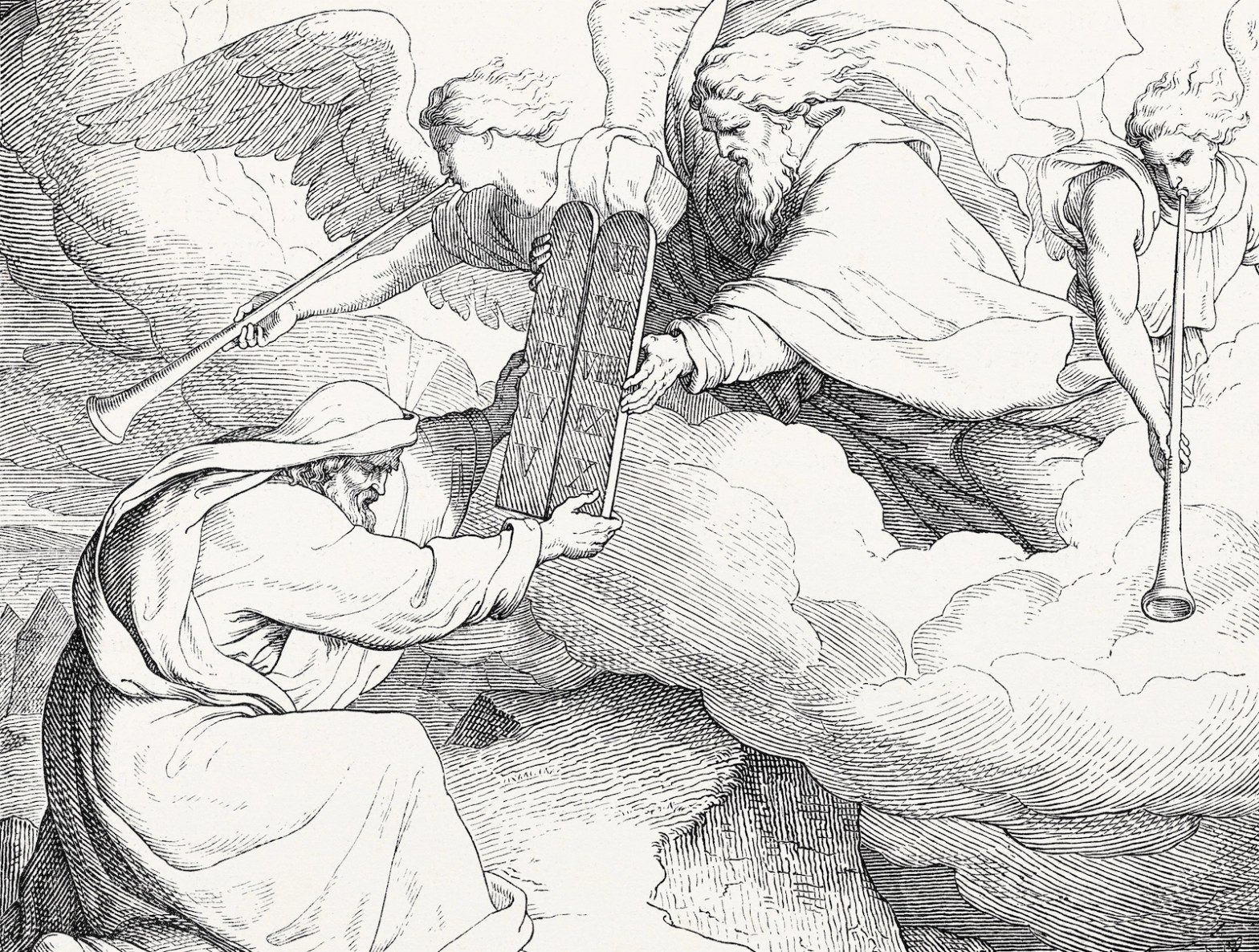
1. Godhead here in hiding Whom I do adore
Masked by these bare shadows, shape and nothing more.
See, Lord, at Thy service low lies here a heart;
Lost, all lost in wonder at the God Thou art.

2. Seeing, touching, tasting are in Thee deceived;
How says trusty hearing? that shall be believed;
What God’s Son has told me, take for truth I do;
Truth Himself speaks truly or there’s nothing true.

3. On the cross Thy Godhead made no sign to men;
Here Thy very manhood steals from human ken:
Both are my confession, both are my belief,
And I pray the prayer of the dying thief.

4. I am not like Thomas, wounds I cannot see,
But I plainly call Thee Lord and God as he:
This faith each day deeper be my holding of,
Daily make me harder hope and dearer love.
5. O Thou, our reminder of the Crucified,
Living Bread, the life of us for whom He died,
Lend this life to me, then; feed and feast my mind,
There be Thou the sweetness man was meant to find.

6. Like what tender tales tell of the Pelican,
Bathe me, Jesus Lord, in what Thy bosom ran:
Blood that but one drop of has the pow’r to win
All the world forgiveness of its world of sin.

7. Jesus Whom I look at shrouded here below,
I beseech Thee, send me what I thirst for so,
Some day to gaze on Thee face to face in light
And be blest forever with Thy glory’s sight.

The first verse is the very Catholic acknowledgement, directly from Scripture and from Tradition, that the consecrated bread after Mass has been said is the very Godhead in hiding, masked behind the appearances of bread. That’s why the Saint and the poet are lost, all lost in wonder at God being present in the little circle of bread. We cannot see it with the eyes of the flesh, cannot feel it with the hands, cannot taste it with the tongue, but we accept the word of Christ when He said, My flesh is real food, my blood is real drink, etc. That’s the subject of the second verse, and the third links the Bread of the Last Supper to the Body that hung upon the cross the next day. Just as Christ is hidden in the Blessed Sacrament, His divinity was hidden on the cross… but the Catholic makes profession in both cases, like the dying thief Dismas, who receives at once the blessing of Christ (this very day you will be with Me in paradise) and so was the thief who first stole paradise.

The fourth verse places us in the shoes of S. Thomas the Apostle, who after the Resurrection refused to believe Christ had risen until he could see and touch/feel. Should we respond like Thomas, or elsewise? Christ had said to Thomas in reply that He believed because he could see and touch, and that blessed are they who cannot do these things and yet believe. Hundreds of years later, then, S. Thomas Aquinas sings that he is not like the first S. Thomas who is able to see and touch, but he still makes profession, as he hopes we shall as well. I shall skip over the fifth verse, which asks of the Blessed Sacrament (Christ) to feed us and be our sweetness on this our pilgrimage through life and towards God, and the sixth verse (which is usually missing from our modern hymnals, which are probably embarrassed by its rather unscientific basis) addresses Christ in the Blessed Sacrament as the Holy Pelican, which refers to a medieval idea that the dying chicks of a pelican are revived by the mother piercing her own body and feeding them with her life-blood; this is of course scientifically incorrect, but it has persisted in our Catholic iconography, because of its reference to Christ reviving us with His Body and Blood in Holy Communion.

The final verse demonstrates the goal of the sacramental life of the Church, which is to acquire the beatific vision, that is, to reach the embrace of God that we call Heaven, where we shall be blest forever by the sight of God’s glory.


“Melchisedech, too, was there, the king of Salem. And he, priest as he was of the most high God, brought out bread and wine with him, and gave him this benediction, ‘On Abram be the blessing of the most high God, Maker of heaven and earth, and blessed be that most high God, Whose protection has brought thy enemies into thy power.’ To him, Abram gave tithes of all he had won.”

Book of Genesis 14: 18-20 [link]

Our readings on the feast day of Corpus Christi focus in one way or another upon this great gift of the Eucharist, the gift of Christ Himself. This gift of bread and wine, His Body and Blood, which He gave for the first time at the Last Supper is (as I have said) linked directly to the Sacrifice on the cross the following day. This is perfect love: the pouring out of the life of a father – a parent – so that his (her) children may live. Like that medieval pelican idea mentioned above. In the first reading, we hear an ancient echo of the gift of bread and wine in the story of Father Abraham and Melchisedech; the mysterious figure of Melchisedech is only again referenced in Scripture in Psalm 109(110), the famous Messianic psalm that refers to the Son of David who will conquer all things. In the second reading, we get the very first narrative of the Last Supper, for this letter of S. Paul’s was written long before the Gospels were read in the churches.

“The tradition which I received from the Lord, and handed on to you, is that the Lord Jesus, on the night when He was being betrayed, took bread, and gave thanks, and broke it, and said, ‘Take, eat; this is My Body, given up for you. Do this for a commemoration of Me.’ And so with the cup, when supper was ended, ‘This cup,’ He said, ‘is the new testament, in My Blood. Do this, whenever you drink it, for a commemoration of Me.’ So it is the Lord’s death that you are heralding, whenever you eat this bread and drink this cup, until He comes.”

First letter of S. Paul to the Corinthians, 11: 23-26 [link]

In the gospel story, we find a miracle of the superabundant dividing of bread and fish among thousands. At Mass, today and until the end of time, we witness and live the superabundant dividing of Christ among us. May He blessed forever in the Most Holy Sacrament of the Altar.

“But the multitudes heard of it, and followed Him; so He gave them welcome, and spoke to them of the kingdom of God, and cured those who were in need of healing. And now the day began to wear on; and the Twelve came and said to Him, ‘Give the multitudes leave to go to the villages and farms round about, so that they can find lodging and food; we are in desert country here.’ But He told them, ‘It is for you to give them food to eat.’ ‘We have no more,’ they said, ‘than five loaves and two fishes, unless Thou wouldst have us go ourselves and buy food for all this assembly.’ About five thousand men were gathered there. So He said to His disciples, ‘Make them sit down by companies of fifty;’ and they did this, bidding all of them sit down. Then He took the five loaves and the two fishes, and looked up to heaven, and blessed them, and broke, and gave them to His disciples, to set before the multitude. All ate and had their fill, and when what they left over was picked up, it filled twelve baskets.”

Gospel of S. Luke, 9: 11-17 [link]

The Love of the Heart of God (Pentecost Sunday)

Let’s talk about the Sacred Heart devotion really quickly. I realise that it is the great feast of Pentecost, but it is impossible to separate the love of the heart of Christ for His Church from the gift of the Holy Spirit that proceeds from that love. So, here, at some length, is what Our Lord said to the Visitation Sister S. Marguerite-Marie Alacoque in the seventeenth century, when He appeared to her and appointed her the Apostle of His Sacred Heart. He said (and we visualise a typical depiction of the Sacred Heart),

‘Behold this Heart which has so loved men that it has spared nothing, even to consuming itself to witness its love. And in return, I receive from most of them only ingratitude from their irreverences and their sacrileges and by the coldness and contempt that they have for Me in this sacrament of love.’

He declared that the greatest hurt He experienced was from those who are His own – His Christians, His Catholics – and yet have done these things. The heart of this devotion of the Church is therefore reparation – making personal offerings to Christ in an effort to console Him for this devastating response to His Sacrifice on the Cross. I and the Father are one, He had once said, they who reject Me reject not only me but Him Who sent Me. This devotion and its respective offerings are therefore given to both the Father and the Son.

So, let us participate to the greatest extent that we are able in this effort, that has been lauded and recommended to us by popes, Saints, and saintly popes. There is this excellent litany of the Sacred Heart, one of the approved litanies of the Church, which we tend to recite in the month of June: the month of the Sacred Heart. I encourage all of you to seek out this litany, either in old books or on the internet. I’ve put it up on this parish website. It addresses the Sacred Heart in many ways, begging the Lord for His mercy upon us and upon those who have so offended Him.

We in England have had the good fortune to be among the first to honour the Sacred Heart, for the confessor of S. Marguerite-Marie, the French Jesuit Blessed Claude de la Colombière, carried this devotion to us when he became chaplain and confessor to the Duchess of York (the king’s sister-in-law) in her London chapel at London S. James (AD 1676). Let us restore to prominence in this country the devotion to the Sacred Heart.


Our gospel reading this weekend demonstrates the relationship of love between Christ and the Church, here represented by the Twelve Apostles at the Last Supper.

“‘If you have any love for Me, you must keep the commandments which I give you; and then I will ask the Father, and He will give you another to befriend you, One Who is to dwell continually with you for ever. It is the truth-giving Spirit, for Whom the world can find no room, because it cannot see Him, cannot recognize Him. But you are to recognize Him; He will be continually at your side, nay, He will be in you. I will not leave you friendless; I am coming to you. It is only a little while now, before the world is to see Me no more; but you can see Me, because I live on, and you too will have life. When that day comes, you will learn for yourselves that I am in My Father, and you are in Me, and I am in you. The man who loves Me is the man who keeps the commandments he has from Me; and he who loves Me will win My Father’s love, and I too will love him, and will reveal Myself to him.‘ Here Judas, not the Iscariot, said to Him, ‘Lord, how comes it that Thou wilt only reveal Thyself to us, and not to the world?’ Jesus answered him, ‘If a man has any love for Me, he will be true to My word; and then he will win My Father’s love, and We will both come to him, and make Our continual abode with him; whereas the man who has no love for Me, lets My sayings pass him by. And this word, which you have been hearing from Me, comes not from Me, but from My Father Who sent Me. So much converse I have held with you, still at your side. He Who is to befriend you, the Holy Spirit, Whom the Father will send on My account, will in His turn make everything plain, and recall to your minds everything I have said to you.”

Gospel of S. John, 14: 15-26 [link]

Christ says that, to demonstrate that we love Him, we should follow His commandments. He Himself would demonstrate His love for us the next day, in His death upon the Cross. The whole goal and direction of the Christian life is the establishment of this relationship of love between us and Christ, individually and as a community. Pentecost is the result of this love between Christ and His Church, for it is via the gift of the Holy Spirit that God the Father and Christ our Lord, in the words of this Gospel, come to us and dwell with us and make us their own.

In the runup to Pentecost, as described by the first reading (the narrative of the Pentecost story from Acts), we find the Apostles gathered together in prayer before the grand event. Set aside the miraculous gift of tongues that they immediately received; these gifts are given as they are required, for the building up of the Church, and we shall ourselves probably not be able to talk to every tribe of mankind in their own languages after we are confirmed by the Bishop. What is more important about living this Christian life – living in the Holy Spirit – is what S. Paul describes in the second reading: it is the purifying of our attachments, and the establishing of our priorities in life.

“Those who live the life of nature cannot be acceptable to God; but you live the life of the spirit, not the life of nature; that is, if the Spirit of God dwells in you. A man cannot belong to Christ unless he has the Spirit of Christ. But if Christ lives in you, then although the body be a dead thing in virtue of our guilt, the spirit is a living thing, by virtue of our justification. And if the Spirit of Him Who raised up Jesus from the dead dwells in you, He Who raised up Jesus Christ from the dead will give life to your perishable bodies too, for the sake of His Spirit Who dwells in you. Thus, brethren, nature has no longer any claim upon us, that we should live a life of nature. If you live a life of nature, you are marked out for death; if you mortify the ways of nature through the power of the Spirit, you will have life. Those who follow the leading of God’s Spirit are all God’s sons; the spirit you have now received is not, as of old, a spirit of slavery, to govern you by fear; it is the spirit of adoption, which makes us cry out, ‘Abba, Father.’ The Spirit Himself thus assures our spirit, that we are children of God; and if we are His children, then we are His heirs too; heirs of God, sharing the inheritance of Christ; only we must share His sufferings, if we are to share His glory.”

Letter of S. Paul to the Romans, 8: 8-17 [link]

If we are to obey the commandments of Christ and remain in His love, the things of this world cannot be for us an end in themselves, but they should be a means and be carefully chosen so as to lead us to God. If they do not, put them away. If they are sinful and we recognise them as destructive of our relationship with Christ, push them far away.

For if we are truly the children of a heavenly Father, we shall seek always, not to hurt His Sacred Heart, but to honour His great love for us.

Novena to the Holy Ghost (9/9)

At the recommendation of the Bishop, I shall be posting the following novena to the Holy Spirit daily until the great feast of Pentecost in just over a week’s time. It was written specifically for PrayMoreNovenas.com and it is based on the Fruits of the Holy Spirit and a desire for sainthood.


Day IX: Goodness

+ In the name of the Father, and of the Son, and of the Holy Spirit. Amen.

Let us bow down in humility at the power and grandeur of the Holy Spirit. Let us worship the Holy Trinity and give glory today to the Paraclete, our Advocate.

O Holy Spirit, by Your power, Christ was raised from the dead to save us all. By Your grace, miracles are performed in Jesus’ name. By Your love, we are protected from evil. And so, we ask with humility and a beggar’s heart for Goodness within us.

We want to be like Your Saints in heaven. Holy Spirit, renew us by Your power with Your Goodness that we may bring the Good News to the world.

O Holy Spirit, we ask for the grace to persevere in Charity until the end. Amen.

Come Holy Spirit, fill the hearts of Your faithful and enkindle in them the fire of your love. Send forth Your Spirit and they shall be created. And You shall renew the face of the earth. O, God, Who by the light of the Holy Spirit, did instruct the hearts of the faithful, grant that by the same Holy Spirit we may be truly wise and ever enjoy His consolations, through Christ Our Lord, Amen.

+ In the name of the Father, and of the Son, and of the Holy Spirit. Amen.

Novena to the Holy Ghost (8/9)

At the recommendation of the Bishop, I shall be posting the following novena to the Holy Spirit daily until the great feast of Pentecost in just over a week’s time. It was written specifically for PrayMoreNovenas.com and it is based on the Fruits of the Holy Spirit and a desire for sainthood.


Day VIII: Self-control

+ In the name of the Father, and of the Son, and of the Holy Spirit. Amen.

Let us bow down in humility at the power and grandeur of the Holy Spirit. Let us worship the Holy Trinity and give glory today to the Paraclete, our Advocate.

O Holy Spirit, by Your power, Christ was raised from the dead to save us all. By Your grace, miracles are performed in Jesus’ Name. By Your love, we are protected from evil. And so, we ask with humility and a beggar’s heart for Your gift of Self-Control within us.

Your Martyrs had the overwhelming self-control to go joyfully to a painful death without shrinking from the opportunity to join You in heaven. Give us this self-control to have command over our emotions and desires that we may serve You more fully.

O Holy Spirit, we ask for the grace to grow in the virtue of fortitude. Amen.

Come Holy Spirit, fill the hearts of Your faithful and enkindle in them the fire of Your love. Send forth Your Spirit and they shall be created. And You shall renew the face of the earth. O, God, Who by the light of the Holy Spirit, did instruct the hearts of the faithful, grant that by the same Holy Spirit we may be truly wise and ever enjoy His consolations, through Christ Our Lord, Amen.

+ In the name of the Father, and of the Son, and of the Holy Spirit. Amen.

Novena to the Holy Ghost (6/9, 7/9)

At the recommendation of the Bishop, I shall be posting the following novena to the Holy Spirit daily until the great feast of Pentecost in just over a week’s time. It was written specifically for PrayMoreNovenas.com and it is based on the Fruits of the Holy Spirit and a desire for sainthood.


Day VI: Faithfulness

Day VII: Gentleness

+ In the name of the Father, and of the Son, and of the Holy Spirit. Amen.

Let us bow down in humility at the power and grandeur of the Holy Spirit. Let us worship the Holy Trinity and give glory today to the Paraclete, our Advocate.

O Holy Spirit, by Your power, Christ was raised from the dead to save us all. By Your grace, miracles are performed in Jesus’ name. By Your love, we are protected from evil. And so, we ask with humility and a beggar’s heart for Your gifts of Faithfulness and Gentleness within us.

You, O Lord, are ever faithful. You are faithful until the end. Though we are weak and distracted, please give us the grace to be faithful to You as you are to us!

Despite the gravity of our sins, O Lord you treat us with Gentleness. Dear Holy Spirit, give us your power to treat all in our lives with the Gentleness of the Saints.

O Holy Spirit, we ask for the grace to maintain the virtues of faithfulness and charity in our daily lives. Amen.

Come Holy Spirit, fill the hearts of Your faithful and enkindle in them the fire of Your love. Send forth Your Spirit and they shall be created. And You shall renew the face of the earth. O, God, Who by the light of the Holy Spirit, did instruct the hearts of the faithful, grant that by the same Holy Spirit we may be truly wise and ever enjoy His consolations, through Christ Our Lord, Amen.

+ In the name of the Father, and of the Son, and of the Holy Spirit. Amen.

Novena to the Holy Ghost (5/9)

At the recommendation of the Bishop, I shall be posting the following novena to the Holy Spirit daily until the great feast of Pentecost in just over a week’s time. It was written specifically for PrayMoreNovenas.com and it is based on the Fruits of the Holy Spirit and a desire for sainthood.


Day V: Kindness

+ In the name of the Father, and of the Son, and of the Holy Spirit. Amen.

Let us bow down in humility at the power and grandeur of the Holy Spirit. Let us worship the Holy Trinity and give glory today to the Paraclete, our Advocate.

O Holy Spirit, by Your power, Christ was raised from the dead to save us all. By Your grace, miracles are performed in Jesus’ Name. By Your love, we are protected from evil. And so, we ask with humility and a beggar’s heart for Your gift of Kindness within us. Jesus approached sinners with immense kindness. Holy Paraclete, please treat us humble sinners with the same kindness and give us the ability to treat all others with that kindness as well.

Holy Spirit we ask for the grace to be charitable, to love even those who despise us. Amen.

Come Holy Spirit, fill the hearts of Your faithful and enkindle in them the fire of Your love. Send forth Your Spirit and they shall be created. And You shall renew the face of the earth. O, God, who by the light of the Holy Spirit, did instruct the hearts of the faithful, grant that by the same Holy Spirit we may be truly wise and ever enjoy His consolations, through Christ Our Lord, Amen.

+ In the name of the Father, and of the Son, and of the Holy Spirit. Amen.

Novena to the Holy Ghost (4/9)

At the recommendation of the Bishop, I shall be posting the following novena to the Holy Spirit daily until the great feast of Pentecost in just over a week’s time. It was written specifically for PrayMoreNovenas.com and it is based on the Fruits of the Holy Spirit and a desire for sainthood.


Day IV: Patience

+ In the name of the Father, and of the Son, and of the Holy Spirit. Amen.

Let us bow down in humility at the power and grandeur of the Holy Spirit. Let us worship the Holy Trinity and give glory today to the Paraclete, our Advocate.

O Holy Spirit, by Your power, Christ was raised from the dead to save us all. By Your grace, miracles are performed in Jesus’ Name. By Your love, we are protected from evil. And so, we ask with humility and a beggar’s heart for Your gift of Patience within us.

O Holy Spirit, You give lavishly to those who ask. Please give us the patience of the Saints who are now with You in heaven. Help us to endure everything with an eternal patience that is only possible with Your help.

Holy Spirit we ask for the grace of perseverance in the Holy Faith until the end. Amen.

Come Holy Spirit, fill the hearts of Your faithful and enkindle in them the fire of Your love. Send forth Your Spirit and they shall be created. And You shall renew the face of the earth. O, God, Who by the light of the Holy Spirit, did instruct the hearts of the faithful, grant that by the same Holy Spirit we may be truly wise and ever enjoy His consolations, through Christ Our Lord, Amen.

+ In the name of the Father, and of the Son, and of the Holy Spirit. Amen.

Novena to the Holy Ghost (3/9)

At the recommendation of the Bishop, I shall be posting the following novena to the Holy Spirit daily until the great feast of Pentecost in just over a week’s time. It was written specifically for PrayMoreNovenas.com and it is based on the Fruits of the Holy Spirit and a desire for sainthood.


Day III: Peace

+ In the name of the Father, and of the Son, and of the Holy Spirit. Amen.

Let us bow down in humility at the power and grandeur of the Holy Spirit. Let us worship the Holy Trinity and give glory today to the Paraclete, our Advocate.

O Holy Spirit, by Your power, Christ was raised from the dead to save us all. By Your grace, miracles are performed in Jesus’ Name. By Your love, we are protected from evil. And so, we ask with humility and a beggar’s heart for Your gift of Peace within us. The Saints were tempted, attacked and accused by the devil who is the destroyer of peace. When we are accused by the devil, come to our aid as our Advocate and give us Peace that lasts through all trials!

O Holy Spirit we ask for the grace to remain at peace in every circumstance of life. Amen.

Come Holy Spirit, fill the hearts of Your faithful and enkindle in them the fire of Your love. Send forth Your Spirit and they shall be created. And You shall renew the face of the earth. O, God, who by the light of the Holy Spirit, did instruct the hearts of the faithful, grant that by the same Holy Spirit we may be truly wise and ever enjoy His consolations, through Christ Our Lord, Amen.

+ In the name of the Father, and of the Son, and of the Holy Spirit. Amen.

Come, Lord Jesus (Sunday VII of Easter)

I wanted to say a few words this weekend about singing at the Mass, because I know that some people have difficulty singing even the ordinary of the Mass – that is, the ordinary prayers and hymns of the Mass, such as the Gloria and the Sanctus.

I want to say to begin with that we have a long tradition of the Mass being sung in at least some of its parts on Sundays and holy days. Among the first historical witnesses to the Catholic liturgy was the presentation by the pagan scientist Pliny the Younger, a second-century Roman governor, who reported that the Christians gathered and sung hymns to the man Christ, as to a god. Long before this, S. Paul had recommended in his letter to the church at Ephesus that the Church be built up through the communal singing of psalms, hymns and spiritual canticles. An ancient adage, sometimes attributed to the great bishop S. Augustine of Hippo, also declares that to sing is to pray twice.

All of this doesn’t mean that we are to be great singers; some of us certainly may be, the rest of us are assuredly not. But early on, music in worship became for us a sign of solemnity, a sort-of joining in with the angels in the heavenly Temple. The chorus of those angels became ours, and we still call any kind of Christian group of singers a chorus, or in English choir. So, we must sing, no matter how badly.

The tradition of the Church has given us the most extravagant developments in polyphonic chant; some of you know of the venerable Elizabethan Thomas Tallis. While beautiful, this needs a degree of professionalism that our parishes cannot easily acquire. We remain with the bare bones of Latin and English chant, and popular hymns, all of which are handily printed in our hymn books.

Some of my fellow priests in other parts of England sing the entire Eucharistic prayer and many parishes sing the Our Father. I’ve decided that’s too much even for me, but I have for the last several years tried to preserve decent hymns, and the very basics of the Missal on Sundays and great feast days, and I would like to ask that you forgive my poverty of skill and persevere with me in singing with the angels.


“But he, full of the Holy Spirit, fastened his eyes on heaven, and saw there the glory of God, and Jesus standing at God’s right hand; ‘I see heaven opening,’ he said, ‘and the Son of Man standing at the right hand of God.’ Then they cried aloud, and put their fingers into their ears; with one accord they fell upon him, thrust him out of the city, and stoned him. And the witnesses put down their clothes at the feet of a young man named Saul. Thus they stoned Stephen; he, meanwhile, was praying; ‘Lord Jesus,’ he said, ‘receive my spirit;’ and then, kneeling down, he cried aloud, ‘Lord, do not count this sin against them.’ And with that, he fell asleep in the Lord. Saul was one of those who gave their voices for his murder.”

Acts of the Apostles, 7: 55-60 [link]

This first reading of ours this weekend, as we prepare for the great feast of Pentecost next weekend, is about a landmark event in the early history of the Church, for it was through the witness of this great deacon S. Stephen, our very first Christian martyr, and through the following persecution of the Church that missionaries flowed in strength from Jerusalem in every direction, establishing great Christian centres, such as Damascus and Antioch in Syria and Alexandria in Egypt.

Note the marks of the Holy Spirit at this end of Stephen’s earthly life: he looks heavenward and sees the glory of the Holy One, and when the his fellow Jews stoned him in their rage he repeated the prayer of his Lord upon the Cross: forgive them, for they know not what they do. The Church has always been harassed by the people of this world and always will be, because (as Christ said) she is not of this world and her priorities are not of this world. Stephen’s perseverance until death must be ours, by the grace of God and in the Holy Spirit. Pray for this constantly. The reward of perseverance is mentioned in the second reading this weekend, from the end of the book of Apocalypse, where Christ declares His victory and bids us wash our robes clean.

“‘Patience, I am coming soon; and with Me comes the award I make, repaying each man according to the life he has lived. I am Alpha, I am Omega, I AM before all, I AM at the end of all, the beginning of all things and their end. Blessed are those who wash their garments in the blood of the Lamb; so they will have access to the tree which gives life, and find their way through the gates into the city. No room there for prowling dogs, for sorcerers and wantons and murderers and idolaters, for anyone who loves falsehood and lives in it. I, Jesus, have sent My angel to give you the assurance of this in your churches; I, the root, I, the offspring of David’s race, I, the bright star that brings in the day. The Spirit and My Bride bid me come; let everyone who hears this read out say, Come. Come, you who are thirsty, take, you who will, the water of life; it is My free gift.’ To all who hear the words of prophecy this book contains, I give this warning. If anyone adds to them, God will add to his punishment the plagues which this book threatens; and if anyone cancels a word in this book of prophecy, God will cancel his share in the book of life, in the holy city, in all that this book promises. And he who gives this warning says, ‘Indeed I am coming soon.’ Be it so, then; come, Lord Jesus.”

Book of Apocalypse, 22: 12-20 [link]

We wash our robes clean constantly through the Sacraments of the Church, by which we who are thirsty come to the source of the water of life, which is Christ. And as the Bride of Christ, we call with the Holy Spirit, Maran-atha! Come, Lord Jesus. Return to us from behind the veil! That’s what Apocalypse means – ‘revelation’ – ‘unveiling.’ He is behind the veil of the heavenly Temple, and He prays there (as here in our gospel reading) that we be one in our faith, our communion, our prayer, a great light in a world of darkness, shining with the glory of Christ our Lord. A glory that we have not earned but which has been given us as a gift by Him Who loved us and desired that we should be His.

“‘It is not only for them that I pray;
I pray for those who are to find faith in Me through their word;
that they may all be one;
that they too may be one in us, as Thou, Father, art in Me, and I in Thee;
so that the world may come to believe that it is Thou Who hast sent Me.
And I have given them the privilege which Thou gavest to Me,
that they should all be one, as We are one;
that while Thou art in Me, I may be in them,
and so they may be perfectly made one.
So let the world know that it is Thou Who hast sent Me,
and that Thou hast bestowed Thy love upon them,
as Thou hast bestowed it upon Me.
This, Father, is My desire,
that all those whom Thou hast entrusted to Me may be with Me where I am,
so as to see My glory, Thy gift made to Me,
in that love which Thou didst bestow upon Me before the foundation of the world.
Father, Thou art just;
the world has never acknowledged Thee,
but I have acknowledged Thee,
and these men have acknowledged that Thou didst send Me.
I have revealed, and will reveal, Thy Name to them;
so that the love Thou hast bestowed upon Me may dwell in them,
and I, too, may dwell in them.'”

Gospel of S. John, 17: 20-26 [link]

Novena to the Holy Ghost (2/9)

At the recommendation of the Bishop, I shall be posting the following novena to the Holy Spirit daily until the great feast of Pentecost in just over a week’s time. It was written specifically for PrayMoreNovenas.com and it is based on the Fruits of the Holy Spirit and a desire for sainthood.


Day II: Joy

+ In the name of the Father, and of the Son, and of the Holy Spirit. Amen.

Let us bow down in humility at the power and grandeur of the Holy Spirit. Let us worship the Holy Trinity and give glory today to the Paraclete, our Advocate.

O Holy Spirit, by Your power, Christ was raised from the dead to save us all. By Your grace, miracles are performed in Jesus’ Name. By Your love, we are protected from evil. And so, we ask with humility and a beggar’s heart for Your gift of Joy within us.

All of the Saints are marked with an uncompromisable Joy in times of trial, difficulty and pain. Give us, O Holy Spirit, the Joy that surpasses all understanding that we may live as a witness to Your love and fidelity!

O Holy Spirit, we ask for the grace of perseverance in Joy, no matter the circumstances. Amen.

Come Holy Spirit, fill the hearts of your faithful and enkindle in them the fire of Your love. Send forth Your Spirit and they shall be created. And You shall renew the face of the earth. O, God, who by the light of the Holy Spirit, did instruct the hearts of the faithful, grant that by the same Holy Spirit we may be truly wise and ever enjoy His consolations, through Christ Our Lord, Amen.

+ In the name of the Father, and of the Son, and of the Holy Spirit. Amen.

Novena to the Holy Ghost (1/9)

At the recommendation of the Bishop, I shall be posting the following novena to the Holy Spirit daily until the great feast of Pentecost in just over a week’s time. It was written specifically for PrayMoreNovenas.com and it is based on the Fruits of the Holy Spirit and a desire for sainthood.


Day I: Charity

+ In the name of the Father, and of the Son, and of the Holy Spirit. Amen.

Let us bow down in humility at the power and grandeur of the Holy Spirit. Let us worship the Holy Trinity and give glory today to the Paraclete, our Advocate.

O Holy Spirit, by Your power, Christ was raised from the dead to save us all. By Your grace, miracles are performed in Jesus’ Name. By Your love, we are protected from evil. And so, we ask with humility and a beggar’s heart for Your gift of Charity within us.

The great charity of all the host of Saints is only made possible by your power, O Divine Spirit. Increase in me the virtue of charity that I may love as God loves with the selflessness of the Saints.

O Holy Spirit, we ask for the grace to persevere in the virtue of holy Charity until the end. Amen.

Come Holy Spirit, fill the hearts of your faithful and enkindle in them the fire of your love. Send forth Your Spirit and they shall be created. And You shall renew the face of the earth.

O, God, Who by the light of the Holy Spirit, did instruct the hearts of the faithful, grant that by the same Holy Spirit we may be truly wise and ever enjoy His consolations, through Christ Our Lord, Amen.

+ In the name of the Father, and of the Son, and of the Holy Spirit. Amen.

The Apostolic Church (Sunday VI of Easter)

With one last Sunday of May, I wondered if I should end my survey of Marian devotions with the Brown Scapular of the Carmelites, or with the Miraculous Medal of S. Catherine Labouré. I thought I’d spend more time with the Scapular in October and remain this weekend with the Medal, because of the complex of imagery that this rather simple device includes.

It was in the 1830s that the Charity Sister, S. Catherine, saw the visions of Our Lady in the chapel of her community house on the Rue de Bac, near central Paris. She saw a vision of the Immaculate standing upon a globe, with rays of light streaming from her hands. And she saw the words, O Mary, conceived without sin, pray for us who have recourse to thee. She was to put this image onto a cast medal, and you can see how the typical medal looks from the picture above. All who wear this medal are to receive signal graces through the hands of OL. It is my belief that the figure on the medal is a very pregnant Lady, and the graces that flow from her hands have their source in the Child Who lives within her.

When the promises associated with this medal began to be fulfilled, the French began calling it the Miraculous Medal, and the name has stuck. Those words (above) associated with the medal are similar to the Hail Mary, and are reputedly very powerful. On the reverse side of the medal, we find that the intercession of our Lady for us is intertwined as a great letter M with the cross of her Son. Her ministry is intertwined with His. Below this symbol we see the Sacred Heart of our Lord – which demonstrates the intense love of God for mankind – set beside the Immaculate Heart of our Lady – which brought that Sacred Heart into this world, and works together with it to bring about our eternal salvation. The twelve stars that enclose this whole refer to the vision of S. John in the book of Apocalypse, when the Lady appeared to him crowned with twelve stars. This medal is a compact summary of the mission of OL within the Church, upon which we as Catholics wonderfully rely. I recommend it for wide use, as I recommend also the Rosary of our Lady.


Our readings at Mass this weekend give us a picture of the Apostolic ministry of the early Church, which has come down to us through the work of the bishops of the Church. The second reading from the book of Apocalypse demonstrates the holy city of Jerusalem, which I shall call a temple of living stones – the Church – descending from heaven.

“And he carried me off in a trance to a great mountain, high up, and there shewed me the holy city Jerusalem, as it came down, sent by God, from heaven, clothed in God’s glory. The light that shone over it was bright as any precious stone, as the jasper when it is most like crystal; and a great wall was raised high all round it, with twelve gates, and twelve angels at the gates, and the names of the twelve tribes of Israel carved on the lintels; three gates on the east, three on the north, three on the south, three on the west. The city wall, too, had twelve foundation-stones; and these, too, bore names, those of the Lamb’s twelve Apostles. The angel who was speaking to me had a rod of gold for a rule, to measure the city, and its gates, and its wall. The city lies foursquare, the same in its length as in its breadth, and when he measured it with his rod, he counted twelve thousand furlongs. Length and breadth and height are everywhere equal. And when he measured its wall, he counted a hundred and forty-four cubits, reckoned by the measure of a man, that is, of an angel. The fashioning of its wall was of jasper, but the city itself was pure gold, that seemed to have the purity of glass. And the foundations of the city wall were worked in every kind of precious stone. The first foundation was a jasper, the second a sapphire, the third a chalcedony, the fourth an emerald; the fifth a sardonyx, the sixth a sardius, the seventh a chrysolite, the eighth a beryl; the ninth a topaz, the tenth a chrysoprase, the eleventh a jacynth, the twelfth an amethyst. And the twelve gates were twelve single pearls, one pearl for each gate; and the street of the city was of pure gold, that seemed like transparent glass. I saw no temple in it; its temple is the Lord God Almighty, its temple is the Lamb. Nor had the city any need of sun or moon to shew in it; the glory of God shone there, and the Lamb gave it light.

Book of Apocalypse, 21: 10-23 [link]

This city has no temple, as S. John says, for its temple is God and the Lamb – the city is the temple, where God dwells. There are twelve gates to access the city and those are the twelve tribes of Israel. When we are baptised, we are joined to the twelve tribes of the Hebrews. There are twelve foundations stones upon which the Church here described stands, and those are the twelve apostles, minus Judas, plus S. Matthias. It is a marvellous picture of the Church, and we can see in the first reading today something of the ministry of the Apostles, for when some renegades went around places like Antioch without the Apostolic authority, suggesting that all of us should become Jews before we can be baptised Christians, the Apostles and the other leaders of the Church in Jerusalem had a bit of a council and decided that, No, Christians need not be inducted into Judaism before they are baptised.

“Thereupon it was resolved by the Apostles and presbyters, with the agreement of the whole church, to choose out some of their own number and despatch them to Antioch with Paul and Barnabas; namely, Judas who was called Barsabas, and Silas, who were leading men among the brethren. And they sent, by their hands, this message in writing; ‘To the Gentile brethren in Antioch, Syria and Cilicia, their brethren the Apostles and presbyters send greeting. We hear that some of our number who visited you have disquieted you by what they said, unsettling your consciences, although we had given them no such commission; and therefore, meeting together with common purpose of heart, we have resolved to send you chosen messengers, in company with our well-beloved Barnabas and Paul, men who have staked their lives for the name of our Lord Jesus Christ. We have given this commission to Judas and Silas, who will confirm the message by word of mouth. It is the Holy Spirit’s pleasure and ours that no burden should be laid upon you beyond these, which cannot be avoided; you are to abstain from what is sacrificed to idols, from blood-meat and meat which has been strangled, and from fornication. If you keep away from such things, you will have done your part. Farewell.'”

Acts of the Apostles, 15: 22-29 [link]

Notice how the Apostles and bishops boldly declare in this apostolic exhortation that this decision of their Council was both of the Holy Spirit and theirs too. This is the authority of Christ the Head of the Church, being exercised by the men He appointed to do it. Interestingly, also, we see in this fifteenth chapter of the Acts of the Apostles some more of the organisation of the early hierarchy: (i) the Apostle S. Peter stepping aside to allow the council to be chaired by the bishop of Jerusalem, S. James, (ii), the missionary priests S. Paul and S. Barnabas needing the Apostolic authority to secure their own work in the north, in Antioch, (iii) and this last requiring the Apostles in Jerusalem to send delegates (or envoys, legates, ambassadors) along with Paul and Barnabas, named here as Judas Barsabbas and Silas.

And as we get closer to Pentecost, we shall consider more and more the work of the Holy Spirit within the Church, exercising His divine power through the appointed men, our bishops and priests. The gospel story tells of the promise of Christ, that the Holy Spirit would continue to teach the Apostles (and by extension their successors the bishops), remind them of the gospel message which they are to bring to the rest of us, and pour out peace and unity within the body of the Church. I am going, Christ seems to say, but I’m not really going at all, for you shall have My Holy Spirit.

“Jesus answered him, ‘If a man has any love for Me, he will be true to My word; and then he will win My Father’s love, and We will both come to him, and make our continual abode with him; whereas the man who has no love for Me, lets My sayings pass him by. And this word, which you have been hearing from Me, comes not from Me, but from My Father Who sent Me. So much converse I have held with you, still at your side. He who is to befriend you, the Holy Spirit, Whom the Father will send on My account, will in His turn make everything plain, and recall to your minds everything I have said to you. Peace is My bequest to you, and the peace which I will give you is Mine to give; I do not give peace as the world gives it. Do not let your heart be distressed, or play the coward. You have heard Me say that I am going away and coming back to you. If you really loved Me, you would be glad to hear that I am on My way to My Father; My Father has greater power than I. I have told you of this before it happens, so that when it happens you may learn to believe.”

Gospel of S. John, 14: 23-29 [link]

Prayer and fasting (Sunday V of Easter)

I thought I’d end my quick survey of the Rosary this weekend. I had intended to talk generally about Marian devotion, and I think that I have so far, because the Rosary is the devotion that comes to our minds when we think of Marian devotion.

I thought I would end with practical suggestions about the Rosary:

  • First of all, taking the time, and regularity – the requirement of our Lady was commitment. When the fifteen decades of the rosary every day seemed too long for us, she permitted a division into three thirds of five decades each, which we have distributed over a week: the joyful, the sorrowful and the glorious. But she calls ideally for at least the daily five decades.
  • Second, do not leave the Rosary to the end of the day, for when we are tired, even acts of love become a chore.
  • Third: everybody prays differently, so don’t feel that you have to say the Rosary on your knees before the crucifix, take it to the road, to the garden, wherever you can find a prayerful moment.
  • Fourth, use images and music to assist you, for we as humans are a sensory species and we can better focus our minds with a good picture or some nice churchy music; use technology, these telephones with the internet on them to find classical paintings of the mysteries of the Rosary by Christian artists.
  • Fifth, again following on from the suggestion about images and music, you can possibly do other things while saying the Rosary; I have looked through the illustrations of books on biblical archeology and even a child’s picture Bible while saying my daily Rosary. Television and the internet have trained us to do multiple things at once, and we should be able to use that to our spiritual advantage.
  • Sixth, use the Rosary as an intercessory prayer: many of you are extremely prayerful and have prayer intentions for family members and friends, and other people in need of prayer – you may dedicate every decade of your Rosary, or every Hail Mary of every decade for a different prayer intention. Wonders may follow, for our Lady is very attentive.
  • Seventh (and it’s nice to end on seven), I shall tell you of a personal practice. My life is a life of interruptions, one of the reasons why I cannot do anthing really well. So, I say the rosary sometimes not all at once within an hour, but gradually during the day in bits and pieces. I can then begin with the Annunciation at seven in the morning and end with the Coronation of the Virgin at eleven at night.

“In that city too [Paul and Barnabas] preached, and made many disciples; then they returned to Lystra, Iconium and Antioch, where they fortified the spirits of the disciples, encouraging them to be true to the faith, and telling them that we cannot enter the kingdom of heaven without many trials. Then, with fasting and prayer, they appointed presbyters for them in each of the churches, and commended them to the care of the Lord in whom they had learned to believe. So they passed through Pisidia, and reached Pamphylia. They preached the word of the Lord in Perge, and went down to Attalia, taking ship there for Antioch, where they had been committed to God’s grace for the work they had now achieved. On their arrival, they called the Church together, and told the story of all God had done to aid them, and how, through faith, he had left a door open for the Gentiles. And they stayed there a considerable time with the disciples.”

Acts of the Apostles, 14: 20-27 [link]

Speaking of not being able to work well for interruptions, I find the pursuits of these Apostolic figures in our first reading to be heartening. Not because I could ever be a Paul or a Barnabas, but because these extraordinary men were able to encourage people like you and me, whom they were visiting to faith and perseverance. Note their recommendations to the local churches: prayer and fasting. Let us take our Marian and other devotions in the circumstance of that prayer and fasting, which was recommended to the Church by the Apostles. Paul and Barnabas also prayed for the local Christians to commend them to Christ, and may they pray for us too. And let us pray for each other, and encourage each other in the difficult task of building up our faith in a faithless world.

“Then I saw a new heaven, and a new earth. The old heaven, the old earth had vanished, and there was no more sea. And I, John, saw in my vision that holy city which is the new Jerusalem, being sent down by God from heaven, all clothed in readiness, like a bride who has adorned herself to meet her husband. I heard, too, a voice which cried aloud from the throne, ‘Here is God’s tabernacle pitched among men; He will dwell with them, and they will be His own people, and He will be among them, their own God. He will wipe away every tear from their eyes, and there will be no more death, or mourning, or cries of distress, no more sorrow; those old things have passed away.’ And He Who sat on the throne said, ‘Behold, I make all things new…'”

Book of Apocalypse of S. John, 21: 1-5 [link]

We are a holy community, sanctified by Christ to be a fitting dwelling place for His Holy Spirit. This second reading of ours (above) pictures our community in the universal Church as an actual building of living stones descending from God out of heaven, the Bride of Christ. And the angel cries out, ‘Behold the Church, where God lives among men, making His home among them, His name forever being God-with-them’ – this is a variant of Emmanuel, which means God-with-us. For when the Church has descended out of heaven through the preaching of the Apostles, the bishops and the priests and through the Sacramental system established by Christ, as the Holy One says, He has made the whole of creation new again.

As He says in the gospel extract (below), His glory began with the completion of His consecrated life on earth: it was completed in His death upon that cross. He ended His life in the way He lived it, in a great gesture of self-sacrificial love. He expects us to do the same with our lives, so that all know that we belong to Him.

“When [Judas] had gone out, Jesus said, ‘Now the Son of Man has achieved His glory, and in His glory God is exalted. Since, in His glory, God is exalted, it is for God to exalt Him in His own glory, and exalt Him without delay. It is only for a short time that I am with you, My children. You will look for Me, and now I have to tell you what I once told the Jews, you cannot reach the place where I am. I have a new commandment to give you, that you are to love one another; that your love for one another is to be like the love I have borne you. The mark by which all men will know you for My disciples will be the love you bear one another.”

Gospel of S. John, 13: 31-35 [link]

The Lord rules me (Sunday IV of Easter)

I began talking about the Rosary last weekend, and I described the literal string of prayers that we say as flowers in a crown that we present to our Blessed Lady. There is a type of satisfaction we gain from simply getting through these prayers as a gift to our Lady (because of our affection for her as her sons and daughters), and in fulfilling her desire that we meditate as we do so on the several mysteries of the life she shared with her Son. This is not quite so easy as it sounds, especially if you leave the rosary for the end of the day, as I sometimes do.

Today, I thought I’d also run through some of the original promises made by her through S. Dominic and Blessed Alan to all those who would take up her Rosary. I already mentioned last week that the Rosary gradually destroys vice and sin within us and increases virtue, and those are some of the promises. Our Lady also said that those who say the Rosary recommend themselves to her in a particular way and she would defend them from misfortune and eternal death. Moreover, she said that they would not die without receiving the Sacraments, such as when death occurs suddenly, which we all hope will not happen to us. She said she would personally retrieve from purgatory those who made the Rosary a particular devotion of theirs, and that those who preached it or spread it to others in any way would be helped by her in necessity and would acquire the patronage of multiple Saints and angels.

When I was looking through these promises again this last week, I was thinking of S. Bernadette of Lourdes and the little shepherd Saints of Fátima and considering that these simple children and their parents and family who taught them basic devotion got it right, and that it was their very simplicity that won them the graces of God, by which they were able to receive the visions of our Lady and becomes apostles of the Rosary. Lots of us today say the Rosary because of the inspiration of these quite recent visionaries of Lourdes and Fátima.

Encouragingly, among the final assertions of our Lady to S. Dominic was that those who recite the Rosary are her beloved children and the brothers and sisters of her divine Son.


This fourth Sunday of Easter is what we have come to call Good Shepherd Sunday, because of the Gospel reading, and what I shall now say I have said many times before. If we go back to the Garden of Eden, we may remember that the great sin of Adam and Eve, beyond disobedience, was their determination to be their own moral guides, to decide for themselves, to shake off the rule of God over their hearts. Through the Old Testament, through Moses the Law-giver and the several prophets, God our Lord sought to restore that rule of His over the hearts of a chosen people, which rule would one day extend to the ends of the earth through the ministry of the Church.

“The Lord is my Shepherd; how can I lack anything?
He gives me a resting-place where there is green pasture,
leads me out to the cool water’s brink,
refreshed and content.
As in honour pledged, by sure paths He leads me;
dark be the valley about my path,
hurt I fear none while He is with me;
Thy rod, Thy crook are my comfort.
Envious my foes watch,
while Thou dost spread a banquet for me;
richly Thou dost anoint my head with oil, well-filled my cup.
All my life Thy loving favour pursues me;
through the long years
the Lord’s house shall be my dwelling-place.”

Psalm 22 (23) [link]

The first line of this psalm in the Latin and the early English translations is ‘the Lord rules me,’ which we now often read as ‘the Lord is my Shepherd.’ In the life, sufferings and death of our Lord, we are given to see the Heart of God, the Sacred Heart, Which does not wish for men and women to die, but to live forever with Him. He invites us then to respond in love to His invitation, that we may permit Him to rule over our hearts again, to direct us. He doesn’t take away our freedom – He respects us too much to do that – rather, He invites us to choose Him freely, and so to choose eternal life. He seeks to draw us away from the fatal choice that Adam and Eve made and towards the one that was made instead by our blessed Lady and her divine Son.

All the preachings of the teachers of the Church since the early days of the Apostles and men like Paul and Barnabas in our first reading were intended to do this. In effect, the Church as our mother, through the Sacraments, seeks to dress us all in the white garments of baptism described in our second reading today and stand us before the throne of God and the Lamb in innocence and purity. All of this begins with a first effort on our part to follow after Christ, the Good Shepherd, Whose voice we know, under Whose rule we rejoice, to Whom we hope to forever belong.

“My sheep listen to My voice, and I know them, and they follow Me. And I give them everlasting life, so that to all eternity they can never be lost; no one can tear them away from My hand. This trust which My Father has committed to Me is more precious than all else; no one can tear them away from the hand of My Father. My Father and I are one.”

Gospel of S. John, 10: 27-30 [link]

Bearing witness (Sunday III of Easter)

It’s the month of May and I thought I would talk a little about the Rosary. I shall use the contents of a book called the Secret of the Rosary by the French priest S. Louis-Marie de Montfort. We don’t always remember why this great prayer of the Church is called ‘the rosary.’ It has also been called a coronet or crown, so our strings of beads may also be called coronets. And we traditionally crown our Lady with flowers in the month of May, don’t we? At least, we used to. Some parishes still do.

S. Louis-Marie called the beads of the rosary ‘roses,’ and his book is built from 53 sections, just like the 53 beads on our coronets with which we say the Ave Maria (Hail Mary). The Rosary as a prayer focuses upon the life of Christ as it was shared with our Lady, and S. Louis-Marie therefore called the Rosary a mystical rose tree. Mysticism involves spiritual union with the Holy One, acquired through prayer and meditation. The Rosary, you see, is not only about saying strings of Paters (Our Fathers) and Aves (Hail Marys), but more importantly about meditating on and imitating the lives of Christ and His mother, and to thus acquiring salvation through lives of virtue. Specifically, we are taught through the regular use of the Rosary the virtues of humility, obedience and charity.

Our Saint is determined to show us, through a quick history, both the divine origins of the Rosary and the beneficial effect it has had in the lives of Christian men and women, especially when it was recited in community. Because of the grace of God that flows through the Rosary from the lives of our Lord and His holy Mother, the Rosary then becomes a ‘battering ram’ against sin and temptation, and brings with it conversion and sanctification. Those of us who say the Rosary regularly know that it is a rather simple prayer, quickly learnt, and that is a great blessing, for it allows every type of person to make use of it, from the eminent scholastic to the humble labourer. What is more difficult than the words and the system of the Rosary is establishing the regular commitment of time and building the focus required to best say the Rosary.

We may remember how as children when the world seemed too large and frightening, we felt a great comfort in holding on to Mum’s hand, or indeed Dad’s. And here, we do the same again, for as we go through the difficulties of this life on earth, we have the comforting presence of the holy Mother.


Today is the memorial day of the English Martyrs. In these countries, when the Catholic Church came under enormous attack from the sixteenth century onwards, it is interesting to see how the Saints hung on to their rosaries. The rosary became one of the principal ways by which the government could arrest our priests and basically smoke out secret Catholics. When the Irish were attacked by their anti-Catholic rulers, men like Cromwell would talk about being unable to pry the rosaries out of the hands of the stubborn Catholics.

“…and they brought [the Apostles] in and bade them stand before the Council, where the high priest questioned them. ‘We warned you in set terms,’ he said, ‘not to preach in this Man’s Name, and you have filled all Jerusalem with your preaching; you are determined to lay this Man’s death at our door.’ Peter and the other Apostles answered, ‘God has more right to be obeyed than men. It was the God of our fathers that raised up Jesus, the Man you hung on a gibbet to die. It is God that has raised Him up to His own right hand, as the Prince and Saviour Who is to bring Israel repentance, and remission of sins. Of this, we are witnesses; we and the Holy Spirit God gives to all those who obey Him.’ On hearing this they were cut to the quick, and designed to kill them… so they sent for the Apostles and, after scourging them, let them go with a warning that they were not on any account to preach in the Name of Jesus. And they left the presence of the Council, rejoicing that they had been found worthy to suffer indignity for the sake of Jesus’ Name.”

Acts of the Apostles, 5: 27-33, 40-41 [link]

In this first reading of ours this weekend, we see the Apostles being harangued by the high-priest Caiaphas, who had thought that he was finished with this annoying Jewish sect when he had got the Roman governor to execute our Lord a few weeks earlier. Now, he was unable to contain even His Apostles, who had suddenly become very bold indeed. He couldn’t pry their rosaries from out of their hands, so to speak. For they answered, as our glorious martyrs did during the Reformation, Obedience to God comes before obedience to men. S. Thomas More had an excellent variant on this when he said, I die the king’s good servant, but God’s first.

We shall have newer and newer opportunities to say similar things in our own times, for it is never comfortable to be a Catholic in this world. We too, like the Apostles and the English and Irish martyrs, should be glad to have the honour to suffer humiliation and indignity for the sake of the Name of Christ. For there are always people in this world who will ask us to bow down to them and their new ideas, but as in the second reading, we Christians are ranged around the throne of God, rosaries in hand, crying out…

“Then I heard, in my vision, the voices of a multitude of angels, standing on every side of the throne, where the living figures and the elders were, in thousands of thousands, and crying aloud, ‘Power and Godhead, wisdom and strength, honour and glory and blessing are His by right, the Lamb that was slain.’ And every creature in heaven and on earth, and under the earth, and on the sea, and all that is in it, I heard crying out together, ‘Blessing and honour and glory and power, through endless ages, to Him Who sits on the throne, and to the Lamb.’ Then the four living figures said, ‘Amen;’ and the twenty-four elders fell prostrate, worshipping Him Who lives for ever and ever.”

Book of Apocalypse (aka. Revelation), 5: 11-14 [link]

Our gospel story as well as being a post-Resurrection appearance of Christ is also a type of parable, even a Eucharistic parable. Because there are the golden shores of Holy Mass, where we are often fed by Christ after a long and seemingly futile struggle. If Holy Church is the barque of Peter, as we still say, and we are all in the boat with the Apostles, sailing the choppy waters of this world with difficulty, and with little reward (catching nothing all night), we still see the Holy One beckoning to us from the sacred shores of an eternal morning, where we shall one day wearily reach, and hear with joy the words, ‘Come and have breakfast.’

“Jesus appeared to His disciples again afterwards, at the sea of Tiberias, and this is how He appeared to them. Simon Peter was there, and with Him were Thomas, who is also called Didymus, and Nathanael, from Cana of Galilee, and the sons of Zebedee, and two more of His disciples. Simon Peter told them, ‘I am going out fishing;’ and they said, ‘We, too, will go with thee.’ So they went out and embarked on the boat, and all that night they caught nothing. But when morning came, there was Jesus standing on the shore; only the disciples did not know that it was Jesus. ‘Have you caught anything, friends,’ Jesus asked them, ‘to season your bread with?’ And when they answered ‘No,’ He said to them, ‘Cast to the right of the boat, and you will have a catch.’ So they cast the net, and found before long they had no strength to haul it in, such a shoal of fish was in it. Whereupon the disciple whom Jesus loved said to Peter, ‘It is the Lord.’ And Simon Peter, hearing him say that it was the Lord, girded up the fisherman’s coat, which was all he wore, and sprang into the sea. The other disciples followed in the boat (they were not far from land, only some hundred yards away), dragging their catch in the net behind them. So they went ashore, and found a charcoal fire made there, with fish and bread cooking on it…”

Gospel of S. John, 21: 1-9 [link]

Confession, reconciliation and Divine Mercy (Sunday II of Easter)

At the very beginning of Holy Week, I had said that I wanted to talk about Marian devotion, and I introduced the Blessed Virgin as the Davidic queen-mother, the advocate who traditionally sat on the right hand side of the King of Judah. When we approach our Lady in prayer, asking for her intercession and for her assistance, we may keep this image of the royal court of Christ in mind.

It reminds me of that episode in the gospels, when two of our Lord’s cousins, the Apostles S. James and S. John, brothers and sons of Zebdai/Zebedee, asked for places one on the left and the other on the right of Christ in His glory. Considering Christ’s reply that they didn’t know what they were asking for – because His glory arrived upon the Cross on Good Friday – and that those places belonged to others, we remember that James was the first of the Apostles to be martyred, and we remember that John suffered the pain of standing at the foot of the Cross, as he supported the Blessed Virgin in her great distress as Our Lady of Sorrows. And she, standing at the foot of the Cross, is usually pictured on the right of her Son, and S. John on the left.

Most of us men whose mothers still live (and those of us who remember our mothers) know the power they have over us. For my part, although my mother died many years ago… the mother of the parish priest often has a powerful presence in his parish, if she chances to live there. The mother of a bishop would be more powerful still. Because anybody who wanted something from me would have a better chance going to my mum about it. There is that interesting episode in the legend of King Solomon, when one of his (older) half-brothers, a man called Adoniyah, seeking to supplant Solomon, sought the indulgence of the queen mother. He ultimately failed, but he made his best try – he tried to get her on his side. The king listens to his mother…

“As for Adonias, son of Haggith, he gained access to Bethsabee, king Solomon’s mother, telling her that he came on a peaceful errand; there was a matter he would confide to her. So she bade him speak out, but still he hesitated; ‘Once,’ said he, ‘the throne was mine, and all Israel had chosen me for their king; now the royal power has changed hands, and gone to my brother; it was God’s will. There is only one request now that I would make of thee; pray do not disappoint me.’ And still she bade him speak out. ‘My request is,’ said he, ‘that thou wouldst say a word for me to king Solomon; there is nothing he can refuse thee. Bid him give me Abisag the Sunamite for my wife.’ ‘Why, yes,’ answered Bethsabee, ‘I will speak to the king on thy behalf.’ Bethsabee, then, made her way to king Solomon, to prefer Adonias’ request; the king rose to meet her and bowed low, then he sat down on his throne again, and a throne was brought for her, the king’s mother, to sit down at his right hand. ‘There is a light request,’ she told him, ‘that I would make of thee; pray do not disappoint me.’ ‘Make thy request, mother,’ said he; ‘I will not turn a deaf ear to it.’

Third book of the Kings (aka. I Kings), 2: 13-20 [link]

We are all of us sinners, some of us greater sinners than others. We cannot do much better than to approach the Lady standing at the foot of the Cross, who received us as her children as her Son was in great distress and dying. For His sake she will hear us and present our case to Him.

In the next few weeks, I shall speak about the Holy Rosary and one or two other Marian devotions. Since May is the month of our Lady, that would be most appropriate.


This second Sunday of Easter the Holy Father John Paul II named for us Divine Mercy Sunday, and this year we would do well to lean against that promise of Divine Mercy, for it is a Jubilee year, and from the most ancient times in the Old Testament, jubilees was connected with restitution, with restoration. We are best restored as Christians when we regularly undergo the rites of holy religion, by receiving the Sacraments. The two Sacraments we regularly receive are Confession and Holy Communion. Unless, of course, we are very ill and have received the Sacrament of the Sick often.

If we are going to Confession very irregularly or not at all, we really must do something about it; it is precisely through regular confession that we lay our sinful behaviours and habits before the throne of the Holy One and remake our commitment to Him – our commitment in love to do good and avoid evil. And it is this that restores us regularly, not only in jubilee years. But jubilee years do serve to focus our minds further upon restoration in Christ.

In our gospel reading this weekend, S. John gives us the origins of the Sacrament of Reconciliation, as Christ gives His Apostles the authority to forgive sin, an authority they later handed down to their bishops, and the bishops to their priests.

“And now it was evening on the same day, the first day of the week; for fear of the Jews, the disciples had locked the doors of the room in which they had assembled; and Jesus came, and stood there in their midst; ‘Peace be upon you,’ He said. And with that, He shewed them His hands and His side. Thus the disciples saw the Lord, and were glad. Once more Jesus said to them, ‘Peace be upon you; I came upon an errand from My Father, and now I am sending you out in My turn.’ With that, He breathed on them, and said to them, ‘Receive the Holy Spirit; when you forgive men’s sins, they are forgiven, when you hold them bound, they are held bound.’

Gospel of S. John, 20: 19-23 [link]

We see the authority of the Apostles to forgive sins in the first reading, where the very shadow of the Apostle S. Peter was sought as a means of curing illness.

“And there were many signs and miracles done by the Apostles before the people. They used to gather with one accord in Solomon’s porch. No one else dared to join them, although the people held them in high honour, and the number of those who believed in the Lord, both men and women, still increased; they even used to bring sick folk into the streets, and lay them down there on beds and pallets, in the hope that even the shadow of Peter, as he passed by, might fall upon one of them here and there, and so they would be healed of their infirmities. From neighbouring cities, too, the common people flocked to Jerusalem, bringing with them the sick and those who were troubled by unclean spirits; and all of them were cured.”

Acts of the Apostles, 5: 12-16 [link]

In the Jewish mind, we know that physical illness was connected with sin, so that a sick person was thought to be suffering the consequences of sin. We might as well say that the people being laid before the Apostles in the streets of Jerusalem for healing were penitents who were looking not only for physical healing but for the forgiveness of Christ and His healing, administered through these Twelve ordained men.

So, let us meditate today on the power of Divine Mercy, Christ’s call to repentance, the agency of the Christian priesthood in this, and the endless love of the heart of God our Lord.

The Bishop expresses his sorrow following the death of Pope Francis

In a statement earlier today, Bishop McKinney said: “I am deeply saddened to learn of the death of the Holy Father, Pope Francis. The Pope has left an indelible mark on the Church and the world, as a man of great warmth and humility who made use of his global prestige to highlight and to listen to the concerns of the poorest and most marginalised people across the world. The loss of the Holy Father will be deeply felt in all of our diocesan communities and well beyond, but I believe his legacy will live on.

“I was very privileged to meet Pope Francis in Rome on two occasions — first, upon my appointment as Bishop of Nottingham in May 2015, and once again during the ad limina visit of the Catholic Bishops of England and Wales to Rome in 2018. Each time I was struck by his humility and warm welcome, deep love of Christ Jesus, desire to engage in dialogue, and his profound commitment to the Church and her mission. He will be greatly missed.

“The Holy Father once said, that ‘it is only through faith in the resurrection that we can face the abyss of death without being overwhelmed by fear.’ It is so poignant that Pope Francis has died this Easter Monday just one day after wishing the world a ‘Happy Easter’. May the Crucified and Risen Lord reward him for his valiant labours. He named this year, a Jubilee Year of Hope. So, In the face of his death and our experience of grief and loss, I would encourage all Catholics to continue to journey as Pilgrims of Hope trusting in Christ’s promise of eternal life to those who are faithful to his teaching, and to commend our prayers for the Holy Father to the intercession of St Ignatius, St Francis of Assisi and Our Lady, Queen of Heaven.

Eternal rest grant unto him, O Lord, and let perpetual light shine upon him. May he rest in peace. Amen.”


The Vatican will announce details of Pope Francis’ Funeral arrangements in due course, and details of Masses and Services across the Diocese of Nottingham will be soon be shared on the diocesan website (dioceseofnottingham.uk).

And the drama begins again… (Palm Sunday)

I shall say today what I wanted to last week, when we had a letter from the cardinal archbishop. After several weeks of talking about the Catholic Mass, I have wanted to introduce another significant element of the devout lives of Catholics: the devotion to Our Lady. If we peer into the chronicles of the Hebrew nation in the old testament, we shall quickly see the honour that was given to the mother of the Jewish king, who was called the great lady. In one instance, this great lady even seized control of the kingdom and ruled like a tyrant.

But, centuries before, King Solomon himself greatly loved his mother Bat’sheva, and even gave her a throne upon his right hand (III Kings, 3:13-20). Everything changes with the Blessed Virgin Mary, the most beautiful of the children of Adam and the masterpiece of all the perfections wrought by the Holy One, created Immaculate and without sin, prepared from her beginning to be the mother of the Holy One Himself. It is her humility and determined purity that wins God’s heart for her, and she soon becomes the Help of Christians and the Mother of the Church.

The Church has often called our Lady a co-redemptrix to Christ our Redemptor (Redeemer), for she has always worked with Him for the mending of the rift between God and men. Therefore, she is also called the new Eve, who in her humility reverses the sin of the old Eve in the garden of Eden. She has a martial aspect in the tradition of the Latin Church, because she has proved in her humility to be a powerful force against the evil spirits who too often infest our lives. If we in this life are the Church Militant – in a constant war against the enemy of our souls, the devil – she has always been a great captain of ours, and our great guiding light, the Stella Maris, who brings us from the choppy waters of this life into the peaceful harbour of her Son.

In the next few days of Holy Week, I shall be mentioning in some way the role in the Passion of our Lord of the Immaculate Lady – whom we shall then call Our Lady of Sorrows, the afflicted soul, faithful in all things, and thus refusing to despair – who watched the Light of her life be seemingly extinguished by human malice.


In today’s events of Palm Sunday, we see the Christ entering into His own City as the Son of David, the descendant of that king, long expected by the Jews. S. Matthew’s version of this event is the most detailed, for it talks not of one colt, but of two animals, an ass together with her colt.

“When they were near Jerusalem, and had reached Bethphage, which is close to mount Olivet, Jesus sent two of His disciples on an errand; ‘Go into the village that faces you,’ He told them, ‘and the first thing you will find there will be a she-ass tethered, and a foal at her side; untie them and bring them to Me. And if anyone speaks to you about it, tell him, The Lord has need of them, and he will let you have them without more ado.’ All this was so ordained, to fulfil the word spoken by the prophet: ‘Tell the daughter of Sion, Behold, thy King is coming to thee, humbly, riding on an ass, on a colt whose mother has borne the yoke.’ The disciples went and did as Jesus told them; they brought the she-ass and its colt, and saddled them with their garments, and bade Jesus mount. Most of the multitude spread their garments along the way, while others strewed the way with branches cut down from the trees.”

Gospel of S. Matthew, 21: 1-8 [link]

If we picture that as a mobile throne, where the larger animal is the seat and the smaller a footrest, we may better understand the prophecy made by Zechariah (9:9) hundreds of years before, about the humility of the Servant-King. If the King is entering His city, the Queen Mother is not far behind. We may pictures her with her sisters and her nephews in the train (many of whom remained with her at the foot of the cross), rejoicing with the people as they cried out what we do in our Sanctus during the Mass, Blessed is He Who comes in the name of the Lord. And she must have known, as vividly as He did, how quickly this welcome would end and how soon the mob that pressed around them would either desert Him, or howl for His crucifixion and death.

Remember the beautiful tunic He wore as he carried that cross through the same streets a few days later, in agony. The beautiful tunic woven without seam that was so precious that instead of ripping it from Him before His crucifixion, the Roman soldiery gambled to possess. Would this not have been the garment of the King, which he wore now on Palm Sunday – the day of His welcome into Jerusalem? Tradition makes the Blessed Virgin something of a weaver. Could she have made Him the tunic that would bring Him into the City and out of it, to the Cross? But would He not have sat nobly upon his momentary throne, dressed as the successor of David, as the people waved branches and strewed the streets leading to the Temple with garments.

Hosanna, they cried, and that word has the same root as the Hebrew name of our Lord. It refers to salvation, and they don’t quite know what they are asking for. Save us, they cried, perhaps from the tyranny of foreign rule by the Romans. And save them He will, within a week, but from every sin and from eternal death, when from the height of the Cross He will declare, It is accomplished

…and all things are made new again, when humanity once more enters the Garden of Eden.

Confessions during Holy Week

Aside from the morning of Holy Saturday at Louth (the day before Easter Sunday), confessions will be heard for at least half an hour before every parish Mass, from Monday of Holy Week down to the Easter vigil. Please come as early as possible, in case there is difficulty with queueing.

This will be attempted even on the Sundays, but logistics may make that more difficult than on weekdays.

The programme of planned Masses and other services is on the front page of the parish website.

Pastoral Letter on the Terminally-ill adults (aka. End-of-life) bill

To be read at all Masses on the Fifth Sunday of Lent (Passion Sunday)
the 5th and 6th of April, 2025

“My dear brothers and sisters in Christ,

I wish to speak with you today about the process in which our Parliament is currently considering legalising assisted suicide through the Terminally Ill Adults (End of Life) Bill. As I have made clear earlier in this debate, as Catholics we have maintained a principled objection to this change in law recognising that every human life is sacred, coming as a gift of God and bearing a God-given dignity. We are, therefore, clearly opposed to this Bill in principle, elevating, as it does, the autonomy of the individual above all other considerations.

“The passage of the Bill through Parliament will lead to a vote in late April on whether it progresses further. This will be a crucial moment and I, together with all the Bishops of England and Wales, am writing to ask your support in urging your MP to vote against this Bill at that time.

“There are serious reasons for doing so. At this point we wish not simply to restate our objections in principle, but to emphasise the deeply flawed process undergone in Parliament thus far. We wish to remind you that it is a fundamental duty of every MP to ensure that legislation is not imposed on our society which has not been properly scrutinised and which will bring about damaging consequences.

“The Terminally Ill Adults (End of Life) Bill will fundamentally change many of the key relationships in our way of life: within the family, between doctor and patient, within the health service. Yet there has been no Royal Commission or independent inquiry ahead of its presentation. It is a Private Member’s Bill. The Bill itself is long and complex and was published just days before MPs voted on it, giving them inadequate time to consult or reflect upon it. The time for debate was minimal. The Committee examining the Bill took only three days of evidence: not all voices were heard, and it comprises an undue number of supporters of the Bill. In short, this is no way to legislate on such an important and morally complex issue.

“One consequence of this flawed process is that many vital questions remain unanswered. Can MPs guarantee that the scope of the Bill will not be extended? In almost every country where assisted suicide has been introduced the current scope is wider than was originally intended. What role, if any, will the judiciary have in theprocess? We were told that judicial oversight was a necessary and vital part of the process; now we are told it isn’t needed at all. What will protect the vulnerable from coercion, or from feeling a burden on family? Can the National Health Service cope with assisted suicide or will it, as the Health Secretary has warned, cause cuts elsewhere in the NHS? Can MPs guarantee that no medical practitioner or care worker would be compelled to take part in assisted suicide? Would this mean the establishment of a ‘national death service’?

“In contrast to the provisions of this Bill, what is needed is first-class, compassionate palliative care at the end of our lives. This is already provided to many in our society but, tragically, is in short supply and underfunded. No-one should be dispatched as a burden to others. Instead, a good society would prioritise care for the elderly, the vulnerable, and the weak. The lives of our families are richer for cherishing their presence.

“It is sad reflection on Parliament’s priorities that the House of Commons spent far more time debating the ban on fox hunting than it is spending debating bringing in assisted suicide.

“I am sure that you will share these concerns. It is now clear that this measure is being rushed without proper scrutiny and without fundamental questions surrounding safeguards being answered. This is a deeply flawed Bill with untold unintended consequences.

“Every MP, and Government, has a solemn duty to prevent such legislation reaching the statute book. This, tragically, is what may happen. So I appeal to you: even if you have written before, please make contact now with your MP and ask them to vote against this Bill not only on grounds of principle but because of the failure of Parliament to approach this issue in an adequate and responsible manner.

“In his Letter to the Philippians, from which we heard in the Second Reading, St Paul reflects on the difficulties and responsibilities of life. He speaks of ‘pressing on’ and ‘striving’ for the fulness of life promised in Christ Jesus. Yet he is totally confident in his struggles because, as he says, ‘Christ Jesus has made me His own.’

“We too have many struggles. We too know that Christ Jesus has made us His own. So we too press on with this struggle, so important in our times. May God bless you all.”

Cardinal Vincent Nichols
President of the Bishops’ Conference of England and Wales

This letter is published with the full support of Bishop Patrick McKinney, Bishop of Nottingham.

Taste and see (Sunday IV of Lent)

I shall end today with my descriptions of the Mass, and next weekend, I shall begin with the Rosary. The Mass, as the second Vatican Council said, is the source and summit of our lives. It is our nearest encounter with the Holy One, the moment when heaven touches earth, and we stand among angels and Saints around the throne of God as a worshipping community. In the past, I have portrayed the various parts of the Mass as an ascent on a holy mountain and as an entry into a sacred space – a sanctuary. I have tried to say how everything prepares us for the Consecration at Mass – when we first adore Christ-made-Present – and for Holy Communion immediately afterwards – when we physically receive Christ-made-Present.

The parallel to this Holy Communion made from the very pages of the New Testament is the exit of the Hebrews from Egypt – their Passover – before they began their long trek towards their Promised Land. As I have said repeatedly, our Egypt is this world and our Promised Land is eternal happiness with God in heaven. That’s why we call Christ our Passover Lamb, and we say Lamb of God, Lamb of God, just before we receive Holy Communion. In the story of the Hebrew Passover and the trek through the desert, the people grew hungry and thirsty, and ached to go back to the comforts of Egypt, and they were fed by God with a ‘bread from heaven.’ Our first reading this weekend is about this coming to an end, when the Promised Land had been acquired. Similarly, in our trek through the desert of this life, we grow spiritually hungry and thirsty and ache far too often to return to the pleasures of this world, and we are fed by God with the true ‘bread from heaven,’ the Blessed Sacrament.

And so we descend from our holy mountain of the Mass, and we leave the blessed sanctuary behind, fed through Holy Communion by God with God. And to what end? What is the point of Mass? Simply, and in a word – holiness. We are to become holy, shorn of sin and evil, we are to be as Adam and Eve were before their Fall. Having become holy, we are also supposed to make the world holy, by drawing other men and women to Christ, thus becoming ministers of God, ambassadors of Christ. And so, when the priest comes to the end of Mass, he says, Go in peace, glorifying God with your lives, to love and serve the Lord, etc.


And our readings this weekend are providentially about Passover, Holy Communion, and participating in Christ’s new Creation. Taste and see that the Lord is good. In our second reading, S. Paul says that the new Creation is in the hearts of men and women.

“…when a man becomes a new creature in Christ, his old life has disappeared, everything has become new about him. This, as always, is God’s doing; it is He Who, through Christ, has reconciled us to Himself, and allowed us to minister this reconciliation of His to others. Yes, God was in Christ, reconciling the world to Himself, establishing in our hearts His message of reconciliation, instead of holding men to account for their sins. We are Christ’s ambassadors, then, and God appeals to you through us; we entreat you in Christ’s name, make your peace with God. Christ never knew sin, and God made him into sin for us, so that in him we might be turned into the holiness of God.”

Second letter of S. Paul to the Corinthians, 5: 17-21 [link]

Remember that Christ said to His adversaries that the Kingdom of God was already among the crowds of people listening to Him. He, the King of Hearts, was already receiving the allegiance of thousands before the Crucifixion – we know, because He was feeding them miraculously in the desert. In so far as we go away after Mass in peace, glorifying the Lord by our lives, we should endeavour constantly to spread the knowledge of Christ and of the commandments of Christ to others, bringing them to Him and so enlarging His Kingdom.

“This day, the Lord said to Josue, ‘I have reversed the lot that made you slaves in Egypt;’ and so the place came to be called Galgal, Turning Round, the name it still bears.”

Book of Joshua, 5: 9 [link]

What is the ‘shame of Egypt’ or the ‘slavery of Egypt’ that is mentioned here, at the top of the first reading this weekend? It is idolatry, and the worship of false gods, that is, evil spirits. We know how contagious idolatry is. The moment the Hebrews thought they had lost Moses, because he was too long up the mountain, they tried to establish an Egyptian fertility religion with the golden calf. And we know that the moment the people we know and love forsake Christ, they find some other object of devotion to replace Him. Turning around from idolatry and back to God is so significant that when the people have made the pledge in the newly-attained Promised Land, their very camp is named Galgal – literally, turning around.

“‘And when the son said, Father, I have sinned against heaven and before thee; I am not worthy, now, to be called thy son, the father gave orders to his servants, Bring out the best robe, and clothe him in it; put a ring on his hand, and shoes on his feet. Then bring out the calf that has been fattened, and kill it; let us eat, and make merry; for my son here was dead, and has come to life again, was lost, and is found. And so they began their merry-making. The elder son, meanwhile, was away on the farm; and on his way home, as he drew near the house, he heard music and dancing; whereupon he called one of the servants and asked what all this meant. He told him, Thy brother has come back, and thy father has killed the fattened calf, glad to have him restored safe and sound. At this he fell into a rage, and would not go in. When his father came out and tried to win him over, he answered his father thus, Think how many years I have lived as thy servant, never transgressing thy commands, and thou hast never made me a present of a kid, to make merry with my friends; and now, when this son of thine has come home, one that has swallowed up his patrimony in the company of harlots, thou hast killed the fattened calf in his honour. He said to him, My son, thou art always at my side, and everything that I have is already thine; but for this merry-making and rejoicing there was good reason; thy brother here was dead, and has come to life again; was lost, and is found.'”

Gospel of S. Luke, 15: 21-32 [link]

Those of us who are still attached to Christ are like the older brother in this gospel story, for we have not left the Father’s house. But we know others who have. We have to work to bring them back. The Holy Father John Paul II called this the ‘new evangelisation’ – bringing back former Christians to the practice of religion. These may have squandered the graces they had in Baptism, Confirmation and Holy Communion, and we could understand perhaps the indignation of the older brother in the story. It is not unlike the indignation of the Pharisees and scribes, who were struggling to perfect their observance of the Law of Moses, and were seeing public sinners entering into the promises of Christ right before them.

Remember the parable of the shepherd who would leave ninety-nine sheep in safety to rescue the one truant. W should always marvel at the heart of God – the Sacred Heart – Who looks at all repentant hearts with great joy, calls His angels and Saints and all His Church to Him and says, Rejoice with me, for they were dead, and are now alive.

Burning bushes (Sunday III of Lent)

I thought we could make an end of my descriptions of the Eucharistic prayer this weekend. I had mentioned from the very beginning of my short theology of the Mass (from January) that entering into the Mass means remaking a very intimate covenant with God that we entered into on the day of our baptism. A covenant that requires making peace with God constantly, and therefore entering His presence in holiness. The readings assist this, the homily assists this, and so we make our offerings before God. The Eucharistic Prayer then ushers us into the presence of God, surrounded by His angels and Saints.

After the consecration, by which the bread and the wine become the Body and Blood of Christ, we find further and repeated references to the offering of the Church, which is nothing more than the self-offering of Christ made together with the offerings of all the rest of us. Then we find ourselves making a memorial of the dead, whom we call the Church Suffering, the Holy Souls in purgatory. We add these very important souls to the worshipping community of the Saints in heaven and the Church living in this world to complete the overall picture of the Church.

Then we have a second long list of Saints on this other side of the Eucharistic prayer, and it’s worth looking through it: there are

  • the important New Testament martyrs John the Baptist and Stephen (the first deacon),
  • there are the Apostles Matthias (who replaced Judas the traitor) and Barnabas (the associate of Paul),
  • there is the martyr bishop Ignatius of Antioch, and there are several martyrs of the early Roman Church…
  • men like Alexander, the priest Marcellinus and the exorcist Peter, and
  • women like the mothers Felicity and Perpetua,
  • and the virgins Agatha, Lucy, Agnes, Cecilia and Anastasia.

We end with the great doxology at the end: for all glory and praise is due to God the Father through, with and in Our Lord Jesus Christ in the unity of the Holy Spirit.


It’s difficult to hear the story of Moses and the Burning Bush (the subject of the first reading) and not think of our experience at Mass. For if we accept the Church’s teaching of Mass as a divine encounter and communion with God then we are obviously standing before a quite different type of burning bush, but a Burning Bush nevertheless, and it would be surprising if we were not given a mission, as Moses was.

“Let me remind you, brethren, of this. Our fathers were hidden, all of them, under the cloud, and found a path, all of them, through the sea; all alike, in the cloud and in the sea, were baptized into Moses’ fellowship. They all ate the same prophetic food, and all drank the same prophetic drink, watered by the same prophetic rock which bore them company, the rock that was Christ. And for all that, God was ill pleased with most of them; see how they were laid low in the wilderness. It is we that were foreshadowed in these events. We were not to set our hearts, as some of them set their hearts, on forbidden things. You were not to turn idolatrous, as some of them did; so we read, The people sat down to eat and drink, and rose up to take their pleasure. We were not to commit fornication, as some of them committed fornication, when twenty-three thousand of them were killed in one day. We were not to try the patience of Christ, as some of them tried it, the men who were slain by the serpents; nor were you to complain, as some of them complained, till the destroying angel slew them. When all this happened to them, it was a symbol; the record of it was written as a warning to us, in whom history has reached its fulfilment; and it means that he who thinks he stands firmly should beware of a fall.”

First letter of S. Paul to the Corinthians, 10: 1-12 [link]

In this second reading, S. Paul talks about the sequel to the burning-bush episode – about the baptism of the people into Moses when they were guided by God through the sea and the desert, eating the spiritual food and drinking the spiritual drink during that great pilgrimage from Egypt towards the Holy Land. Paul wants us to be extremely careful during our own great pilgrimage from this world (our Egypt) towards Heaven (our Holy Land), he wants us to learn from the mistakes of those Hebrews, and not fall into sin as so many of them did. When he talks about the baptism of the people into Moses, Paul surely means their baptism into the way of God as given to them by Moses, just as we are baptised into the way of God as given us by OLJC. In each case commandments are issued and a spiritual government of priests is established, by which we should be able to live lives acceptable to God.

The same warning that Paul issues is given by our Lord in our gospel reading as well this weekend – the warning of care in our dealing with temptation and sin, and care in our observance of the commandments. At first Christ treats of some Galileans who were massacred by the Roman procurator Pilate at the Temple (‘mingled their blood with their sacrifice’) and still others who died when the tower of Siloam fell upon them. Whether killed by human hands or killed by accident, Christ declares that they did not necessarily so die because they were greater sinners like everybody else. More important than the way we die is how we live our lives, in repentance and building virtue.

So, our Lord speaks in parable of God planting us as fig trees in his vineyard (the Church) and then perhaps being dismayed when we do not produce the fruit He is expecting; God may then wish to cut down the fruitless trees, for their being useless. The merciful heart of Christ here steps forth as the keeper of the trees and speaks for us, saying, Leave it another year and let’s see if things improve. This is the season of grace, the time of mercy, and we must make avail of this extra time given us by Christ to build virtue and produce fruit – fruit that will last.

“At this very time there were some present that told Him the story of those Galileans, whose blood Pilate had shed in the midst of their sacrifices. And Jesus said in answer, ‘Do you suppose, because this befell them, that these men were worse sinners than all else in Galilee? I tell you it is not so; you will all perish as they did, if you do not repent. What of those eighteen men on whom the tower fell in Siloe, and killed them; do you suppose that there was a heavier account against them, than against any others who then dwelt at Jerusalem? I tell you it was not so; you will all perish as they did, if you do not repent.’ And this was a parable He told them; ‘There was a man that had a fig-tree planted in his vineyard, but when he came and looked for fruit on it, he could find none; whereupon he said to his vine-dresser, See now, I have been coming to look for fruit on this fig-tree for three years, and cannot find any. Cut it down; why should it be a useless charge upon the land? But he answered thus, Sir, let it stand this year too, so that I may have time to dig and put dung round it; perhaps it will bear fruit; if not, it will be time to cut it down then.”

Gospel of S. Luke, 13: 1-9 [link]

When God tabernacles with men (Sunday II of Lent)

I’m not in a hurry to finish talking about the Mass, and we’re at the summit of it, where time and clocks don’t matter. Because at Mass we kneel among angels, in an eternity of time.

There is a beautiful church that was built for us in Derby city in the nineteenth century called S. Mary’s, and one of its most memorable features is its windows; in one of them, in the Lady chapel, there are angels dressed as Roman clerics: priests and deacons.

When Moses established the tabernacle religion at Mount Sinai, he was following a plan he saw of the heavenly temple, which is staffed by angel-priests. Before Solomon built the Temple in Jerusalem, King David his father established a liturgy, complete with musicians and various orders of deacons, again with a mind to replicating a heavenly model. And shortly after our Lord established the divine liturgy of the Mass, the Apostle S. John saw the visions of the book of Apocalypse (aka. Revelation), the last book of the Bible.

The book of Revelation is a complex picture of the Church at worship in the first century, in the midst of the turmoil of on-and-off persecution. S. John was a bit of a Padre Pio at least with these visions – he saw angels everywhere. He saw what we cannot ourselves – that as the Church lives her life on this earth, and especially when she is at worship, she walks with the angels. The church in Derby tries to make that visible. We know that we all have guardian angels (somebody at some point taught us that) and we get used to the priest saying in the preface to the Eucharistic prayer, ‘…with angels and archangels, thrones, and dominations, etc…,’ but we still usually think that these kindly spirits, shining with the Eternal light, are somewhere up there, and not down here.

So… if we think the Eucharistic prayer too boring – same old words, every Sunday of every week of every month of every year – I suggest that we listen for keywords. Some of these keywords I’ve been calling out for several Sundays now are ‘offering,’ and ‘we offer.’ For it is in offering constantly throughout our lives as Christians that we are a priestly people. So, let’s keep our ears out now for every mention of ‘offering,’ and also for every mention of the angels, as archangels, thrones, dominations, powers of heaven, etc. We shall find that when the angels are not filling the heavenly Temple with the smoke of incense, they are carrying our prayers and offerings (signified by that smoke of incense) up to the altar in that Temple.


Now, what would a crowd of angels be doing in our little parish churches in the countryside? They are here for us, yes, but far more than us, they are here for Him. If we take His presence in our churches for granted, they never do. In our gospel story today, the three cardinal Apostles catch a glimpse of Christ as the angels behold Him.

“It was about a week after all this was said, that He took Peter and John and James with Him, and went up on to the mountain-side to pray. And even as He prayed, the fashion of His face was altered, and His garments became white and dazzling; and two men appeared conversing with Him, Moses and Elias, seen now in glory; and they spoke of the death which He was to achieve at Jerusalem. Meanwhile, Peter and His companions were sunk in sleep; and they awoke to see Him in His glory, and the two men standing with Him. And, just as these were parting from Him, Peter said to Jesus, ‘Master, it is well that we should be here; let us make three arbours in this place, one for Thee, and one for Moses, and one for Elias.’ But he spoke at random: and even as he said it, a cloud formed, overshadowing them; they saw those others disappear into the cloud, and were terrified. And a Voice came from the cloud, ‘This is My beloved Son; to Him, then, listen.’ And as the Voice sounded, Jesus was discovered alone. They kept silence, and at the time said nothing of what they had seen to anybody.”

Gospel of S. Luke, 9: 28-36 [link]

As the glory of the Holy One flashes forth on the mountain, the law-giver and judge Moses appears and the prophet and moralist Elijah appear alongside. They were talking about the point where Law and prophecy come together, where justice and righteousness are fulfilled, where heaven touches earth and angels walk among men. They are talking about the Passion of Christ, His death and His resurrection. They are therefore talking about the Mass.

The terrified Apostle S. Peter says an odd thing – he wants to erect three tabernacles (arbours, or tents), one for each heavenly figure. This was about the time of the Jewish feast of Tabernacles, the time of year when Jews remember how their forefathers wandered through the desert with Moses as judge, when they lived in tabernacles (tents) and grew in their knowledge of God and their intimacy with Him, and received His promises. For He journeyed with them, and dwelt in a tabernacle just outside their camp.

And here’s where we can link the story of the Transfiguration to the season of Lent, for as we give up our usual sources of comfort in food and drink and other things we enjoy, we walk away from the flesh-pots of Egypt and through the wilderness, giving up the stability of stone and brick homes (worldly security) for the transitory nature of tents (greater dependence on God), putting ourselves at the mercy of nature, and at the mercy of God. Taking risks for Him. Abandoning to an extent our reliance on ourselves and trusting to a ministry of angels.

This will always be a challenge, for we are accustomed to relying for the most part upon ourselves and the systems of our society and culture. On the security of Egypt, let’s say. But S. Peter seems to have been hoping to keep heaven open a little longer, by keeping the presence of God (as presented by the heavenly figures) tabernacled with the people of Israel, as in the time of Moses perhaps. And so should we wish to preserve the desert experience constantly, with our lives of continued prayer, fasting and almsgiving.

And by walking with the angels. 

Priestly offerings (Sunday I of Lent)

Last week, I mentioned the reality of the Blessed Sacrament, and how we are to behave when the very Body and Blood of Christ – Christ Himself – lies upon the altar. But why is it that this should be? Why have Christ upon an altar at all? As we continue with the frame of the Mass, we find that after a quick memorial of the suffering, death, resurrection and ascension into heaven of Christ, the Eucharistic Prayer gives us the answer, for it calls the now-consecrated bread and wine a pure victim, a holy victim, a spotless victim.

This throws us all the way back into the Old Testament, when the victims of the Temple sacrifices of the Hebrew nation were animals. And those sacrifices were intended to purify the people so that they could approach the holiness of God. The Church, looking upon that situation, would tell us that those animal sacrifices had no power of their own; rather, what God has looked for always is a humble and contrite heart, a repentant sinner, one who goes far enough in seeking God’s forgiveness as to seek the priesthood of the Jerusalem Temple. The Church also tells us that it is the great Sacrifice of Christ that truly redeems, and that the animal sacrifices looked forward to Calvary and Good Friday. They had no power of themselves then.

To return to our question, why should the Body and Blood of Christ be lying upon an altar in a Catholic Church…? Because the Mass is a Temple liturgy which echoes the worship of the heavenly Temple, and this presence of Christ upon our altars forms the greatest part of the offertory of the Church – our joint offering to God the Father of ourselves is made together with Christ’s offering of Himself. So, the next time we make a big sacrifice (or a little one) – and Lent is a season of personal sacrifices made – we mustn’t forget to offer it up, and bring it to Mass, where it can lie upon the altar with Christ.

Finally, to hammer in the unity of the Sacrifice of the Mass with the sacrifices of the Hebrews, the Eucharistic prayer also mentions three ancient priests – Abel the son of Adam, the patriarch Abraham and the mysterious priest-king Melchizedek – asking God to accept our offering, as He once accepted theirs.


Let’s continue with this theme of priesthood and offering as we look at our readings this weekend. In the first reading from Deuteronomy, we find what we could call the Creed of the Hebrew nation.

“Thereupon the priest will take the basket from thy hand, and set it down before the altar of the Lord thy God. In that divine presence, thou wilt continue thy protestation: My fathers were wanderers, hunted to and fro in Syria, when they made their way into Egypt and began to dwell there, only a handful of them; but they grew to be a great people, hardy and numerous. Whereupon the Egyptians treated us ill and persecuted us, and the burden we must bear was insupportable; so we cried out to the Lord God of our fathers, and he listened to our plea, and took pity on our affliction, the toil and oppression we suffered; rescued us from Egypt by force, with his arm high uplifted to strike great terror, and perform great wonders and portents, and brought us here, where he has given us a land that is all milk and honey. That is why I am offering first-fruits, now, out of the land which the Lord has given me. So leave them there, in the presence of the Lord thy God, and when thou hast paid worship to this Lord and God of thine…”

Book of Deuteronomy, 26: 4-10 [link]

Remember our own Creed – I believe in the Father, I believe in the Son, I believe in the Holy Spirit, etc. which we have as part of the Mass on Sundays and holy days. The setting of the Hebrew Creed in the reading is also a divine liturgy, with a priest offering a sacrifice of first-fruits on behalf of the people. We could take the frame of this Hebrew Creed: Abraham our father, enslavement in Egypt, rescue by God with great miracles, the promise of the Holy Land, and behold we make these offerings… and we could give it a Christian aspect: God our Creator, Adam our father, enslavement to sin and death, rescue by Christ with His life-death-resurrection-ascension, the promise of Heaven, and behold we make these offerings at Mass…

Our gospel story carries us out into the wilderness with Christ, as He endures His forty days and forty nights of preparation for ministry. Let us approach our Lenten observances in the spirit of offertory. Giving up even small things is difficult. There are Eastern Catholics who give up not only sweets and alcohol but all animal products – including dairy products – for the duration of Lent. Now, that is very difficult, and even scary. And just as with every other privation we may suffer during the rest of the year, we had best offer up the Lenten sacrifices we make. And there’s no better time to make that offering in prayer than at Mass, on Sunday or during the week.

We can be sure that the enemy of our souls will not only come to ruin our Lent at the end of it, just as he probably tempted Christ through all of His forty days, and not just with this parting salvo in our gospel story today. If we maintain our discipline and are hungry, we will be tempted to take liberties; if we give up our devotion to things other than God during Lent, we will be tempted to return to them.

But, we shall be strong and persevere, eyes fixed upon Christ, and the serpent will have to leave in frustration, to perhaps return at a later time. 

“Jesus returned from the Jordan full of the Holy Spirit, and by the Spirit He was led on into the wilderness, where He remained forty days, tempted by the devil. During those days He ate nothing, and when they were over, He was hungry. Then the devil said to Him, ‘If Thou art the Son of God, bid this stone turn into a loaf of bread.’ Jesus answered him, ‘It is written, Man cannot live by bread only; there is life for him in all the words that come from God.’ And the devil led Him up on to a high mountain, and shewed Him all the kingdoms of the world in a moment of time; ‘I will give Thee command,’ the devil said to Him, ‘over all these, and the glory that belongs to them; they have been made over to me, and I may give them to whomsoever I please; come then, all shall be Thine, if Thou wilt fall down before me and worship.’ Jesus answered him, ‘It is written, Thou shalt worship the Lord thy God; to Him only shalt thou do service.’ And he led Him to Jerusalem, and there set Him down on the pinnacle of the temple; ‘If Thou art the Son of God,’ he said to Him, ‘cast thyself down from this to the earth; for it is written, He shall give his angels charge concerning thee, to keep thee safe, and they will hold thee up with their hands, lest thou shouldst chance to trip on a stone.’ And Jesus answered him, ‘We are told, Thou shalt not put the Lord thy God to the proof.’ So the devil, when he had finished tempting Him every way, left Him in peace until the time should come.”

Gospel of S. Luke, 4: 1-13 [link]

Quiet, and blessed silence (Sunday VIII of Ordered time)

I shall continue with my description of the Mass next Sunday. But while still on the subject of the Consecration during the Eucharistic prayer of the Mass, I thought I’d talk this weekend about reverence for the Blessed Sacrament.

Let’s look at our foundations. I have been talking about building a relationship of marital give-and-take with Christ to the extent that Christ gives Himself entirely for us as the Church and each one of us individually… and then we make an equally personal donation of ourselves to Him. And then, with the institution of the Mass, Christ literally and practically puts Himself into our hands. And this is how…

Christ tells us in the Gospel that the only way that we can break the bonds of mortality and live forever is by eating Him. This confused His Jewish hearers, who asked themselves (as per the Apostle S. John’s account) what this apparent madness could mean. They are probably concerned about cannibalism, which Judaism along with almost every other human tradition abhors. And during that episode of the gospel, and at that very point, many of Christ’s followers left Him. He looked at His Apostles and asked if they would leave also. S. Peter stood up and declared that there was nowhere else for them to go. And the Catholic Church has always stood behind the Apostle.

How do we eat Christ? A Catholic will answer that without missing a beat: in the Eucharist. And if receiving Holy Communion means eating Christ, the consecrated bread upon the altar is Christ Himself. And the consecrated bread that goes into the tabernacle at the end of Mass is Christ Himself. If Christ is king of all things, and Lord of lords, that makes our churches into throne-rooms.

If we were to peek into His Majesty King Charles’ throne room in one of his palaces when the king was present, what should we find? Respectful courtiers perhaps, and detailed and quasi-ritual ceremonial, and undoubtedly a general hush? This wouldn’t surprise us. And if somebody were for some reason to draw a curtain before the throne of the king, everybody in the room would still know that he was there, although they couldn’t see him, and not cease from the customary honours. They wouldn’t at once begin to talk loudly or turn on some music, or look at their phones instead.

And yet, we have forgotten to treat our churches similarly. There are some quite simple means of demonstrating respect for the Holy One in His churches, especially when He is exposed for veneration during the Adoration of the Blessed Sacrament: (i) we could take care to not turn our backs upon the tabernacle in the sanctuaries, if we can help it, (ii) we could attempt to maintain silence for as much as possible in His presence, and (iii) we could pay some respect to others in church who are struggling to pray in that presence of Christ. If we could manage at least these, we could perhaps show a greater courtesy to the presence of the Him Who loves us, and has given Himself thus into our hands in our churches.


Our readings at Mass this weekend have to do with moral instruction, and the first reading just makes me laugh, because it’s so blunt. We know that some people can and will change their ways under the influence of grace, but we all know that other people are more ingrained in their bad habits and careless manner. And some of us can be quite obtuse and annoying to be around. The Wisdom books, such as this Sirach/Ecclesiasticus, say wonderful things like, A fool reveals himself when he talks. And today’s reading is like that: we demonstrate our personal faults when we speak, we demonstrate our mind by what we say and do.

“The sieve shaken, nothing is left but refuse; so thou wilt find a man’s poverty in his thought. Pottery is tested in the furnace, man in the crucible of suffering. Good fruit comes from a tree well dressed, and a man will be in word what he is in thought; do not give thy opinion of a man till he has spoken; there lies the proof.”

Book of Ecclesiasticus, 27: 5-8 [link]

And so, according to that last line of the reading – even if famous people, politicians and celebrities do not agree – we should be very careful about writing autobiographies and giving interviews. Similarly, we could say that the cleverest (or most pious) of men and women have concealed themselves in monasteries and hermitages. And that this is the reason why several church communities still have the good sense to appoint their bishops not from the chattering classes of clergy but from the monasteries.

For wisdom is gained in silence and listening, rather than in speech, and as the Lord says in our gospel reading today, a foolish man will lead everybody who follows him into the pit he’s digging for himself. Once more, blindness here refers to spiritual blindness, so that the ungodly and impious man will make all who look up to him godly and impious, for the student becomes his teacher (as Christ here says). And that’s how we shall be able to tell who a good teacher is – from his students, and from his students’ students. For rot spreads easily, and produces rotten fruit.

To end on a pleasant note: for centuries, the Church has identified saintly men and women who have produced good fruit in abundance, often with miracles added on, often in the silence of the monasteries and convents, whose wisdom has come down to us either in their writing or in the stories written about them by their confreres. They are models for us, good teachers who show us the good way to Christ, and how to trace the narrow road with all its joys and sorrows that will eventually place us in the eternal embrace of Christ.

“And He told them this parable, ‘Can one blind man lead another? Will not both fall into the ditch together? A disciple is no better than his master; he will be fully perfect if he is as his master is. How is it that thou canst see the speck of dust which is in thy brother’s eye, and art not aware of the beam which is in thy own? By what right wilt thou say to thy brother, Brother, let me rid thy eye of that speck, when thou canst not see the beam that is in thy own? Thou hypocrite, take the beam out of thy own eye first, and so thou shalt have clear sight to rid thy brother’s of the speck. There is no sound tree that will yield withered fruit, no withered tree that will yield sound fruit. Each tree is known by its proper fruit; figs are not plucked from thorns, nor grapes gathered from brier bushes. A good man utters what is good from his heart’s store of goodness; the wicked man, from his heart’s store of wickedness, can utter nothing but what is evil; it is from the heart’s overflow that the mouth speaks.'”

Gospel of S. Luke, 6: 39-45 [link]

Love even your enemies (Sunday VII of Ordered time)

I’m getting to the very centre now of my my short descriptions of the Catholic Mass. I have called it a festival of divine love, specifically the love that dies in order that the Beloved may live. The Mass requires a relationship of intimate love with the Holy One, which is likened to marital love, so that God in Christ is the Bridegroom and the Church is the Bride. Any marital relationship, as most of us know, requires an active spirit of reconciliation between spouses, and unsurprisingly the Mass has a penitential rite at the beginning.

Then having divined a little of the mind of the Bridegroom in the readings from Scripture, and in the homily, we declare our faith in Him in the lengthy formula we call the Creed. And then we offer our heart to Him, for He has given us His own. And then we arrive at the foot of the Cross, where the Sacred Heart is indeed bared in His great love for mankind, whom He raised up from the dust of the earth. We sing the Holy-Holy-Holy of the angels at the beginning of the Eucharistic Prayer and gather together around the names of the Holy Father and the Bishop and a number of Saints.

Something I sometimes say is that the Last Supper, the Crucifixion and indeed the Resurrection, although they took place across a series of consecutive days, are really one great event. So, as we kneel before the altar and hear the words of Christ – ‘…this is My Body, this is My Blood…’ – from the Last Supper, we are simultaneously watching that Body heaving upon the Cross as the Holy One struggled to sustain His torturous breathing, we are simultaneously watching that blood pour down and stain the blessed wood. And then, beyond the horror of the Crucifixion, we see (also simultaneously) that Body now gloriously risen and walking out of the tomb on Easter Sunday.

Our next move will be to take up this glorious Body and Blood of Christ and offer it back to God the Father – His gift to us, so cruelly treated by sinful mankind, we offer back to Him. It is our best possible offering, the most pure, most holy, most spotless.


What makes the Sacrifice of our Lord upon the Cross so perfect? In a single word, His humility, which perfectly reverses the pride of mankind and negates the punishment due to that pride. Humility creates the locus for that self-sacrificing love we always talk about. Without pride, the command of the gospel story this weekend is not just possible but becomes probable. It is a message of perfect love, even for enemies, and of endless generosity.

“‘And now I say to you who are listening to Me, Love your enemies, do good to those who hate you; bless those who curse you, and pray for those who treat you insultingly. If a man strikes thee on the cheek, offer him the other cheek too; if a man would take away thy cloak, do not grudge him thy coat along with it. Give to every man who asks, and if a man takes what is thine, do not ask him to restore it. As you would have men treat you, you are to treat them; no otherwise. Why, what credit is it to you, if you love those who love you? Even sinners love those who love them. What credit is it to you, if you do good to those who do good to you? Even sinners do as much. What credit is it to you, if you lend to those from whom you expect repayment? Even sinners lend to sinners, to receive as much in exchange. No, it is your enemies you must love, and do them good, and lend to them, without any hope of return; then your reward will be a rich one, and you will be true sons of the most High, generous like Him towards the thankless and unjust. Be merciful, then, as your Father is merciful. Judge nobody, and you will not be judged; condemn nobody, and you will not be condemned; forgive, and you will be forgiven. Give, and gifts will be yours; good measure, pressed down and shaken up and running over, will be poured into your lap; the measure you award to others is the measure that will be awarded to you.'”

Gospel of S. Luke, 6: 27-38 [link]

The corresponding illustration from the old testament, given by our first reading, is the story of King David, not yet a king, and fleeing from persecution by the legitimate king who had grown to hate David and envy David’s relationship with God, a relationship Saul himself had briefly enjoyed but had lost. David’s companion Abishai suggests to him that he dispatch the king his enemy, who has fallen so marvellously into his hands.

“So, at dead of night, David and Abisai passed through into the Israelite lines, and found Saul asleep in his tent, with his spear driven into the ground by his pillow; all around him, Abner and the rest of his army lay sleeping too. ‘Now,’ said Abisai, ‘the Lord has left thy enemy at thy mercy! Let me pin him to the ground as he lies with one thrust of yonder spear; there will be no need for a second.’ ‘Nay,’ answered David, ‘kill him thou must not; none can lay hands on the king whom the Lord has anointed but he incurs guilt.'”

First book of the Kings (aka. I Samuel), 26: 7-9 [link]

David, although a seasoned warrior, would not sink as low as to kill the anointed king, his enemy, and centuries later his Successor, hanging upon the cross with all the power of God Himself, would only bow His head and ask His Father to forgive His enemies, for they did not know what they were doing. Give, He says to us in the gospel reading, until you can give no more, and do not hope for a return. Give your very life for even your enemy, and you will show the world the heart of God, because you are compassionate/merciful as your Father in heaven is compassionate/merciful. Unusually, the second reading has a common message, asking us who share the humanity of Adam to take upon ourselves the Humanity of Christ…

“Mankind begins with the Adam who became, as Scripture tells us, a living soul; it is fulfilled in the Adam who has become a life-giving spirit. It was not the principle of spiritual life that came first; natural life came first, then spiritual life; the man who came first came from earth, fashioned of dust, the Man who came afterwards came from heaven, and His fashion is heavenly. The nature of that earth-born man is shared by his earthly sons, the nature of the heaven-born Man, by His heavenly sons; and it remains for us, who once bore the stamp of earth, to bear the stamp of heaven.”

First letter of S. Paul to the Corinthians, 15: 45-49 [link]

Now, that is the humility of Christ. In humility, as per the gospel reading, neither shall we judge, for humility does not take upon itself the mantle of a judge. If we didn’t have two thousand years of church history, we would think all of this impossible for the human heart. Most people today will still have an eye for every eye taken from them, a tooth for every tooth knocked out of their mouths. Vengeance lives wonderfully in the human heart.

But through long centuries, saintly Christian men and women have given and given beyond human ability, have knelt before cruel torturers in superhuman endurance and, hanging from their own crosses, they have spoken the message of their Lord, a message of undying love for fallen men, whom He would like to raise despite everything to eternal life.

Trust in God alone (Sunday VI of Ordered time)

I shall continue this weekend with my short trip through the Mass. I have so far described our Sunday experience as a walk from the gateway of a Temple in the penitential rites at the beginning, to the several atriums of memory in the readings from the Old Testament and the New Testament of the Bible, to the doorway of the confession of belief in the Creed (where we are invited also to make an offering of ourselves, in the Offertory). The door to the inner sanctum is opened and we are greeted with the song of the angels, the Holy-Holy-Holy, as we arrive at the foot of the Cross and the holiest part of the Mass – the Eucharistic prayer.

At the beginning of the Eucharistic prayer, the priest takes up the narrative of the offerings made a little earlier (principally, the offering of ourselves) and requests that these be received and blessed, and he prays for the Church and her centre of unity – the Holy Father in Rome – and our local leader, the Bishop in Nottingham. There comes a moment then at the beginning of the first Eucharistic Prayer when we pray for the living, just as nearer its end when we pray for the dead. As you may have heard me do, it is at one or both of these two points that I bring in the intention of the Mass, or any prayers people ask of me, and we pray for these in particular and for ‘all those gathered in the church, whose faith and devotion are known’ to God already.

It is for all these that the priests offer the ‘sacrifice of praise,’ and indeed this sacrifice of praise is offered by all the people present, for themselves and those they love. Now, we come to a moment when we reflect again on the nature of the Church, which is not only a community of us here on earth, but a community of all the living, even those Saints in heaven. We cannot name every one of those thousands of Saints, but we name the few who are primary to the Roman Church, namely, the Holy Mother, her spouse S. Joseph, the eleven Apostles and S. Paul, several of the early Successors of Peter (Linus, Cletus, Clement, Sixtus, Cornelius), the great bishop Cyprian, and several martyrs (Lawrence, Chrysogonus, John and Paul, Cosmas and Damian).


In effect, what we do as Christians in walking thus into the heart of the Mass is we put our hearts and minds in trust into the hands of God. We trust then in Him alone, and (as above, in the Eucharistic prayer) we have just made a first listing of the one Lady and the several men who did the same thing – they gave their lives, especially the martyr Saints, for Christ and for His Church. In the witness of their lives, today’s first reading comes alive, for we are called as Christians to set aside any reliance on the fickle people of this world, and indeed the more untrustworthy among them, who have themselves turned away from God. With no knowledge of Him, these who have turned from God would be the blind leading the blind, having no eyes for what is good (as the prophet says), if we were to be foolish enough to put ourselves into their hands.

“Cursed shall he be, the Lord says, that puts his trust in man, and will have flesh and blood to aid him, his thoughts far from God. Never shall the sight of better times greet him; forlorn as some bush of tamarisk out in the desert, he dwells in a parched waste, the salt plains for all his company. Blessed shall he be that puts his trust in the Lord, makes the Lord his refuge. Not more favoured is tree planted by the water’s edge, that pushes out its roots to catch the moisture, and defies the summer heat; its green leaves careless of the drought, its fruit unfailing.”

Prophecy of Jeremias, 17: 5-8 [link]

Rather, as the prophet suggests, and as our Lord Himself once said when He was talking about building upon solid rock rather than on sand, if we were to rely on the Holy One, God our Lord, being sure of His protection, we would have fewer worries, even when suffering and distress comes upon us. And so therefore, we have had the first psalm of the Book of Psalms this weekend: Blessed is he (or indeed, she) who places trust in God alone.

“Blessed is the man
who does not guide his steps by ill counsel,
or turn aside where sinners walk,
or, where scornful souls gather, sit down to rest;
the man whose heart is set on the Law of the Lord,
on that Law, day and night, his thoughts still dwell.
He stands firm as a tree planted by running water,
ready to yield its fruit when the season comes
,
not a leaf faded;
all that he does will prosper.
Not such, not such the wicked;
the wicked are like chaff the wind sweeps away.
Not for the wicked, when judgement comes,
to rise up and plead their cause;
sinners will have no part in the reunion of the just.
They walk, the just, under the Lord’s protection;
the path of the wicked, how soon is it lost to sight!”

Psalm I [link]

For our gospel reading, we for the first time in a while have an accurate translation of what we call the Beatitudes. Some of us may remember that for a few decades, we have heard that they are happy who are poor, who mourn, who weep, etc. Rather, now, blessed are they who are poor of spirit, who are hungry for God and His justice, who weep at primarily the state of mankind in this ‘vale of tears,’ as we sometimes call our short lives of strife in this world of sin and death. For we shall one day find riches in God, rejoice in His reign and witness His renewal of the world. If we truly walk in faithful trust in God, we shall find ourselves occupied somehow with the things that are His: simplicity of heart (poverty of spirit), justice, union of all men and women with Him, etc. And significantly – for Christ makes loud mention of this – we shall find merit in our attachment to Him in spite of everything while we still suffer the indignities of this world, for then we should be like the Saints of God who suffered for Christ, and our reward (He says) will be great in heaven.

“With them He went down and stood on a level place; a multitude of His disciples was there, and a great gathering of the people from all Judaea, and Jerusalem, and the sea-coast of Tyre and Sidon. These had come there to listen to Him, and to be healed of their diseases; and those who were troubled by unclean spirits were also cured; so that all the multitude was eager to touch Him, because power went out from Him, and healed them all. Then He lifted up His eyes towards His disciples, and said; ‘Blessed are you who are poor; the kingdom of God is yours. Blessed are you who are hungry now; you will have your fill. Blessed are you who weep now; you will laugh for joy. Blessed are you, when men hate you and cast you off and revile you, when they reject your name as something evil, for the Son of Man’s sake. When that day comes, rejoice and exult over it; for behold, a rich reward awaits you in heaven; their fathers treated the prophets no better. But woe upon you who are rich; you have your comfort already. Woe upon you who are filled full; you shall be hungry. Woe upon you who laugh now; you shall mourn and weep. Woe upon you, when all men speak well of you; their fathers treated the false prophets no worse.'”

Gospel of S. Luke, 6: 17-26 [link]

Holy, Holy, Holy is the Lord of Hosts (Sunday V of Ordered time)

In the last several weeks, I have been describing the Mass we attend weekly (or some of us more often) as a celebration of our union with the Holy One, God our Lord, our divine Spouse. We often hear of the Church called the Bride of Christ in the New Testament of the Bible, but every human soul is also a bride of Christ. One of the reasons the Church takes marriage so seriously is because of the comparison of Christian marriage to this marriage of Christ to the Church, and of God to each human soul.

Last week, I drew a picture of us being invited to a type of dinner party and being drawn into a dining room which is also the sacred space within a large Temple. But, when we get to that sacred space, we find ourselves at the foot of a cross, twenty centuries ago, outside Jerusalem. Standing near us is the Blessed Virgin, leaning in distress upon the support of her nephew S. John the Evangelist, surrounded by her sisters, her cousins and friends. For her Son is dying upon the Cross.

As we kneel before the vision of the Holy One in His agony, other Christians of all ages, all assisting at Mass also appear around us, until countless men and women of all places and all times are gathered before the Cross. The Holy One says to His Christians, Behold, I have given My life for you, now give yourselves to Me. Then comes the ninth hour, 3.00 in the afternoon, and He has completed His work for the destruction of sin and death, and He says, It is accomplished. And within this sacred space in the Temple into which we at Mass have been drawn, the ministerial priest begins the words of the Eucharistic Prayer.

Remember our gift of bread and wine at the offertory, as well the gift of ourselves. So the priest says, To you, therefore, dear Father, we humbly ask through Jesus Christ, your Son, our Lord, that you accept and bless these gifts, these offerings, praying at the first for your holy Catholic Church, in her chief governor Francis our Pope and in our local governor Patrick our Bishop, and all the others who cooperate with them in handing on the Catholic faith.


All this is recited soon after the song of the angels, the Holy, Holy, Holy. And perhaps those of us who read the first reading this weekend will be putting things together. The prophet Isaiah was probably a priest of the Temple in Jerusalem, and had entered to offer incense there – one of the primary duties of the Hebrew priests – for the narrative talks for the Temple being filled with smoke. All of a sudden Isaiah who had entered a stone Temple on the mountain in Jerusalem finds himself in the heavenly Temple, with the angels singing the Holy-Holy-Holy.

“In the year of king Ozias’ death, I had a vision. I saw the Lord sitting on a throne that towered high above me, the skirts of His robe filling the temple. Above it rose the figures of the seraphim, each of them six-winged; with two wings they veiled God’s face, with two His feet, and the other two kept them poised in flight. And ever the same cry passed between them, ‘Holy, holy, holy is the Lord God of hosts; all the earth is full of His glory.’ The lintels over the doors rang with the sound of that cry, and smoke went up, filling the temple courts. ‘Alas,’ said I, ‘that I must needs keep silence; my lips, and the lips of all my countrymen, are polluted with sin; and yet these eyes have looked upon their King, the Lord of hosts.’ Whereupon one of the seraphim flew up to me, bearing a coal which he had taken with a pair of tongs from the altar; he touched my mouth with it, and said, ‘Now that this has touched thy lips, thy guilt is swept away, thy sin pardoned.’ And now I heard the Lord say, ‘Who shall be My messenger? Who is to go on this errand of Ours?’ And I said, ‘I am here at Thy command; make me Thy messenger.'”

Prophecy of Isaias, 6: 1-8 [link]

Again, remember where we are when at Mass. Isaiah may as well have been kneeling before the Cross at this moment, and his words could be ours at Mass, Wretched am I, a sinner, for here I am in the presence of the Holy One. Again, as in the gospel story, when S. Peter falls before the Holy One now clothed in human flesh, Who tells him that grace brings great things from humble souls. The same glory that shone upon Isaiah, that shone upon S. Peter, now shines upon us as well, at Mass.

“…He said to Simon, ‘Stand out into the deep water, and let down your nets for a catch.’ Simon answered Him, ‘Master, we have toiled all the night, and caught nothing; but at Thy word I will let down the net.’ And when they had done this, they took a great quantity of fish, so that the net was near breaking, and they must needs beckon to their partners who were in the other boat to come and help them. When these came, they filled both boats, so that they were ready to sink. At seeing this, Simon Peter fell down and caught Jesus by the knees; ‘Leave me to myself, Lord,’ he said; ‘I am a sinner.’ Such amazement had overcome both him and all his crew, at the catch of fish they had made; so it was, too, with James and John, the sons of Zebedee, who were Simon’s partners. But Jesus said to Simon, ‘Do not be afraid; henceforth thou shalt be a fisher of men.’

Gospel of S. Luke, 5: 4-10 [link]

And we begin the Eucharistic Prayer to thank God for His generosity to us, baffled in a way that the Ancient of Days should trouble Himself with little old us, overcome like the Fisherman was by the extraordinary miracle of the fish. So we huddle around the Bishop, and around the Successor of that Fisherman, the Holy Father in Rome, whose names we mention, and we ask God to accept the poor offerings we have just made. And (as we shall see when we talk about the end of the Mass) He has a mission for us, poor sinners though we are.

We might as well use S. Paul’s words in the second reading this weekend: I am the least of the people to be sent out by You, Lord, for I have been a great sinner, and I hardly deserve the name Apostle, but by your grace I shall be fruitful, by your grace I shall be an apostle. Then, as per the first reading, we continue: You have cleansed me of my sins, as the angel touches the coal to my lips.

And the Sacred Heart looks upon us and says, Be not afraid, you are to be apostles of My love, and through your love, you will catch and bring souls to Me.

“Of all the apostles, I am the least; nay, I am not fit to be called an apostle, since there was a time when I persecuted the Church of God; only, by God’s grace, I am what I am, and the grace He has shewn me has not been without fruit; I have worked harder than all of them, or rather, it was not I, but the grace of God working with me. That is our preaching, mine or theirs as you will; that is the faith which has come to you.”

First letter of the Apostle S. Paul to the Corinthians, 15: 9-11 [link]

The Lord will enter His Temple (Sunday IV of Ordered time)

In the last few weeks, I presented the Liturgy of the Word, together with the Penitential Rite and the recitation of the Creed as a sort of introductory session in the ‘marriage feast of the Lamb,’ which is an early description of the Mass. It’s like when you’re invited to a dinner party, but in a larger home you are led from the front door through hallways and ante-rooms before you arrive at the set table. In like fashion, the Mass is ordered in time as a dinner party is ordered in space.

So, here we are, having been led through the doorway of penitence and so being of readiness for union with God, and having been walked progressively through the ante-rooms of the Old Testament reading and the writings of S. Paul and others, and then the parlour of the gospel reading, a deacon (which is Greek for ‘servant’) stands before you and bids you prepare for your meeting with the Host of the event, the great King. He has offered you His heart, now you are to offer Him yours. So you recite the Creed, I believe in God the Father, I believe in God the Son, I believe in God the Holy Spirit, and you place your heart upon the altar, so-to-speak.

And then you hear the ministerial priest declare, Pray brothers and sisters, that my sacrifice and yours may be acceptable to God the Almighty Father… and the veil is lifted before the door into the dining room, and before you is the High King, Who stands to greet His guests. In our ears are the words of the priest as he calls out, Lift up your hearts, and we reply, We lift them up to the Lord. Soon afterwards, we are singing the song of the angels, Holy, Holy, Holy is the Ancient One, Hosanna in the Highest, and our gaze settles upon the familiar face of Christ as we say, Blessed is He Who comes in the name of the Lord. Thus have we fully entered into the heavenly Temple, and are prepared for the heart of the Mass: the Eucharistic prayer.


And this idea of entry into a temple may be an interesting way to introduce today’s festival, insofar as the Holy One enters His own Temple in Jerusalem, which was a facsimile of the heavenly Temple; and He enters to establish forever the locus of divine worship. The Holy Family honours their ancient religion with its Temple ritual on the eve of its transformation, which would happen on the hill of the Crucifixion. The Apostle S. John says in his gospel that the true Temple – the true Shrine – is the body of Our Lord. When that new Shrine hung dead upon the cross, a dreadful earthquake shook the old shrine and its veil was torn asunder. When that Body rose gloriously on Easter Sunday, true worship could only again take place through it. One of the principal points of the old Sacred Heart devotion was and is entering into the heart of Christ. As we say at the end of the Eucharistic prayer, Through Him, with Him, and in Him

The Presentation of the Lord in the Temple comes precisely forty days after Christmas and is also connected with the Hebrew tradition of the purification of the mother after the birth of her son, which gives us some of our old Christian traditions of the ‘churching of women.’ This is very much a festival of both Our Lord and of His holy Mother. The prophet Malachi in our first reading looks forwards centuries before the event to the entry of the Holy One into His Temple in Jerusalem.

“See where I am sending an angel of Mine, to make the way ready for My coming! All at once the Lord will visit His temple; that Lord, so longed for, welcome herald of a divine covenant. Ay, says the Lord of hosts, He is coming; but who can bear the thought of that advent? Who will stand with head erect at His appearing? He will put men to a test fierce as the crucible, searching as the lye that fullers use.”

Prophecy of Malachias, 3: 1-2 [link]

Those of you who listen to or read my ramblings about the Old Testament know that Solomon’s great Temple was destroyed in 587BC and a second Temple was built, which still stood in the first century. Malachi lived in the time of the second Temple, which was notably without the supernatural effects of Solomon’s Temple, which had had mysterious clouds and smoke, flashings of light, etc. The prophet looked into the future and saw when these supernatural effects would return, when the God of Israel would enter once more into His sanctuary in Jerusalem. The second reading this weekend tells us how the God of Israel took His descent as a human being from those very Hebrews whom Malachi was prophesying to, from the stock of Father Abraham. And the gospel story tells us of the circumstances of this extraordinary figure of the God-man being carried into the second Temple by His Mother Mary, closely followed by their guardian S. Joseph, who made the requisite sacrifice of four birds for the ‘churching’ of his wife.

The old priest Simeon was waiting for them. He was a prophet, not unlike Malachi, and he knew that he before he died would see the Holy One enter His Temple, as Malachi had foretold. With a joy that has echoed down to us in his famous words, Now, Master, you can let your servant depart in peace, S. Simeon returns the Child to Our Lady, saying to her that she would have to suffer much on the Child’s behalf, but through it all would Judgement come upon mankind, and Salvation to all who believe.

“At this time there was a man named Simeon living in Jerusalem, an upright man of careful observance, who waited patiently for comfort to be brought to Israel. The Holy Spirit was upon him; and by the Holy Spirit it had been revealed to him that he was not to meet death, until he had seen that Christ Whom the Lord had anointed. He now came, led by the Spirit, into the Temple; and when the Child Jesus was brought in by His parents, to perform the custom which the law enjoined concerning Him, Simeon too was able to take Him in his arms. And he said, blessing God, ‘Ruler of all, now dost Thou let Thy servant go in peace, according to Thy word; for my own eyes have seen that saving power of Thine which Thou hast prepared in the sight of all nations. This is the light which shall give revelation to the Gentiles, this is the glory of Thy people Israel.‘ The father and Mother of the child were still wondering over all that was said of Him, when Simeon blessed them, and said to his Mother Mary, ‘Behold, this Child is destined to bring about the fall of many and the rise of many in Israel; to be a sign which men will refuse to acknowledge; and so the thoughts of many hearts shall be made manifest; as for thy own soul, it shall have a sword to pierce it.”

Gospel of S. Luke, 2: 25-35 [link]