Our festival this weekend centres on the Holy Family in Bethlehem, and then in Nazareth, and then in exile in Egypt to escape the wicked king Herod, and then in the later flourishing in Nazareth. In the circle of the Immaculate Virgin, her silent but certain protector S. Joseph and the God-man Christ passing gradually from infancy and childhood to maturity, we may now meditate upon the virtues of family life and seek their benedictions for ourselves and our own families. In our first reading this weekend, we find the benediction of the Holy One for Abraham and Sarah, who were without children.
“And now, true to His undertaking, the Lord visited Sara and fulfilled His promise; old as she was, she conceived and bore a son at the very time God had foretold. To this son whom Sara had borne him, Abraham gave the name of Isaac, and circumcised him, as God had commanded, when he was eight days old. He himself was then a hundred years old; so great an age had he reached before Isaac was born to him. And Sara cried out, ‘God has made me laugh for joy; whoever hears of this will laugh (Isaac) with me. Who would have thought,’ she added, ‘that Abraham would ever be told, Sara is nursing a son, born to thee in thy old age?'”
It is God Who brings us the children that we have, it is God Who blesses us with posterity. May we always be welcoming of this blessing and nurture the young life carefully. The letter to the Hebrews which gives us our second reading this weekend comments on the story of Abraham and Sarah, to say that their miracle child – given to them in old age – was theirs on account of their faith in the God Who had promised them this gift. There is a swift mention of Abraham’s determination to his miracle son Isaac; this horrible act is justified by the sacred author on account of Abraham’s faith in God’s Own fidelity, that God would bring about a happy ending for him.
“…he to whom the name of Abraham was given shewed faith when he left his home, obediently, for the country which was to be his inheritance; left it without knowing where his journey would take him. Faith taught him to live as a stranger in the land he had been promised for his own, encamping there with Isaac and Jacob, heirs with him of a common hope; looking forward all the while to that city which has true foundations, which is God’s design and God’s fashioning. It was faith that enabled Sara, barren till then, to conceive offspring, although she was past the age of child-bearing; she believed that God would be faithful to His word.”
We too should be as trusting when we or members of our families are in threat of health or of life. This has never been easy, but God invites it. But the priority of the devout life is worship of God, by which we render praise to God, and thanks, for His generosity to us as families. We see the liturgical devotion of the Holy Family as the Child is presented in the Temple in our gospel reading. We hear the joy of the parents and the prophets Simeon and Anna, and the solemn prophecy of the sorrows the Blessed Virgin would have to endure some thirty years later. Family life can be joyful, family life can be sorrowful. In all things, however, may the Holy One be praised.
“The father and mother of the Child were still wondering over all that was said of Him, when Simeon blessed them, and said to His Mother Mary, ‘Behold, this Child is destined to bring about the fall of many and the rise of many in Israel; to be a sign which men will refuse to acknowledge; and so the thoughts of many hearts shall be made manifest; as for thy own soul, it shall have a sword to pierce it.'”
I used to say to people who said that they hear the Bible mostly at Mass in church (or these days, by watching Mass on TV or via the internet) that the books take on a different character when they are read on their own, and cover-to-cover. The liturgy of the Church is necessarily selective and uses a tiny portion of the immensity of Holy Scripture in Mass texts. That is not sufficient for an understanding of the Bible. And, as I now realise, the Mass has hardly any Ezechiel in it – except for a few lines that refer to the Messiah Who was to come. But Ezechiel has much more about the Messiah than that, so somebody listening only to Mass readings is missing out immensely.
Now, I cannot quote very much from this thick book, so I shall mention general themes and some outstanding parts. Keep in mind that long after the northern kingdom of Israel was destroyed by Assyrians in 721 BC, the kingdom of Juda persisted until it was weakened by the Egyptians in about 610 BC, and King Joachaz of Juda was carried away to Egypt. A few years later, in about 598 BC, the Chaldeans descended upon Jerusalem with force and carried away several of the Judaite people to exile in Babylon, including King Joachin of Juda. Let’s call that the first exiling of Juda, for the Chaldeans left a puppet king in Juda – King Sedecias son of Josias, uncle of the exiled King Joachin. Finally, in 587 BC, Jerusalem was utterly destroyed and a second and more complete exiling of the people was carried out, with King Sedecias himself being led off towards Babylon. Ezechiel was a priest of the Temple, and he was exiled with King Joachin in the first removal, and so we may understand his prophecies against a Jerusalem that was still standing, but was soon to be destroyed.
Ezechiel has the same basic themes as every other prophets, namely (i) the sins of the people (principally idolatry, as demonstrated in chapter eight) had exceeded the limits of God’s anger and punishment was now inevitable (chapter nine, chapter twenty-one); (ii) the punishment would be temporary, for the people would return and the nation would be restored in a small remnant of the people; (iii) the great guilt of the kings and the nobles of the people, in leading the people astray; (iv) the guilt of the priests and the false prophets, who had misled the kings, the nobles and the people by saying that all was well, so that they continued in grave sin (chapter thirteen); and finally, even there in the midst of the first group of exiles (v) the exiled people kept asking Ezechiel for a message from God, but did not profit from it (chapter fourteen, and again chapter twenty, and the end of chapter thirty-three). This last point was the experience of Jeremias as well, as he was dragged against his will into exile in Egypt, and found that the people continued to be idolaters there also. Ezechiel is wonderfully different from Isaias and Jeremias in his mystical experiences – he is quite used to seeing a very particular vision of the Godhead seated upon a throne and assisted by spiritual beings (see also chapter ten for a similar vision):
“Over the living figures a vault seemed to rise, like a sheet of dazzling crystal resting on their heads; under this vault each held two wings erect to meet his neighbour’s. Each had two turned upwards to overshadow him, and two turned downwards to veil his body. When they moved, the sound of their wings reached me, loud as waters in flood or thunders from on high, incessant as the hum of a great throng or an armed camp; only when they came to rest did they lower their wings. A voice would come from the firmament over their heads; then they would halt, then they would lower their wings. Above this vault that rested on them, sapphire blue towered up into the form of a throne, nor did that throne seem to be empty; a Shape was there above it, as of One enthroned, and all about Him it was filled with amber-coloured flame. Upwards from His loins, downwards from His loins, an arch of light seemed to shine, like rainbow among the clouds on a day of storm; there was brightness all about Him.“
Ezechiel, 1: 22-28
Ezechiel is straightaway sent upon a mission to condemn a folk still hard-hearted and obstinate in their sins, principally idolatry, even in the midst of their exile in Babylon. They seem to think that God is still on their side and that their exile is therefore only temporary, and all will be well again. It is Ezechiel’s sad duty to continue to warn them that this first exiling of the people is only the beginning. As in the picture above, he is mystically given a scroll of the prophecy he is to consume (chapter three), and so be filled with the message that he has to give them. His duty of warning sinners about their sin should sound familiar to Christians reading the Gospels, who still think that we cannot judge others:
“When I threaten I the sinner with doom of death, it is for thee to give him word, and warn him, as he loves his life, to have done with sinning. If not, he shall die as he deserves, but for his undoing thyself shalt be called to account. If thou warn him, and leave his rebellious sinning he will not, die he shall as he deserves, and thou go free. Or if the upright man leaves his innocence, and I take him unawares in his wrong-doing, dies he for want of warning? Die he shall, his good deeds all forgotten, but thou for his undoing shalt be called to account. Thine to warn the upright man against the marring of his innocence; and he, sin avoiding, shall owe his life to thy remonstrance; thy duty is done.“
Ezechiel, 3: 18-21
That does take some courage, but if you are baptised to be priest, prophet and king, you cannot back away from correcting sinners – it’s a spiritual work of mercy. But back to Ezechiel… part of the job of the Hebrew prophet is a sort of play-acting, or show-and-tell, by which the prophet makes graphic description of what fate he is heralding for certain people and nations. So, there is the drawing of the siege of Jerusalem on a tile to demonstrate her fate (chapter four), the parting of the strands of hair of the prophet to demonstrate the fate of the people (chapter five), the prophet carrying a travelling pack on his back to demonstrate the continued exile of the people, not likely to end at any time soon (chapter twelve), the prophet cooking with a ruined pot to demonstrate the siege of Jerusalem (chapter twenty-four) etc. The saddest thing of all is that the nation would not return to its previous state; it would be mostly destroyed and disturbed, leaving only a small remnant to rebuild later on, a small remnant of the faithful who would be purified through long suffering:
“Far away I have banished them, says He, widely scattered them; yet, go they where they will, a sanctuary in little they shall find in my companionship. Tell them this, from the Lord God, Lost among the peoples, I will gather you, scattered over the world, I will muster you, and give you the land of Israel for your home. To it they shall find their way, and rid it of all that is foul, all that is abominable there; one mind they shall have, and a new spirit shall fill their inmost being; gone the heart of stone, and a human heart theirs in place of it. My paths they shall tread, my will jealously obey, they my people, and I their God.“
Ezechiel, 11: 16-20
In the prophecies, as in later Christian works, God’s relationship with the people is portrayed as a marriage, which the people have betrayed with idolatry, giving the nation the guise of a harlot. This is the subject of the rather stinging chapter sixteen, where God describes how he had blessed his wife and decorated her before the foreign nations, to whom she proceeded to prostitute herself (see also chapter twenty-three for a further description of harlotry):
“‘Swift as the wild blossoms I bade thee grow; grow thou didst and thrive, and camest to woman’s estate, the breasts formed, new hair shewing; and still thou wast all naked, and blushing for thy nakedness. Who but I came upon thee, as I passed on My way? And already thou wert ripe for love; cloak of Mine should be thrown about thee, to hide thy shame; My troth I plighted to thee, the Lord God says, and thou wert Mine. Water to wash thee, all thy stains gone, oil I brought to anoint thee; clad thee with embroidery, shod thy feet with leather; of fine linen thy tiring should be, of silk thy wear. How I decked thee with ornaments! Bracelets for those arms, a collar for that neck; a frontlet on thy brow, rings in thy ears, on thy head a crown magnifical. Of gold and silver thy adorning, of fine linen and silk and embroidery thy apparel, of wheat and honey and oil thy nourishment; matchless beauty, too, was thine, such beauty as brought thee to a throne. All the world heard the fame of thy loveliness; I had made thee so fair, says the Lord God, utterly fair! Fatal beauty, fatal renown, which emboldened thee to play the harlot, lavish thy favours on every passer-by, and be his! That thou shouldst use those garments of thine to make curtains for thy hill-shrines, what age can match the villainy of it?‘”
Ezechiel, 16: 7-16
The chapter proceeds to say that the successive acts of idolatry had condemned the southern kingdom of Juda further even than the ancient cities of Sodom and Gomorrah – worse even than the idolatries of the northern kingdom – a terrible statement, for Juda had had the blessing of the Jerusalem Temple and numerous prophets of the almighty God. Chapter eighteen is interesting, for it corrects or replaces an old supposition that may be found in the ten commandments themselves (Exodus, chapter twenty): ‘I, thy God, the Lord Almighty, am jealous in My love; be My enemy, and thy children, to the third and fourth generation, for thy guilt shall make amends…’ To Ezechiel is now given this message: a person is punished for his or her own personal sin.
“Word came to me from the Lord: ‘Strange, that a proverb should be current in Israel, The fathers have eaten sour grapes, and the children’s teeth are being set on edge! As I am a living God, the Lord says, this proverb shall be current in Israel no more. What, is not every soul at my disposal, father and son alike? It is the guilty soul that must die… Is a man loyal to me, does he live innocently and uprightly…? Here is a loyal servant of mine; life for him, he shall live on, says the Lord God. But now, what if son he begets that is a man of violence, a murderer; lends himself to any of those practices which his father ever shunned? Shall he live on? Nay, no life for him; he must die the death his foul crimes have earned him. Son of his, in turn, warned by such a father’s doom, forswears that ill example… Doer of my will, keeper of my law, he shall not die for his father’s sins; he shall live on. His father, a man of wrong and violence, that deserved ill of his countrymen, has paid for his guilt by death; would you have the son, too, make amends for it? Nay, but here is a man upright and honest, that holds fast by decrees of mine and obeys them; he must live on.'”
Ezechiel, 18: 1-5, 9-10, 13-14, 17-19
Chapter twenty-five begins a series of condemnations against surrounding nations who thought to profit from the neutralisation and then the destruction of the power of the kings of Juda, first the Ammonites, the Moabites, the Edomites (also called Seir in chapter thirty-five) and the Philistines (chapter twenty-five); and then the Phoenicians of Tyre (chapters twenty-six to twenty-eight); and then to the Egyptians (chapters twenty-nine to thirty-two), who would also be subdued by the Chaldeans in time; and finally a condemnation of a certain and unspecified Magog, ruler of Gog (chapter thirty-eight). Chapter thirty-four is an excellent read for Christians, for it describes the Good Shepherd, which is a vital part of the Gospel message. This is what was in the mind of Jewish hearers of Christ as He declared Himself the Good Shepherd, and Ezechiel goes all Messianic in this chapter, calling this Good Shepherd God’s good servant David:
“‘So my sheep fell a-wandering, that shepherd had none; every wild beast fell a-preying on them, and they scattered far and wide. All over the mountains they strayed, all over the high hills were scattered, this flock of Mine, and no search was made for them, no search at all. This doom, then, the Lord pronounces on yonder shepherds: As I am a living God, I will have a reckoning for sheep of Mine carried off, sheep of Mine the wild beasts have preyed on, while they went all untended, with shepherds that would not go in search of them, shepherds that no flock would feed, but themselves only. A word, shepherds, for your hearing, a message from the Lord God: Out upon yonder shepherds! I will hold them answerable for the flock entrusted to them, and they shall have charge of it no more, feed themselves out of its revenues no more. From their greedy power I will rescue it; no longer shall it be their prey. This is what the Lord God says: I mean to go looking for this flock of Mine, search it out for Myself. As a shepherd, when he finds his flock scattered all about him, goes looking for his sheep, so will I go looking for these sheep of Mine, rescue them from all the nooks into which they have strayed when the dark mist fell upon them.“
Ezechiel, 34: 5-12
“They shall have a single shepherd to tend all of them now; who should tend them but my servant David? He shall be their shepherd, and I, the Lord, will be their God, now that he rules them on earth; such is My divine promise to them. Such a covenant I will make as shall grant them security; beasts of prey there shall be none, safe resting, now, in the desert, safe sleeping in the woods; on My hill-sides they shall dwell, a blessed people in a blessed home, rain in its season fall on them, and blessings all the while.”
Ezechiel, 34: 23-26
Remember when Christ was sorry for the Jews of His time, because they were like sheep without a shepherd? The Jewish authorities in the first century had become just as hopeless as shepherds as the rulers of old Israel had been centuries before. And, yes, God certainly would come looking for His sheep in person. God’s anger now exhausted and He being jealous for the honour of His Name, the rest of the book deals with the restoration of the people in the small remnant that will remain after the destruction of the old kingdoms. This is quite a good chapter, and the second quote below is often used at baptism services, for obvious reasons.
“‘But you, mountains of Israel, must burgeon anew, and grow fruit for My own people to enjoy; their home-coming is not far off now. Watch for Me, I am coming back to you; soil of you shall be ploughed and sown anew; and men, too, shall thrive on it, Israel’s full muster-roll, peopling the cities, restoring the ruins. Full tale you shall have of men and beasts that thrive and multiply; I will make you populous as of old, more than of old My blessings lavish, and you shall not doubt My power. Masters you shall have, and those masters My people of Israel, your rightful lords; never shall they want lands or you lords again. Till now, the Lord God says, men have called thee a land that starves folk and empties cradle; henceforth, His will is that thou shouldst starve thy folk, bereave thy folk, no longer; scoff and taunt of heathen neighbours thou wilt have none to bear, He says, nor lack men to till thee henceforward.'”
Ezechiel, 36: 8-15
“‘Give Israel, then, this message from the Lord God: It is not for your own sakes, men of Israel, that I come forward as your Champion; it is for the sake of My holy Name, brought into disrepute among the Gentiles who have crossed your path. That great renown of Mine I mean to vindicate, that is now dragged in the dust among the Gentiles, dragged in the dust because of you. The very Gentiles will recognize My power, the Lord God says, when I proclaim My majesty in their sight by delivering you. I mean to set you free from the power of the Gentiles, bring you home again from every part of the earth. And then I will pour cleansing streams over you, to purge you from every stain you bear, purge you from the taint of your idolatry. I will give you a new heart, and breathe a new spirit into you; I will take away from your breasts those hearts that are hard as stone, and give you human hearts instead. I will make My spirit penetrate you, so that you will follow in the path of My law, remember and carry out My decrees. So shall you make your home in the land I promised to your fathers; you shall be My people, and I will be your God.“
Ezechiel, 36: 22-28
This tale of the restoration of the people ends with the famous vision Ezechiel received of the field of corpses of dead soldiers, who are returned to life by the power of God (chapter thirty-seven), and represent the restoration of a single united kingdom of Israel, purified of sin, as in the time of David and Solomon, and indeed captained by David himself – very Messianic!
“And there, in the hill-country of Israel, I will make one nation of them, with one king over them all; no longer shall they be two nations under two crowns. No more shall they be contaminated with idol-worship, and foul rites, and forbidden things a many; I will deliver them from the lands that were once the haunts of their sinning, and make them clean again; they shall be My people, and I will be their God. They shall have one king over them, a Shepherd to tend them all, my servant David; My will they shall follow, My commands remember and obey. And their home shall be the home of your fathers, the land I gave to My servant Jacob; they and their children shall enjoy it, and their children’s children, in perpetuity, and ever My servant David shall be their prince.“
Ezechiel, 37: 22-25
The book ends with Ezechiel being again mystically carried from Babylon to an unspecified location where he enters a new City and a new Temple, for which he is given detailed descriptions. These few chapters, from chapter forty to chapter forty-seven, have the same effect as Moses’ forty-day stay on Mount Horeb (Exodus, chapter twenty-five and onwards), when he received a detailed description of the tabernacle that would afterwards be built. It’s a minor reformation of the cult of the Jerusalem temple, accompanied with a reordering of the Holy Land among the twelve tribes (chapters forty-seven and forty-eight). I would assume that this plan was followed by the exiles returning to the Holy Land under Ezra and Nehemiah. I should end appropriately with the description of the Holy City, which is very, very similar to the final description of the heavenly Jerusalem (that is, the Church) at the end of the book of Apocalypse (aka. Revelation), even with the names of the twelve tribes of Israel marking the gates, while the names of the Apostles mark the foundations. And Catholics would recognise the name of the City as being the name of every one of our churches, because of the Blessed Sacrament – Emmanuel: THE LORD IS WITH US.
“And these are the city’s limits; on the north side, measure four thousand five hundred cubits; and here (for all must be named after Israel’s tribes) are three gates named after Ruben, Juda and Levi. As many on the east, and here are gates named after Joseph, Benjamin, and Dan. As many on the south, and here are gates named after Simeon, Issachar and Zabulon. As many on the west, and here are gates named after Gad, Aser and Nephthali. The whole circumference is one of eighteen thousand cubits. THE LORD IS THERE; such is the name by which the city will be known ever after.“
Here’s the short Gospel, Saint Mark’s own effort, perhaps written in Rome, where Mark was a disciple of the Apostle Saint Peter, before Peter dispatched him as presbyter to Alexandria in Egypt, to found the Coptic Church. It’s interesting how the Coptic Church began as a dependency of Rome, before achieving its autonomy and becoming one of three great patriarchates in the East, alongside Constantinople and Antioch. May Alexandria soon return altogether to union with the mother Church in Rome.
It seems to me sometimes that Mark modelled on Saint Matthew’s Gospel, but purposely shortening it and perhaps receiving some input from the Peter himself. So, to summarise… there is not infancy narrative here, for Mark begins with the ministry of Saint John the Baptist and runs straight into the baptism of Christ and the desert temptation over forty days and nights. Christ enters Galilee, when Herod has arrested and imprisoned John. His first call is:
“But when John had been put in prison, Jesus came into Galilee, preaching the gospel of God’s kingdom: ‘The appointed time has come,’ He said, ‘and the kingdom of God is near at hand; repent, and believe the Gospel.'”
Gospel of S. Mark, 1: 14-15
Christ calls Simon Peter and his brother Andrew and sets up his first base at Caphar-Naum, from which they launch a preaching ministry to the surrounding towns and villages. Miracles abound. Matthew-Levi is called from his tax-collectors desk, and the orthodox Jews take offence at Christ’s mingling with publicans and sinners, and his general laxness with respect to the detailed Jewish observances of the time:
“Thereupon the scribes and Pharisees, seeing Him eat with publicans and sinners in His company, asked His disciples, ‘How comes it that your master eats and drinks with publicans and sinners?’ Jesus heard it, and said to them, ‘It is not those who are in health that have need of the physician, it is those who are sick. I have come to call sinners, not the just.’ John’s disciples and the Pharisees used to fast at that time. And they came and said to Him, ‘How is it that thy disciples do not fast, when John’s disciples and the Pharisees fast?‘ To them Jesus said, ‘Can you expect the men of the bridegroom’s company to go fasting, while the bridegroom is still with them? As long as they have the bridegroom with them, they cannot be expected to fast; but the days will come when the bridegroom is taken away from them; then they will fast, when that day comes.'”
Gospel of S. Mark, 2: 16-20
This is a repeated accusation, part of an ongoing debate between different rabbinical schools (Christ’s being one), and occurs again in chapter seven; Christ was determined to make His point. The Sabbath was made for man, He said, not man for the Sabbath. The supreme law is the salvation of souls, as the law of the Church still declares, and the prescriptions of the Law of Moses were also at the service of men. His popularity had begun to grow and He drew disciples from as far away as Jerusalem in the south and Tyre and Sidon in the north-west. He climbed a mountain-side and, from that position of authority, summoned the rest of the Twelve:
“Then He went up on to the mountain-side, and called to Him those whom it pleased Him to call; so these came to Him, and He appointed twelve to be His companions, and to go out preaching at his command, with power to cure diseases and to cast out devils. To Simon He gave the fresh name of Peter; to James the son of Zebedee and his brother John, He gave the fresh name of Boanerges, that is, Sons of thunder. The others were Andrew, and Philip, and Bartholomew, and Matthew, and Thomas, and James the son of Alphaeus, and Thaddaeus, and Simon the Cananean; and Judas Iscariot, the traitor.”
Gospel of S. Mark, 3: 13-19
The parables begin in chapter four, with the story of the sower of the seed, followed by the sowing of the weed by the enemy of our souls, and the image of the mustard seed. The miracles continue to abound as He calms the storm, and exorcises the demons out of the man in the Gerasene country. Returning to the Capharnaum area, He brings Jairus’ daughter back to life and then returns to Nazareth, where the natives cannot understand the behaviour of their own Carpenter. So He leaves, and begins to send the Twelve out in pairs with apostolic powers. His fame spreads and Herod, hearing of Him, suspects that John the Baptist (whom he had had killed) has returned to life. The apostles return with tales of their missionary work, and Christ arranges a private prayer-retreat, but is foiled by His growing crowd of disciples:
“And now the apostles came together again in the presence of Jesus, and told Him of all they had done, and all the teaching they had given. And He said to them, ‘Come away into a quiet place by yourselves, and rest a little.‘ For there were many coming and going, and they scarcely had leisure even to eat. So they took ship, and went to a lonely place by themselves. But many saw them going, or came to know of it; gathering from all the cities, they hurried to the place by land, and were there before them.”
Gospel of S. Mark, 6: 30-33
Christ takes pity on the people and teaches them, then feeds all five thousand of them with five loaves of bread and three fish, and disperses the people while the Twelve go across on a boat to Bethsaida. Having said His prayers, Christ takes a stroll across the sea to Bethsaida and gives the apostles a bit of a shock. After a short mission in the Genesareth area, and further attacks from the Pharisees and scribes about the poor observance of traditional rules, Christ made a quick trip to the (non-Jewish) Phoenician lands of Tyre and Sidon, where He heals the daughter of the Syro-phoenician lady. He returns to Galilee and heal the deaf and dumb man. He holds another giant teaching session, and feeds fourth thousand with seven loaves of bread and a few fish. The next stop is Bethsaida again, where the blind man was healed. Christ and the Twelve then go further up the Jordan valley to Caesarea Philippi and Peter makes his great confession, although Mark doesn’t tell us of the immediate commission given to Peter to be the foundation of the Church – maybe this was according to Peter’s own wishes in Rome. Now, Christ begins to talk about His upcoming sacrifice:
“Then He said to them, ‘And what of you? Who do you say that I am?’ Peter answered Him, ‘Thou art the Christ.’ And He strictly charged them not to tell anyone about Him. And now He began to make it known to them that the Son of Man must be much ill-used, and be rejected by the elders and chief priests and scribes, and be put to death, and rise again after three days.”
Gospel of S. Mark, 8: 29-31
The Transfiguration follows, where Christ takes up His mantle of light and is seen by the three chosen Apostles, Peter, James and John, to be conversing with Elias/Elijah, representing the Prophets, and Moses, representing the Law. This is possibly an attempt to put new heart into these men, for He tells them again of His upcoming torture and death, and His resurrection. There follows the healing of a young demoniac, whom only Christ was able to cure, for the possession was strong and, as Christ said, required much prayer and fasting.
” When He had gone into a house, and they were alone, the disciples asked Him, ‘Why was it that we could not cast it out?’ And He told them, ‘There is no way of casting out such spirits as this except by prayer and fasting.'”
Gospel of S. Mark, 9: 27-28
Back in Caphar-Naum, He gives the Apostles final instructions about the humility necessary for the leaders of the Church, the rewards of the Apostolic ministry and the penalties for Church leaders abusing their authority. Then begins the procession to Jerusalem, with the increasing challenges from the Pharisees and the growing fear of the disciples. Christ tells the Twelve once more of His upcoming Passion, in greater detail; and his Resurrection.
“And now they were on the way going up to Jerusalem; and still Jesus led them on, while they were bewildered and followed Him with faint hearts. Then once more He brought the twelve apostles to His side, and began to tell them what was to befall Him: ‘Now, we are going up to Jerusalem; and there the Son of Man will be given up into the hands of the chief priests and scribes, who will condemn Him to death; and these will give Him up into the hands of the Gentiles, who will mock Him, and spit upon Him, and scourge Him, and kill Him; but on the third day He will rise again.'”
Gospel of S. Mark, 10: 32-34
They arrive at Jericho and Christ acquires a new disciple, the blind man Bar-Timaeus. Christ now begins to prepare for His entry into Jerusalem and sends disciples off to fetch a young colt that had never been ridden. His new base for the brief Jerusalem ministry is Bethany, where He had His friends, Mary, Martha and Lazarus. He seems to have spent the days teaching in the Temple precincts and the evenings and nights at Bethany. The Sadducean priests and the scribes and elders of the people challenged His authority, but He brushed them aside. There followed the disturbing parable of the vineyard dresses who would not deliver the fruit of the vineyard to its owner – a clear condemnation of the religious authority in Jerusalem – and they try to pit Him against the Romans by attempting to get Him to challenge the tax system. Unable to successfully challenge His understanding of the Law, they simmer on in silence. Meanwhile, Christ predicts the destruction of the Temple and of the Holy City, which would take place within a generation or two, and the persecution of the Church:
“As He was leaving the temple, one of His disciples said to Him, ‘Look, Master, what stones! What a fabric!’ Jesus answered him, ‘Do you see all this huge fabric? There will not be a stone of it left on another; it will all be thrown down.‘ So, when He was sitting down on mount Olivet, opposite the Temple, Peter and James and John and Andrew asked Him, now that they were alone: ‘Tell us, when will this be? And what sign will be given, when all this is soon to be accomplished?’ ‘Take care,’ Jesus began in answer, ‘that you do not allow anyone to deceive you. Many will come making use of My name; they will say, Here I am, and many will be deceived by it. When you hear tell of wars, and rumours of war, do not be disturbed in mind; such things must happen, but the end will not come yet. Nation will rise in arms against nation, and kingdom against kingdom, there will be earthquakes in this region or that, there will be famines: all this is but the beginning of travail. But you will have to think of yourselves; men will be giving you up to courts of justice, and scourging you in the synagogues, yes, and you will be brought before governors and kings on My account, so that you can bear witness to them; the Gospel must be preached to all nations before the end. When they take you and hand you over thus, do not consider anxiously beforehand what you are to say; use what words are given you when the time comes; it is not you that speak, it is the Holy Spirit. Brother will be given up to death by brother, and the son by his father; children will rise up against their parents, and will compass their deaths; all the world will be hating you because you bear My name; but that man will be saved, who endures to the last.”
Gospel of S. Mark, 13: 1-13
Then comes the dreadful Passion itself, as Mary anoints Christ’s head and is attacked for it by the Apostle Judas. Christ defends her and the traitor runs off to arrange his act of betrayal. Meanwhile, the disciples arrange the last supper and Christ institutes the Holy Mass and the party departs for the Mount of Olives and Gethsemane. The arrest follows in short order, and the Apostles disperse, Peter denies Christ and dissolves into tears. Christ is almost acquitted for lack of evidence of sin, but quickly declares Himself to be the Son of God and is sentenced to death by the Sadducean priesthood for blasphemy. Pilate, the Roman governor, is unable to understand Christ’s determination to not defend Himself, and sentences Him to death to please the people. He was crucified near midday on that fateful Friday and hung for three hours, dying at 15.00. The veil in the Temple is dramatically torn down as the heart of God of Israel is finally revealed, and the old religion is brought to fulfilment. The Body is entombed before the onset of the Sabbath by Saint Joseph of Arimathea. The women return after the Sabbath observance, on Sunday morning, to complete the anointing of the Body and find angels, the disciples in various places see Christ alive once more, and the now-Eleven Apostles receive the commission to preach the Gospel everywhere and baptise people unto salvation. The last words are these:
“And so the Lord Jesus, when He had finished speaking to them, was taken up to heaven, and is seated now at the right hand of God; and they went out and preached everywhere, the Lord aiding them, and attesting His word by the miracles that went with them.”
Our readings this weekend invite us to compare our Lord the Messiah with His forerunner or herald, S. John the Baptist. For the first reading gives us a rather vivid picture of the Messiah the Jewish people were expecting and the gospel message gives us a picture of the rather fiery character that John was/is. Let’s look at the Isaiah reading first.
“The Lord has anointed me, on me His spirit has fallen; He has sent me to bring good news to men that are humbled, to heal broken hearts, promising the release of captives, the opening of prison doors, proclaiming the year of the Lord’s pardon, the day when He, our God, will give us redress. Comfort for every mourner; Sion’s mourners, what decree should I make for them, what gift offer them? Heads shall be garlanded, that once were strewn with ashes; bright with oil, the faces that were marred with grief; gaily they shall be clad, that went sorrowing. Sturdy growths (men will say) that fulfil hope reposed in them, pride of the Lord’s planting! Theirs to rebuild what long has lain desolate, repair the ruins of past days, restore the forsaken cities that were lost, we thought, for ever. Strangers they shall be that tend your flocks for you, farm and vineyard alien hands shall till; for you, a higher name, a greater calling, priests and chosen ministers of the Lord our God. All the wealth of the nations shall be yours to enjoy, their spoils shall be your boast; for double portion of shame and contempt, you shall be twice honoured now. Twice happy that home-coming, eternal that content; I AM the Lord, that love to give each his due, resent the wrong, when men rob Me of My sacrifice. Faithfully I will give them their recompense, bind Myself, now, by an eternal covenant. Such a race shall spring from them, as all the nations of the world shall acknowledge; none that sees them but shall know them for a people the Lord has blessed. Well may I rejoice in the Lord, well may this heart triumph in my God. The deliverance He sends is like a garment that wraps me about, His mercy like a cloak enfolding me; no bridegroom so proud of garland that crowns him, no bride of the necklace she wears. See how yonder earth gives promise of spring, how the garden seeds give promise of flower! And the Lord God will make good His promise for all the world to see; a spring-time of deliverance and renown.“
What are the properties of the Messiah? First of all, he is anointed by God and so is ritually appointed to the task. What task? To reconcile the people to God, and in that way to free them from sin and death, and to declare a year of favour and pardon – a jubilee. The jubilee was an ancient institution in the Old Testament; it was a period of time when debts were forgiven, inheritances were restored. A jubilee brought parties of people together after years of conflict and misery. The jubilee of the Messiah was to bring the people together with God after the conflict and misery engendered by the sin of our first parents in the garden. The voice of Christ sounds from hundreds of years before His birth as the prophet declares that the Messiah is clothed in the garments of salvation or deliverance. What garments are those? The garments of virtue. The reading mentions mercy and integrity, but that is only a hint. Integrity comes with humility and a strong sense of trust in God and charity towards Him and to the people around us. The simplest description of integrity is being on the inside as you show yourself to be on the outside. The opposite of integrity is hypocrisy, deceit and treachery. God wages a war against these evils throughout the Bible, and Christ doesn’t cease to denounce them when He has a chance. Two-facedness God hates. Now let us look at John the Baptist, and we shall see a man not unlike the image of the Messiah given by Isaiah; it is no wonder that the people thought John might be the Christ of God.
“This, then, was the testimony which John bore, when the Jews sent priests and Levites from Jerusalem, to ask him, ‘Who art thou?’ He admitted the truth, without concealment, admitted that he was not the Christ. ‘What then,’ they asked him, ‘art thou Elias?’ ‘Not Elias,’ he said. ‘Art thou the prophet?’ And he answered, ‘No.’ So they said, ‘Tell us who thou art, that we may give an answer to those who sent us; what account dost thou give of thyself?’ And he told them, ‘I am what the prophet Isaias spoke of, the voice of one crying in the wilderness, Straighten out the way of the Lord.’ The Pharisees (for they were Pharisees who had come on this errand) asked him, ‘Why dost thou baptize, then, if thou thyself art not the Christ, nor Elias, nor the prophet?’ John answered them, ‘I am baptising you with water; but there is One standing in your midst of Whom you know nothing; He it is, Who, though He comes after me, takes rank before me. I am not worthy to untie the strap of His shoes.’ All this happened in Bethany that is beyond Jordan, where John was baptizing.”
John is a humble man and certainly appointed by God to a task. He had to bring the people to repentance, so that when they asked ‘what next?’ He could send them over to Christ. The gospel reading demonstrates a man who does no posturing, who doesn’t claim for himself any glory, any honour. Instead, he is rolling out a red carpet for Somebody else, whose own mission John knows little about. The Jews were expecting the Messiah – the anointed one of Isaiah – to come with or be preceded by two heavenly figures: the prophet Elijah and the mysterious Prophet that Moses had spoken of before he died. Moses had said that this coming Prophet would take up Moses’ own role of teacher of the people and lawgiver to them. So, the delegates from the Temple ask John: are you the Christ? Are you Elijah? Are you the Prophet? No, no, no, he said. Then how can you bring repentance and baptism? they asked. I’m doing what I was told to do, he replied, but I am nothing, not even fit to undo the sandals of the Holy One.
We are all called as Christians to carry out a priestly role, as John did, and prepare a way for the Lord into the hearts of the men and women around us, be they our family members, our friends, those within our circles of influence. We may not all have the strength of faith and the energy of the great missionaries in the history of the Church, but our witness is borne in our own communities in small ways. Look at the second reading from Paul’s letter to the Thessalonians for some tips: be happy at all times, pray constantly, give thanks for all things, behave and act prudently, choose good, avoid evil – seek holiness.
“Joy be with you always. Never cease praying. Give thanks upon all occasions; this is what God expects of you all in Christ Jesus. Do not stifle the utterances of the Spirit, do not hold prophecy in low esteem; and yet you must scrutinise it all carefully, retaining only what is good, and rejecting all that has a look of evil about it. So may the God of peace sanctify you wholly, keep spirit and soul and body unimpaired, to greet the coming of our Lord Jesus Christ without reproach. The God who called you is true to His promise; He will not fail you.”
First letter of S. Paul to the Thessalonians, 5: 16-24 [link]
Continuing on from the prophecies of Jeremias, I have arrived at the end of the far shorter book containing his long moan over the destruction of his nation and its great capital city. There’s not too much to add to this post apart from what I put into the post on Jeremias linked above. For the sin of idolatry and partial apostasy, the prophets had long read out a sentence of doom on the people and the City from God on high, and Jeremias among others had been properly ignored. Now all was desolation, the people almost entirely removed (except for the poor workers on the land) and the City properly levelled. We may imagine the prophet sitting in the ruins, with his long lament, which speaks of punishment imposed on account of sin and wretched regret.
“Look well, you that pass by, and say if there was ever grief like this grief of mine; never a grape on the vineyard left to glean, when the Lord’s threat of vengeance is fulfilled.
Must fire from heaven waste my whole being, ere I can learn my lesson? Must he catch me in a net, to drag me back from my course? Desolate he leaves me, to pine away all the day long with grief.
No respite it gives me, the yoke of guilt I bear, by his hand fastened down upon my neck; see, I faint under it! The Lord has given me up a prisoner to duress there is no escaping.
Right the Lord has in his quarrel; I have set his commands at defiance. O world, take warning; see what pangs I suffer, all my folk gone into exile, both man and maid.”
Lamentations, 1: 12-14
Indeed, the sinner knows that God’s Justice cannot be questioned, for the punishment has been earned by him. Worst of all for one who knew the glory of the City in her prime, looted often but still resplendent in the days of King Josias of Juda, Jeremias and others had to suffer the hideous sight of the ruins left behind by the Chaldeans.
“All dim, now, and discoloured, the gold that once shone so fair! Heaped up at every street-corner lie hallowed stones.
Bright they shone once in all their renown, the men of Sion, and now what are they? Little regarded as common earthenware, of the potter’s fashioning.
Cub of jackal is fed at its dam’s breast; and has my people grown unnatural towards its own children, like some ostrich in the desert?
Dry throat and parching tongue for babe at the breast; children asking for bread, and never a crust to share with them!
Ever they fared daintily, that now lie starved in the streets; ever went richly arrayed, and now their fingers clutch at the dung-hill.”
Lamentations, 4: 1-5
The very Temple lay all around the streets in hallowed stones, stripped bare of her gold, silver and bronze. The warriors of the people who survived now sent into slave labour. The narratives in the prophecy of Jeremias tell of a remnant of the people left behind by the invaders, who had carried most of them to Babylon. It must be this remnant that the prophet sees in the streets of the City, still starved after the two-year-long siege, women and children. The last chapter is a piteous call for help from a dispossessed people, once themselves invaders in the land, and ends with a beautiful confession of faith:
“Bethink thee, Lord, of our ill case; see where we lie humiliated, and seeing take pity! New tenants our lands have, our homes foreign masters; orphaned sons of widowed mothers were not more defenceless. Ours to buy the very water we drink, pay a price for every stick of fire-wood; led hither and thither under the yoke, with no respite given, we must make our peace with men of Egypt or Assyria, for a belly-full of bread. So must we bear the guilt of our fathers, that sinned and are gone! Slaves for our masters now, and none to ransom us; bread won out in the desert, and at peril of our lives from the sword’s point! What wonder if our skins are burnt dry as an oven, seared by long famine…?
Lord, Thou abidest ever; age after age Thy throne endures; and wilt Thou still be forgetful of us, through the long years leave us forsaken? Bring us back to Thee, Lord, and let us find our home; bring back to us the days of our youth; wouldst Thou altogether abandon us, shall Thy indignation know no measure?”
The last book of the Kings is the sad story of the decline and fall of the proud Hebrew kingdoms, so glorious in the days of the kings David and Solomon. Descended the both kingdoms into gross idolatry, the author of this book now condemns that behaviour as the reason for the descent of first the Assyrians from Nineveh on the kingdom of the northern tribes, capitalled at Samaria, and then the descent of a new Assyrian empire born at Babylon upon the kingdom of the southern tribes, capitalled at Jerusalem. The Assyrians followed a ruthless policy of the destroying the nationhood of peoples by transplanting them from their home countries to more distant lands. Thus, the idolatrous northern tribes of Israel were finally lost, while the exiles of Judah and Jerusalem, who had had many faithful kings and prophets, continued in their faithfulness to the Lord, God of Israel. Now carried off in ruin, the Judaites would return a few decades later as one of the most lasting nations of people in history: those who followed the ancient religion of the Hebrews, now the religion of the Judaites, that is to say, the Jews. But on with the summary of this calamitous time for the people of God.
In the last book of kings, we discovered the rise of the great Israelite prophet Elias/Elijah, the challenger of the idolatrous king Achab of Israel and his Sidonian wife Jezabel, who had imported her Sidonian religion and established it by force in Israel. But at the end of the book, Achab was dead, and his son Ochozias had a bad accident and didn’t last very long himself. But now it was time for Elias to himself depart, and he did so dramatically, ascending in a whirlwind, and so becoming one of a handful of biblical characters who didn’t die normally. His disciple Eliseus, who had accompanied him, inherited his mantle as prophet and his ability with miracles.
“When they had crossed, Elias said to Eliseus, ‘Make what request of me thou wilt, before I am carried away from thee.’ And he answered, ‘I would have a double portion of the spirit thou leavest behind thee.’ ‘It is no light request thou hast made,’ said he. ‘If I am carried away in full view of thee, it means thy request is granted; if not, it is refused.’ And they were still going on, and talking as they went, when all at once, between them, a flaming chariot appeared, drawn by flaming horses, and Elias went up on a whirlwind into heaven. Eliseus watched it, crying out, ‘My father, my father, Israel’s chariot and charioteer!’ But now he had sight of him no longer. He caught at his own clothes, and tore them across then he took up the mantle of Elias, that had fallen from him; and when he reached Jordan bank again, with this mantle that had fallen from Elias he struck the waters; but they did not part. ‘Alas,’ cried he, ‘where is he now, the God of Elias?’ With that, he struck the waters again, and they parted this way and that, for Eliseus to cross over.”
IV Kings, 2: 9-14
The ability to get across the river Jordan in this fashion must have been the mark of a prophet of the one God. There was a reason that Saint John the Baptist chose this very spot to carry out his ministry of baptism – he was a much, much later successor of Elias/Elijah. Now for several chapters, this book gives us the many prodigious feats and miracles of Eliseus/Elisha, the successor of Elijah, who now moved the centre of his ministry to Samaria and for the rest of his life worked closely with the kings of Israel who were based there. In chapter two, he cleanses foul waters with salt, in a story that is called to mind by priests when they bless holy water in church. In chapter three, he helps the combined armies of Israel and Juda to find a spring of water in the desert, to prevent their utter ruin. In chapter four, he helps a woman in desperate need after she assisted him, and then helps an old barren couple to have a child and later raises that boy from the dead. In chapter five, he heals a Syrian noble called Naaman from leprosy, in a celebrated story that Christ Himself used to demonstrate to the Pharisees that God’s ministry extends beyond Israel to all mankind. The proud Syrian discovered that there was a virtue in the waters of the river Jordan that wasn’t available in Syria.
“So Naaman came with his horses and his chariots, and stood at the door of Eliseus’ house; where Eliseus sent word out to him, ‘Go and bathe seven times in the Jordan, if thou wouldst have health restored to thy flesh, and be clean.’ At this, Naaman was for going back home; ‘Why,’ he said angrily, ‘I thought he would come out to meet me, and stand here invoking the name of his God; that he would touch the sore with his hand, and cure me. Has not Damascus its rivers, Abana and Pharphar, such water as is not to be found in Israel? Why may I not bathe and find healing there?’ But, as he turned indignantly to go away, his servants came and pleaded with him; ‘Good father,’ they said, ‘if the prophet had enjoined some great task on thee, thou wouldst surely have performed it; all the more readily thou shouldst obey him when he says, “Wash and thou shalt be clean.”‘ So down he went, and washed in the Jordan seven times, as the servant of God had bidden him. And with that, his flesh healed up, and became like the flesh of a little child, and he was clean.”
IV Kings, 5: 9-14
Other miracles swiftly followed, as Eliseus remains the star of this part of the book. In chapter six, he causes an axe with a heavy metal head to float on water, and then working with the king at Samaria, was able to frustrate the attempts of the Syrian king to attack Israel. The wily prophet, with his divine knowledge was always able to find the traps set by the Syrians for the Israelite army.
“When the king of Syria went to battle with Israel, he would hold a council of war, and name some place where he would lay an ambush; and ever word came from Eliseus to the king of Israel, ‘Beware how thou marchest by such and such a place; the Syrians are lying in wait there.’ Then the king of Israel would send and make sure of the place the prophet had told him of; and so he avoided danger, not once but many times. At this, the king of Syria’s mind much misgave him; and at last he summoned his council and asked, ‘Was there no learning the name of this traitor that revealed his plans to the king of Israel?’ Whereupon one of his courtiers told him, ‘Nay, my lord king, it is the Israelite prophet, Eliseus, that discloses to him the secrets of thy council-chamber.’ ‘Why then,’ the king said, ‘go and find out where he is, so that I can send and take him prisoner.'”
IV Kings, 6: 8-13
But he couldn’t catch Eliseus unaware. But Eliseus was not in complete agreement with the Israelite king and things grew colder between them, as the kings spiralled further and further into idolatry. When even Juda fell into idolatry as a result of a intermarriage between the royal houses of Juda and Israel, Eliseus had had enough, and he sent one of his disciples out to anoint a soldier of the Israelite army as the new king of Israel, thus ending the dynasty of the Amriites, begun with king Amri of Israel and continued by king Achab his son.
“So the young prophet made his way to Ramoth-Galaad, and, reaching it, found the captains of the army met in conclave. He asked to have speech with the commander; and when Jehu asked which of them all he meant, he said, ‘With thee, my lord.’ Thereupon Jehu rose up, and went into the inner room; where the prophet forthwith poured the oil over his head. ‘This is my message,’ said he, ‘from the Lord God of Israel; Herewith I anoint thee king over Israel, the Lord’s people. Thou art to overthrow the dynasty of King Achab that was thy master; so it is that I mean to take vengeance for all those prophets of mine, all those true servants of the Lord, that were slain by Jezabel. All Achab’s race I mean to destroy, sparing no male issue of his, free man or bondman in the realm of Israel; it shall have no better fortune than the race of Jeroboam, son of Nabat, or the race of Baasa, son of Ahia. As for Jezabel, she shall lie unburied in the purlieus of Jezrahel, for the dogs to eat.’ And with that he threw the door open, and was gone.”
IV Kings, 9: 4-10
It was a sensitive message indeed, for the Amriite dynasty was very powerful. It was a good reason for the prophet to scurry away into the darkness. Jehu proceeded to utterly destroy all of the sucessors to that dynasty, including the Sidonian queen Jezabel, and temporarily restore the worship of the Lord, God of Israel, to the kingdom of the north. Naturally he had another reason for the slaughter: the elimination of any competition to the rule of his own family or dynasty. This is however significant for being the only time since the reign of king Solomon that the northern tribes had been led by a king faithful to God. Every other king had fallen hopelessly into idolatry and syncretism. Juda, in the south, had had better luck with her kings, eight of whom had been faithful and had been able to carry out periodic reforms of the national religion.
The rest of the book is a summary of the succession of kings, noting carefully on the side Juda not just the name of the king but the name of his mother, which was and still is particularly important for Hebrew genealogies, and remains an Apostolic principle of the Church, founded by the last of those kings; it was important for the Hebrews to preserve the genealogy of King David, whose line promised not only the great future King but also the Messiah. It’s easier to note the kings who were faithful to God than the others, unless they were notorious criminals, like king Manasses of Juda, who is blamed by the sacred author for the final destruction of that kingdom. Meanwhile, the storm clouds were encircling from every direction. The Syrian threat to the kingdom of Israel, greatest under king Hazael of Syria, was ended when the Syrian kingdom was itself taken by the Assyrians. Even king Joas of Juda had to give money to Hazael to keep him off, but Israel’s military force was severely depleted by the constant Syrian aggression, while simultaneously the prophet Eliseus/Elisha declined in health and died. Almost immediately, the relics of the prophet were working miracles, in the same manner as the relics of the Saints of the Church.
“In the year of Eliseus’ death and burial, the country was being ravaged by freebooters from Moab. Some of these appearing suddenly when a dead man was being carried out to his funeral, the bearers took fright, and threw the corpse into the first grave they could find; it was that of Eliseus. And no sooner had it touched the prophet’s bones, than the dead man came to life again, and rose to his feet.”
IV Kings, 13: 20-21
It is interesting to note that the royal succession of the mostly idolatrous northern kingdom of Israel was fraught with strife, treachery and malice, as dynasties succeeded dynasties (I’ve counted at least nine dynasties in the course of the books of Kings) after they left their allegiance to the family of King David. Meanwhile, in Juda, the succession of David’s family was continued until the end of the kingdom (and carefully protected thereafter). The greatest of these Davidic kings were Ezechias/Hezekiah and Josias/Josiah, both faithful, but inheriting problems created by their predecessors, and surviving the assaults of the great empires to the East. Rasin is the last Syrian king to be mentioned in these books, as the great Assyrian king Theglath-Phalasar (or Tiglath Pelaser) appeared from the north and cruelly ended both the Syrian kingdom and the northern kingdom of Israel, transplanting the people to other lands. This was the procedure of the Assyrians, in order to end nationalism and attachment of a people to a native land. This fate would later fall upon the people of Judah and the royal family of king David.
“It was in the fifty-second year of Azarias that Phacee, son of Romelia, came to the throne at Samaria; he reigned over Israel twenty years, and defied the Lord’s will, never forgoing the sins of Jeroboam, son of Nabat, that taught Israel to sin. During the reign of Phacee, the Assyrian king Theglath-Phalasar invaded Israel, taking Aion, Abel-Beth-Maacha, Janoe, Cedes and Asor, with Galaad and Galilee and the whole territory of Nephthali, and carrying off their inhabitants into Assyria. As for Phacee, he was caught unawares and slain by a conspirator, Osee son of Ela, who succeeded him on the throne in the twentieth year of Joatham, son of Ozias.”
IV Kings, 15: 27-30
So, already entire tribes of ancient Israel had begun to vanish from the north into the depths of Assyria: Zabulon, Nephthali, Manasses. Osee son of Ela was the last king of Israel, and he rebelled against being subjected to Assyria and even tried to forge an alliance with the waning power of the Egyptian pharaoh; king Salmanasar of the Assyrians reacted by doing what Theglath-Phalasar had mercifully held back on and finally ended the kingdom that was capitalled at Samaria, carrying the rest of the northern tribes away. Only two tribes of ancient Israel now remained in the Holy Land: Juda and Benjamin.
“Afterwards, the Assyrian king found out that he had sent an embassy to Sua, king of Egypt, hoping thus to rebel, and to be rid of his yearly tribute; whereupon he seized him, put him in chains, and imprisoned him. Then he overran the whole country with his troops, and marched against Samaria, which for three whole years he kept beleaguered. At last, in the ninth year of Osee, Samaria was taken, and all the Israelites carried off to the Assyrian country; where they were settled in Hala, in Habor, by the river of Gozan, and among the cities of Media. Such was their doom, who had no sooner escaped from Egypt and from the power of Pharao, than they wronged the God Who had rescued them by worshipping alien gods instead.”
IV Kings, 17: 4-7
Chapter seventeen contains a long condemnation of the errors of the northern kingdom, which had therefore been so terribly punished. The new people that the Assyrians brought from elsewhere to live in the region of Samaria and Galilee brought foreign religions with them and, in spite of the presence of Hebrews and the practice of their ancient religion, the atmosphere was for centuries afterwards syncretistic and, by the time of Christ, the area was still called by the Jews ‘Galilee of the Nations.’
Meanwhile, Juda was also being subjected to the expansion of the Assyrian empire, and subjection was demanded by the Assyrians. When good king Ezechias/Hezekiah tried to rebel against this, hoping in the power of God and the promise to king David, the response was prompt. The Assyrians arrived in great force, king Sennacherib himself supervising, raiding the countryside and capturing the great Hebrew fortress at Lachis. Ezechias was forced to pay a great tribute and Sennacherib’s marshals taunted the Judaite king and his devotion to God:
“Then Rabsaces stood up and cried aloud, in Hebrew, ‘Here is a message to you from the great king, the king of Assyria! This is the king’s warning, Do not be deluded by Ezechias, he is powerless to save you; do not let Ezechias put you off by telling you to trust in the Lord; that the Lord is certain to bring you aid, he cannot allow the king of Assyria to become master of your city. No, do not listen to Ezechias; here are the terms the king of Assyria offers you. Earn my good will by surrendering to me, and you shall live unmolested, to each the fruit of his own vine and fig-tree, to each the water from his own cistern.'”
IV Kings, 18: 28-31
At this point, the great Judaite prophet Isaias/Isaiah son of Amos appears on the scene, bringing the voice of God to king Ezechias, telling of present relief for Juda and reward to Ezechias for his faithfulness.
“Then Isaias, son of Amos, sent word to Ezechias, ‘A message to thee from the Lord, the God of Israel, granting the prayer thou hast made to him about Sennacherib, king of the Assyrians. This is what the Lord has to say of him: See how she mocks thee, flouts thee, Sion, the virgin city! Jerusalem, proud maiden, follows thee with her eyes and tosses her head in scorn. So thou wouldst hurl insults, and blaspheme, and talk boastfully, and brave it out with disdainful looks, against whom? Against the Holy One of Israel… But I am watching thee where thou dwellest, thy comings and goings and journeyings, thy raving talk against me. Yes, I have listened to the ravings of thy pride against me, and now a ring for thy nose, a twitch of the bridle in thy mouth, and back thou goest by the way thou didst come… A remnant of Juda’s race will be saved, and this remnant will strike root deep in earth, bear fruit high in air; yes, it is from Jerusalem the remnant will come, from mount Sion that we shall win salvation; so tenderly he loves us, the Lord of hosts. This, then, is what the Lord has to tell thee about the king of the Assyrians; he shall never enter this city, or shoot an arrow into it; no shield-protected host shall storm it, no earth-works shall be cast up around it. He will go back by the way he came, and never enter into this city, the Lord says; I will keep guard over this city and deliver it, for my own honour and for the honour of my servant David.”
IV Kings, 19: 20-22, 27-28, 30-34
And go back Sennacherib did, to ruin in Nineve, where he was killed by his own sons. Sadly, all of Ezechias’ goodness was undone by the wicked king Manasses of Juda. He restored shrines on hill-side and in forest-glen, built altars to Baal and planted sacred trees. He even set up an idol in the Temple in Jerusalem and began a great devotion among the people to the occult. And, most wicked of all, he orchestrated the execution of multitudes of people in Jerusalem. No relief came to the lonely kingdom of Juda until the reign of Manasses’ grandson Josias/Josiah, last of the faithful kings of Juda in this time. To cut a longish story short, Josias’ high-priest Helcias discovered a ritual book of the Law of Moses in the Temple, a book which contained rituals that obviously had not been followed for generations. And king Josias was horrified by that, and began a thorough-going reform of religion, repeating the work of Ezechias, but going north into the former territory of the northern kingdom to cleanse even that land of idolatry.
“In Bethel, too, there was an altar and a hill-shrine, the work of Jeroboam, son of Nabat, that taught Israel to sin; altar and shrine both Josias overthrew and burned and pounded to dust, setting fire at the same time to the sacred trees. And when he looked about him; and saw the hill-side covered with graves, he had bones fetched from these and burned them on the altar, just as the prophet had threatened in the Lord’s name when he foretold all this. All the hill-shrines in the cities that once belonged to Samaria, raised by kings of Israel in the Lord’s despite, Josias abolished, treating them as he had treated the shrine at Bethel; and the priests that served these altars he put to death, one and all. Then, having profaned the altars by burning men’s bones on them, he returned to Jerusalem… Gone were the familiar spirits, the diviners, the images, gone were all the foul abominations of Juda and Jerusalem; Josias swept them all away; since Helcias had found the book in the Lord’s temple he had no thought but to carry out the law’s prescriptions in full. Never was there such a king as this; none before or after him came back to the Lord’s allegiance, heart and soul and strength, as he did, with the law of Moses to guide him.”
IV Kings, 23: 15-16, 19-20, 24-25
But Josias died too soon, foolishly attempting to interfere with an Egyptian attack on the Assyrian empire. His sons returned to idolatry and the end came quickly. The Assyrian empire had been replaced as the great power in the East with the neo-Babylonian (an Assyrian, Chaldean dynasty) empire and before this new dominion even the power of Egypt had failed. King Nabuchodonosor of Babylon arrived in person to properly subjugate Juda in the Assyrian manner, carrying away the wealth of Jerusalem, Temple and palace. A first evacuation and transplanting of the Judaites and and the nobility and citizens of Jerusalem took place. Joachin the king was imprisoned and his uncle Sedecias planted in Jerusalem as a vassal king. Sedecias tried to rebel, and a new siege of two years finally brought down the city’s defences. Nabuchodonosor captured Sedecias, destroyed his family, blinded him and carried him into exile. And he sent experts to utterly demolish Jerusalem, including the first Temple, Solomon’s Temple.
“On the fifth day of the seventh month in the nineteenth year of Nabuchodonosor’s reign, the commander of his forces, Nabuzardan, came on his master’s errand to Jerusalem, where he burned down temple and palace and private dwellings too; no house of note but he set it on fire. The troops he brought with him were employed in dismantling the walls on every side of it. Then Nabuzardan carried off the remnants of the people that were left in the city, the deserters who had gone over to Nabuchodonosor, and the common folk generally, leaving only such of the poorer sort as were vine-dressers and farm labourers.“
IV Kings, 25: 8-12
A sorry end for the Holy City. The rest of the people were later also removed from the city, which was left utterly ruined. The governor left behind by the Babylonians to rule over the final remnants of the Judaite tribes was killed by a member of the family of David, and the rest of people then fled to Egypt. This is told in the last chapter of the book, which tries to end on a positive note. For a successor of David had survived, king Joachin, and the ancient religion would be kept alive in exile, through prophecy and through the hope in the restoration of the fortunes of the people under a new Davidic king.
“On the twenty-seventh day of the twelfth month, in the thirty-seventh year after king Joachin of Juda had been carried into exile, he was released from prison by Evil-Merodach, king of Babylon, then in the first year of his reign. Graciously did Evil-Merodach receive him, gave him a seat of honour above the other captive kings, and relieved him of his prisoner’s garb. All the rest of his life he was entertained at the royal table; all the rest of his life he received, day by day, a perpetual allowance made to him by the king’s bounty.”
As Advent proceeds we see new images of the Shepherd King in the prophecies of Isaiah. If we remember that Isaiah lived some seven hundred years before Christ, this is the voice of the God Who saves, Who has plotted His moment in time when He should arrive as the Shepherd of the people. He has marked out our Blessed Lady as the vessel by which He should take up our likeness and be born a human being. For many centuries in the interval between His message to Isaiah and His arrival in a stable in Bethlehem, the people He loves would fall into dissolution and be almost completely destroyed by a sequence of political moves against their nation and capital, leaving the people in both spiritual squalor and national devastation and calamity. A frightful place to be for a people who rejoiced in God’s favour. What would sustain them for hundreds of years until their redemption should appear? A promise! Only a promise. The promise was of that Child born in a cave-stable.
“Take heart again, My people, says your God, take heart again. Speak Jerusalem fair, cry aloud to her that her woes are at an end, her guilt is pardoned; double toll the Lord has taken for all her sins. A cry, there, out in the wilderness, Make way for the Lord’s coming; a straight road for our God through the desert! Bridged every valley must be, every mountain and hill levelled; windings cut straight, and the rough paths paved; the Lord’s glory is to be revealed for all mankind to witness; it is His own decree.”
So Isaiah sings in our first reading today: speak to the heart of the people, tell them that suffering has ended, that salvation is at hand. How would it begin? With a voice crying in the wilderness. Elijah returned, at last, if only in spirit. For in reality it was the son of Zechariah, John the Baptist, greater even than Elijah, who would for a long time prepare the people by repentance and baptism for the arrival of Christ. His very bearing and demeanour is one of rejection of the world and embrace of God. So, he is described as dressing and eating in a more humble manner than those around him, and calling for repentance, so striking the fearful figure of Elijah Returned.
“And so it was that John appeared in the wilderness baptising, announcing a baptism whereby men repented, to have their sins forgiven. And all the country of Judaea and all those who dwelt in Jerusalem went out to see him, and he baptised them in the river Jordan, while they confessed their sins. John was clothed with a garment of camel’s hair, and had a leather girdle about his loins, and he ate locusts and wild honey. And thus he preached, ‘One is to come after me Who is mightier than I, so that I am not worthy to bend down and untie the strap of His shoes. I have baptised you with water; He will baptise you with the Holy Ghost.”
John was the joyful messenger of Isaiah that announced to all who would listen, ‘Here is your God.’ When he gestured towards Christ and said to his own disciples, ‘Behold the Lamb of God, Who takes away the sins of the world,’ many of them left him to join Christ, some of them entered the number of the Twelve Apostles. Behold the Lamb, coming with power, subduing all before Him, victory won over sin and death, His trophies before Him (His Cross, the nails that held Him, the crown of suffering that made Him King of all things). The King of Love my Shepherd is, in the words of that excellent hymn form of Psalm 22(23). For the God Who had long ago promised to arrive as the Shepherd of the people is a suffering Shepherd. He has a solution to our weakness and attachment to sin. Sin brings the punishment of death. The Shepherd proposes to take that punishment upon Himself and so buy our freedom from death. As Isaiah says, He is like a shepherd feeding his flock, gathering lambs in his arms. And they had to wait hundreds of years for the intervention of God, for the arrival of the Shepherd King. And we have waited twenty centuries for His return, and we may have to wait twenty more. But, as S. Peter says in the second reading, it’s all in a day for the Holy One Who lives without time.
“But one thing, beloved, you must keep in mind, that with the Lord a day counts as a thousand years, and a thousand years count as a day. The Lord is not being dilatory over His promise, as some think; He is only giving you more time, because His will is that all of you should attain repentance, not that some should be lost. But the day of the Lord is coming, and when it comes, it will be upon you like a thief. The heavens will vanish in a whirlwind, the elements will be scorched up and dissolve, earth, and all earth’s achievements, will burn away.”
Second letter of S. Peter, 3: 8-10
But God living outside of time doesn’t mean that He is careless of time. Time is His gift to us. Time allows men and women to change. Change can only occur within time, and so God proposes to purify us within time, drawing us towards perfection before we enter eternity, eternal life, so that nobody may be lost, everybody allowed to change their ways. So, let us live holy and saintly lives, as S. Peter says, following the Way to Perfection, the Imitation of Christ, before the great Day of the Lord, the Day of Judgement, when we hope that the Shepherd King coming as Judge will find us at peace.
The third book of Kings (which in many modern Bibles is called the first book of Kings, since the first and second books of Kings are often called the first and second books of Samuel) is a rather sad book, because the unity of the tribes that King David had to struggle long and hard to achieve through diplomacy is ended all of a sudden through the foolishness of his grandson Roboam (also called Rehoboam). All the glory of Roboam’s father Solomon’s long reign now begins its slow decline, as both Roboam and his descendants and the new kings of the northern tribes of Israel descend, with one or two notable exceptions, into paganism and idolatry.
But the book begins with the decline of King David, now a very old man. His son Adonias, like Absalom his older brother, attempted to acquire the succession. But, through the cunning of the priest Sadoc and David’s strongman Banaias son of Joiada, Solomon’s mother Bethsabee acquires the succession for her own son Solomon. Solomon ruled as king of Israel for forty years, as his father David had done, and seems to have been a master at diplomacy, indeed widely renowned in his own lifetime for his wisdom. Solomon began his reign by tying up many loose ends, including the execution of his brother Adonias (as the oldest of the sons of David, a continual threat), who continued to try to oppose his succession; of the captain of the army Joab, whom his father David had learnt to mistrust; and of Semei the Benjaminite, who was a partisan of King Saul of Israel and ever a challenge to David’s own rule and that of his family/dynasty over Israel.
But Solomon, in his great wisdom, brought properly to reality the prediction that the prophet Samuel had made about the kings of Israel: that they would abuse their power and over-burden their people…
“In answer, then, to their request for a king, Samuel told the people all the Lord had said to him. ‘When you have a king to reign over you, he will claim the rights of a king. He will take away your sons from you, to drive his chariots; he will need horsemen, and outriders for his teams; regiments, too, with commanders and captains to marshal them, ploughmen and reapers, armourers and wheelwrights. It is your daughters that will make his perfumes, and cook for him, and bake for him. All the best of your lands and vineyards and olive-yards he will take away, and entrust to his own bailiffs; and he will tithe the revenues of such crop and vintage as is left you, to pay his own courtiers and his own retinue. He will take away servants and handmaids of yours, all the lustiest of the young men, all the asses that work for you, to work for him instead; of your herds, too, he will take tithe. You will be his slaves; and when you cry out for redress against the king you have chosen for yourselves, the Lord will not listen to you; you asked for a king.”
I Kings, 8: 10-18
So, Solomon’s government grew to exceed David’s and, to support the system, Solomon established a revenue service, with twelve commissioners to collect from the twelve tribes of Israel, all listed by name in chapter four. And his kingdom and rule extended to the best of the promises God had made to Moses and Joshua in earlier books, stretching from the Mediterranean on the west to the Euphrates on the east. Even as rumours of the king’s wisdom spread throughout the region, revenue from the provinces and tribute from subjected kingdoms poured into the royal treasury at Jerusalem, bringing with it an opulence King David would have been astonished at. Solomon now judged that it was the time to build the Temple to house the Ark of the Covenant, and a palace for himself, alongside a palace for his Egyptian queen and a civic centre called the ‘Forest of Lebanon,’ probably because of the forest of columns that kept the roof up. For this, he contracted with Hiram, king of Tyre, to acquire not only the best wood and tonnes of gold, but the best craftsmanship that the Phoenicians were capable of. And the Phoenicians were among the best craftsmen of the time. They would work alongside the Hebrews, teaching and guiding.
Chapters six and seven therefore provide a detailed description of Solomon’s plan for the Temple, a plan that would follow the proportions of the ancient tabernacle built under Moses’ authority, but exceed it in wealth and finesse. The image at the head of this post shows the king planning the Temple, which was completed in seven years. Solomon then built the palaces and the Forest of Lebanon. The building of the Temple ended with a marvellous liturgical ceremony, in the presence of representatives from all the tribes of Israel, when the king formally transferred the cult of sacrifice from the tabernacle that David had had installed in the City of David in Jerusalem to the new building on mount Moria; the Ark of the Covenant now disappeared forever from public view, into the depths of the Jerusalem Sanctuary. When that Sanctuary was destroyed by the Babylonians in a few centuries, the Ark had vanished entirely. The ceremony of dedication is described in great detail in chapter eight. The Temple now became the centre of the penitential rites of the Hebrew religion
“‘Whatever requests I or Thy people Israel make shall find audience here; Thou wilt listen from Thy dwelling-place in heaven, and listening, wilt forgive. Has a man wronged his neighbour, and is he bidden to clear himself of the charge by an oath? Then, if he comes to this house of thine, to swear the lie before Thy altar, Thou, in heaven, wilt be listening, and ready to strike the blow; Thine to do justice between thy servants, passing sentence on the guilty and avenging the wrong, acquitting the innocent and granting him due redress. Are Thy people of Israel condemned to flee before their enemies, in punishment of the sins they will surely commit? Then, if they come here repentant, and acknowledging Thy power, pray to Thee and plead with Thee in this temple of Thine, do Thou, in heaven, listen to them, and forgive the sins of Thy people Israel, and restore them to the land which Thou gavest to their fathers.'”
III Kings, 8: 30-34
Solomon had not built only in Jerusalem, with Hiram of Tyre’s help; he had also thought to fortify strategic cities like Heser, Mageddo and Gazer, and indeed any city that stood unwalled. And he built civic buildings all over Israel. And he committed himself to maintaining at least the Temple in Jerusalem. He also reached beyond Edom, which had submitted to him, to establish a port city at Asion-Gaber (aka. Ezion-Gever), at the top of what we call the Gulf of Aqaba, giving himself access to naval trade up and down the Red Sea, another significant source of revenue for the king and the nation. He again received assistance from the Phoenician king Hiram, whose mariners were the best at the time. With all of this wealth, Solomon seems to have built a mightier army than David ever had, with hundreds of chariots and thousands of cavalry.
But Solomon had his faults. One of his great errors was breaking the old commandment and divinely-ordered condition of possession of the Holy Land by the People: he married women from the other nations round about. And, inevitably in his old age, he was corrupted by the religions these women brought to Jerusalem. Solomon found himself bowing to several gods: Astharte of the Sidonians, Moloch of the Ammonites, Chamos of the Moabites. He even built shrines to Moloch and Chamos within sight of the Holy City. And with these acts, his reign of peace was disturbed. Enemies arrived in Adad the Idumaean, who resented King David’s extermination of his Edomite kingdom; in Razon son of Eliada, a Syrian brigand-turned-king; and, more significantly, in Jeroboam son of Nabat, who would eventually wrest the kingship of the northern tribes away from Solomon’s son Roboam.
Oh, if only Roboam had been wise enough to lessen the burden his father had placed upon the northern tribes. But, when he foolishly decided to be harsh, Jeroboam took his chance.
“So the third day came, and Jeroboam, with all the people at his back, kept the tryst which the king had made with them for the third day following. And the king, instead of heeding the advice which the older men had given, spoke to the people harshly, with such words as the younger men had prescribed to him. ‘If my father’s yoke fell heavy on you, he told them, mine shall be heavier still; if his weapon was the lash, mine shall be the scorpion.’ Thus the king refused to fall in with his people’s will; the Lord had left him to his own devices, in fulfilment of the promise Ahias the Silonite made, in his name, to Jeroboam son of Nabat. And when the people found that the king would not listen to them, they were quick with their answer. ‘David is none of ours, they cried; not for us the son of Jesse; go back, men of Israel, to your homes! Let David look to the affairs of his own tribe!’ And with that, the people dispersed to their homes; none but the Israelites living in the cities of Juda would acknowledge Roboam as king.”
III Kings, 12: 12-17
The rest of the book is mostly about the descent of the kings of Israel, Jeroboam and the several others who followed him, further and further into idolatry. Jeroboam had himself attempted to create a religion to rival the cult of the Jerusalem Temple based on Egyptian models, as described in chapter twelve. This infidelity to God resulted in much strife in the royal succession of Israel, as kings were treacherously murdered by subordinates, who proceeded to seize power; thus Baasa ended the dynasty of Jeroboam, and Zambri the dynasty of Baasa, Zambri himself being dethroned within a few months by Amri, a soldier in the Israelite army. Judah had better luck with her kings, for although Roboam and Abiam his son were also idolaters (like Solomon in his later years), their successors Asa and Josaphat his son were faithful to the God of Israel. However, Asa and Josaphat failed to destroy the hill-top shrines that had become common by this time.
King Amri of Israel began the greatest dynasty of the northern kingdom, for his son Achab was as powerful and capable as he was, although both were idolaters. Amri had built the city of Samaria, that would stand the test of time. Achab was the king who married the infamous Sidonian princess Jezabel, whose name is even today a byword for cruelty. She had implanted the religion of Baal of the Sidonians in Israel and in the mind of Achab, prompting the arrival on the scene of one of the greatest of the prophets of the God of Israel, Elias of Thesbe (aka. Elijah the Thesbite). After Jezabel had organised a great massacre of the prophets of the God of Israel, Elias arranged his celebrated competition with the prophets of Baal, demanding that the people choose their allegiance either to the God of Israel or to Baal, and to live with the consequences:
“So Achab sent word to all the men of Israel, and gathered the prophets together, there on mount Carmel. And now Elias appeared before the whole of Israel, and thus reproached them, ‘Will you never cease to waver between two loyalties? If the Lord is God, then take his part; if Baal is God, then take his.‘ No word did the people give him in answer, and Elias began speaking to them again; ‘Here am I, he said, the only prophet of the Lord left, while Baal has four hundred and fifty. Bring us two bulls; let them choose which they will, cut it up into pieces, and set these upon fire-wood, without kindling it. I will prepare the other bull, and I too will set it on fire-wood still unkindled. Then call upon the names of your gods, and I will call on the name of the Lord I serve; and the God who sends fire in answer shall be acknowledged as God.’ ‘Well said,’ cried all the people, ‘well said!'”
III Kings, 18: 20-24
Of course, Elias was successful, and was able to rid Israel of the four hundred and fifty prophets of Baal. But when Jezabel found out about it, he fled southward, ending up as far as mount Horeb, where Moses had received the ten Commandments. Elias ended up receiving a mission to anoint a new king of Israel and acquiring a new disciple and successor, Eliseus son of Saphat (aka. Elisha). Meanwhile, Achab’s end was swiftly coming, and the book ends with the death of this great king of Israel. After two successes against Benadad, the king of Syria, and the subjugation of Syria, Achab made an ill-advised bid to restore to Israel the cityship of Ramoth-Galaad in the Transjordan from Syrian annexation. With the assistance of the Josaphat, king of Judah, and ignoring the warnings of the prophet Michaeas, Achab joined battle, was injured in the chest by a stray arrow and died soon after in Samaria.
This second book of the Kings (often called the second book of Samuel) starts with the aftermath of the fall of King Saul, who had been grievously wounded on the battlefield at Gelboe, and whose body and those of his sons had been dishonoured by the Philistines at Bethsan. The bodies were recovered and buried honourably in Galaad. And now we continue with the story, as David slowly draws the tribes to himself, overcoming a fierce loyalty of the northern tribes and the tribe of Benjamin to the family of King Saul. David had already ingratiated himself to the people of Iuda at the end of the last book, by sharing with the them the spoils of his successful war against the Amalecites, who had raided much of the south country.
“When David reached Siceleg, he sent presents to the elders of the neighbouring cities in Juda, bidding them accept his offering taken out of the spoil of the Lord’s enemies.”
I Kings, 30: 26
And they were anyway of his clan, and family, so there was family affinity. It wasn’t so easy with the northern tribes of primarily Ephraim and Manasses east and Manasses west. For instance, David tried to congratulate Manasses east on risking their lives to secure the bodies of Saul and his sons for burial; no reply to this act of what I consider good diplomacy is recorded, however.
“And when David heard how the men of Jabes-Galaad had given Saul burial, he sent messengers to say, ‘The Lord’s blessing on you, for the faithfulness you have shewn to Saul, your master, in thus burying him; may the Lord make return to you for your loyalty and kindliness! I too will prove myself grateful for it. Strong be those arms of yours, keep your courage high; now that you no longer have Saul to rule over you, the tribe of Juda has anointed me to be its king.'”
II Kings, 2: 4-7
Meanwhile David mourned and lamented publicly the death of the king who had tried so hard to kill him:
“This is the lament David made over Saul and his son Jonathan, and would have this lament of his, ‘The Bow, taught to the sons of Juda; the words of it are to be found in the Book of the Upright. ‘Remember, Israel, the dead, wounded on thy heights, the flower of Israel, cut down on thy mountains; how fell they, warriors such as these? Keep the secret in Geth, never a word in the streets of Ascalon; shall the women-folk rejoice, shall they triumph, daughters of the Philistine, the uncircumcised? Mountains of Gelboe, never dew, never rain fall upon you, never from your lands be offering made of first-fruits; there the warrior’s shield lies dishonoured, the shield of Saul, bright with oil no more…‘”
II Kings, 1: 17-21
After a long period, during which David ruled only over the tribe of Juda, at Hebron in the south, the kingship of the northern tribe was almost handed to him on a platter soon afterwards, by Saul’s cousin and military general Abner, who had fallen into disagreement with Saul’s son Isboseth.
“But Saul had left a concubine, Respha the daughter of Aia; and of her Isboseth said to Abner, ‘What, wouldst thou mate with my father’s concubine?’ And he, greatly angered by Isboseth’s words, cried out, ‘I have made all Juda shun me like a carrion-dog, by befriending the line of thy father Saul, his kindred and his court, instead of giving thee up to David; and am I to be called to account this day over a woman? God punish Abner as he deserves and more than he deserves, if I do not fulfil the promise which the Lord made to David; the kingship shall be taken away from Saul’s line, and David shall reign over Israel and Juda alike, from Dan to Bersabee!‘”
II Kings, 3:7-10
But, unfortunately, Abner happened to have killed the Asael, the brother of David’s military general, Joab, and was drawn into a trap and killed. David diplomatically distanced himself from that act of treachery, held a public funeral for Abner at Hebron and had Joab mourn publicly on that occasion, too.
“And Joab left the royal presence to send messengers after Abner, summoning him back, without David’s knowledge, from the Pool of Sira. No sooner had Abner come back to Hebron than Joab took him aside, there in the gates, under pretence of speaking with him, and smote him in the groin, avenging by that death the death of his brother Asael. It was all over when David heard of it, and he cried, ‘Never shall I or my kingdom be held answerable for Abner’s death! On Joab’s head let the guilt fall, and on all his line; let the line of Joab never want a man that has a running at the reins, or is a leper, or works at the distaff like a woman, or falls in battle, or begs his bread.’ Thus Joab and his brother Abisai murdered Abner, who had slain their brother Asael in the fighting at Gabaon. As for David, he bade Joab and his men tear their garments and put on sackcloth, and go mourning at Abner’s funeral; he himself followed the bier, and wept aloud over Abner’s tomb at Hebron, where they buried him; all the people, too, were in tears.”
II Kings, 3: 26-32
The rivalry between the families of David and Saul continued for years, but when Saul’s son Isboseth was treacherously murdered, the northern tribes joined with Juda at Hebron and acclaimed David as king of a united Israel.
“After this, all the tribes of Israel rallied to David at Hebron; ‘We are kith and kin of thine,’ they said. It is not so long since Israel marched under thy orders, when Saul was still reigning; and the Lord has promised thee that thou shouldst be its shepherd and its captain.’ And so the elders of Israel went to his court at Hebron; and there, at Hebron, in the Lord’s presence, David made a covenant with them, and they anointed him king of Israel. He was thirty years old when his reign began, and it lasted forty years;”
II Kings, 5: 1-4
Thus began a triumphant few years for the Israelites as David extended his power in every direction, creating a kingdom that in its extent would only be surpassed under the reign of Herod the Great (although then under the protection of the Roman Empire), just before and during the time of the infancy of Christ. The next great move of King David was to acquire his capital city and citadel (chapter five). He moved against the Jebusites, whose capital Jebus would become the Jerusalem we know and love. David then became the prosperous middle-Eastern type of king that we could perhaps imagine, with his army of crack troops moving out in raids and invasions to extend his power (although often enough, these troops were led by the king himself), while he remained in Jerusalem. After this, David proceeded to move the Ark of the Covenant from its resting place at Abinadab’s house in Gabaa to a special tabernacle construction he had prepared for it at Jerusalem.
“When the ark had been brought into the city, they put it down at the appointed place, in the midst of a tabernacle which David had there spread out for it; and David brought burnt-sacrifices and welcome-offerings into the Lord’s presence there. Then, when his offering was done, he blessed the people in the name of the Lord of hosts, and gave to every Israelite, man or woman, a roll of bread and a piece of roast beef and a flour cake fried in oil; and with that, the people dispersed to their homes.”
II Kings, 6: 17-19
This was an important move on David’s part, for he made his new capital Jerusalem not only the centre of the secular power, but the centre of the national religious cult. Much later on, the kings would declare that sacrifice could only be offered at Jerusalem, as suggested by the Law of Moses (Deuteronomy, 12: 4-11), and smaller shrines and temples would lose their significance, shifting the religious centre further towards Jerusalem. David must have wanted to give this religious centre more permanence, for he wanted to build a wooden temple as a shrine for the Ark, but he learnt from the prophet Nathan that it was far too soon.
“‘This message, then, thou wilt give to My servant David from the Lord of hosts: Out in the pasture-lands, where thou wast tending the sheep, I summoned thee away to bear rule over My people Israel; go where thou wouldst, I was ever at thy side, exterminating thy enemies to make room for thee, granting thee such renown as only comes to the greatest on earth. Henceforth My people are to have a settled home, taking root in it and remaining in undisturbed possession of it, no longer harassed by godless neighbours, as they have been ever since I first gave Israel judges to rule them. No longer shall thy enemies trouble thee; and this too the Lord promises, that He will grant thy line continuance. So, when thy days are ended, and thou art laid to rest beside thy fathers, I will grant thee for successor a son of thy own body, established firmly on his throne. He it is that shall build a house to do My Name honour. I will prolong for ever his royal dynasty; he shall find in mMe a Father, and I in him a son. If he plays Me false, be sure I will punish him; ever for man the rod, ever for Adam’s sons the plagues of mortality; but I will not cancel My merciful promise to him, as I cancelled My promise to Saul, the king that was banished from My favour.'”
II Kings, 7: 8-15
Meanwhile, David had finally subdued the Philistines in the south-west, who had plagued Saul, and, after some exertion, the Ammonites in the east and the Syrians in the north-east as well. All this is the substance of chapters eight and ten. He honoured the son of Jonathan, Saul’s son, because of his old friendship with Jonathan, making him part of the royal household.
“Then the king sent to fetch Siba, that had been serving-man to Saul. ‘All that belonged to Saul,’ he told him, ‘all the household that once was his, I have given to thy master’s heir. Do thou, then, and thy sons, and the servants under thee, till the lands for him, and bring in its revenues to maintain him. He, Miphiboseth, thy master’s heir, shall evermore sit down to eat at my table.’ This Siba had fifteen sons, and twenty servants under him, and he told David, ‘My lord king, I am at thy service to do thy bidding.’ So Miphiboseth ate at the king’s table, as if he had been one of the king’s own sons.”
II Kings, 9: 9-11
David’s upward career suffered two setbacks, which the chronicle connects with two great sins. The second was his daring to conduct a census of the people, possibly with a mind to setting them to work for the royal house (chapter 25). But the first was not quite the act of adultery which he committed with Bethsabee, the wife of Urias the Hethite – great crime though that was – but with his careful contrivance to have Urias killed before the adultery became public knowledge and brought shame to the king.
“And Nathan said to David, ‘Thou art the man.’ ‘Here is a message for thee,’ said he, ‘from the Lord God of Israel: I anointed thee king of Israel, I saved thy life when Saul threatened it; I gave thee thy master’s goods to enjoy, thy master’s wives to cherish in thy bosom; all Israel and Juda are in thy power, and if that were not enough, more should be thine for the asking. And thou, wouldst thou defy the Lord’s commandment, and do the wrong He hates, putting Urias the Hethite to the sword, so as to take his wife for thy own? The men of Ammon struck the blow, but thou art his murderer. For the wrong thou hast done in robbing Urias the Hethite of his wife, to make her thine, murder shall be the heirloom of thy own race. This is the Lord’s message to thee: I mean to stir up rebellion against thee in thy own household; before thy very eyes take thy own wives from thee and give them to another, that shall bed them in the full light of yonder sun. Thou didst go to work secretly; when this threat of mine is fulfilled, all Israel and yonder sun shall witness it.”
II Kings, 12: 7-12
The son Bethsabee had borne died in infancy, but strikingly she later gave him his heir, Solomon, who became an ancestor of our Lord Jesus Christ. It is often remarked that some of the most notorious of human errors are found in the very human heritage of Christ. The next few chapters tell the sorry story of David’s son Absalom’s sedition and attempt to usurp the kingship from his father (chapters thirteen through eighteen). All I could remember before I completed this rereading of the story was the ignominy of Absalom’s death: he was riding a donkey (probably a pretence of kingship) and got his head stuck in the branches of a tree, so the donkey marched on and left him hanging. David’s general Joab promptly dispatched him, to the deep sorrow of the king. But David recovered his throne and the loyalty of all those who had gone over to Absalom. But in all of this, and as David grew older and lost his strength and agility, the book tells of how his hand-picked fighting men in several companies were vital to his maintaining his power. So we hear of Ioab, who had captained the army of Juda, but now took over the same role for the army of Israel united; we hear of Banaias son of Joiada, who captained the company of the Cerethites and Phelethites. Other champions of the Israelite army are named, chiefly the Three, who accomplished great deeds among thirty other super-soldiers of the king.
“Once, when it was harvest-time, these three, the foremost of the Thirty, were at the king’s side in the cave of Odollam; the Philistines had encamped in the Valley of the Giants, and David kept close in his stronghold. The Philistines had a garrison at this time in Bethlehem: and now David, overcome with longing, said aloud, ‘Oh for a cup of water from the well by Bethlehem gate!’ Whereupon the three champions broke through the Philistine lines, drew water from the well by the gate of Bethlehem, and brought it to David. Instead of drinking it, he poured it out as a libation to the Lord; ‘The Lord be merciful to me,’ said he, ‘never that! That were to drink men’s blood; they brought it at the peril of their lives; it is not for my drinking.’ Such were the feats of the three first champions.”
II Kings, 23: 13-17
The book ends with David’s acquiring the land and building an altar where would eventually stand both the first Temple (Solomon’s Temple) and, when that was destroyed in 587 BC, the second Temple, which would stand until it was destroyed by the Romans in AD 70. Truly, David could be glad for all the support he had received throughout his life, primarily from God. And chapter 22 of the book is a great hymn of thanksgiving to God, further immortalised as Psalm 17(18) in the Book of Psalms. And with this psalm, I leave this commentary on the career of the greatest king of Israel, David son of Jesse the Bethlehemite.
“Shall I not love Thee, Lord, my only Defender? The Lord is my Rock-fastness, my Stronghold, my Rescuer; to God, my Hiding-place, I flee for safety; He is my shield, my Weapon of deliverance, my Refuge. Praised be the Lord! When I invoke His Name, I am secure from my enemies. All about me surged the waves of death, deep flowed the perilous tide, to daunt me; the grave had caught me in its toils, deadly snares had trapped my feet. One cry to the Lord, in my affliction, one word of summons to my God, and He, from His sanctuary, listened to my voice; the complaint I made before Him found a hearing…“
The famous cantata of the German composer Bach above has the theme of the end of year and Advent: keep watch, keep vigilant, watch for the Lord, Whose coming is imminent. Our Advent readings add to that theme an increasing amount of hope that the Holy One, God our Lord, would begin a new eruption of Himself into history, to enlarge or complete His reign on earth. As we say in the great prayer of the Church, ‘Thy kingdom come, Thy will be done, here as there.’
Advent invites us to put our feet into the shoes of the ancient Jewish people of the centuries before the coming of our Lord. These men and women had been given a spiritual inheritance under the prophet Moses, and were promised prosperity if they were true to the God Who had called them. But religious observance waxes and wanes, and the Chosen, the Elect of God had been lured into the same laxity and temptation as Adam and Eve in the garden. Their earthly prosperity under the great kings David and Solomon was threatened, then was lost beyond hope. Many were the prophets who sought to draw the people as a whole out of their religious complacency, then to salvage what was left of their spiritual inheritance. In our first reading today, the voice of Isaiah echoes from those last centuries of the Israelite kingdoms in a cry of repentance, calling upon God to strengthen the hearts of His people, to return them to Him.
“Bethink Thee now, in heaven; look down from the palace where Thou dwellest, holy and glorious. Where, now, is Thy jealous love, where Thy warrior’s strength? Where is Thy yearning of heart, Thy compassion? For me, compassion is none. Yet, who is our father, Lord, if not Thou? Let Abraham disown us, Israel disclaim his own blood, we are Thy sons still; is it not Thy boast of old, Thou hast paid a price for us? And now, Lord, wouldst Thou drive us away from following Thee, harden our hearts till worship we have none to give Thee? For love of Thy own servants, relent, for love of the land that by right is Thine. Is it nothing to Thee, enemies of Thy holy people should have the mastery, trample Thy sanctuary down? Fared we worse in old days, before ever we called Thee King, ever took Thy holy Name for our watchword? Wouldst Thou but part heaven asunder, and come down, the hills shrinking from Thy presence, melting away as if burnt by fire; the waters, too, boiling with that fire! So should the fame of Thee go abroad among Thy enemies; a world should tremble at Thy presence!”
Oh that God would rend the heavens open and descend to confirm the faith of His chosen. This must have been the prayer of those centuries between the time of Isaias and that of Christ. Surely, seeing God, men and women would repent and return to a stronger faith and hope. We can’t say that God did not answer the prophet. He did descend, but He was not what they expected and they got foreigners to crucify Him. Today, we can use Isaiah’s prayer and call for Him to descend once more, to return to us. Surely, seeing Him, men and women will repent and return to a stronger faith and hope. As the prophet says, we have all withered like leaves, and our sins blow us away like the wind. Few in our society now invoke the Name of the Holy One, or tries to get a hold of Him in prayer and study. And yet, we are the clay, and He is the potter. May He prepare us for His Second Coming, as He once did for His first.
“We are men defiled; what are all our claims on Thy mercy? No better than the clout a woman casts away; we are like fallen leaves, every one of us, by the wind of our own transgressions whirled along. There is none left that calls on Thy Name, that bestirs himself to lay hold of Thee. Thou hidest Thy face from us, broken men caught in the grip of their wrong-doing. Yet, Lord, Thou art our father; we are but clay, and Thou the craftsman Who has fashioned us; wilt Thou crush us, Lord, with Thy anger, wilt Thou keep our sins ever in mind? We are Thy people, all of us.”
England was once great, so faithful and so attached in particular to the Holy Mother of God that she was called as a nation ‘the dowry of Mary.’ Let us sing once more the refrain of the psalm this weekend: ‘God of Hosts, bring us back; let your face shine upon us, and we shall be saved.’ Meanwhile, those of us who do still call upon the Name of God must keep awake, stand vigilant in our lives of devotion and charity. This is the call of our Lord from the gospel reading this weekend. He gives us the example of a householder travelling abroad but with servants left behind to keep the household running and prepared for his return.
“Look well to it; watch and pray; you do not know when the time is to come. It is as if a man going on his travels had left his house, entrusting authority to his servants, each of them to do his own work, and enjoining the door-keeper to watch. Be on the watch, then, since you do not know when the master of the house is coming, at twilight, or midnight, or cock-crow, or dawn; if not, he may come suddenly, and find you asleep. And what I say to you, I say to all, ‘Watch.'”
Our Lord Himself is that householder, His house is the Church. Many years ago, He left that house in the care of His Apostles, who appointed bishops and priests and deacons to keep it. And in a sense, He left it to all of us. And we’ve made quite a mess of it, for the most part. A great intellectual of the twentieth century once said that the proof of the divine foundation of the Church is that she hasn’t yet been ruined by those who have been appointed to serve her. But we shall be positive. Christ is always around the corner, His Second Coming is always tomorrow. Every day in a sense is Advent. And the cry of Advent is ‘Stay awake and watch.’
The first book of the Kings in most modern copies of the Bible is called the first book of Samuel. The Catholic Bible counts four books of the Kings of Israel and Judah – that is, the two books of Samuel and the two books of Kings (so with the old Catholic Bibles and the usual presentation today, I Kings = 1 Samuel, II Kings = 2 Samuel, III Kings = 1 Kings, IV Kings = 2 Kings). Anyhow, this first of the four books is the story of the Nazarite priest-prophet Samuel and of the first of the Israelite kings, Saul son of Cis; the last part of the book is about the ascendancy of the second Israelite king, David of Bethlehem. Here is a quick summary of the whole. Those of us who attend daily Mass, or somehow follow the daily readings at Mass, know many of the stories in this book, because (unlike the books of Judges and Joshua) they feature constantly there.
The first part of the book is the story of Samuel who, like so many great biblical figures (Samson, the Blessed Virgin, John the Baptist), is born to mothers who are apparently barren and without children, mothers who promptly consecrate the child to God. So, Samuel son of Elcana was dedicated to the service of God at the shrine at Silo, where the Ark of the Covenant possibly had been moved, although the book indicates that a shrine remained at Galgala (near Jericho, where the Israelites first camped on entry into the Holy Land), and the Ark may not have moved from Galgala at all. Anyhow, Samuel performed priestly tasks all his life long, wearing the linen mantle of the priests, and was of the priestly family of Aaron himself, serving the high-priest Heli at Silo.
“Meanwhile, Samuel had begun to minister in the Lord’s presence, girded, though still a boy, with the linen mantle. Every year, his mother made him a little tunic, and brought it with her when she came up with her husband on feast-days for the yearly sacrifice. And Heli gave a blessing to Elcana and his wife, ‘May the Lord grant thee children by this woman, in return for what thou hast lent Him!'”
I Kings, 2: 18-20
At the same time as Samuel grew in reputation for holiness and as a prophet, God read out the doom of Heli and his family, for his sons, both priests, were committing grave crimes against the ritual of the sanctuary. With their downfall, Samuel became the oracle of God at Silo.
“Samuel grew up, still enjoying the Lord’s favour, and no word he spoke went unfulfilled, so that he became known all over Israel, from Dan to Bersabee, as the Lord’s true prophet. After this revelation made to Samuel in Silo, the Lord continued to reveal himself there, as he had promised; and when Samuel spoke, all Israel listened.”
I Kings, 3: 19-21
Meanwhile, the Ark of the Covenant foolishly had been carried into battle by the Israelites and, when Heli’s sons fell, the Ark was taken by the Philistines. The book tells of how the Philistines suffered physically for seven months for their possession of the Ark, whereupon they sent it away and it was recovered finally by the Iudaite city of Cariathiarim, where it remained for twenty years and certainly past the end of this book.
“So they came as they were bidden, the men of Cariathiarim, and brought back the ark with them, housing it with a certain Abinadab in Gabaa; and they set apart his son Eleazar to keep watch over the Lord’s ark. Long time the ark remained in Cariathiarim; twenty years so passed, and now the whole race of Israel sought rest from its troubles in following the Lord.”
I Kings, 7: 1-2
The great moment now arrived, when the people rejected God as their King, asking Samuel to give them a king, in the manner of the other, surrounding nations. They seem to have thought that all their ills in the ongoing battle with the Chanaanite tribes were due to disunity of the tribes, and their idea of a king might have been that of a symbol of unity, and a centralisation of their national religion. After the loss of the Ark of the covenant, Samuel had attempted to unite the tribes under the national religion (chapter seven), and had retained his function as a judge of Israel, living at Ramatha and working between Bethel, Galgala and Masphath, as a sort of earthly vicar of God to the people. But now, when he grew old and his own sons were not fit to follow him as judges,
“…all the elders of Israel met Samuel at Ramatha; ‘Thou hast grown old,’ they said to him, ‘and thy sons do not follow in thy footsteps. Give us a king, such as other nations have, to sit in judgement over us.’ It was little to Samuel’s mind, this demand for a king to be their judge; but when he betook himself to the Lord in prayer, the Lord said to him, ‘Grant the people all they ask of thee. It is My rule over them they are casting off, not thine. It has ever been the same, since the day when I rescued them from Egypt; Me they will ever be forsaking, to worship other gods; and now it is thy turn. Grant their request, but put thy protest on record; tell them what rights their king will claim, when they have a king to rule over them.”
I Kings, 8: 4-9
So, God and Samuel warned the people that the king they wanted would use them and abuse them. But they seemed to be happy with that, and Samuel proceeded to seek out the new king. And we begin with the story of Saul son of Cis, a brash and careless man, usually acting without thinking and not considering enough the ministry of the old man Samuel. Once anointed king, Saul led the people mostly from his home in Gabaa in the territory of Benjamin. He began his royal career by defending the people of Jabes-Galaad, across the Jordan, from the Ammonites who were attacking from the south. It appears that the anointing and the blessing of Samuel produced bursts of courage and zeal for the nation, which created the same enthusiasm among the people that have been described in the books of Joshua and Judges:
“…just then Saul came in from the country, driving his team of oxen; ‘What ails the people,’ he asked, ‘that they should weep?’ And he was told of the message from Jabes. When he heard it, the spirit of the Lord fell upon him, and his heart burned with rage; there and then he took both the oxen, and cut them into small pieces, which he sent round by messenger to every part of Israel; ‘The man who does not rally,’ said he, ‘to the cause of Saul and Samuel, will have his oxen treated like these.’ And the Lord put the whole people in such dread of him, that they answered his summons to a man; when he called the roll at Bezech, Israel had sent three hundred thousand, and there were thirty thousand besides from Juda.”
I Kings, 11: 5-8
Two years later, Saul had a hand-picked army of thousands of men, under the captainship of himself and his son Jonathan. But in his very first meeting with the Philistines, he disobeyed an instruction of Samuel and presumed to perform the priestly office himself. Samuel immediately pronounces a curse: Saul’s family would not inherit his kingship, it would pass to another.
“For seven days he waited to keep tryst with Samuel, but still Samuel did not come; and meanwhile, men were deserting from his ranks; so at last he bade them bring the victims for burnt-sacrifice and welcome-offering, and performed the sacrifice himself. And now, when the burnt-sacrifice was over, he saw Samuel coming, and went out to greet him. ‘What is this thou hast done?’ Samuel asked. And he answered, ‘I found that men were deserting from my ranks; thou hadst not kept the tryst, and already the Philistines had raised their standard at Machmas. Can I let the Philistines sweep down on me here in Galgala, thought I, without first winning the Lord’s favour? So I offered the burnt-sacrifice; there was no other way.’ But Samuel told him, ‘This was great folly in thee, so to transgress the commands which the Lord thy God had given thee. But for this, the Lord would have destined thee, here and now, to found a line of kings that should have ruled Israel for ever. Now thy dynasty shall fall with thee; the Lord has found a man to fulfil His purposes, and rule His people instead of thee; such is the reward of disobedience.'”
I Kings, 13: 8-14
It’s not difficult to sympathise with poor, impetuous Saul, but the die was cast. He soon managed not only to put the Philistine armies to flight, but to subdue the Moabites and the Ammonites in the east and the Edomites in the south. His downfall was assured after he was sent by Samuel to exterminate the Amalecites at their capital city, all living things and to destroy all their possessions. Saul chose to take the Amalecite king captive and to bring the choicest possessions of that people to Galgala to offer them in burnt sacrifice (again on his own, a task forbidden to non-priests) to God. Samuel’s judgement is swift and final:
“‘May I tell thee,’ asked Samuel, ‘the message the Lord has given me in the night?’ and when Saul bade him speak out, he went on, ‘It was little conceit thou hadst of thyself, when the tribes of Israel were committed to thy leadership. And the Lord anointed thee king of Israel, and sent thee on an errand; Up, he said, destroy the sinful men of Amalec, smiting them down till none is left. How is it thou didst not obey the Lord’s command? Why didst thou fall to plundering, in defiance of the Lord’s will?’ ‘Nay,’ protested Saul, ‘obey the Lord I did; I went where the Lord’s errand took me, and brought back Agag, king of Amalec, in chains, and destroyed Amalec utterly. If my men carried off sheep and oxen, these were but first-fruits that were saved from the slaughter of all the rest, to be offered up to the Lord their God here in Galgala.’ ‘What,’ said Samuel, ‘thinkest thou the Lord’s favour can be won by offering Him sacrifice and victim, instead of obeying His divine Will? The Lord loves obedience better than any sacrifice, the attentive ear better than the fat of rams. Rebellion is sin as witchcraft is sin, all one with idolatry is the unsubmissive heart. Thou hast revoked thy loyalty to the Lord, and He thy kingship.’“
I Kings, 15: 16-23
Samuel now contrived to anoint a new king and arrived at the house of Jesse in Bethlehem and discovered the young shepherd-boy David, who nonetheless is described here as a trained warrior! This warrior-shepherd is independently selected for the court of King Saul, for his skills at music. A very talented young man was David, according to these multiple traditions.
“Meanwhile the Lord’s spirit passed away from Saul; instead, at the Lord’s bidding, an evil mood came upon him that gave him no rest. ‘God sends thee an ill mood,’ his servants told him, ‘to disquiet thee. We are thy servants, waiting on our Lord’s bidding; shall we go and find some skilful player on the harp, to relieve thee, when God visits thee with this evil mood, by his music?’ ‘Yes,’ answered Saul, ‘find one who can play the harp well, and bring him to me.’ And here one of his servants offered advice; ‘Stay, I myself have met such a man, a skilful player indeed, a son of Jesse the Bethlehemite. He is sturdy besides, and a tried warrior, well-spoken and personable, and the Lord is with him.’ Thereupon a message went out from Saul to Jesse, ‘There is a son of thine, David, that looks after thy sheep; send him to me.'”
I Kings, 16: 14-19
But before this appointment, David would have proved himself against the Philistine giant Goliath of Geth. There’s no need to repeat that story here; it is well known. However, what is interesting is the spirited speech of David when he hears of Goliath’s challenge to the Israelites – a reaction similar to Saul’s when the Ammonites threatened Jabes-Galaad, years ago. Naturally, this challenge to Goliath attracted Saul’s attention:
“…out came the champion of the Philistine cause, Goliath, the bastard of Geth; and David heard him repeat his customary challenge. All the men of Israel were shrinking away in terror from the sight of him; and the talk went round among them, ‘Saw you this warrior that went by? He has challenged Israel; and great good fortune awaits the man who overcomes him. The king has promised such a man great riches, and his daughter’s hand in marriage, and for his father’s house, freedom from every tax levied in Israel.’ And now here was David asking, ‘What reward is there for saving Israel’s honour, by overcoming the Philistines? What, shall an uncircumcised Philistine defy the armies of the living God?’“
I Kings, 17: 23-26
David’s victory over Goliath was the beginning of his continual success against the Philistines and his reputation for military strength earned him the acclaim of the people, and the envy of King Saul, who now began to plot his death, for he remembered the curse of Samuel (now deceased):
“But when David returned from slaying the Philistine, the women who came out from every part of Israel to meet Saul, singing and dancing merrily with tambour and cymbal, matched their music with the refrain, ‘By Saul’s hand a thousand, by David’s ten thousand fell.’ And at this Saul was much displeased; it was no song to win his favour. ‘What,’ he said, ‘ten thousand for David, and but a thousand for me? What lies now between him and the kingship?’ So ever after, Saul eyed him askance.”
I Kings, 18: 6-9
The rest of the book is about David fleeing from Saul and Saul chasing him. At the beginning, David had the assistance of Saul’s son Jonathan, with whom he enjoyed a deep friendship. But soon, he became used to hiding in the hills of the Judaean wilderness, and with the assistance of the priest Abiathar, who fled to his side after Saul destroyed Abiathar’s family, David had a hotline to God and was able to evade the king. On two occasions, at the oasis of Engaddi, just west of the Dead Sea, Saul was at David’s mercy (chapters twenty-four and twenty-six), but David refused to kill the one whom he recognised as the anointed of God. For this, Saul eventually gave up the pursuit and turned his attentions to the Philistines, who were renewing their military advances on Israel. Now Saul made his final error and in the runup to the battle that would end his life, he used a witch-medium to attempt to return Samuel from the dead, to act as an oracle. The Law of Moses forbade the use of soothsayers and divination. The Samuel ghost does not mince his words:
“‘Why hast thou disturbed my rest,’ Samuel asked, ‘and brought me to earth again?’ ‘I am hard pressed,’ Saul told him; ‘the Philistines are levying war on me, and the Lord has forsaken me, giving me no answer by prophet or by dream; and I have summoned thee to tell me how I am to make shift.’ ‘Nay,’ answered Samuel, ‘what need to ask? The Lord has forsaken thee, and gone over to one that is thy rival. He means to make good the threat I uttered in His name, that He would snatch the kingdom from thy hand, and give it to another; it was of David he spoke. And thy plight this day is the punishment the Lord sends thee for disobeying His command, instead of executing his vengeance on Amalec; over thee and all Israel He will give the Philistines mastery. To-morrow, thou and thy sons will be with me, and the Lord will leave the camp of Israel at the mercy of the Philistines.'”
I Kings, 28: 15-19
Meanwhile David had moved with his followers to the Philistine city state of Geth and endeared himself to the king, Achis son of Maoch. There he remained for over a year, with his two wives, spending the time inconveniencing and destroying the hold of the Chanaanite tribes in the area, while feigning to Achis that he was raiding the Israelites of Juda. Eventually, Achis gave him a town of his own, Siceleg, where he and his followers could settle into – this town was later retained by Juda, as David rose to the kingship. The book ends with a great military victory over the Amalecites that secured favour for David among the people of Juda:
“When David reached Siceleg, he sent presents to the elders of the neighbouring cities in Juda, bidding them accept his offering taken out of the spoil of the Lord’s enemies. These were Bethel, Ramoth in the South, Jether, Aroer, Sephamoth, Esthamo, Rachal, the cities of Jerameel, the cities of Ceni, Arama, the Hollow of Asan, Athach, and Hebron; and other places besides, where David and his men had once made their home.”
I Kings, 30: 26-31
But, while David was ruining the Amalecites, Saul and his sons met their end on the battlefield. The Philistines did terrible things to their bodies, which were eventually recovered and given burial by the people of Jabes-Galaad, who had long been Saul’s supporters. And that’s where we pass on to the second book of Kings and the ascendancy of David as king of a united Israel.
The longest prophecies of the Old Testament belong to Isaias, Jeremias and Ezechiel, and each comes from a different era after the destruction of the northern kingdom of Israel, and surrounding the time of the catastrophic destruction of Jerusalem in 587 BC. Isaias is the prophet of the time of King Ezechias of Juda (715-687 BC), Jeremias of the time of King Josias (640-610 BC) and on past the destruction of the Holy City and the exile of the people in Babylon (587 BC), and Ezechiel among the people exiled in Babylon.
Jeremias was a priest, and so of the family of Aaron brother of Moses, and he came from a town called Anathoth in the territory of the tribe of Benjamin, a levitical city as given by Josue, 21: 18. And he was called very early on to his work as a prophet of the eternal God, as given from this famous extract from the first chapter of the book, that is often read out at priestly ordinations today:
“The word of the Lord came to me, and His message was: ‘I claimed thee for My own before ever I fashioned thee in thy mother’s womb; before ever thou camest to the birth, I set thee apart for Myself; I have a prophet’s errand for thee among the nations.’ ‘Alas, alas, Lord God (said I), I am but a child that has never learned to speak.’ ‘A child, sayest thou?’ the Lord answered. ‘Nay, I have a mission for thee to undertake, a message to entrust to thee. Have no human fears; am I not at thy side, to protect thee from harm?’ the Lord says. And with that, the Lord put out his hand, and touched me on the mouth; ‘See,’ he told me, ‘I have inspired thy lips with utterance. Here and now I give thee authority over nations and kingdoms everywhere; with a word thou shalt root them up and pull them down, overthrow and lay them in ruins; with a word thou shalt build them up and plant them anew.”
Jeremias, 1: 4-10
The men God chooses are not always the most eloquent, as we know from the whole history of the Bible, and they make the same protest, Lord, I am not worthy. And that is probably the response that the Holy One is looking for, because these men are eventually able to part seas, bring water from rocks, slay thousands of villains with the jawbone of an ass, and stand fearlessly before immoral princes and wicked men. Jeremias was destined to do the last, delivering unwanted messages from heaven to the several of the kings and the nobles in the last decades of the kingdom of Juda, before that kingdom was utterly ruined and its people dispersed among the vast territories of the neo-Babylonian empire. Jeremias’ message was not unlike that of the other prophets: return to the whole-hearted worship of the Lord God, end all other religious cults around the country (of which there seem to have been many), and follow the instructions of the prophets, not seeking diplomatic support from other world powers. Basically, prophets like Jeremias could see that it would be better for the survival of the nation if the king of Juda accepted the overlordship of the Babylonians; when he was ignored and the king sought to defy Babylon, hoping in the ancient support of God, he learnt to his ruin that that ancient support had fled him. The great problem, as had been recorded and predicted by Moses in the Torah, was that the Chosen people occupying the Holy Land would be corrupted by the native religious cults there. And so they were.
“Then the Lord’s word came to me: ‘Go and cry out so that all Jerusalem may hear, with this message from the Lord: What memories I have of thee, gracious memories of thy youth, of the love that plighted troth between us, when I led thee through the desert; alone in the barren wastes, thou and I! Israel was set apart for the Lord, first-fruits vowed to be his revenue; he lay under a ban that plucked them, and must rue his rashness, the Lord says. Listen, then, to the Lord’s word, men of Jacob; listen, every clan that bears the name of Israel, to the Lord’s message: What fault did they find in Me, those fathers of yours, that they should keep their distance from Me, and court false gods, false as themselves? And never a thought to ask where I, the Lord, was, that rescued them from Egypt, and led them on their way through the desert, wild and solitary, parched and dead, far from haunt of traveller and the homes of men! Into a land of plenty I brought you, to enjoy the fruits and the blessings of it; and you had no sooner entered it than you must needs defile it, My own land, turn my chosen home into a place abominable.“
Jeremias, 2: 1-7
Here we see the marital language (‘that plighted troth between us‘) of the covenant between God and the people in the desert, a covenant of fidelity which God had kept and the people had by now so repeatedly broken (‘and court false gods‘) that they were about to suffer the fury of a jilted Husband. Jeremias’ ministry had begun in the reign of the good King Josias, who had begun a religious reform, but had been cut down in his prime when he challenged an Egyptian army passing through the Holy Land to challenge the Chaldeans. Despite his attempt at reforming the people therefore, the wickedness of Josias’ grandfather, King Manasses, would result in a quick return to the former behaviour of the people, and prophets like Jeremias would be summarily ignored. If Jeremias said that God was about to bring ruin on Juda, an army of yes-man prophets (see chapter twenty-three) and Temple priests would challenge him and pronounce prosperity and health for the king and people. Apparently, they continued with multiple religions (‘stock of wood and block of stone they hailed‘), but when trouble came rushed back to the Temple of God to ask for His help.
“‘Thief caught in the act has less cause to blush than the men of Israel, king and prince, priest and prophet, with the rest. Stock of wood and block of stone they hailed as the father that had begotten them; on Me they turned their backs, and gave Me never a glance. And now, in their distress, it is Up, Lord, and bring us rescue! Where are those other gods thou madest for thyself? Bid them rise up and aid thee in the hour of peril; gods thou hadst a many; no city of thine, Juda, but must have its own! And would you still implead Me? Nay, says the Lord, you have forsaken Me, one and all.'”
Jeremias, 2: 26-29
Chapter three continues with the marriage-and-infidelity imagery, and God declares His famous mercy as He says that the people need only acknowledge their fault in deserting Him for other religions and gods. And then there are echoes of the Messianic age:
“Wandering hearts, the Lord bids you come back to Him, and renew your troth; by ones and twos, from this city or that, from this clan or that, He will claim you for His own and bring you back to Sion; and you shall have shepherds of His own choice to guide you well and prudently. After that, the Lord says, when all is growth and fertility, no longer shall you have the Ark of the Lord’s Covenant for your rallying-cry; from thought and memory it will have passed away, nor any care shall be bestowed on the fashioning of it. It is Jerusalem men will speak of as the Lord’s throne; there at Jerusalem all the nations of the world will meet in the Lord’s Name, the false aims of their perverse hearts forgotten. When that time comes, Juda and Israel will be united; together they will come back from the north country to the land I gave your fathers for their home.”
Jeremias, 3: 14-18
That the Ark of the Covenant is to be removed speaks of the time when the law of God will be written on the hearts of the people, rather than stored up in a particular place. And all the nations will meet in God’s name, in total dedication to Him. But first, the people are to be rededicated to God (circumcised afresh, as in chapter four, verse 4) and, as we shall eventually discover, punishment by exile and banishment must first be endured. And much of the book is doom and gloom, as the growing threat of the pitiless Chaldean army becomes evident, news coming of a vast army descending from north Syria. But we find the strange self-confidence of the people: the God Who saved their ancestors from Egypt would surely save them now, also?
“Obstinately they have defied Me, the Lord says, Israel and Juda both; they disown Me; Nay, they tell one another, this is none of His doing, harm shall never befall us, we shall have neither slaughter nor famine here; the prophets did but waste breath, no word of revelation made to them; on their own heads be it! Vain words; but not vainly the Lord, the God of hosts, has spoken; flaming words of His He has entrusted to my lips, and fuel this people shall be for their devouring.”
Jeremias, 5: 11-14
Christians may find that language familiar, for Christ denounced the religious authorities of His own time for slaying the prophets He had sent in the past. Jeremias had to challenge this false confidence, this false security in the sacredness of the Holy City and of the great Temple of Solomon, which the people had apparently defiled to the extent of installing pagan items in the courts of the Temple itself:
“A message came from the Lord to Jeremias, bidding him take his stand at the Temple gate, and there proclaim aloud: Listen to this word of the Lord, men of Juda, that make your way in through these gates to worship Him. Thus says the Lord of hosts, the God of Israel, ‘Amend your lives and your likings, if you would have me dwell here among you. Trust never in the false assurances that proclaim this place The Lord’s temple, The Lord’s temple, The Lord’s temple. Will you but amend your lives and your likings, giving one man redress against another, not oppressing the alien, the orphan, the widow, nor in these precincts putting innocent men to death, nor courting, to your ruin, the gods of other nations, then indeed I will make my dwelling here among you, in the land which was my gift to your fathers from the beginning to the end of time. You put your trust in flattering hopes, which can nothing avail you; theft, murder, adultery, the false oath, libations to Baal, the courting of alien gods that are no gods of yours, nothing comes amiss, if only you can come and stand in my presence, here in this house, the shrine of my name, and tell yourselves you have made amends for all these your detestable doings! What, does this house, the shrine of such a name, count for no more than a den of thieves, in eyes like yours? Think you, the Lord says, that eternal God has no eyes to see it?“
Jeremias, 7: 1-11
It does seem as if the abandonment of the Law of God leads automatically to the destruction in morals (see also chapter twenty-two), as we know from our times also. Please amend your lives, cries the Most High, and I will continue to dwell among you. And that, of course, means that the indwelling of God in the Jerusalem Temple was never meant to be permanent, rather (like the possession of the Holy Land) it hinged upon the faithfulness of the people. And notice that those last few lines point directly at Christ’s famous cleansing of the Temple – not only was Christ condemning the merchant-work in the Temple court but, referring back to Jeremias, we can see that he was once more accusing the Temple priests, the scribes and the Pharisees, and generally the people, of a superficial religion – they come to the Temple to offer sacrifice or sin and hope to make amends, but do not reform their lives, thus making the Temple a den of thieves! Those were also the words used by Christ. Offering money for grace, a mockery of religion, and God may not be mocked. The chapter begins the final sentence on Jerusalem of banishment and rejection. And, then, there was the treatment of the prophets, which is the treatment given to the Saints even in our own time: the people of Anathoth, Jeremias’ own fellows, came after him.
“Thou, Lord, didst make it all known to me past doubt, warning me beforehand of their devices. Hitherto, I had been unsuspecting as a cade lamb that is led off to the slaughter-house; I knew nothing of the plots they were hatching against me, as they whispered, Let us give him a taste of the gallows-tree; let us rid the world of him, so that his very name will be forgotten! But thou, Lord of hosts, true Judge that canst read the inmost thoughts of man’s heart, let me live to see thee punish them; to thee I have made my plea known. And now the Lord has a word for yonder men of Anathoth, who conspired to kill me, and would have stopped me prophesying in the Lord’s name, on pain of my life.”
Jeremias, 11: 18-21
I needn’t go through the whole of the rest of the book in detail. The themes are common to all the prophecies and we only find Jeremias’ adventures around Jerusalem and between Jerusalem and his home country, around Anathoth in Benjamin. There are the tales of the rotted girdle (chapter thirteen) and the breaking and refashioning of clay (chapter eighteen and chapter nineteen) which demonstrate the fate of the nation and how the people will be refashioned and remade after their punishment. There is also the tale of the scroll of prophecies that Jeremias twice made out with the assistance of the prophet Baruch son of Nerias, who was also a scribe (chapter thirty-six); twice because the king himself burnt the first one. These proclamations of doom once more brought upon Jeremias’ the wrath of the people, similar to the later hatred that brought Christ to the Cross. There is more serious matter in chapter twenty-six, and we should wonder at the courage of the prophet.
“Hereupon they summoned a conclave to plot against me, Jeremias; ‘What,’ they said, ‘would he have us believe we need no more priests to expound the law, no more wise men to counsel us, no more prophets to say their word?’ They thought to compass my death by their clamour; to all my warnings would pay heed no longer. Lord, give me audience; listen to these pratings of my enemies. Must they make such a return for my good will, laying a snare to take my life? Bethink Thee, how I ever stood up before Thee to plead for them, to avert Thy anger from them.“
Jeremias, 18: 18-20
Jeremias was a priest, of course, and his intercession for the people, like the intercession of Abraham and Moses of old, was powerful before God. But here, he had received only evil for his good intentions. Jeremias survived the first deportation of the people from Jerusalem in 598 BC and the second deportation and the destruction of the City in 587 BC. After the first deportation, King Jechonias (aka. Joachin) of Juda had been carried away into imprisonment in Babylon and his uncle Sedecias held the City for the next ten to eleven years. Much of Jeremias’ work is addressed to Joachim father of Jechonias and to Sedecias (who was reasonably friendly to him) before the final destruction, but in chapter twenty-nine, we find that he addressed a letter to the exiles of the first deportation, to tell them to remain calm and build their families in exile, awaiting a certain return.
“A message from the Lord of hosts, the God of Israel, to the men of Jerusalem he has sent into exile at Babylon! I would have you build yourselves houses of your own to dwell in, plant yourselves gardens of your own to support you, wive and gender, and of your sons and daughters wed man with maid, maid with man, to breed sons and daughters in their turn; grow numerous, that are now so few, there in your land of exile. A new home I have given you; for the welfare of that realm be ever concerned, ever solicit the divine favour; its welfare is yours.”
Jeremias, 29: 4-7
He warned them to not try to return to Jerusalem or to listen to false prophets who predicted a quick return, for he knew that the City would soon be destroyed and a further deportation made and at least seventy years were to pass before the City could be rebuilt (see chapter thirty), and he wished to protect them. In describing that second deportation and the following destruction, Jeremias uses the famous words that Saint Matthew (Gospel of S. Matthew, 2: 18) uses to describe the killing of the innocent children by King Herod, in his attempt to kill the Christ Child:
“Now, the Lord says, a voice is heard in Rama, of lamentation and bitter mourning; it is Rachel weeping for her children, and she will not be comforted, because none is left. But thus he reassures thee: Sad voice, lament, sad eyes, weep no more; I, the Lord, give thee promise of a reward for thy working-days, a return from the enemy’s country.”
Jeremias, 31: 15-16
Chapters thirty-seven onwards descend into a historic narration, as we discover the plight of the kingdom of Juda under King Sedecias son of Josias, with Babylonians and Chaldeans threatening from the north and east, and Egyptians from the west. Jeremias, on a chance visit to his home at Anathoth, was arrested as a deserter to the Chaldeans and imprisoned. He remained imprisoned at Jerusalem until the City was destroyed in AD 587, continuing to counsel the people to surrender to the Babylonians/Chaldeans to avoid the destruction of the City and the collossal loss of life and the death of the nation. The invaders then established a regional governor called Godolias to rule the remnants of the people (who had not been carried away to Babylon), and Jeremias remained with this group at Maspha (chapter forty). Strife continued as a prince of the royal house of Judah contrived to assassinate this foreign-appointed governor and massacre the Judaites who had rallied to Godolias (chapter forty-one). Ignoring the counsel of Jeremias, who knew that Egypt herself would fall under the advancing Babylonians, the remaining captains of the people decided to carry the remaining Judaites into flight and exile in Egypt (chapters forty-two and forty-three). Sadly, finding new safety in Egypt, the Judaites returned to their old idolatrous ways, to the chagrin of the prophet, who had been forced into Egypt with them.
“This, too, Jeremias said to the crowd about him, and to their women-folk besides: ‘Jews of Egypt, listen to the message He sends you, He, the Lord of hosts, the God of Israel. So you will be as good as your word; sacrifice and libation you have vowed to the queen of heaven, and must pay it; all is accomplished, will has turned into act! Then listen, Jews of Egypt, to the doom which the Lord pronounces: By the honour of My own Name I have sworn it, the Lord says, never Jew shall be heard more taking his oath by the living God, in all this land of Egypt! For woe, not for weal, these eyes of Mine shall watch over them, till sword and famine have done their work, and Jew in Egypt is none.”
Jeremias, 44: 24-27
Without knowing anything about it, I would suppose that the queen of heaven here was some Egyptian deity, for the people had an old habit of picking up the religion of the lands they lived in. We shouldn’t mock them for it; we often do the same thing. There now follow messages of doom and gloom for all the neighbouring nations to Juda in the Holy Land, who would in turn fall into the clutches of the Chaldeans, the Philistines, the Moabites, the Edomites, the Ammonites. And last of all, in chapter fifty and chapter fifty-one, we hear that the cause of all this woe, the mighty empire of Babylon itself, newly established by the Chaldean power coming from the north, would itself be destroyed and suffer the plight it had inflicted upon so many others. The end of the book of Jeremias is practically a copy-and-paste job of the end of the fourth book of Kings, with the looting and destruction of Jerusalem by the Chaldeans, the second deportation of the people, and the final liberation (forty or so years after his imprisonment) of King Jechonias (aka. Joachin) of Juda by a new Babylonian king. One day, one of his successors would return to Jerusalem to rebuild.
“…just as all have died with Adam, so with Christ all will be brought to life. But each must rise in his own rank; Christ is the first-fruits, and after Him follow those who belong to Him, those who have put their trust in His return. Full completion comes after that, when He places His kingship in the hands of God, His Father, having first dispossessed every other sort of rule, authority, and power; His reign, as we know, must continue until He has put all His enemies under His feet, and the last of those enemies to be dispossessed is death. God has put all things in subjection under His feet…”
First letter of S. Paul to the Corinthians, 15: 22-27 [link]
‘…those who belong to Him, those who have put their trust in His return.‘ Those, that is, whose hearts are reigned over by Him. Today we celebrate the sovereignty of OLJC over all things, recalling how at the end of the gospel of S. Matthew, He declared that all power in heaven and upon earth has been given Him, before sending His Apostles out to build the Church up beyond measure. As S. Paul says in our second reading this weekend (above), that rule of Christ is not yet complete, rather it is extending gradually through the work of the Church, and will be ended with the Second Coming of Christ, when His kingdom will be handed over to God the Father, every other competing force finally removed.
“A word, shepherds, for your hearing, a message from the Lord God: ‘Out upon yonder shepherds! I will hold them answerable for the flock entrusted to them, and they shall have charge of it no more, feed themselves out of its revenues no more. From their greedy power I will rescue it; no longer shall it be their prey.’ This is what the Lord God says: ‘I mean to go looking for this flock of mine, search it out for Myself. As a shepherd, when he finds his flock scattered all about him, goes looking for his sheep, so will I go looking for these sheep of Mine, rescue them from all the nooks into which they have strayed when the dark mist fell upon them. Rescued from every kingdom, recovered from every land, I will bring them back to their own country; they shall have pasture on the hill-sides of Israel, by its watercourses, in the resting-places of their home.”
My favourite chapter of the prophecy of Ezechiel is presented in part as our first reading this weekend (above). Remember that the reign of Christ over the hearts of men and women is a gentle one, a quiet one, one that slips under the noses of politicians like the Roman governor Pontius Pilate and the several kings Herod, but a reign that brings forth intense hatred from religious figures like certain of the pharisees and the Temple priests who tried to end it with the crucifixion. They knew the prophecy of Ezechiel too, and they could hear in Christ’s denunciation of them, the voice of the prophets of old. The reign of Christ is the result of an extraordinary attraction that the God-man has to the men and women who end up calling themselves His sons and daughters. To summarise chapter 34 of Ezekiel – the Holy One berates the Hebrew priesthood of the prophet’s time (some 600 years before Christ) for betraying His trust and the trust of the people, of being bad shepherds. Now, God says through the prophet, the solution, long-conceived of, is finally upon you. The chosen people shall not be left to the likes of worldly priests. Rather God Himself would descend to look after His flock. This makes this chapter of Ezekiel into the Good Shepherd chapter of the Old Testament, to match the Good Shepherd chapter of the New Testament, the 10th of the Gospel of S. John, where Christ declares that He is the Good Shepherd, whose sheep follow Him everywhere because they know His voice.
“Jesus spoke to them again; ‘Believe me,’ He said, ‘it is I Who am the door of the sheep-fold. Those others who have found their way in are all thieves and robbers; to these, the sheep paid no attention. I am the door; a man will find salvation if he makes his way in through Me; he will come and go at will, and find pasture. The thief only comes to steal, to slaughter, to destroy; I have come so that they may have life, and have it more abundantly. I am the good Shepherd. The good Shepherd lays down His life for His sheep, whereas the hireling, who is no shepherd, and does not claim the sheep as his own, abandons the sheep and takes to flight as soon as he sees the wolf coming, and so the wolf harries the sheep and scatters them. The hireling, then, takes to flight because he is only a hireling, because he has no concern over the sheep. I am the good Shepherd; My sheep are known to Me and know Me; just as I am known to My Father, and know Him. And for these sheep I am laying down My life.
Through Ezechiel, God said that He would Himself care for the sheep, rule their hearts, draw them to Himself. And He would judge between the sheep that are for Him and those who are ranged against Him. In the gospel message this weekend, Christ describes Himself as returning victorious – as the divine Shepherd-king of the first reading – making the judgement that Ezechiel long ago mentioned.
“When the Son of Man comes in His glory, and all the angels with Him, He will sit down upon the throne of His glory, and all nations will be gathered in His presence, where He will divide men one from the other, as the shepherd divides the sheep from the goats; He will set the sheep on His right, and the goats on His left. Then the King will say to those who are on His right hand, ‘Come, you that have received a blessing from My Father, take possession of the kingdom which has been prepared for you since the foundation of the world. For I was hungry, and you gave Me food, thirsty, and you gave Me drink; I was a stranger, and you brought Me home, naked, and you clothed Me, sick, and you cared for Me, a prisoner, and you came to Me.’ Whereupon the just will answer, ‘Lord, when was it that we saw Thee hungry, and fed Thee, or thirsty, and gave Thee drink? When was it that we saw Thee a stranger, and brought Thee home, or naked, and clothed Thee? When was it that we saw Thee sick or in prison and came to Thee?’ And the King will answer them, ‘Believe Me, when you did it to one of the least of My brethren here, you did it to Me.”
What is the matter of the judgement? Charity! Love! Did you show love for the poor, the hungry, the stranger, the naked, the sick, the imprisoned? He asks us. In their faces, He implies, you should have seen My own. Recall His condemnation of the Hebrew priests of Ezechiel’s time for their inability to love the people in their care; recall His condemnation of the scribes and the pharisees of first-century Jerusalem for their inability to love the people in their care. Now, He asks us His Christians to demonstrate our love to the people He now places within our circles of influence, to be Christs to them. If He truly rules our hearts, if we are thus living in the Lord’s own house (in the words of our psalm), we should be His arms and His feet in this world, for our works of charity are actually acts of love towards Him.
The book of Leviticus is a book of rites, a ritual, inserted into the narrative history of the transfer of the People from Egypt, through Sinai and into the trans-Jordan. As Moses had established the groundwork for the Hebrew religion at the end of the book of Exodus, with the building of the tabernacle and the ark of the Covenant, and all the accessories, this is the ideal position of the priestly ritual before the narrative of the passage through the desert continues in the book of Numbers.
I’m going to try and break this article down into little blocks because, although it isn’t a terribly long book, Leviticus is quite clinical in its treatment, since it is a dedicated ritual that was meant to guide the work of the levitical priesthood of the Hebrew nation. Hence its name (the house of the tribe of Levi was the appointed guardian of the sanctuary, producing priests from the family of Aaron, the brother of Moses, and producing every manner of assistants to the priests). The old priests were quite clearly skilled butchers, too, and this book has been designed to join up with the end of the book of Exodus, so that all of the work of the priests is clearly given as a command from God on the holy mountain to Moses and Aaron. The central theme is that of the People being holy, set apart from all other tribes they would encounter on the way to the Holy Land and certainly all tribes and peoples they would discover in the Holy Land. It is their dedication to purity and holiness, and so to being God’s People that would win them the Holy Land, and their violation of the purity laws consequently would dispossess even them of the Holy Land. So, the divisions of the book are as below:
I. Sacrificial offering: the first three chapters are each a description of one of three types of sacrifice: the burnt sacrifice (holocaust) of an animal, to win the Lord’s favour; the bloodless (cereal) offering of flour and oil mixed with incense, seemingly a lesser alternative to the burnt sacrifice; and the welcome-offering of an animal, designed to bring peace between people, or between people and God, and including thanksgiving. That last word, ‘thanksgiving,’ immediately draws my mind to the Holy Eucharist, for this is what Christ must have had in mind at the Last Supper. The following descriptions of sin offerings and guilt offerings, in chapters four and five respectively, are variations on the themes of the peace offering. There now follow instructions for the priests about their own daily lives performing the perpetual sacrifices that would accompany the lives of the people until the destruction of Solomon’s temple in 587 BC, and definitively with the destruction of the second temple in AD 70. So, there is the daily holocaust and the daily bloodless offering in chapter six, together with the prescribed sin offerings. Chapter seven ends the sequence of sacrificial prescriptions with the prohibition on the consumption of either the blood or the fat of the victims and the gift to the priests of parts of the sacrificed animals (being unable to themselves own land or cattle, this was to be their portion of the inheritance of the land).
II. Consecration of the priests: chapters eight and nine present respectively the rite of consecration of the Hebrew priests (here applying specifically to Aaron and his sons), the rites of the octave day of the consecration, and the sin offerings made by the priests on behalf of themselves. The prohibition against idolatry is presented throughout the book, but in chapter ten we discover that two of Aaron’s sons had decided to burn ‘unhallowed fire,’ a possible indication of their having introduced a pagan rite to the sequence, something they may have learnt in Egypt. The reaction of God is instant and they are burnt to a crisp before their father’s eyes, and the rest of the chapter is the rites of consecration being completed by their grief-stricken family members.
III. Purity laws: the next five chapters, eleven through fifteen, comprise the purity laws of the People, some (like the dietary laws) better known than others, because they regulate until today the everyday life of the Jewish community. So, here we find the description of clean and unclean animals (chapter eleven), the rites of childbirth (chapter twelve) and the control of contagion from leprosy and other skin diseases (chapters thirteen and fourteen) and, finally, what seems to pertain to live sores in the skin and abnormal issues of blood (chapter fifteen).
IV. The Day of Atonement (Yom Kippur): chapter sixteen institutes the holiest part of the Hebrew calendar, the tenth day of the seventh month after the celebration of the Passover, when the whole People made annual atonement for sin through the offices of the levitical priesthood.
V. Holiness of the people: chapter seventeen brings new prohibitions on the offering of any sacrifice to a pagan god, and on the consumption of blood; both will cause the offender to be thrust from the People and so lose his inheritance of the Land. Chapter eighteen is a round condemnation of incestuous relationships and unnatural sexual acts, which are said to be the characteristics of the pagan societies and should not characterise the Chosen People. Chapter nineteen further fleshes out the ten commandments, presented at the end of Exodus, and condemns the superstitions associated with witchcraft, divination and soothsaying. Chapter twenty penalises the various crimes mentioned earlier, but including here the killing of children. Chapters twenty-one and twenty-two concern personal purity of the priests and other details of the sacrificial cult.
VI. The liturgical year: the day of Atonement has been mentioned, but chapter twenty-three provides a more detailed description of the year. So, the seven-day week and the punctuation of the Sabbath observance are followed by the prescription of the Passover (fifteenth day of the first month), the feast of Unleavened Bread, a feast of solemn assembly. There follows the prescriptions of the festival of the First Fruits, which directly followed the Passover with its own ritual and sacrifices, followed by seven weeks (of what we Christians would call ‘Eastertide’), and the feast of Pentecost or Weeks on the fiftieth day after the Passover. Then came the first day of the seventh month (roughly September), what is today celebrated as the Jewish New Year with the blowing of trumpets, and the tenth day of the same month, the aforementioned Day of Atonement. Finally, there is the period from the fifteenth day for a week, the feast of Tent-dwelling or Booths, also a feast of solemn assembly, like Unleavened Bread and Weeks.
VII. The final reminders: the last part of the book looks like an epilogue. Chapter twenty-four begins with the regulation about maintaining the lighted lamps outside the tabernacle (these lamps again, standing on the great golden candlestick, never went out until the destruction of the two temples) and ends with the condemnation of blasphemy and the death-sentence for the same and then the punishment for injury to human beings or murder – the famous eye for an eye and tooth for a tooth verdict. The twenty-fifth chapter orders the sabbatical year (every seventh since the settlement of the Holy Land), which was to allow the land itself to rest, and jubilee year (the fiftieth year, following seven sets of seven years), which was a type of great reset in the ownership of the land, restoring the hereditary status of ownership of the Holy Land by the Israelite tribes. Chapter twenty-six condemns idolatry again and is a long list of punishments that the People will incur if they fall into idolatry or somehow wilfully break the covenant. And chapter twenty-seven describes the use of consecrated life and property, including the tithing system.
And that is Leviticus, in summary. I shall probably refer back several times, since the latter history of the people, even in the New Testament is peppered with calls back to this book.
Our readings this weekend focus more and more on the end of all things as we drift towards the end of the liturgical year, which takes place on the day before the first Sunday of Advent. And, just as we attempt to settle our affairs and package everything as we come to the end of our lives, so Holy Church invites us to manage and settle our spiritual affairs as we envision the end of this world and the ultimate futility of the affairs of this world. So, our second reading this weekend concerns that oddity of the Thessalonian church, many of whom seem to have thought that the Great Judgement that the Jews called the ‘Day of the Lord’ had already taken place, probably on Good Friday; but S. Paul tells them that this Great Reckoning is still in the future, and that they must continue to be vigilant and prayerful, waiting for the return of Christ – His Second Coming.
“There is no need, brethren, to write to you about the times and the seasons of all this; you are keeping it clearly in mind, without being told, that the Day of the Lord will come like a thief in the night. It is just when men are saying, ‘All quiet, all safe,’ that doom will fall upon them suddenly, like the pangs that come to a woman in travail, and there will be no escape from it. Whereas you, brethren, are not living in the darkness, for the day to take you by surprise, like a thief; no, you are all born to the light, born to the day; we do not belong to the night and its darkness. We must not sleep on, then, like the rest of the world, we must watch and keep sober; night is the sleeper’s time for sleeping, the drunkard’s time for drinking; we must keep sober, like men of the daylight. We must put on our breastplate, the breastplate of faith and love, our helmet, which is the hope of salvation.”
First letter of S. Paul to the Thessalonians, 5: 1-8 [link]
Our gospel story today contains a parable about investments. The parable itself speaks of a monetary investment, but we can easily read spiritual blessings into it. A silver talent in the ancient world was an enormous sum of money, let’s say the value of a medium-sized family car today. Now, when we were baptised, we were given a priceless treasure – a strong belonging to the Holy One Himself, and a share in the several promises made by Christ to the Church through His Apostles. But setting this first great investment aside, we are all given regularly a spiritual principal amount – not unlike the men in the gospel story – always apportioned to our abilities.
“‘So it was with a man who went on his travels; he called his trusted servants to him and committed his money to their charge. He gave five talents to one, two to another, and one to another, according to their several abilities, and with that he set out on his journey. The man who had received five talents went and traded with them, until he had made a profit of five talents more; and in the same way he who had received two made a profit of two. Whereas he who had received but one went off and made a hole in the ground, and there hid his master’s money.
And so we have the great sin of acedia, or apathy, or perhaps sloth. Burying in the ground what could have been used and promoted growth. We have heard of the great Saints of the Church – say Padre Pio, S. Therese, and so on. They were given greater spiritual gifts than, say, you or me. It would be foolish to think that the spiritual burden of Padre Pio could be borne by me, or that of Therese be borne by one of you. No, for the Holy One knows what we are capable of, and makes an investment. And he wants us to take that investment and bring forth fruit – fruit that will last. The gospel stories are full of good servants, and capable householders, who take up the trust and responsibility given them by their masters. But there are also stories about incompetent stewards and lazy workers, who waste time and money often in petty and selfish ways. The ideal of the Christian soul, who carefully manages investments and brings forth returns is given by the Good Wife of the first reading, the brilliant last chapter of the book of Proverbs in the Old Testament.
“A man who has found a vigorous wife has found a rare treasure, brought from distant shores. Bound to her in loving confidence, he will have no need of spoil. Content, not sorrow, she will bring him as long as life lasts. Does she not busy herself with wool and thread, plying her hands with ready skill? Ever she steers her course like some merchant ship, bringing provision from far away. From early dawn she is up, assigning food to the household, so that each waiting-woman has her share. Ground must be examined, and bought, and planted out as a vineyard, with the earnings of her toil. How briskly she girds herself to the task, how tireless are her arms! Industry, she knows, is well rewarded, and all night long her lamp does not go out. Jealously she sets her hands to work, her fingers clutch the spindle. Kindly is her welcome to the poor, her purse ever open to those in need. Let the snow lie cold if it will, she has no fears for her household; no servant of hers but is warmly clad.”
The power of the biblical woman as given here was not in her ability to do everything her male counterpart was capable of and do it better. Rather, her work complemented his role in society, and hers was the efficient management not only of a home but of a large household of dependants and associates. The reading demonstrates how she is invaluable, how her husband is utterly reliant upon her expertise, how she works with her own hands to provide for her family, how she is intimately involved with charitable works, how she is wise in both word and deed.
So also like her is every Christian soul called to be in her life of devotion and prayer, for it would please the Holy One immensely to see our pursuit of wisdom and our spiritual industry on behalf of His Church but also on behalf of the whole world, and to make use of our faculties in word and deed to draw more souls to Him, and so further His reign on earth.
Daniel is a rather interesting set of short stories that circle around one noble and pious Judaite boy who was removed from Jerusalem into exile (in about the beginning of the sixth century BC) with friends of his: Ananias, Misael, and Azarias. The four were immediately given Chaldean names, respectively: Baltassar, Sidrach, Misach and Abednago. Like other exiled Jews in the province, they were expected to acclimatise to the new environment, to take on new customs and learn a new language. The first chapter demonstrates how they remained true to the old Hebrew religion, even managing to privately skirt around the commandment from the Babylonian authority to break the dietary rules of the Law of Moses. It was soon discovered that the boys were good scholars, and they prospered in the service of the Babylonian kings. Chapter two demonstrates that Daniel has a power that we may remember from the book of Genesis, for the patriarch Joseph had this same ability: the interpretation of occult dreams. In return for this service he renders to the king, Daniel and his friends are given new and overarching responsibilities in government.
“With that, king Nabuchodonosor bowed down face to earth, and made Daniel reverence; ay, he would have sacrifice offered to him, and incense, and with these words greeted him: ‘Doubt is none but this God of yours of all gods is God, of all kings the Master; He it is brings hidden things to light, or how couldst thou have read the secret?’ Thereupon, he raised Daniel to high rank, and showered riches on him; ruler he should be of all Babylon’s provinces, and over all its wise men have the pre-eminence. But Daniel made suit to him, and it was Sidrach, Misach and Abdenago that had Babylon under their charge; Daniel himself was the king’s courtier still.“
Daniel, 2: 46-49
The old problem of the Old Testament raises its head again: idolatry. Chapter three tells how a golden idol erected by the king was designed for public worship, with severe penalties attached to non-observance of the rule. When this had happened in the old Israelites kingdoms, most of the people had succumbed to the rule of the kings, and only a minority remained faithful to the old religion and the Law of Moses. The people in exile must have done the same, but we are given to understand that the four young men were of the faithful minority of the Judaites or Jews who refused to comply. Being politicians, however, they have enemies who use the situation to have them eliminated. Thus we receive the wonderful tale of the fiery furnace and the rescue of the four by the presence of the angel. Even while this is taking place, we get one of the great prayers of the Old Testament, which is a summary of the fall of Juda and Jerusalem:
“Blessed art Thou, Lord God of our fathers, renowned and glorious is Thy Name for ever! In all Thy dealings with us, Thou hast right on Thy side; so true to Thy promises, so unswerving in Thy course, so just in Thy awards! No punishment Thou hast inflicted upon us, or upon Jerusalem, holy city of our fathers, but was deserved; for sins of ours, faithfulness and justice that stroke laid on. Sinners we were, that had wronged and forsaken Thee, all was amiss with us; unheard Thy commandments, or else unheeded, Thy will neglected, and with it, our own well-being! Nothing we had not deserved, pillage of Thy contriving, plague of Thy sending, and at last the foul domination of godless foes, of a tyrant that has no equal on earth! Tongue-tied we stand, that have brought disgrace on the livery of Thy true worship. For Thy own honour, we entreat Thee not to abandon us eternally. Do not annul Thy covenant, and deprive us of Thy mercy. Think of Abraham that was Thy friend, of Thy servant Isaac, of Jacob whom Thou didst set apart for Thyself; the men to whom Thou didst promise that Thou wouldst increase their posterity, till it was countless as the stars in heaven, or the sand by the sea-shore. Whereas now, Lord, we are of all nations the most insignificant; all the world over, men see us humbled for our sins. In these days we are without prince or leader or prophet, we have no burnt-sacrifice, no victim, no offering; for us no incense burns, no first-fruits can be brought into Thy presence and win Thy favour. But oh, accept us still, hearts that are crushed, spirits bowed down by adversity; look kindly on the sacrifice we offer Thee this day, as it had been burnt-sacrifice of rams and bullocks, thousands of fattened lambs; who ever trusted in Thee and was disappointed? With all our hearts, now, we choose Thy will, we reverence Thee, we long after Thy presence; for that clemency, that abundant mercy of Thine must we hope in vain? By some wondrous deliverance vindicate Thy own renown; Theirs be the vain hope, that would do Thy servants an injury. Fools, that would match themselves with omnipotence! Crush down their might; teach them that in all the world Lord there is none, God there is none, glorified as Thou.”
Daniel, 3: 26-45
That is a psalm worthy of King David himself, with echoes of his famous Miserere. We also receive from this chapter one of the great litanies of the Old Testament, which the priests and Religious read practically every Sunday of the year in the Divine Office of prayer:
“‘Blessed art Thou, Lord God of our fathers, praised above all, renowned above all for ever; blessed is Thy holy and glorious Name, praised above all, renowned above all for ever. Blessed art Thou, Whose glory fills Thy holy temple, praised above all, renowned above all for ever; blessed art Thou, Who reignest on Thy kingly throne, praised above all, renowned above all for ever. Blessed art Thou, Who art throned above the cherubim, and gazest down into the depths, praised above all, renowned above all for ever. Blessed art Thou, high in the vault of heaven, praised above all, renowned above all for ever.’ Then they cried out upon all things the Lord had made, to bless Him, and praise Him, and extol His Name for ever. ‘Bless the Lord they should, the Lord’s angels; bless Him they should, the heavens, and the waters above the heavens; bless Him they should, all the Lord’s powers. Bless Him they should, sun and moon, stars of heaven, each drop of rain and moisture, and all the winds of God. Bless Him they should, fire and heat, winter cold and summer drought, dew and rime at morning, frost and the cold air. Bless Him they should, ice and snow, day-time and night-time, light and darkness, lightnings and storm-clouds. And earth in its turn should bless the Lord, praise Him, and extol His name for ever. Bless the Lord they should, mountains and hills, every growing thing that earth yields, flowing fountains, seas and rivers. Bless Him they should, sea-monsters and all life that is bred in the waters, all the birds that fly in heaven, wild beasts and tame, and the sons of men. Bless Him Israel should, priests of the Lord bless Him, servants of the Lord bless Him; bless Him they should, spirits and souls of all faithful men; bless Him they should, dedicated and humble hearts.”
Daniel, 3: 52-87
This translation of the Bible leaves out the repeated refrain Blessed Him they must, praise above all, renowned above all forever from after most of the various creatures in the list above, which would make the whole into a recognisable litany, such as we are used to in the Church. At the end of this chapter, and of the next, the Babylonian king Nabuchodonosor is himself drawn to faith in the eternal God.
“‘When the appointed time was over, I lifted up my eyes to heaven, I, Nabuchodonosor, and right reason came back to me. Blessed I then the most high God, to the eternal gave glory and praise; such a reign as His lasts for ever, such power as His the ages cannot diminish. Matched with Him, the whole world of men counts for nothing; in the heavenly powers, as in our mortal lives, He accomplishes His will, and none may resist Him, none may ask His meaning. And when reason came back to me, back came royal pomp and state, back came the beauty I once had; prince and senator waited on me, restored to my throne now in more magnificence than ever. What wonder if I, Nabuchodonosor, praise this King of heaven, extol and glorify Him, so faithful to His promise, so just in His dealings? Proud minds none can abase as He.'”
Daniel, 4: 31-34
The story turns, with chapter five, to the folly of King Baltassar son of Nabuchodonosor, and the destruction of the neo-Babylonian empire of the Chaldeans with the taking of Babylon by Darius of Media. Chapter six reveals that Daniel found favour with Darius also and was made a governor again, which brought him new enemies. These men confound the king himself and cause him to thrust Daniel into a lions’ den, for the first time in these stories. Now the Median king finds faith in the one, eternal God.
“Then Darius sent out a proclamation to all the world, without distinction of nation, race or language, wishing them well, and enjoining this decree upon them, that all the subjects of his empire should hold the God of Daniel in awe and reverence. ‘Here is a God that lives,’ he told them, ‘a God that abides for ever; such a reign as His there is no overthrowing, such power as His the ages cannot diminish. His to deliver, His to save, His to shew wondrous portents in high heaven and on earth beneath, the God who saved Daniel from the lions.’ Let Darius reign, or Cyrus the Persian, this same Daniel throve yet.”
Daniel, 6: 25-28
Chapter seven takes us back to the reign of the last Chaldean king, Baltassar (above), and to a wonderful dream or vision of the four beasts that Daniel had, which he realised was a reading of the future of four empires. This dream has an interesting Messianic insert that we would recognise from our Mass readings for (I believe) the feast day of Christ the King – one like a son of men would take up a kingdom and reign that never ends.
“Then I saw in my dream, how one came riding on the clouds of heaven, that was yet a son of man; came to where the Judge sat, crowned with age, and was ushered into His presence. With that, power was given him, and glory, and sovereignty; obey him all must, men of every race and tribe and tongue; such a reign as his lasts for ever, such power as his the ages cannot diminish. By this, Daniel wrote, my heart was ill at ease; a dread sight it was, and as I dreamed, my thoughts bewildered me.”
Daniel 7: 13-15
Chapter eight contains a further dream of Daniel, the one with the horned ram and the buck-goat and from that same time-period, that further detailed the fate of the great empires that would succeed one after the other from Daniel’s time and forward, until the reign of a Prince of princes, who would win the final blessing by divine power. Chapter nine presents the vision by which Daniel, following a wonderful prayer of his on behalf of his people, was visited by the angel Gabriel and so claimed to know the precise timing of the restoration of Juda and Jerusalem (although the calculation looks obscure), and then went on and on through the next five hundred or so years until Christ, when the Temple would be abolished and burnt sacrifice forever ended.
“…and then sixty-two weeks must pass before the Christ is done to death; the people will disown him and have none of him. Then the army of an invading leader will destroy both city and sanctuary, so that his taking away will mean utter destruction; only a ruin is to be left when that war is ended. High covenant he shall make, before another week is done, and with folks a many; but when that week has run half its course, offering and burnt-sacrifice shall be none; in the temple all shall be defilement and desolation, and until all is over, all is fulfilled, that desolation shall continue.”
Daniel, 9: 26-27
Chapters ten and eleven and twelve continue the story, with Daniel being led this time by another heavenly spirit, who seems to predict the rise of the Macedonian empire under Alexander the Great and the turmoil following the death of Alexander, which would split his empire under four of his generals, the Egyptian Ptolemys and the Syrian Seleucids emerging as major contenders in their claims especially for the Holy Land. The story ends once more with the Messianic age and the end of the Temple in Jerusalem. Once again, the calculations are obscure and there are various opinions about how these days and weeks are to be treated. Daniel anyway receives a fine blessing here:
“Of this be sure; after the time when the daily sacrifice is abrogated, and all becomes defilement and desolation, twelve hundred and ninety days must pass. Blessed shall his lot be that waits patiently till thirteen hundred and thirty-five days are over. And for thyself, Daniel, go thy way … till the end; till the end of the days rest thou shalt, and rise to fulfil thy appointed destiny.“
Daniel, 12: 11-13
Chapter thirteen gives us the wonderfully long tale of the tragic story of Susanna, a Jewish woman who was entrapped and almost killed by a couple of lustful elders of the people, who would have had their way with her had it not been for her excellent upbringing and high sense of virtue. This story may simply have been added to the book because of the name of one of the main characters – Daniel – who saved Susanna’s life. He may or may not have been the same Daniel as in the rest of the book. Chapter fourteen tells us of Daniel’s good relations with the Persian king Cyrus, who may have been the same Cyrus who allowed the Jews to return to Juda and rebuild Jerusalem and the Temple. There are some excellent stories here of Daniel ridding the Persians of two pagan cults, one of a deity called Bel and one relating to some type of serpent, which draws upon him the ire of the cultists and a second narrative stay in a lions’ den. Suitably enough, his new survival results in Cyrus himself being drawn to conversion to worship of the one, true God. And thus ends the book.
“And at that, the king cried aloud, ‘How great Thou art, O Lord, Thou who art Daniel’s God!’ And he took him out of the lion-pit, and shut up there instead the men who had conspired to ruin him; and in a moment, as he watched, the lions devoured them. Whereupon the king said, ‘Well may the whole world stand in awe of Daniel’s God. What deliverance He effects, what signal proofs of His power, here on earth, the God Who has rescued Daniel out of a den of lions!’“
“They shall grow not old, as we that are left grow old; Age shall not weary them, nor the years condemn; At the going down of the sun, and in the morning; We will remember them.”
“They mingle not with their laughing comrades again; They sit no more at familiar tables of home; They have no lot in our labour of the day-time; They sleep beyond England’s foam.”
“O God, Thou art my God; how eager my quest for Thee, body athirst and soul longing for Thee, like some parched wilderness, where stream is none! So in the holy place, I contemplate Thee, ready for the revelation of Thy greatness, Thy glory.”
I wonder sometimes if we as a people actually seek out wisdom, or truth, if we are generally thirsting after it, as in our psalm above. Are we thirsting after God, like in a parched wilderness? The first reading this weekend is about wisdom, and has put into my mind that famous story of the Hebrew king Solomon, a distant ancestor of Our Lord Jesus Christ. In the story, the king is asked by God to name a blessing that God could give to him. And what could a man who is king – and has everything laid out for him by his father David – what more could he ask for? Solomon asked for the wisdom to act well as a king. According to the story, God replies with great joy by granting the king great wisdom, and wealth and fortune to go with it. A great story, and let us be encouraged by it. The Christian religion, as much as the Hebrew religion, is a pursuit of truth, a pursuit of wisdom, and as the psalm tells us this is a pursuit of God Himself.
“The bright beacon of Wisdom, that never burns dim, how readily seen by eyes that long for it, how open to their search! Nay, she is beforehand with these her suitors, ready to make herself known to them; no toilsome quest is his, that is up betimes to greet her; she is there, waiting at his doors. Why, to entertain the very thought of her is maturity of the mind; one night’s vigil, and all thy cares are over. She goes her rounds, to find men worthy of her favours; in the open street unveils that smiling face of hers, comes deliberately to meet them.”
Christ declared once to His apostles that He was the Way, the Truth and the Life. Come to me all you who thirst, He cried out elsewhere, and you shall receive your fill. To the Samaritan woman He said, If you knew Who it was asking you for water, you would ask Him for living water, and you would never again be thirsty. So there is a water that we should be filled with, and that water can be nothing else but the Holy Spirit of God, among Whose several gifts to human souls is knowledge and wisdom. And that puts in my mind the day of that first Christian Pentecost, when a small band of people frightened and hiding in prayer in Jerusalem were suddenly filled with a startling fire and burst out into the streets to begin the long history of the Church. As the first reading says, Wisdom is searching for us too – quick to anticipate those who desire her, she makes herself known to them; she herself walks about looking for those who are worthy of her. If you seek after the Lord, you shouldn’t have to wait long before you are filled with His Spirit.
“The very first step towards wisdom is the desire for discipline, and how should a man care for discipline without loving it, or love it without heeding its laws, or heed its laws without winning immortality, or win immortality without drawing near to God?”
This above is the immediate continuation of our first reading this weekend, and is sadly left out. I cannot think why, because it joins nicely with the gospel message, in which Christ adds another dimension to the thirsting after God, the waiting for Him, and this has everything to do with the Commandments, with discipline and laws, which are at the core of the Hebrew Bible.
“…the kingdom of heaven will be like ten virgins, who went to bring the bridegroom and his bride home, taking their lamps with them. Five of these were foolish, and five were wise; the five foolish, when they took their lamps, did not provide themselves with oil, but those who were wise took oil in the vessels they carried, as well as the lamps…”
Those who are seeking after God, searching for wisdom, should also have welcomed the wisdom that has already been given and profited from it. They are like the wise virgins of the parable, carefully keeping their lamps lit. This wisdom (and perhaps the oil for the lamps) is contained in Scripture, and in the Tradition of the Church, and has been distilled for us and applied to our present situation by the teaching authority of the Church in numerous catechisms. You and I know then that the wisdom of God is not always welcome, and there are many even of the Church who are looking for other wisdom, desperate to continue to live lives at odds with the Commandments and still somehow claim the inspiration of the Holy Spirit. That seems more like the foolish virgins who left their spare oil (wisdom and discipline) behind and so let their lamps go out.
We must be careful, so careful – the traps are many, the temptations without bound, and Christ calls us to be vigilant and wakeful. And yet, He would that we not lose hope. For Wisdom is on the move, graciously showing herself to us we go, in every thought of ours coming to meet with us.
Above is Michelangelo’s version of the prophet from the heights of the Sistine chapel at S. Peter’s on the Vatican hill. Zecharyah, or Zacharias as he is in the old Catholic bibles, was a later prophet, who lived only a few hundred years before Christ, in the Jewish period of Sacred Scripture. The Israelite kingdoms having been destroyed and the people exiled from a fairly deserted Holy Land, the histories of Esdras, in the books of Ezra and Nehemiah, tell of the return of a small band of the exiles to Juda, now in a condition of semi-independance – self-rule under a Jewish governor, but under the oversight and supra-governance of the Persian empire – and the rebuilding of Jerusalem and a smaller and more humble Temple. In these reduced circumstances of a humiliated and humbled people, the prophets of almighty God reappeared. One of these was Haggai (or Aggaeus in the Latin bibles), and Zacharias was a contemporary of Haggai; Zacharias is very significant for Christians because several of his lines were used by the Gospel-writers and in the rest of the New Testament, as pointing towards the late Jewish period and Christ, before the final destruction of the Jerusalem Temple. So, let’s have a look at those.
The Book of Zacharias is quite hard to understand, because it doesn’t seem to have a single form, but seems to be a stitching together of several prophecies, that speak sometimes of widely different time periods. In addition to that, Zacharias was a bit of a visionary, in the manner of the prophet Ezechiel; the things he sees in vision are supposed to be evident in meaning, but for us millenia in the future things are rather obscure. The book speaks of the new situation in post-exilic Judaea, with the small band of Jews returned from Babylon, under the Successor of David called Zorobabel – now a Persian-appointed governor, rather than a king of Juda – assisted by a Sadocite high-priest called Josue; these two are addressed more plainly by Haggai. And the Lord declares Himself for the restoration of Jerusalem and the Jewish people:
“…the Lord answered him; gracious His words were, gracious and full of comfort. ‘Cry it abroad, now,’ my monitor said to me, ‘this message from the Lord of hosts: Jealous, right jealous My love for Sion’s hill, deep, full deep My anger against the heathen that are so well content! I would have punished Jerusalem but lightly, it was these drove home the blow. And now, the Lord says, I am for Jerusalem again, bringing pardon with Me; Temple shall be built there for the Lord of hosts, Jerusalem shall see mason’s plummet busy once again. And this, too: A promise from the Lord of hosts! Yonder towns shall yet overflow with riches; Sion shall yet receive comfort, Jerusalem be the city of My choice.”
Zacharias, 1: 13-17
The nations in comfort are possibly those old neighbours of Juda and Jerusalem who had profited from the destruction of the Hebrew nation. These first visions of Zacharias are well populated with angelic figures, such as the prophet’s monitor. Another figure, in chapter two, performs the same service as Ezechiel’s angel companion – he prepares at first to measure the newly-restored City, still in the building. But then God interrupts to say that the City will be filled beyond measure and then, gasp, that He Himself will come to dwell among the people, and the Gentiles (other nations) will join sides with the people of God – no, they would also become the people of God!
“When next I looked up, I saw a man there that carried a measuring-line; so I asked him, whither he was bound? ‘For Jerusalem,’ said he, ‘to measure length and breadth of it.’ And at that, my angel monitor would have gone out on his errand, but here was a second angel come out to meet him. ‘Speed thee,’ said he, ‘on thy way, and tell that pupil of thine: So full Jerusalem shall be, of men and cattle both, wall it shall have none to hedge it in;’ ‘I Myself,’ the Lord says, ‘will be a wall of fire around it, and in the midst of it, the brightness of My presence… Sion, poor maid, break out into songs of rejoicing; I am on My way, coming to dwell in the midst of thee,’ the Lord says. ‘There be nations a many that shall rally that day to the Lord’s side; they, too, shall be people of Mine, but with thee shall be My dwelling.’ Doubt there shall be none it was the Lord of hosts sent me to thy aid. Juda the Lord shall claim for His own, His portion in a holy land; still Jerusalem shall be the city of His choice. Be silent, living things, in the Lord’s presence; yonder in His holy dwelling all is astir.”
Zacharias, 2: 1-5, 10-13
Chapter three describes the recommissioning of the Sadocite priesthood in the high-priest Josue (aka. Joshua), because the continuation of that line of priesthood was still important to the service of the new Temple. But what I find interesting there is the mention of the Dayspring, God’s Servant, the stumbling-block for the Temple authorities in the New Testament that becomes the corner-stone of a new foundation, complete with seven eyes, like the Lamb of God in the book of Apocalypse who brings forgiveness (aka. Revelation, chapter five).
“This for the hearing of the high priest Josue, and others his co-assessors, names of good omen all. Time is I should bring hither My servant, that is the Dayspring. Stone is here I will set before yonder Josue; a stone that bears seven eyes, device of my own carving, says the Lord of hosts. All the guilt of this land I will banish in a single day. That shall be a day of good cheer, the Lord of hosts says, friend making glad with friend under vine and under fig-tree.”
Zacharias, 3: 8-10
Chapter four demonstrates the work of the building of the second Temple under Zorobabel, and the growth of two dynasties, one the Davidic which would bring the Messiah, and the other the Sadocite which would provide high-priests for the Temple – both here seem to be represented by olive trees. Both are begun by anointed ones, or christs, namely Zorobabel and Josue. Chapter five describes the imprisonment of godlessness, as the two christs are crowned in chapter six. And then there’s more talk about the Dayspring who would rebuild the Temple – this may describe Zorobabel in that time, but consider also that Christ would rebuild the Temple in three days (and Saint John says in the his Gospel that Christ was speaking of the Temple that was His body, that is, a third Temple, chapter two):
“Gold and silver thou must take from them, and make crowns, to crown the high priest, Josue son of Josedec… This message thou shalt give him from the Lord God of hosts: ‘Here is one takes his name from the Dayspring; where his feet have trodden, spring there shall be. He it is shall rebuild the Lord’s temple; builder of the Lord’s temple, to what honours he shall come! On princely throne he sits, throne of a priest beside him, and between these two, what harmony of counsel!’“
Zacharias, 6: 11-13
So, that might indicate the two offices of king and high-priest existing in harmony with Zorobabel and Josue, but the writer of the Letter to the Hebrews might say to us that the harmony of the kingship of the line of King David and the high-priesthood of the Temple is brought about by none other but Christ, Who has entered once and for all into the Holy of Holies to make plea for His Church. The prophecies now moves again towards the restoration of Jerusalem (no need to continue to mourn for the City any longer, a tradition of the last seventy years of exile that the people can now let go of, chapter seven), and the renewed promise to the people (a new stability, renewed prosperity and security, restored morality, chapter eight). In the midst of all this, the people will finally rest in peace through the coming of a new ruler, a new king. And here’s some familiar language from the Gospels:
“Glad news for thee, widowed Sion; cry out for happiness, Jerusalem forlorn! See where thy king comes to greet thee, a trusty deliverer; see how lowly he rides, mounted on an ass, patient colt of patient dam! Chariots of thine, Ephraim, horses of thine, Jerusalem, shall be done away, bow of the warrior be unstrung; peace this king shall impose on the world, reigning from sea to sea, from Euphrates to the world’s end. How should they be ransomed, but by the blood of thy covenant with me, those thy fellow-countrymen, in waterless dungeons bound?”
Zacharias, 9: 9-11
A new king and possibly a new covenant, or perhaps a restoration or rewriting of an old covenant. And yet, the next few verses, and in chapter ten speak of the military success of the Jews, and perhaps hint at the military success of the priest-warriors called the Maccabees in the face of a future treacherous ruling class in Jerusalem and a cowardly priesthood there in the face of aggression against the Jewish religion by the Greeks of the remnants of Alexander the Great’s later empire. Chapter eleven is endlessly confusing, unless it refers also to the failure of the twin institutions of governor and high-priest (that Zacharias had originally set up) in the face of the Greek aggression of later times, attached to a new and Greek idolatry that overtook many among the Jewish community. This failure would have prompted a new anger on God’s part. But we’re coming to the end of the book and things are getting Messianic again. Here’s this interesting bit, where God is pierced:
“When that day comes, the men of Jerusalem shall have the Lord for their stay; the lowest fallen among them shall seem royal as David’s self, and David’s clansmen a race divine, as though an angel of the Lord marched at their head. Never a nation that marched on Jerusalem but I will hunt it down, when that day comes, and make an end of it. On David’s clan, on all the citizens of Jerusalem, I will pour out a gracious spirit of prayer; towards Me they shall look, Me Whom they have pierced through. Lament for him they must, and grieve bitterly; never was such lament for an only son, grief so bitter over first-born dead. When that day comes, great shall be the mourning in Jerusalem, great as Adadremmon’s mourning at Mageddo; the whole land in mourning, all its families apart.”
Zacharias, 12: 8-12
This is, of course, what the Apostle Saint John speaks of to great effect when he portrays the Crucifixion of Christ and the piercing of the Body of Christ (Gospel of S. John, 19:37). John, of course, had immediately before this spoken of the blood and the water that burst forth from the side of Christ, an eruption that Holy Church has often seen as her birth in the Lord. We can be sure that the prophecy of Zacharias was in the mind of Saint John, because the very next words in Zacharias are these:
“When that day comes, clansmen of David and citizens of Jerusalem shall have a fountain flowing openly, of guilt to rid them, and of defilement. A time shall come, says the Lord of hosts, when I will efface the memory of the false gods; the very names of them shall be forgotten; banish, too, the false prophets, and the unclean spirit they echo. Dares one of them prophesy again, all men will turn against him, even the parents that begot him; Still at thy lying, and in the Lord’s name? Thou shalt die for it! And with a javelin’s thrust father and mother will take the life they gave.”
Zacharias, 13: 1-3
Of course, false prophets would continue, as Christ Himself said. But the people would no longer be taken in by them, for they would themselves henceforth be guided by the Holy Spirit and by the ministerial priesthood of the Apostles, bishops and priests. Here in this chapter is the line used by Christ after the Last Supper, when the Apostles promise to remain true to Him, but He tells them that they will all lose faith in Him at once and have to rediscover that faith:
“Up, sword, and attack this shepherd of mine, neighbour of mine, says the Lord of hosts. Smite shepherd, and his flock shall scatter; so upon the common folk my vengeance shall fall. All over this land, the Lord says, two thirds of them are forfeit to destruction, only a third shall be left to dwell there; and this third part, through fire I will lead them; purged they shall be as silver is purged, tried as gold is tried. Theirs on My Name to call, their plea Mine to grant; My own people, so I greet them, and they answer, The Lord is my own God.“
Zacharias, 13: 7-9
And how they would regain that faith! Martyrs would bend head before the sword and go to the gallows thenceforth for the sake of the Shepherd, once fallen. Through great suffering they would be tried as silver and gold is tried, as the Shepherd had said they would, and reply to magistrates and rulers that the Lord is their own God. And this brings us to the last chapter, where the Lord is given to take his stand upon the Mount of Olives, as Christ did do in those last few days after His triumphal entry into Jerusalem as Messiah.
“And then the Lord will go out to battle against those nations, as He did ever in the decisive hour. There on the mount of Olives, that faces Jerusalem on the east, His feet shall be set; to east and west the mount of Olives shall be cloven in two halves, with a great chasm between, and the two halves shall move apart, one northward, one southward.”
Zacharias, 14: 3-4
On that day, on that day, on that day, living water will flow forth from the Temple in Jerusalem and God will be acclaimed King by all, a King reigning from a Cross. The evangelists all speak of a dreadful darkness that crowned the land of Juda that day, when Christ cried aloud from the Cross and the veil of the Temple was torn in two.
“Light there shall be none that day, all shall be frost and cold; one day there shall be, none but the Lord knows the length of it, that shall be neither daylight nor dark, but when evening comes, there shall be light. Then a living stream will flow from Jerusalem, half to the eastern, half to the western sea, winter and summer both; and over all the earth the Lord shall be king, one Lord, called everywhere by one name.“
Zacharias, 14: 6-9
And all the people that previously warred against Jerusalem and the Jews will fall into a single worship of the one God, Whom alone they will recognise as able to control their destinies, rule their lives, and above all forgive their sins. The feast of Tent-dwelling, Tabernacles, is associated with the day of Atonement, Yom Kippur, and comes around every year in about September. And there, with the arrival of the Gentiles into the Church of Christ, I shall end this post.
“Yet of all the nations that sent their armies against Jerusalem there shall be some remnant left; and these, year by year, shall make pilgrimage, to worship their King, the Lord of hosts, and keep his feast of Tent-dwelling. Come and worship their King they must, the Lord of hosts; else no rain shall fall on them, all the world over.“
We all know what damage bad and corrupted leaders can cause generally – how they can ruin not just a community but also the work of that community. But today we can talk about corruption among leaders of a religious community, because the readings of the Sunday give us the opportunity. And this is not only about condemning the sin and corruption of our leaders, but also about the survival of that community – for a community with bad leaders must survive them and continue on its mission, continue with its work. The prophet Malachi was brilliant at giving the Hebrew priests in Jerusalem a bit of a rap on the knuckles. These men were not only to offer sacrifices for the people, they were also to teach and demonstrate a strong moral character. Not unlike our own Catholic priests. And they failed.
“‘It is for you, priests, to see that this Law of Mine is obeyed. Give Me neither heed nor hearing,’ says the Lord of hosts, ‘let My Name go unhonoured, and with sore distress I will visit you; falls My curse on all the blessings you enjoy, falls My curse …, to the punishing of your heedlessness. Arm of yours I will strike motionless, bury your faces in dung, ay, the dung of your own sacrifices, and to the dung-pit you shall go. So you shall learn your lesson; My Law I gave you,’ says the Lord of hosts, in token of My covenant with Levi’s family. Live they should and thrive, but the fear of Me I enjoined upon them; none but should fear, and hold My Name in reverence. Faithfully they handed on tradition, the lie never on their lips; safe and straight was the path they trod at My side, and kept many from wrong-doing. No utterance like a priest’s for learning; from no other lips men will expect true guidance; is he not a messenger to them from the Lord of hosts? That path you have forsaken; through your ill teaching, how many a foothold lost! Nay,’ says the Lord of hosts, ‘you have annulled My covenant with Levi altogether. What wonder if I have made you a laughing-stock, a thing contemptible in all men’s sight, priests that so ill kept my command, gave award so partially? Have we not all one Father, did not one God create us all? No room, then, for brother to despise brother, and unmake the covenant by which our fathers lived. Here is great wrong in Juda, here are foul deeds done by Israel and Jerusalem! Juda, that was once content to be set apart for the Lord, has profaned that holy estate, has taken wives that worship a god he knew not. Doer of such a deed, set he or followed the ill example, shall be lost to the dwelling-place of Jacob, for all his offerings made to the Lord of hosts.”
The Holy One speaks through the prophet (here, in our first reading) to say that he is prepared to curse the Hebrew priesthood because of its waywardness and its corruption. And Malachi was a later prophet, living only a few hundred years before our Lord. There is something about religious leaders appointed by God that makes many of them prone to an abuse of their elevated social position, if not of their God-given moral authority. We can see from the Gospel reading that the religious leader of our Lord’s time – the Pharisees and scribes – experts in the moral law, of course – these men taught the Law as of old, but by their own lives had become a scandal before the Holy One, now walking as a man among them.
“Jesus addressed Himself to the multitudes, and to His disciples; ‘the scribes and Pharisees,’ He said, ‘have established themselves in the place from which Moses used to teach; do what they tell you, then, continue to observe what they tell you, but do not imitate their actions, for they tell you one thing and do another. They fasten up packs too heavy to be borne, and lay them on men’s shoulders; they themselves will not stir a finger to lift them. They act, always, so as to be a mark for men’s eyes. Boldly written are the texts they carry, and deep is the hem of their garments; their heart is set on taking the chief places at table and the first seats in the synagogue, and having their hands kissed in the market-place, and being called Rabbi among their fellow men.”
Here He condemns them roundly for their hypocrisy, their selfishness, their self-seeking. Obey their teaching, Christ says, because they have the teaching authority of Moses, but do not copy the way they live. Do not call them Father, or Rabbi, or Teacher, because their authority is at an end; the authority of God Himself has arrived with Christ, so that there is now only one Father (in heaven) and one Teacher and Rabbi (Christ Himself). No other was at that moment worthy of these titles; the authority of the Church had not yet been established, the Holy Spirit had not yet descended upon the Apostles at Pentecost.
“‘You are not to claim the title of Rabbi; you have but one Master, and you are all brethren alike. Nor are you to call any man on earth your father; you have but one Father, and He is in heaven. Nor are you to be called teachers; you have one teacher, Christ. Among you, the greatest of all is to be the servant of all; the man who exalts himself will be humbled, and the man who humbles himself will be exalted.”
We have seen massive corruption in the Church in the last sixty years or so, when a relative handful of wretched men have committed such hideous sin as to grievously harm the people, and to forever damage the moral authority of the Church. And we still hear about other priests and bishops who despite everything have been and still are shielding the guilty and protecting them. And beyond this, the teaching office of the Church has almost dissolved, for we are often in many places not given the substance of the Faith as we were in the past. Catechesis, as many say, has suffered massively across at least two generations, so the younger among us often don’t know how to live the Christian life, if they even attend Sunday Mass. It seems that the warning of the prophet Malachi to priests is as much ours today, as it was Israel’s in the prophet’s own time, or Jerusalem’s in the time of our Lord. And now a quick word on survival. In our time, the moral authority of the Church is daily compromised in the eyes of society as a whole. I’ve just heard of a new report on sexual abuse of minors in the Spanish Church that is beyond belief. Why would anybody today want to trust the priests of the Church? Why believe what they say, when they are collectively tarnished by the deeds of a relative few?
Because there is an ideal that was established by the Holy One in His Apostles at the Last Supper, before His great sacrifice. His priests were to be like Him, being His face to the people, becoming moral fathers for them in His stead. And we know that what these wicked priests who have done so much to abuse so many people is not the ideal. And you will find the ideal of the Christian priesthood in a few words in the second reading today, from S. Paul, one of our first priests, a man who took the place of God for his people and so could be called (by the grace of God) Father, Teacher and Rabbi: he and his associates were like a mother feeding and caring for her children, willing to give their lives for them, hard workers, and evangelists. May Paul inspire new generations of priests and leaders to rebuild and revitalise the Church in our times.
“We have passed God’s scrutiny, and He has seen fit to entrust us with the work of preaching; when we speak, it is with this in view; we would earn God’s good opinion, not man’s, since it is God Who scrutinises our hearts. We never used the language of flattery, you will bear us out in that; nor was it, God knows, an excuse for enriching ourselves; we have never asked for human praise, yours or another’s, although, as apostles of Christ, we might have made heavy demands on you. No, you found us innocent as babes in your company; no nursing mother ever cherished her children more; in our great longing for you, we desired nothing better than to offer you our own lives, as well as God’s gospel, so greatly had we learned to love you.“
First letter of S. Paul to the Thessalonians, 2: 4-8 [link]
Yesterday was All Souls day, and as I was walking through the cemeteries, I thought often about why our race buries their dead, and why particularly those of Jewish and Catholic communities use such elaborate ceremonial for funeral and burial/cremation. And I remembered Tobias (Hebrew, Tobi-yah), a short story in our Old Testaments that is little used, and little known. And I thought it would be nice to walk through. Every good story is based on a real figure, even if that figure is lost in the mists of history, and Tobias was a displaced Jew from among the northern tribes, whose kingdom based at the Hebrew city of Samaria had been been destroyed by the Assyrian empire and the people dispersed. Tobias was a religious man and particularly known for burial of dead bodies that the Assyrians commanded be left to carrion birds and animals. This was a particular mark of disrespect that even Hebrews paid to foreigners they themselves disliked (such as the Phoenician princess Jezebel, who married the Israelite king Achab, and who not long before the story of Tobias had been murdered and her body left to the dogs). Not a very nice thing to do, but Tobias was different; at great risk and in defiance of the Assyrian king Sennacherib, he buried the dead…
“…it was Tobias’ daily task to visit his own clansmen, comforting them and providing for each of them as best he could, out of what store he had; it was for him to feed the hungry, to clothe the naked, to honour with careful burial men that had died of sickness, and men slain. When Sennacherib came home from Judaea, escaping while he might from the divine vengeance his blasphemies had brought upon him, he killed many an Israelite in his anger; and these too Tobias would bury. When this came to the king’s ears, he gave orders that Tobias should be put to death, and seized all his property; but he escaped, with his wife and son, into safe hiding; destitute as he was, he had many friends…”
And so, Tobias became an enemy of the state. But he persisted, but however accidentally lost his sight. Even his wife cursed him for his persistence in virtue, although he had apparently lost the favour of God, since he was now blind. But he, now dependent on his wife’s earnings, counselled patience and perseverance, for the Hebrews although living in exile were of ‘a holy stock.’
“Kinsman and clansman might taunt him, as Job was taunted by his fellow chieftains; might call him a fool for his pains, and ask whether this was the reward he had hoped for when he gave alms, and went a-burying; Tobias took them up short. ‘Nay,’ said he, ‘never talk thus; we come of holy stock, you and I, and God has life waiting for us if we will but keep faith with Him.’ His wife Anna went every day to work at the loom, bringing home what earnings she could; and one day it was a kid that was given her for her wages. When she brought this home, and its bleating reached her husband’s ears, he made great ado for fear it had been stolen; ‘Nay,’ he said, ‘this must be restored to its owner; never shall it be said that we ate stolen food, or soiled our hands with theft!’ ‘Fine talk,’ said she, ‘but the like hopes have played thee false already; what hast thou to shew, now, for all thy almsgiving?’ With such taunts as these even his wife assailed him.”
And so, Tobias called upon the Name of the Most High, with a wonderful little prayer that has entered into the divine office of the Church’s prayer. But Tobias is convinced that his blindness is permanent, and life has become a burden for him, and he calls for God to bring him home. And he mourns the state of his exiled people, the Hebrews, calling this exile a fitting punishment for their infidelity.
“‘Lord,’ he said, ‘Thou hast right on Thy side; no award of Thine but is deserved, no act of Thine but tells of mercy, of faithfulness, and of justice. Yet bethink Thee, Lord, of my case; leave my sins unpunished, my guilt, and the guilt of my parents, forgotten. If we are doomed to loss, to banishment and to death, if Thou hast made us a by-word and a laughing-stock in all the countries to which Thou hast banished us, it is because we have defied Thy commandments; it was fitting punishment, Lord, for the men who neglected Thy bidding, and were half-hearted followers of Thine. And now, Lord, do with me as Thy will is, give the word, and take my spirit to Thyself in peace; for me, death is more welcome than life.'”
And the prayer is heard, and the story proceeds, for an angel arrives and solves many problems for the family of Tobias, including a cure for his blindness. And the angel reminds him that he buried the dead, and that the Holy One had marked that carefully and sent the angel to him on account of it.
“‘Come, let me tell you the whole truth of the matter, bring the hidden purpose of it to light. When thou, Tobias, wert praying, and with tears, when thou wert burying the dead, leaving thy dinner untasted, so as to hide them all day in thy house, and at night give them funeral, I, all the while, was offering that prayer of thine to the Lord. Then, because thou hadst won His favour, needs must that trials should come, and test thy worth. And now, for thy healing, for the deliverance of thy son’s wife Sara from the fiend’s attack, He has chosen me for His messenger. Who am I? I am the angel Raphael, and my place is among those seven who stand in the presence of the Lord.'”
I shouldn’t end this short description of the Hebrew custom of burying the dead without mentioning the other Jewish custom of praying for the dead, a custom the Church inherited from her very Jewish Lord and His apostles. For evidence of this, we shall look to the second book of Maccabees, where the priest-warrior Judas Maccabeus encourages this custom among his soldiers. Again, the question is the burial of bodies, this time of Jewish soldiers. Unfortunately, those men seem to have fallen to the old sin of idolatry, greatly deplored. Martyrs for the nation, but fallen as sinners! What should their brother soldiers still living do for them…? Pray for their forgiveness and then lay up money for a sacrifice to be made at the Temple, for the sake of dead sinners. A pious wish, with the resurrection of those sinners in mind!
“Next day, with Judas at their head, they went back to recover the bodies of the slain, for burial among their own folk in their fathers’ graves; and what found they? Each of the fallen was wearing, under his shirt, some token carried away from the false gods of Jamnia. Here was defiance of the Jewish law, and none doubted it was the cause of their undoing; none but praised the Lord for His just retribution, that had brought hidden things to light; and so they fell to prayer, pleading that the sin might go unremembered. Judas himself, their gallant commander, gave public warning to his men, of fault they should evermore keep clear, with the fate of these transgressors under their eyes. Then he would have contribution made; a sum of twelve thousand silver pieces he levied, and sent it to Jerusalem, to have sacrifice made there for the guilt of their dead companions. Was not this well done and piously? Here was a man kept the resurrection ever in mind; he had done fondly and foolishly indeed, to pray for the dead, if these might rise no more, that once were fallen! And these had made a godly end; could he doubt, a rich recompense awaited them? A holy and wholesome thought it is to pray for the dead, for their guilt’s undoing.”
We Catholics would call the same offering (here described) a Mass for the eternal repose of the deceased. For it is a holy and a wholesome thought to pray for the dead, for their guilt’s undoing.
“Listen then, Israel; there is no Lord but the Lord our God, and thou shalt love the Lord thy God with the love of thy whole heart, and thy whole soul, and thy whole strength.”
Above is the call of the Hebrew and the Jew, and the Catholic, from the book of Deuteronomy. We shall hear much of it in our gospel reading this weekend, for Christ used it at this point in the Gospel of S. Matthew to emphasise His identification as an Orthodox Jew, in the face of the attacks of the Pharisees and the Sadducees (the party of the Temple priests in Jerusalem).
Here again is my usual comparison of the Church of the New Testament and the Old Testament People of God. God elected the children of our Father Abraham as His Chosen people, gathered several thousands of them working as slaves in Egypt and drew them under the leadership of the prophet Moses through the depths of the sea, through forty long years in the desert and through the waters of the river Jordan into the Holy Land, which He had promised Abraham would belong to his descendants. We know that the Jewish people claim this land today, which we call Palestine. But we Christians claim no land on this earth in the same way. Because our Holy Land is happiness with God in heaven. The long walk through the desert to the Holy Land for the Hebrews is for a Christian soul her passage through this life on earth. The waters through which the Hebrews passed to acquire their inheritance of land are for the Christian the waters of baptism. And the wretched (although comfortable) land of slavery which for the Hebrews was the Egypt of the Pharaohs is for the Christian the wretched (although usually comfortable) world that we live in. Christ and His Apostles called us out of the world to be a new Elect people, on the way to the eventual possession of heaven. Now, let us look at our readings, and find further comparisons.
“There must be no harrying or oppression of the aliens that dwell among you; time was when you too dwelt as aliens in the land of Egypt. You must not wrong the widow and the orphan; wronged, they will cry out to Me for redress, and their cry will be heard. My anger will blaze out against you, and I will smite you with the sword, making widows of your own wives, orphans of your own children. If thou dost lend money to some poorer neighbour among my people, thou shalt not drive him hard as extortioners do, or burden him with usury. If thou takest thy neighbour’s garment for a pledge, thou shalt give it back to him by set of sun; it is all he has to cover himself with, his body’s protection, all he has to sleep under. He has but to cry for redress, and I, the ever Merciful, will listen to him.”
Exodus, 22: 21-27
Moses tells the people in the first reading that they must not despise or oppress non-Hebrews, rather show them hospitality, for they were themselves outsiders and foreigners in Egypt; and so, let us not despise in any way non-Christians who do not share with us the promises of Christ. Moses tells the Hebrews to not be harsh with widows and orphans – that is, the dispossessed and vulnerable; and so, let us Christians be as charitable as we can with anybody in our experience who is dispossessed and vulnerable. The rest of the reading needs no comparisons. The law of Christian charity (as much as the Law of Moses) obliges us to not charge interest on loans to the poor and destitute, and to return quickly what was borrowed or taken as a pledge, if the loss of it were to seriously inconvenience the other. In fact, Christ requires us to give without hope of return, for giving is far better than receiving. In all things, after all, as Christ makes clear in the gospel story, the law is charity and endless charity. First, we owe a debt of charity, a debt of love, to the Holy One, Who created us and has blessed us and desires with a burning Heart (a furnace of love we call the Sacred Heart) to draw us to Himself. He describes this Himself in the reading, using the words of Deuteronomy at the top of this post.
“And now the Pharisees, hearing how He had put the Sadducees to silence, met together; and one of them, a lawyer, put a question to try Him: ‘Master, which commandment in the Law is the greatest?’ Jesus said to him, ‘Thou shalt love the Lord thy God with thy whole heart and thy whole soul and thy whole mind. This is the greatest of the commandments, and the first. And the second, it’s like, is this, Thou shalt love thy neighbour as thyself. On these two commandments, all the Law and the prophets depend.'”
Gospel of S. Matthew, 22: 34-39
And so, the Law and the Prophets point to Charity, to love. Christ declares that charity to our neighbour, to those who require it – the poor, the destitute, the dispossessed – resembles the charity we owe to God Himself. We cannot declare a love for God and treat our neighbour like so much rubbish. This deep sense of charity is not common to human nature. It is taught us first by the Holy Spirit, and then learnt at the feet of Christ and of His Saints – men and women who are an example to us. Even in the New Testament, as the second reading indicates, the Church was instructed and given the example of Apostles like S. Paul and his cooperators. And love/charity is the only way to be Christian, despite persecutions of every sort.
“Our preaching to you did not depend upon mere argument; power was there, and the influence of the Holy Spirit, and an effect of full conviction; you can testify what we were to you and what we did for you. And on your side, you followed our example, the Lord’s example. There was great persecution, and yet you welcomed our message, rejoicing in the Holy Spirit…”
First letter of S. Paul to the Thessalonians, 1: 5-6
This is an interesting inheritance that Christians have from Jewish theology: the יֵצֶר הַרַע. The evil inclination. It is given by S. Paul in our reading at Mass this morning, from his letter to the Romans:
“My own actions bewilder me; what I do is not what I wish to do, but something which I hate. Why then, if what I do is something I have no wish to do, I thereby admit that the Law is worthy of all honour; meanwhile, my action does not come from me, but from the sinful principle that dwells in me. Of this I am certain, that no principle of good dwells in me, that is, in my natural self; praiseworthy intentions are always ready to hand, but I cannot find my way to the performance of them; it is not the good my will prefers, but the evil my will disapproves, that I find myself doing. And if what I do is something I have not the will to do, it cannot be I that bring it about, it must be the sinful principle that dwells in me. This, then, is what I find about the Law, that evil is close at my side, when my will is to do what is praiseworthy. Inwardly, I applaud God’s disposition, but I observe another disposition in my lower self, which raises war against the disposition of my conscience, and so I am handed over as a captive to that disposition towards sin which my lower self contains. Pitiable creature that I am, who is to set me free from a nature thus doomed to death? Nothing else than the grace of God, through Jesus Christ our Lord.“
Here’s a Wikipedia article on the evil inclination. At the very beginning of the Bible, in Genesis, when God makes the first covenant with men, with Noah specifically, He acknowledges this, when He says that mankind ‘…has all the thoughts and imaginations of his heart, even in youth, so bent towards evil,’ but nevertheless determines that ‘never again will I send affliction such as this upon all living creatures.’ [link] The affliction referred to is, of course, the flood. It is, I suppose, when evil continues to flourish after the flood that the Holy One (in the words of the liturgy) determines to fashion a remedy for mortality out of mortality itself, to bring life to the children of men from within mankind itself – by arriving Himself in the form of a man.
It may seem that S. Paul is being negative, even dismal, in the appraisal of himself here in Romans. I believe that he is showing the great virtue of humility, and himself countering the pride of our race. The perfect Law of God draws us to virtue in spite of ourselves, but does not make us virtuous of itself. That is in small part our own effort, and in greater part the action of the Holy One within us. But the Lives of the Saints demonstrate to us a constant effort on their part to overcome the ‘other disposition in my lower self,’ as Paul calls it. It takes humility to recognise that lower nature of ours that wars against our higher calling, and because it puts throws us into the hands of our Redeemer it is that humility that will be our first rescue.
This morning, we had the ordinary weekday readings, with a strong message from S. Paul on the observance of ritual purity, which is to remain within the Christian Church as it did within the Temple Judaism of Paul’s day.
“I am speaking in the language of common life, because nature is still strong in you. Just as you once made over your natural powers as slaves to impurity and wickedness, till all was wickedness, you must now make over your natural powers as slaves to right-doing, till all is sanctified. At the time when you were the slaves of sin, right-doing had no claim upon you. And what harvest were you then reaping, from acts which now make you blush? Their reward is death. Now that you are free from the claims of sin, and have become God’s slaves instead, you have a harvest in your sanctification, and your reward is eternal life.”
This was to a non-Jewish community in the capital of the Empire, in Rome. They had been called through baptism out of their ancestral religion and the immorality that implied into the Judaism of the Apostolic Church, and old habits die hard. The slavery S. Paul refers to is a voluntary slavery of the heart, and he is anxious that the hearts of the Roman Christians be given to Christ, and not to something lower and more base. They are to be not the slaves to sin, but slaves to the Holy One, Who had purchased them from the powers of darkness through the sacrifice of Christ, and named them His sons and daughters. Many centuries ago, the Holy Father S. Gregory the Great had initiated a mission to the new Anglo-Saxon kingdoms of Britain, anxious to draw these Germanic tribes into the Catholic Church. Slowly, Christendom came to birth in Britain, and among the first flowerings of the Faith in these countries were the two brothers, Ceadda and Cedd, both made bishops.
Here’s a short life from the Catholic Encyclopaedia. Ceadda, or Chad, was a seventh-century abbot at Lastingham (Cedd, his brother, was also an abbot there, and later bishop in Essex) and named bishop first of York, and later of Lichfield. Chad was educated at Lindisfarne under S. Aidan, then went to Ireland. Cedd and Chad then established Lastingham in Yorkshire. Chad’s appointment by King Oswiu of Northumbria as bishop at York was challenged by the rather unpleasant S. Wilfrid, and Chad was asked by the archbishop of Canterbury, S. Theodore, to vacate York in Wilfrid’s favour. Theodore did not wish Chad to vanish into the obscurity of the cloisters and appointed him bishop of Mercia in AD 669. Chad built the cathedral church and monastery of Lichfield, where he lived in monastic community, while performing his episcopal duties. The relics of S. Chad were moved in the twelfth century to Lichfield, but were hurriedly removed by the Catholics following King Henry’s reformation in the sixteenth century; they are now enshrined at the cathedral church of S. Chad, seat of the archbishop of Birmingham. All we know about Chad is what has been recorded by the monk historian called the Venerable Bede, who had been instructed himself by one of Chad’s disciples.
Today’s gospel message is quite uncharacteristic for Who we may think Jesus Christ was, for He declares that He had come to bring not peace but a sword, to cause deep and painful divisions within families. This is not a call to accept a moral code per se, but a call to establish a strong and permanent allegiance to Him – a heart-to-heart with God Himself. I was thinking of Chad and Cedd as I heard this gospel; in their day the English were still mostly pagans and these men and their families were a sign of contradiction, foreigners in their own tribes and within their own societies, because they had embraced the religion of the Apostles. Every convert to Christianity understands the fire and the sword that Christ brings into families divided in their personal beliefs, some more than others. If we are to be slaves of Christ, and if no slave can serve two masters (as Christ also said), then embracing the Christian and Catholic religion, with its radical embrace of Christ to the exclusion of even family and friends, can be immensely painful. Men and women have broken relationships and given up inheritances for the sake of the promises Christ made to those who would remain with Him. In the history of the English reformation, we read of many who fled England for Continental Europe, homeless and dispossessed, because they were desirous of remaining Catholic. We also read of a handful of those refugees who returned to England as priests to bring the Sacraments to English Catholics, and who were hunted down, tortured and executed for their efforts by a ruthless protestant government. May we always remember the sacrifices men and women made in the past and make today for their attachment to Christ, and be prepared always at least in our hearts to do the same.
“Do you think that I have come to bring peace on the earth? No, believe Me, I have come to bring dissension. Henceforward five in the same house will be found at variance, three against two and two against three; the father will be at variance with his son, and the son with his father, the mother against her daughter, and the daughter against her mother, the mother-in-law against her daughter-in-law, and the daughter-in-law against her mother-in-law.”
“A message from the Lord to the king He has anointed, to Cyrus. I have caught him by his right hand, ready to subdue nations at his coming, put kings to flight, open every gateway before him, so that no door can keep him out. And now (says the Lord) I will still lead thee on thy way, bending the pride of earth low before thee; I will break open gates of bronze, and cleave through bars of iron; their hidden treasures, their most secret hoards, I will hand over to thee. Know by this that it is I, the Lord, the God of Israel, Who am calling upon thee by thy name; and that I do it for love of My servant Jacob, of Israel, My chosen people.”
Thus begins our first reading this weekend. Isaiah the prophet in the splendid 45th chapter of that prophecy names a non-Jewish king, Koresh (or in English Cyrus), to perform a job for Him and restore the Jewish people from seventy years of exile to their own land, the Holy Land, what we know today as Palestine. The prophet even calls this Persian emperor an ‘anointed one,’ or in the Greek language, a ‘Christ.’ For Koresh has been chosen by the Holy One for this particular mission; in freeing the Jews to return and rebuild Jerusalem, some five hundred years before Christ, Cyrus would make his own contribution to establishing the environment for the birth of Christ, for the Jews would bring back to Palestine some Persian customs and even the Aramaic language of the Apostles. But the Jews returned to Palestine would not have their own sovereignty for millennia (until the establishment of the modern Zionist state). The family of our Lord would be subjected after the Persian empire to the Macedonian empire of Alexander the Great and the Seleucid Greek empire after that, and the Roman Empire at last. All of these empires had overlordship of the Jewish kingdoms, to a greater or a lesser extent. How does a religious person, such as you or I, who claim a religious allegiance to the Holy One – how do we respect these human and worldly lordships and empires? Our Lord Himself grew up in Galilee, where there were small Jewish villages and large non-Jewish towns. He would have spoken familiarly the Aramaic of the Persians, in the carpentry business of S. Joseph He would have spoken the Greek of the Macedonians, and in the synagogue the Hebrew of His heritage. So, He knew well what He was talking about when He established this character of the Christian Church:
“…the Pharisees withdrew, and plotted together, to make Him betray Himself in His talk. And they sent their own disciples to Him, with those who were of Herod’s party, and said, ‘Master, we know well that Thou art sincere, and teachest in all sincerity the way of God; that Thou holdest no one in awe, making no distinction between man and man; tell us, then, is it right to pay tribute to Caesar, or not?’ Jesus saw their malice; ‘Hypocrites,’ He said, ‘why do you thus put Me to the test? Shew Me the coinage in which the tribute is paid.’ So they brought Him a silver piece, and He asked them, ‘Whose is this likeness? Whose name is inscribed on it?’ ‘Caesar’s,’ they said; whereupon He answered, ‘Why then, give back to Caesar what is Caesar’s, and to God what is God’s.’
The Apostles and early priests like S. Paul knew how to live under empire and respect the human overlord – S. Paul knew also how to use the Roman systems to spread the Gospel far beyond anybody else’s expectations. They were taught by Christ to give what is due to the human emperor to him, and give what is due to the Holy One to Him. As we see in our gospel message above, the Church throughout the world (like Christ) lives and must live under human potentates and governments. The Church has always seen this as at least a divinely permitted and at most a divinely ordained system – we are meant to be thus subject to men and nevertheless remain faithful to God. Cyrus the Persian in the first reading was designated by the Holy One, and so are our governments today, for better or for worse. Often where we are, despite our belief that we are being democratically governed, we find ourselves helpless before the antics of our politicians and policy-makers. But they must have their due. And their incompetence should make us trust more and rely more upon the benevolent government of God our Lord, Who draws us on to our true end – happiness with Him forever. And so let us in every situation, as Paul says in our second reading today, continue to show our active faith, our unwearied love, our endurance in hope in Our Lord Jesus Christ, to Whom be glory and praise now and always.
“Paul and Silvanus and Timothy, to the Church assembled at Thessalonica in God the Father and the Lord Jesus Christ; grace be yours and peace. We give thanks to God always for all of you, making mention of you continually in our prayers; such memories we have of your active faith, your unwearied love, and that hope in our Lord Jesus Christ which gives you endurance, in the sight of him who is our God and Father.
First letter of S. Paul to the Thessalonians, 1: 1-3 [link]
The Mablethorpe S. Joseph parish annual general meeting took place this last Thursday, after the morning Mass, and the following are (a) the message from the Chair, and (ii) the minutes of the meeting.
Chair’s Report – AGM 2023
Firstly, a big thankyou to our regular parishioners. We have, over Covid and since, built up a good core of regulars – 55/60 each week. (Sunday).
Now a welcome to Fr. Kevin. We do have teething problems, but nothing too hard that it cannot be sorted. It is really early doors yet. Any problems are lost in the gratitude we owe for finally having a parish priest and not having to rely on the good offices of the retired ranks.
Your rep’s on the PPC have faithfully and diligently attended meetings held monthly and contributed ideas and help in many fields. I thank them for the support they have given me.
You will hear from our Health & Safety man Mr Travers later in the meeting.
Ongoing we had two young people prepared for confirmation, and currently have four preparing for First Holy Communion. So, we continue to grow; steadily and steadfastly.
Ongoing, we need to come together with Saint Mary’s. An ongoing challenge to amalgamate accounts, Gift Aid et al. I have faith it will be made to work for both congregations.
Finally, thanks to Roger for holding it all together for the past four years. Enjoy your retirement!
M. L. Chair of the PPC for Saint Joseph’s, Mablethorpe.
Minutes of an Annual general Meeting held at Saint Joseph’s, Mablethorpe on Thursday 12th October 2023 at 10.50am
Present: Fr. Kevin Athaide (President), T. L. (Chair), Fr. James Lynch, C. F., V. C., T. T., N. S., M. F. and D. H., J. W., J. W., M. M., K. A., V. J. and Deacon Roger Crowe.
Apologies: K. H., C. H., J. C. and J. M.
Introduction
T. L. announced Fr. Kevin who opened the meeting with prayer and handed it over to the chair of the PPC, T. L.
Minutes of the last meeting
Minutes of the previous AGM held on 11th October 2022 were agreed to be an accurate record of that meeting. Proposer – V. C., Seconded by M. F.
Matters arising
Monthly Draw: The draw had been suspended when Lock Down was imposed, leaving ten months of funds to be dispersed. The PPC had agreed this should take place when convenient to all and the first of the draws had taken place on Sunday 9th October 2022 when the first prize was won by Mrs. D. T. and the second prize by Mr. K. H. Prizes were drawn monthly thereafter until all funds had been distributed to winners and the scheme will not be continued for the foreseeable future as agreed at the 2022 AGM.
Confirmation of the present members of the PPC in their appointments:
The meeting was asked to approve the appointment of the present members of the council and other parish officers in their appointments pending the inaugural meeting of the PPC of the newly amalgamated parish of St. Mary’s, Louth with St. Joseph’s, Mablethorpe when the matter will be discussed again. Approved.
Reports from the PPC:
The chair gave a comprehensive report which is attached to these minutes.
Finance Report:
Each person attending was provided abridged copies of the parish finance report for FY2022/2023. A full copy was published and is available on the noticeboard in the narthex. The treasurer noted that Sunday collections were holding up well. The Excess of Income over Expenditure for the FY was around £2,000.
Parish Reports:
Gift Aid: C. F. told the meeting that the numbers of those involved in the Gift aid scheme had dropped and that membership was down on previous years. It was acknowledged that some parishioners will have dropped out of paying tax due to threshold changes over the last two years. Despite this the contribution from the Gift Aid scheme continued to be a very valuable source of income. How the scheme will be administered after amalgamation remains open.
Buildings & Grounds: T. T. reported on works required to comply with the latest Health & Safety Audit and Quinquennial inspection report. The solution to leaks on the Narthex roof and a new Fire Exit in the Fatima Shrine chapel have been agreed and approved by the diocesan buildings committee and work on the roof will start shortly.
Flowers: Deacon Roger reported that funding for flowers had started to run low regularly and some parishioners had commented upon the more regular requests for collections outside of the traditional Easter and Christmas appeals. V. C. noted that a sale of Tomatoes and Lavender Bags recently raised £41 for the Flower Fund. The Chair was asked to investigate Floral Decoration and Funding and to report back to the PPC. Action: T. L.
Red Boxes: Deacon Roger reported that he had taken responsibility for APF collections and that all monies are now processed through the parish. This is onerous as, not only are small denominations of coin heavy and have to be banked, counting and banking have become difficult as banks have closed locally. He intends to pass the Red Box collections to the representative at Louth. Action: Deacon Roger
Quinquennial Inspection and Resulting Works Services:
Deacon Roger advised that the Diocesan Property Office had requested the Diocesan Surveyor to bring forward his quinquennial inspection date for this parish that he might advise on the action we should take to resolve the water ingress into the Narthex. His recommendations were passed to Rodden & Cooper who had inspected the roof and had proposed a remedy which the diocese has agreed. The costs are generally reasonable, and the major funding element is the new fire exit and modifications to existing exits. Works will proceed shortly.
Sunday Mass Times:
Deacon Roger introduced a discussion with the Dean where Fr. Kevin was confirmed in his desire to properly accommodate liturgical and pastoral ministries at Saint Mary’s and Saint Joseph’s and was advised to bring forward the Sunday Mass time at Saint Mary’s to 9am while retaining that at Saint Joseph’s at 11.30am. He informed the meeting some parishioners had requested that the Sunday Mass at Saint Joseph’s commence earlier as the late finish precluded any social interaction which was the main thrust of our Synodal submission the deanery. Discussion concluded with Fr. Kevin deciding in favour of retaining the current Mass time of 11.30am at Saint Joseph’s. The Sunday Mass at Saint Mary’s will commence at 9am from the first Sunday of Advent. The chair will investigate the potential for tea/coffee and a chat might be possible following the Thursday Mass. Action: Fr. Kevin/T. L.
Any other business:
Fr. Kevin enquired as to the provision of the Sacrament of Reconciliation. He suggested a monthly Saturday Vigil Mass at 6pm to be preceded by Confessions as a possibility and he will see if this might be possible. Perhaps he and Fr. Richard Ireson might alternate between Mablethorpe and Louth? Action: Fr. Kevin
V. C. generously volunteered to arrange for a Christmas Raffle. Action: V. C.
K. A. kindly volunteered to take minutes for future meetings. Action: K. A.
The theme of the last few weekend’s readings on the vineyard of the Lord being the House of Israel is continued this weekend. This time, the kingdom of God is not drawn as a vineyard with workers or as a vineyard with the management being changed, but as a royal wedding feast. And the feast, as given by the prophet Isaiah in the first reading, is not for a particular people or nation – not only for Israel – but emphatically for all peoples.
“A time is coming when the Lord of hosts will prepare a banquet on this mountain of ours; no meat so tender, no wine so mellow, meat that drips with fat, wine well strained. Gone the chains in which He has bound the peoples, the veil that covered the nations hitherto; on the mountain-side, all these will be engulfed; death, too, shall be engulfed for ever.”
The location of the Holy Mountain is obviously Mount Zion or Jerusalem, and the wedding feast is a Jewish wedding feast; the gospel reading demonstrates that the first invitation of guests was the Hebrew nation of Israel, the descendants of Israel. But Isaiah speaks of the veil being lifted off the eyes of non-Jewish people, so that they come running to find the God of Israel. But the message of Christ was primarily for a Jewish audience, and He is clear here that the Hebrew nation, as represented by the chief priests and the elders of the people, had not itself responded to the invitation. As the parable continues, we discover that the king who was making the invitations had sent out servants to pursue the invitations and bring the invited in, but they were employed with secular activities – literally, the things of this world.
“…he sent other servants with a fresh summons, bidding them tell those who had been invited, By this, I have prepared my feast, the oxen have been killed, and the fatlings, all is ready now; come to the wedding. But still they paid no heed, and went off on other errands, one to his farm in the country, and another to his trading; and the rest laid hands upon his servants, and insulted and killed them. The king fell into a rage when he heard of it, and sent out his troops to put those murderers to death, and burn their city….”
These servants were the prophets who had been sent for centuries, most lately S. John the Baptist. They had all been badly-treated and somehow silenced. Here again, Christ foretells the destruction of Jerusalem and the Temple (forty years later), when He says that the king in his anger dispatched soldiers to have the murderers killed and their town burnt down. The next prophecy is of the Apostolic Church, for the new servants – the Apostles and missionaries – are now sent out to invite everybody they could find with a mind to come, even non-Jews and non-Hebrews. What a great message for all of us who are not Jews, that we should be able to enter the family of God. Our song of joy is given by Isaiah in the first reading:
“…men will be saying, He is here, the God to whom we looked for help, the Lord for whom we waited so patiently; ours to rejoice, ours to triumph in the victory he has sent us.
And yet, the Lord ends the parable with a warning: there is a man invited to the wedding who had no wedding garment on, and was at once condemned to be tossed without again. Long ago, in our baptisms, we were given a literal white garment and were told by the priest baptist (whether or not we could understand, if we were baptised as infants) that we were to bring that white garment unstained before the Lord at the end of our lives. It is not easy to keep the white garment unstained, for sadly we are most of us sinners, but worse yet there are many we know (even our friends and family) who have given up their wedding garments through apostasy and denial of Christ. The response of the king in the parable, who generously invites all to the feast, is terrifying: ‘throw him without, where there is weeping and grinding of teeth.’ So, today, let us pray for the return to the practice of the faith of lapsed Christians and Catholics. For, as the Lord says…
“Bind him hand and foot, and cast him out into the darkness, where there shall be weeping, and gnashing of teeth. Many are called, but few are chosen.”
Mgr. Richard Moth, liaison bishop for prisons [image source]
“This year Prisoners’ Sunday – the national day of prayer and action for prisoners and their families – falls on 8th October. Prisoners’ Sunday is an important opportunity for us all to direct our thoughts and prayers to the needs of prisoners and their families, and those who work to support our brothers and sisters affected by the criminal justice system.”
Mgr. Richard Moth, liaison bishop for prisons, in his letter to priests nationally
This is where we support the PACT charity. That stands for prison advice and care trust. According to their website, they support prisons, convicts and their families. Here’s a quote from that website that we can get behind and support…
“Our vision is of a society that understands justice as a process of restoration and healing, that uses prisons sparingly and as places of learning and rehabilitation, and that values the innate dignity and worth of every human being. We work for the common good of Society, taking a public health-based approach. We work at the intersection of criminal justice, child and family welfare, mental health, wellbeing provision and health and social care.”
“The migratory flows of our times are the expression of a complex and varied phenomenon that, to be properly understood, requires a careful analysis of every aspect of its different stages, from departure to arrival, including the possibility of return. As a contribution to this effort, I have chosen to devote the Message for the 109th World Day of Migrants and Refugees to the freedom that should always mark the decision to leave one’s native land.
“‘Free to leave, free to stay’ was the title of an initiative of solidarity promoted several years ago by the Italian Episcopal Conference as a concrete response to the challenges posed by contemporary migration movements. From attentive listening to the Particular Churches, I have come to see that ensuring that that freedom is a widely shared pastoral concern.
“‘An angel of the Lord appeared to Joseph in a dream and said: Get up, take the child and his mother, and flee to Egypt, and remain there until I tell you; for Herod is about to search for the child, to destroy him.’ (Mt 2:13) The flight of the Holy Family into Egypt was not the result of a free decision, nor were many of the migrations that marked the history of the people of Israel. The decision to migrate should always be free, yet in many cases, even in our day, it is not. Conflicts, natural disasters, or more simply the impossibility of living a dignified and prosperous life in one’s native land is forcing millions of persons to leave. Already in 2003, Saint John Paul II stated that ‘as regards migrants and refugees, building conditions of peace means in practice being seriously committed to safeguarding first of all the right not to emigrate, that is, the right to live in peace and dignity in one’s own country.’ (Message for the 90th World Day of Migrants and Refugees, 3)
“‘They took their livestock and the goods that they had acquired in the land of Canaan, and they came into Egypt, Jacob and all his offspring with him.’ (Gen 46:6) A grave famine forced Jacob and his entire family to seek refuge in Egypt, where his son Joseph ensured their survival. Persecutions, wars, atmospheric phenomena and dire poverty are among the most visible causes of forced migrations today. Migrants flee because of poverty, fear or desperation. Eliminating these causes and thus putting an end to forced migration calls for shared commitment on the part of all, in accordance with the responsibilities of each. This commitment begins with asking what we can do, but also what we need to stop doing. We need to make every effort to halt the arms race, economic colonialism, the plundering of other people’s resources and the devastation of our common home.
“‘All who believed were together and had all things in common; they would sell their possessions and goods and distribute the proceeds to all, as any had need.’ (Acts 2:44-45) The ideal of the first Christian community seems so distant from today’s reality! To make migration a choice that is truly free, efforts must be made to ensure to everyone an equal share in the common good, respect for his or her fundamental rights, and access to an integral human development. Only in this way will we be able to offer to each person the possibility of a dignified and fulfilling life, whether individually or within families. Clearly, the principal responsibility falls to the countries of origin and their leaders, who are called to practice a good politics – one that is transparent, honest, farsighted and at the service of all, especially those most vulnerable. At the same time, they must be empowered to do this, without finding themselves robbed of their natural and human resources and without outside interference aimed at serving the interests of a few. Where circumstances make possible a decision either to migrate or to stay, there is a need to ensure that the decision be well informed and carefully considered, in order to avoid great numbers of men, women and children falling victim to perilous illusions or unscrupulous traffickers.
“‘In this year of jubilee you shall return, every one of you, to your property.’ (Lev 25:13) For the people of Israel, the celebration of the jubilee year represented an act of collective justice: ‘everyone was allowed to return to their original situation, with the cancellation of all debts, restoration of the land, and an opportunity once more to enjoy the freedom proper to the members of the People of God.’ (Catechesis, 10 February 2016) As we approach the Holy Year of 2025, we do well to remember this aspect of the jubilee celebrations. Joint efforts are needed by individual countries and the international community to ensure that all enjoy the right not to be forced to emigrate, in other words, the chance to live in peace and with dignity in one’s own country. This right has yet to be codified, but it is one of fundamental importance, and its protection must be seen as a shared responsibility on the part of all States with respect to a common good that transcends national borders. Indeed, since the world’s resources are not unlimited, the development of the economically poorer countries depends on the capacity for sharing that we can manage to generate among all countries. Until this right is guaranteed – and here we are speaking of a long process – many people will still have to emigrate in order to seek a better life.
“‘For I was hungry and you gave me food, I was thirsty and you gave me something to drink, I was a stranger and you welcomed me, I was naked and you gave me clothing, I was sick and you took care of me, I was in prison and you visited me.’ (Mt 25:35-36) These words are a constant admonition to see in the migrant not simply a brother or sister in difficulty, but Christ himself, who knocks at our door. Consequently, even as we work to ensure that in every case migration is the fruit of a free decision, we are called to show maximum respect for the dignity of each migrant; this entails accompanying and managing waves of migration as best we can, constructing bridges and not walls, expanding channels for a safe and regular migration. In whatever place we decide to build our future, in the country of our birth or elsewhere, the important thing is that there always be a community ready to welcome, protect, promote and integrate everyone, without distinctions and without excluding anyone.
“The synodal path that we have undertaken as a Church leads us to see in those who are most vulnerable – among whom are many migrants and refugees – special companions on our way, to be loved and cared for as brothers and sisters. Only by walking together will we be able to go far and reach the common goal of our journey.
Following the destruction of the Catholic Church in England by King Henry VIII in the sixteenth century and his successors (notably Queen Elizabeth I), refugees from England were welcomed by Catholic countries on the Continent, and several English Colleges were born in various places. Famous are the ones at Douai and Rheims, now long dissolved, which gave us the enduring English translation of the Catholic Scriptures called the Douai-Rheims, and again the still-extant ones at Rome and Valladolid, which are still the home of seminaries belonging to the bishops of England and Wales. We have just been notified by e-mail of a new history of the English College in Lisbon, only dissolved in 1972, which is now available for purchase. The communiqué we have been sent is below…
“THE ENGLISH COLLEGE AT LISBON, 1622-1972 Simon P. Johnson Gracewing 2023
“The English College in Lisbon was unique in being the only continental college to be controlled by the secular clergy of England from its inception to its closure: a ‘diocesan’ seminary on the model instituted by the Council of Trent but serving an entire country. Its origins go back to the early seventeenth century when the sympathy of a Portuguese noble, Dom Pedro Coutinho, for the sufferings of English Catholics prompted him to fund the establishment of the College of Saints Peter and Paul in 1622. This marked the beginning of a virtually unbroken record of providing priests for England and Wales until obliged to close in 1972. Simon Johnson has provided a succinct and lively account of the college’s fortunes, between poverty and riches, neglect and Portuguese royal favour. Established at a time of penal persecution in England, it found itself able as a British establishment to help negotiate the marriage of Catherine of Braganza and Charles II, and at times of violent anti-Catholic political sentiment in Portugal was able to provide a safe haven for Lisbon inhabitants to worship, both students and staff blithely ignoring the prohibition of the public display of clerical dress. Forced to close at the end of the Second World War, it found new life in 1948 under the presidency of Mgr James Sullivan (later awarded OBE for his service to Anglo-Portuguese understanding). Generations of students from widely differing backgrounds studied together: former Royal Navy officers found themselves rubbing shoulders with ex-National Servicemen, journalists, teachers and teenagers fresh from school. With a foreword by the Duke of Braganza, the book has already re-energised interest in the college’s place in the religious and political history of both England and Portugal.
“The book is available directly from Gracewing or from Amazon Books, priced £25.00.”
These two words, which begin one of the recent documents of the Holy Father, mean ‘the joy of the Gospel.’ I’m a little late with this post, but I did promise to have something on the parish website. To begin with, the Holy Father has hoped that we would be preparing wow the jubilee year celebrations in 2025, in two ways:
in 2023, reflecting on the larger documents of the Second Vatican Council of the 1960s, called constitutions; and
in 2024, deepening our lives of prayer with a particular focus on the Lord’s Prayer, in 2024.
We are called to be joyous in proclaiming our faith. This weekend, we heard something about the ‘Mission Directorate’ of the Bishops’ Conference. According to the website of the bishops, this promotes ‘the work of encounter and evangelisation,’ and through which, ‘the vision of the Holy Father is embraced in a fuller way,’ promoting ‘the whole ideal of of proclamation, evangelisation, dialogue and catechesis.’ It would do us well to support them and pray for real benefits from all these efforts. The Mission Directorate has produced a series of videos on the four Constitutions which reflect on the Liturgy, the Word of God, the Church and on its role in the modern world. Find out more here: https://www.cbcew.org.uk/evangelii-gaudium-sunday.
A range of resources is being prepared for the Year of Prayer in 2024 which include a course on the Lord’s Prayer from small groups for Lent, encouragement to try different ways of praying from the tradition of the Church. The Mission Directorate will be supporting the Jubilee co-ordinator appointed by each diocese. The second collection for Evangelii Gaudium Sunday will support the work carried out by the Mission Directorate on behalf of the Bishops’ Conference. Some of these are visible at the above-linked webpage.
I shall conclude this short post with links to the original constitutional documents of the Second Vatican Council:
But, apart from our blessed Lord, Paul was the greatest heart in the writings of the New Testament, able to create several local churches with or without the existence of a local Jewish synagogue, to a great extent by his own personal influence. Probably because of his ability to foster deep friendships with his converts and to carry these on across vast distances, through the use of letter-writing. Letters became a primary means of uniting the churches in various parts of the Roman empire, which seems to have had an excellent and reliable postal system for the times.
Saint Paul, according to the later part of the letter, doesn’t seem to have visited Rome before, for he says that he had made it a point to not visit areas that had already received Christian missionaries. And, of course, by the time of this letter, the Apostle Saint Peter had already set up his chair as bishop somewhere in the city of Rome. I remember once reading that a possible origin story for this letter to the Romans was an invitation from Peter to Paul to write it. Why? Because, whilst Peter had exerted himself with the mission to the Jewish communities, Paul had specialised in missions to the non-Jewish, or Gentile, believers. And Peter was in a particular quandry: at some point we are not certain of, the Emperor Claudius had expelled all the Jews from Rome. We know this from the Acts of the Apostles:
“Here he met a Jew named Aquila, born in Pontus, who, with his wife Priscilla, had lately come from Italy, when Claudius decreed that all Jews should leave Rome.”
Acts of the Apostles, 18: 2
Before this point, the Roman church had been mostly Jewish. With the expulsion of the Jews, it naturally became almost entirely non-Jewish, but continued to grow. When the expulsion ended, the Roman Jewish Christians who returned found themselves in a new situation: a majority Gentile church. And poor, dear Peter had to handle the consequent tensions between the Jewish Christians, who still felt bound to the Law of Moses (especially the dietary rules), and the Gentile Christians, who revelled in the freedom granted them by Christ. We see a little of this towards the end of the letter, when Paul tells the feuding Christians to exercise charity:
“And if thy brother’s peace of mind is disturbed over food, it is because thou art neglecting to follow the rule of charity. Here is a soul for which Christ died; it is not for thee to bring it to perdition with the food thou eatest. We must not allow that which is a good thing for us to be brought into disrepute. The kingdom of God is not a matter of eating or drinking this or that; it means rightness of heart, finding our peace and our joy in the Holy Spirit.”
Romans, 14: 15-17
Therefore, if your Jewish Christian wants to observe the dietary rules, don’t give him or her any grief over it. Just co-exist, for the sake of the kingdom of God… The whole letter is a prolonged defence of the Jewish people who have largely rejected the Catholic gospel, leaving only a remnant (the Jewish Christians):
“So it is in our time; a remnant has remained true; grace has chosen it. And if it is due to grace, then it is not due to observance of the law; if it were, grace would be no grace at all. What does it mean, then? Why, that Israel has missed its mark; only this chosen remnant has attained it, while the rest were blinded; so we read in scripture, God has numbed their senses, given them unseeing eyes and deaf ears, to this day.”
Romans, 11: 5-8
Paul is himself a Jew, one of this remnant, and he feels deeply for the others. In those days, there was no very sharp distinction between the Jews who didn’t believe in Christ and those who did – Jewish Christians still lived according to the Law of Moses. We know from the Acts of the Apostles that the Jewish Christians in Jerusalem continued with the Temple observances, and that would mean the synagogue observances also. This would naturally have set them apart from the non-Jewish Christians. Paul demands that the Jewish Christians (those who are circumcised) remember that Christ came to ‘relieve their needs’ as Jews, and the Gentiles Christians remember that they are indebted to the mercy of God for their own being Christians.
“You must befriend one another, as Christ has befriended you, for God’s honour. I would remind those who are circumcised, that Christ came to relieve their needs; God’s fidelity demanded it; He must make good His promises to our fathers. And I would remind the Gentiles to praise God for His mercy. So we read in scripture, ‘I will give thanks to Thee for this, and sing of Thy praise, in the midst of the Gentiles;’ and again it says, ‘You too, Gentiles, rejoice with His own people;’ and again, ‘Praise the Lord, all you Gentiles; let all the nations of the world do Him honour;'”
Romans, 15: 7-11
Get along, please, you’re all Christians, he seems to say. It’s impossible to walk through all the contents of this letter in a short blog-post, but it’s worth noting once more, Paul’s solicitude for his own people, who he expects to eventually be reconciled with the Christian message, although at the moment they have denied it, and so have forfeited their right to Christian believers, Jews and Gentiles:
“Tell me, then, have [God’s people, the Jews] stumbled so as to fall altogether? God forbid; the result of their false step has been to bring the Gentiles salvation, and the result of that must be to rouse the Jews to emulate them. Why then, if their false step has enriched the world, if the Gentiles have been enriched by their default, what must we expect, when it is made good? (I am speaking now to you Gentiles.) As long as my apostolate is to the Gentiles, I mean to make much of my office, in the hope of stirring up my own flesh and blood to emulation, and saving some of them. If the losing of them has meant a world reconciled to God, what can the winning of them mean, but life risen from the dead?”
Romans, 11: 11-15
And there is the kind heart I meant earlier, and the personal influence surely follows from that. Throughout the letter, he not only counsels Christians to bear with each other in their differences, but he refuses to exclude the Jewish people from the final reward of ‘life risen from the dead.’ Anyway, I shall end here, by mentioning the absolute crowd of Christians in Rome Paul seems to know already, probably because he had met them on his travels through Asia, Macedonia and Greece. It must have been a small world, the Roman world, that could sustain this type of pan-European-and-Asian network of churches and Christians. Paul tells the Romans of his desire to both visit them finally (in spite of the presence of an Apostle in Rome) and continue on to Spain. Some people think he may have made it to Spain, although the New Testament only informs us of one imprisonment of Paul in Rome. Whether there was only one, or two, it is striking that, by the end of the first century, Peter and Paul were seen as joint founders of the Roman church.
We are trying to improved the look of both the website and newsletter, so changes are on the way. Suggestions from parishioners and visitors are welcome, so do let us know via the contacts page. We shall also begin using a new e-mail address from this weekend.
The Bishop’s letter, which will be read out at Masses this weekend, can be downloaded using the button above. He commends to us the Catholic education service in our Diocese, invites us to support the work with prayer and through fund-raising. And he calls for more directors and governors to be appointed to the multi-academy trusts. Here are a few associated messages.
In our pastoral letter [this weekend], Bishop Patrick is seeking to appoint new foundation directors and governors for our Catholic Multi-Academy Trusts and schools. If you would like to know more about these rewarding voluntary roles, please contact Peter Giorgio (Director of Education) by emailing the Director’s PA, Julie Sweeney (julie.sweeney@nottingham-des.org.uk) or by telephoning 01332 293833.
Ahead of Education Sunday, the Catholic Union is encouraging people to sign an open letter to the Education Secretary calling for the 50 percent cap on faith-based admissions to new free schools to be lifted. The cap is preventing the Catholic Church in England from taking part in the free schools programme. The letter is available to sign at www.catholicunion.org.uk.
I saw a recent twittering about the awful language used by our Lord to the Syro-Phoenician woman in the gospel message this weekend. He said that the food of the children should not be tossed to the house-dogs. Does that mean He is calling a Gentile woman a house-dog. By no means. It seems to me that he is using Jewish slurs of His time against Gentiles to test the faith of the woman. Let’s have a look at the story.
“Jesus left those parts and withdrew into the neighbourhood of Tyre and Sidon. And here a woman, a Chanaanite by birth, who came from that country, cried aloud, ‘Have pity on me, Lord, Thou Son of David. My daughter is cruelly troubled by an evil spirit.’ He gave her no word in answer; but His disciples came to Him and pleaded with Him; ‘Rid us of her,’ they said, ‘she is following us with her cries.’ And He answered, ‘My errand is only to the lost sheep that are of the house of Israel.’ Then the woman came up and said, falling at His feet, ‘Lord, help me.’ He answered, ‘It is not right to take the children’s bread and throw it to the dogs.’ ‘Ah yes, Lord,’ she said; ‘the dogs feed on the crumbs that fall from their masters’ table.’ And at that Jesus answered her, ‘Woman, for this great faith of thine, let thy will be granted.’ And from that hour her daughter was cured.”
The poor woman is clearly not a Jew, but she demonstrates that she doesn’t have to be to earn the favour of the Holy One of Israel. It was not unusual in the Hebrew Scriptures for non-Jews to receive great favours. Elsewhere in the gospel, Christ makes mention of people like the widow of Zarephath, whose son was resurrected from death by the prophet Elias/Elijah and the Syrian army-captain Naaman who was cured of leprosy by the prophet Elisha. In both these cases, the miracle enables the the Gentile (non-Jew) to acquire into the faith of Israel in the eternal God. We may consider that this Canaanite woman of the gospel story became a Christian in due course.
The first reading this weekend is a prophecy of Isaiah. God, speaking through the prophet, says that foreigners (read Gentiles, non-Hebrews, or non-Jews) would be drawn to His holy mountain. I think we may say with the Apostles that this holy mountain is the Apostolic Church established by Christ. This message was not always welcome to Jewish ears: that the time had come for the promises made by God to the Hebrews to be applied to non-Jews. It took a long time for the Apostles themselves to realise this, as is given by the narrative of the Acts of the Apostles. Here, the first bishop of Jerusalem, S. James, upon hearing of the vision of S. Peter (called Simon here) that God accepts non-Jews, and the stories of Paul and Barnabas of the further miracles worked among the Gentiles of Asia Minor, makes declaration of it…
“Then the whole company kept silence, and listened to Barnabas and Paul describing all the signs and wonders God had performed among the Gentiles by their means. And when they had finished speaking, James answered thus, ‘Listen, brethren, to what I have to say. Simon has told us, how for the first time God has looked with favour on the Gentiles, and chosen from among them a people dedicated to His Name. This is in agreement with the words of the prophets, where it is written: Afterwards, I will come back, and build up again David’s tabernacle that has fallen; I will build up its ruins, and raise it afresh; so that all the rest of mankind may find the Lord, all those Gentiles among whom My Name is named, says the Lord, Who is the doer of all this. God has known from all eternity what He does to-day. And so I give my voice for sparing the consciences of those Gentiles who have found their way to God…”
Acts of the Apostles, 15: 12-19
Even today, it is rare to find a Jew who is happy to discover that the Christian Church is Jewish in her constitution. And many Christians seem to have forgotten it. But S. Paul is clear in his letter to the Romans, which gives us a text for our second reading at Mass this evening. The ‘pagans’ Paul speaks to in our lectionary texts today are the Gentile Christians who, in the Roman church that received Paul’s letter, had begun to outnumber the Jewish Christians. For Rome was the centre of a vast empire, which was by far non-Jewish. Paul wishes to create peace within a church in conflict, to establish a spirit of charity between Christians both Gentile and Jewish in Rome. It would seem that the house-dogs of the gospel message also were beginning to look down upon the children in general, who had to a large extent rejected Christ and so forfeited the rewards brought them by Christ as the Holy One of Israel. So, Paul says that Gentile Christians should not despise Jews who do not accept Christ, for they too will one day be joined to the Church…
“If the losing of them has meant a world reconciled to God, what can the winning of them mean, but life risen from the dead? When the first loaf is consecrated, the whole batch is consecrated with it; so, when the root is consecrated, the branches are consecrated too. The branches have been thinned out, and thou, a wild olive, hast been grafted in among them; sharest, with them, the root and the richness of the true olive. That is no reason why thou shouldst boast thyself better than the branches; remember, in thy mood of boastfulness, that thou owest life to the root, not the root to thee. Branches were cut away, thou wilt tell me, so that I might be grafted in. True enough, but it was for want of faith that they were cut away, and it is only faith that keeps thee where thou art; thou hast no reason for pride, rather for fear…”
Letter of S. Paul to the Romans, 11: 15-20
Thus, the losing of the greater number of Jews through their refusal to accept Christ has resulted in the Apostles gathering together more non-Jews into the Church, so causing ‘a world reconciled to God.’ This new community of Gentile Christians he calls a wild olive tree grafted onto the old olive tree of Israel which has been consecrated and revitalised by Christ. And the wild olive tree shares ‘the root and the richness’ of the old olive tree. So, Christians cannot despise their Hebrew roots, from which they draw life. And they cannot forget to pray that they themselves remain grafted onto that tree, for if the unbelieving among the Jews could be branches cut away through a ‘want of faith,’ that could easily happen to Christians also.
So, let us pray for an increase in faith. And let us pray for the Jewish communities, who are still called by the Name of the Holy One of Israel. For, as Paul says later on,
“In the preaching of the Gospel, God rejects them, to make room for you; but in His elective purpose He still welcomes them, for the sake of their fathers; God does not repent of the gifts He makes, or of the calls He issues.”
This weekend by a coincidence, the feast day of the Transfiguration falls on the Sunday and, being a feast, ranks with the Sunday and is able to ride over the Sunday, filling our churches with white, a colour that is vividly described in the gospels by the men who heard first-hand descriptions (from the Apostles Ss. Peter, James and John) of Christ dressed in light. Dressed in light! There’s a psalm about that…
“Bless the Lord, my soul; O Lord my God, what magnificence is Thine! Glory and beauty are Thy clothing. The light is a garment Thou dost wrap about Thee, the heavens a curtain Thy hand unfolds. The waters of heaven are Thy ante-chamber, the clouds Thy chariot; on the wings of the wind Thou dost come and go.”
As we see in our second reading this Sunday S. Peter, who was charged with the other two Apostles to not reveal this vision until after the Resurrection, was eloquent in his description of it: as a lamp in some darkened room. ‘When I am gone,’ he wrote to the early Church, ‘you will remember what I have said…’ Take it away, Peter…
“And I will see to it that, when I am gone, you shall always be able to remember what I have been saying. We were not crediting fables of man’s invention, when we preached to you about the power of our Lord Jesus Christ, and about His coming; we had been eye-witnesses of His exaltation. Such honour, such glory was bestowed on Him by God the Father, that a Voice came to Him out of the splendour which dazzles human eyes; ‘This,’ it said, ‘is My beloved Son, in Whom I am well pleased; to Him, then, listen.’ We, His companions on the holy mountain, heard that voice coming from heaven, and now the word of the prophets gives us more confidence than ever. It is with good reason that you are paying so much attention to that word; it will go on shining, like a lamp in some darkened room, until the dawn breaks, and the day-star rises in your hearts.”
And what about the other two Apostles? What had they to say? James, the first of the Apostles to be killed didn’t write anything we have preserved, but John wrote us another gospel, notoriously missing out this crucial story from it, the story of the Transfiguration. But, he did write a nice long letter which we have preserved. And it begins like this…
“Our message concerns that Word, Who is life; what He was from the first, what we have heard about Him, what our own eyes have seen of Him; what it was that met our gaze, and the touch of our hands. Yes, Life dawned; and it is as eye-witnesses that we give you news of that Life, that eternal Life, Which ever abode with the Father and has dawned, now, on us…”
It’s all about light and light dawning on darkened minds. The picture above this article is a stylisation of the Transfiguration event, with the transfigured Christ surrounded by the figures of Moses holding the Ten Commandments (a summary of the Hebrew Law) and Elijah holding a scroll of prophecy. Long ago, Christ not yet in the form of man had given the Law to Moses and he had given the words of the prophecies through men like Isaiah, Jeremiah and Ezekiel. Although Elijah himself left no writings, in the Jewish mind he represented all the prophets. The word of God in the Ten Commandments was supposed to draw men and women into a union of hearts with God: to enlighten minds. The prophecies had two functions: to call people back to the observance of the Law (and so into a union of hearts with God), and to foretell the coming of a new breakthrough. A new light, that would bring the darkness to an end. The prophet Ezekiel foretold wonderfully that God Himself would arrive as a shepherd to guide His people…
“…but now I mean to protect this flock of Mine against your greed, give beast redress against its fellow.… They shall have a single shepherd to tend all of them now; who should tend them but My servant David? He shall be their shepherd, and I, the Lord, will be their God, now that he rules them on earth; such is My divine promise to them. Such a covenant I will make as shall grant them security; beasts of prey there shall be none, safe resting, now, in the desert, safe sleeping in the woods; on My hill-sides they shall dwell, a blessed people in a blessed home, rain in its season fall on them, and blessings all the while.”
And that is the meaning of the Transfiguration event. Behold, God has arrived, clothed in light. He is both the Good Shepherd of Ezekiel and the Son of David of the prophecy, to rule us upon earth. In the transfigured Christ, the Jewish Messiah is revealed to the startled Apostles as the fulfilment of Law and Prophecy.
This is the message from the Holy Father for the third World Day for Grandparents and the Elderly, programmed for Sunday the 23rd of July, 2023
“Dear brothers and sisters!
“This is the theme of the third World Day for Grandparents and the Elderly, and it takes us back to the joyful meeting between the young Mary and her elderly relative Elizabeth (cf. Lk 1:39-56). Filled with the Holy Spirit, Elizabeth addressed the Mother of God with words that, millennia later, continue to echo in our daily prayer: “Blessed are you among women and blessed is the fruit of your womb” (v. 42).
“The Holy Spirit, Who had earlier descended upon Mary, prompted her to respond with the Magnificat, in which she proclaimed that the Lord’s mercy is from generation to generation. That same Spirit blesses and accompanies every fruitful encounter between different generations: between grandparents and grandchildren, between young and old. God wants young people to bring joy to the hearts of the elderly, as Mary did to Elizabeth, and gain wisdom from their experiences. Yet, above all, the Lord wants us not to abandon the elderly or to push them to the margins of life, as tragically happens all too often in our time.
“This year, the World Day for Grandparents and the Elderly takes place close to World Youth Day. Both celebrations remind us of the “haste” (cf. v. 39) with which Mary set out to visit Elizabeth. In this way, they invite us to reflect on the bond that unites young and old. The Lord trusts that young people, through their relationships with the elderly, will realize that they are called to cultivate memory and recognize the beauty of being part of a much larger history.
“Friendship with an older person can help the young to see life not only in terms of the present and realize that not everything depends on them and their abilities. For the elderly, the presence of a young person in their lives can give them hope that their experience will not be lost and that their dreams can find fulfilment.
“Mary’s visit to Elizabeth and their shared awareness that the Lord’s mercy is from generation to generation remind us that, alone, we cannot move forward, much less save ourselves, and that God’s presence and activity are always part of something greater, the history of a people. Mary herself said this in the Magnificat, as she rejoiced in God, Who, in fidelity to the promise He had made to Abraham, had worked new and unexpected wonders (cf. vv. 51-55).
“To better appreciate God’s way of acting, let us remember that our life is meant to be lived to the full, and that our greatest hopes and dreams are not achieved instantly but through a process of growth and maturation, in dialogue and in relationship with others. Those who focus only on the here and now, on money and possessions, on “having it all now”, are blind to the way God works.
“His loving plan spans past, present and future; it embraces and connects the generations. It is greater than we are, yet includes each of us and calls us at every moment to keep pressing forward. For the young, this means being ready to break free from the fleeting present in which virtual reality can entrap us, preventing us from doing something productive.
“For the elderly, it means not dwelling on the loss of physical strength and thinking with regret about missed opportunities. Let us all look ahead! And allow ourselves to be shaped by God’s grace, which from generation to generation frees us from inertia and from dwelling on the past!
“In the meeting between Mary and Elizabeth, between young and old, God points us towards the future that He is opening up before us. Indeed, Mary’s visit and Elizabeth’s greeting open our eyes to the dawn of salvation: in their embrace, God’s mercy quietly breaks into human history amid abundant joy. I encourage everyone to reflect on that meeting, to picture, like a snapshot, that embrace between the young Mother of God and the elderly mother of Saint John the Baptist, and to frame it in their minds and hearts as a radiant icon.
“Next, I would invite you to make a concrete gesture that would include grandparents and the elderly. Let us not abandon them. Their presence in families and communities is a precious one, for it reminds us that we share the same heritage and are part of a people committed to preserving its roots. From the elderly we received the gift of belonging to God’s holy people. The Church, as well as society, needs them, for they entrust to the present the past that is needed to build the future. Let us honour them, neither depriving ourselves of their company nor depriving them of ours. May we never allow the elderly to be cast aside!
“The World Day for Grandparents and the Elderly is meant to be a small but precious sign of hope for them and for the whole Church. I renew my invitation to everyone – dioceses, parishes, associations and communities – to celebrate this Day and to make it the occasion of a joyful and renewed encounter between young and old.
“To you, the young who are preparing to meet in Lisbon or to celebrate World Youth Day in your own countries, I would ask: before you set out on your journey, visit your grandparents or an elderly person who lives alone! Their prayers will protect you and you will carry in your heart the blessing of that encounter. I ask you, the elderly among us, to accompany by your prayers the young people about to celebrate World Youth Day. Those young people are God’s answer to your prayers, the fruits of all that you have sown, the sign that God does not abandon His people, but always rejuvenates them with the creativity of the Holy Spirit.
“Dear grandparents, dear elderly brothers and sisters, may the blessing of the embrace between Mary and Elizabeth come upon you and fill your hearts with peace. With great affection, I give you my blessing. And I ask you, please, to pray for me.”
Given by HH Francis, at Rome S. John Lateran, on the 31st day of May, 2023, the feast day of the Visitation of the Blessed Virgin Mary.
We have gotten used over the last few years that the Holy Father is eager to solemnise the Sunday nearest to the feast day (the 26th of July) of the parents of the Blessed Virgin, S. Joaquim and S. Anna – that is, the Holy Grandparents – as a day to honour all our grandparents, in the same way as we honour our parents with the secular Father’s Day and Mother’s Day. This year, the Apostolic Penitentiary has announced that the Holy Father has granted a plenary indulgence for the Faithful who take part in this Third World Day for Grandparents and the Elderly, on the 23rd of July.
The conditions for gaining the plenary indulgence are:
the participation in the solemn Mass offered in the presence of the Holy Father at S. Peter’s basilica on Vatican hill, or attendance at Mass on that day in various parts of the world.
the usual conditions of sacramental Confession, reception of the Eucharist, and prayer for the intentions of the Holy Father.
A plenary indulgence offers remission of the temporal punishment due to sins already forgiven, which can be applied to oneself or to the souls in Purgatory. The Apostolic Penitentiary extends the same Plenary Indulgence to those who dedicate significant time to visit – either in person or by virtual means of communication – their elderly brothers and sisters who are in need or facing difficulties, such as the sick, abandoned, and those with disabilities.
For people who are unable to leave their homes due to serious reasons, spiritual participation in Mass celebrated for the World Day through prayer, offering their sufferings, and joining in the broadcasts of the Pope’s various celebrations will also grant them the opportunity to obtain a plenary indulgence. However, the indulgence requires that the faithful maintain detachment from sin and intend to fulfil the three usual conditions as soon as possible.
And they are both men I knew and worked with. I knew Father Gradwell when he joined my seminary during my last months there as a permanent deacon preparing for the priesthood, following the death of his wife Susan. As for the Reverend Stephen Doona, he was our active deacon at the Cathedral when I worked there, many years ago, going in retirement for ill health not long before I left the Cathedral for my placement in Leicester. I did not know Mrs. Gradwell at all, but Mr. and Mrs. Doona I shall never forget.
Father Kevin Gradwell went to the Lord on the 1st day of July. Born on the 29th day of August 1950, he at first studied for the priesthood, before meeting Susan and settling down with her at Marple Bridge S. Mary. Following a career in the civil police, he was called to support students of the seminary at the English College in Valladolid, in Spain. I remember his stories of his regular ferrying with his van of cargo for students from England to Valladolid in the summers – a grave act of generosity, I always thought. Having retired, he was soon ordained a deacon in March, 2010. When Susan passed away, he applied to the priesthood and joined us at the seminary of the archbishop of Westminster, at Allen Hall, in Chelsea. He was ordained not long before myself at the Cathedral and spent his priestly ministry in the High Peak, working along with the ailing Father John Cairns at Chapel-en-le-Frith, while assisting at Marple Bridge and New Mills. He generously agreed to serve as parish priest at Grantham S. Mary Immaculate at the end of 2020, but was forced within a few months to retire to Marple Bridge for ill health. I shall always remember his big smile, even when he was in great pain and discomfort. May he rest now in the peace of Christ. His body will be received at Marple Bridge S. Mary on the 27th of July at 18.00, and the Mass in requiem will be offered by the Bishop on Friday the 28th of July at 11.30.
The Reverend Stephen Doona also went to the Lord on the 1st day of July. He married Liz at Calverton S. Anthony and they settled down at Syston Divine Infant of Prague, working in catering. Stephen began to work at Emmanuel House in Nottingham in the 90s and, with Liz and their son, began to attend the diocesan pilgrimage to Lourdes, while they lived at Eastwood OL of Good Counsel. Stephen was soon drawn to the permanent diaconate and ordained by the Bishop at the Cathedral in February, 2006. Stephen has worked as a deacon in both Eastwood and at the Cathedral, where he also had a ministry to those in bereavement, as I well remember. He was forced to retire from this work for ill health, roundabout 2017. May he rest now in the peace of Christ.
Ever since this idea was given me by a fellow priest of the diocese, I have endeavoured to find my way regularly through all of Sacred Scripture, for if you don’t go to it you don’t quite get it in full. The liturgical sequence we get at daily Masses, even for those of us who can attend Holy Mass every single day, is quite inadequate. And the Sundays, if we attend on Sundays only, give us even less. And, of course, the readings prepared for the Masses are often cut and pasted in ways that extract very significant parts of the whole.
The solution is to actually grab for the Book of books, and make a brave attempt of our own. It’s not easy, since the Bible is not a single book, but a library of books, and each of those books has overall a certain genre. It’s not like reading a single modern book which has the same manner and presentation throughout. Among the various genres we find in the Bible are: history, poetry, narrative storytelling, prophecy, apocalyptic vision… Even the history in the Bible is not history as we understand it today, and many books have a mixture of the above: history and poetry, storytelling and vision, etc. We may not always understand what we’re reading – but it’s good to make a stab of it and get it done. So, there is an element of endurance.
My sister recently got me a copy of the Augustine Bible (pictured above), which is the English Standard Version translation, and a Catholic edition, so it should have all the books of the Catholic canon. I’m going to start working my way through it, beginning today. Below, you should find a list of the books of the Bible, and I shall update this post regularly, as I find my way through over the next few months. Having grown up with computers, I depend on progress bars, and this post is the progress bar I shall use for the Augustine Bible. Let’s go…
Bible progress: 8% (currently Genesis 36%, Book of Psalms 8%, Gospel of S. Matthew 24%)
Joshua/Iosue (0%) Judges (0%) Ruth (0%) I Kings/1 Samuel (0%) II Kings/2 Samuel (0%) III Kings/1 Kings (0%) IV Kings/2 Kings (0%) I Paralipomena/1 Chronicles (0%) II Paralipomena/2 Chronicles (0%) I Esdras/Ezra (0%) II Esdras/Nehemiah (0%) I Machabees (0%) II Machabees (0%)
3. Traditional literature (much historical material)
Tobias (0%) Judith (0%) Esther (0%) Job (0%) Psalms (8%) Proverbs (0%) Ecclesiastes (0%) the Wisdom of Solomon (0%) Ecclesiasticus/Sirach (0%) the Song of Songs (0%)
Romans (0%) I Corinthians (0%) II Corinthians (0%) Galatians (0%) Ephesians (0%) Philippians (0%) Colossians (0%) I Thessalonians (0%) II Thessalonians (0%) I Timothy (0%) II Timothy (0%) Titus (0%) Philemon (0%) the Letter to the Hebrews (0%)
8. The letters of the Apostles
James (0%) I Peter (0%) II Peter (0%) I John (0%) II John (0%) III John (0%) Jude (0%)
Sister Justine Mulcahy PBVM (+), of the Presentation Sisters, whom I knew when she was still making parish visits at Eyres Monsell, just south of Leicester City. Sister was of Newcastle West, Limerick, entered the Order at Castleconnell in Ireland, before a foreign mission to India, eventually finding her way back to England, and working across the Diocese through the several Presentation houses we have had, most latterly the one at the parish church of S. John Bosco at Eyres Monsell. She had moved to the convent at Matlock because of her last illness, and died there on the 27th of June. Very dedicated to her life of consecration and to her fellow Sisters and the people she constantly ministered to, she now makes her final journey to the heavenly City. Let us remember the Presentation Sisters at this time, and Sister Justine whom we shall ever remember.
The longest psalm of the Book of Psalms in our Bibles is number 118 according to the ancient Greek numbering in our Catholic Bibles, and 119 according to the masoretic Hebrew numbering that most modern Bibles use. The psalm is wonderfully repetitive because it is a long prayer and hymn to the Holy One, that He increase in our hearts the love of the Torah, His own holy Law and Guidance for our lives as human beings – and that He do this despite the worst of circumstances. This love of the Torah for the sake of the Holy One was the great strength of the Hebrew people and continues to be for their remnant, the Jewish nation. And it is the great strength of Holy Church, who recognises in Christ the Torah incarnate – the Word of God in the flesh. Let’s have a look at psalm 118, but as we go through it, let’s replace ‘law’ or ‘commandments’ or ‘decrees’ in our minds with ‘Christ’ or ‘gospel,’ and ‘covenant’ with ‘love’ or ‘Church’ – which is a sacrament of the love of God – and see how it sounds. In the following translation, the translator Monsignor Knox has used an acrostic-type mechanism, by which he has composed successive stanzas of the psalm to have each line beginning with a particular alphabet – an old Hebrew trick.
Ah, blessed they, who pass through life’s journey unstained, who follow the Law of the Lord! Ah, blessed they, who cherish His decrees, make Him the whole quest of their hearts! Afar from wrong-doing, Thy sure paths they tread. Above all else it binds us, the charge Thou hast given us to keep. Ah, how shall my steps be surely guided to keep faith with Thy covenant? Attentive to all Thy commandments, I go my way undismayed. A true heart’s worship Thou shalt have, Thy just awards prompting me. All shall be done Thy laws demand, so Thou wilt not forsake me utterly.
Best shall he keep his youth unstained, who is true to Thy trust. Be Thou the whole quest of my heart; never let me turn aside from Thy commandments. Buried deep in my heart, Thy warnings shall keep me clear of sin. Blessed art Thou, O Lord, teach me to know Thy will. By these lips let the awards Thou makest ever be recorded. Blithely as one that has found great possessions, I follow Thy decrees. Bethinking me still of the charge Thou givest, I will mark Thy footsteps. Be Thy covenant ever my delight, Thy words kept in memory.
Crown Thy servant with life, to live faithful to Thy commands. Clear sight be mine, to contemplate the wonders of Thy law. Comfort this earthly exile; do not refuse me the knowledge of Thy will. Crushed lies my spirit, longing ever for Thy just awards. Chastener of the proud, Thy curse lies on all who swerve from Thy covenant. Clear me of the reproach that shames me, as I was ever attentive to Thy claims. Closeted together, princes plot against me, Thy servant, that thinks only of Thy decrees. Claims lovingly cherished, decrees that are my counsellors!
Deep lies my soul in the dust, restore life to me, as Thou hast promised. Deign, now, to shew me Thy will, Thou who hast listened when I opened my heart to Thee. Direct me in the path Thou biddest me follow, and all my musing shall be of Thy wonderful deeds. Despair wrings tears from me; let Thy promises raise me up once more. Deliver me from every false thought; make me free of Thy covenant. Duty’s path my choice, I keep Thy bidding ever in remembrance. Disappoint me, Lord, never, one that holds fast by Thy commandments. Do but open my heart wide, and easy lies the path Thou hast decreed.
Expound, Lord, Thy whole bidding to me; faithfully I will keep it. Enlighten me, to scan Thy law closely, and keep true to it with all my heart. Eagerly I long to be guided in the way of Thy obedience. Ever let my choice be set on Thy will, not on covetous thoughts. Eyes have I none for vain phantoms; let me find life in following Thy ways. Establish with me, Thy servant, the promise made to Thy worshippers. Ease me of the reproach my heart dreads, Thou, whose awards are gracious. Each command of thine I embrace lovingly; do Thou in Thy faithfulness grant me life.
For me too, Lord, Thy mercy, for me too the deliverance Thou hast promised! Fit answer for those who taunt me, that I rely on Thy truth. Faithful Thy promise, let me not boast in vain; in Thy covenant lies my hope. For ever and for evermore true to Thy charge Thou shalt find me. Freely shall my feet tread, if Thy will is all my quest. Fearlessly will I talk of Thy decrees in the presence of kings, and be never abashed. Fain would I have all my comfort in the Law I love. Flung wide my arms to greet Thy Law, ever in my thoughts Thy bidding.
Go not back on the word Thou hast pledged to Thy servant; there lies all my hope. Good news in my affliction, Thy promises have brought me life. Ground down by the scorn of my oppressors, never from Thy Law I swerve aside. Gracious comfort, Lord, is the memory of Thy just dealings in times long past. Great ruth have I to see wrong-doers, and how they abandon Thy Law. Gone out into a land of exile, of Thy covenant I make my song. Gloom of the night finds me still thinking of Thy Name, Lord, still observant of Thy bidding. Guerdon I ask no other, but the following of Thy will.
Heritage, Lord, I claim no other, but to obey Thy word. Heart-deep my supplication before Thee for the mercies Thou hast promised. Have I not planned out my path, turned aside to follow Thy decrees? Haste such as mine can brook no delay in carrying out all Thy bidding. Hemmed in by the snares which sinners laid for me, never was I forgetful of Thy Law. Hearken when I rise at dead of night to praise Thee for Thy just dealings. How well I love the souls that fear Thee, and are true to Thy trust! How Thy mercy fills the earth, Lord! Teach me to do Thy will.
In fulfilment of Thy promise, Lord, what kindness Thou hast shewn Thy servant! Inspire, instruct me still; all my hope is in Thy covenant. Idly I strayed till Thou didst chasten me; no more shall Thy warnings go unheeded. Indeed, indeed Thou art gracious; teach me to do Thy bidding. In vain my oppressors plot against me; Thy will is all my quest. Inhuman hearts, curdled with scorn! For me, Thy Law is enough. It was in mercy Thou didst chasten me, schooling me to Thy obedience. Is not the Law Thou hast given dearer to me than rich store of gold and silver?
Jealous for the handiwork Thou hast made, teach me to understand Thy commandments. Joy shall be theirs, Thy true worshippers, to see the confidence I have in Thy word. Just are Thy awards; I know well, Lord, it was in faithfulness Thou didst afflict me. Judge me no more; pity and comfort Thy servant as Thou hast promised. Judge me no more; pardon and life for one that loves Thy will! Just be their fall, who wrong me scornfully; Thy Law is all my study. Joined to my company be every soul that worships Thee and heeds thy warnings. Jealously let my heart observe Thy bidding; let me not hope in vain.
Keeping watch for Thy aid, my soul languishes, yet I trust in Thy word. Keeping watch for the fulfilment of Thy promise, my eyes languish for comfort still delayed. Kitchen-smoke shrivels the wine-skin; so waste I, yet never forget Thy will. Knowest Thou not how short are Thy servant’s days? Soon be my wrongs redressed. Knaves will be plotting against me still, that are no friends to Thy Law. Knaves they are that wrong me; bring aid, as Thy covenant stands unchanging. Keep Thy bidding I would, though small hope of life they had left me. Kind as Thou ever wert, preserve me; then utter Thy bidding, and I will obey.
Lord, the word Thou hast spoken stands ever unchanged as heaven. Loyal to His promise, age after age, is He who made the enduring earth. Long as time lasts, these shall stand, obeying Thy decree, Master of all. Lest I should sink in my affliction, Thou hast given Thy covenant to be my comfort. Life-giving are Thy commands, never by me forgotten. Lend me Thy aid, for Thine I am, and Thy bidding is all my quest. Let sinners go about to destroy me, I wait on Thy will. Look where I may, all good things must end; only Thy Law is wide beyond measure.
My delight, Lord, is in Thy bidding; ever my thoughts return to it. Musing still on Thy commandments, I have grown more prudent than my enemies. More wisdom have I than all my teachers, so well have I pondered Thy decrees. More learning have I than my elders, I that hold true to thy charge. Mindful of Thy warnings, I guide my steps clear of every evil path. Meek under Thy tuition, Thy will I keep ever in view. Meat most appetizing are Thy promises; never was honey so sweet to my taste. Made wise by Thy Law, I shun every path of evil-doing.
No lamp like Thy word to guide my feet, to shew light on my path. Never will I retract my oath to give Thy just commands observance. Nothing, Lord, but affliction, never the saving help Thou didst promise me? Nay, Lord, accept these vows of mine; teach me to do Thy bidding. Needs must I carry my life in my hands, yet am I ever mindful of Thy Law. Nearly the snares of the wicked caught my feet, yet would I not swerve from Thy obedience. Now and ever Thy covenant is my prize, is my heart’s comfort. Now and ever to do Thy will perfectly is my heart’s aim.
Out upon the men that play traitor to the Law I love! Other defence, other shield have I none; in Thy Law I trust. Out of my path, lovers of wrong; I will keep my God’s commandments. Only let Thy promised aid preserve me; do not disappoint me of the hope I cherish. Only do Thou sustain me in safety, looking ever to Thy will. Obey Thee who will not, shall earn Thy disdain; idle is all their scheming. Outcasts they are that profane the land with wrong; for me, Thy Law is enough. Overcome is my whole being with the fear of Thee; I am adread of Thy judgements.
Protect the justice of my cause; never leave me at the mercy of my oppressors. Pledge Thyself still to befriend me; save me from the oppression of my enemies. Pining away, I look for Thy saving help, the faithful keeping of Thy promises. Pity Thy own servant, and teach him Thy decrees. Perfect in Thy own servant’s heart the knowledge of Thy will. Put off the hour, Lord, no more; too long Thy commandment stands defied. Precious beyond gold or jewel I hold Thy Law. Prized be every decree of Thine; forsworn be every path of evil-doing.
Right wonderful Thy decrees are, hard to read, and well my heart heeds them. Revelation and light Thy words disclose to the simple. Rises ever a sigh from my lips as I long after Thy covenant. Regard and pity me, as Thou hast pity for all that love Thy Name. Rule Thou my path as Thou hast promised; never be wrong-doing my master. Rescue me from man’s oppression, to wait henceforth on Thy bidding. Restore to Thy servant the smile of Thy living favour, and teach him to know Thy will. Rivers of tears flow from my eyes, to see Thy Law forgotten.
So just, Lord, Thou art, Thy awards so truly given! Strict justice and utter faithfulness inspire all Thy decrees. Stung by love’s jealousy, I watch my enemies defy Thy bidding. Shall not I, Thy servant, love Thy promises, tested and found true? Still despised and disinherited, I do not forget Thy charge. Stands Thy faithfulness eternally, Thy Law for ever changeless. Sorrow and distress have fallen on me; in Thy commandments is all my comfort. Sentence eternal is Thy decree; teach me the wisdom that brings life.
Thy audience, Lord, my whole heart claims, a heart true to Thy trust. To Thee I cry, O grant deliverance; I will do all Thy bidding. Twilight comes, and I awake to plead with Thee, hoping ever in Thy promises. Through the night my eyes keep watch, to ponder Thy sayings. Thine, Lord, to listen in Thy mercy, and grant life according to Thy will. Treacherous foes draw near, that are strangers to Thy covenant. Thou, Lord, art close at hand; all Thy awards are true. Taught long since by Thy decrees, I know well Thou hast ordained them everlastingly.
Unblessed is my lot; look down and rescue me, that still am mindful of Thy Law. Uphold my cause, and deliver me; true to Thy promise, grant me life. Unknown thy mercy to the sinner that defies Thy bidding. Unnumbered, Lord, are Thy blessings; as Thy will is, grant me life. Under all the assaults of my oppressors, I keep true to Thy charge. Unhappy I, that watch Thy warnings to the sinner go unheeded! Up, Lord, and witness the love I bear Thy covenant; in thy mercy bid me live! Unchanging truth is Thy word’s fountain-head, eternal the force of Thy just decrees.
Vexed by the causeless malice of princes, my heart still dreads Thy warnings. Victors rejoice not more over rich spoils, than I in Thy promises. Villainy I abhor and renounce; Thy Law is all my love. Votive thanks seven times a day I give Thee for the just awards Thou makest. Very great peace is theirs who love Thy Law; their feet never stumble. Valiantly, Lord, I wait on Thee for succour, keeping ever true to Thy charge. Vanquished by great love, my heart is ever obedient to Thy will. Vigilantly I observe precept and bidding of Thine, living always as in Thy sight.
Wilt Thou not admit my cry, Lord, to Thy presence, and grant me Thy promised gift of wisdom? Wilt Thou not countenance my plea, redeem Thy pledge to deliver me? What praise shall burst from my lips, when Thou makest known Thy will! What hymns of thankfulness this tongue shall raise to the author of all just decrees! Wouldst Thou but lift Thy hand to aid me, that take my stand on Thy covenant! Weary it is, Lord, waiting for deliverance, but Thy Law is my comfort. When will thy just award grant redress, that I may live to praise Thee? Wayward Thou seest me, like a lost sheep; come to look for Thy servant, that is mindful still of Thy bidding.
“Dear parishioners, in preparation for our 175th anniversary in 2025, we are developing a strategy to enable our parishes, schools, and chaplaincies to be better supported in their mission. As a first step, we are conducting a consultative phase to develop the most effective plan. Gathering a cross representation of opinions, via an e-survey, this process is designed to gauge reaction to our spiritual themes, funding priorities, assess our ability to raise additional funds and consider key fundraising aspects.
“We value your feedback as we carry out this important piece of work, and ask that you please take a moment to read an overview of our plans – CLICK HERE TO READ ABOUT OUR PRIORITIES before responding to this short survey.
“We thank you in advance for your participation. This survey will be open until 12pm on Friday 30th June. Your insight will help guide us in making the right decisions for our future and for the next generation of Catholics across the Diocese of Nottingham.
“With prayer and good wishes, Diocese of Nottingham“
It’s worth repeating the historical sequence of the major prophets, and that is best done with a table. As can be seen, many of the prophets we know of appeared during the reign of King Ioatham – Osee (aka. Hosea), Michaeas (aka. Micah) and Isaias – and these three persisted into the reign of King Ezechias, joined by Nahum. These authentic prophets of the eternal God would have known each other, and we sometimes find shared material, such as with Michaeas and Isaias. Isaias even enters the historical narratives in the books of the Kings and in the Chronicles as the advisor to the good King Ezechias, when Juda was invaded by the Assyrian King Sennacherib. I suppose that the ministry of the prophets was dependent on a receptive king, and its no surprise then that the wicked King Manasses and his son Amon could not tolerate a prophet of the eternal God; they would have had yes-man court prophets, who told them what they wanted to hear. Then came the good King Josias with his multiple religious and moral reforms, and the prophets again multiplied – Sophonias (aka. Zephaniah), Habacuc and Jeremias. Jeremias had the sad duty of preaching, being ignored and watching the wrath of God descend upon the people, as Juda was successively neutralised and then Jerusalem destroyed in 587 BC, thereupon being carried off into exile in Egypt. Baruch was a scribe and a close associate of Jeremias. And Ezechiel, who was carried off with King Joachim into exile in Babylon is the last on my list. He, like Jeremias and Baruch, lived through the ordeal of the final destruction of the kingdom of Juda, although (unlike Jeremias) from afar off. The northern kingdom of Israel had perished during the reign of King Achaz of Juda, so the later kings of Ezechias formed the last of the Israelite kingdoms.
King of Juda
Period of reign at Jerusalem (BC)
Prophet
Ioatham
742-735
Osee, Michaeas, Isaias
Achaz (Iehoachaz)
735-715
Osee, Michaeas, Isaias
Ezechias (Hezekiah)
715-687
Osee, Michaeas, Isaias, Nahum
Manasses, Amon
687-640
Nobody
Josias (Josiah)
640-609
Sophonias, Habacuc, Jeremias
Joachaz, Joachim
609-598
Jeremias, Ezechiel
Joachin, Sedecias
598-587
Baruch, Jeremias, Ezechiel
The prophets aligned with the Judaean kings of their times
But this post is about Isaias son of Amos, who lived some time before the destruction of Jerusalem, but could certainly see far enough, by the grace of God, to know that this bombshell was approaching and what it would do to the people. Indeed he could see even further into the future and describe in many ways the Messianic age we are living in, so much so that he is often said to have written the fifth Gospel. I shall try to add as much of this as I can, without making this post too long. In Scripture school, you hear that there is a consensus that the book of Isaias was written in three segments, at three different periods, and later on merged together into a single book; scholars who support this theory may speak of a ‘school of Isaiah,’ composed of the prophet’s disciples, who produced the later sequences. It’s all terribly clever, I’m sure, but I shall be treating the book as a whole, as it was first given to us by the Church, and not speculating about multiple authors.
Isaias is similar to other prophets in the usual condemnations: the people have forsaken the God of their ancestors and become thoroughly idolatrous, becoming comparable to the ancient cities of Sodom and Gomorrah; their practice of the Hebrew religion is superficial and have become abominable to God; and they are morally corrupt. All this is in the first chapter, which gives us the famous call to penitence and the washing away of the filth of sin:
“‘Wash yourselves clean, spare Me the sight of your busy wickedness, of your wrong-doing take farewell. Learn, rather, how to do good, setting your hearts on justice, righting the wrong, protecting the orphan, giving the widow redress; then come back,’ says the Lord, ‘and make trial of Me. Crimson-dyed be your guilt, it shall turn snow-white; like wool new-washed yonder scarlet stain. Will you think better of it, and listen, and have rich harvests to feed you? Or will you refuse, and defy Me, and yourselves be food for the sword? The Lord has given sentence.'”
Isaias, 1: 16-20
This is very sad, because in the time of Isaias, the people still had a chance to turn back to God and find atonement with Him, but by the time of Ezechiel their chance had passed by and not even the good will of the reformer King Josias could turn back the wrath of God. There’s that wonderful bit from chapter two that is also present in Michaeas (chapter four), a picture of the Messianic age, when the Gentiles would enter the Church of God:
“In later days, the mountain where the Lord dwells will be lifted high above the mountain-tops, looking down over the hills, and all nations will flock there together. A multitude of peoples will make their way to it, crying, ‘Come, let us climb up to the Lord’s mountain-peak, to the house where the God of Jacob dwells; He shall teach us the right way, we will walk in the paths He has chosen.’ The Lord’s commands shall go out from Sion, His word from Jerusalem, and He will sit in judgement on the nations, giving His award to a multitude of peoples. They will melt down their swords into plough-shares, their spears into pruning-hooks, nation levying war against nation and training itself for battle no longer. ‘Come you too (they will say), children of Jacob, let us walk together in the path where the Lord shews us light.'”
Isaias, 2: 2-5
In chapter five, we find the story of the owner of the vineyard that was adopted by Christ after His entry into Jerusalem as Messiah (Gospel of S. Matthew, 21: 33-46), to the great rage of the Sadducees and the scribes, who realised that the original condemnation of Isaiah against the rulers of the Israelites of his time was now being levelled against them in Jerusalem by the successor of David.
“‘A song, now, in honour of one that is my good friend; a song about a near kinsman of mine, and the vineyard that he had. This friend, that I love well, had a vineyard in a corner of his ground, all fruitfulness. He fenced it in, and cleared it of stones, and planted a choice vine there; built a tower, too, in the middle, and set up a wine-press in it. Then he waited for grapes to grow on it, and it bore wild grapes instead. And now, citizens of Jerusalem, and all you men of Juda, I call upon you to give award between my vineyard and me. What more could I have done for it? What say you of the wild grapes it bore, instead of the grapes I looked for? Let me tell you, then, what I mean to do to this vineyard of mine. I mean to rob it of its hedge, so that all can plunder it, to break down its wall, so that it will be trodden under foot. I mean to make waste-land of it; no more pruning and digging; only briars and thorns will grow there, and I will forbid the clouds to water it. Alas, it is the house of Israel that the Lord called his vineyard; the men of Juda are the plot he loved so. He looked to find right reason there, and all was treason; to find plain dealing, and he heard only the plaint of the oppressed.”
Isaias, 5: 1-7
See also chapter twenty-seven, where the destruction is given as a means of disciplining the people, aimed at purifying them and cleansing them of their errors. The rest of chapter five continues the condemnation of the rulers of the people and the false prophets, who had not only led them into ruin through idolatry (see also chapter twenty-eight), but were thoroughly unjust in their dealings with ordinary people (stealing their land and possessions, for example), had neglected the warnings of the true prophets as well, and so were leading all their dependants into utter ruin (see also chapter nine). Chapter six provides us the details of Isaias’ calling and his famous cleansing of soul by the angel, sometimes used at Ordination Masses.
“I saw the Lord sitting on a throne that towered high above me, the skirts of His robe filling the temple. Above it rose the figures of the seraphim, each of them six-winged; with two wings they veiled God’s face, with two his feet, and the other two kept them poised in flight. And ever the same cry passed between them, ‘Holy, holy, holy is the Lord God of hosts; all the earth is full of His glory.’ The lintels over the doors rang with the sound of that cry, and smoke went up, filling the temple courts. ‘Alas,’ said I, ‘that I must needs keep silence; my lips, and the lips of all my countrymen, are polluted with sin; and yet these eyes have looked upon their King, the Lord of hosts.’ Whereupon one of the seraphim flew up to me, bearing a coal which he had taken with a pair of tongs from the altar; he touched my mouth with it, and said, ‘Now that this has touched thy lips, thy guilt is swept away, thy sin pardoned.’ And now I heard the Lord say, ‘Who shall be my messenger? Who is to go on this errand of ours?’ And I said, ‘I am here at Thy command; make me Thy messenger.’“
Isaias, 6: 1-8
The following chapter, chapter seven, gives us the famous prediction of the virgin birth, in response to a question from King Achaz, a rather wretched king but with a superficial piety, and yet grateful that the coalition of the northern kingdom of Israel and the Syrian kingdom would not succeed in attacking Juda. If I remember correctly, it was Achaz who had called on the help of the Assyrian king against the above-mentioned coalition and so drawn the attention of Assyria to the wealth of Juda; thereafter the Judaites would be paying tribute to the Assyrians until the end.
“The Lord sent, besides, this message to Achaz, ‘Ask the Lord thy God to give thee a sign, in the depths beneath thee, or in the height above thee.’ But Achaz said, ‘Nay, I will not ask for a sign; I will not put the Lord to the test.’ ‘Why then,’ said Isaias, ‘listen to me, you that are of David’s race. Cannot you be content with trying the patience of men? Must you try my God’s patience too? Sign you ask none, but sign the Lord will give you. Maid shall be with child, and shall bear a son, that shall be called Emmanuel. On butter and honey shall be his thriving, till he is of age to know good from harm; already, before he can tell this from that, king they shall have none, the two kingdoms that are thy rivals. As for thee, and for thy people, and for thy father’s house, the Lord means to bring upon thee such days of trouble as have not been seen since Ephraim parted from Juda, with the coming of the king of Assyria.'”
Isaias, 7: 10-17
“From the stock of Jesse a scion shall burgeon yet; out of his roots a flower shall spring. One shall be born, on whom the spirit of the Lord will rest; a spirit wise and discerning, a spirit prudent and strong, a spirit of knowledge and of piety, and ever fear of the Lord shall fill his heart. Not his to judge by appearances, listen to rumours when he makes award; here is judgement will give the poor redress, here is award will right the wrongs of the defenceless. Word of him shall smite the earth like a rod, breath of him destroy the ill-doer; love of right shall be the baldric he wears, faithfulness the strength that girds him. Wolf shall live at peace with lamb, leopard take its ease with kid; calf and lion and sheep in one dwelling-place, with a little child to herd them! Cattle and bears all at pasture, their young ones lying down together, lion eating straw like ox; child new-weaned, fresh from its mother’s arms, playing by asp’s hole, putting hand in viper’s den! All over this mountain, my sanctuary, no hurt shall be done, no life taken. Deep as the waters that hide the sea-floor, knowledge of the Lord overspreading the world! There he stands, fresh root from Jesse’s stem, signal beckoning to the peoples all around; the Gentiles will come to pay their homage, where he rests in glory.“
Isaias, 11: 1-10
It all brings a tear to the eye, these visions of the Messianic age. We Catholics may look at the flower springing from the root of Jesse as the Blessed Virgin herself, for she was of the tribe of Juda and of the family of King David, and through her agreement to the plan of God, permitted God to take human form and walk among His ancient people as He had never done before. As we can see, the main sign of the Messianic age is the entry of the Gentiles into the Church of God, the very thing the Sadducees and the scribes of Christ’s time could not tolerate (remember that even the people of Nazareth tried to kill Christ, when he mentioned this, Gospel of S. Luke, 4: 24-29). The next few chapters begin with a series of woes on all the nations that had made some form of enmity with the Israelite kingdoms, and this formula is common to the other great prophets: there was Babylon, that would be the instrument of God’s punishment of the people (chapter thirteen) and would herself one day lose her strength and be destroyed by the Persians; there was Philistia, who rejoiced in the destruction of the power of Juda during Sennacherib’s invasions (end of chapter fourteen); there was Moab, one of the earliest foes of the Israelites (chapter fifteen and sixteen); there was the Syrian power of Damascus, soon to be overrun by the Chaldeans (chapter seventeen); there was Egypt, that rejoiced in an ancient wisdom and power, but which would also be overrun by the Chaldeans (chapter nineteen); there were the Persians of Tyre, famous merchants and traders, who would rejoice in the destruction of the power of Israel and Juda, who had monopolised access to the ancient trade routes, so that all merchandise reaching Tyre passed through Israel (chapter twenty-three). The Chaldeans would wipe the slate clean with the Holy Land and its neighbouring territories, and all that would be left would be a Hebrew remnant, chosen to rebuild.
“In the midst of the wide earth, among those many peoples, what shall be left? A remnant, the last olives that are shaken from the tree, the gleanings that remain when vintage-time is over. Few only, but they shall lift up their voices in praise; God’s honour vindicated, their rejoicing shall be heard across the sea, Give glory to God, where knowledge of him is revealed; praise to the God of Israel among the distant isles; here at the ends of the earth his song of triumph has reached us, the boast of his elect.”
Isaias, 24: 13-16
And then Isaias goes Messianic again, recalling that feast on mount Sion to which Gentiles would arrive (chapter two), and we get a wonderful little piece which is echoed in the Gospels and in the book of Apocalypse (aka. Revelation) – it’s all about the freedom of the people and the removal of sadness and despair.
“A time is coming when the Lord of hosts will prepare a banquet on this mountain of ours; no meat so tender, no wine so mellow, meat that drips with fat, wine well strained. Gone the chains in which He has bound the peoples, the veil that covered the nations hitherto; on the mountain-side, all these will be engulfed; death, too, shall be engulfed for ever. No furrowed cheek but the Lord God will wipe away its tears; gone the contempt His people endured in a whole world’s eyes; the Lord has promised it. When that day comes, men will be saying, ‘He is here, the God to whom we looked for help, the Lord for whom we waited so patiently; ours to rejoice, ours to triumph in the victory He has sent us.’“
Isaias, 25: 6-9
But succeeding chapters insist that before all of this comes great destruction, devastation of all the Israelite cities and their dependencies. Chapters twenty-seven and twenty-eight begins this with another diatribe against the rulers of the people and chapter thirty and chapter thirty-one call out their diplomatic visits to Egypt, seeking for military aid as the armies of the Assyrians appear on the horizon. Pharaoh, says the prophet, is too weak to provide the support the Judaites are looking for, even if he could challenge the will of God for Juda. From chapter thirty-six, the prophecy is paused for an historical sequence which is almost identical to some of the final chapters of the fourth book of Kings, dealing with the invasion of the Assyrians under King Sennacherib and his challenge to the God of Israel. The Assyrians eventually abandon the assault on Jerusalem, thanks to the prayers of King Ezechias, buying Juda a few more years of respite. The prophetic sequence begins again with chapter forty, and a beautiful set of verses with a Messianic flavour.
“A voice came, bidding me cry aloud; asked I in what words, in these: ‘Mortal things are but grass, the glory of them is but grass in flower; grass that withers, a flower that fades, when the Lord’s breath blows upon it. The whole people, what is it but grass? Grass that withers, a flower that fades; but the word of our Lord stands for ever. Good news for Sion, take thy stand, herald, on some high mountain; good news for Jerusalem, proclaim it, herald, aloud; louder still, no cause now for fear; tell the cities of Juda, See, your God comes! See, the Lord God is coming, revealed in power, with His own strong arm for warrant; and see, they come with Him, they walk before Him, the reward of His labour, the achievement of His task, His own flock! Like a shepherd He tends them, gathers up the lambs and carries them in His bosom, helps the ewes in milk forward on their way.“
Isaias, 40: 6-11
This doesn’t quite mention the Gentiles, but it introduces what scholars call the Suffering Servant songs, which some people consider a story of the suffering nation of Israel, but which can be extremely personal, as if speaking of a single person, a particular person. And the Christian mind realises that these are startling images of Christ Himself. See this initial sequence, for example, which Christ quoted in the Gospels…
“‘And now, here is My servant, to whom I grant protection, the man of My choice, greatly beloved. My Spirit rests upon him, and he will proclaim right order among the Gentiles. he will not be contentious or a lover of faction; none shall hear his voice in the streets. he will not snap the staff that is already crushed, or put out the wick that still smoulders; but at last he will establish right order unfailingly. Not with sternness, not with violence; to set up right order on earth, that is his mission. He has a law to give; in the far-off islands men wait for it eagerly. Thus says the Lord God, He who created the heavens and spread them out, Craftsman of the world and all the world affords, He who gives being and breath to all that lives and moves on it: ‘True to My purpose, I, the Lord, have summoned thee, taking thee by the hand and protecting thee, to make, through thee, a covenant with My own people, to shed, through thee, light over the Gentiles: to give sight to blinded eyes, to set the prisoner free from his captivity, from the dungeon where he lies in darkness.’“
Isaias, 42: 1-7
Chapters forty-three and forty-four are something of a love song of God to His chosen people, in which He grumbles that they have not returned His affections and calling them back once more, all idolatry cast aside summarily. And now, chapter forty-five appoints a very particular messiah, the Median (Persian) king Cyrus, who is to vanquish the neo-Babylonian empire and permit the Judaites (now called Jews) to return to Juda and rebuild Jerusalem and the Temple; the next two chapters tell of the fall of Babylon. The time of schooling over, the Messianic age beckons once more – Christ and His Church will be the light to the Gentiles, bringing salvation to the ends of the earth:
“‘Listen, remote islands; pay heed to me, nations from far away. Ere ever I was born, the Lord sent me His summons, kept me in mind already, when I lay in my mother’s womb. Word of mine is sword of His, ready sharpened, under cover of His hand; arrow He has chosen out carefully, hidden yet in His quiver. ‘Thou art My servant,’ He whispers, ‘thou art the Israel I claim for my own.’ To me, all my labour seemed useless, my strength worn out in vain; His to judge me, He, my God, must reward my work as He would. But now a new message He sends me; I am His servant, appointed ever since I lay in the womb, to bring Jacob back to Him. What if Israel will not answer the summons? None the less, the Lord destines me to honour; none the less, He, my God, protects me. ‘Use thee I will,’ He promises, ‘nor with thy service be content, when the tribes of Jacob thou hast summoned, brought back the poor remnant of Israel; nay, I have appointed thee to be the light of the Gentiles, in thee I will send out my salvation to the furthest corners of the earth.’“
Isaias, 49: 1-6
The height of the Suffering Servant verses is reached in the end of chapter fifty-two and all of chapter fifty-three, where the Sacrifice of Christ is manifested in frightening detail.
“‘See, here is My servant, one who will be prudent in all his dealings. To what height he shall be raised, how exalted, how extolled! So many there be that stand gazing in horror; was ever a human form so mishandled, human beauty ever so defaced? Yet this is he that will purify a multitude of nations; kings shall stand dumb in his presence; seen, now, where men had no tidings of him, made known to such as never heard his name.'”
Isaias, 52: 13-15
“Strayed sheep all of us, each following his own path; and God laid on his shoulders our guilt, the guilt of us all. A victim? Yet he himself bows to the stroke; no word comes from him. Sheep led away to the slaughter-house, lamb that stands dumb while it is shorn; no word from him. Imprisoned, brought to judgement, and carried off, he, whose birth is beyond our knowing; numbered among the living no more! Be sure it is for my people’s guilt I have smitten him. Takes he leave of the rich, the godless, to win but a grave, to win but the gift of death; he, that wrong did never, nor had treason on his lips! Ay, the Lord’s will it was, overwhelmed he should be with trouble. His life laid down for guilt’s atoning, he shall yet be rewarded; father of a long posterity, instrument of the divine purpose; for all his heart’s anguish, rewarded in full. The Just One, My servant; many shall he claim for his own, win their acquittal, on his shoulders bearing their guilt.”
Isaias, 53: 6-11
The following chapter returns to the marital language of God’s covenant with the people, renewed in the suffering of His chosen Servant.
“‘Husband now thou hast, and the name of him is the Lord of hosts, thy Creator; He, the Holy One of Israel, that will now be called God of the whole earth, makes thee His own. The Lord calls thee back, a woman forsaken and forlorn, the wife of His youth, long cast away; thy God sends thee word, ‘If I abandoned thee, it was but for a little moment, and now, in My great compassion, I bring thee home again. Hid I My face from thee, it was for a short while, till My anger should be spent; love that takes pity on thee shall be eternal, says the Lord, thy Ransomer.”
Isaias, 54: 5-8
And when you remember Christ standing on the Temple mount in Jerusalem and calling aloud, Come to me all you who thirst and drink (Gospel of S. John, chapter 7), you may be certain that at least some of the Jews who heard Him remembered this bit from Isaias. Even that was a Messianic call.
“‘So many athirst; who will not come to the water? So many destitute; who will come and get him food, get wine and milk free, no price to be paid? What, always spending, and no bread to eat, always toiling, and never a full belly? Do but listen, here you shall find content; here are dainties shall ravish your hearts. To My summons give heed and hearing; so your spirits shall revive; a fresh covenant awaits you, this time eternal; gracious promise of mine to David shall be ratified now. Before all the world My witness thou, a prince and a ruler among the nations! Summons of thine shall go out to a nation thou never knewest; peoples that never heard of thee shall hasten to thy call; such the glory thy God, the Holy One of Israel, has bestowed on thee.“
Isaias, 55: 1-5
Right, then. Hastening on towards the end – and this is mostly all Messianic now – let’s begin with chapter sixty. Rise up, O Jerusalem, mother of nations… when a Christian reads this, he or she is probably thinking of the book of Apocalypse (aka. Revelation) and the new Jerusalem, with a flood of Gentiles, the new sons of Jerusalem, entering the Church:
“Rise up, Jerusalem, and shine forth; thy dawn has come, breaks the glory of the Lord upon thee! What though darkness envelop the earth, though all the nations lie in gloom? Upon thee the Lord shall dawn, over thee His splendour shall be revealed. Those rays of thine shall light the Gentiles on their path; kings shall walk in the splendour of thy sunrise. Lift up thy eyes and look about thee; who are these that come flocking to thee? Sons of thine, daughters of thine, come from far away, or rising up close at hand. Heart of thee shall overflow with wonder and gratitude, to see all the riches of ocean, all the treasure of the Gentiles pouring into thee! A stream of camels thronging about thee, dromedaries from Madian and Epha, bringing all the men of Saba with their gifts of gold and incense, their cry of praise to the Lord! Into thee all the herds of Cedar shall be driven, the rams of Nabaioth shall be thy victims; gifts at my altar accepted, to make the fame of My temple more famous yet. Who are these that come, swift as the cloud-wrack, as doves flying home to the dove-cot? These, too, are thy sons; long since, the islands and the ocean-going ships have awaited my signal, when I would bring them home from far away, their silver and their gold with them, for the honour of the Lord thy God, the Holy One of Israel, that has bestowed this glory on thee.“
Isaias, 60: 1-9
And there’s that bit that Christ read at the synagogue at Nazareth, on probably His last visit to this synagogue of His youth (Gospel of S. Luke, 4: 24-29):
“The Lord has anointed me, on me His spirit has fallen; He has sent me to bring good news to men that are humbled, to heal broken hearts, promising the release of captives, the opening of prison doors, proclaiming the year of the Lord’s pardon, the day when He, our God, will give us redress. Comfort for every mourner; Sion’s mourners, what decree should I make for them, what gift offer them? Heads shall be garlanded, that once were strewn with ashes; bright with oil, the faces that were marred with grief; gaily they shall be clad, that went sorrowing. Sturdy growths (men will say) that fulfil hope reposed in them, pride of the Lord’s planting! Theirs to rebuild what long has lain desolate, repair the ruins of past days, restore the forsaken cities that were lost, we thought, for ever.”
Isaias, 61: 1-4
More Messianic verse still to come!
“For love of Sion I will no more be silent, for love of Jerusalem I will never rest, until he, the Just One, is revealed to her like the dawn, until he, her deliverer, shines out like a flame. All the nations, all the kings of the nations, shall see him, the just, the glorious, and a new name shall be given thee by the Lord’s own lips. The Lord upholds thee, his crown, his pride; thy God upholds thee, his royal diadem. No longer shall men call thee Forsaken, or thy land Desolate; thou shall be called My Beloved, and thy land a Home, now the Lord takes delight in thee, now thy land is populous once again.”
Isaias, 62: 1-4
Notice now that a new name is to be given to the Church of Christ. No longer Jacob, or Israel, after the patriarch of the people, perhaps because that name is so much associated with the idolatry of former days, which resulted in God’s holy Name being dragged through the dust before the world. Instead, here, the chosen people is called My Beloved. The prophet sees something brilliant in the distance and he seems to be impatient for it to burst into reality before him.
“Wouldst Thou but part heaven asunder, and come down, the hills shrinking from Thy presence, melting away as if burnt by fire; the waters, too, boiling with that fire! So should the fame of Thee go abroad among thy enemies; a world should tremble at Thy presence! Of Thy marvellous doing, we ourselves cannot bear the sight; so it was when Thou camest down, and the hills shrank away before Thee, long ago. Such things as were never known from the beginning, as ear never heard, eye never saw, save at Thy command, Thou, O God, hast made ready for all that await Thy aid.” – Isaias, 64: 1-4
Many prophets have used this type of poetic language for the arrival of God. See, for example, King David in Psalm 17(18) and the prophecy of Habacuc. But come He would eventually, and making all things new (just as in the book of Apocalypse, 21: 5: Behold, I make all things new…):
“‘My servants shall be light-hearted and sing, while you, with sad hearts, cry aloud, groan in the heaviness of your spirits. A name you shall leave behind you to serve My chosen people as a curse; the Lord God takes full toll. For His own servants He will have a new name instead; By the God of Truth shall be the blessing men invoke, By the God of Truth shall be the oath men take, in this land of Mine henceforward. Forgotten, the sorrows of past days, hidden away from My eyes. See where I create new heavens and a new earth; old things shall be remembered no longer, have no place in men’s thoughts. Joy of yours, pride of yours, this new creation shall be; joy of mine, pride of mine, Jerusalem and her folk, created anew.”
Isaias, 65: 14-18
Yes, the Church will have a new name, given her by God – that is to say, the remnant of the people would be given a new being, a new character, a new promise and covenant. God Himself is no longer to be called the God of Israel or the God of Jacob, but the God of Truth. Now recall that Christ said, I AM the Way, the Truth and the Life (Gospel of S. John, chapter fourteen), and you may see the full depth of His claims in Jerusalem, during those last few days, during Holy Week. The Apostles will have remembered this last part of Isaias when they heard Him, even if Pilate wondered what He meant by Truth. And that brings me at last to and end for this long post, and we may end well on the final blessing for the Church and with mention of her priests and deacons (priests and Levites), which is the end of the Book of Isaias.
“‘What of those that find deliverance? I have an errand for them, to be My messengers across the sea; to Africa, and to Lydia where men draw the bow, to Italy, and to Greece, and to the Islands far away. They shall go out where men never heard of My Name, never saw my glory yet, to reveal that glory among the nations. And out of all nations they shall bring your brethren back, an offering to the Lord, with horse and chariot, with litter and mule and waggon, to Jerusalem, the Lord says, to this mountain, My sanctuary. A bloodless offering this, for the sons of Israel to bring, in its sanctified vessel, to the Lord’s house! And some among these newcomers, the Lord says, I will choose out to be priests and Levites.‘ This, too, He promises: Enduring your race and name shall be as the new heavens, the new earth I fashion, to stand continually in My presence. Month after month, sabbath after sabbath shall go by, and still all mankind shall come to bow down before Me, the Lord says.”
I’m setting up a list of recommended charities, which is far from complete. I’ve added that as a link at the bottom of the main page of this website, but you can find it also by clicking here.
This is programmed for next weekend, Saturday the 17th and Sunday the 18th of June. As the bishops will tell us nearer the date, the voices of women who have had an abortion are often silent in Church and in society. This year’s message for Day for Life is written by a woman and hopes to break this silence and offer opportunities for hope, healing and reconciliation.
“I went to Catholic schools, I knew about God and morality on some level, but for me, the culture spoke louder when it came to making decisions around sexuality.
“When I was 15, I discovered I was pregnant and the fear clouded everything. I had one aim, and that was to solve the problem I had found myself in. A quick search for confidential help landed me at a clinic connected to an abortion provider. They seemed to genuinely believed that abortion was the solution to my problem and I don’t remember discussing any other options. I was relieved when they determined that I was capable enough to make this decision alone, without the involvement of an adult, which is still legal to this day.
‘By hearing other people share their stories and being gently encouraged by the team, I was able to speak the truth of what had happened to me on that day. My feelings were acknowledged, including my sense of loss.’
Jane
“That Saturday I travelled alone to the clinic. My parents were unaware, due to other difficulties in the family home that I didn’t want to contribute to. I went through the degrading experience of a surgical abortion, and I thought that if I could just get through that day, I would never have to think about it again. I remember feeling conflicted as a tear rolled down my cheek, that I quickly wiped away. I believed I couldn’t be sad because this was something I had chosen to do. So after the initial feeling of relief, I pushed down the experience and avoided anything to do with the topic of abortion. It was difficult to be around pregnant women and I found the anniversary difficult each year.
“Over the next few years, I became more curious about faith through the invitation of a friend. I was looking for direction and truth, but my spiritual life was always tainted by the thought that I could never be forgiven for what I had done – somehow, God’s mercy didn’t apply to me. In the fleeting moments of honesty with myself and God, I knew that my choice didn’t make me lose something, but someone. At times, this realisation was unbearable. This led to periods of deep depression and suicidal thoughts, as well as more promiscuous behaviour and numbing the pain with alcohol, food, or isolation.
“This all changed when I was encouraged to go to confession. Even when I tried to justify my choice, the priest met me with the love and mercy of Jesus. The tears he shed melted my heart of stone. I began to give up my old ways of life and follow His way.
“On this journey I was introduced to Rachel’s Vineyard: a healing ministry that provides support for those who are suffering after abortion. I remember the kindness of the woman that I spoke to, and I knew I wouldn’t be judged there.
“It took so much courage to go on a retreat, but I can genuinely say it changed my life. By hearing other people share their stories and being gently encouraged by the team, I was able to speak the truth of what had happened to me on that day. My feelings were acknowledged, including my sense of loss. I was finally given permission to grieve for the baby that had died through my choice. I acknowledged my motherhood and named my son Joseph. This was the start of God turning the guilt, shame and unforgiveness into a deep love for my son, as any good mother would have.
“The healing has continued alongside my faith journey. I’ve taken responsibility for the role I played in my abortion, but with perspective and time, I can see that my ‘choice’ wasn’t really a choice at all. There were other people’s failures, and an inability to truly give informed consent as a teenager that also contributed. The option that was presented as a quick fix solution has eternal consequences, and I truly believe that if I’d have known the impact abortion would have had on my life, even as a teenager, I would have made a different choice.”
In times past, this whole part of the calendar year, from Trinity Sunday until the first Sunday of Advent, was called the time ‘after Pentecost.’ These days, we count down the Sundays to Advent in an ordered way and call it Ordered Time, or Ordinary Time. I wanted to in this small post call attention to an old page I copied onto this website, about the so-called Athanasian Creed. It was of old attributed to S. Athanasius, but that association is usually thought to be contrived. It remains that the Athanasian Creed, also called Quicumque-vult, after its first words in the Latin, is a concise statement of the faith, with a greater content about the Holy Trinity than the other popular creeds that we know – the Apostles creed and the Nicaeno-Constantinopolitan creed (both of which we use at Mass). Click the link in this paragraph for more.
I thought that I would repeat what I had begun at Derby – an hour of Confessions heard on Saturday mornings and about a half hour before every Sunday Mass. We began that today. I shall eventually establish an hour of Confessions at Mablethorpe also.
I’ve noticed that, once more, Catholic social media accounts are calling out about June being dedicated to the Sacred Heart. It’s been some time since I read Sister Margaret Mary’s reluctant autobiography about her visions of Christ. I say reluctant because, like so many other Catholic visionary Saints, she sought to be a recluse and to not receive publicity for herself. But messages like the one she received cannot be detached from the prophetic figures that bring them to the people. And Sister MM was a prophet. Here’s a short essay on her experiences:
She entered a community of the Visitation Sisters at Paray-le-Monial on the 25the of May, 1671, greatly gifted with humility and a generous spirit that drove her to choose duties for herself that made life particularly intolerable for herself. She found refuge from this in the Sacred Heart, and Christ acted personally as her spiritual director, confiding to her the mission to spread abroad devotion to His Sacred Heart. Religious superiors don’t generally look kindly on reports of spiritual excesses bestowed on their subordinates, and MM was called to obedience and to continue to lead the common life of the Sisters, despite the extraordinary favours shown her by the Most High. Suffering was His gift to her and she established the Holy Hour and the Holy Communion on the first Friday of every month. Christ called upon men and women in general to return to love of Him, and so to receive from the treasury of His Sacred Heart the love and mercy that was His gift, the sanctification and so the salvation that He had designed for the race of men. The Friday after the octave (eight days) of the feast of Corpus Christi was named by Christ Himself as the feast day of His Sacred Heart. He called Sister MM His beloved disciple of the Sacred Heart. She died with the Holy Name of Jesus upon her lips.
Here are the several promises made by Christ to those who would take up devotion to His Sacred Heart:
“I will give them all the graces necessary in their state of life.
“I will establish peace in their homes.
“I will comfort them in all their afflictions.
“I will be their secure Refuge during life, and above all in death.
“I will bestow abundant blessings upon all their undertakings.
“Sinners will find in My Heart the source and infinite ocean of mercy.
“Lukewarm souls shall become fervent.
“Fervent souls shall quickly mount to high perfection.
“I will bless every place in which an image of My Heart is exposed and honoured.
“I will give to priests the gift of touching the most hardened hearts.
“Those who shall promote this devotion shall have their names written in My Heart.
“I promise you in the excessive mercy of My Heart that My all powerful love will grant to all those who receive Holy Communion on the First Fridays in nine consecutive months the grace of final perseverance; they shall not die in My disgrace, nor without receiving their sacraments. My divine Heart shall be their safe refuge in this last moment.”


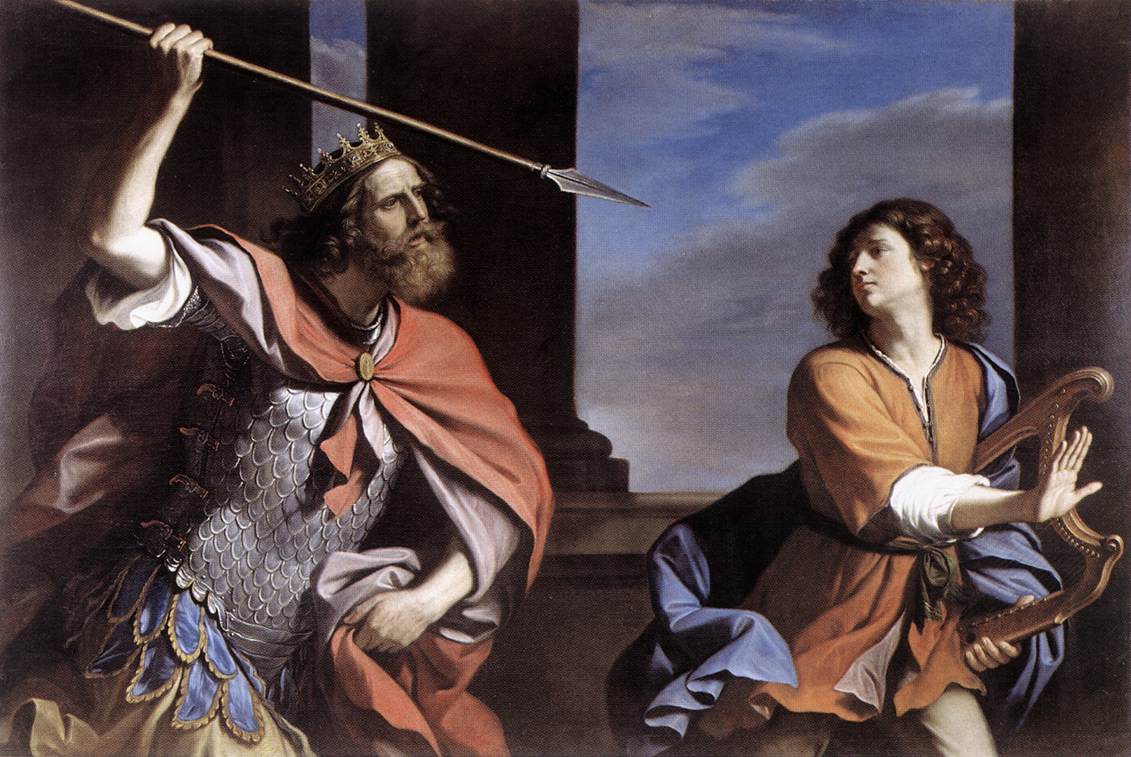
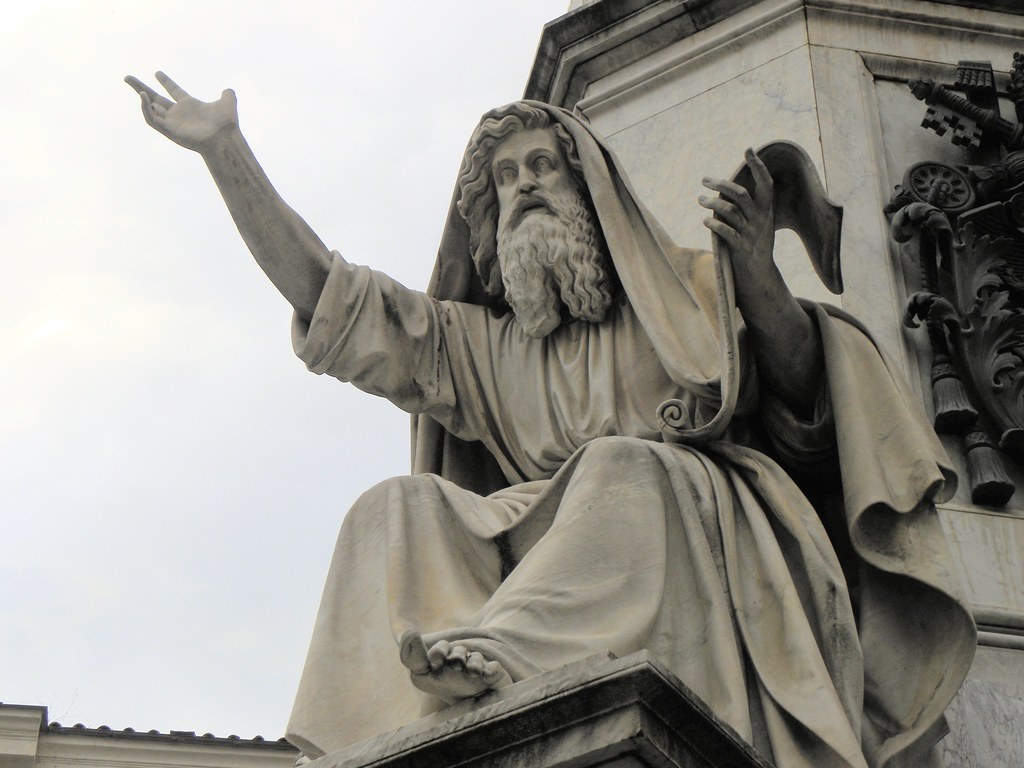


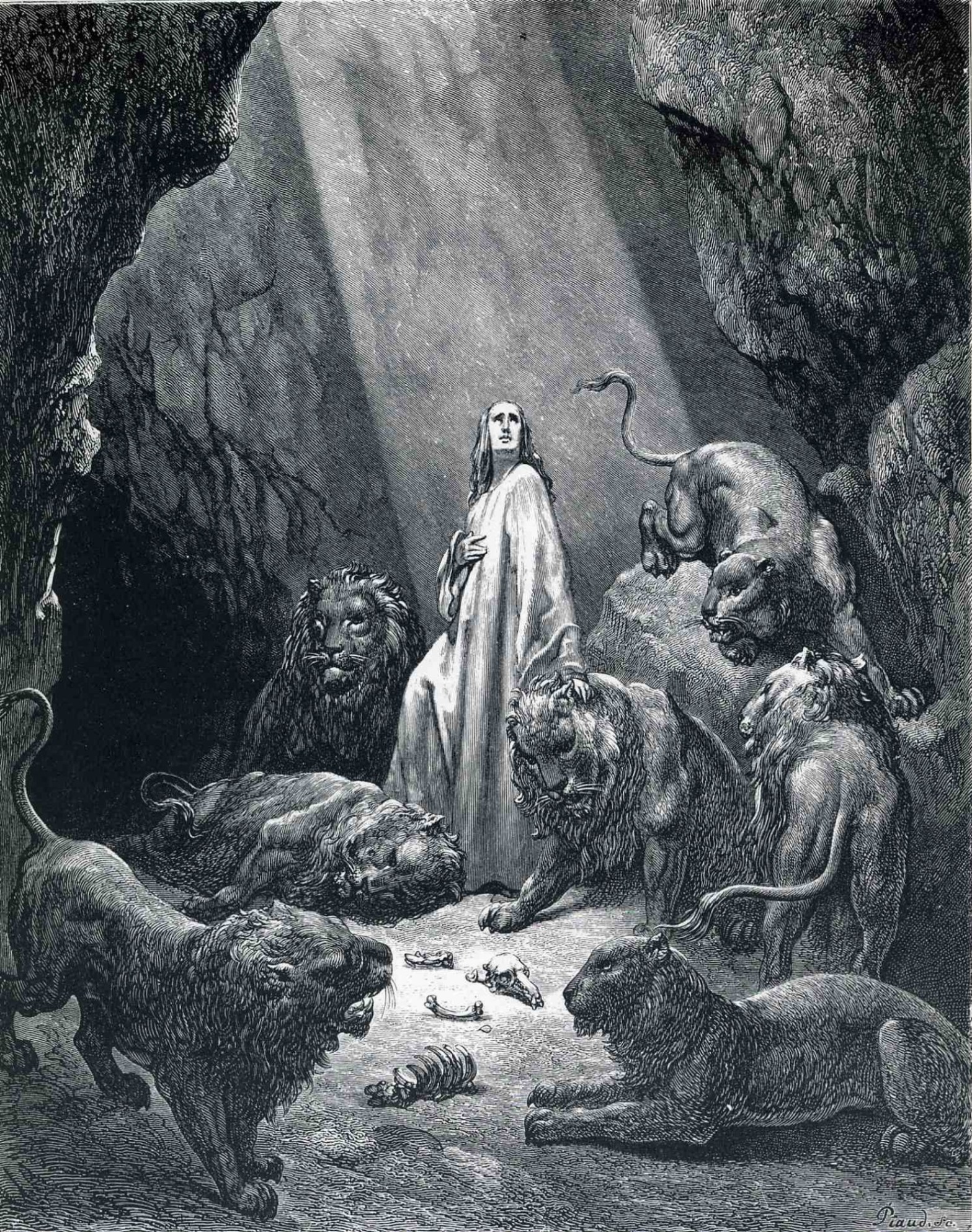


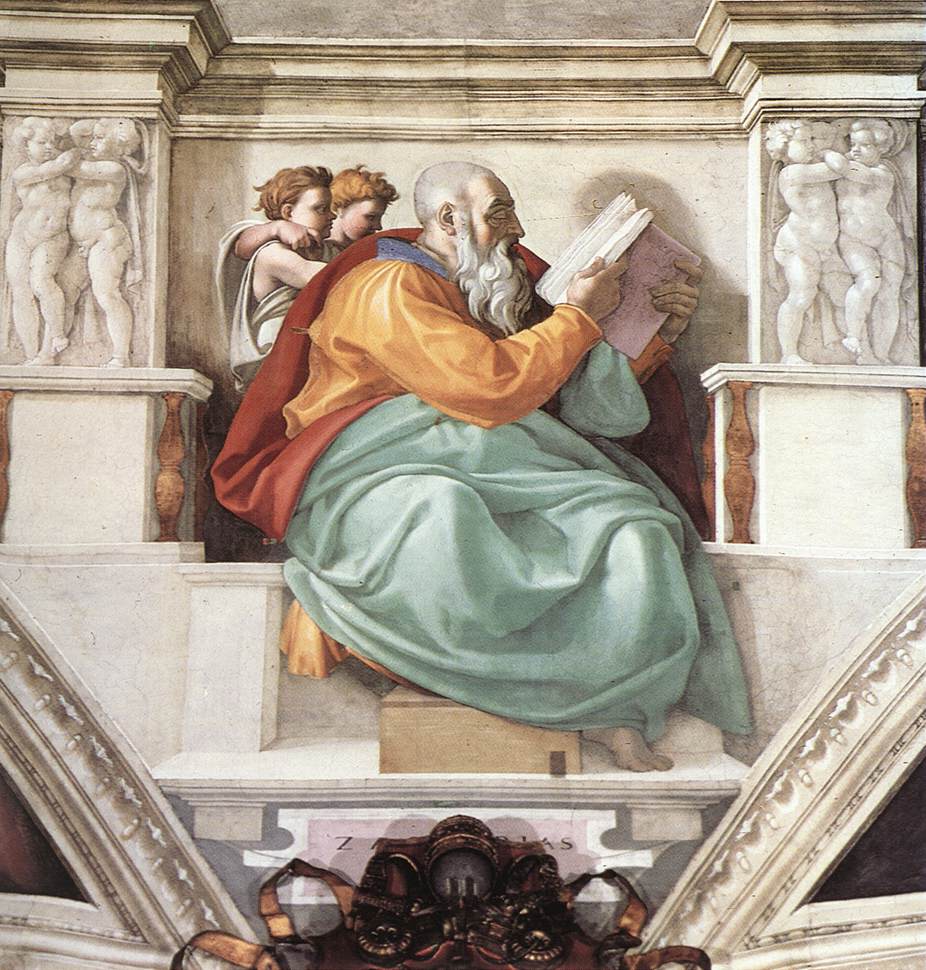


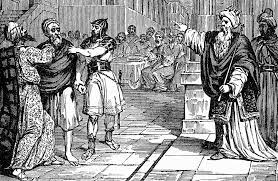




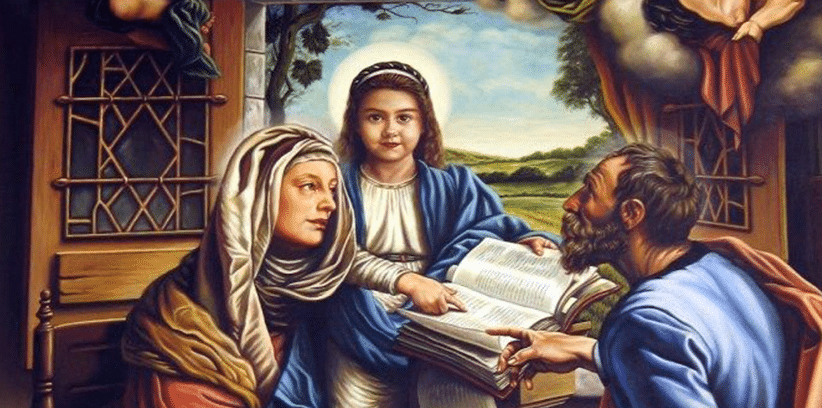


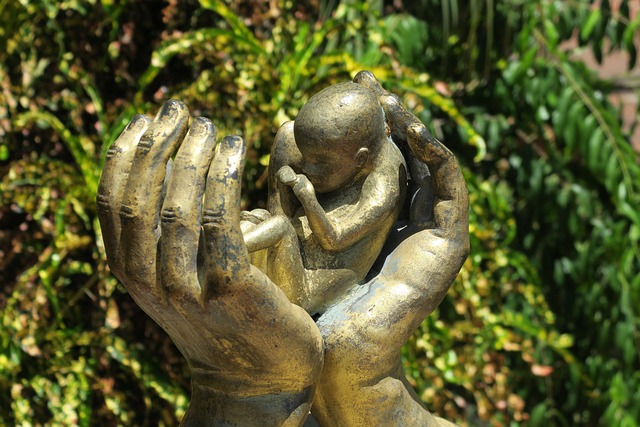

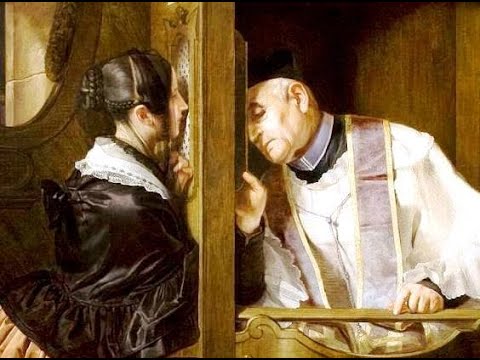
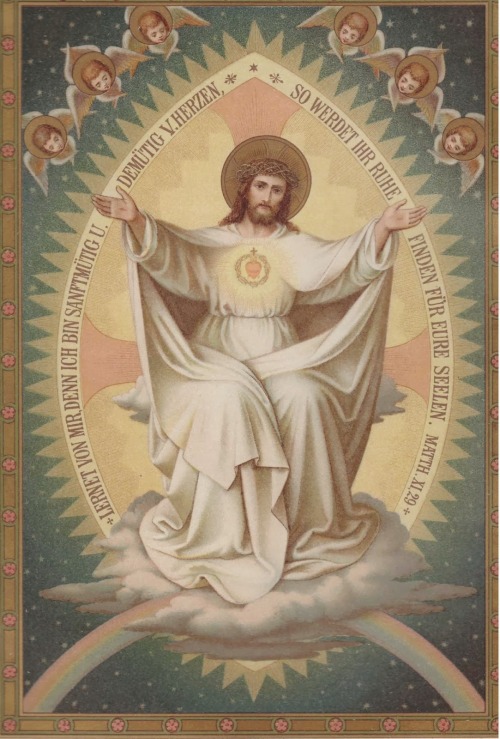
 Catholic Louth and Mablethorpe